

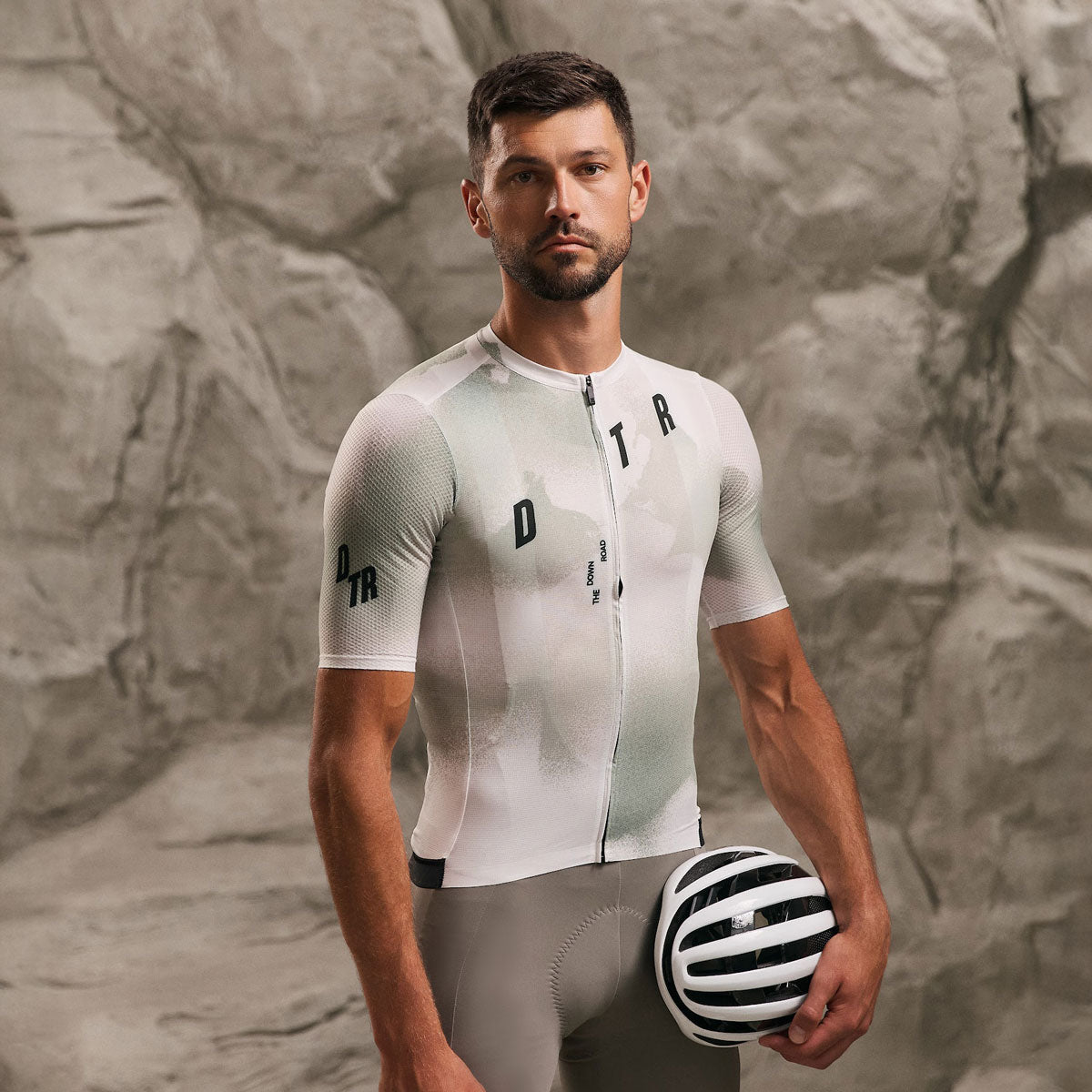
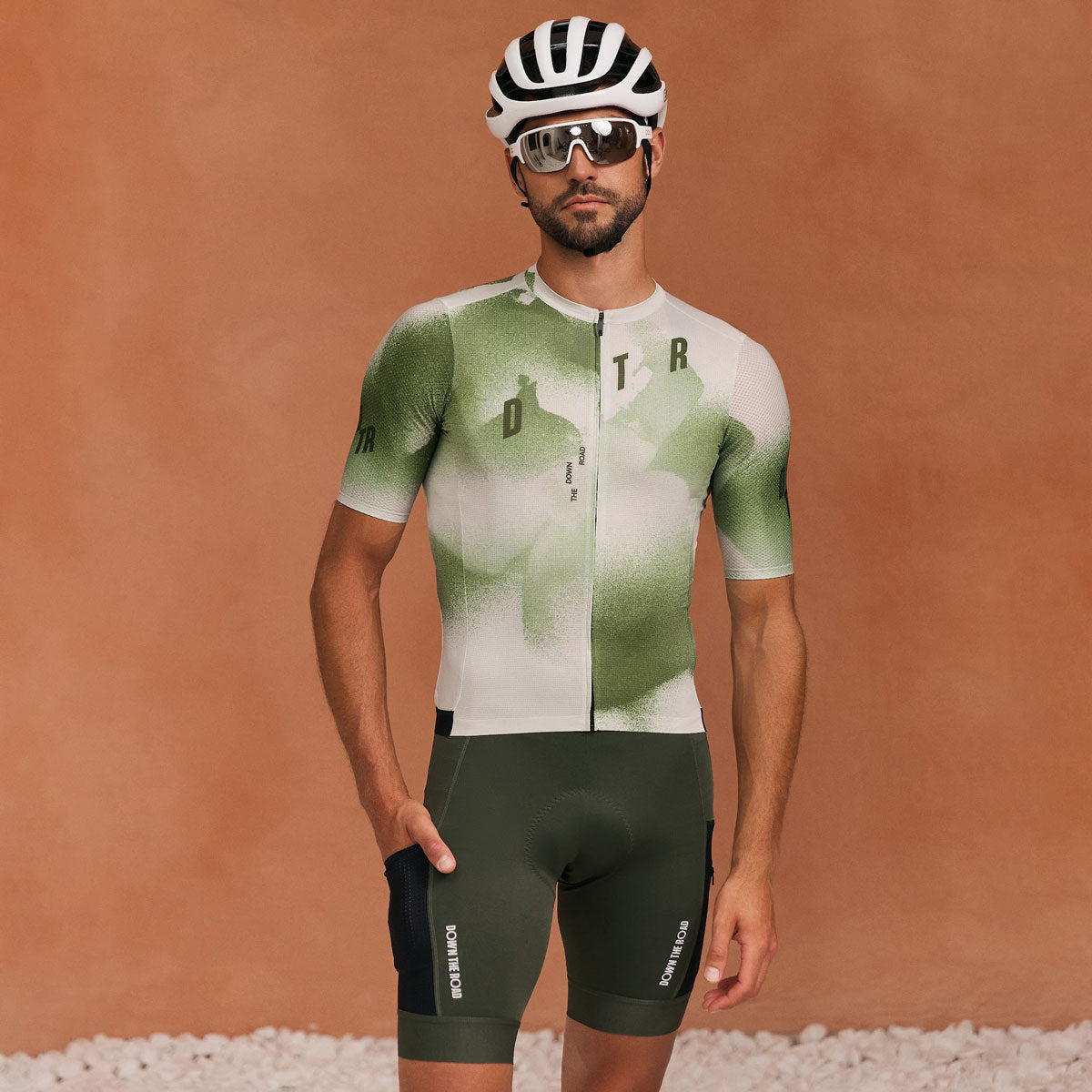
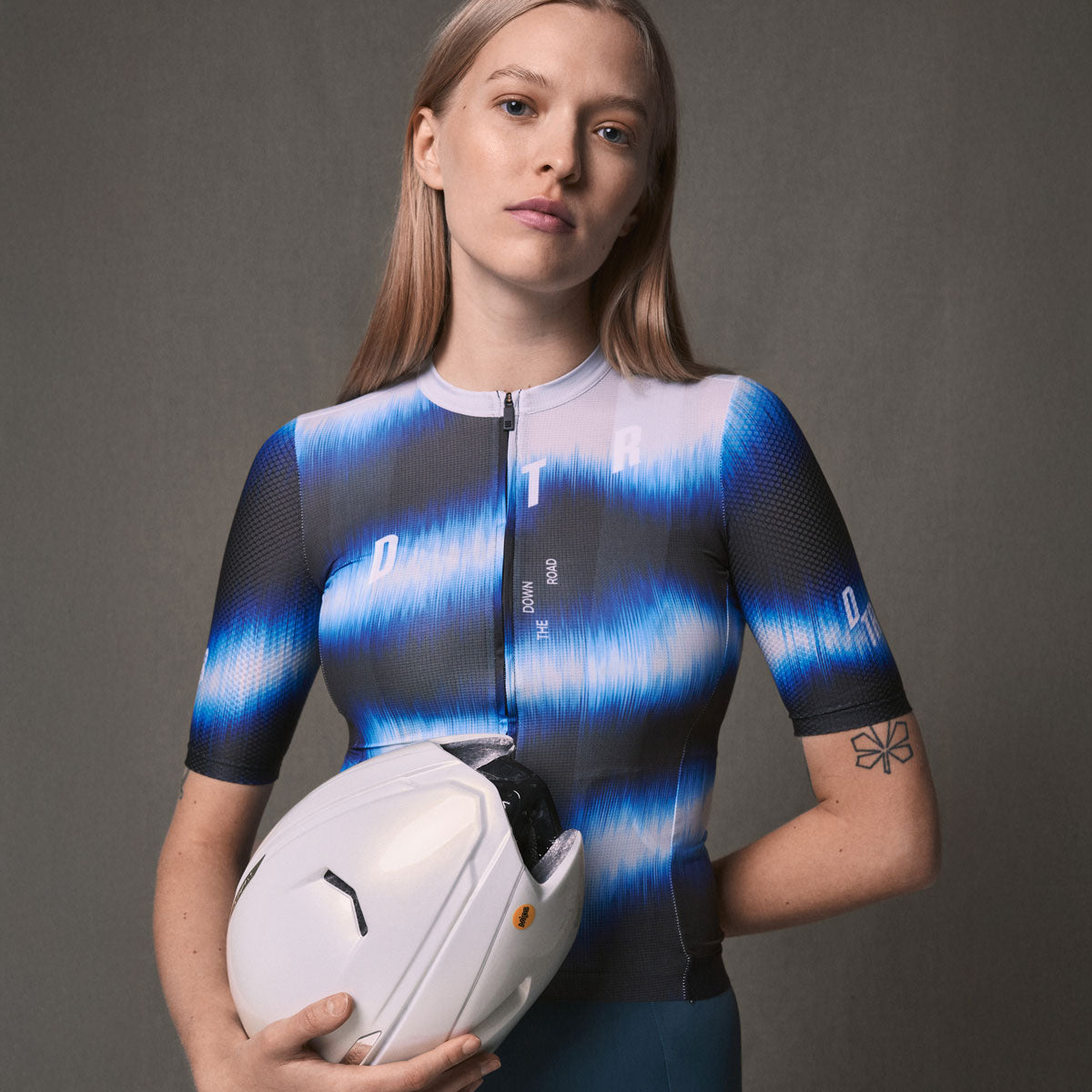

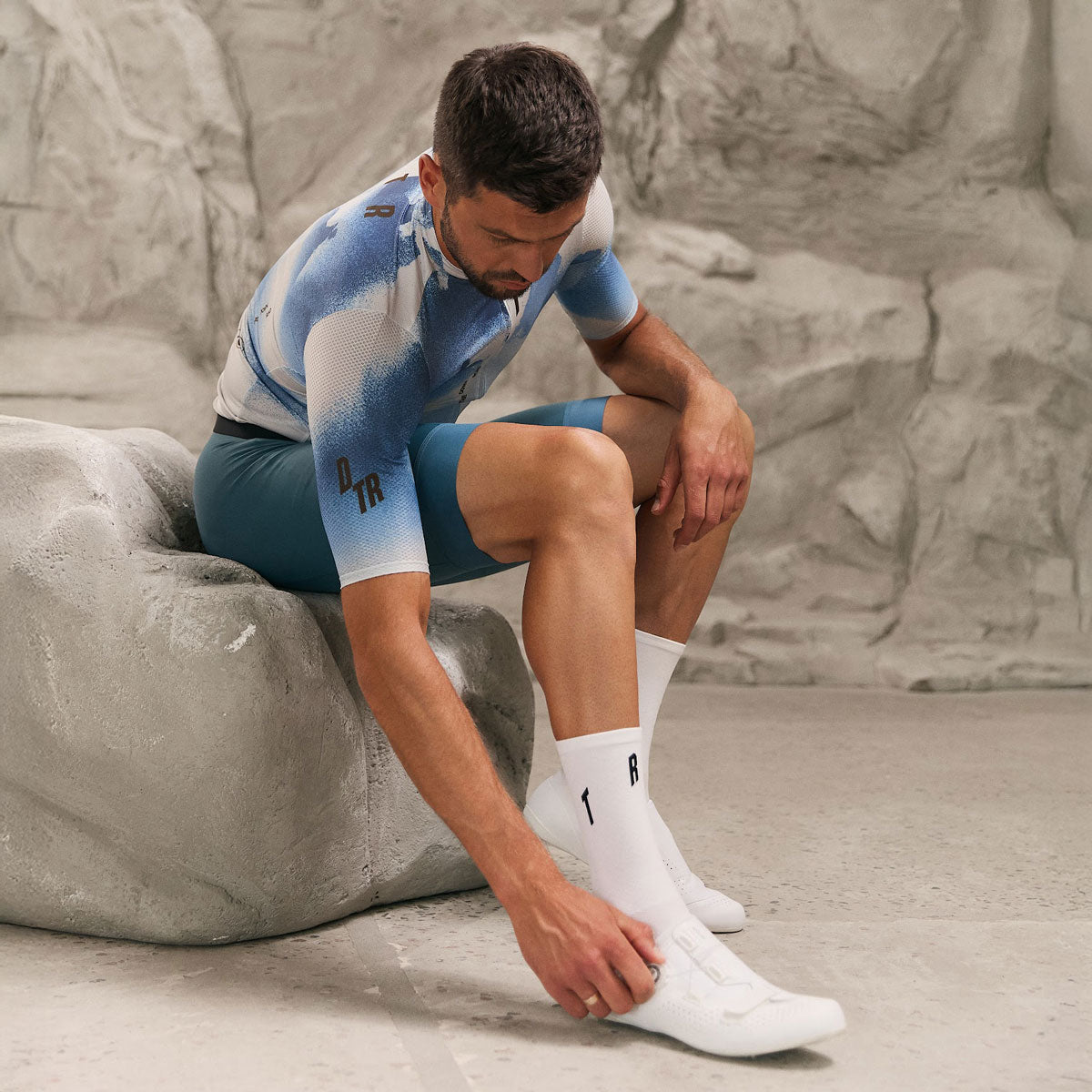
For a sprint triathlon you wear one trisuit, put on before the race and kept on the whole way through, with nothing underneath it. Everything else is weather and water temperature. The reason sprint kit is simpler than long-course kit is that the race is short enough for transition seconds to matter more than comfort, so the right choice is almost always the one that needs no changing.
Why one piece beats two over 750m, 20km and 5km
A sprint is roughly an hour to ninety minutes of racing, split three ways. Over that distance a two-piece kit gains you almost nothing in comfort and costs you time twice, because a top that rides up over a wet torso in T1 is genuinely slow to sort out.
A one-piece also solves a problem that only exists in triathlon: getting dressed while wet, out of breath and standing on one leg. Fewer edges to catch, no waistband to roll, nothing riding up on the run. That is the whole argument, and at this distance it is enough.
Two-piece kit starts to make sense at middle and full distance, where you may want to change something, adjust a fit over five or six hours, or manage nutrition through a jersey pocket. At sprint distance those reasons do not apply. If you are still deciding what to buy first, the first-triathlon kit guide covers the whole list.
Wetsuit swim or not, and what changes
If the swim is wetsuit-legal, the trisuit goes on under the wetsuit before you start, and you strip the wetsuit in T1 already dressed for the bike. If the swim is non-wetsuit or a pool start, the trisuit is simply what you swim in.
Either way the trisuit does not change. What changes is how much you care about the back zip and the shoulder cut, because a suit worn under a wetsuit needs to be flat enough at the shoulders not to bunch when neoprene is dragged over it. Front-zip suits with a low collar are the easier option under a wetsuit.
Water temperature and the race organiser decide wetsuit legality, not you, so check the race information the week before rather than the morning of. Most sprint races publish a decision the day before if it is borderline.
What goes under it
Nothing. No underwear, no bib shorts, no cycling jersey. A trisuit is built to be worn against the skin, and anything underneath adds seams, holds water from the swim and creates friction on the run.
Women usually find the built-in bust support in a women's trisuit sufficient at sprint distance. If you prefer more, a seamless sports bra under the suit is the common solution, chosen for flat seams rather than support level, because seams are what chafe once everything is wet.
The one thing worth adding is a small amount of anti-chafe balm at the neck, the underarms and anywhere a wetsuit collar sits. Salt water and a repeated head-turn will find those places on a 750m swim.
Sleeved or sleeveless
At sprint distance the difference is small and mostly about heat and sun. A sleeved trisuit is marginally faster in a wind tunnel and gives you shoulder coverage on a hot, exposed course. A sleeveless suit is cooler, easier to get out of a wetsuit and easier to swim in for riders who find sleeves restrictive.
The aerodynamic gain from sleeves is real but small over 20km at sprint speeds, and it is dwarfed by your position on the bike. If you are choosing between the two, choose on comfort in the water and sun exposure on the course. Both cuts sit in the DTR trisuit range.
For a first sprint, sleeveless is the lower-risk choice. It is more forgiving of a suit that is slightly the wrong size, and there is one less thing to fight with in T1. Get the fit right before you worry about either.
Chamois thickness for a 20km bike leg
Thin. A trisuit chamois is designed to be swum in, ridden on and run in, so it is deliberately much thinner than a bib short chamois. Over 20km you do not need padding, you need something that does not hold water and does not flap on the run.
If a trisuit pad feels like a bib short pad when you try it on, it is the wrong suit for a sprint. That thickness will absorb pool or lake water in the swim, sit heavy on the bike and chafe over 5km of running. The pad guide maps thickness to distance.
This is the clearest difference between sprint kit and long-course kit. At Ironman distance you accept a thicker pad because six hours on the bike demands it. At sprint distance the run is a bigger share of the race and thin wins.
Cold, wet and windy race mornings
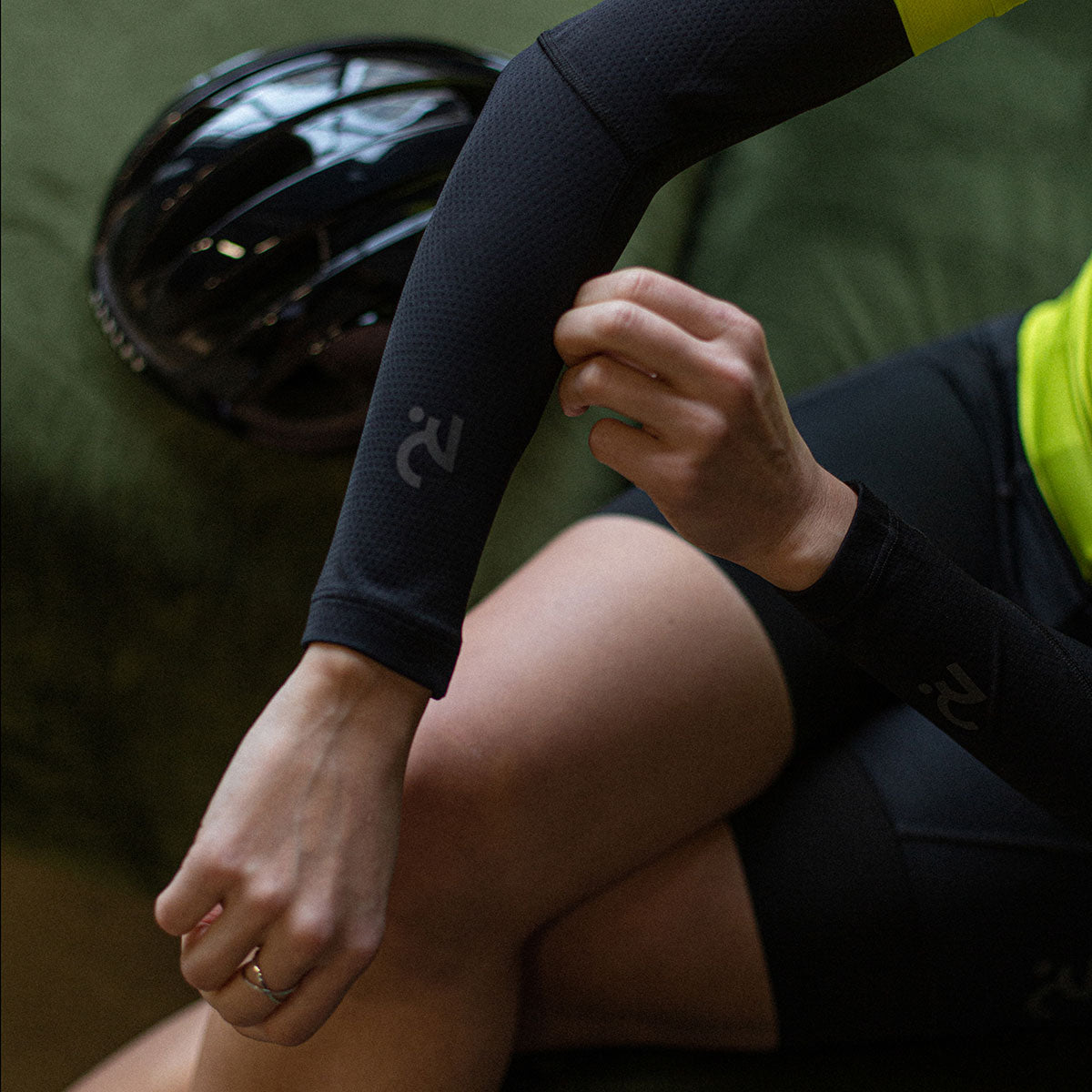
For a cold start, the additions are all things you can put on over the trisuit without taking anything off: arm warmers, a lightweight windbreaker or a cycling vest for the bike leg, and a cap under the helmet. Everything comes off at T2 or stays on to the finish.
Do not add a base layer under the trisuit for warmth. It will be soaked from the swim, and a wet layer against the skin makes you colder on the bike than the trisuit alone.
Cold hands are the one thing worth pre-empting. Thin gloves left in T1 cost a few seconds and make the descents and the braking far more controlled on a cold morning. That is a fair trade even at sprint pace, and the transition checklist is the place to plan it.
Common questions
Can I do a sprint in cycling kit? You can ride in bib shorts and a jersey and change in transition, but you will lose more time changing than you will gain in comfort. If you already own a trisuit, wear it.
Do I need a separate swimskin? No. Swimskins are for non-wetsuit long-course racing. At sprint distance the trisuit is the swim garment.
Should the trisuit be tight? Yes, close-fitting with no loose fabric at the shoulders or the seat, but not so tight that you cannot fully extend your arms overhead. Loose fabric drags in the water and flaps on the bike.
Socks or no socks? Socks cost a few seconds and save blisters over 5km. Most first-timers should wear them; a thin, low-bulk race sock goes on fastest over a wet foot.
How do I look after it afterwards? Rinse it before it dries, then follow the trisuit washing guide. Chlorine and salt are harder on a trisuit than the racing is.
See the trisuit range at /collections/trisuits.
DTR — performance cycling and triathlon apparel, designed and developed in Ukraine.
Racing as three athletes instead? Read Triathlon Relay Team Kit: What Each Leg Actually Wears.

Leave a comment
This site is protected by hCaptcha and the hCaptcha Privacy Policy and Terms of Service apply.