

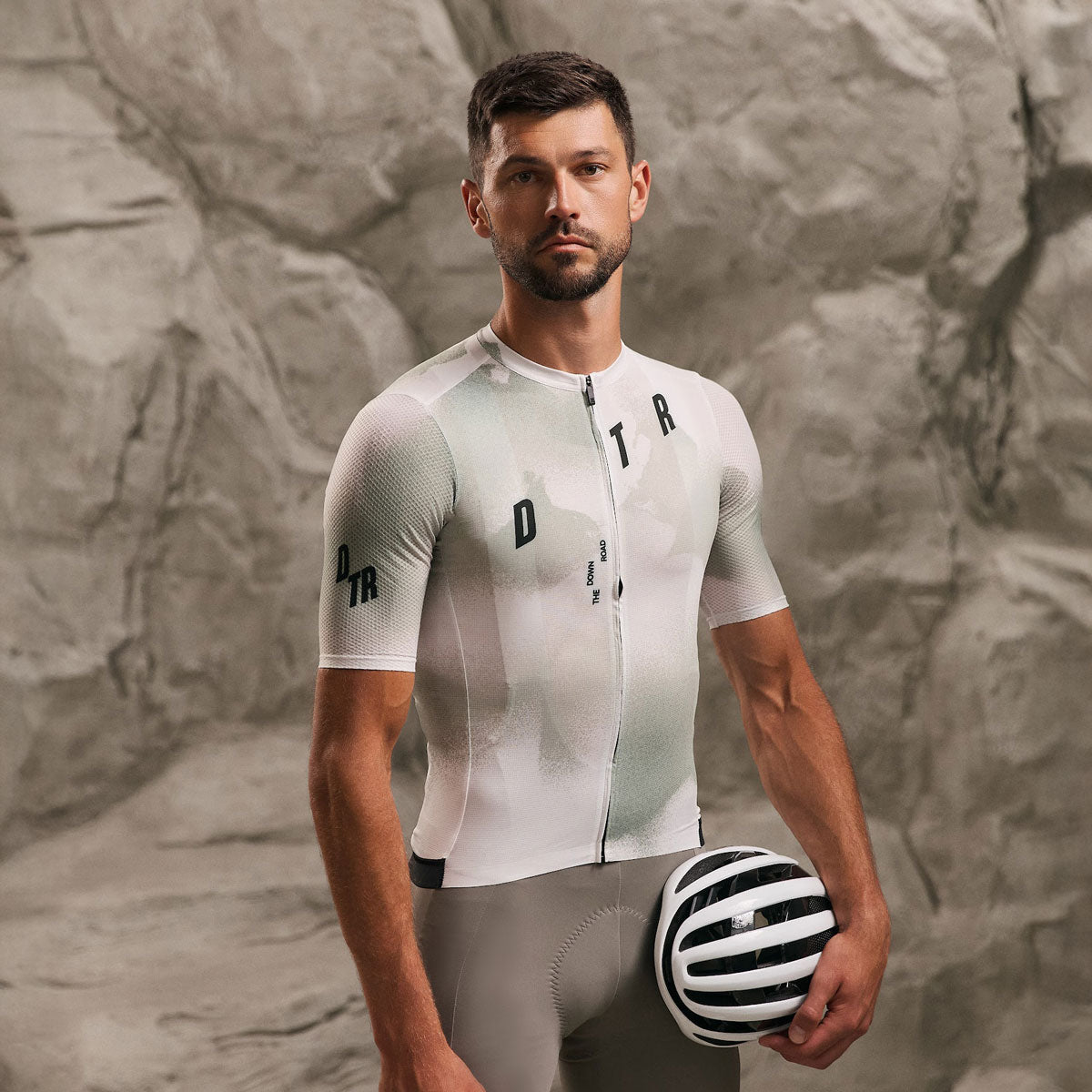
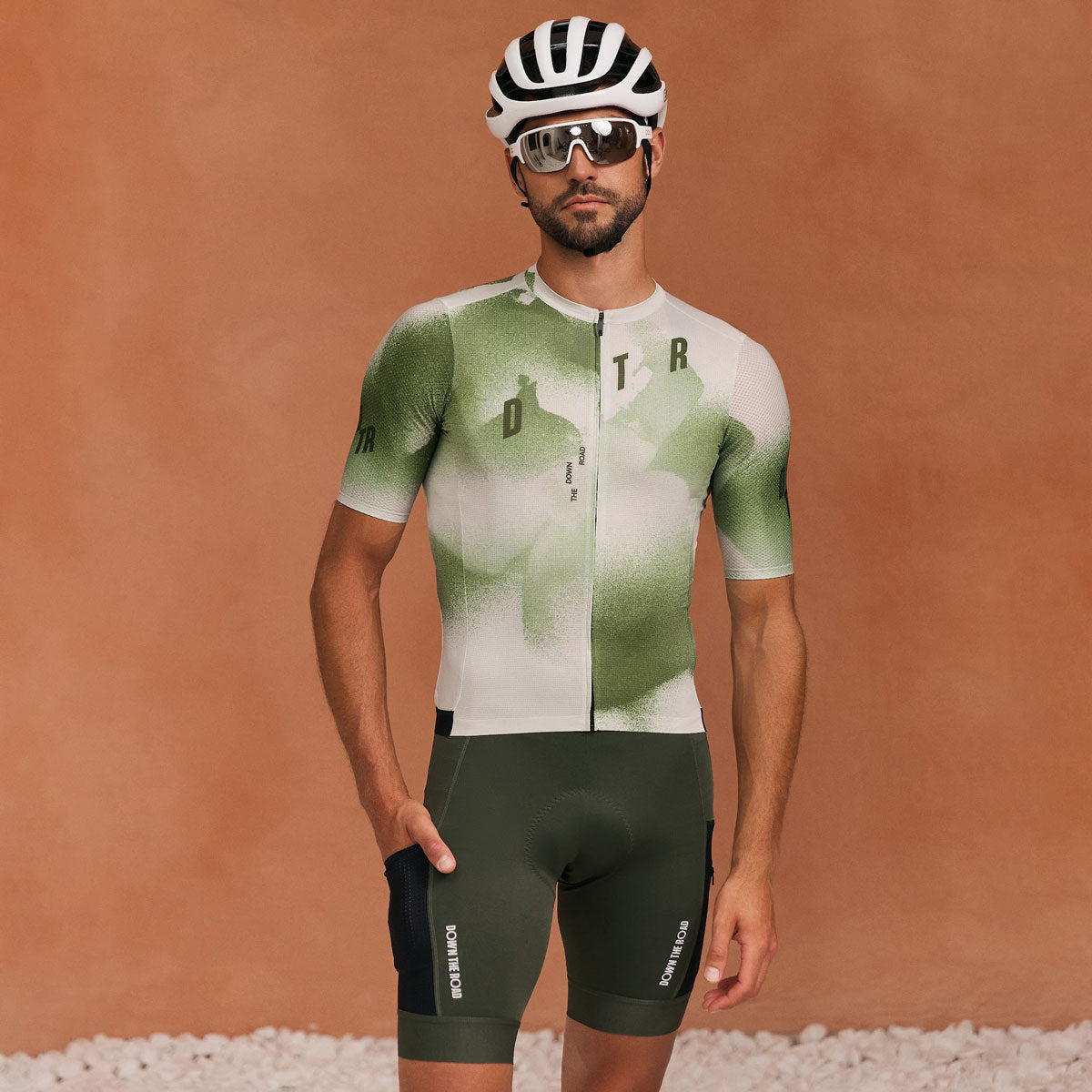
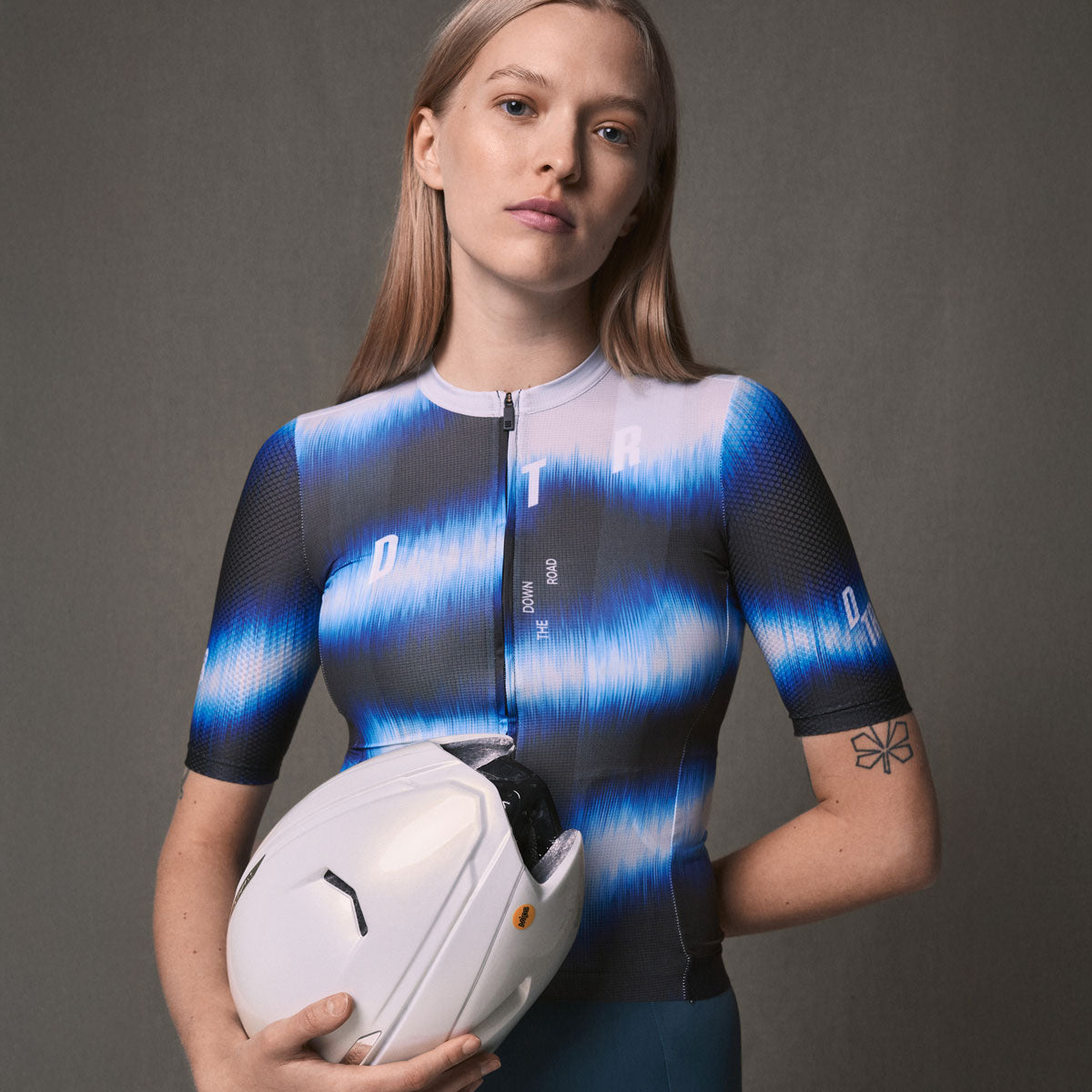
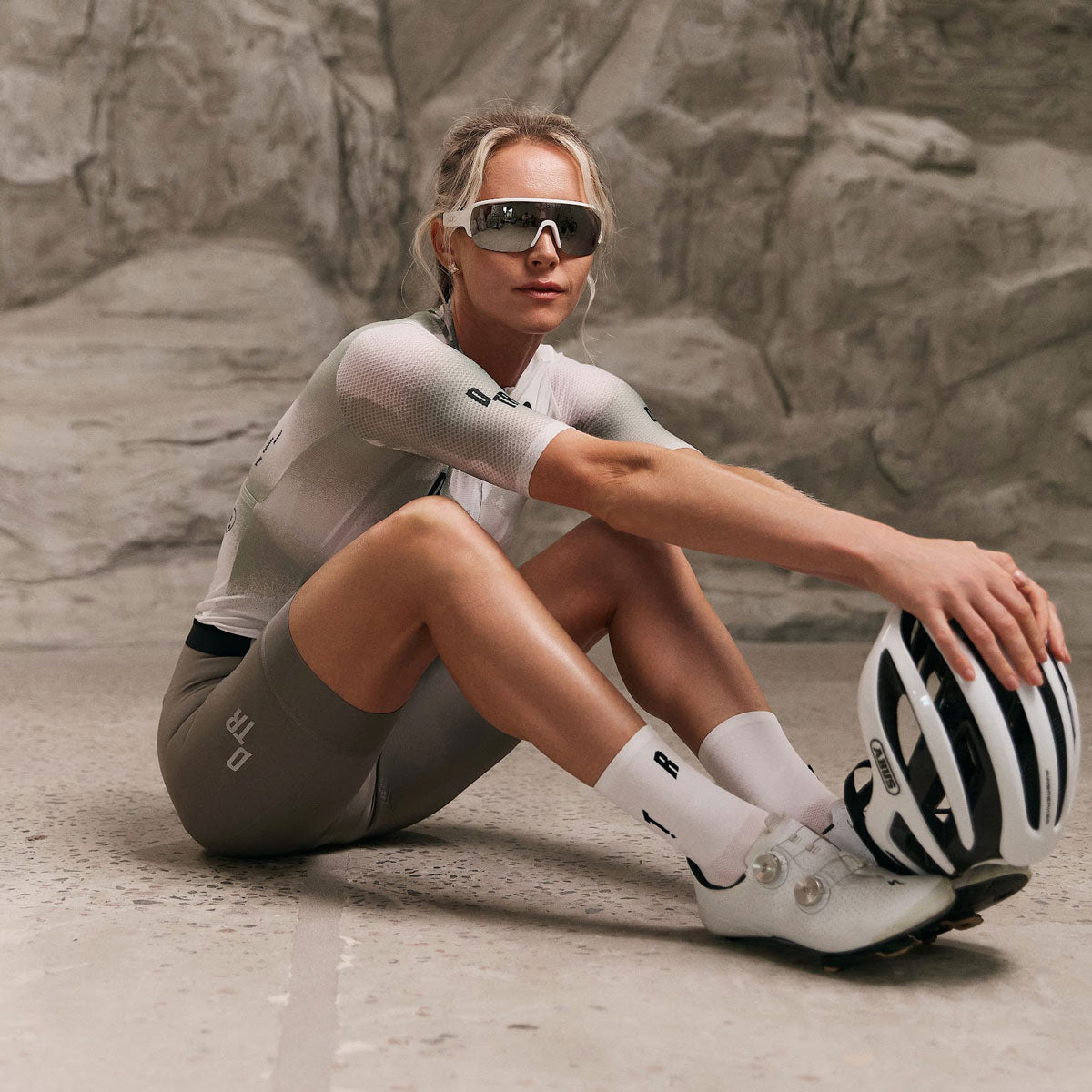
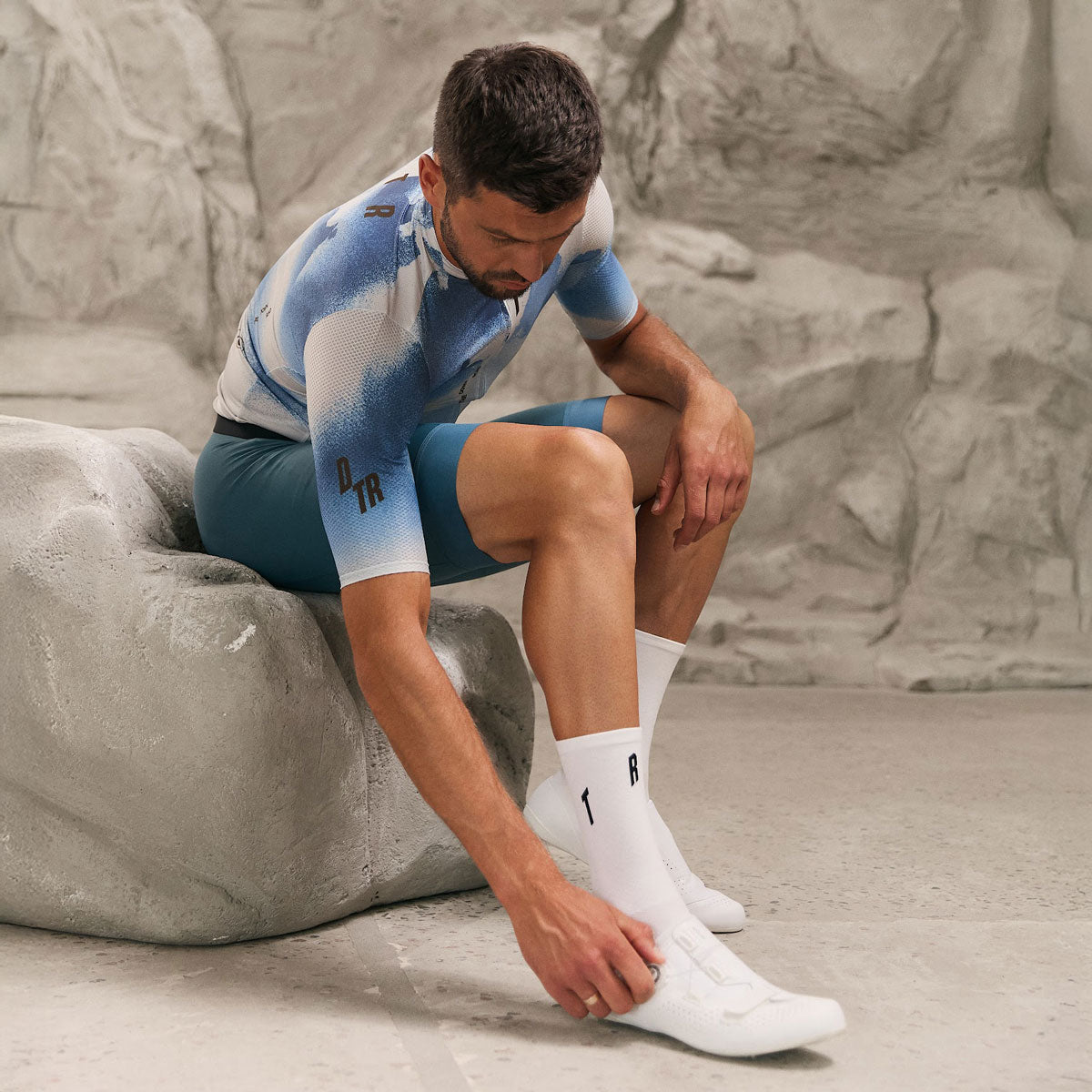
For Kona, the right race kit is a close-fitting trisuit that dries quickly after the swim, stays breathable in humid heat and carries nutrition without a kit change. This guide covers the fit, fabric behaviour and race-week testing that matter when the day gets hot and the course stays long.
What matters most in heat and humidity?
Start with moisture management and fit. A wet, loose trisuit holds more water and shifts under load; a close race fit with quick-drying fabric stays more stable through the bike and gives you less to fix once the run starts. Heat does not make the basics optional: test your chamois, pockets and zip on a long training day.
What should a Kona trisuit actually do?
It should take you through swim, bike and run without a change. Prioritise a close race fit, breathable panels, a triathlon-specific chamois that does not dominate the run, secure leg grippers and pockets you can reach on the bike. The DTR trisuit collection is built around that use case, with quick-drying fabrics, mesh ventilation and rear-pocket storage across the range.
How should it fit before race week?
It should feel close and unrestrictive in your aero position, not merely comfortable while standing still. Use the fit check in How Should a Trisuit Fit?, then ride and run in the exact size you will race. A long-distance suit should stay stable through the shoulders, zip and leg openings without pulling at the hip flexors.
Why does a tested chamois matter more than extra padding?
For a long hot race, the right chamois is the one that supports your bike position without becoming a problem on the run. More bulk is not automatically better. Work from the distance and your time in aero; this trisuit chamois guide explains the trade-off between cushion, drying and freedom to run.
How do you manage the swim-to-bike transition?
A good trisuit lets you leave T1 without adding or removing layers. Practise opening and closing the zip, taking nutrition from the rear pockets and settling the chamois during the first minutes on the bike. What to Wear Under a Trisuit explains why an extra layer usually creates more friction than comfort.
Which sessions should you repeat in race kit?
Repeat one long bike-to-run brick in warm conditions, one swim-to-bike transition practice and one nutrition session with the exact pocket layout you will use. Pair that work with Cycling in Hot Weather for a practical heat plan and the triathlon transition kit checklist for the small details that are easy to miss when the race is close.
What should stay out of the race-week experiment?
Keep the race kit stable. Do not introduce a new trisuit, a different chamois, new anti-chafe products or a new pocket arrangement in the final week. If sunscreen, salt and sweat have been part of your training, wash the suit promptly and use the routine in How to Wash a Trisuit so residue does not stay in the fabric.
FAQ
Is a trisuit enough for a hot long-distance race?
Yes. It is designed to cover all three disciplines in one close-fitting layer, provided the fit, chamois and pockets have been tested over your planned duration.
Should you wear a new trisuit at Kona?
No. Race in the same model and size you have used in at least one long brick. Humid heat exposes small fit problems quickly.
How should a trisuit feel on the bike?
It should sit close through the torso and shoulders, stay stable at the leg openings and allow you to breathe deeply in aero without pressure from the zip or pockets.
DTR — performance cycling and triathlon apparel, designed and developed in Ukraine.

Leave a comment
This site is protected by hCaptcha and the hCaptcha Privacy Policy and Terms of Service apply.