

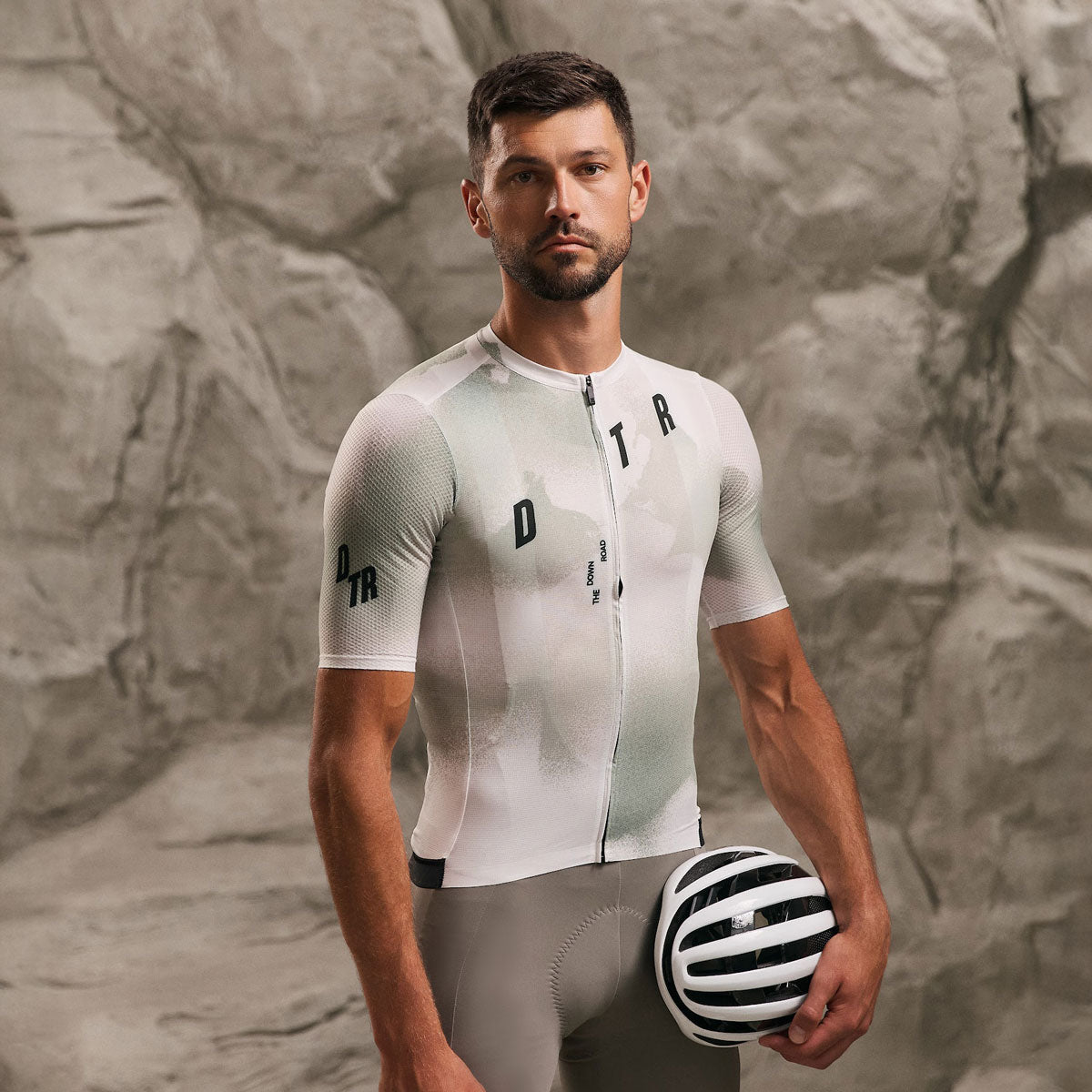
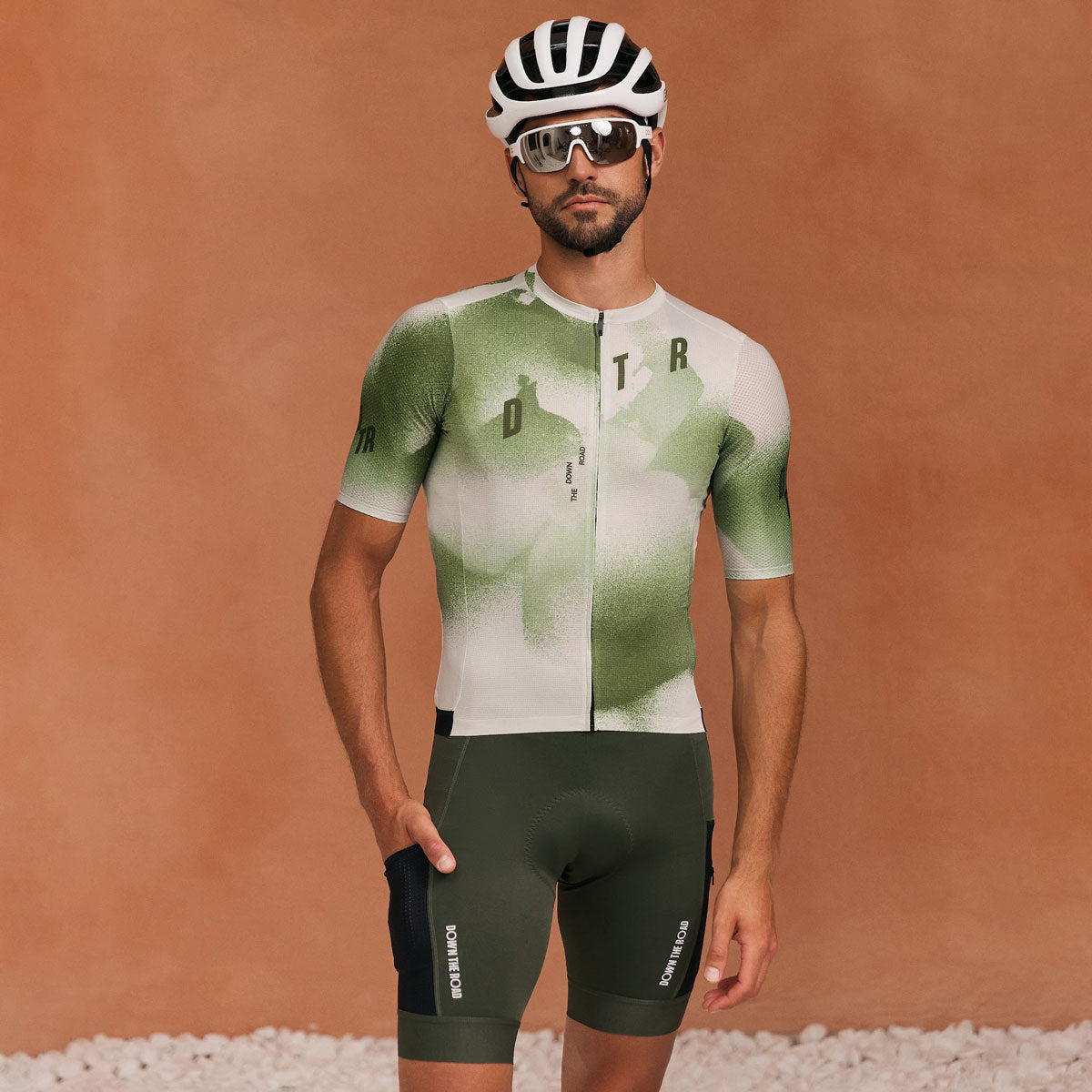
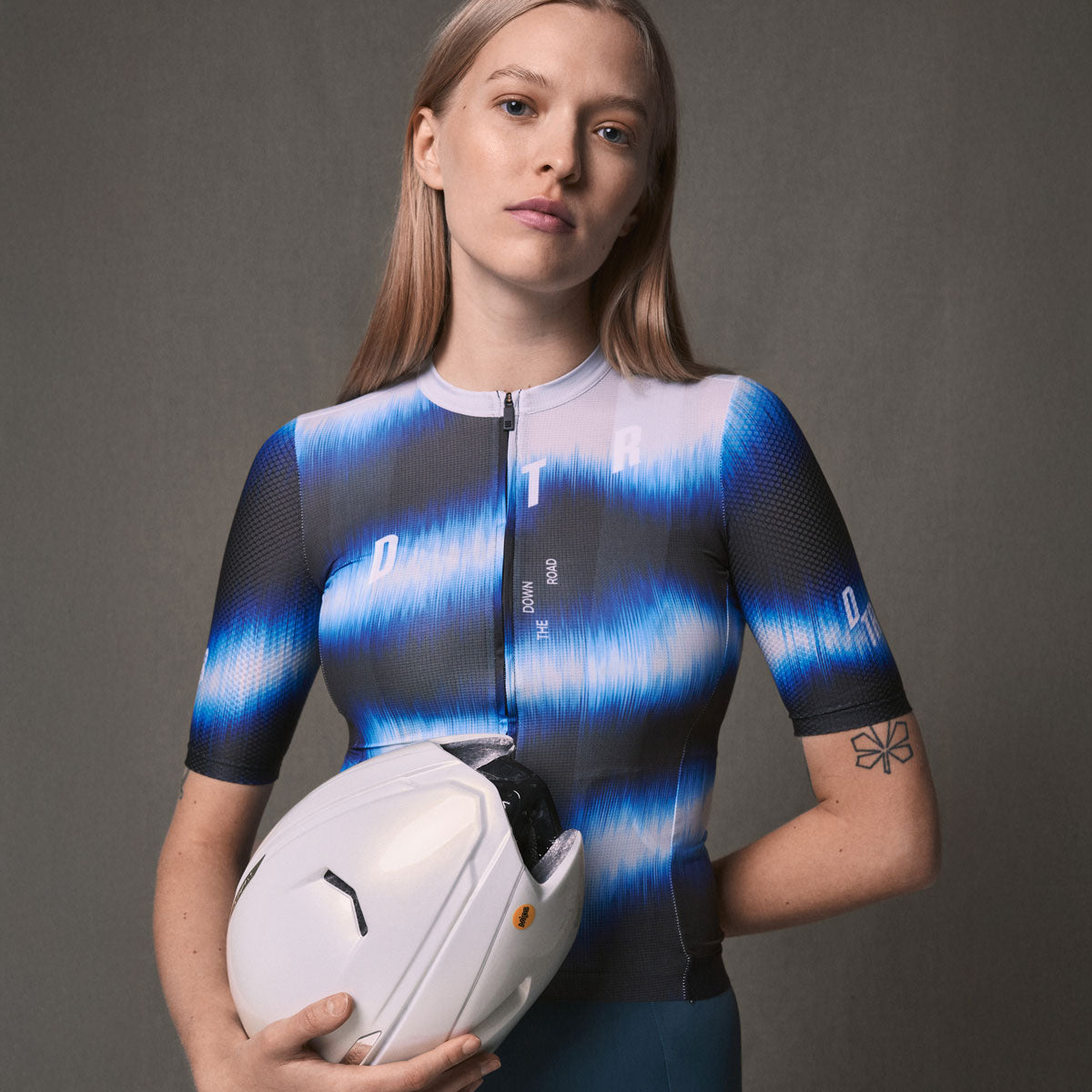

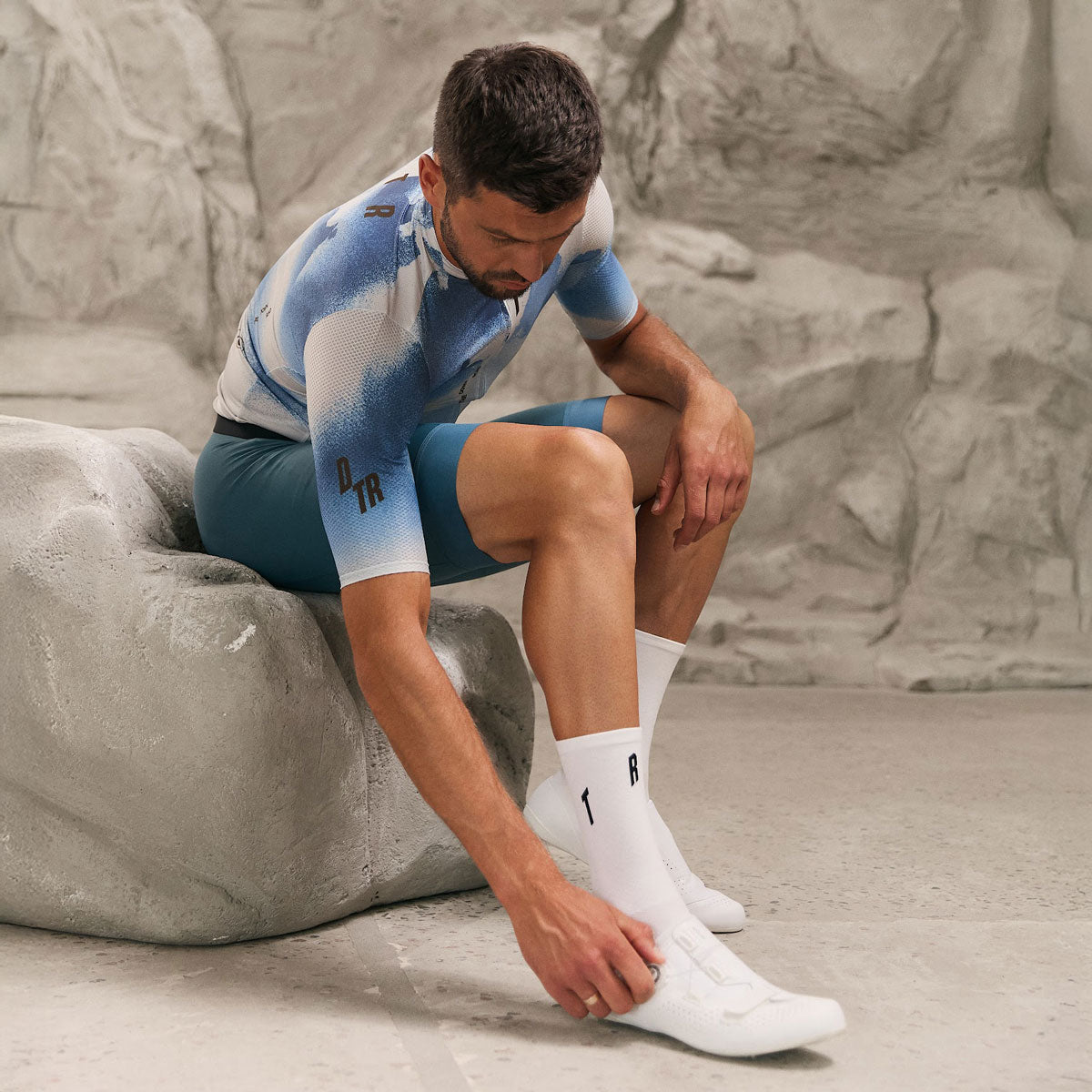
For most triathletes, the answer is nothing. A trisuit is designed to be worn directly against the skin, and anything underneath it adds seams, holds water and creates the friction the suit was built to avoid. The one common exception is a sports bra, if you want more support than the suit's own lining gives.
This guide covers why the suit goes next to skin, what to do about support, and the narrow cases where a layer underneath is justified.
Why a trisuit is designed to go next to skin
A trisuit has to work wet, then dry, then wet again with sweat. The fabric is chosen to drain fast and sit flat, and the chamois is built thin so it does not soak up water on the swim. Put a layer underneath and you defeat all three: it holds water, it wrinkles, and it puts a seam between the pad and you. For how it behaves in the water itself, here is whether you can swim in a trisuit and what to expect.
The friction point is what catches most people out. A trisuit is a single smooth surface against the skin. Add underwear and you create two surfaces that move independently — fabric against fabric, then fabric against skin — across several hours of repeated motion. That is the mechanism behind most race-day rubbing complaints.
Underwear: the short answer
Do not wear underwear under a trisuit. Cotton or standard synthetic underwear holds water from the swim for the whole race, bunches under the chamois where you sit, and puts a seam directly under load. It is the single most common first-triathlon mistake and it is entirely avoidable.
The same applies to cycling bib shorts under a trisuit. Two pads stacked is not more comfort — it is more bulk in the wrong place, and it will make the run leg noticeably worse. If your trisuit pad is not enough for the bike distance you are racing, the answer is a different suit, not a second pad. Our trisuit pad guide covers what thickness suits what distance.
Sports bras and built-in support
Most women's trisuits include a built-in shelf or lining, which is enough for shorter racing. For longer distances, or if you want more support than the lining offers, a thin racing sports bra worn underneath is a normal and sensible choice — as long as it is a technical, quick-drying one with flat seams and no clasps, hooks or padding.
What matters is that it behaves like part of the suit rather than a separate layer. A cotton bra, a moulded-cup bra or anything with plastic hardware will hold water off the swim and press into your skin for the rest of the race. A flat, seamless racing bra will not.
Practical detail: put it on before the suit and check it under the straps while you are still dry. Anything that catches or folds while you are standing still will be worse after ninety minutes on the bike. Our women's trisuit guide covers fit and support in more depth.
Is there ever a case for a base layer?
Rarely, and only in cold races. A thin, quick-drying sleeveless base layer under a trisuit can help in genuinely cold conditions — a cold-water swim followed by a cold, wet bike leg. Outside that, it adds a wet layer you cannot remove and slows drying for the rest of the race.
If you are racing somewhere cold enough to consider it, layering over the suit is almost always the better answer: arm warmers you can strip in T2, or a gilet for the bike leg. That keeps the next-to-skin surface clean and gives you something you can actually take off. Our guide to what to wear for your first triathlon covers the full race-day setup.
What about under a wetsuit?
The trisuit is what goes under the wetsuit — that is the point of it. You race in the suit from start to finish, pull the wetsuit over it for the swim, and strip the wetsuit in T1. Nothing else goes between them.
This is worth stating plainly because it is where the two questions get tangled. Under the wetsuit: the trisuit. Under the trisuit: skin, plus a racing bra if you want one. We cover the wetsuit side separately in what to wear under a wetsuit.
The rest of the race kit
Everything else goes on outside the suit, in transition:
- Socks — optional on short races, worth it over 70.3 distance. Put them on in T1 with dry feet if you can.
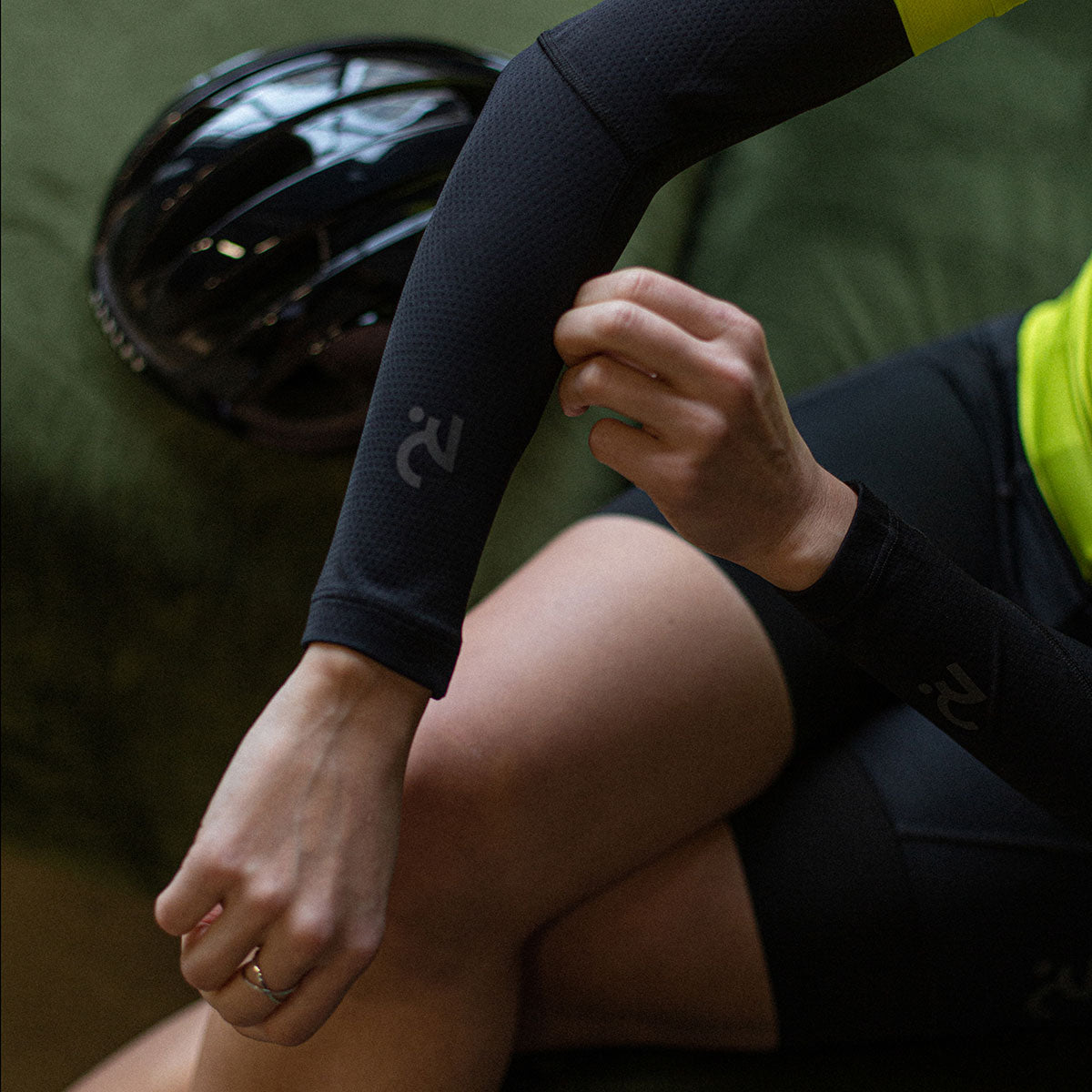
- Arm warmers — over the suit, on in T1, off in T2. The flexible way to handle a cold bike leg.
- Race belt — over the suit. Never pin a number through a trisuit.
- Gilet or windbreaker — for cold or long descents on the bike leg only.
DTR trisuits carry two rear pockets and UPF 50+ fabric, so nutrition and sun cover are handled by the suit itself rather than by anything you add underneath.
If you are getting rubbed
Chafing under a trisuit is usually caused by a seam that should not be there, a suit that is too loose, or salt and grit left on the skin after the swim. Removing the extra layer solves most of it. A suit that fits closely enough not to move is doing more for you than anything you can wear underneath.
Minor soreness after a long race is common and settles. If skin is broken, painful for more than a few days, or looks infected, see a doctor rather than trying to fix it with kit. Our guide to chafing covers the wider causes.
FAQ
Do you wear underwear under a trisuit?
No. Underwear holds water from the swim, bunches under the chamois and adds a seam where you sit. Trisuits are designed to be worn against the skin, and the pad only works properly in direct contact.
Do you wear a bra under a trisuit?
Most women's trisuits have a built-in shelf that is enough for short races. For longer distances or more support, a thin technical racing bra with flat seams and no hardware works well. Avoid moulded cups, clasps and cotton.
Can you wear bib shorts under a trisuit?
No. Two chamois stacked adds bulk without adding comfort and makes the run leg worse. If the pad is not enough for your bike distance, choose a suit with a thicker pad instead.
Do you need a base layer under a trisuit?
Only in genuinely cold races, and even then layering over the suit is usually better. A base layer underneath stays wet all race and cannot be removed; arm warmers over the top can be stripped in transition.
What do you wear under a trisuit for a cold-water swim?
The trisuit itself, under the wetsuit. Nothing goes between the two. The wetsuit provides the thermal layer, and you strip it in T1 leaving the trisuit to race in.
See the range: DTR trisuits are at /collections/trisuits.
DTR — performance cycling and triathlon apparel, designed and developed in Ukraine.
For race-day context, see Kona World Championship Race Kit: Heat, Humidity and Transitions and Next-Gen Tri-Suits: What Performance Innovation Matters.

Leave a comment
This site is protected by hCaptcha and the hCaptcha Privacy Policy and Terms of Service apply.