

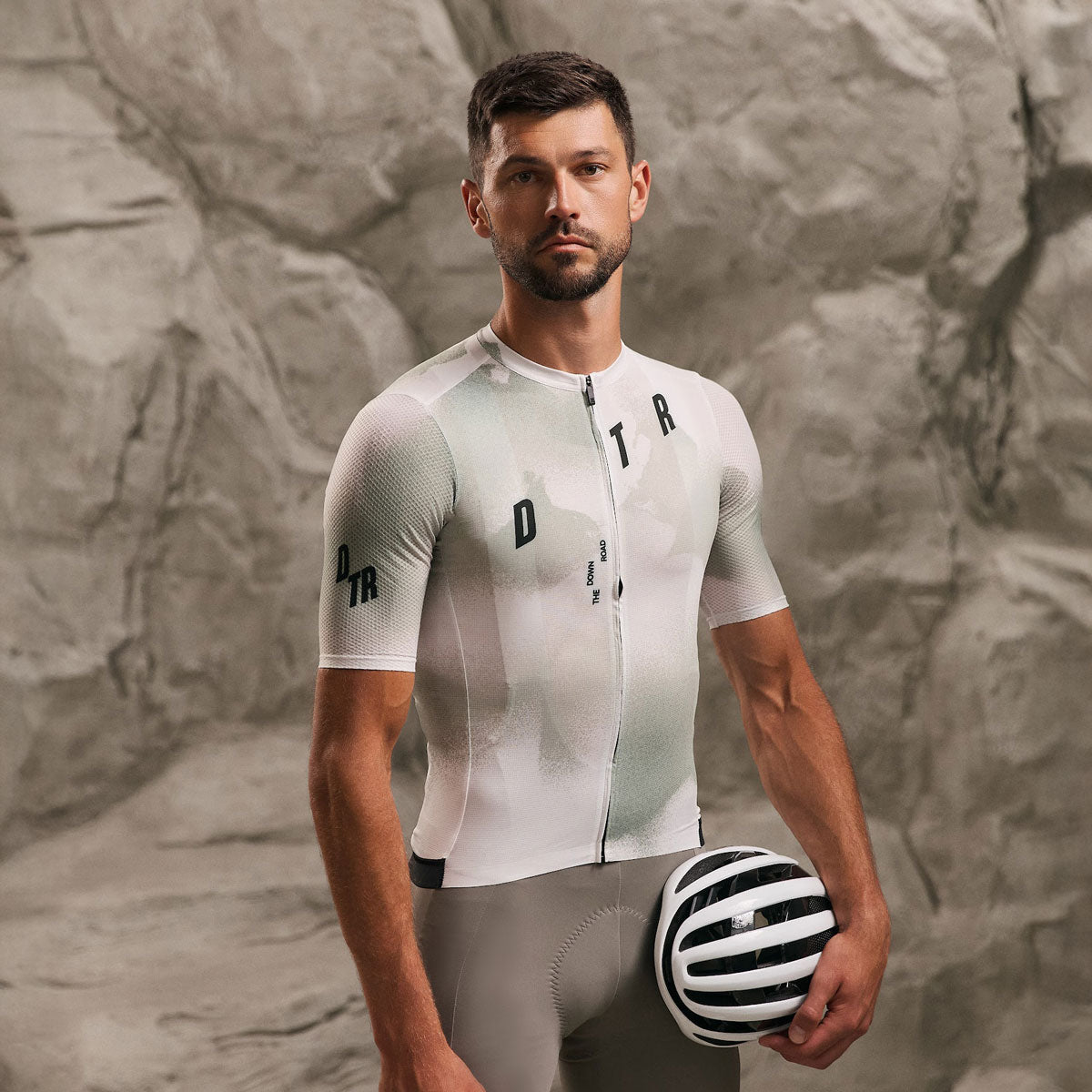
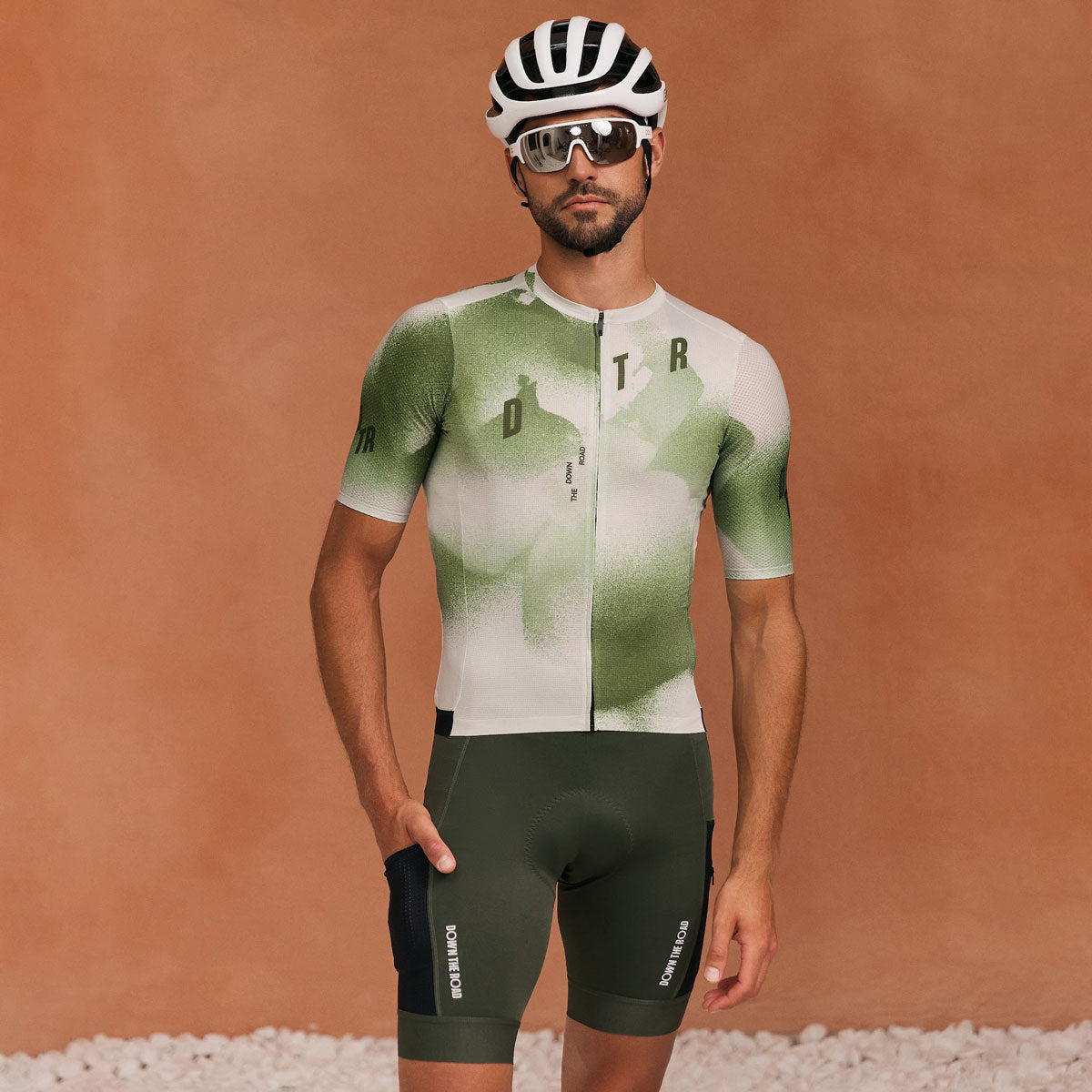
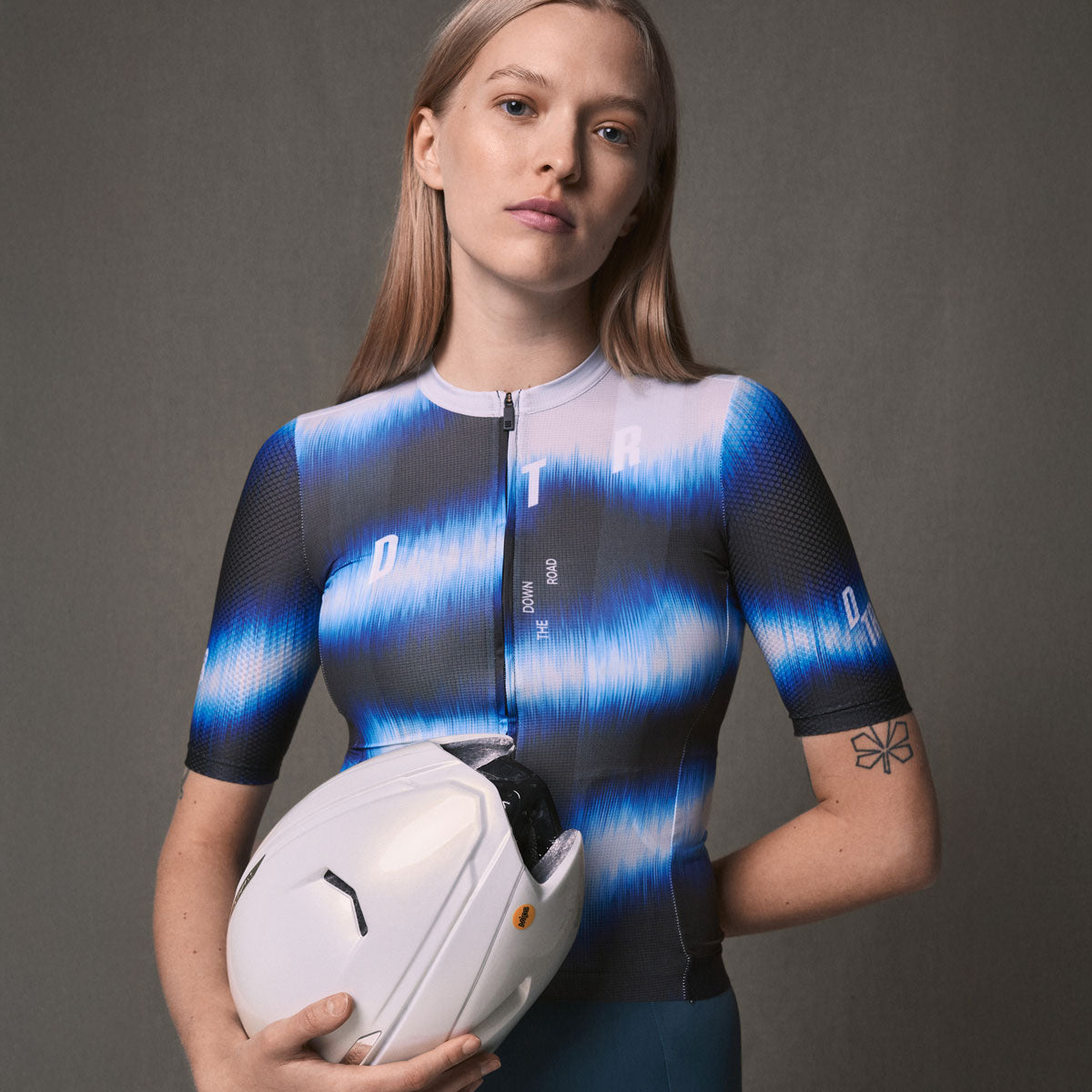
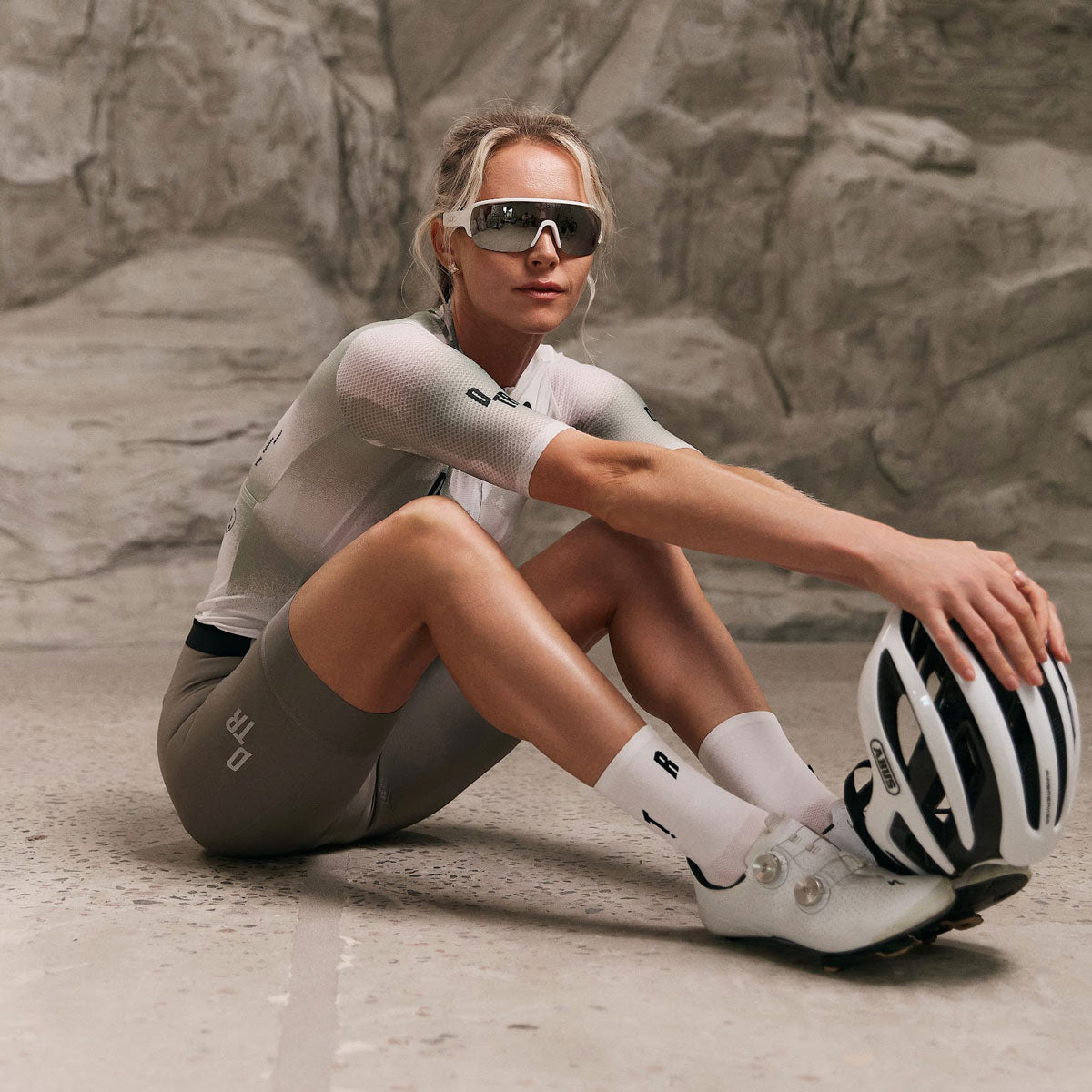
A trisuit pad is deliberately thinner than the chamois in your bib shorts — usually somewhere between about 4mm and 8mm, against 10mm or more on the road — because it has to work on the bike and then let you run. Thicker is not better here. This guide covers what thickness suits which distance, why density matters more than millimetres, and how to tell a pad problem from a fit problem.
Why it is thinner than a road chamois
A road chamois only ever has one job: cushioning you in the saddle. A tri pad has three. It has to be thin enough to swim without soaking up water, supportive enough for hours in the aero position, and slim enough between your legs that it does not chafe or waddle when you run off the bike.
That is why a tri pad will feel thin on your first long ride if you are used to bib shorts. It is not underbuilt — it is solving a harder problem with tighter constraints.
How much thickness for which distance
As a rough working guide: sprint and Olympic racing is comfortable on a thin pad of roughly 4–6mm, while 70.3 and full distance generally want something closer to 6–8mm. Beyond that you gain bulk on the run faster than you gain comfort on the bike.
Treat those numbers as a starting point, not a rule. Saddle choice, bike fit and how long you actually spend in aero move the answer more than a millimetre either way.
Sprint and Olympic
Under about ninety minutes on the bike, a thin pad is enough. The priority is a fast swim exit and an unimpeded run; you simply are not in the saddle long enough for cushioning to become the limiting factor.
70.3 and full distance
Here the bike leg runs from roughly two and a half to seven hours in a single, aggressive position, so pad support genuinely matters. You want more support and better pressure distribution — not a thicker cushion. The distinction sounds pedantic and is the whole point.
Density does more than thickness
Support comes from how a pad is constructed, not how tall it is. A denser foam resists compression and keeps supporting you at hour five, while a thick, soft pad bottoms out early and then just adds bulk. More density does not mean more thickness.
This is why two pads measuring the same can feel completely different after four hours. We go deeper into how construction works in the chamois density guide, and on branded systems in Elastic Interface vs standard chamois.
Does it absorb water in the swim?
A tri pad is built to take on very little water and shed what it does take quickly, which is the main reason it is slimmer and less absorbent than a road chamois. A soaked pad is heavy, cold, and stays wet against your skin for the rest of the race.
If you swim in a wetsuit, the pad is protected for most of the swim anyway. In a non-wetsuit swim, quick-draining construction is doing real work in the first twenty minutes on the bike.
Fit beats millimetres
Most discomfort blamed on a pad is actually a fit problem. If the suit is loose, the pad moves relative to you, and movement is what creates friction — no amount of extra foam fixes that.
The pad should sit still against you with no wrinkles when you are in the aero position on the bike, not standing in front of a mirror. Check it in position. If the fabric bunches at the lower back or the pad shifts when you pedal, the size or cut is wrong, and a thicker pad will make it worse rather than better. Our sizing guide covers how to measure properly.
Women's pads are shaped differently
A women's tri pad is engineered separately rather than scaled down from a men's version — different width, different support zones, different placement. Across the DTR range, the women's Breakaway and Lines trisuits use a gender-specific pad.
That difference is easy to ignore over ninety minutes and hard to ignore over five hours.
Comfort, skin and long days
Discomfort over a long race usually comes from friction plus moisture over time rather than from insufficient padding. Chamois cream, a suit that fits without wrinkles, and having done long rides in exactly that kit remove most of the problem.
Apply cream to skin rather than loading the pad. If you get skin that stays sore after a race, breaks the surface, or shows signs of infection, that is worth seeing a doctor about rather than training through. Our saddle sores guide and chamois cream guide go further on the mechanics.
Should you just race in bib shorts instead?
For a long training ride, yes — bib shorts and their thicker chamois are more comfortable. For a race, no: changing in transition costs more time than the comfort is worth, and you would then run in a road chamois, which is exactly what a tri pad exists to avoid.
Plenty of triathletes train in bib shorts and race in a trisuit. That is a sensible split, as long as you have done enough long rides in the race suit to know how it behaves.
FAQ
How thick should a trisuit pad be for a full distance?
Around 6–8mm suits most riders, with support and density mattering more than the number itself. Beyond that you add bulk on the run without much gain on the bike.
Is a thicker pad more comfortable?
Not usually. A thick, soft pad compresses early and adds bulk when you run. A denser pad of moderate thickness supports you better late in a race.
Can I use a trisuit pad for a long training ride?
You can, and you should before racing on it. For general long rides where you are not running afterwards, bib shorts are more comfortable.
Why does my pad feel fine at two hours and bad at five?
Usually compression set or movement: the foam has bottomed out, or the suit is loose enough that the pad shifts. Check the fit in the aero position first.
Do men's and women's tri pads differ?
Yes. Women's pads are designed separately with different width, shaping and support zones — not resized from a men's pattern.
See the trisuit range at /collections/trisuits.
DTR — performance cycling and triathlon apparel, designed and developed in Ukraine.
For race-kit context, see Kona World Championship Race Kit: Heat, Humidity and Transitions and Next-Gen Tri-Suits: What Performance Innovation Matters.
For the two-piece training context, see Triathlon Shorts: What They Are and When to Train in Them.

Leave a comment
This site is protected by hCaptcha and the hCaptcha Privacy Policy and Terms of Service apply.