

Elastic Interface is an Italian chamois manufacturer, not a quality grade — it supplies pads to a long list of apparel brands, across a range that runs from entry-level to top-tier. Seeing the name on a spec sheet tells you who made the chamois; it does not on its own tell you the pad is right for your riding. This guide covers what the label actually signals, and the specifications that decide whether you are comfortable at hour four.
What the name actually tells you
Elastic Interface is a specialist that does one thing: design and manufacture chamois pads for apparel brands to integrate. Their catalogue spans dozens of models with different densities, thicknesses, shapes and intended durations. A brand picks a model from that catalogue and builds a short around it.
So the useful question is never whether a short has an Elastic Interface pad. It is which pad, matched to which short, for how long in the saddle. A short-distance pad from a premium supplier will still be the wrong choice for a six-hour day.
How an in-house chamois differs
The alternative is a brand developing its pad specification directly with a manufacturer rather than selecting from a catalogue. The advantage is fit integration: the pad's shape, density zones and position are drawn against that brand's specific pattern instead of the pattern being adapted around a stock component.
That matters most at the edges of the pad. A catalogue chamois placed into a pattern it was not drawn for can leave a density step exactly where your sit bones land, or edges that sit slightly proud on a close cut. A pad developed against the pattern puts the transitions where the body is not loading them.
Neither route is automatically better. A well-chosen catalogue pad in a well-built short beats a poorly specified in-house one, and the reverse is equally true.
Side by side
| Supplier-branded chamois | In-house developed chamois | |
|---|---|---|
| What it signals | Who manufactured the pad | The pad was specified for that short |
| Model range | Wide catalogue, many durations | Built to the brand's use cases |
| Fit integration | Pattern adapted around the pad | Pad drawn against the pattern |
| Recognition | Familiar name on the spec sheet | Judged on its own specification |
| What still decides comfort | Density profile, shaping, duration match | Density profile, shaping, duration match |
Does a brand-name pad ride better?
Not inherently. Comfort over long hours comes from three things, and the manufacturer's name is not one of them: how the density is distributed under the sit bones, how the pad is shaped to your riding position, and whether its intended duration matches your actual rides.
Density is the most misread of the three. More density does not mean more thickness — a multi-density chamois uses firmer material where you load the saddle and softer material at the perimeter, which is why a well-built pad can be thinner and still more supportive than a uniformly thick one. Thickness alone mostly buys you bulk you then have to pedal around. There is more on this in chamois density explained.
What to look at instead
Read the duration the pad is built for and compare it honestly to your riding. A pad rated for two to three hours will not become a five-hour pad because the ride is important to you.
Check whether the chamois is gender-specific. Sit bone spacing and soft-tissue loading differ, and a pad shaped for one is measurably worse for the other. Engineered separately — not scaled down.
Look at what surrounds the pad: flatlock seams so the perimeter does not become an edge, four-way stretch so the short moves with the pedal stroke rather than dragging the chamois out of position, and a leg gripper that holds without constricting. A good pad in a short that shifts is still an uncomfortable short.
Where DTR uses each
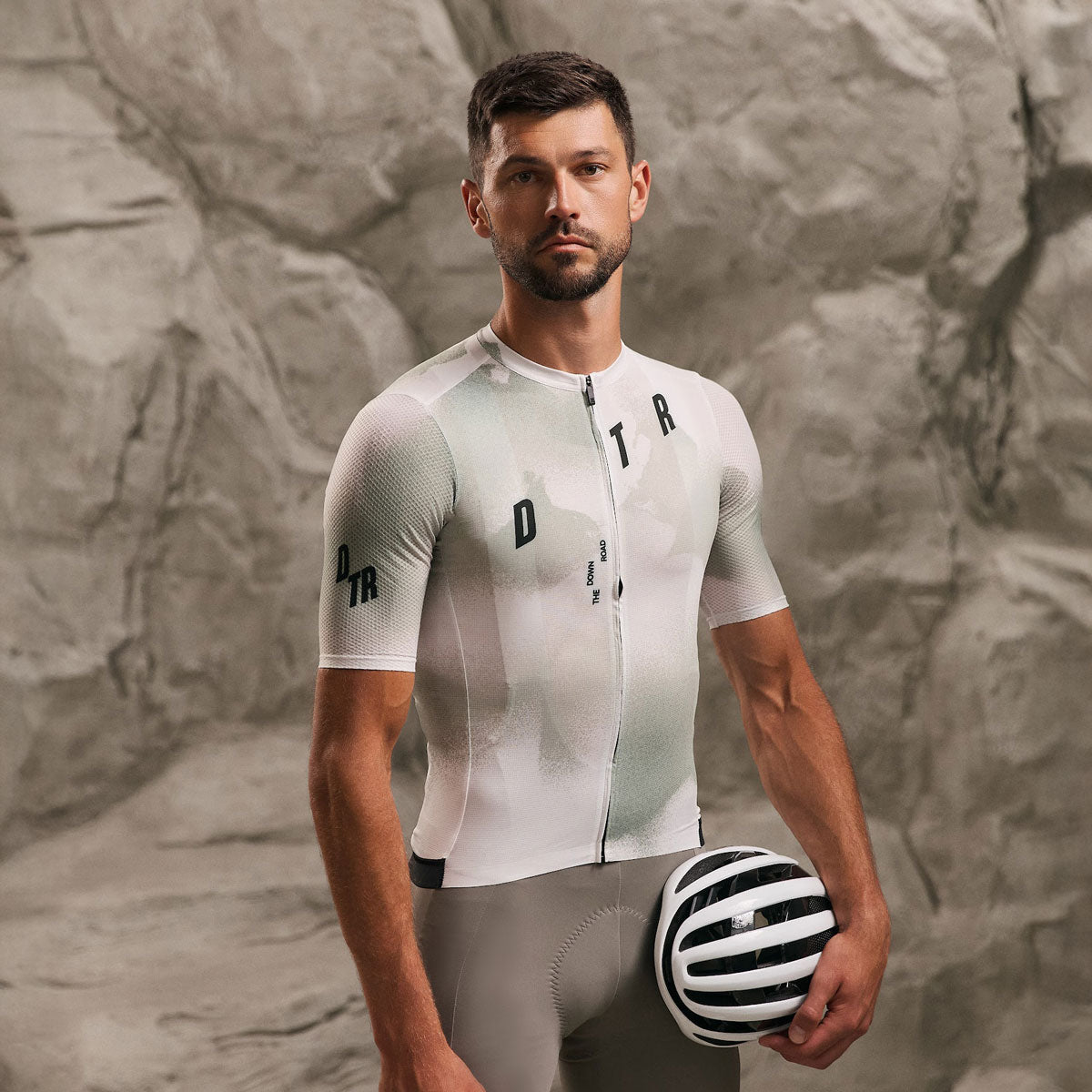
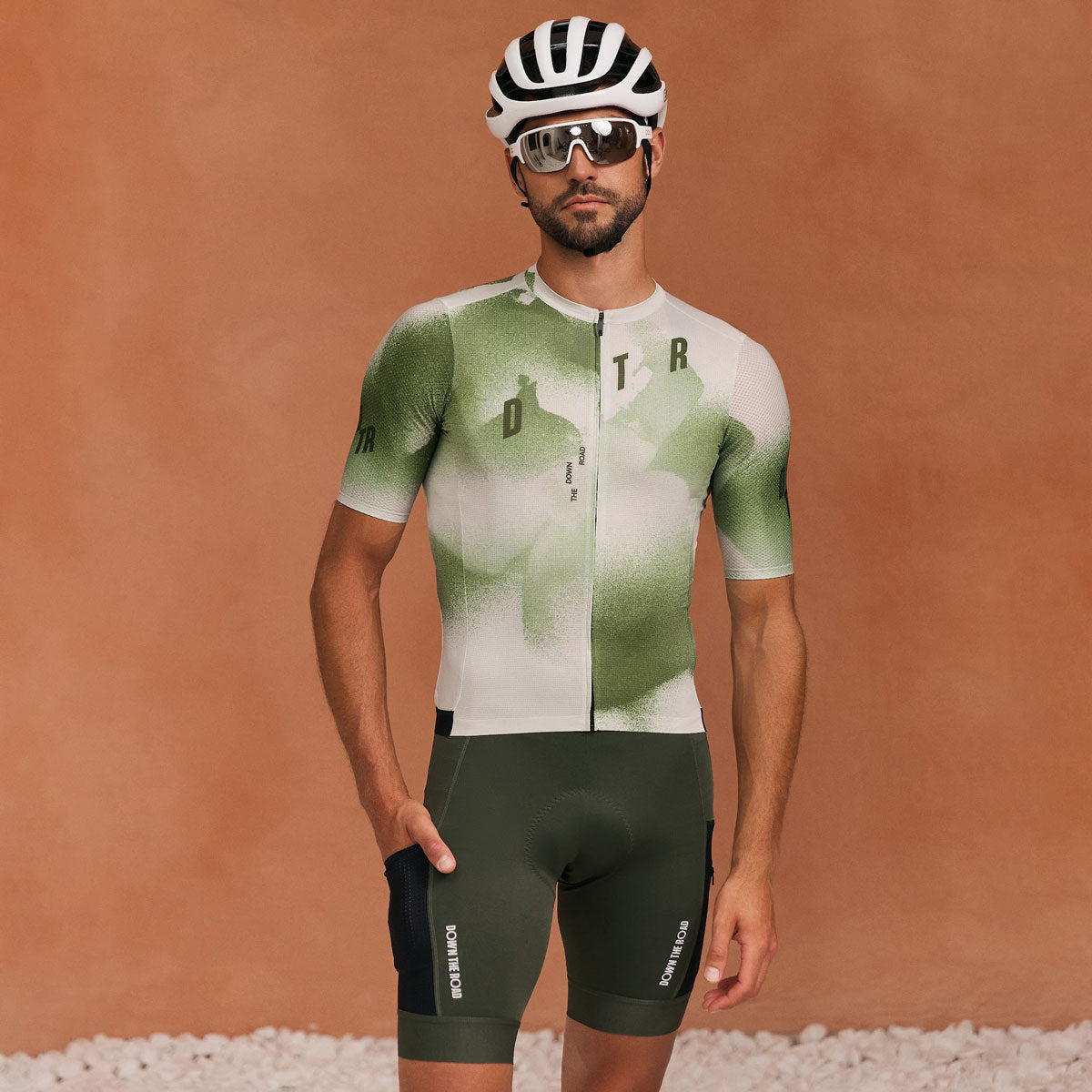
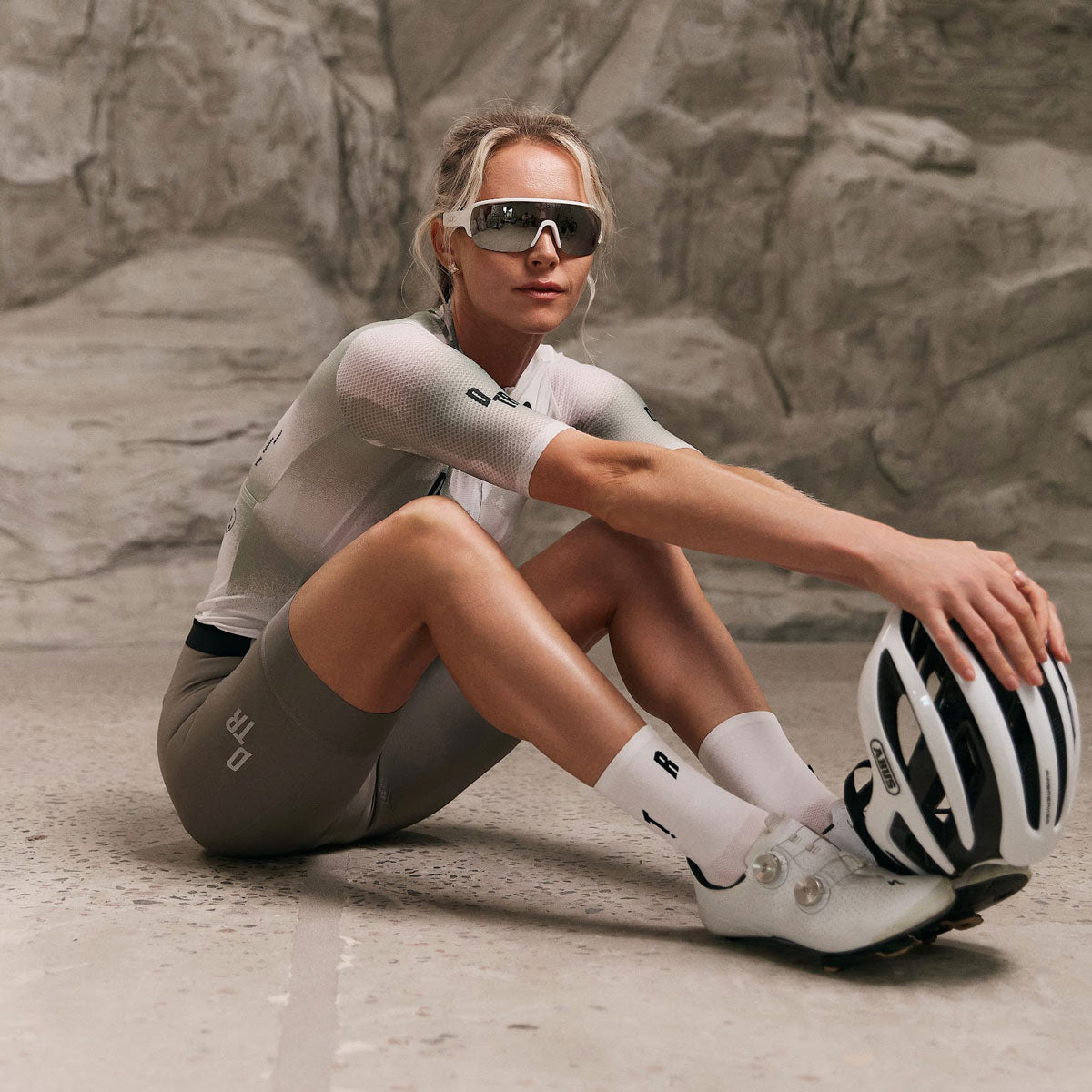
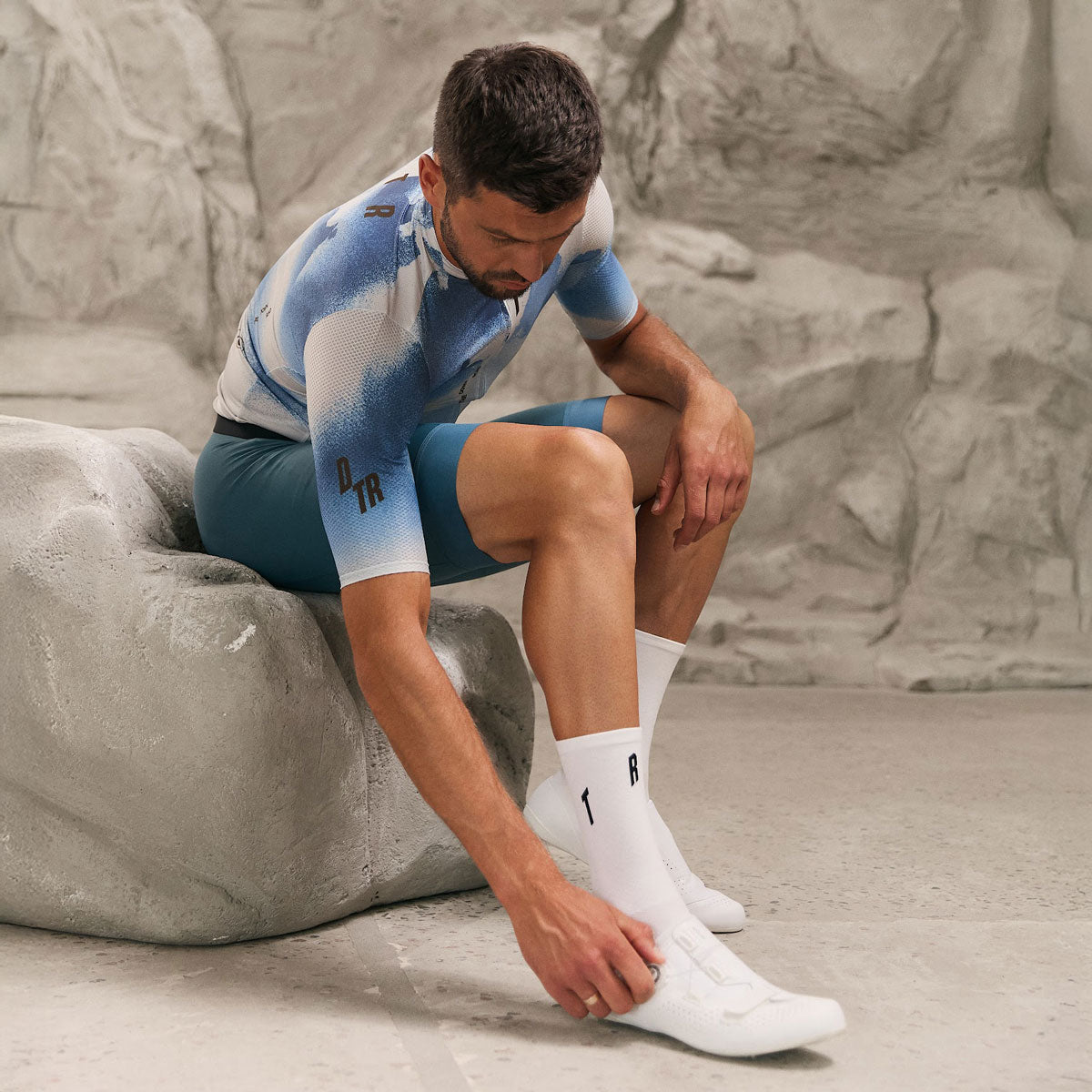
Straight answer, because this is the part most brands leave vague. DTR's road bib shorts — the Prime and the Elite — run a multi-density chamois developed against our own patterns, shaped for three to five hours in the saddle, with women's versions drawn separately rather than resized. Our winter bib tights use an anatomical multi-density chamois calibrated for long cold-weather rides.
Elastic Interface appears in one place in our range: the DTR Racing team aero trisuit, which uses an Elastic Interface long-distance tri pad chosen specifically because it stays comfortable in the aero position without interfering with the run.
That split is deliberate. We use the component that suits the garment rather than putting one name across everything.
FAQ
Is Elastic Interface the best chamois?
It is a respected manufacturer with a wide catalogue, not a single product or a quality tier. Whether a given pad is right depends on which model it is and how well it matches your ride duration and position.
Do DTR bib shorts use an Elastic Interface chamois?
No. Our road bib shorts use a multi-density chamois developed against our own patterns. Elastic Interface is used on the DTR Racing team aero trisuit.
Is a thicker chamois more comfortable?
Not usually. Support comes from density placement rather than thickness. A thick, uniform pad adds bulk between your legs without improving how the load is carried.
Does the chamois need to be gender-specific?
For long rides, yes. Sit bone spacing and pressure distribution differ enough that a pad shaped for one is a compromise for the other.
How long should a chamois last?
The pad usually outlives the fabric around it. When the short stops holding position, or the chamois flattens and stops recovering between rides, its useful life is over regardless of who made it.
See the multi-density chamois in the DTR bib shorts range.
DTR — performance cycling and triathlon apparel, designed and developed in Ukraine.

Leave a comment
This site is protected by hCaptcha and the hCaptcha Privacy Policy and Terms of Service apply.