

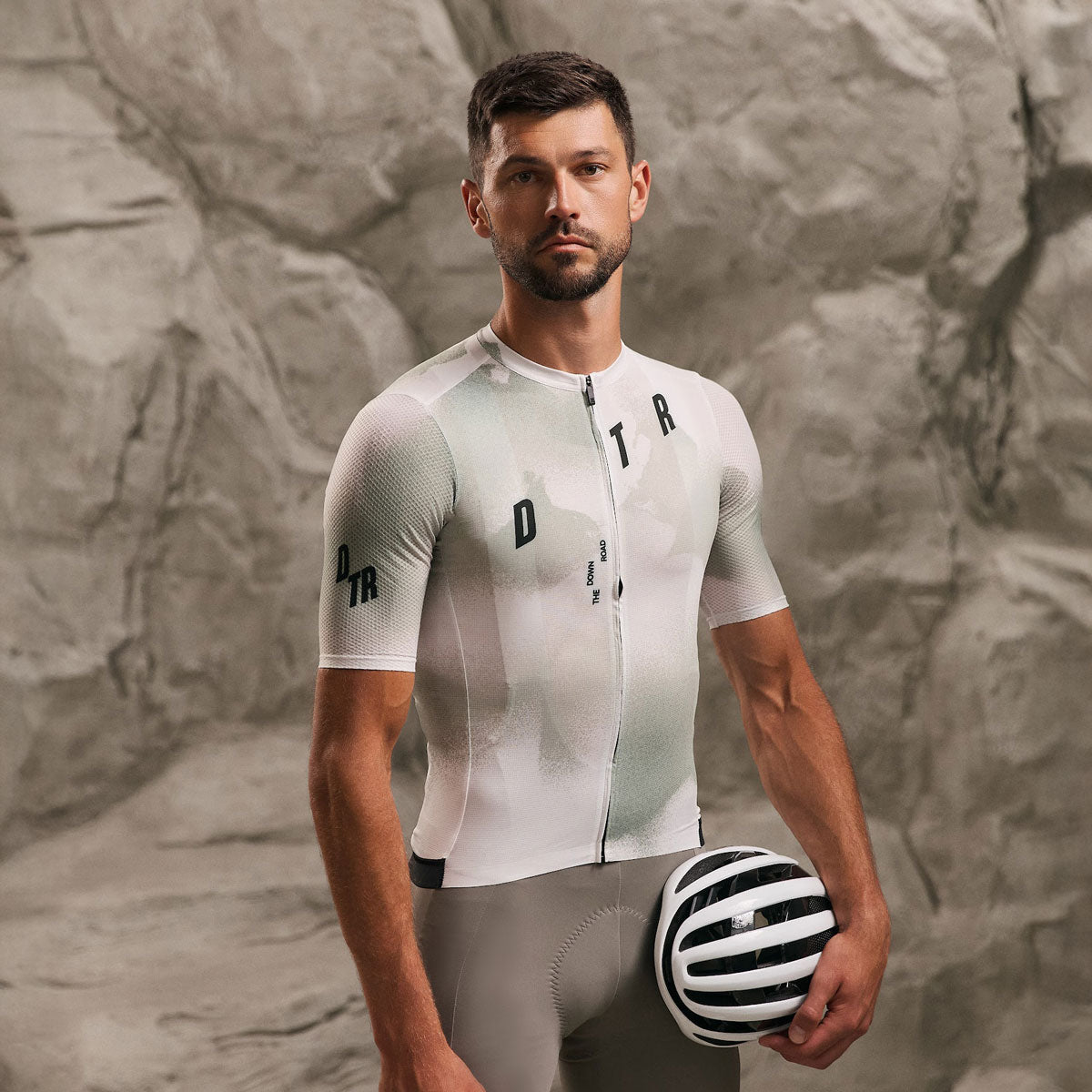
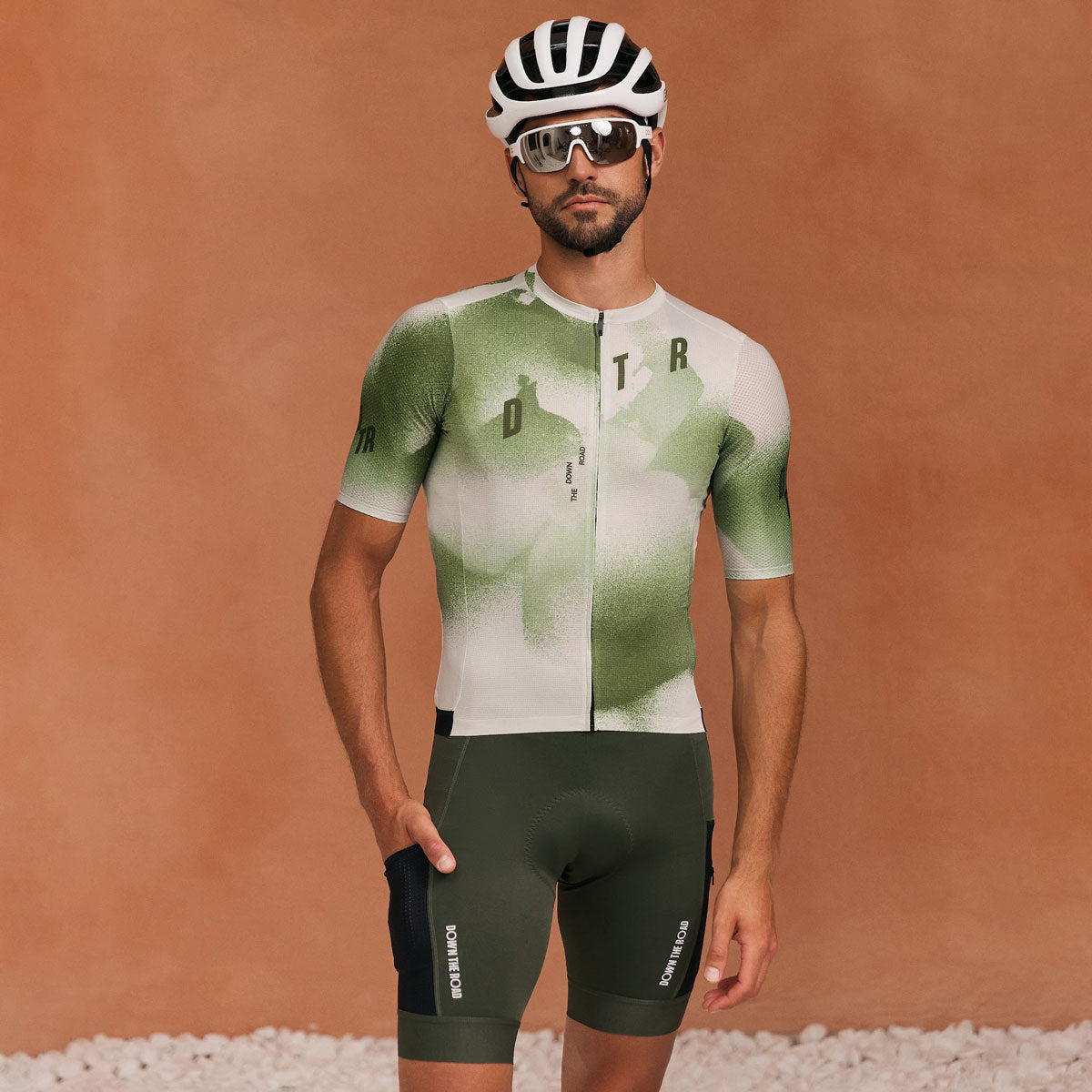
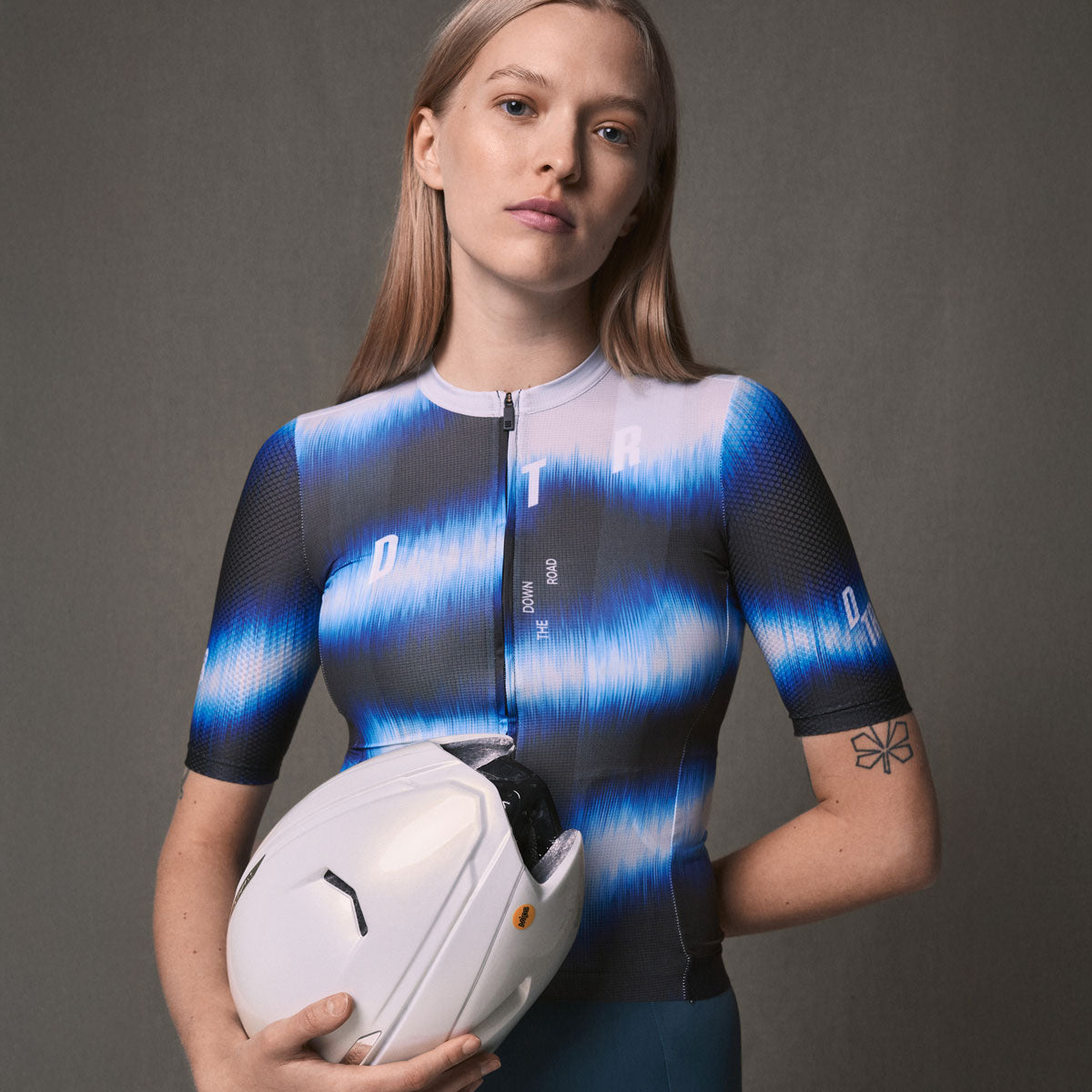
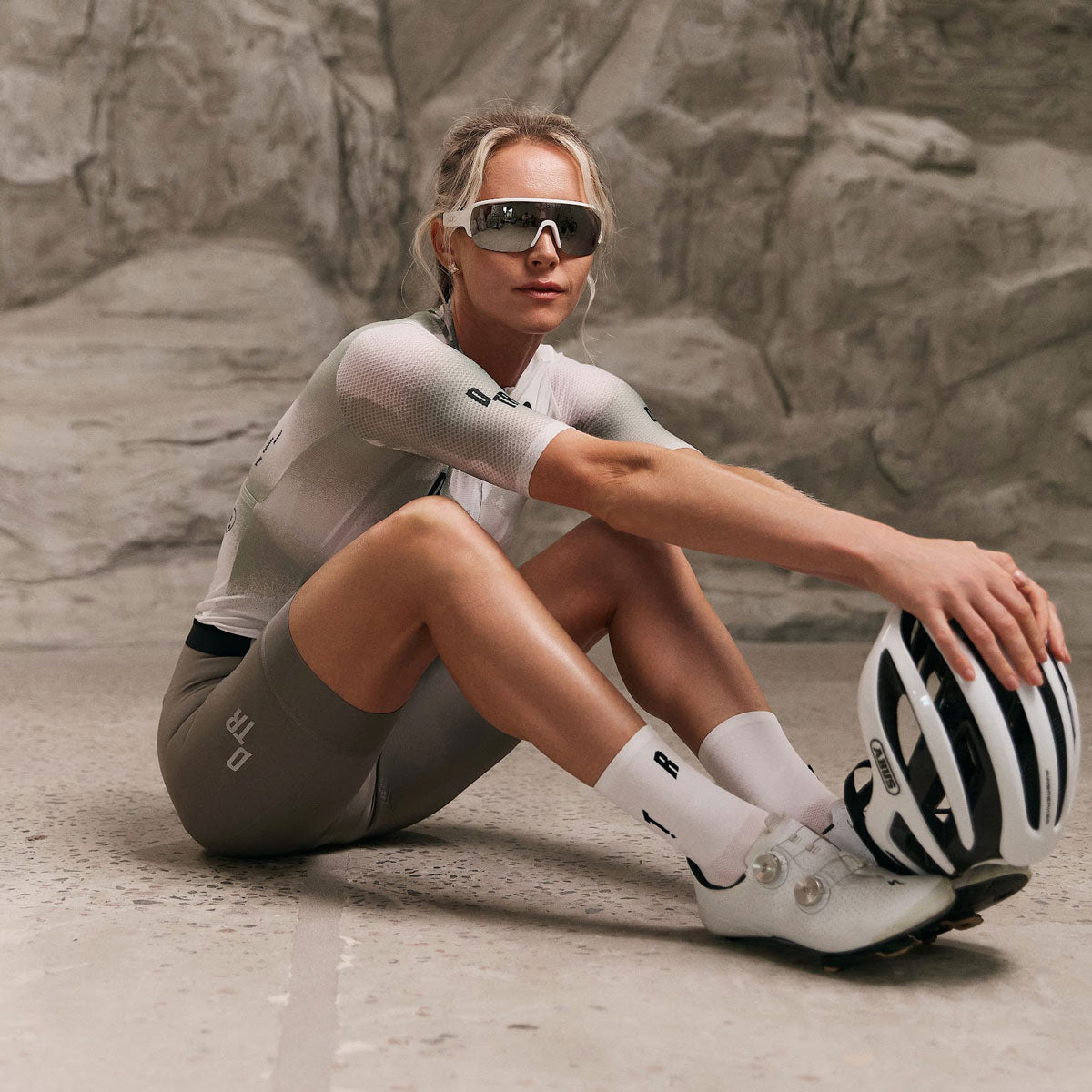
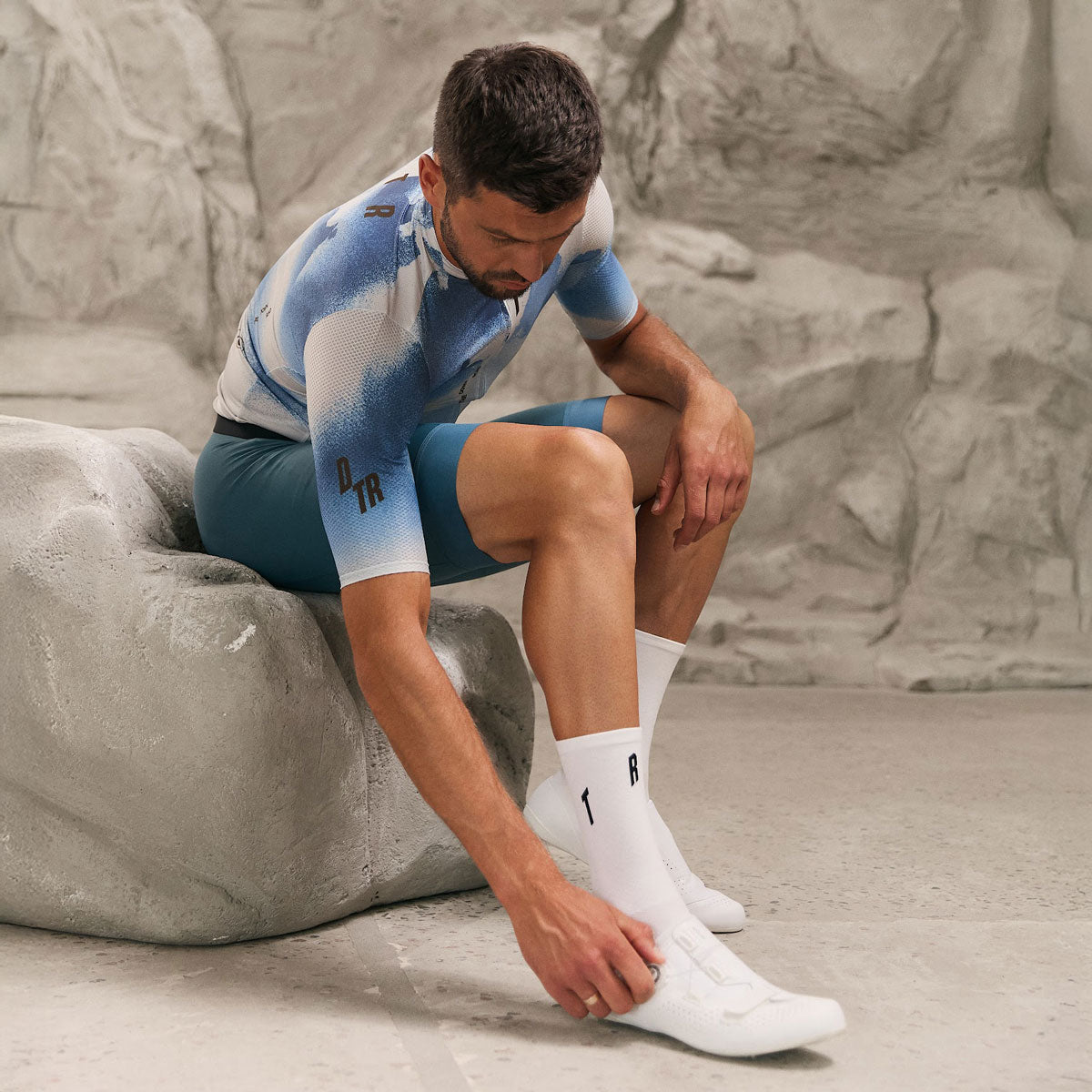
For long-distance triathlon, the trisuit that wins is the one that stays comfortable in the aero position for five to seven hours and still lets you run off the bike. That means a tri-specific chamois, a fit that does not wrinkle when you are stretched out, and enough storage to carry your own nutrition. This guide compares the DTR trisuit range against those three demands so you can pick by use case rather than by colourway. If you're still working out what a tri suit actually is before comparing models, start there.
One thing up front, so you know what you are reading: this is a comparison of our own range, not a roundup of the whole market. We compare DTR trisuits to each other by race distance and riding position. If you want independent head-to-head reviews, those are worth reading elsewhere — what we can tell you accurately is which of our suits suits which race.
What long distance actually asks of a suit
Over 70.3 and full distance the demands change from short-course racing. You are in one position far longer, you take on far more nutrition, and the run happens on legs that have already been loaded for hours. Three things decide whether a suit works: pad comfort over time, fit in the aero position, and carrying capacity.
Everything else — fabric weight, zip placement, sun protection — matters, but it matters second. A suit that nails the aero fit and the pad will out-race a lighter suit that bunches at the lower back.
The DTR range at a glance
| Suit | Sleeves | Zip | Best for |
|---|---|---|---|
| Breakaway | Sleeveless | Front | First 70.3 and full distance, hot and humid races |
| Lead Out | Sleeveless | Back zip or front, by model | Riders who want a cleaner shoulder line under a wetsuit |
| Palmares | Sleeveless | Front | All-round racing across distances |
| Lines (women's) | Sleeveless | Front | Women racing long, with a gender-specific pad |
| DTR Racing Team Aero | Aero race cut | — | Long-distance aero racing, Elastic Interface® tri pad |
All of the range shares the same core: a tri chamois designed to ride and run, silicone leg grippers, breathable mesh panels, UPF 50+ sun protection, two rear pockets and reflective detailing.
Breakaway — the straightforward long-course choice
The Breakaway is the suit to pick if this is your first long-distance race or if your race is hot. The front zip opens on the run for heat dumping, the sleeveless cut is easy to pull a wetsuit over, and the fit is forgiving enough to stay comfortable when you are not yet used to hours in aero.
The women's Breakaway uses a gender-specific pad — engineered separately, not a scaled-down version of the men's. That matters more over five hours than over ninety minutes.
Choose it if you want one suit that will handle a first 70.3, a hot full distance, and your training races without argument.
Lead Out — for a cleaner line under neoprene
The Lead Out is worth choosing if you swim in a wetsuit in most of your races. The sleeveless back-zip version in particular gives a smooth shoulder and chest line with nothing to catch under neoprene, and it comes off quickly in T1.
A back zip is slightly harder to manage alone and does not open on the run for cooling, which is the trade. In cooler or moderate races that costs you nothing. In a genuinely hot race, a front zip you can open at every aid station is the more useful feature.
Palmares — the all-rounder
The Palmares sits in the middle of the range: front zip for adjustment on the move, sleeveless cut, the same tri chamois and two rear pockets. It is the suit for someone racing a mixed calendar — an Olympic in spring, a 70.3 mid-season, maybe a full distance later.
If you are not optimising hard for one race and want something that is competent across the board, this is the pick.
Lines — the women's long-course option
The Lines is a women's suit built on the same platform, with the front zip and the pocket layout that long racing needs. As with the women's Breakaway, the pad is designed specifically for women rather than adapted from a men's pattern.
For women racing 70.3 and beyond, the decision between Lines and Breakaway comes down to fit preference and colourway rather than capability — both are built for the distance.
DTR Racing Team Aero Trisuit — the long-distance race suit
This is the fastest suit in the range and the only one with a confirmed Elastic Interface® long-distance tri pad. It is built as a long-distance aero suit: aero race fit through the shoulders, arms and back, lightweight fast-drying fabric that stays cool in heat, minimal seams in the high-friction areas, and UV protection for long days in the sun.
The important caveat is availability. It is the official 2026 DTR Racing team suit, sold as a pre-order and available only to confirmed team members. If you are not racing for the team, your long-distance choice is between the suits above.
Sleeved or sleeveless for a long race?
Sleeves are faster on the bike and give real sun cover across a long day; sleeveless is cooler in humid heat and easier to get a wetsuit over. Over five to seven hours, the sun-protection argument is stronger than most people expect — but only in dry, exposed races.
In humid heat, evaporation is what cools you, and a sleeveless cut lets you move more air. Pick for your race's actual conditions rather than for the aero number.
Front zip or back zip?
A front zip lets you vent on the run and manage heat at aid stations; a back zip gives a cleaner line under a wetsuit and a smoother chest. For long distance in warm conditions, the front zip is the more useful of the two.
If you race mostly in cool conditions and swim in neoprene every time, the back zip is a reasonable preference. Just be aware you lose the cooling lever on the run.
What about the pad?
Every trisuit in the range uses a tri-specific chamois, which is deliberately thinner than a road chamois so it does not interfere with the run. Thicker is not better here — a thick pad holds water from the swim, adds bulk between your legs on the run, and does not solve a fit problem.
If you are coming from bib shorts, the tri pad will feel thin on your first long ride. That is expected and correct. We go into how pad construction actually works in the chamois density guide.
Getting the fit right
A long-distance trisuit should be tight enough that there are no wrinkles anywhere when you are in the aero position, without restricting your shoulders in the swim or your stride on the run. Check it on the bike, in position, not standing in front of a mirror.
The failure mode over long distance is fabric that bunches at the lower back once you are stretched out, which turns into a hot spot by hour four. Our sizing guide covers how to measure, and the DTR Racing Team suit runs to a long-distance aero fit — if you are between sizes or prefer a slightly more relaxed feel there, size up.
FAQ
Which DTR trisuit is best for a first 70.3?
The Breakaway. The front zip helps with heat on the run, the sleeveless cut is easy under a wetsuit, and the fit is comfortable for someone still building aero-position tolerance.
Is a thicker pad better for full distance?
No. Tri pads are thinner on purpose so they work for both the bike and the run. A thicker pad holds swim water and adds bulk when you are running.
Can I buy the DTR Racing Team Aero Trisuit?
It is available to confirmed DTR Racing 2026 team members as a pre-order. Everyone else should look at the Breakaway, Lead Out, Palmares or Lines.
Do the women's suits use a different pad?
Yes. The women's Breakaway and Lines use a gender-specific pad designed for women rather than a resized men's version.
How much can I carry in a trisuit?
Two rear pockets, which is enough for gels, salt and a phone. Anything bulkier belongs on the bike or in special needs.
See the full trisuit range at /collections/trisuits.
DTR — performance cycling and triathlon apparel, designed and developed in Ukraine.

Leave a comment
This site is protected by hCaptcha and the hCaptcha Privacy Policy and Terms of Service apply.