

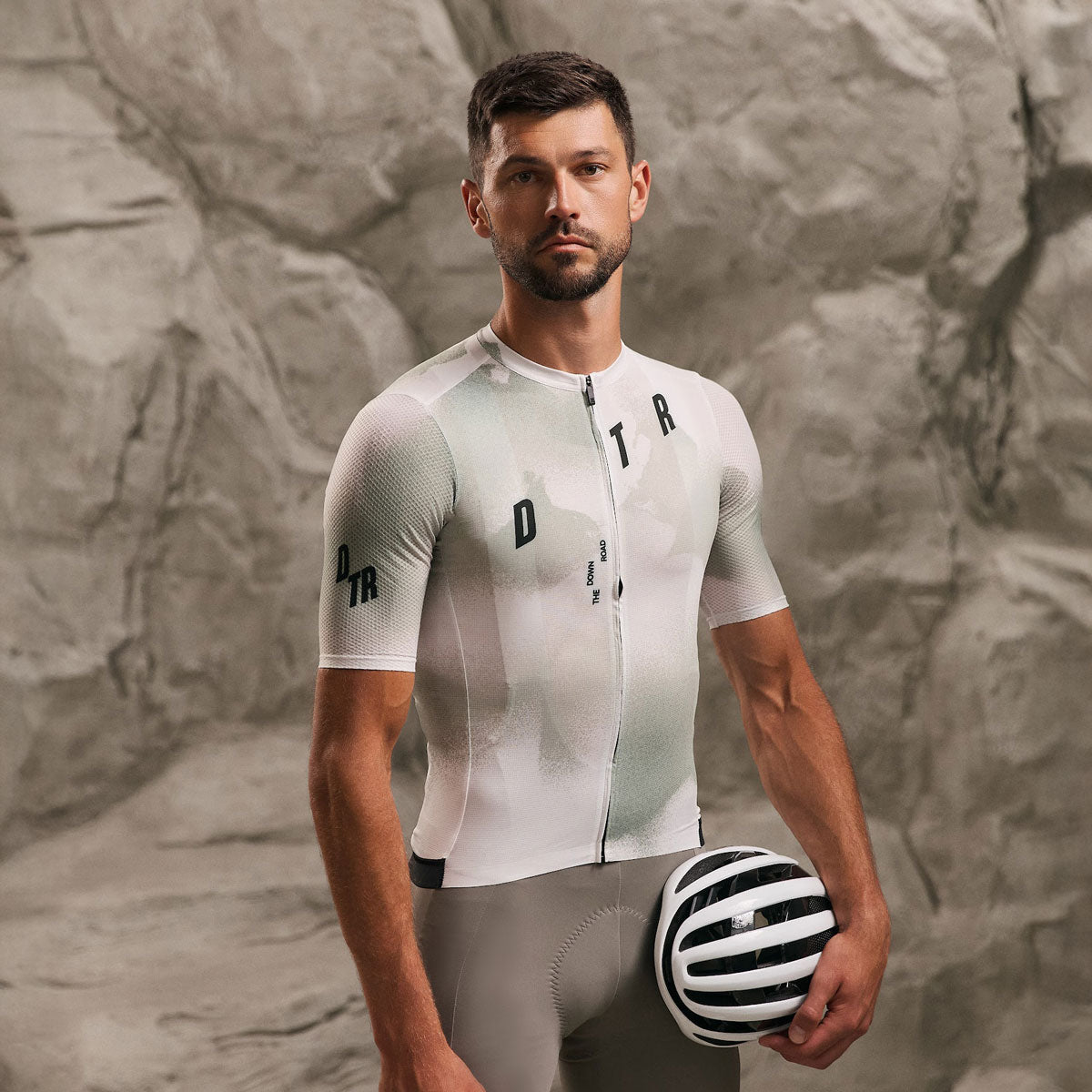
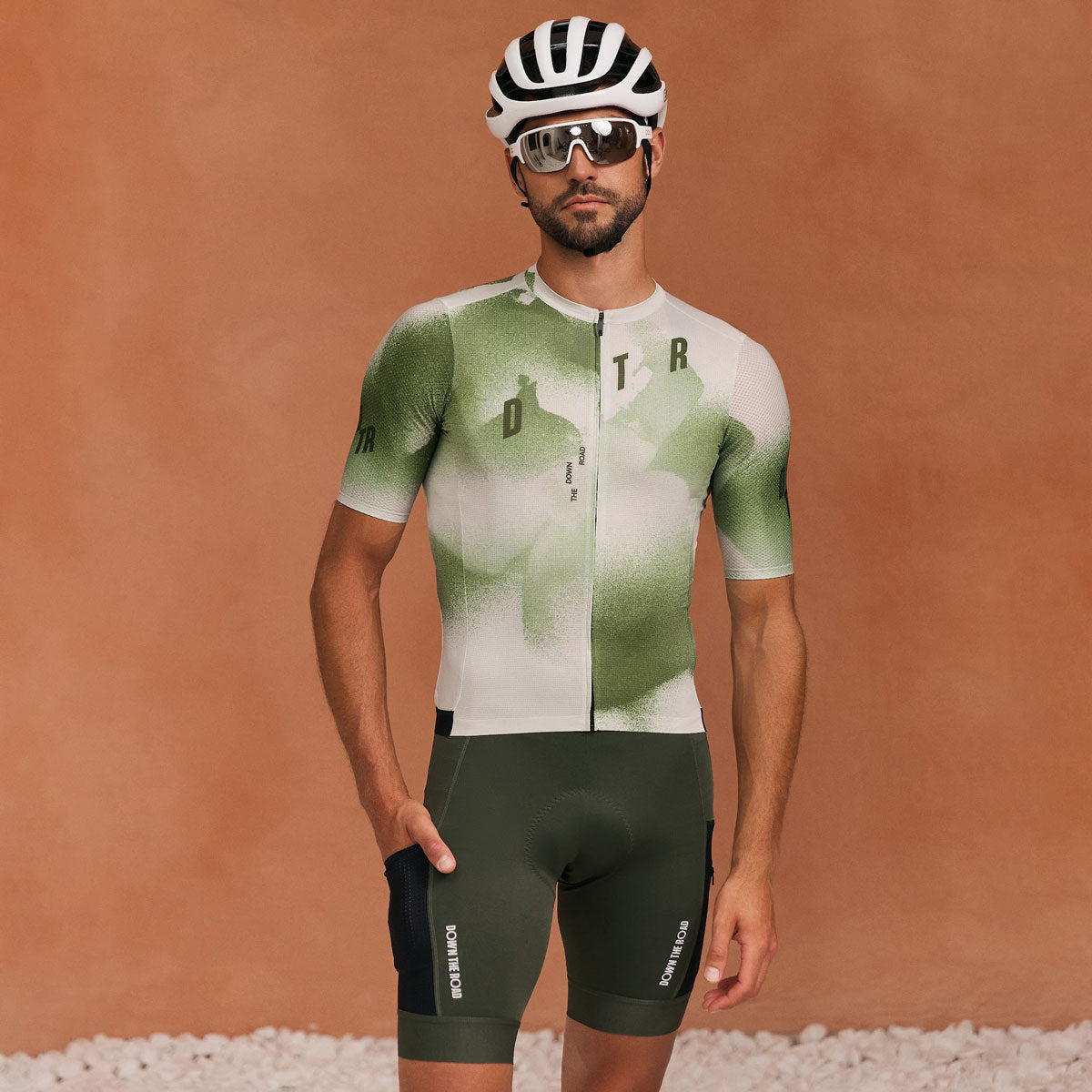
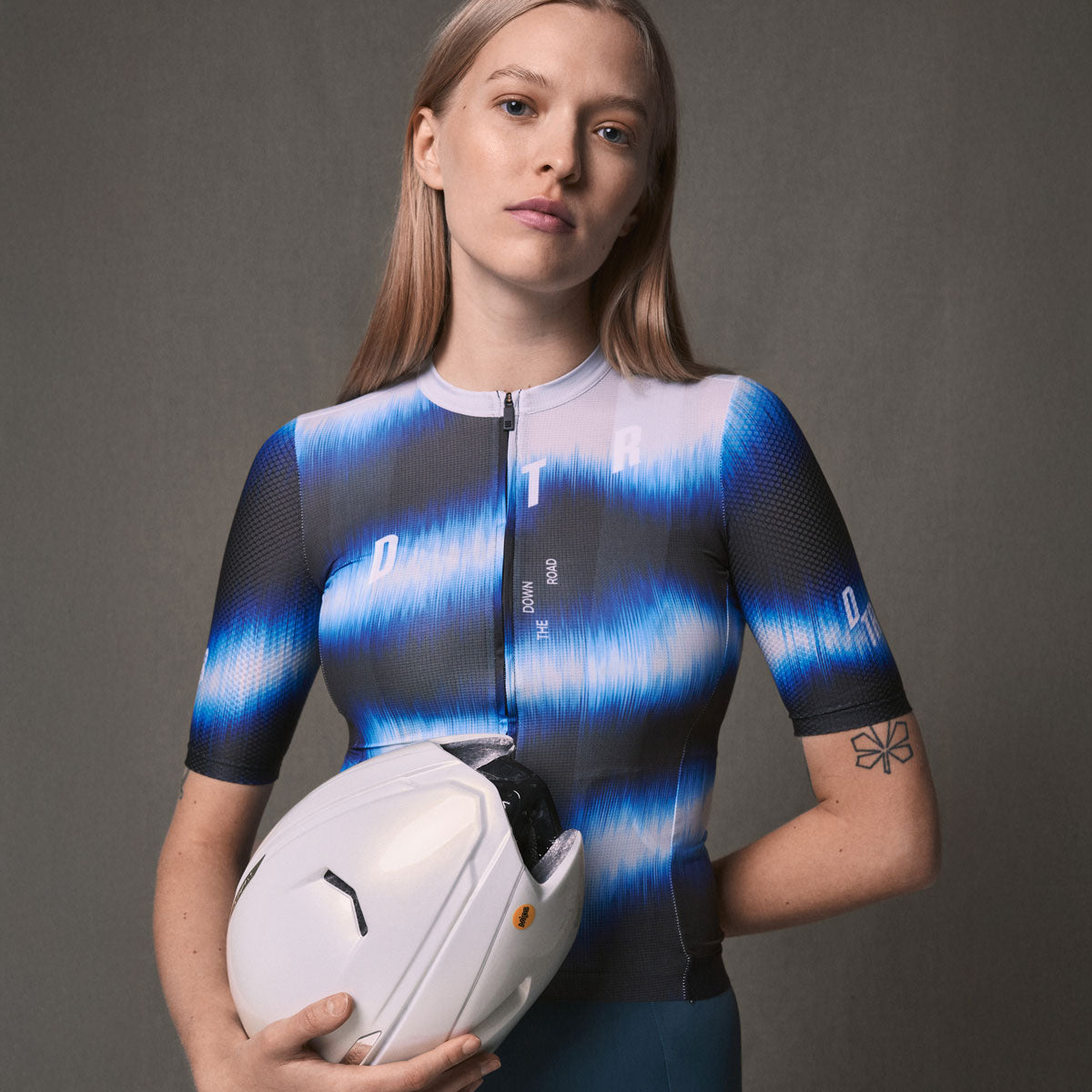
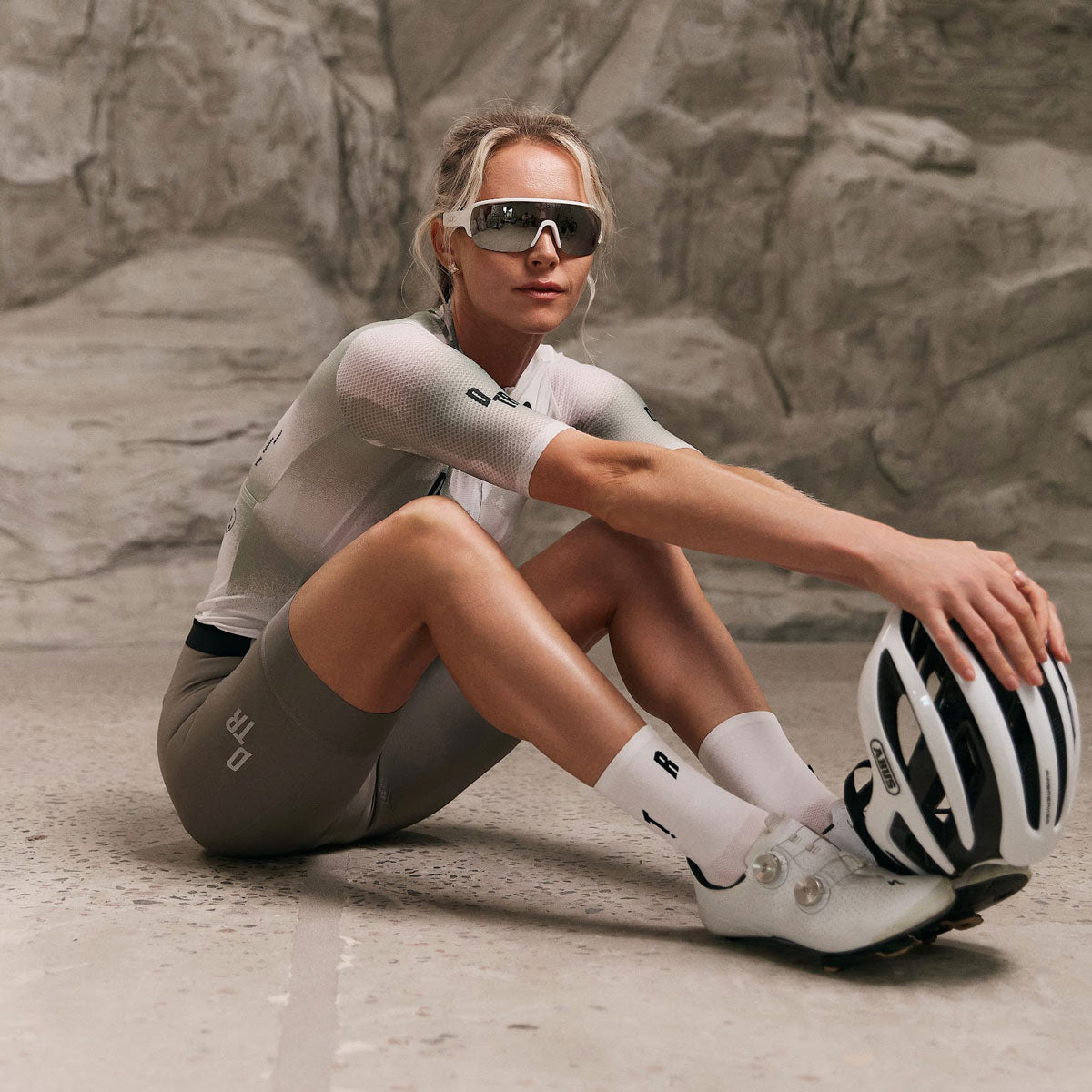
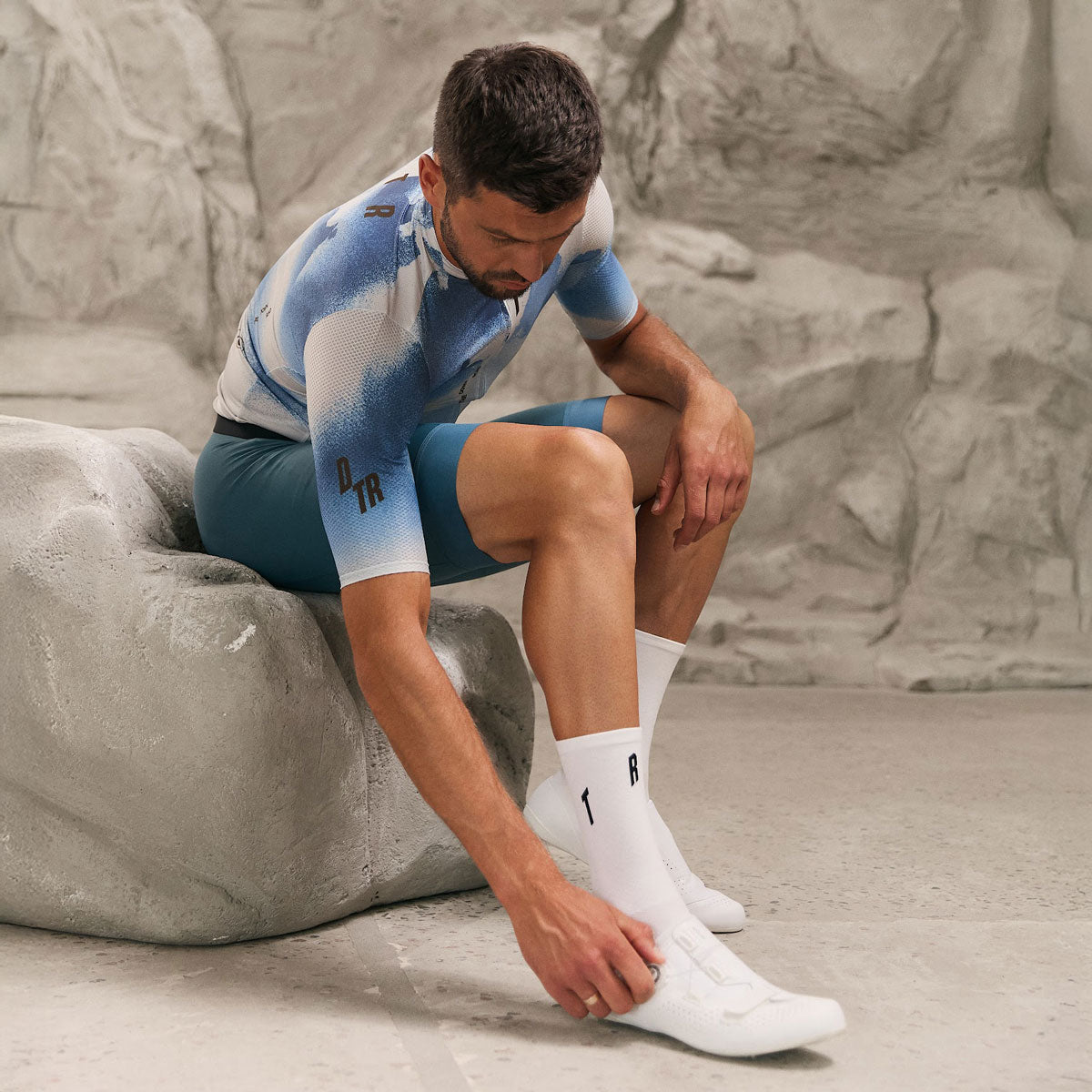
Size cycling kit from your chest, waist and inseam measurements — not from the size you wear off the bike. Performance kit is cut close on purpose, so a size that feels tight standing in front of a mirror is often correct once you are in the riding position. This guide covers how to measure, what each garment should feel like, and what to do when you fall between sizes.
Why your street size is the wrong starting point
Casual clothing is cut with ease built in — extra fabric so it hangs well on a standing body. Performance kit is cut to sit against the skin in a forward, hinged riding position, which means less fabric, closer seams and a shape that only makes sense on the bike.
So a rider who wears a medium in everyday shirts may be a medium, large or small in a jersey depending on chest circumference and torso length. The label is not the guide. The tape measure is.
The four measurements that decide everything
Take four numbers, in light clothing, with the tape snug but not pulled tight: chest at the fullest point, natural waist, hips at the widest point, and inside leg from crotch to ankle. Write them down. Every DTR size decision comes from these.
Measure yourself rather than working from memory, and re-measure once a season. Winter training and a solid block of racing both move these numbers, and a chest measurement from two years ago is a guess.
Once you have them, check the jersey size guide and the bib shorts size guide — the two garments size on different measurements and do not always land on the same letter.
What a correctly sized jersey feels like
A jersey should be smooth across the chest and back with no loose fabric flapping at the sides, and the hem should stay put when you reach for the bars. Sleeves sit mid-bicep without gripping. Off the bike it will feel short in the body — that is the drop tail doing its job.
The practical test is the riding position, not the mirror. Get on the bike and check three things: does the fabric pull across the shoulders when you reach forward, does the hem ride up at the back, and do loaded rear pockets drag the whole garment down. A jersey that sags under three gels and a phone is a size too big.
What correctly sized bib shorts feel like
Bib shorts should feel firm everywhere and tight nowhere. The leg grippers hold without leaving deep marks, the straps carry the short without pulling on your shoulders, and the chamois sits flat against you with no gaps or folds anywhere along its length.
The chamois is the reason sizing matters more here than in any other garment. A short that is too large lets the chamois shift under you, which is what causes friction over a long ride. Too small and the fabric compresses the chamois until it stops doing its job. Neither shows up in a five-minute try-on — both show up at hour three.
Strap length is the separate variable. Riders with long torsos can measure correctly for the waist and hips and still find the straps pulling at the shoulders. If that is you, size on the torso and accept a slightly roomier leg.
Base layers, trisuits and warmers
A base layer should be the closest thing you own — skin-tight, no air gap, no bunching under a jersey. Air trapped between a loose base layer and your skin is exactly what stops it wicking. Size down before you size up.
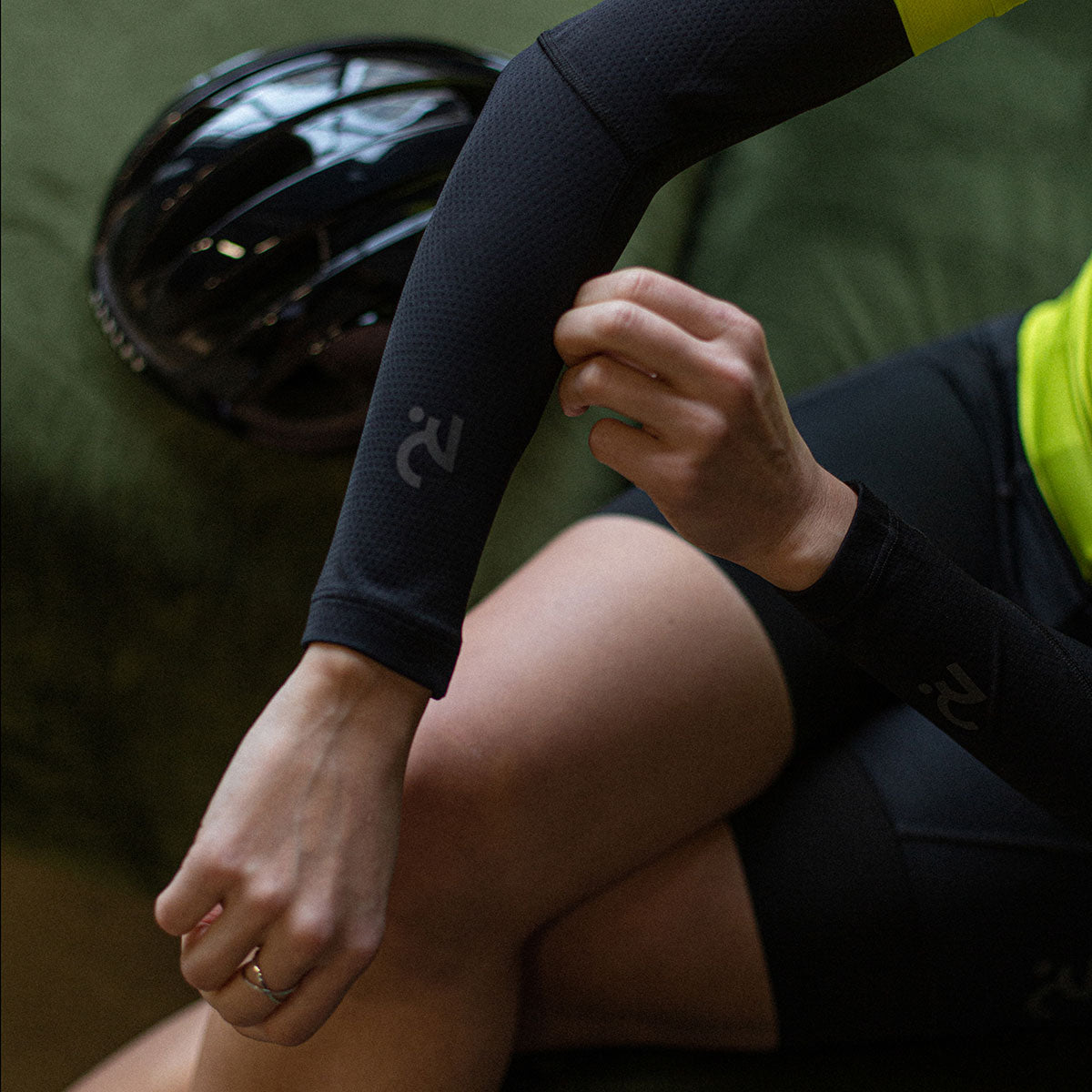
A trisuit is sized on torso length as much as chest, because a suit that is short in the body will pull at the shoulders in the swim and drag at the crotch on the bike. Warmers size on circumference — bicep for arms, thigh and calf for legs — not on your general build.
What to do when you are between sizes
Go by the garment's job. For a jersey, size down if you want race fit and up if you want a layer to go under it. For bib shorts, size down — a short that is slightly firm settles in, a short that is slightly loose never does. For a base layer, always down.
If two measurements point at different sizes, let the larger one decide for tops and the chamois position decide for shorts. A jersey that fits the chest and is generous at the waist is wearable. One that fits the waist and binds across the chest is not.
Does cycling kit run small?
Not exactly — it runs close. Race-cut kit is designed with almost no ease, so a rider comparing it to a casual t-shirt will read it as a size small. That is the cut, not the sizing, and it is the reason measurements beat labels.
Women's sizing is engineered, not scaled down
Women's kit at DTR is cut on its own patterns: different chamois shape and placement, different strap geometry on the bib, different torso and shoulder proportions. It is not a men's garment made smaller, and it does not size like one.
That matters for anyone size-hunting across a range. Measure against the women's chart directly rather than translating from a men's size, because the two are built from different starting points.
FAQ
Should I size up or down in cycling kit? Down for bib shorts and base layers. For jerseys it depends: down for race fit, up if you plan to layer underneath.
How tight should bib shorts be? Firm and even, with the chamois flat against you and no gaps. Grippers hold without leaving deep marks.
Can I use my normal clothing size? No. Performance kit is cut with far less ease. Measure your chest, waist, hips and inside leg and work from those.
What if the jersey and the bib shorts give me different sizes? That is normal — they size on different measurements. Follow each garment's own chart.
Do I need to re-measure? Once a season. Training blocks change chest and waist numbers more than most riders expect.
How do I size a base layer? As close to the skin as possible. Any air gap stops it wicking, so size down rather than up.
Start with the piece where fit matters most: the DTR bib shorts range.
DTR — performance cycling and triathlon apparel, designed and developed in Ukraine.

Leave a comment
This site is protected by hCaptcha and the hCaptcha Privacy Policy and Terms of Service apply.