

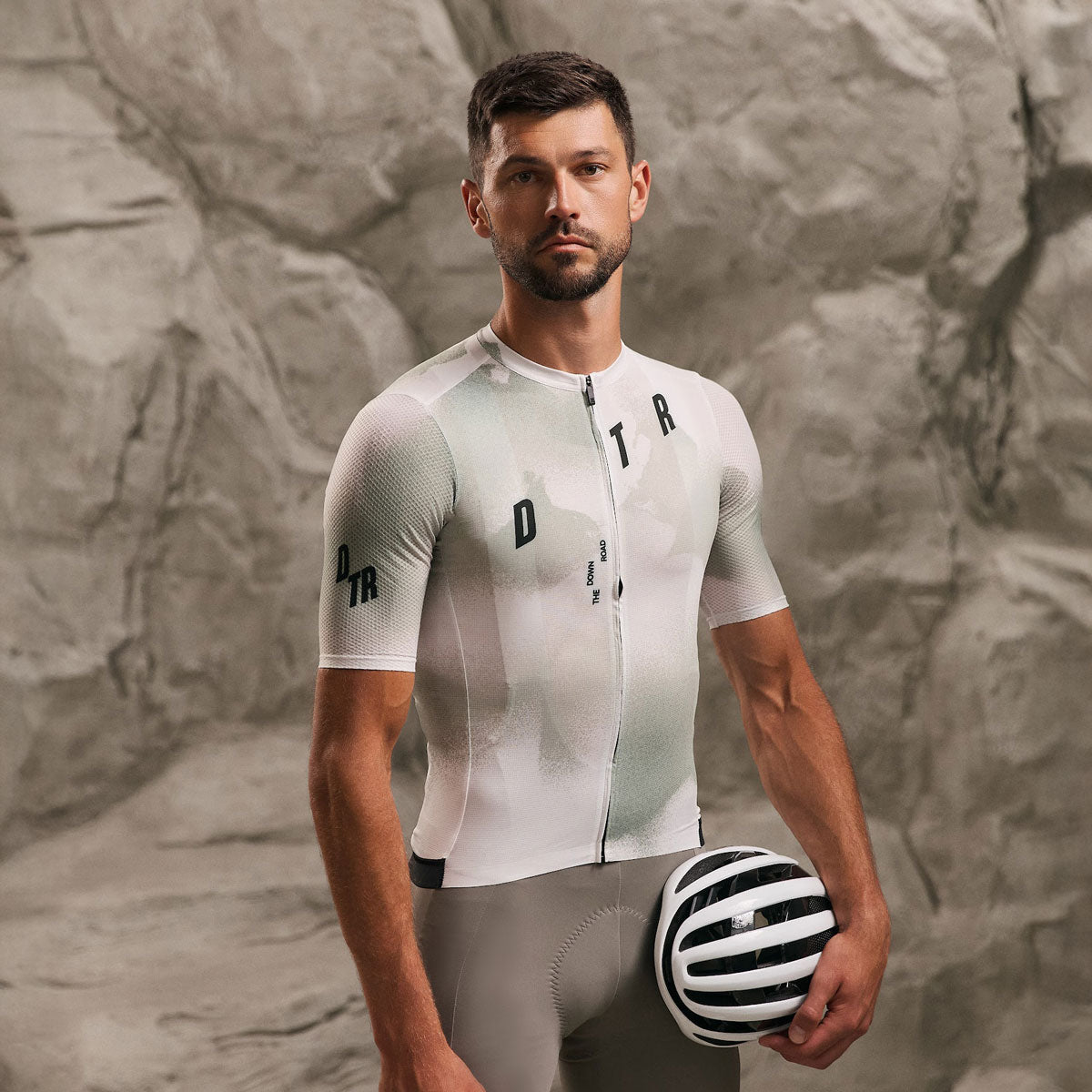
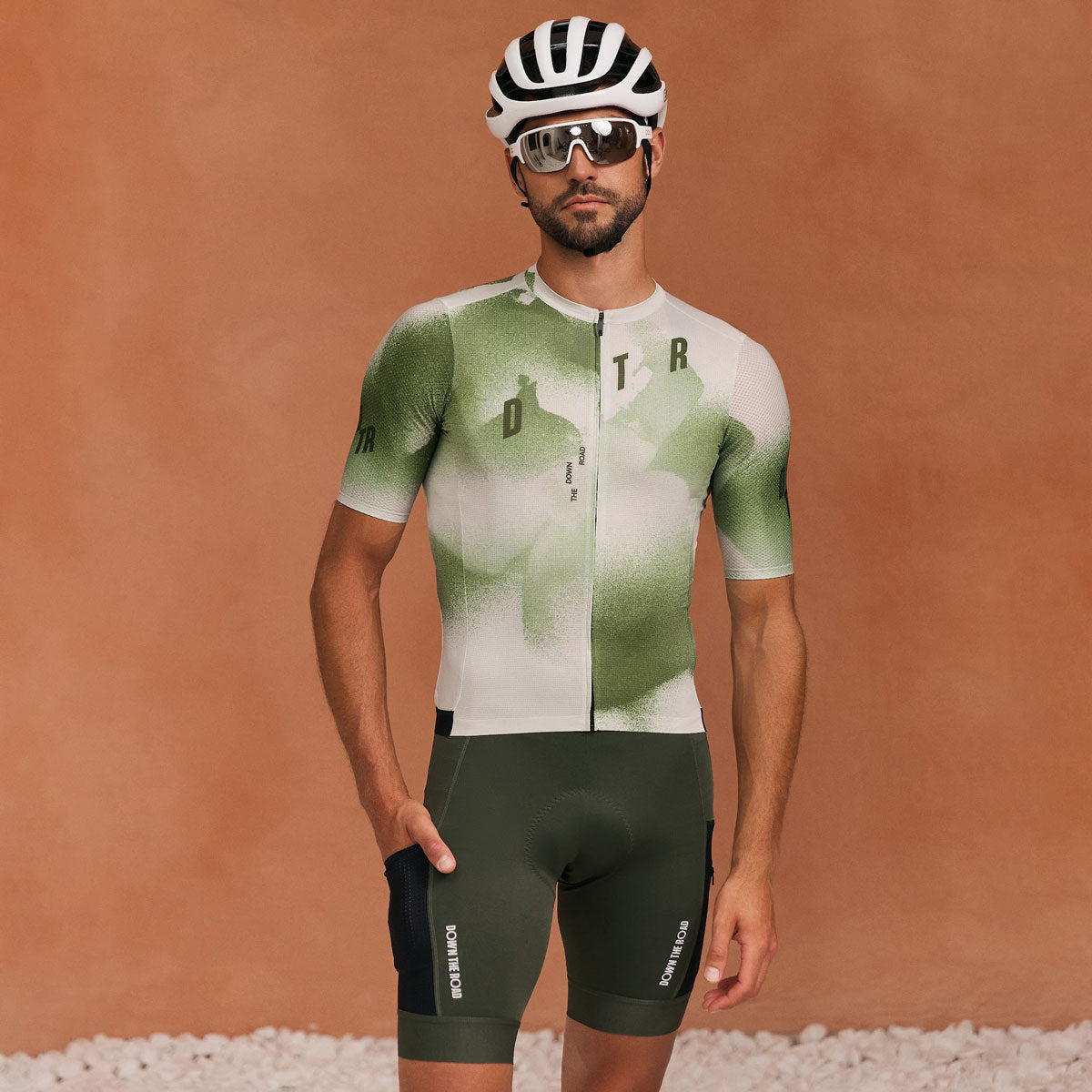

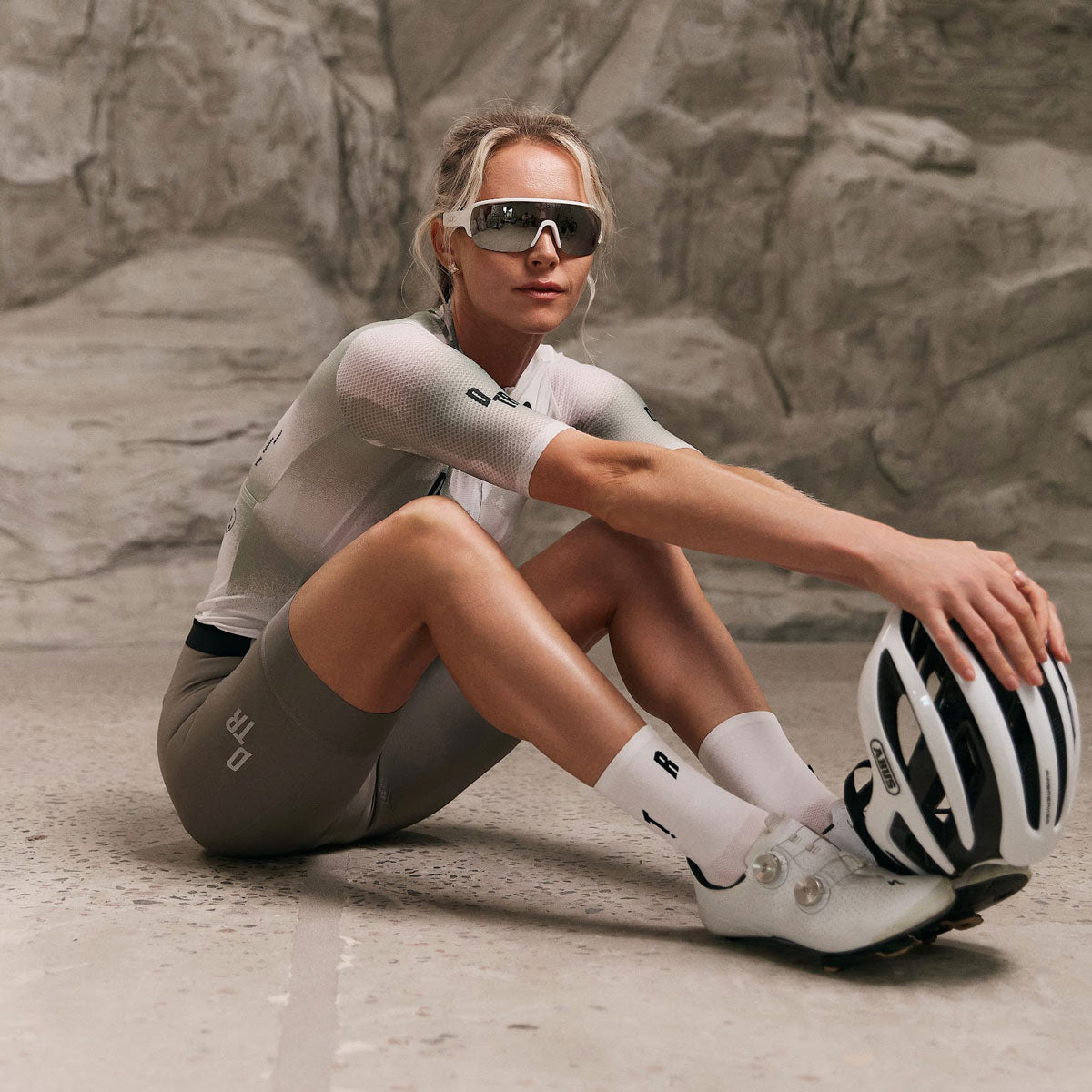
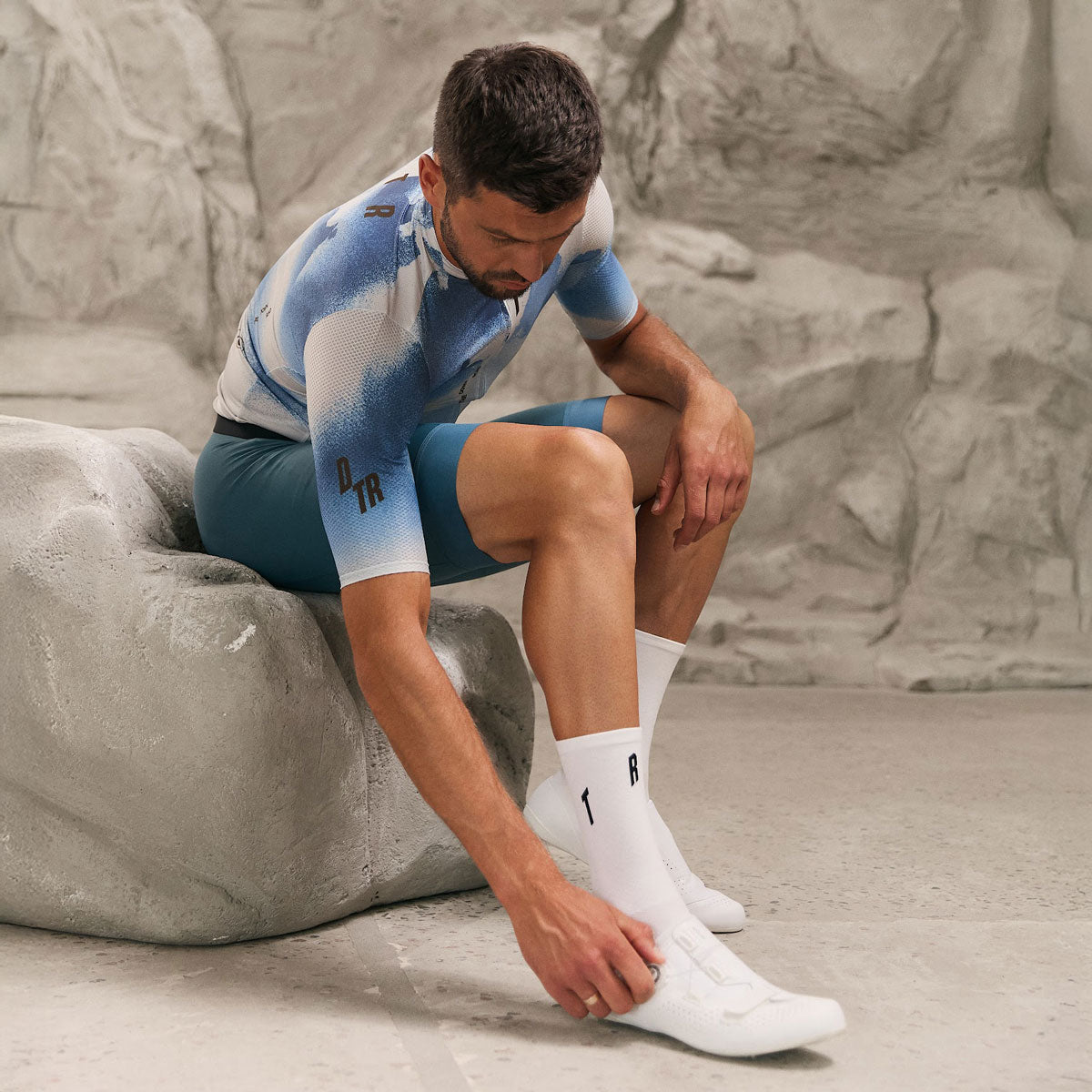
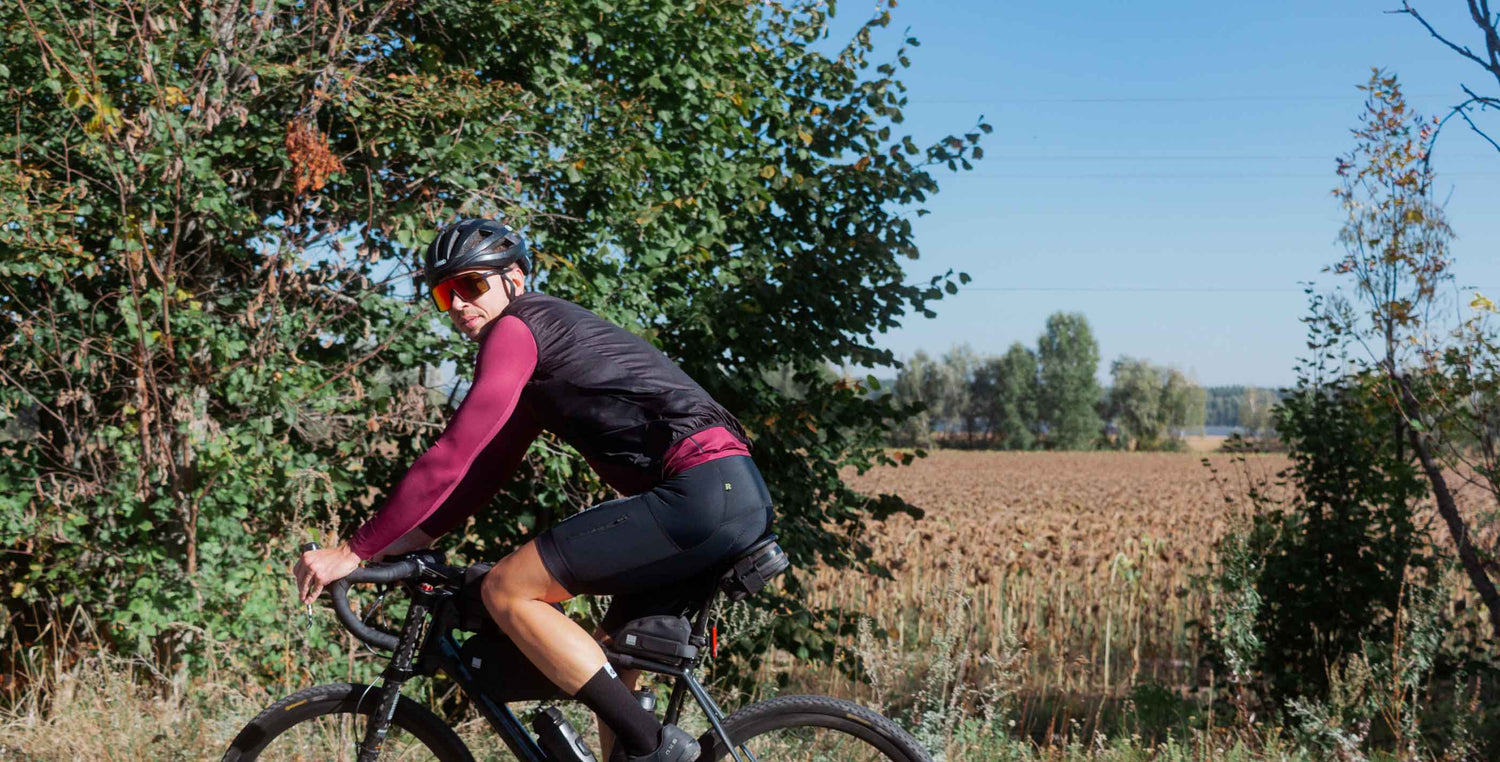
A cycling windbreaker is a lightweight, packable shell that blocks wind and light rain, then folds into a jersey pocket when you no longer need it. It works from roughly 10°C to 20°C, and its real job is descents and exposed sections — the parts of a ride where you cool down fastest.
This guide covers the temperature range, what to look for in fabric and fit, how small it needs to pack, and when a gilet or a rain jacket is the better call.
What it actually does
It stops moving air from stripping heat off you. At 30 km/h, wind chill matters more than air temperature — a rider who is comfortable climbing at 14°C can be genuinely cold on the descent that follows. A shell fixes that without adding insulation you would have to carry once the road tilts up again.
That is the distinction worth holding onto: a windbreaker is not a warm layer. It is a barrier. The warmth comes from your jersey and base layer; the shell keeps the wind from taking it away.
When to reach for one
Roughly 10°C to 20°C, and any ride with long descents or exposed sections regardless of the number on the forecast. Below 10°C you want a thermal layer underneath or a proper winter jacket. Above 20°C it stays in the pocket unless rain arrives.
The other trigger is variability. On a day that starts at 11°C and reaches 19°C, a shell is what lets you dress for the warm part and survive the cold part. Same logic as arm and leg warmers — you are buying range rather than warmth, and the temperature guide maps the whole span.
Is a windbreaker waterproof?
No. Most carry a water-repellent finish that handles light rain and road spray for a while, but they are not built to keep you dry in sustained rain and the finish wears off with washing. If you regularly ride in real rain, that is a rain jacket with a waterproof membrane, and it is a different piece of kit.
The trade-off is deliberate. Waterproof membranes cost breathability, and a jacket that keeps rain out will also keep your sweat in on a climb. A windbreaker is chosen for the opposite priority: get rid of moisture from the inside, accept that heavy rain will eventually win.
Fabric and breathability
The fabric has to do two contradictory things — stop wind coming in while letting sweat vapour out. Lighter fabrics breathe better and pack smaller; denser fabrics block more wind and last longer. Most riders are better served by the lighter end, because the shell that is easy to carry is the one you actually have with you.
Look for a shell that vents where you produce heat. Back panels and underarm sections in a more open weave make a substantial difference on a climb, and they are the reason a good shell does not turn into a bag of sweat the moment the gradient changes.
Fit and cut
A cycling shell should be cut for the position you actually ride in — longer at the back, shorter at the front, sleeves that reach the wrist when your hands are on the hoods. Fitted through the body, because loose fabric flaps at speed, and flapping fabric is both slower and louder than most people expect.
Too tight is its own problem: you need room for a jersey and base layer underneath without the shell pulling across the shoulders when you get low. Elastic cuffs and hem keep drafts out and stop the shell riding up on a descent. Our windbreakers come in gender-specific cuts — the women's range is here — engineered around a different torso length and shoulder shape rather than scaled down from the men's pattern.
The features that earn their place
- A full-length zip. The simplest ventilation control you have — open it on the climb, close it at the top.
- Elasticated cuffs and hem. Where drafts get in, and what stops the shell riding up when you are in the drops.
- Rear vents. The difference between a shell you keep on and one you take off after ten minutes of climbing.
- Reflective detail. Worth having on anything you will wear at dawn, dusk, or in poor light.
- A dropped tail. Keeps road spray off your lower back.
How small should it pack?
Small enough to live in a jersey pocket without you thinking about it — roughly the size of a fist, and light enough that you forget it is there. A shell that only fits in a saddle bag will get left at home, and a shell left at home protects nobody.
This is the single most underrated specification. Packability is what converts a windbreaker from a jacket you plan around into a piece of kit that is simply always with you, and it is the axis we compare the range on in the packable shell roundup.
Windbreaker, gilet, or rain jacket?
Take a windbreaker for wind and light rain with full arm coverage. Take a gilet when you want your core protected but your arms free — warm days with cold descents, or hard efforts where you overheat quickly. Take a rain jacket when it is going to rain properly.
Most riders end up with a shell and a gilet, and reach for the gilet more often than they expect, because core temperature drives comfort more than arm temperature does. If you are choosing one first, choose the windbreaker — it covers more situations. We go deeper on the wet-weather side in our windbreaker and rain jacket comparison, and on the gilet question in windproof vs thermal gilet.
Looking after it
Cold wash, gentle cycle, no fabric softener. Softener clogs the fabric and kills the water-repellent finish faster than anything else you can do to it. Air dry rather than tumble dry.
When water stops beading on the surface and starts soaking in, the repellent finish has worn off. It can be reproofed with a spray-on treatment made for technical fabrics, which is worth doing once a season if you ride through winter.
FAQ
What temperature is a cycling windbreaker for? Roughly 10°C to 20°C, and any ride with long descents regardless of temperature.
Is a windbreaker waterproof? No. It handles light rain and spray, but sustained rain needs a jacket with a waterproof membrane.
Windbreaker or gilet? A windbreaker covers your arms and suits changeable days; a gilet protects your core while keeping arms free for hard efforts.
Can I wear one over a winter jacket? You can, but a shell over a thermal jacket usually traps moisture. Below 10°C, a dedicated winter jacket is the better answer.
How do I stop it flapping? Size for a close fit through the body and use the elasticated cuffs and hem. Excess fabric is what flaps.
Are windbreakers good for cycling in the rain? Only for light rain and road spray. A windbreaker's water-repellent finish sheds a shower for a while, but it isn't a waterproof membrane, so it wets through in sustained rain — that's a job for a dedicated rain jacket instead.
See the range: /collections/windbreakers.
DTR — performance cycling and triathlon apparel, designed and developed in Ukraine.

Leave a comment
This site is protected by hCaptcha and the hCaptcha Privacy Policy and Terms of Service apply.