

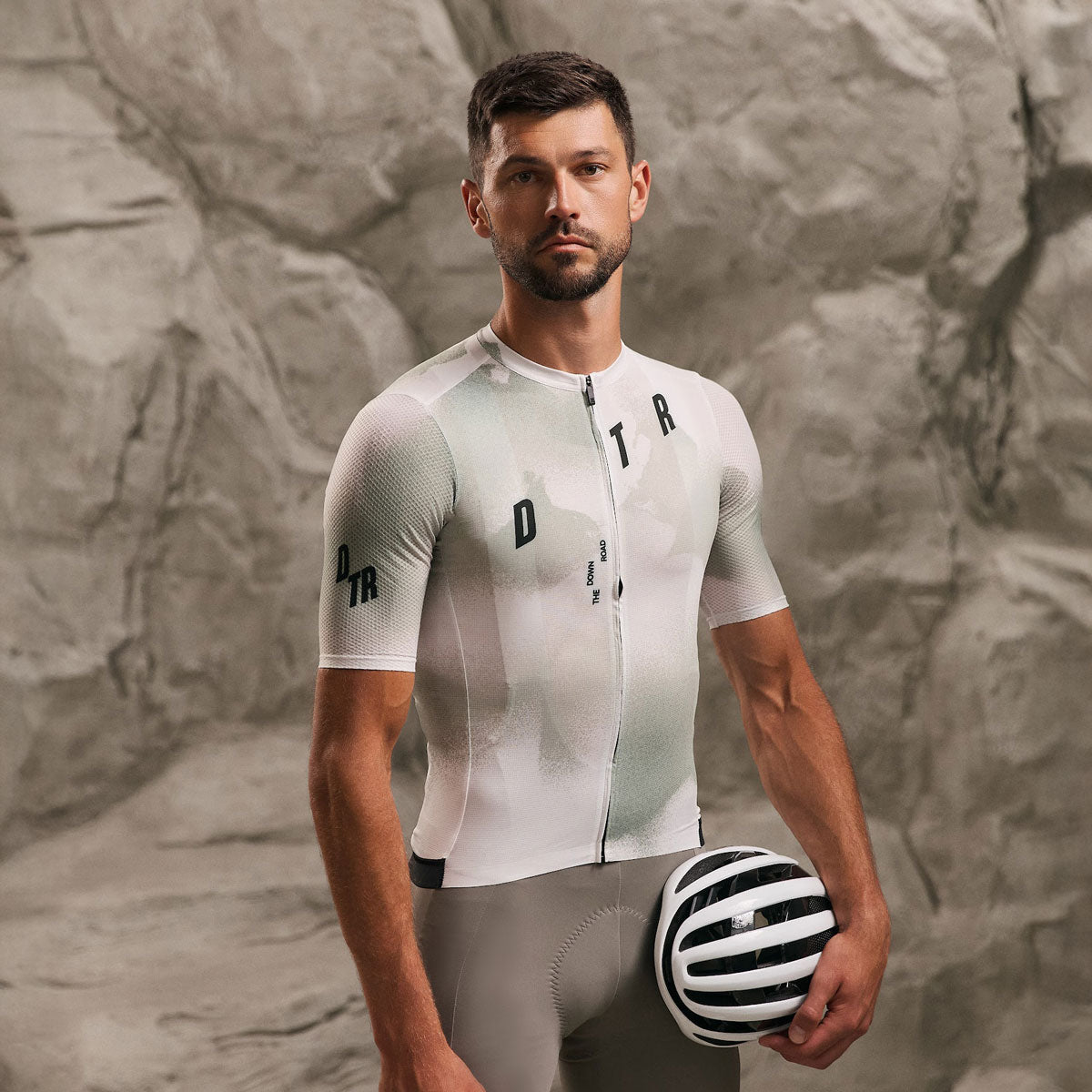
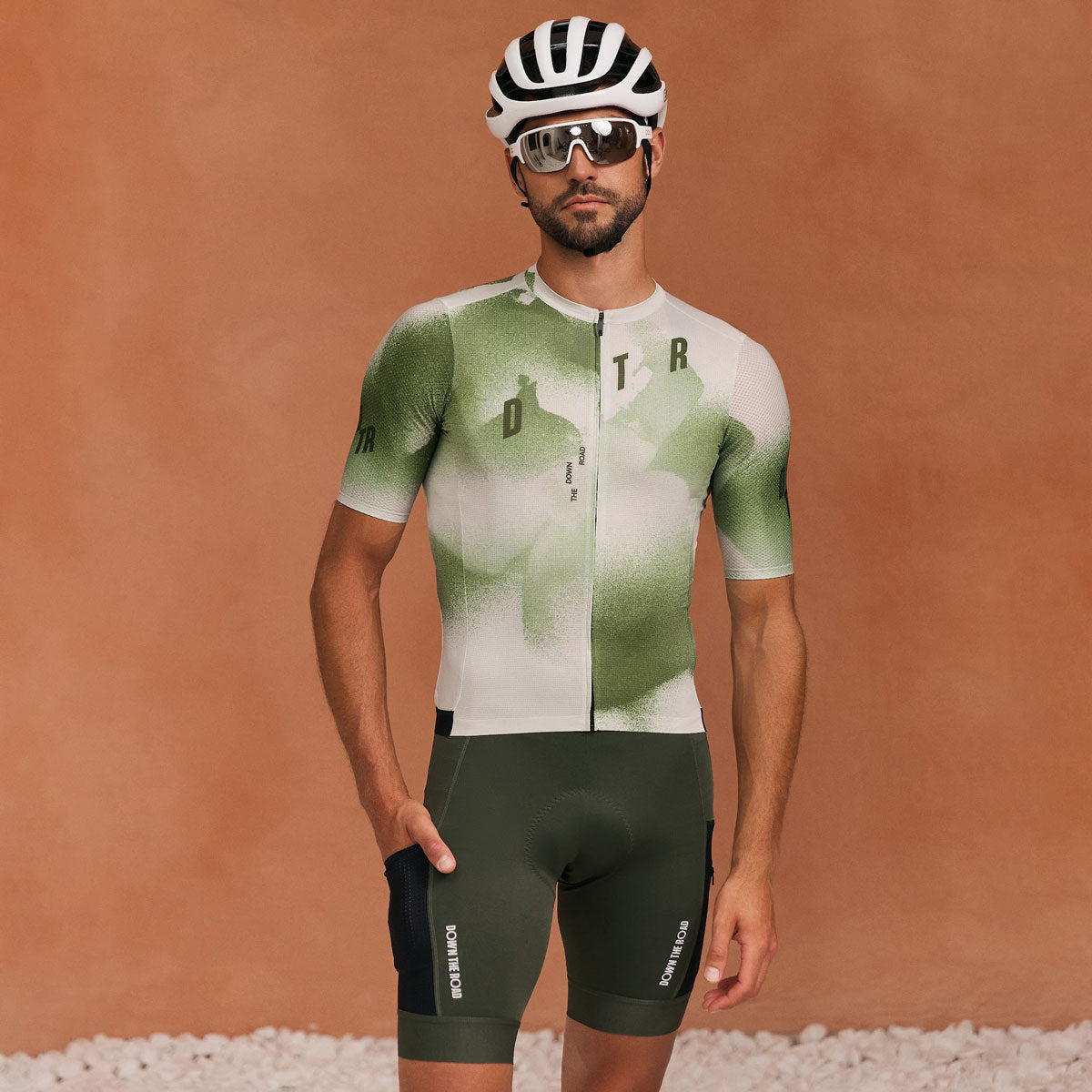
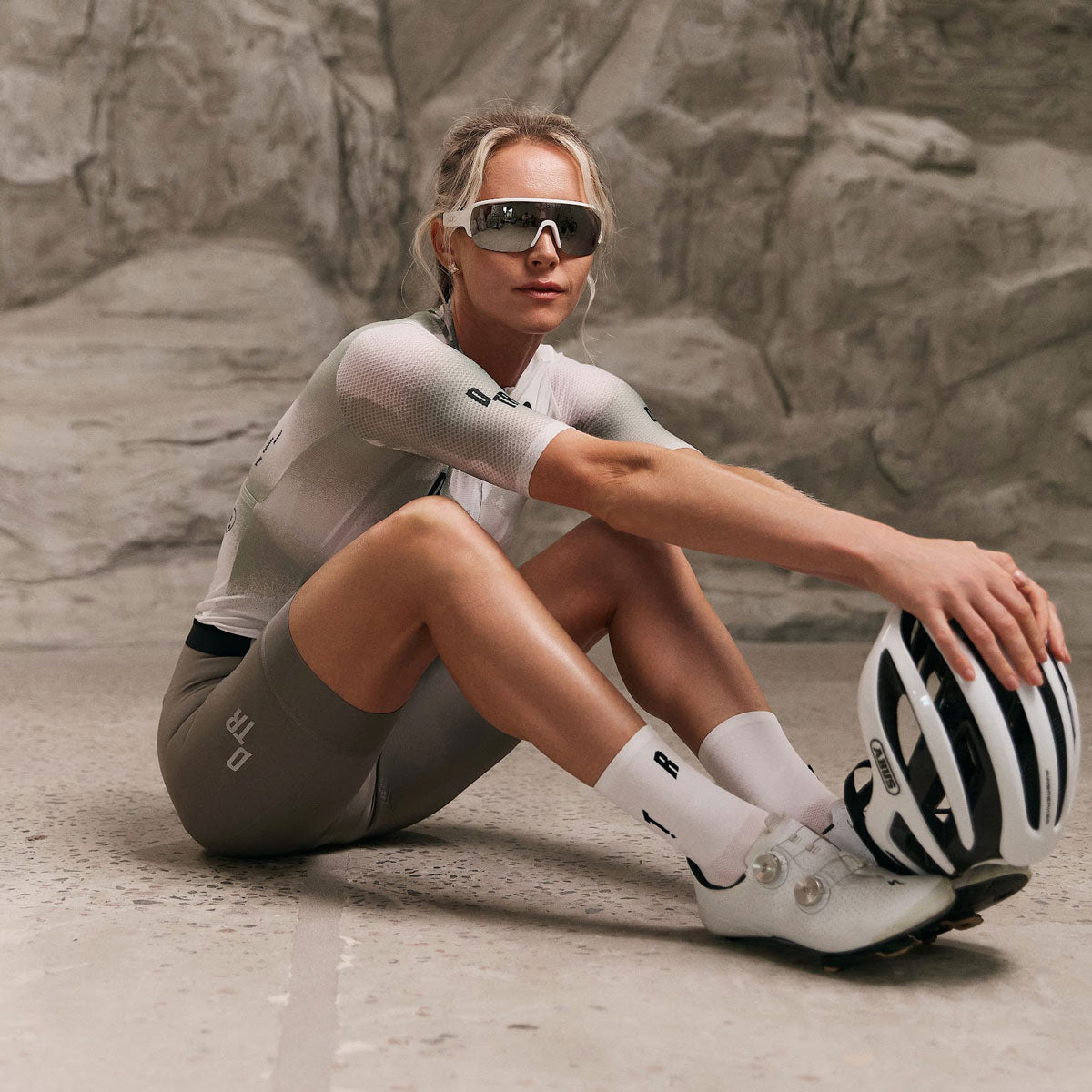
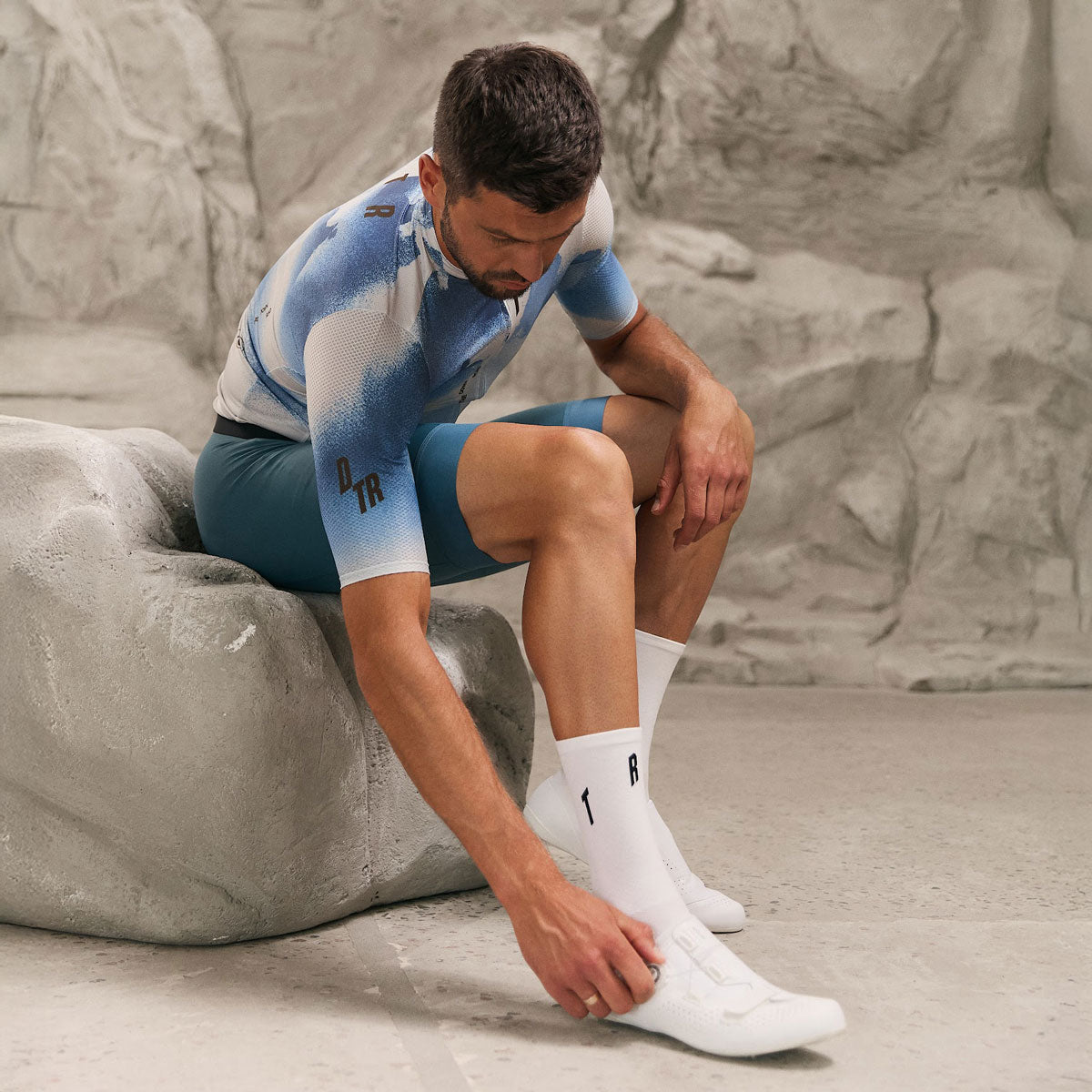
Arm warmers go on between roughly 8°C and 16°C — cool starts, unsettled days, early descents. Leg warmers join them once the temperature sits below about 12°C, because knees need cover before arms do. This guide covers when to use each, how to wear them properly, and when to carry both.
What warmers actually do
Arm and leg warmers turn summer kit into shoulder-season kit. A short-sleeve jersey with arm warmers covers most of what a long-sleeve jersey does; bib shorts with leg warmers replace thermal bib tights on all but genuinely cold days. The difference is that warmers pack into a jersey pocket when the day warms up — fixed kit doesn't.
When to wear arm warmers
Wear arm warmers when the ride starts between about 8°C and 16°C and you expect it to warm up, or when a long descent follows a climb. Paired with a short-sleeve jersey they add roughly 5–8°C of effective warmth, which is why they are the first thing experienced riders pack in spring and autumn.
They earn their place on cool mornings that turn mild, on mountain days where the summit is ten degrees colder than the valley, and on any ride where stopping to change layers isn't an option — the fuller system is in how to layer for cold-weather cycling.
When do your knees need cover?
Below about 12°C, your knees want cover. The joint has little muscle around it and limited blood flow, warms up slowly, and handles long cold rides worse than your arms do. Leg warmers close that gap: bib shorts underneath, warmers over the top, coverage from thigh to ankle.
The practical rule: legs feel fine at temperatures where knees are quietly taking damage over hours. If in doubt, keep the warmers on for the first half hour and pocket them when you're genuinely warm.
How do you wear arm warmers?
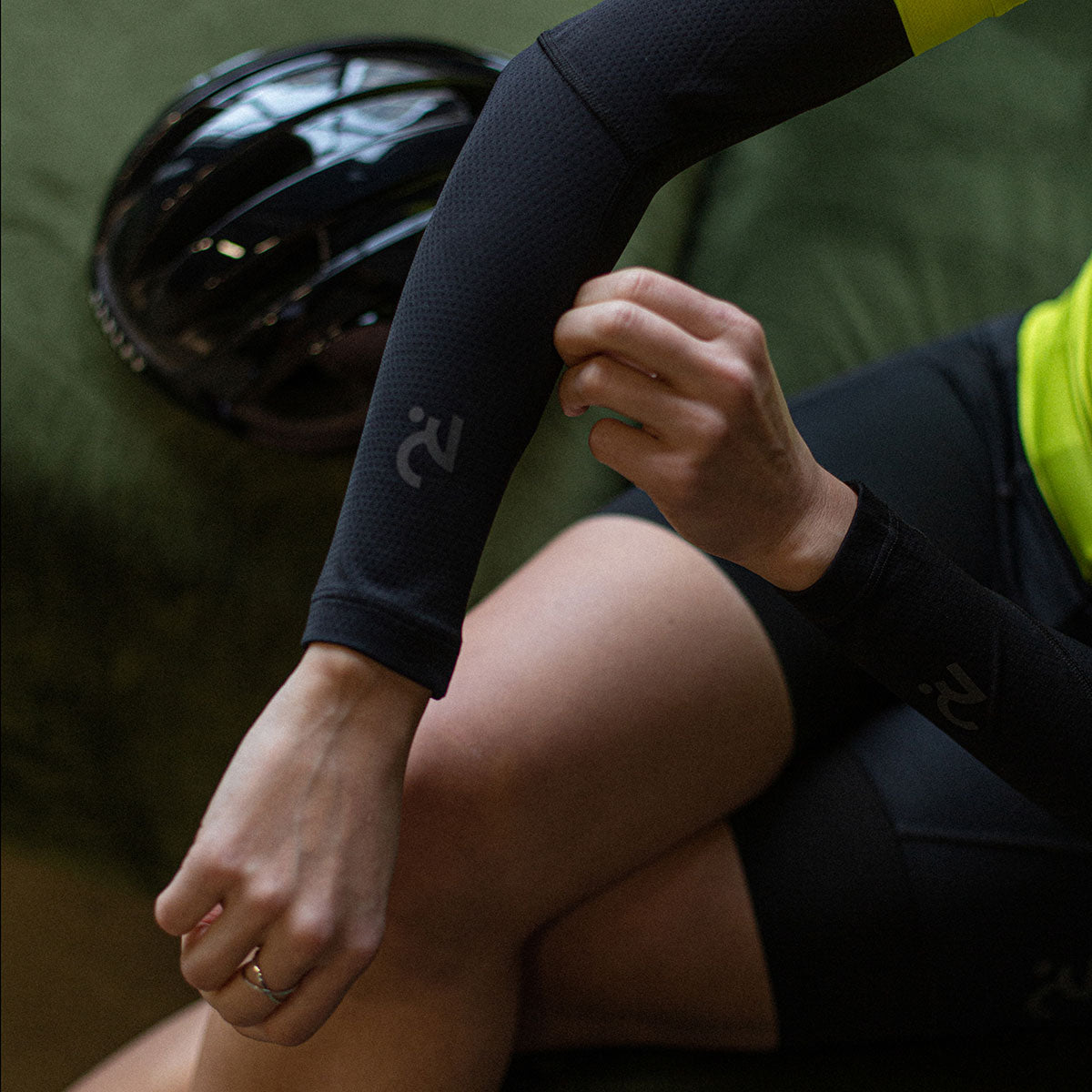
Arm warmers go on before the jersey, with the jersey sleeve overlapping the top of the warmer so there is no gap at the shoulder. The gripper sits flat against the skin — not folded — and the cuff reaches your wrist. Snug is right; tight enough to mark the skin is a size too small.
Mid-ride, roll them down to the wrist on climbs and pull them back up before the descent. With practice they come off and into a pocket without stopping.
Do warmers stay up?
They stay up if they fit. Sizing is the main variable: a warmer that is loose at the top will slide no matter how good the gripper is. Look for a wide silicone gripper that holds without cutting circulation, and flatlock seams that sit flat under a jersey or bib shorts.
DTR leg warmers use asymmetric construction — each piece is cut for a specific leg, left for left and right for right — so the fabric articulates behind the knee without bunching.
Arm warmers, leg warmers, or both?
From 12–16°C, arm warmers alone usually do it. From 8–12°C, ride both. Below about 8°C, move to a long-sleeve jersey or thermal bib tights — warmers are a bridge, not winter kit. On changeable days, carry both anyway: together they take less pocket space than a packable jacket.
FAQ
What temperature are arm warmers for? Roughly 8–16°C at the start of the ride, or any day with a cold descent in it.
Do arm warmers go under or over the jersey? Under. The jersey sleeve overlaps the top of the warmer so there is no gap.
Do leg warmers go over or under bib shorts? Under the leg of the shorts — the short's gripper overlaps the top of the warmer and holds it in place.
Can you wear leg warmers without arm warmers? You can, but it is rare: if it is cold enough for your knees, your arms almost always want cover too.
Can I use arm warmers as leg warmers, or leg warmers as arm warmers? Not well. Leg warmers are cut wider through the top to fit a thigh and taper less; arm warmers are narrower and taper more to follow the forearm. Swapping one for the other leaves it loose at one end or too tight at the other.
The bottom line
Arms first, knees soon after, both in the pockets when the day warms up. Build out your shoulder-season kit: the DTR arm and leg warmer lineup is at /collections/cycling-warmers-arm-leg.
DTR — performance cycling and triathlon apparel, designed and developed in Ukraine.
If the question is knee coverage versus a full-length pair, read Knee Warmers vs Leg Warmers: Which Do You Actually Need?.

Leave a comment
This site is protected by hCaptcha and the hCaptcha Privacy Policy and Terms of Service apply.