

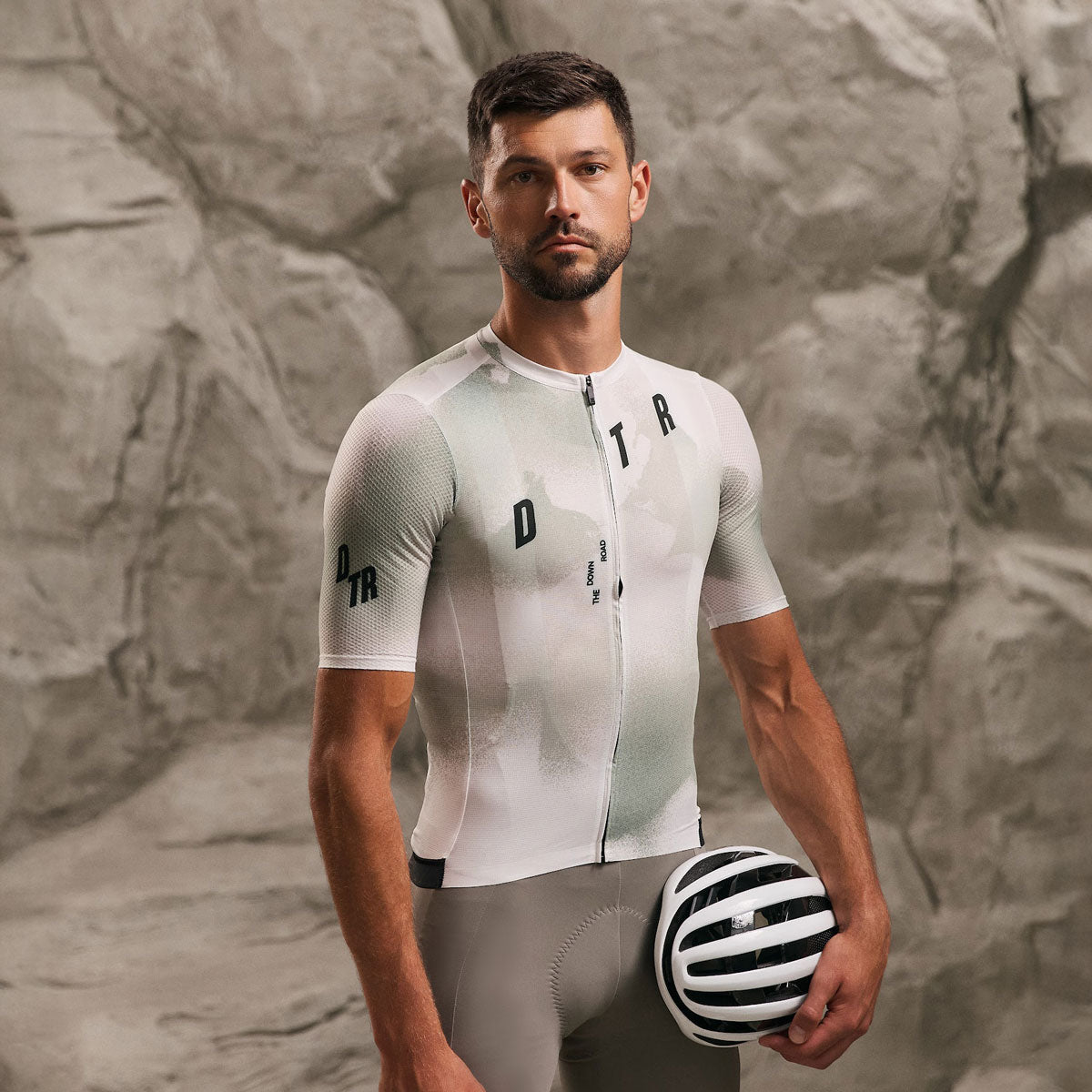
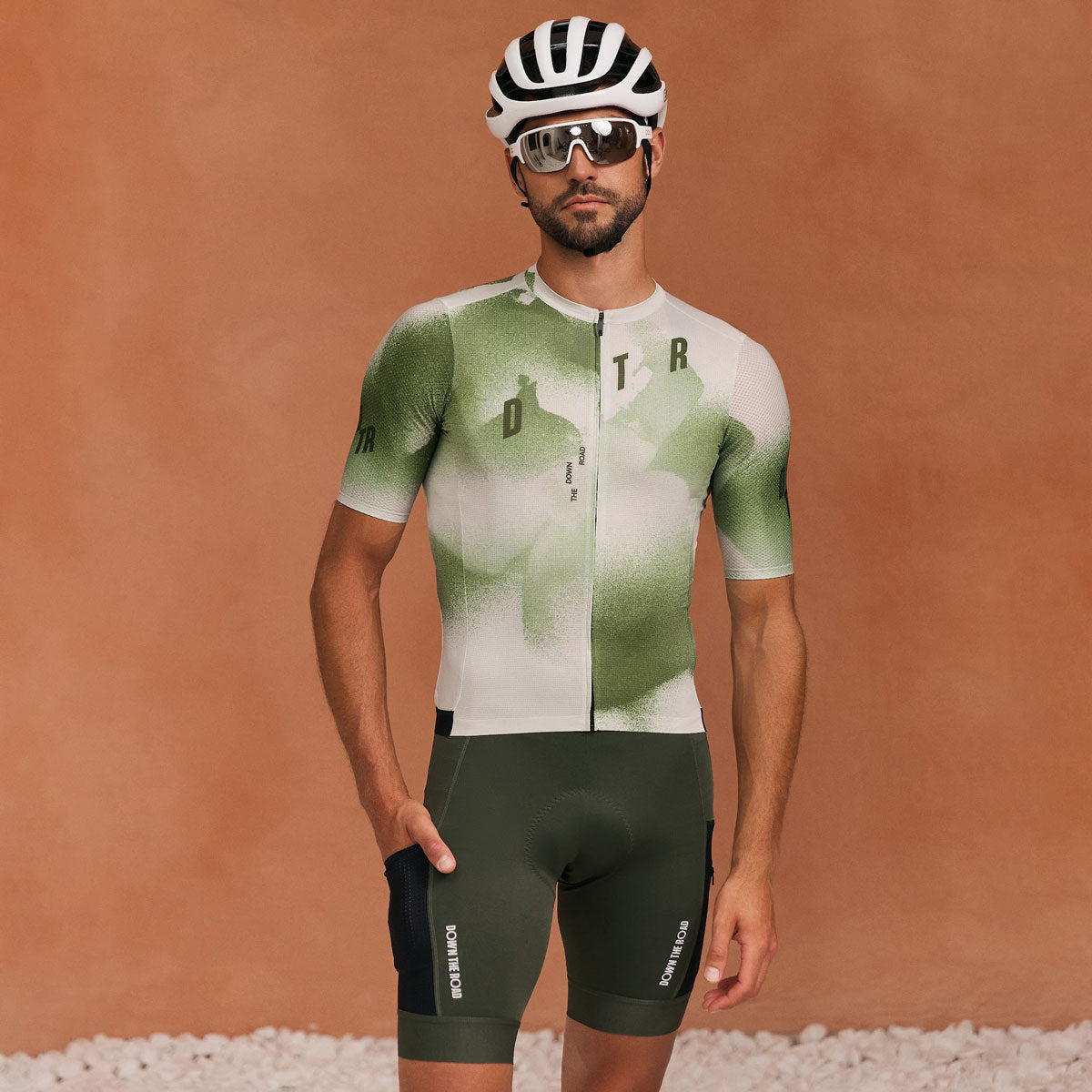
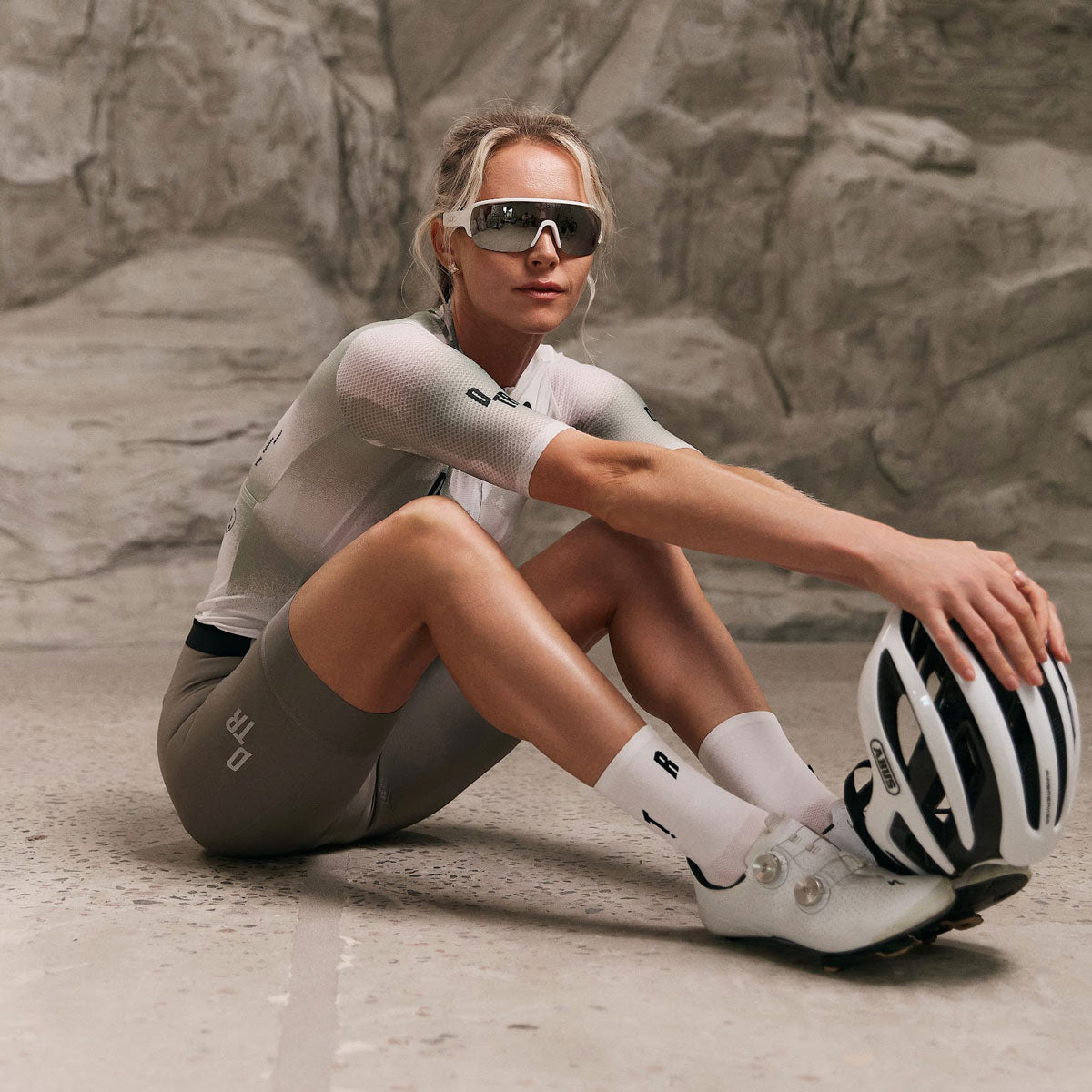
Cycling leg warmers are for the in-between days — roughly 8°C to 16°C, when bib shorts alone leave your knees cold but thermal bib tights are overkill. This guide covers when to put them on, whether they actually stay up, how they should fit, and when you are better off in tights instead.
What cycling leg warmers are
Cycling leg warmers are removable fabric sleeves that cover the leg from ankle to mid-thigh, held above the knee by a silicone gripper. They let you keep riding in your normal bib shorts through a cold morning, then peel off and pack into a jersey pocket once the temperature climbs.
That is the whole appeal: one pair turns your normal bib shorts into a cold-weather setup without changing your fit, your position, or anything at the chamois. Nothing about your saddle comfort changes — only your temperature management does.
When to wear them
The working window is about 8°C to 16°C. Below 8°C you want thermal bib tights. Above 16°C bare legs are cooler and faster. Inside that band, the decision usually comes down to how long you will be out and whether the temperature is climbing.
- 8°C–12°C. On from the start, and usually on for the whole ride. Pair with a base layer and a gilet or windbreaker.
- 12°C–16°C. The classic case. Start covered, expect to strip them after the first 45 to 60 minutes once your core temperature comes up.
- Above 16°C. Bare legs, unless you run cold at the knee or you are descending into sustained headwind.
Intensity shifts this more than most guides admit. Riding threshold intervals generates enough heat that the same morning can feel three or four degrees warmer than it does on a steady endurance ride. The pair you actually keep using is the pair that packs down small enough to stash without thinking about it — see how to layer for cold-weather cycling for the fuller system.
Do they stay up?
Yes, if the fit is right. The silicone gripper needs to sit on bare skin just above the knee, in light tension against the leg. When a pair slips, it is almost always one of three things: the size is too large, the gripper is sitting on fabric instead of skin, or the material is heavy enough to drag the band down.
What separates a pair that holds from one that creeps: a wide gripper band spreads pressure instead of digging into the quad, and the top edge should be shaped to follow the contour of the lower thigh. A flat band on a round leg rolls. If a pair slips after an hour, that is a fit problem rather than something you can solve by pulling them up more often.
How they should fit
Snug enough to stay put and give light compression, never tight enough to restrict circulation. The top edge should sit three to five centimetres above the knee — on the thigh, not on the joint — and the bottom should reach the ankle bone so cold air is not getting in at every pedal stroke.
The test worth doing before you commit: put them on and do a full squat. You want zero gathering behind the knee at full flexion. Any bunching there will only get worse over three hours in the saddle.
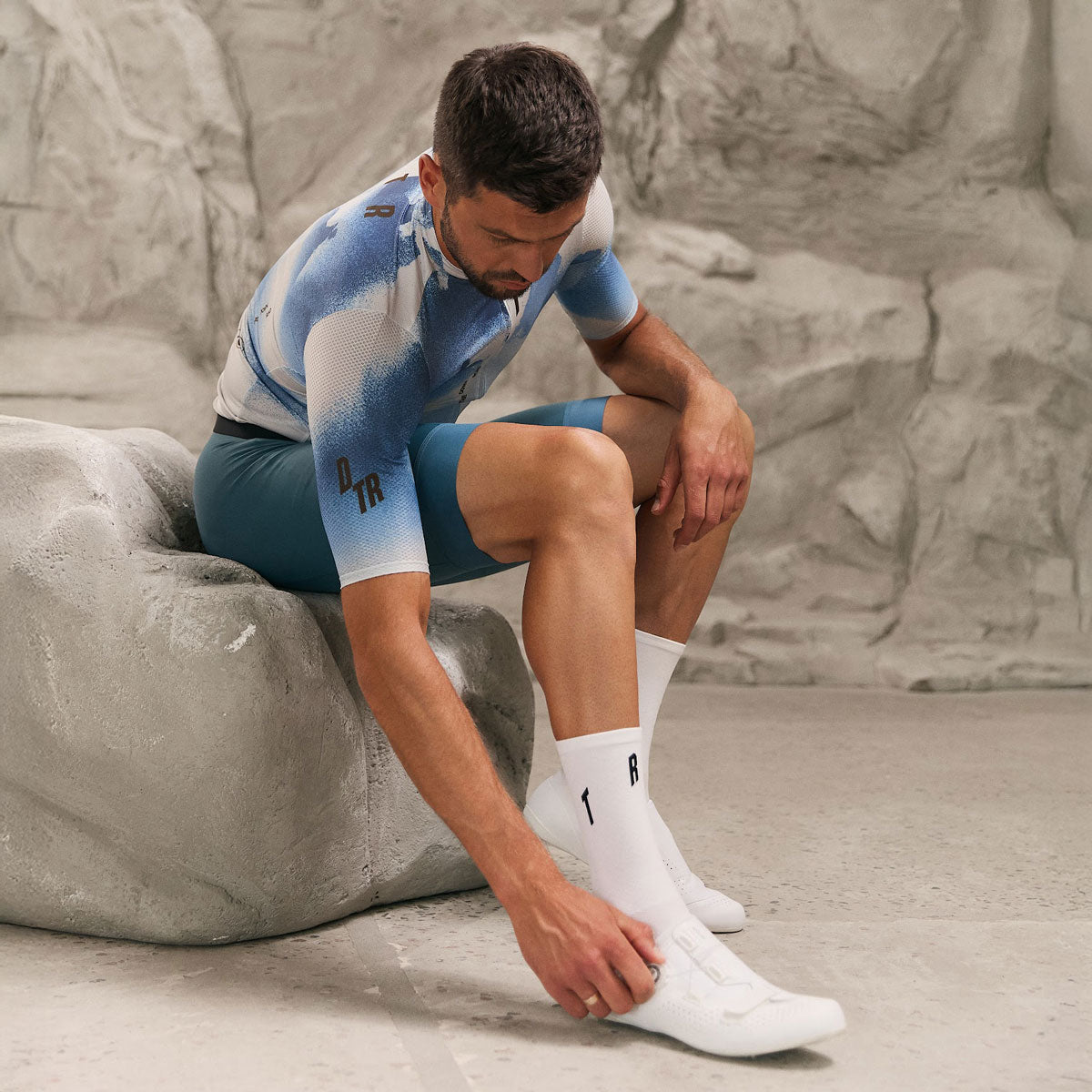
DTR leg warmers use asymmetric construction — each piece is cut for a specific leg, left and right. That is an ergonomic decision rather than an aerodynamic one: a leg-specific cut follows the actual shape of the limb, so the fabric sits flat behind the knee instead of twisting. If you are between sizes, size for the thigh rather than the calf, because that is the circumference the gripper has to work against.
What makes the best cycling leg warmers
The best cycling leg warmers get three things right, in order: a wide gripper that holds above the knee without digging in, a leg-specific cut that stays flat behind the knee through a full pedal stroke, and cycling-grade fabric with even compression from ankle to thigh. Get those three right and everything else is detail. A pair that holds position, follows the leg through a pedal stroke, and blocks wind without turning into a sweatbox will outlast several cheaper pairs.
DTR leg warmers are cut from the same technical lycra as our bib shorts, so the stretch is calibrated for cycling movement rather than general athletic use. That gives even compression from ankle to thigh with no thin, cold spots where the fabric is under tension, and enough surface density to keep wind off at speed. Flatlock seams keep the joins flat against skin — a detail you will not notice at forty minutes and will at four hours.
What to be wary of: general athletic sleeves adapted for cycling. A pedal stroke combines hip flexion and knee extension in a way that running or gym wear is not cut for, and the fabric gathers behind the knee on every downstroke.
Leg warmers or bib tights?
Take leg warmers when the temperature is going to move during the ride, and thermal bib tights when it is not. Warmers are the flexible option — on, off, pocketed, back on for the descent. Tights are the warmer, simpler option for a day that starts cold and stays cold.
Below about 8°C, thermal bib tights win outright: they insulate the whole leg as one piece, there is no gripper interface to manage, and they include the chamois so there is no doubling up. Above that, warmers give you range that tights cannot, because you can change your setup mid-ride without stopping to change kit.
How they fit into the rest of your kit
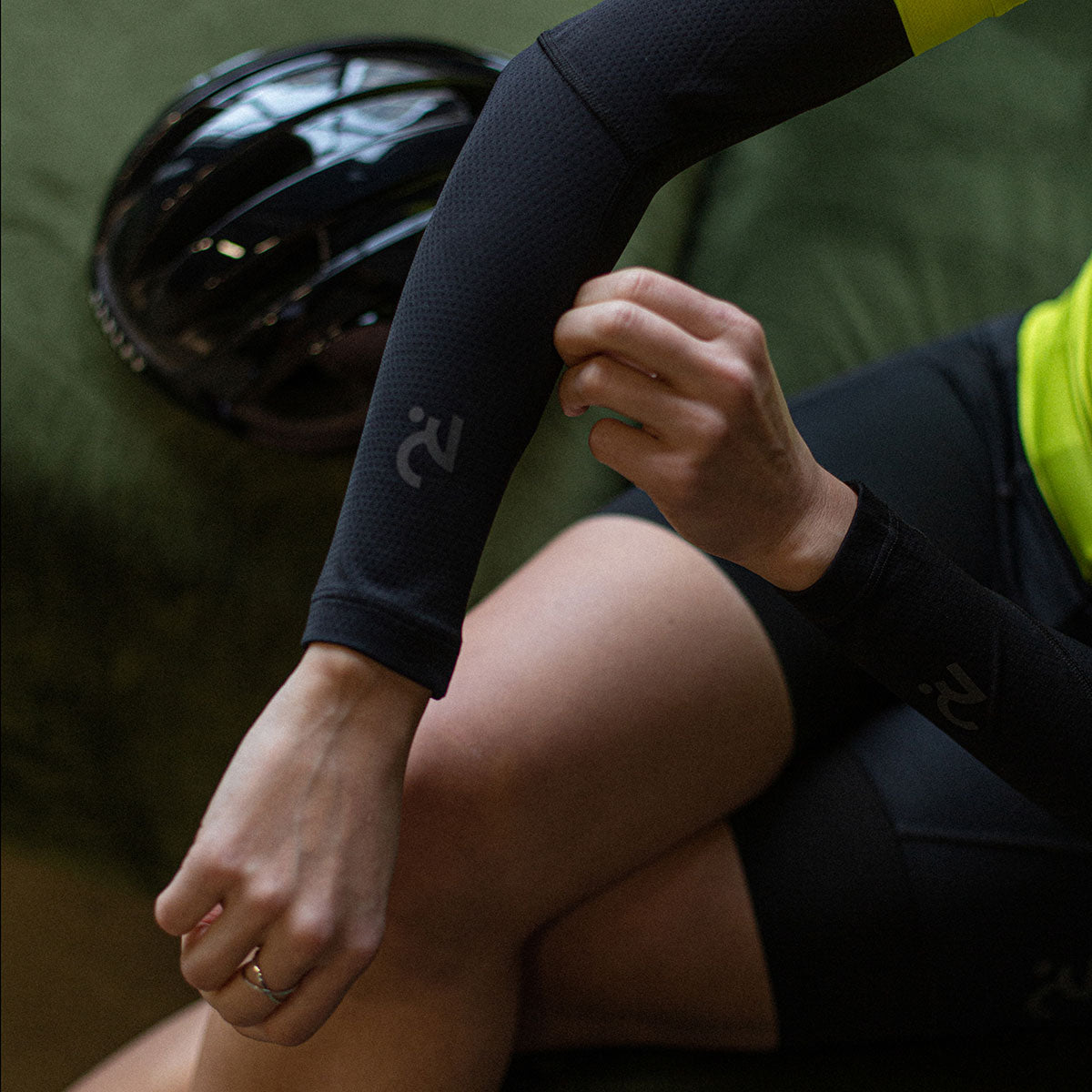
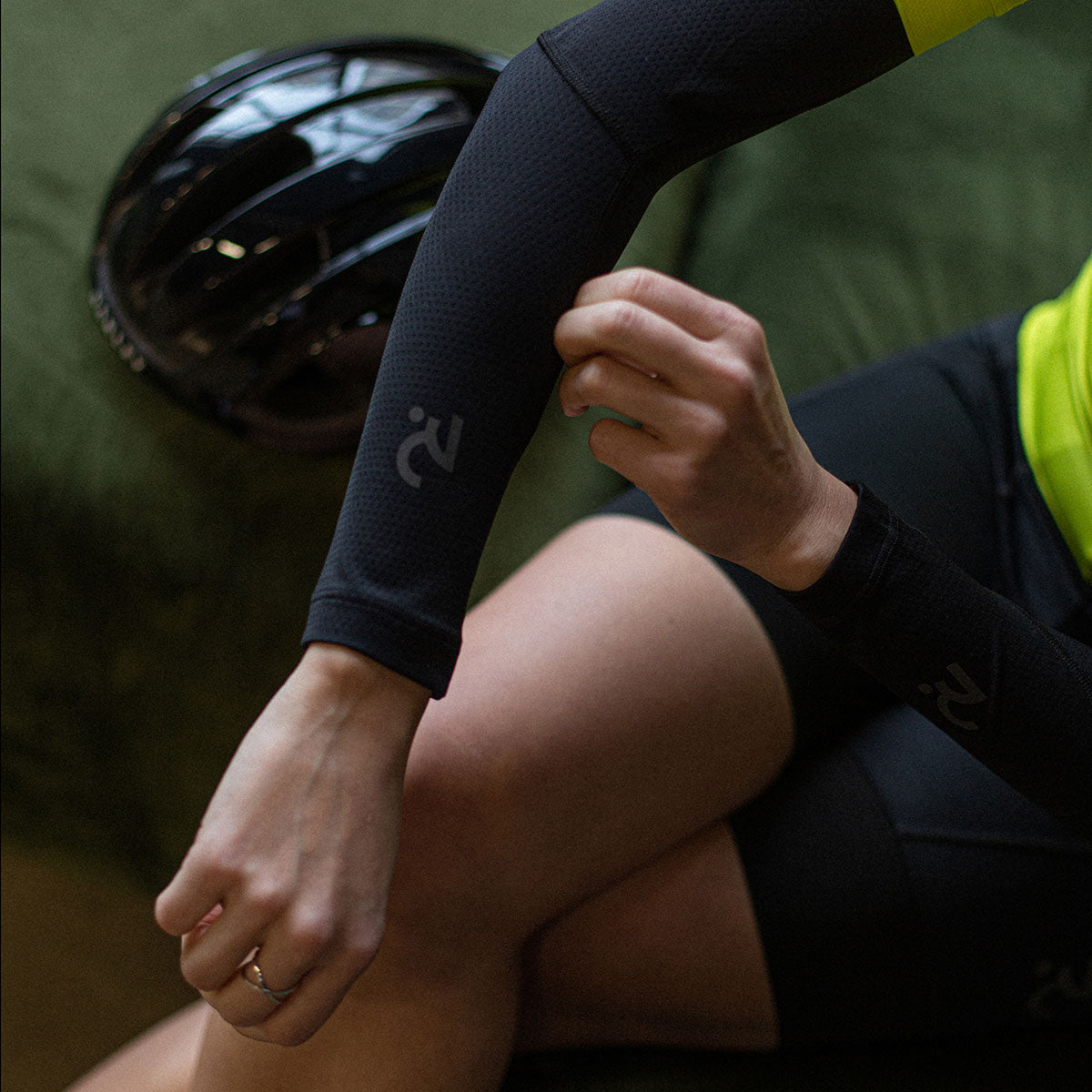
Leg warmers work as part of a system, and the useful rule is that they should come off at roughly the same time as your arm warmers. If your arms are warming up much faster than your legs, the balance is off — usually a jersey that is too warm or warmers that are too light.
For 8°C to 12°C: bib shorts and leg warmers, base layer under a jersey, arm warmers to match, and a gilet or windbreaker you can shed. For 12°C to 16°C: the same without the outer layer, with everything chosen so it packs into three rear pockets once the sun is up.
FAQ
What temperature are cycling leg warmers for? Roughly 8°C to 16°C. Below that, thermal bib tights insulate better; above it, bare legs are more comfortable.
Do they go over or under bib shorts? Under the leg of the short. The short sits on top of the upper edge, which keeps wind out of the hem and anchors the gripper against skin.
How do I stop them falling down? Make sure the gripper is on bare skin above the knee rather than on shorts fabric. If they still slip, the size is likely too large.
Can I wear running tights instead? Not well. They are not cut for a pedal stroke and will gather behind the knee.
How should I wash them? Cold, gentle cycle, no fabric softener — softener degrades the silicone gripper and the elasticity of the lycra. Air dry flat.
Do they need to match my bib shorts? Functionally no, since the only interface is at the thigh.
Are cycling leg warmers different for women? Not in function — the temperature range and fit logic are the same. DTR's leg warmers are sized to match our women's bib shorts, so the panel length and thigh circumference follow a women's leg rather than being a scaled-down men's cut.
See the range: /collections/cycling-warmers-arm-leg.
DTR — performance cycling and triathlon apparel, designed and developed in Ukraine.
For the decision between shorter coverage and a full-length pair, read Knee Warmers vs Leg Warmers: Which Do You Actually Need?.

Leave a comment
This site is protected by hCaptcha and the hCaptcha Privacy Policy and Terms of Service apply.