

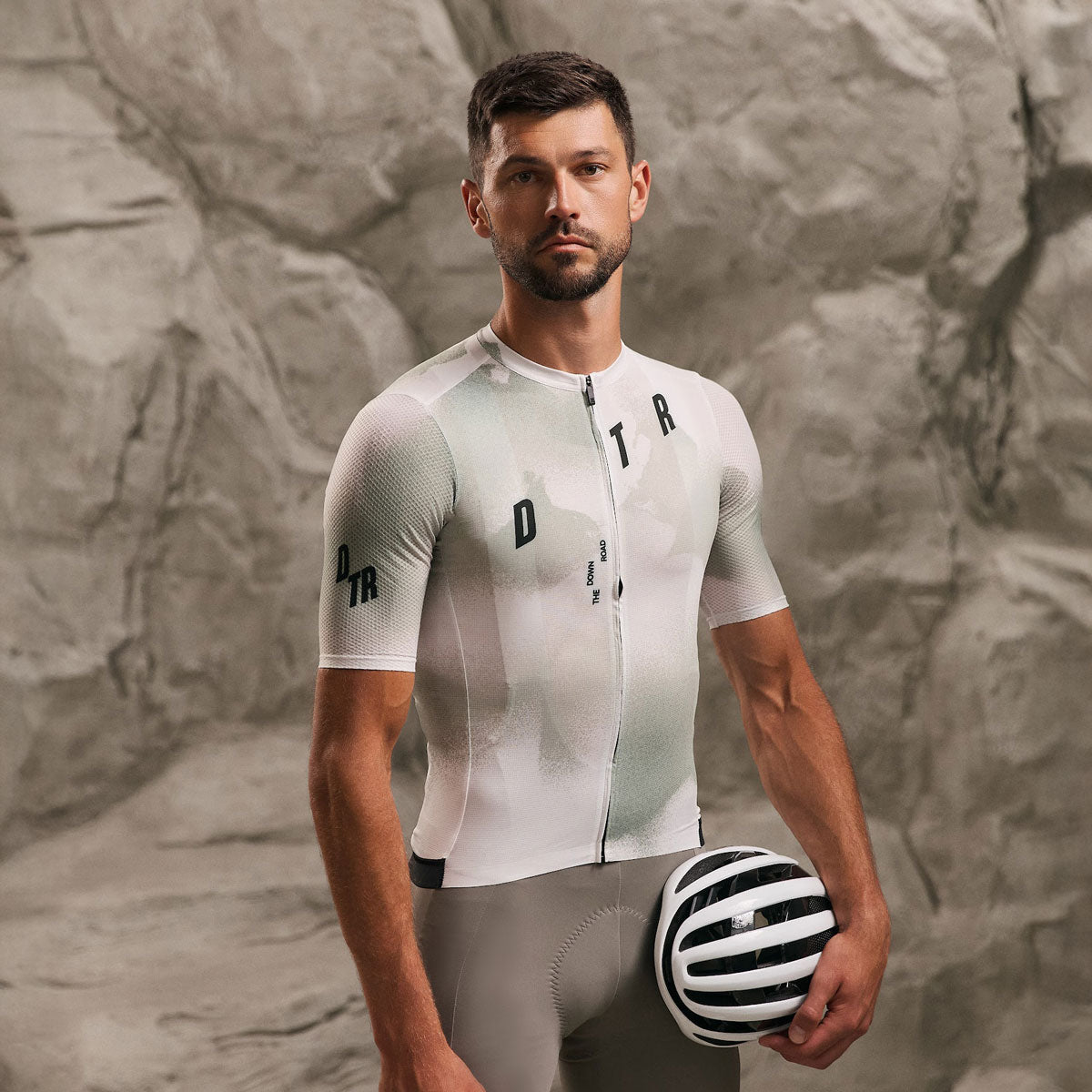
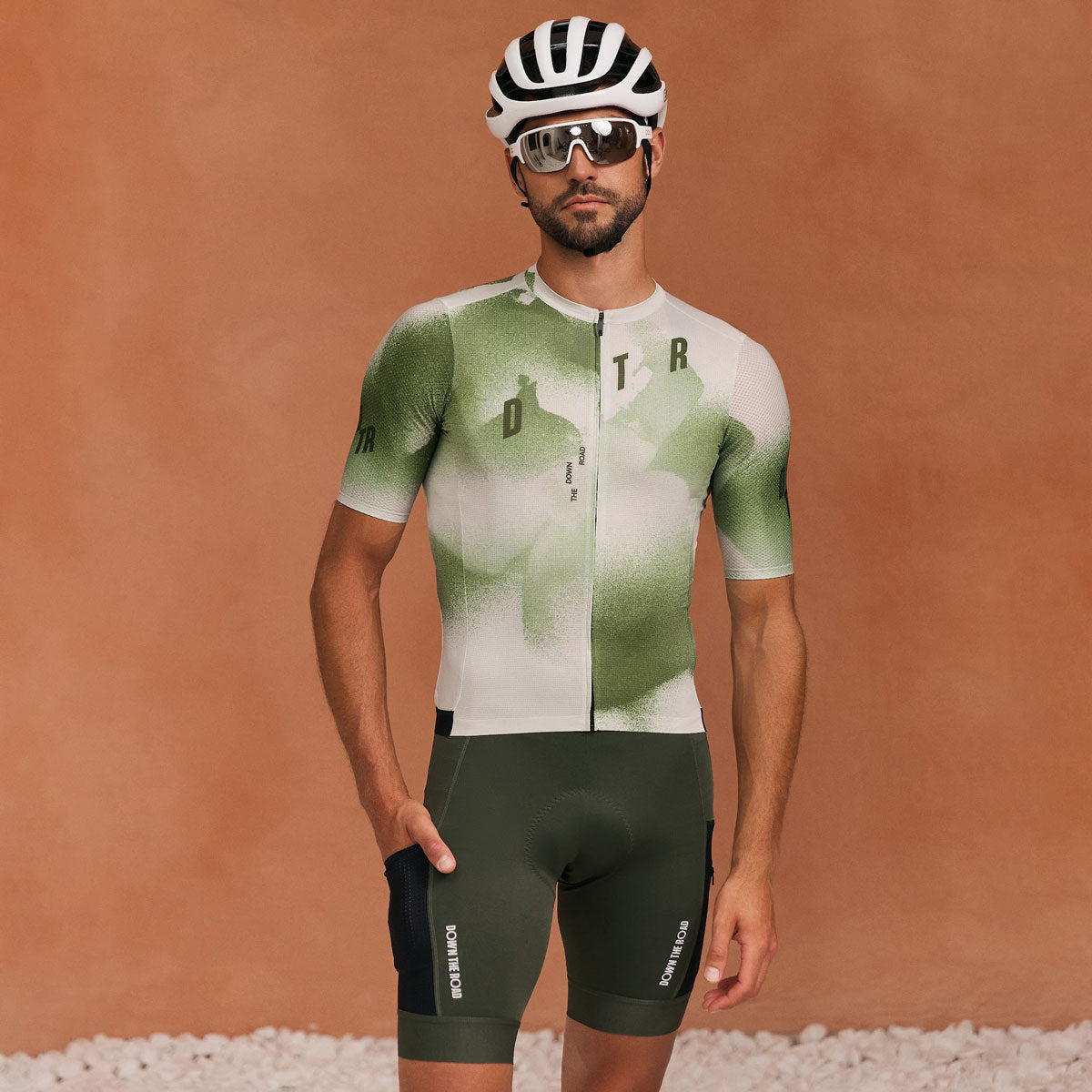
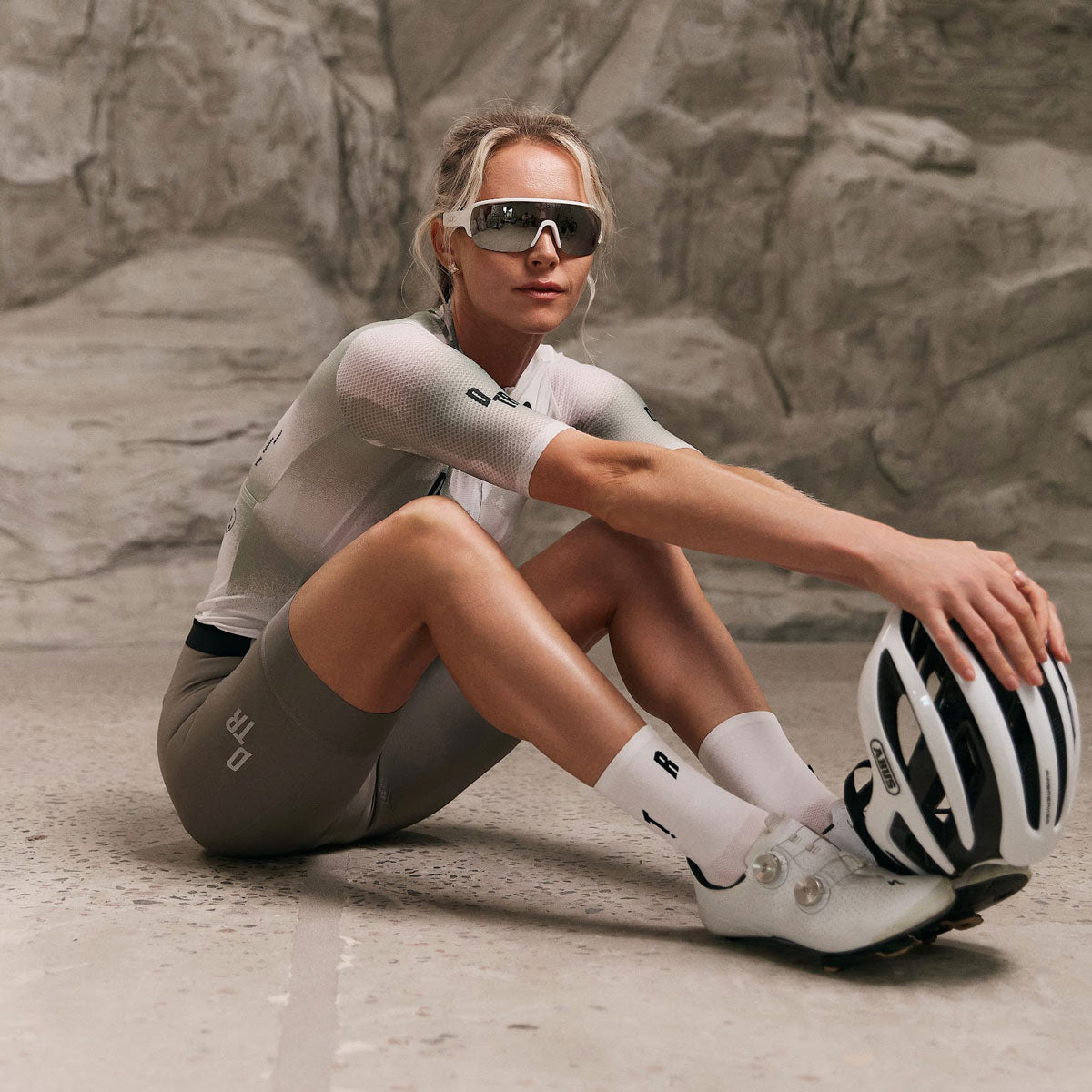
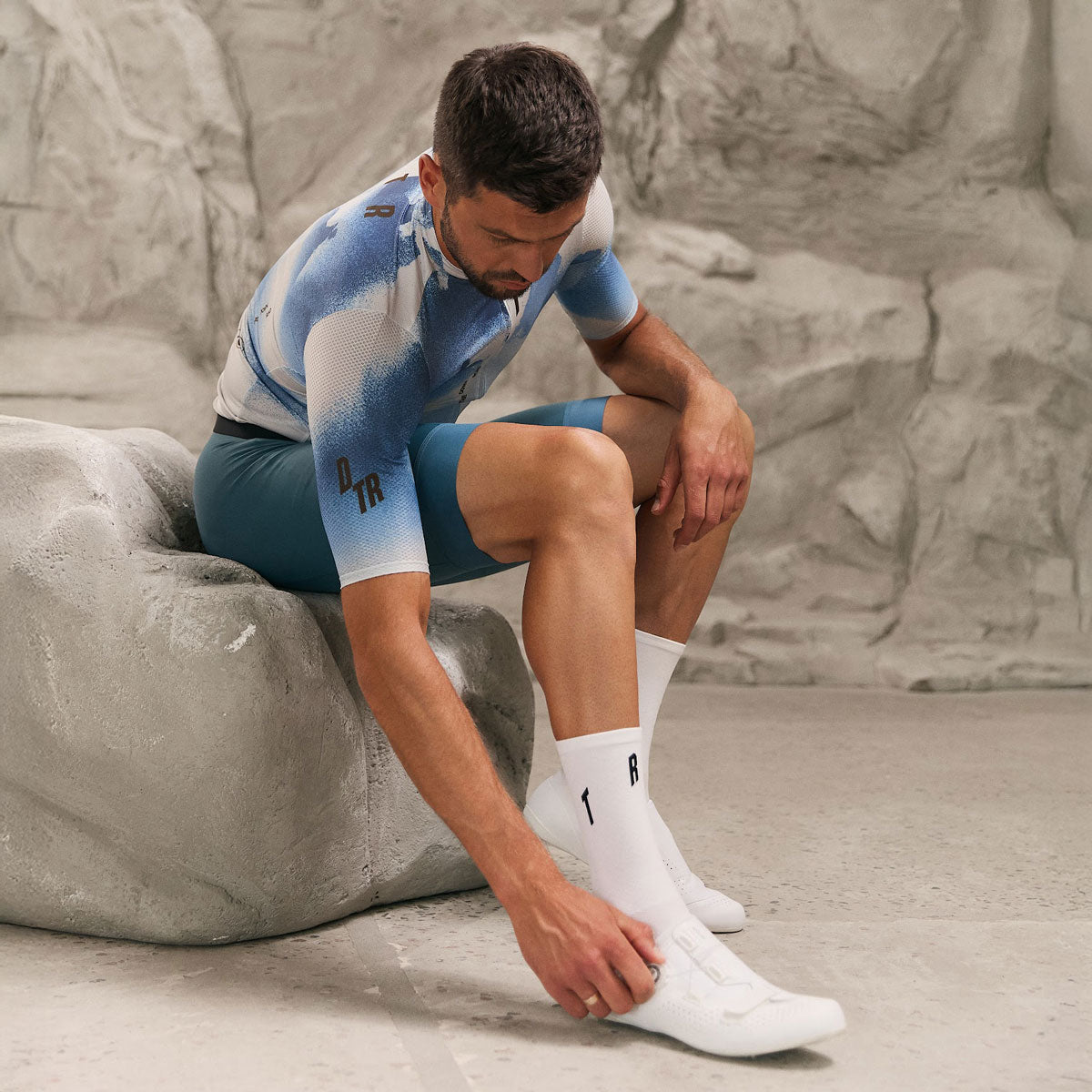
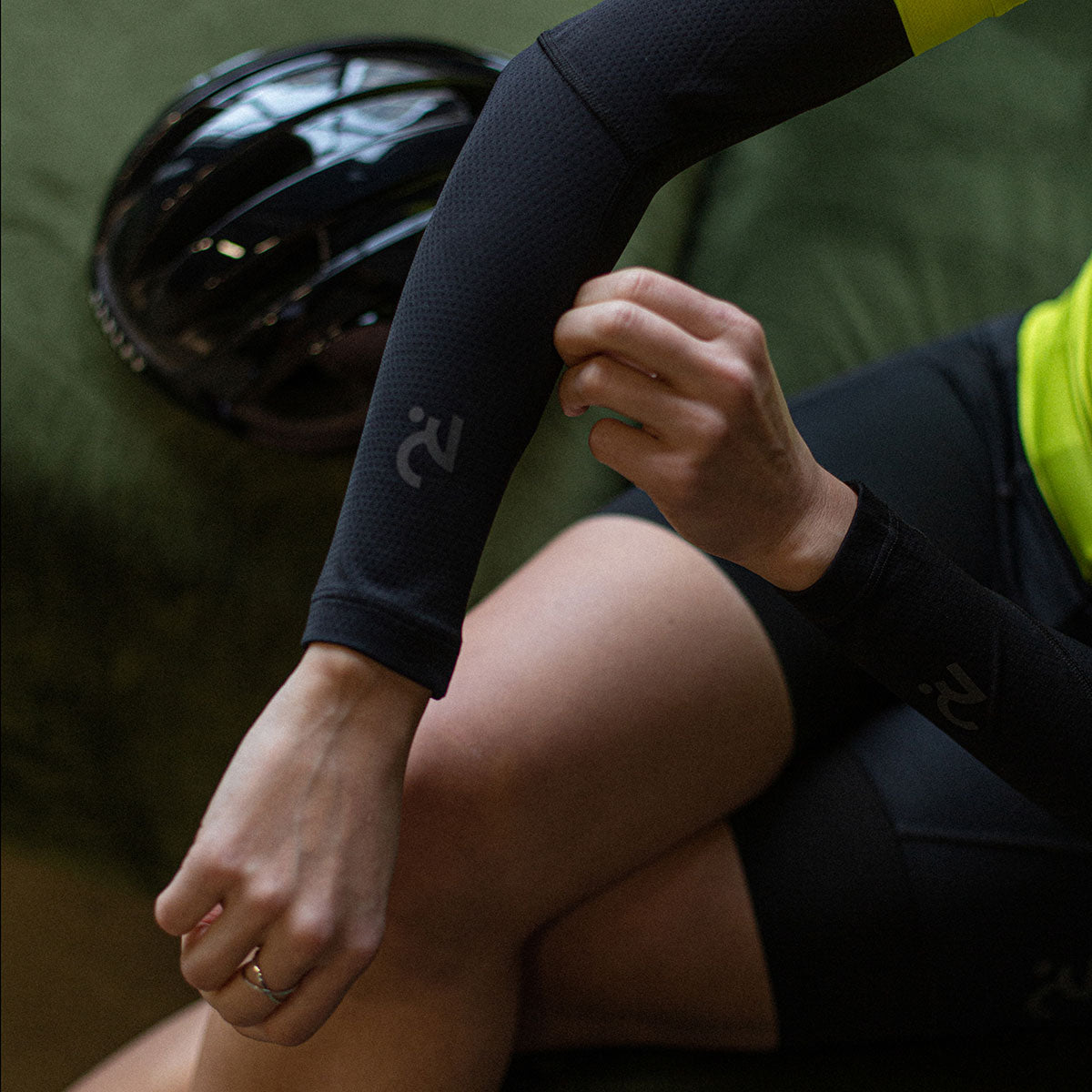
Knee warmers cover the knee and a little above and below it; leg warmers run the full length from mid-thigh to ankle. Knee warmers suit roughly 13–18°C, leg warmers roughly 8–16°C. If you only ever buy one, buy the full-length pair — it covers everything the shorter version does and keeps working as the temperature drops.
What each one actually covers
Both are removable sleeves worn with bib shorts, held up by a silicone gripper against bare skin above the knee. The difference is how far down the leg they go. Knee warmers stop just below the knee, around the top of the calf. Leg warmers continue to the ankle, covering the calf and shin. That difference sounds small and isn't. The calf is a large muscle group with a lot of blood flow close to the surface, so covering it changes how the whole leg feels in a headwind or on a long descent. Knee warmers leave it exposed deliberately — that's the point of them, not a shortcoming.
Why riders bother covering the knee at all
The knee joint sits close to the surface with little muscle or fat over it and relatively modest blood flow, so it loses heat faster than the muscle around it. Many riders and coaches use a rough rule of covering the knees below about 15–18°C, particularly for hard efforts or long days. It's worth being straight about the evidence here: the "cold knees cause injury" claim is widely repeated and not well established. What is uncontroversial is that a cold joint feels stiffer, warms up more slowly, and is less pleasant to push watts through. That alone is a good enough reason to cover them on a cold morning. If you have knee pain that persists, worsens, or shows up regardless of temperature, that's a conversation for a doctor or physio, not a kit decision.
When the shorter option makes sense
Knee warmers earn their place in a narrow band — roughly 13–18°C — and in racing, where a rider wants the knees covered on the start line and the calves free. They're also the smaller, lighter thing to stuff in a pocket when you're carrying insurance rather than expecting to need it. The honest case for them: if you ride mostly in a mild climate, you race criteriums or road races where you'll strip layers on the line, or you specifically dislike fabric on your calves, they're the better tool. A rider in southern Spain or coastal California will reach for knee warmers far more often than someone in Belgium in October.
When full-length is the better call
Leg warmers are the more useful purchase for most riders because they cover a wider temperature range and handle conditions the shorter version can't. Below about 13°C, or on any ride with a long descent, exposed calves get cold fast and stay cold. The deciding factor is usually the descent, not the average temperature. A 15°C ride with a 20-minute descent is a leg warmer day, because you generate no heat going downhill and the wind chill on a bare calf at 50 km/h is significant. The same applies to early starts that warm up later — our temperature guide breaks down what to pair with what across the range. For the full picture on sizing, layering order and when to take them off, the leg warmer guide goes deeper than this comparison does.
Do either of them stay up?
Both stay up reliably when sized correctly and worn with the gripper on bare skin above the knee, with the leg of the bib short over the top. Knee warmers are marginally more prone to slipping because they have less surface area gripping the leg and less length below the knee to anchor them. The two things that cause slipping are the same for both: the gripper sitting on short fabric instead of skin, or a size too large. If a pair slides after twenty minutes, check the layering order first — the short goes over the warmer, not under it. If it still slides, it's the size.
What DTR makes, and what it doesn't
DTR's warmer range is four pieces: leg warmers, fleece leg warmers, arm warmers and fleece arm warmers. There are no knee warmers in the line. That's a deliberate scope decision, not an oversight — the full-length pair covers the same job across a wider range. If you want knee coverage specifically, a leg warmer worn as-is does it and keeps doing it when the temperature drops further. The standard leg warmer handles the 8–16°C band with four-way stretch and flatlock seams; the fleece version takes over when it gets genuinely cold. Below about 5°C, neither is really the answer — that's thermal bib tights territory, which the leg warmers versus bib tights comparison covers properly. And whatever goes on your legs, arm warmers are the other half of the same system — most riders need both on the same days. One thing worth checking before you buy either: the gripper only works against skin, so the fit of your bib shorts at the thigh matters as much as the warmer itself.
FAQ
Are knee warmers or leg warmers better? Leg warmers, for most riders. They cover the same knee area plus the calf, work from roughly 8–16°C rather than 13–18°C, and handle descents where bare calves get cold. Knee warmers are better only in consistently mild conditions or for racing. At what temperature should you wear knee warmers? Roughly 13–18°C. Below that, the exposed calf becomes the limiting factor and full-length leg warmers are the better choice. Above 18°C most riders don't need either. Can you wear leg warmers as knee warmers? Not really — rolling them down bunches fabric behind the knee and causes chafing. If it warms up mid-ride, take them off entirely and pocket them; that's what they're designed for. Do you wear knee or leg warmers over or under bib shorts? Under. The leg of the short sits on top of the upper edge, which anchors the gripper against skin and keeps wind out of the hem. Do you need both knee warmers and leg warmers? No. If you own full-length leg warmers, knee warmers are largely redundant — they cover a subset of the same range. Riders who own both usually race. Are cold knees actually bad for you? The injury link is commonly claimed but not well established. What is clear is that cold joints feel stiff and warm up slowly, which is reason enough to cover them. Persistent knee pain is worth discussing with a doctor.
The bottom line
Knee warmers cover a narrow band in mild conditions and suit racing. Leg warmers cover a wider band, handle descents, and are the better single purchase for almost everyone — which is why DTR builds the full-length pair and not the short one. Buy for the coldest ride you'll actually do, not the average one. See the warmer range at /collections/cycling-warmers-arm-leg. DTR — performance cycling and triathlon apparel, designed and developed in Ukraine.

Leave a comment
This site is protected by hCaptcha and the hCaptcha Privacy Policy and Terms of Service apply.