

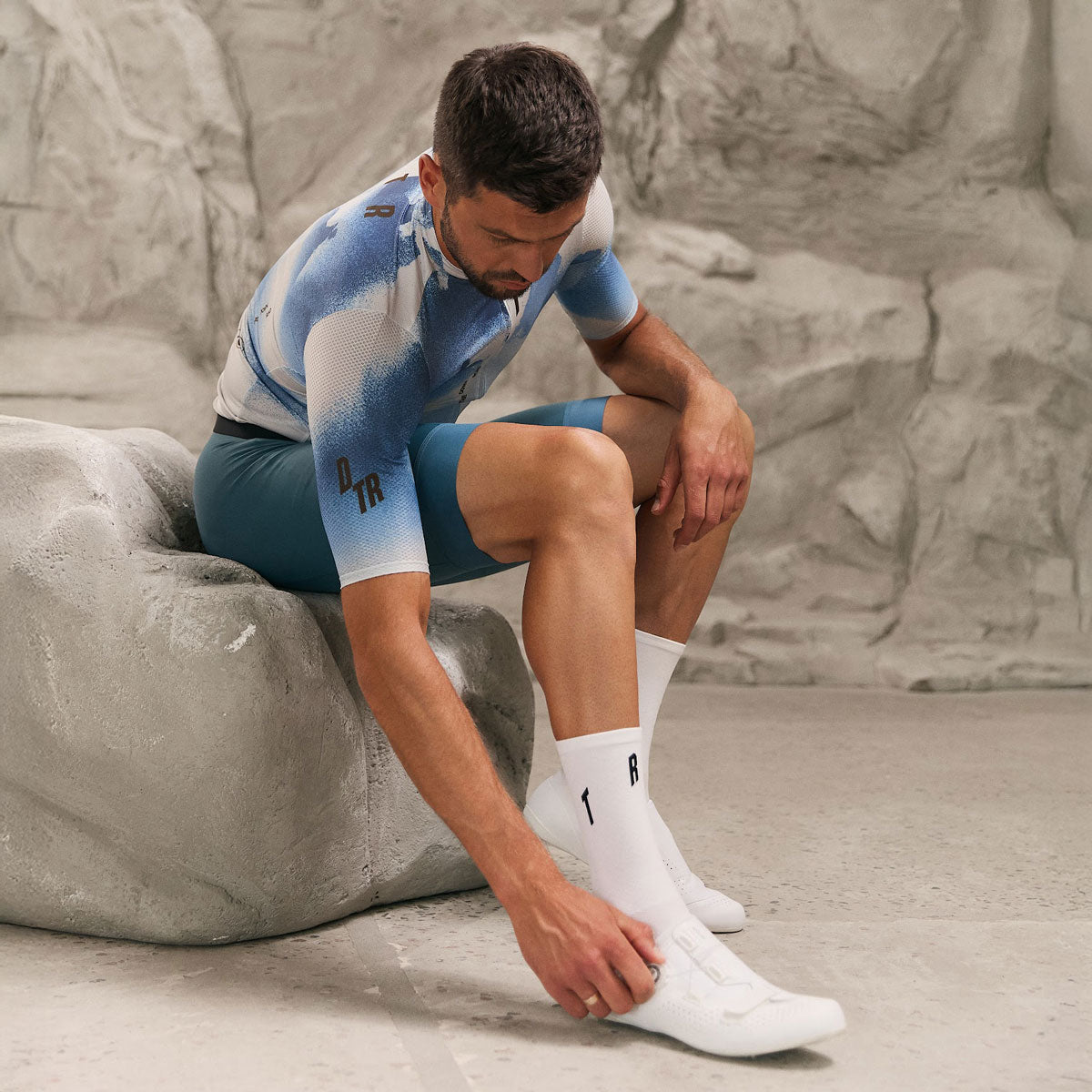
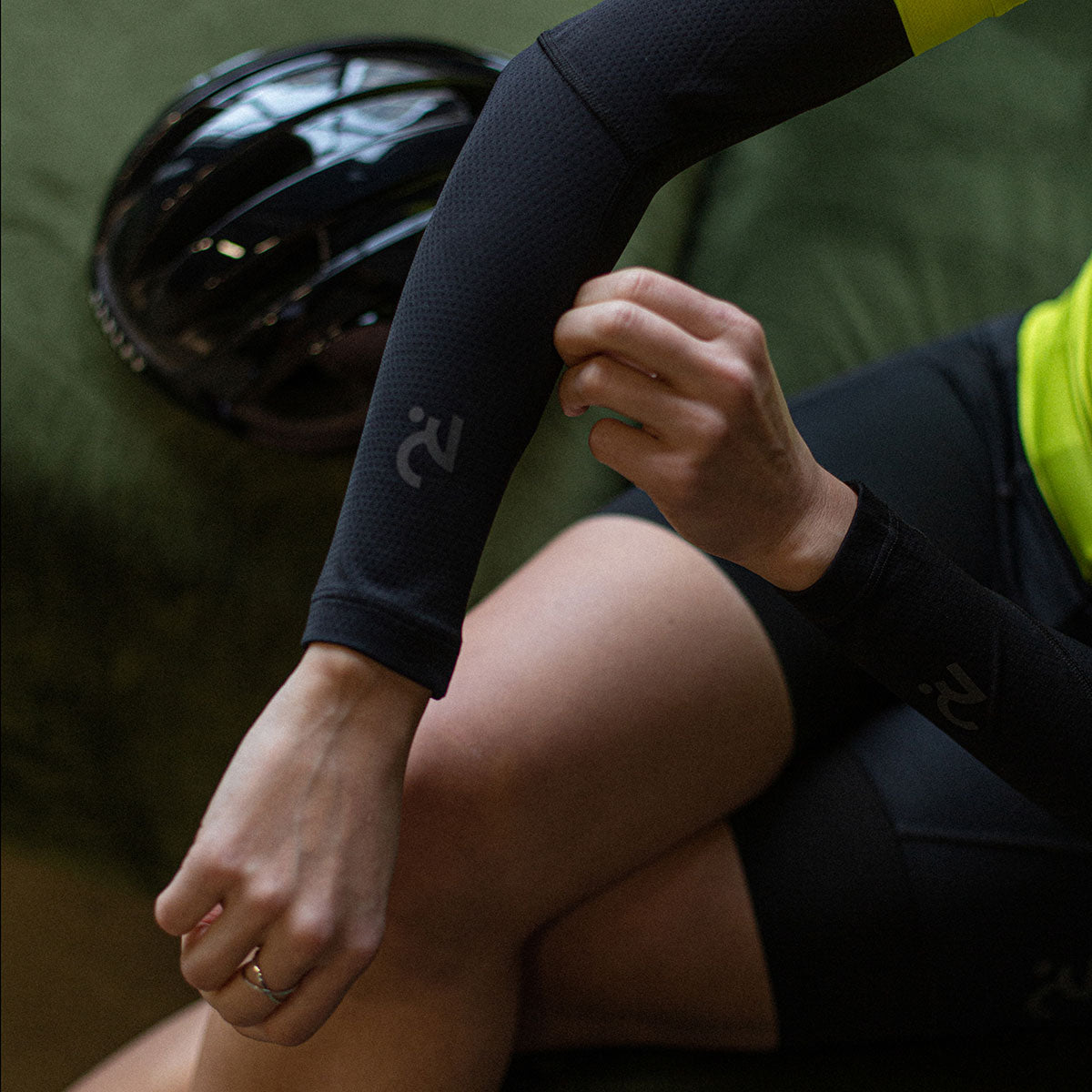
What you wear cycling comes down to temperature, then adjusted for wind, rain and how hard you're riding. The short version: above 20°C it's a short sleeve jersey and bib shorts; from 8 to 16°C you're adding arm and leg warmers and a base layer; below 8°C you move into thermal bib tights, a thermal base layer and a windproof layer. The trick is to dress for how you'll feel ten minutes in — warm at the start usually means overheating by the first climb. This guide breaks it down by °C band, with the layers that matter and how to adjust for the day in front of you.
Dress for ten minutes in, not the first cold minutes
Your body takes ten to fifteen minutes to warm up, so the right amount of kit feels slightly cold at the door and just right once you're rolling. Overdress and you'll be soaked in sweat by the first climb, which then chills you on the descent — the worst of both worlds. Two principles make the rest of this guide work. First, protect the core: keeping your torso and knees warm matters more than your arms. Second, build a system you can shed — arm and leg warmers, a gilet, and a pocketable windbreaker let you add or drop warmth mid-ride without stopping. And remember the number on the forecast isn't the number you feel: wind and fast descents make it colder, hard efforts and sun make it warmer.
Quick reference: what to wear by temperature
| Temperature | What to wear |
|---|---|
| 20°C and above | Short sleeve jersey and bib shorts; optional lightweight base layer |
| 15–20°C | Jersey and bibs; arm warmers for the first hour; light base layer |
| 12–15°C | Jersey and bibs, arm and leg warmers, base layer; gilet for descents |
| 8–12°C | Base layer or long sleeve jersey, arm and leg warmers, gilet or windbreaker, full-finger gloves |
| 5–8°C | Thermal base layer, long sleeve jersey, thermal bib tights or leg warmers, windproof jacket, winter gloves, headband |
| 0–5°C | Thermal base, winter jersey, thermal bib tights, windproof jacket, thermal gloves, cap, overshoes |
| Below 0°C | Thermal base and tights, insulated jacket, thermal gloves, overshoes, cap or buff |
The temperature bands in detail
20°C and above — warm
A short sleeve jersey and bib shorts is all most riders need. Counter-intuitively, a lightweight summer base layer can make you cooler, not warmer, by wicking sweat off the skin so it evaporates instead of soaking your jersey. Prioritise breathability, sun protection and hydration over anything else.
15–20°C — mild
Still jersey-and-bibs weather, but early mornings bite before the sun is up. Slip arm warmers on for the first hour and pocket them once you warm up — they're the single most useful piece for this range. A light base layer takes the edge off without adding real bulk.
12–15°C — cool
The classic warmers zone. Ride your normal jersey and bibs, add arm and leg warmers, and a base layer underneath. Carry a gilet for descents and café stops — it protects your core when you stop working without cooking you on the climbs. This is the most variable band, so the ability to add and drop layers matters most here.
8–12°C — cold
Start with a base layer under your jersey — or switch to a long sleeve jersey — with arm and leg warmers on from the off. Add a gilet or a packable windbreaker to block the wind chill, especially on descents. Full-finger gloves start to matter here, and you'll likely keep everything on for the whole ride.
5–8°C — very cold
This is where you move from warmers to a dedicated winter setup. A thermal base layer, a long sleeve jersey, and either thermal bib tights or bibs with leg warmers keep the legs protected. Add a windproof gilet or jacket, full winter gloves, and a headband under the helmet — a surprising amount of warmth is lost at the ears and neck. Fleece warmers do a better job than standard ones below 10°C.
0–5°C — freezing
Commit to winter kit. A thermal base layer, a winter or deep long sleeve jersey, and thermal bib tights are the foundation, with a windproof-front jacket over the top to stop the cold cutting through. Thermal gloves, a cap or headband, and overshoes to keep your feet working round it out. Everything here is about trapping warm air and blocking wind — breathability drops down the priority list.
Below 0°C — sub-zero
Maximum layering: thermal base, thermal tights, an insulated winter jacket, thermal gloves, overshoes, and a cap or buff to cover the ears. Extremities suffer first, so gloves and overshoes matter as much as the jacket. Honestly assess conditions — ice, wind chill and short daylight mean a shorter loop or an indoor session is sometimes the smarter call.
The pieces that do the heavy lifting
A few items cover most of the temperature range on their own. A base layer works year-round — wicking in summer, insulating in winter. Arm and leg warmers are the swing pieces for roughly 8 to 16°C, adding warmth you can strip off mid-ride. A gilet protects the core across the widest range of any layer, and a pocketable windbreaker turns a cold descent comfortable. Below 8°C, thermal bib tights take over from warmers. Get these right and you can dress for almost any day by mixing and matching rather than owning a wardrobe per season.
Adjust for the day, not just the thermometer
The forecast temperature is a starting point, not the answer. Wind is the big one — a 12°C day into a headwind feels several degrees colder, and every descent is a wind-chill event, so carry more than the number suggests if there's climbing. Rain pulls heat away fast, so a wet 12°C ride needs more than a dry one. Intensity cuts the other way: hard efforts and steady climbs generate real heat, so an interval day dresses lighter than an easy spin at the same temperature. And factor in yourself — some riders run hot, some cold, and a three-hour ride gives the weather more time to change than a quick hour. When in doubt, take the warmers you can pocket: the cost of carrying them is nothing, the cost of needing them is a miserable ride.
FAQ
What temperature should I wear arm and leg warmers?
Roughly 8 to 16°C. In that range they add real warmth you can strip off once you heat up. Above 16°C, bare arms and legs are usually more comfortable; below 8°C, a thermal setup insulates better.
Leg warmers or thermal bib tights?
Leg warmers above about 8°C, when you want to add and drop warmth on changeable days. Thermal bib tights below 8°C, or whenever it's cold start to finish and removing a layer isn't practical.
Do I need a base layer in summer?
Yes — a lightweight summer base layer wicks sweat off your skin so it evaporates, which keeps you cooler and drier than a jersey worn on its own. It's a warm-weather tool as much as a cold one.
How do I dress for a ride with big temperature swings?
Layer with pieces you can shed. Start in a base layer, arm and leg warmers, and a pocketable gilet or windbreaker, then drop layers as it warms and add them back on descents. One kit covers a wide range when it's built to come apart.
Is it better to overdress or underdress?
Slightly underdress. You'll warm up within ten to fifteen minutes, and being a touch cold at the start beats overheating and soaking your kit, which then chills you the moment you stop pedalling.
The right kit is the one matched to the day in front of you — layer it, shed it, and let the range above cover every temperature.
—
DTR — performance cycling and triathlon apparel, designed and developed in Ukraine.

Leave a comment
This site is protected by hCaptcha and the hCaptcha Privacy Policy and Terms of Service apply.