

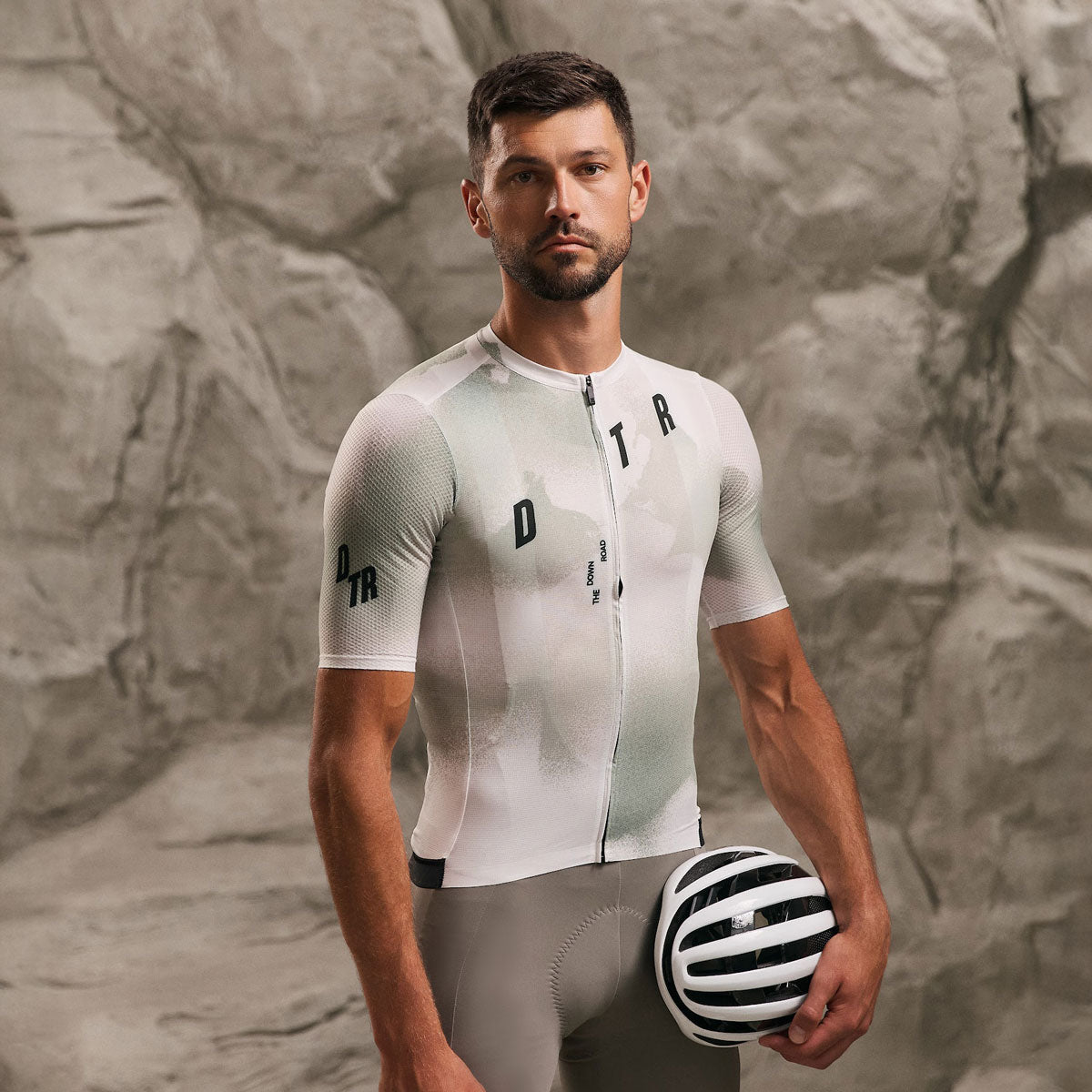
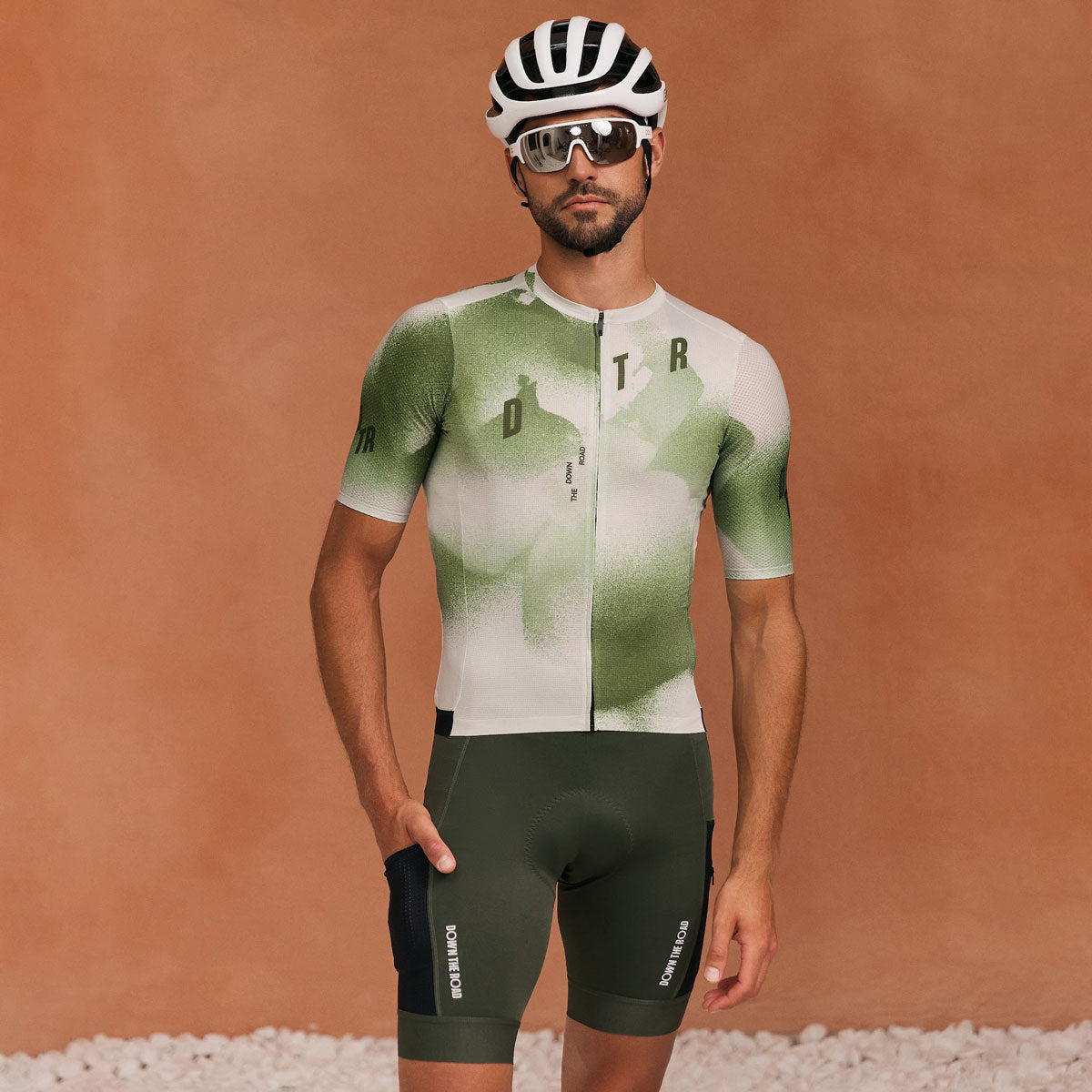
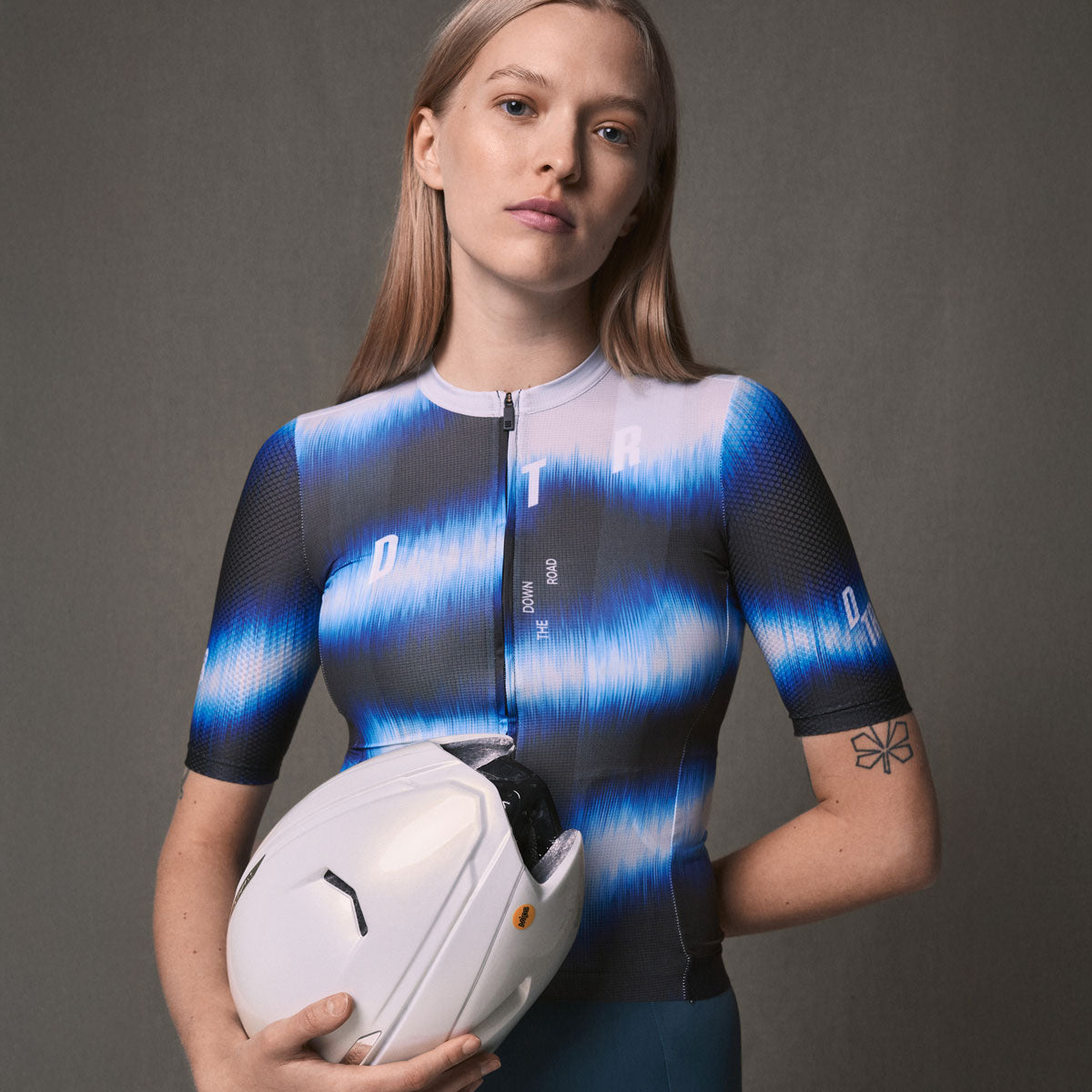
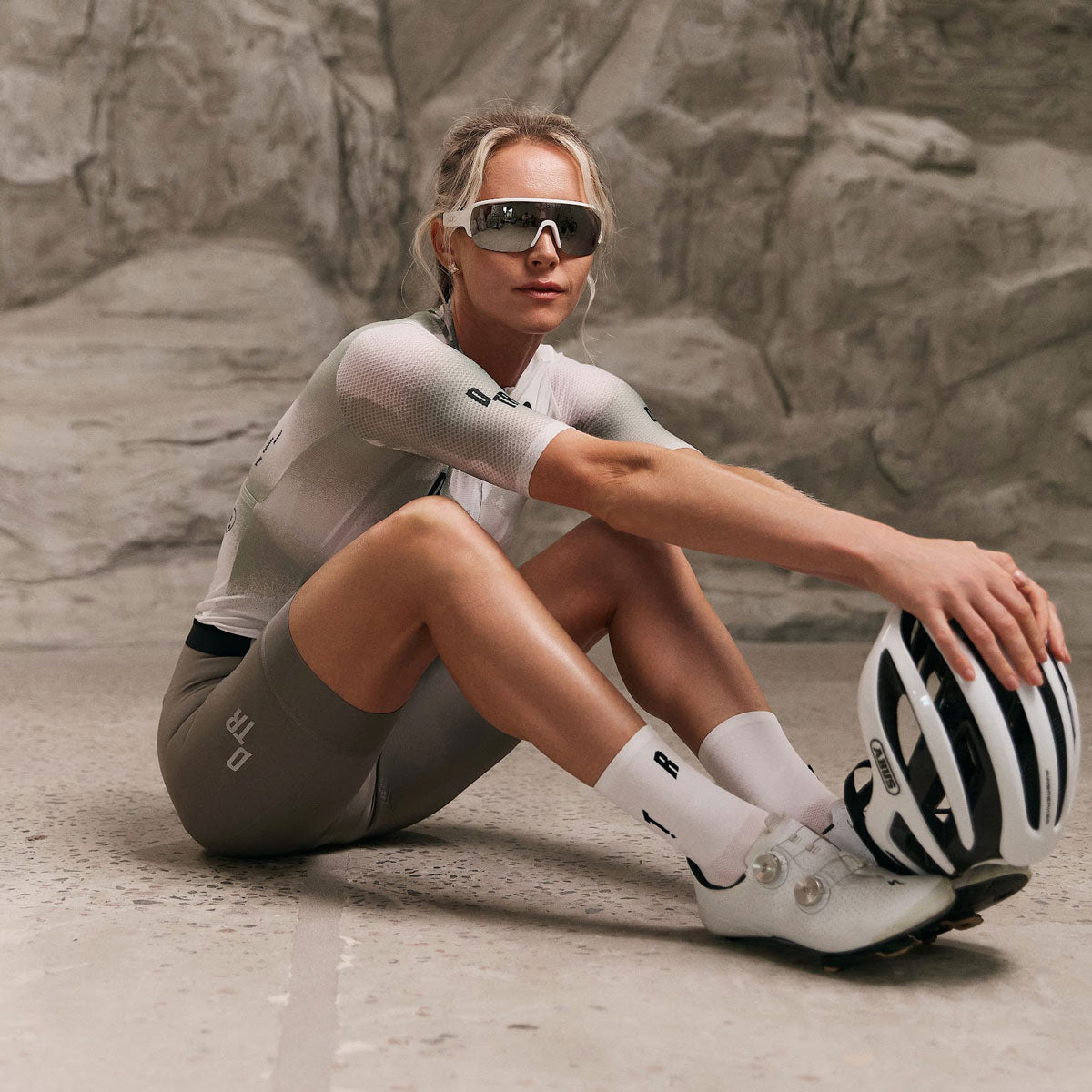
What you wear for gravel comes down to a breathable jersey and cargo bib shorts as the base, then layered and adjusted for the day's weather and the length of the ride. Gravel isn't just road riding on a rougher surface — it's usually longer, more remote, more self-supported and far more variable, so the kit leans toward durability, storage and adjustability over pure aero. This guide covers the gravel kit essentials, how to dress for long gravel rides and races by conditions, and what actually changes compared with the road.
How gravel kit differs from road
On the road you're rarely far from a café or a bail-out, and the surface is predictable. Gravel flips both: rides run longer, take you further from resupply, and throw dust, mud, sharp climbs and long exposed sections at you in the same day. Three things follow. You carry more — food, tools, a layer, water — so storage matters. Conditions swing more, so you dress in adjustable layers rather than one fixed kit. And the terrain is harder on fabric and fit, so durability and a short that stays put over rough ground earn their keep. Comfort over long hours beats marginal aero gains almost every time.
The core: a breathable jersey and cargo bib shorts
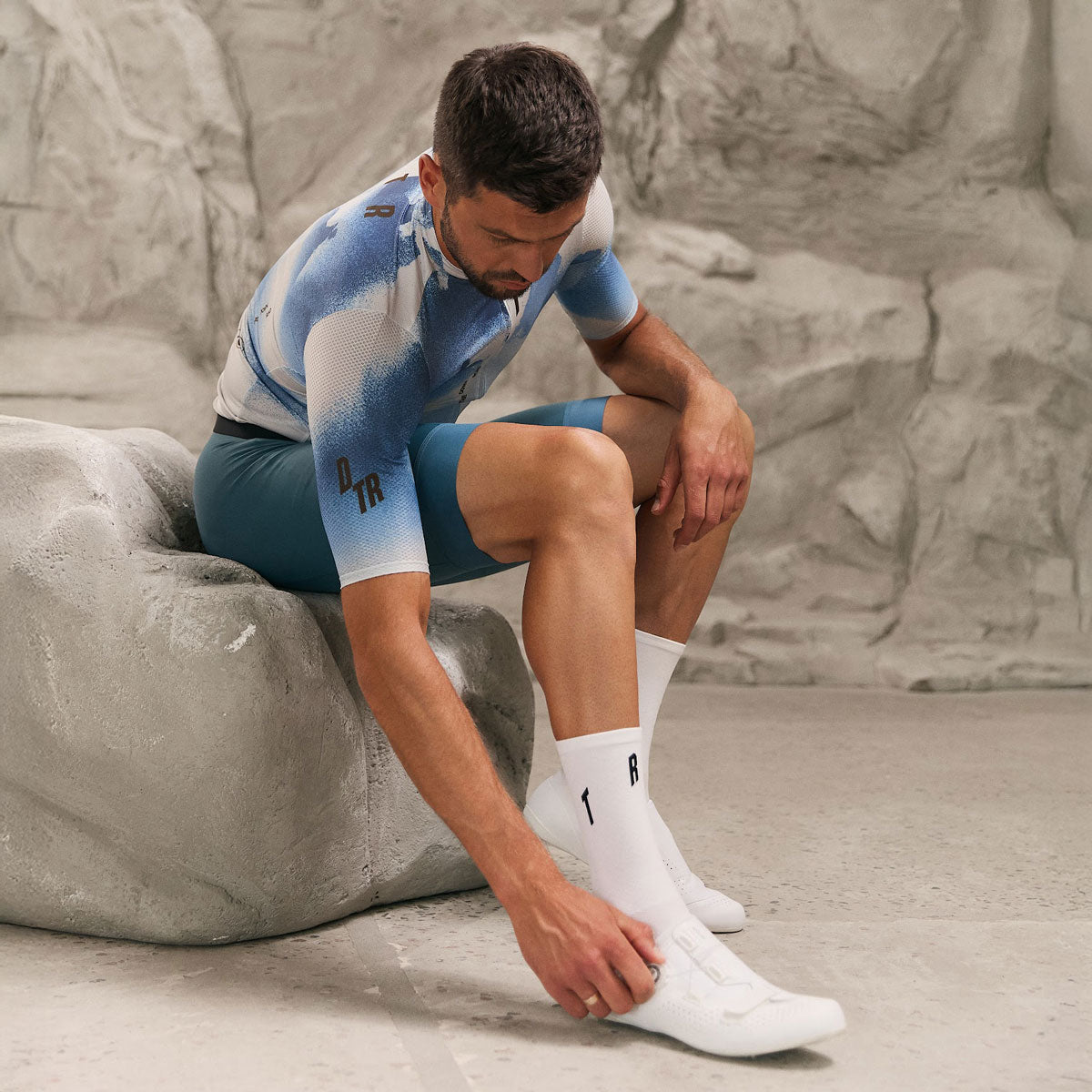
Every gravel kit starts with the same two pieces. A breathable jersey with secure rear pockets manages heat over long efforts and carries the essentials you want fast access to. Cargo bib shorts are the gravel-specific upgrade: the same multi-density chamois and supportive fit as a road bib, plus integrated thigh pockets that carry gels, bars, a phone and a tool without a bulging jersey or a saddle bag. On a five-hour self-supported ride, that extra storage is the difference between carrying what you need and rationing it. Build the base with DTR cargo bib shorts and a breathable jersey, then layer from there.
Layering for long gravel days
Gravel rewards a system you can adjust on the move, because a long day off-road often starts cold, heats up, climbs into wind and finishes in changeable light. The same three-layer logic as any cold-weather riding applies — base, insulation, shell — just dialled for longer, more variable days.
- Above 16°C: jersey and cargo bibs, plus a lightweight base layer that wicks sweat and keeps you cooler, not warmer.
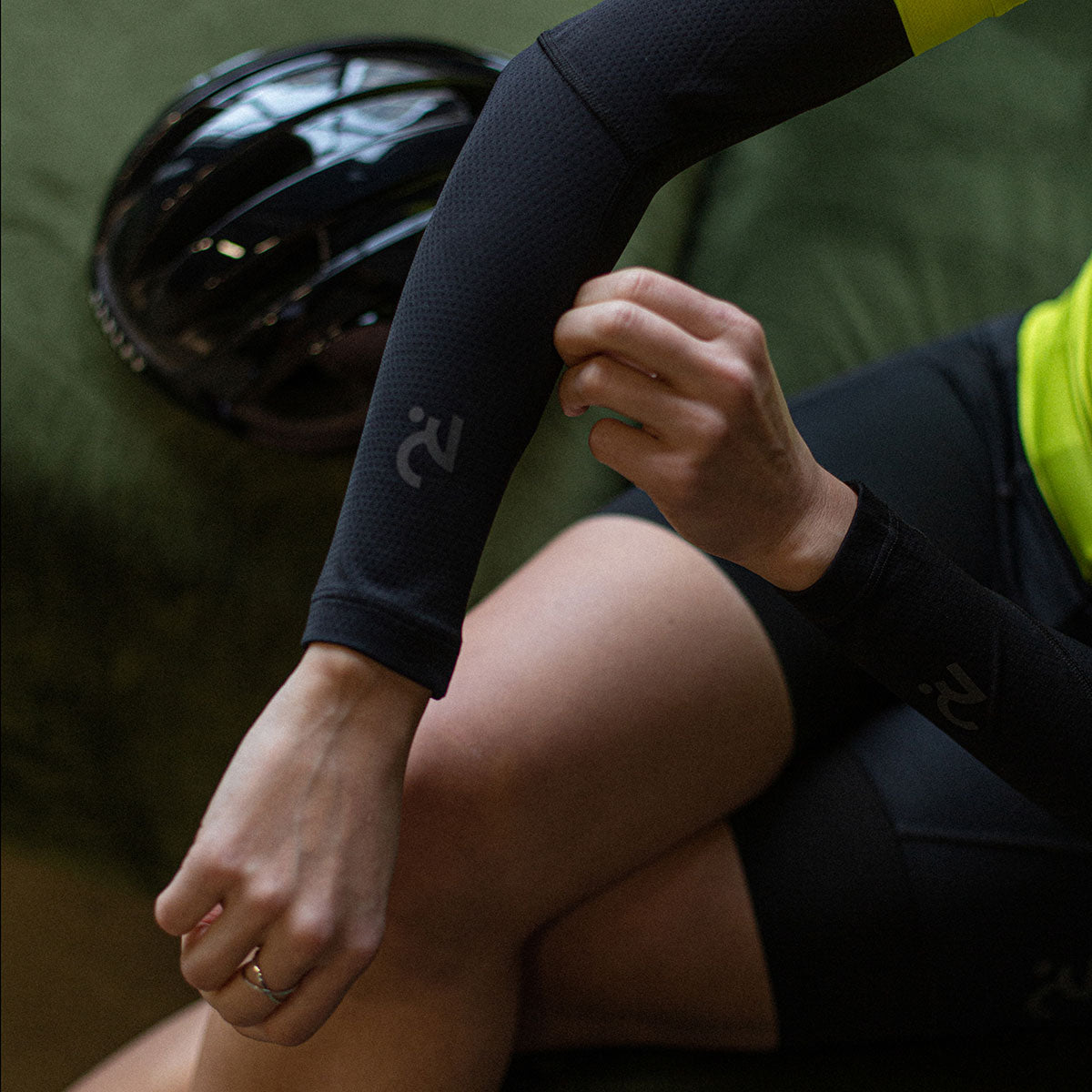
- 8–16°C: add arm and leg warmers you can strip and pocket, and a base layer. This is the classic gravel shoulder-season range.
- Below 8°C: a thermal base layer, warmers or thermal bib tights, and a packable windproof gilet or jacket for exposed sections and descents.
Carry a packable shell whatever the forecast — gravel takes you far enough that weather can turn before you're home, and a windbreaker that lives in a cargo pocket costs you nothing until you need it. (For the full temperature breakdown, see our guide to what to wear cycling by temperature.)
Storage is a kit decision, not an afterthought
The single biggest kit difference on gravel is how you carry things. Three jersey pockets fill fast once you add real food, a phone, a multi-tool, a spare and a layer for a long day. Cargo bib shorts solve most of it by moving weight low and stable onto the thighs, where it doesn't bounce or drag on your lower back the way a stuffed jersey does. Pair the cargo bibs' thigh pockets for frequently-accessed items (gels, bars) with your jersey pockets for a shell and phone, and you can go a long way self-supported without a saddle or frame bag. For bikepacking-length days, add bags — but for most long gravel rides and races, cargo bibs plus jersey pockets carry it.
Racing vs long adventure rides
The two pull the kit in slightly different directions. Gravel racing prioritises fast, no-stop nutrition access and a close, efficient fit — you want everything reachable without slowing, so cargo pockets and a race-fit jersey earn out. Long adventure and endurance gravel leans harder on comfort and capacity: a slightly more relaxed fit, more storage, and layers for a day that might run twice as long as planned. Both share the same core — jersey and cargo bibs — but the racer trims for speed and the adventurer builds for hours and self-sufficiency.
Hands, feet, head and eyes
Off-road adds protection that road riding often skips. Gloves matter more on gravel — the rougher surface and longer descents mean vibration and grip fatigue, and full-finger gloves take the edge off (and save skin in a crash on loose ground). Durable socks and shoes that clear mud keep your feet working over long days. A cap under the helmet manages sweat and sun, and eyewear is close to essential: dust, grit and flicked-up debris are constant on gravel, so wrap-around or clear lenses protect your eyes far more than on clean tarmac. These small pieces are often what ends a long gravel day early if you skip them.
Hot, cold and wet gravel
Conditions shift how you build the kit:
- Hot, dusty rides: prioritise breathability and a light summer base layer; sun protection and hydration matter more than anything, and dust makes eyewear non-negotiable.
- Cold gravel: the three-layer system with a thermal base and a windproof shell; extremities (gloves, overshoes, a cap) suffer first on exposed off-road sections.
- Wet and muddy: a shell that sheds a shower, quick-drying kit that doesn't hold water weight, and shoes and socks that drain. Wet gravel chills you faster than wet road because you're out longer and further from shelter.
Durability and fit for rough ground
Gravel is harder on kit than road, so fit and fabric that last matter. A short that rides up or a gripper that slips is worse over rough terrain, where you move around on the saddle far more than on smooth tarmac — so a supportive fit with wide, secure leg grippers is worth prioritising. Flatlock seams stop chafing over long, bouncing hours. And a four-way-stretch fabric that moves with you on and off the bike — because gravel means hike-a-bike, gates and stops — keeps you comfortable when a stiffer road-race short wouldn't.
FAQ
What should I wear for gravel cycling? A breathable jersey and cargo bib shorts as the base, layered with a base layer, arm and leg warmers and a packable shell for the conditions — plus gloves, eyewear and a cap for the rougher, dustier terrain.
Do I need special kit for gravel, or is road kit fine? Road kit works, but gravel-specific choices help: cargo bib shorts for storage on long self-supported rides, a durable fit that stays put over rough ground, and eyewear and gloves for dust and vibration.
Why cargo bib shorts for gravel? Gravel rides are longer and more remote, so you carry more. Cargo bibs add thigh pockets that carry food, a tool and a phone low and stable, without a bulging jersey or a saddle bag.
What do I wear for a gravel race? The same core — jersey and cargo bibs — trimmed for speed: a close race fit and fast, no-stop nutrition access from cargo pockets, with minimal layers you can shed.
How do I dress for a long gravel ride with changing weather? Layer with pieces you can adjust: a base layer, arm and leg warmers you can pocket, and a packable windproof shell. Carry the shell whatever the forecast — gravel takes you far enough that the weather can turn before you're back.
The bottom line
For long gravel rides and racing, start with a breathable jersey and cargo bib shorts, layer with a base, warmers and a packable shell for the day's conditions, and don't skip the protection — gloves, eyewear, a cap — that rough, remote riding demands. Dress for adjustability and self-sufficiency over pure speed, and carry a shell you'll be glad of when the weather turns. Build your gravel base with DTR cargo bib shorts and a breathable jersey.
—
DTR — performance cycling and triathlon apparel, designed and developed in Ukraine.

Leave a comment
This site is protected by hCaptcha and the hCaptcha Privacy Policy and Terms of Service apply.