

What you wear in the rain is decided by temperature far more than by how hard it is raining. Above roughly 15°C you can ride soaked and stay perfectly comfortable in normal summer kit. Below about 10°C the problem changes completely: you are no longer trying to stay dry, you are trying to stay warm while wet.
This guide covers how to make that call, what actually keeps you warm once the kit is wet, how to handle hands, feet and head, being seen when the light goes flat, and what to do in the first ten minutes after you stop.
Temperature decides, not the rainfall
Warm rain is a non-event. Wear what you would have worn anyway, accept that you will be wet within ten minutes, and ride. Cold rain is a genuine hazard, because water strips heat from the body far faster than air does, and a long descent in soaked kit drops your core temperature quickly.
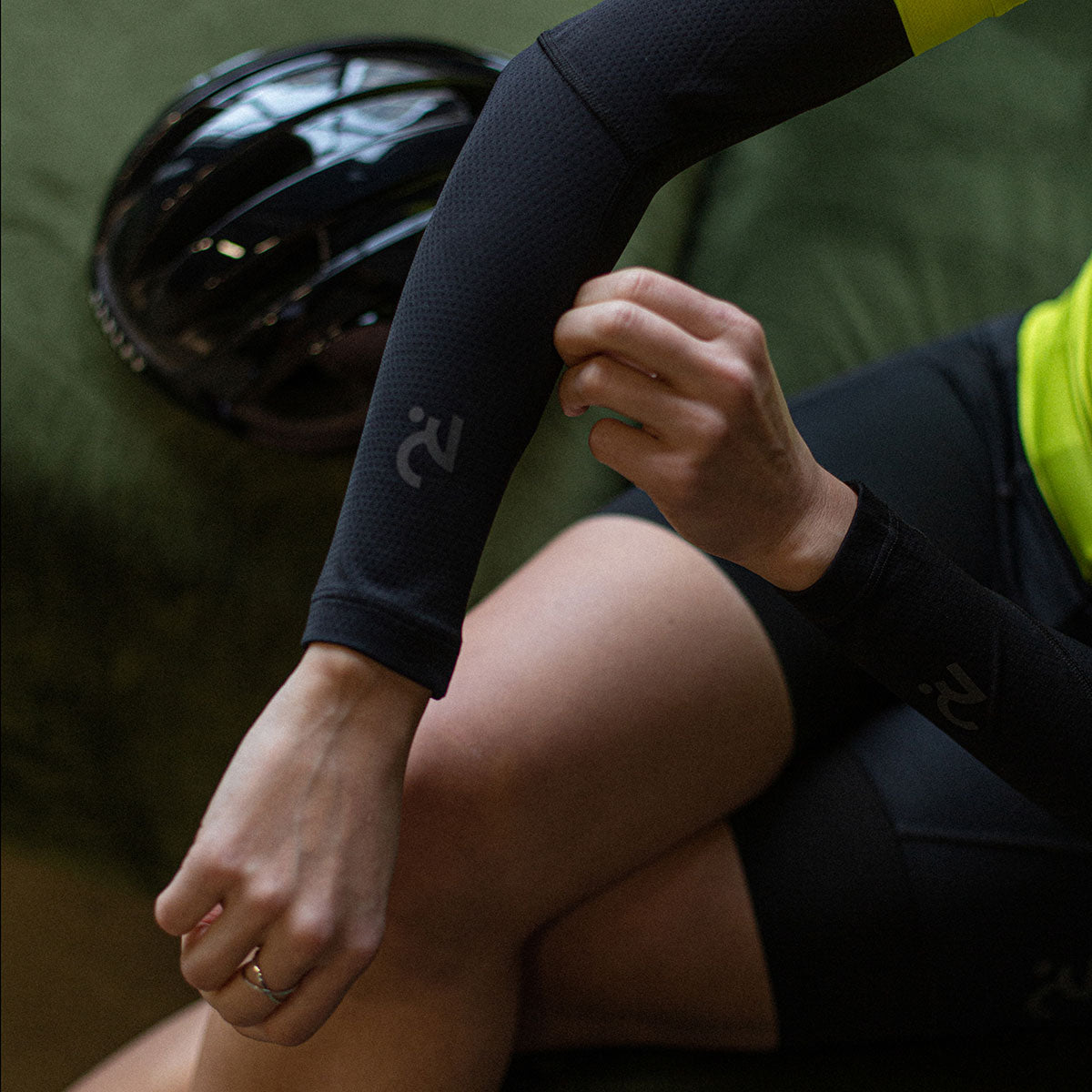
A rough working scale: above 15°C, summer kit and nothing else. Between 10°C and 15°C, add a windproof layer for descents and consider arm warmers. Below 10°C, treat it as a cold ride first and a wet ride second — thermal bib tights or leg warmers, a long sleeve layer, and something windproof over the top.
Why staying dry is the wrong goal
On a ride of any real intensity you will end up wet regardless. A fully waterproof shell keeps rain out, but it also traps the sweat you generate climbing, and you finish just as damp from the inside. The goal that works is staying warm while wet, and that is a different problem with a different solution.
What delivers it is a layer that blocks wind over a layer that insulates when damp. Wind is what turns wet skin cold — evaporation off a soaked jersey at 40kph on a descent is what chills you, not the rain landing on you. A windbreaker or vest pulled on before the descent does more for your comfort than any amount of water resistance.
Merino or a merino blend under the jersey is the other half of it. Wool retains a usable amount of warmth when wet, where a saturated lightweight synthetic base layer largely stops insulating. On a cold, wet ride that difference is significant.
Hands, feet and head
Extremities are where wet rides are won or lost. Hands go first and matter most, because cold hands mean poor braking and gear changes on exactly the surfaces where you need both. Feet go second, and stay cold for the rest of the ride once they are wet through.
For hands, the useful approach is a windproof outer over a thin glove rather than one thick glove — a soaked thick glove is worse than a damp thin one under a shell. For feet, overshoes are the highest-return item in wet conditions: they cut the wind over the top of the shoe and slow how fast water gets in. For the head, a cycling cap under the helmet keeps rain and road spray off your glasses, which is a safety matter more than a comfort one.
Being seen when the light goes flat
Rain kills contrast. Spray, grey light and windscreen wipers together mean drivers see you later than they would on a dry day, and the muted colours that photograph well disappear completely in those conditions.
Fluorescent colours work in daylight and dull light because they convert UV into visible light — they are the right answer for a grey afternoon. Retro-reflective detail works at night against headlights. They do different jobs, and a wet winter ride usually needs both, along with lights front and rear regardless of the hour.
What to do the moment you stop
Get out of wet kit immediately. The hardest part of a cold wet ride is often the twenty minutes after it, standing at a café or a car park with soaked layers against the skin and no effort keeping you warm. A dry base layer and a jacket waiting in the car changes the whole experience.
The kit itself needs attention too. Rinse road grit out before it dries into the fabric, wash cool without softener, and dry away from direct heat. Grit left in a chamois is what turns a wet ride into skin irritation on the next one.
Frequently asked questions
Do I need a waterproof jacket to ride in the rain?
Not usually. For rides at effort, a windproof layer over kit that insulates when damp is more comfortable than a sealed shell, which traps sweat. A fully waterproof layer earns its place mainly at low intensity or in prolonged cold rain.
What temperature is too cold to ride in the rain?
There is no fixed number, but below about 5°C in steady rain the margin for error gets small, especially on long descents. Shorten the route, plan a warm stop, and carry a dry layer.
Should I wear a base layer in the rain?
Yes, and merino or a merino blend if it is cold. It keeps insulating when wet, which a saturated ultralight synthetic does not.
How do I keep my glasses clear?
A cycling cap with the peak down handles most of it. Clear or low-light lenses are more useful than dark ones in grey rain.
Are overshoes worth it?
In cold wet conditions they are among the best-value items in the wardrobe. They will not keep your feet dry indefinitely, but they slow the process considerably and cut the windchill.
Build your wet-weather layer with the DTR windbreakers at /collections/windbreakers.
DTR — performance cycling and triathlon apparel, designed and developed in Ukraine.

Leave a comment
This site is protected by hCaptcha and the hCaptcha Privacy Policy and Terms of Service apply.