

Leg warmers or thermal bib tights? The short version: leg warmers for roughly 8°C to 16°C and changeable days when you want to add or drop warmth mid-ride; thermal bib tights below 8°C, or any ride that's cold from start to finish. Both keep your legs warm — they just solve different problems. This guide breaks the choice down by temperature, ride length and use case, so the right one ends up in your drawer.
The short answer
Leg warmers are the versatile, transitional option: removable, packable, and made for the 8–16°C window where the day might warm up. Thermal bib tights are the committed winter option: a one-piece insulated system for sustained cold below 8°C. If the temperature will swing during your ride, or you start cold and finish warm, take leg warmers. If it's cold start to finish, wear bib tights.
How they actually differ
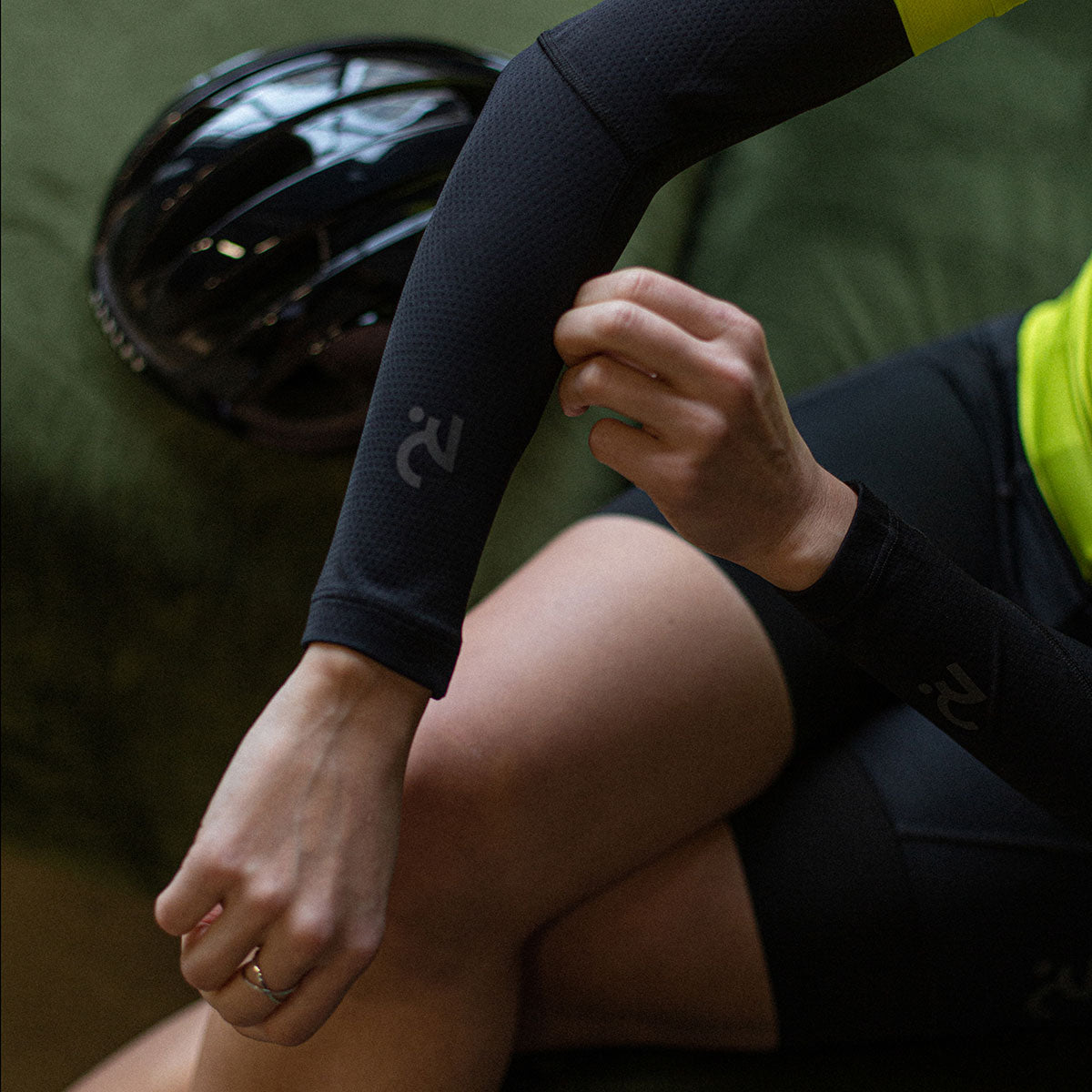
Leg warmers are insulating sleeves that cover you from ankle to mid-thigh, worn over your normal bib shorts and held up by a silicone gripper above the knee. You ride the bibs you already own and add or strip warmth as conditions change — then pocket the warmers when the sun comes out.
Thermal bib tights are a single garment: fleece-lined, full-length, with the chamois built in. They replace your bib shorts for the day, usually with a wind-resistant front panel and more coverage across the whole leg. There's nothing to remove mid-ride — and that's the point.
The real difference is flexibility versus commitment. Leg warmers fold into a jersey pocket; bib tights are what you put on and leave on.
Choosing by temperature
Temperature is the first filter:
- Above 16°C — bare legs. Neither is needed unless you're cold-sensitive at the knee.
- 8–16°C — leg warmers. This is their range: enough warmth for cold starts and descents, easy to strip off when your core heats up. (Our guide to what to wear cycling by temperature has the full breakdown.)
- Below 8°C — thermal bib tights. Leg warmers stop being enough; full-leg insulation and a wind-resistant front do a better job of keeping the deep cold out.
Around 8°C the two overlap, and that's where the rest of the decision comes in.
Choosing by how the day changes
The thermometer is only a starting point. What matters as much is whether the temperature will move.
- Changeable days — a cold 9°C morning that becomes a mild 15°C afternoon is leg-warmer weather. You want to shed warmth without stopping.
- Consistent cold — a 4°C ride that stays 4°C is bib-tights weather. There's nothing to shed, so the one-piece warmth and coverage win.
If you ride early and finish late, or climb warm and descend cold, flexibility beats raw insulation — leg warmers let you manage it.
Choosing by ride length and use case
- Racing and fast group rides in spring and autumn: leg warmers. You can pocket them the moment the bunch lifts the pace and your legs are warm.
- Long winter base miles: thermal bib tights. Hours in steady cold are exactly what they're built for, and the built-in chamois is calibrated for long time in the saddle.
- Commuting: either — pick by your climate. Consistent cold commute, bib tights; mild but variable, leg warmers you can adjust at both ends of the day.
- Travelling light: leg warmers. One pair of bibs plus warmers covers far more temperature range than packing full tights.
Can you use both?
Across a year, most riders own both — leg warmers for the shoulder seasons and bib tights for deep winter. What you don't do is wear leg warmers under bib tights; that's overkill and restricts movement. Think of them as covering two adjacent temperature bands, not as layers to stack.
Which should you buy first?
If you already have good bib shorts and ride mostly in spring and autumn, buy leg warmers first — they extend the kit you own into cold weather for very little outlay. If your riding runs through deep winter, thermal bib tights are the better first purchase: they're the piece that actually makes sub-8°C riding comfortable.
FAQ
At what temperature should I switch from leg warmers to bib tights? Around 8°C. Above it, leg warmers over your bibs are usually enough and more flexible. Below it, thermal bib tights insulate the whole leg better and block wind chill.
Are thermal bib tights warmer than leg warmers? Yes. They cover the full leg, are fleece-lined, and usually add a wind-resistant front panel. Leg warmers trade some of that warmth for packability and the ability to remove them mid-ride.
Do thermal bib tights have a chamois? Yes — they're a complete short-and-tights in one, with a multi-density chamois built in, so you don't wear separate bib shorts underneath.
Can I just wear leg warmers all winter? Below about 8°C, and especially in wind or rain, leg warmers leave gaps and thinner coverage that bib tights close. For consistent cold, tights are the more comfortable choice.
Which is better value? Leg warmers are cheaper and extend bibs you already own, so they're the better value if you ride mostly in the 8–16°C range. If you ride through winter, bib tights earn their cost in comfort over long cold hours.
The bottom line
Match the kit to the day: leg warmers for changeable, 8–16°C riding you can adjust on the move; thermal bib tights for consistent cold below 8°C. Build out the transitional end with the DTR leg warmer and arm warmer range, or step into full winter with DTR thermal bib tights.
DTR — performance cycling and triathlon apparel, designed and developed in Ukraine.
Choosing between a shorter warmer and full coverage first? Read Knee Warmers vs Leg Warmers: Which Do You Actually Need?.

Leave a comment
This site is protected by hCaptcha and the hCaptcha Privacy Policy and Terms of Service apply.