





Chamois cream is not essential for every ride — for most rides under a couple of hours, in a good pair of bib shorts, you can skip it entirely. It earns its place on rides beyond about three hours, in heat, and whenever friction has been a problem before. This guide covers what it actually does, when it's worth using, where it goes, and how much to apply.
What does chamois cream actually do?
Chamois cream reduces friction between your skin and the chamois — that's the whole job. It's a viscous, skin-safe cream that lets skin and pad glide over each other instead of rubbing, which is what prevents the hot spots and chafing that long hours in the saddle produce. Many formulas also include mild antibacterial ingredients, a nod to the fact that broken, chafed skin plus bacteria is how saddle sores start.
What it doesn't do: fix a chamois that's worn out, rescue shorts that don't fit, or compensate for kit that wasn't washed after the last ride. Friction is one cause of saddle trouble — cream addresses that one, not the others.
Do you actually need it?
For short rides in well-fitting bib shorts — no, most riders don't. A good multi-density chamois against clean skin handles an hour or two without help. Chamois cream starts earning its place when the hours stack up:
- Rides over about three hours. Friction is cumulative — thousands more pedal strokes, progressively softer skin.
- Hot, humid days. Sweat-soaked skin breaks down faster, and more moisture means more friction.
- Back-to-back long days. Training camps, tours, stage events — skin never fully recovers between rides.
- If you've chafed before. Riders whose skin runs sensitive, or who've had saddle sores, benefit at shorter durations too.
- Racing long. A gran fondo or long-course triathlon is not the day to find out how hour five feels without it.
If none of those apply, skipping it is a legitimate choice, not a rookie mistake.
Where does it go — skin, chamois, or both?
Directly onto the skin is the method most riders settle on: apply a generous layer wherever you contact the saddle — sit-bone area, inner thighs, anywhere that has ever chafed. Some riders also spread a thin layer onto the chamois itself; both work, and doing both is common on very long days.
Apply it just before you put your bib shorts on, not hours in advance. And remember the order of operations: clean skin, clean shorts, then cream. Cream over yesterday's kit defeats the point.
How much should you use?
More than feels reasonable the first time — a two-finger scoop is a normal starting dose, not excess. Too little simply disappears into skin and fabric within the first hour and does nothing when you actually need it. It should feel slightly ridiculous when you walk to the bike; it feels exactly right at hour four.
For very long days, some riders carry a small tube or sachet and reapply at a mid-ride stop — worth it for anything past the six-hour mark, or a long-course triathlon where you're wet from the swim.
When can you skip it?
Short rides, cool days, proven shorts: skip it freely. The honest hierarchy of saddle comfort is fit first, clean kit second, cream third. If you're chafing on 90-minute rides, the fix is almost never more cream — it's checking how your bib shorts fit, retiring a flattened pad, and washing kit after every ride. Cream is the finishing layer on top of those habits, not a substitute for them.
One more skip-worthy case: if a sore or broken skin is already there, cream is not treatment. Rest and cleanliness are — and anything persistent or infected-looking belongs with a doctor, not a chamois tin.
FAQ
Do you need chamois cream for short rides? No — in well-fitting bib shorts with a healthy chamois, rides under a couple of hours don't need it. It starts paying off beyond about three hours, in heat, and for riders who chafe easily.
Where do you apply chamois cream? Directly onto clean skin, wherever you contact the saddle — and optionally a thin layer on the chamois too. Apply just before putting your shorts on, always onto clean skin and clean kit.
How much chamois cream should you use? Be generous — a two-finger scoop is a normal dose. Too little vanishes in the first hour. On very long rides, reapplying at a stop is worth it.
Does chamois cream prevent saddle sores? It addresses one of the three causes — friction — so it genuinely helps on long rides. It doesn't fix a bad fit, a worn chamois or dirty kit, which matter more.
Can you ride a triathlon with chamois cream? Yes — long-course triathletes routinely apply it in transition or before the swim. After the swim your skin is wet, which is exactly when friction climbs.
The bottom line
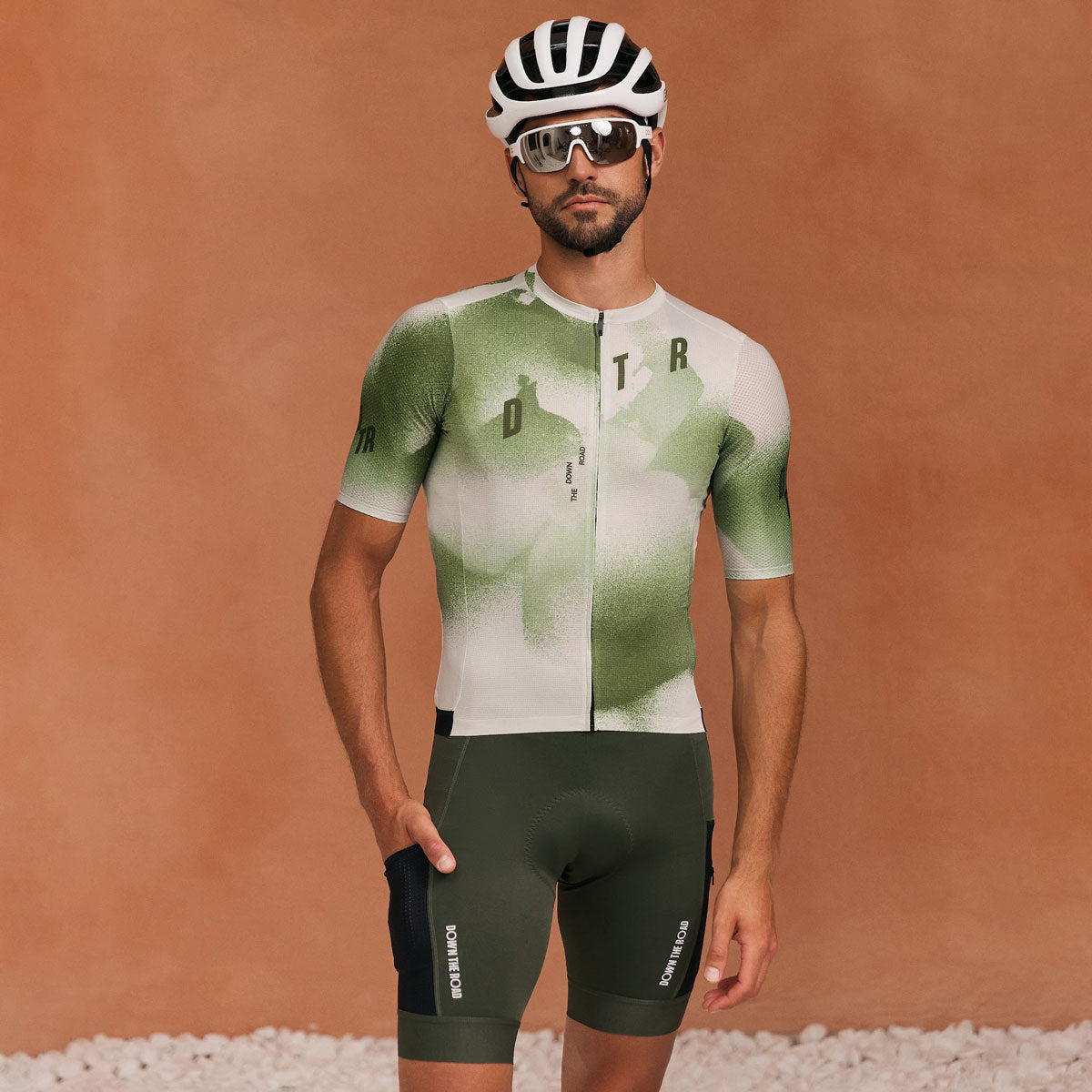
Chamois cream is a long-ride tool: skip it for short rides in shorts that fit, use it generously past three hours, in heat, and whenever chafing has found you before. It goes on clean skin, under clean kit, just before you dress — and it works alongside good habits, not instead of them. The other half of the equation is a chamois worth protecting: the DTR bib shorts range is where to start.
DTR — performance cycling and triathlon apparel, designed and developed in Ukraine.

Leave a comment
This site is protected by hCaptcha and the hCaptcha Privacy Policy and Terms of Service apply.