


The most sustainable cycling kit in 2026 is the kit you don't replace. Materials matter — recycled polyester, regenerated nylon, bio-based fibres, PFAS-free finishes — but the biggest lever is still how many years a jersey or a pair of bib shorts stays in your rotation. This guide covers what sustainable cycling apparel actually means this year, which fabric and certification claims stand up, and how to judge a kit before you buy.
What makes cycling kit sustainable?
Three things, all measurable: fabric with recycled or bio-based content instead of virgin petroleum fibre; production without harmful chemistry — PFAS-free water repellents, certified dye houses; and construction durable enough to be worn for years and repaired after a crash, not replaced. A kit that fails one of these isn't sustainable, however green the marketing.
Beyond those three, the honest answer includes behaviour: washing cold, skipping the dryer, and repairing instead of rebuying extend a garment's life more than any material swap.
Do recycled fabrics perform as well as virgin ones?
Yes. At the polymer level, recycled polyester and regenerated nylon are the same material as their virgin equivalents, so wicking, stretch recovery and durability are determined by how the fabric is knitted and finished, not by where the fibre came from. A race-fit jersey in recycled polyester behaves like a race-fit jersey.
The caveat is elastane. The stretch fibre that gives a race-fit cut its compression is still mostly virgin, and it's the first thing to degrade with heat and chlorine. That's a care question as much as a material one — cold washes and no dryer protect exactly the part recycling can't yet cover.
What are bio-based performance fabrics?
Bio-based fabrics replace petroleum feedstock with renewable sources — polyamide made from castor-bean oil is the most established in performance apparel. In 2026 they're no longer lab projects: bio-based nylons knit, stretch and wick like their fossil equivalents and are appearing in jerseys and base layers. Content percentages still vary widely, so read the label: "bio-based" can mean 30% or 100% of the fibre.
Why is PFAS-free suddenly everywhere?
Because regulation caught up with chemistry. PFAS — the "forever chemicals" long used in durable water repellent (DWR) finishes — are being phased out across the EU, and performance brands have moved to PFAS-free DWR on windbreakers and rain shells. The new finishes bead water slightly differently and need reactivating more often (a warm iron or a low tumble), but for cycling use the protection is equivalent.
Why durability is the biggest lever
Spread a garment's footprint over its life and the maths is blunt: a bib short worn for four seasons beats a "greener" one replaced every year. Durability is where performance and sustainability stop competing — the same flatlock seams, technical lycra and reinforced stitching that survive race distance also keep kit out of landfill. Repairability counts double: a crash shouldn't retire a bib short if a panel can be replaced. DTR's crash replacement exists for exactly that reason.
Which certifications are worth trusting?
Three cover most of what matters. OEKO-TEX Standard 100 tests the finished fabric for harmful substances — a floor, not a ceiling. bluesign audits the chemistry and resource use of the mills themselves. GRS (Global Recycled Standard) verifies recycled content claims and the chain of custody behind them. A brand quoting one of these with a percentage is telling you something checkable; a leaf icon is not.
How do you read a sustainability claim?
Look for the number and the noun. "Jersey body fabric: 78% recycled polyester, GRS certified" is a claim you can weigh. "Eco-friendly collection" is not. Ask what part of the garment the claim covers (body fabric, trims, chamois?), whether the percentage refers to the whole garment or one panel, and whether durability data — or at least a repair and crash policy — backs it up. Brands doing the work tend to show the work.
Where DTR stands
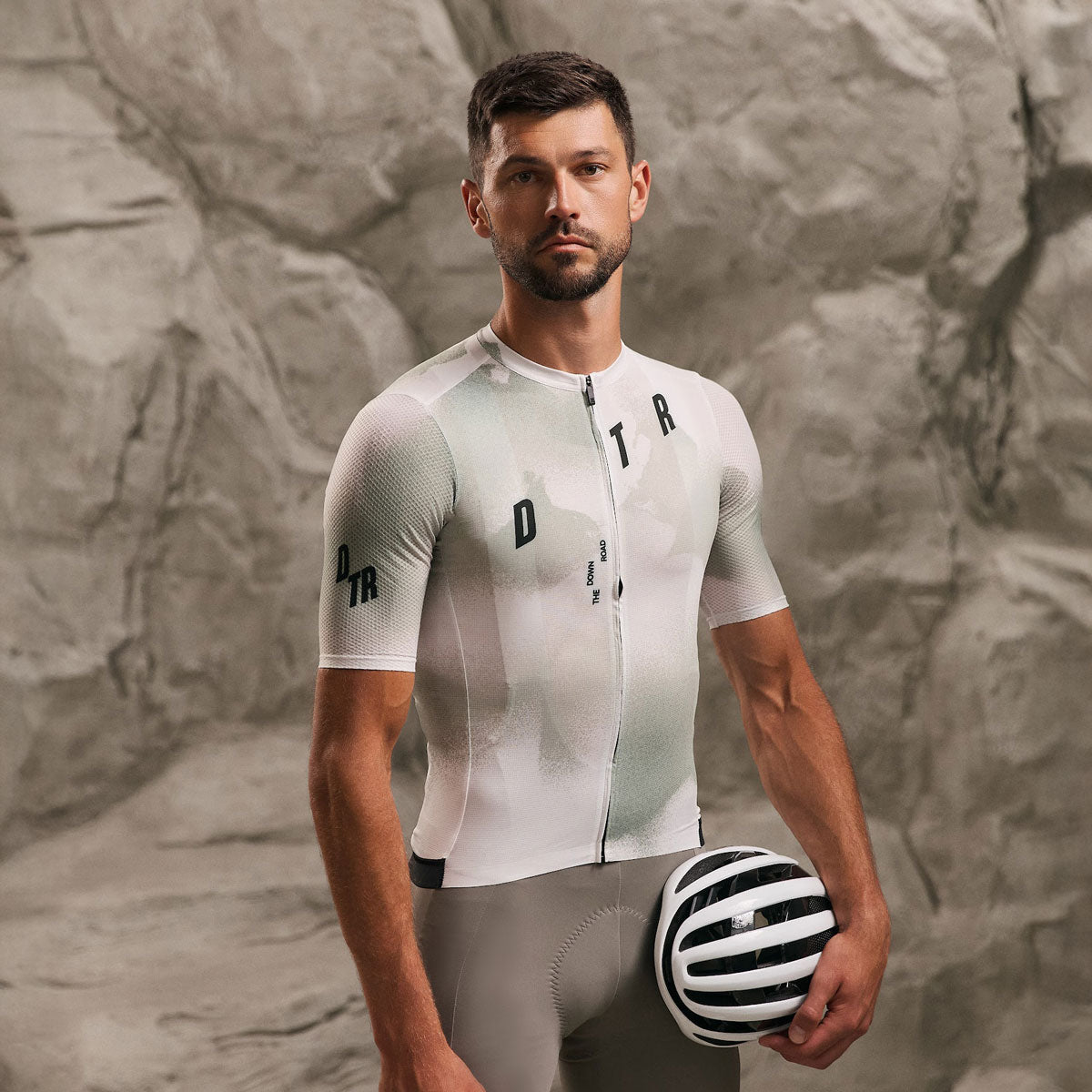
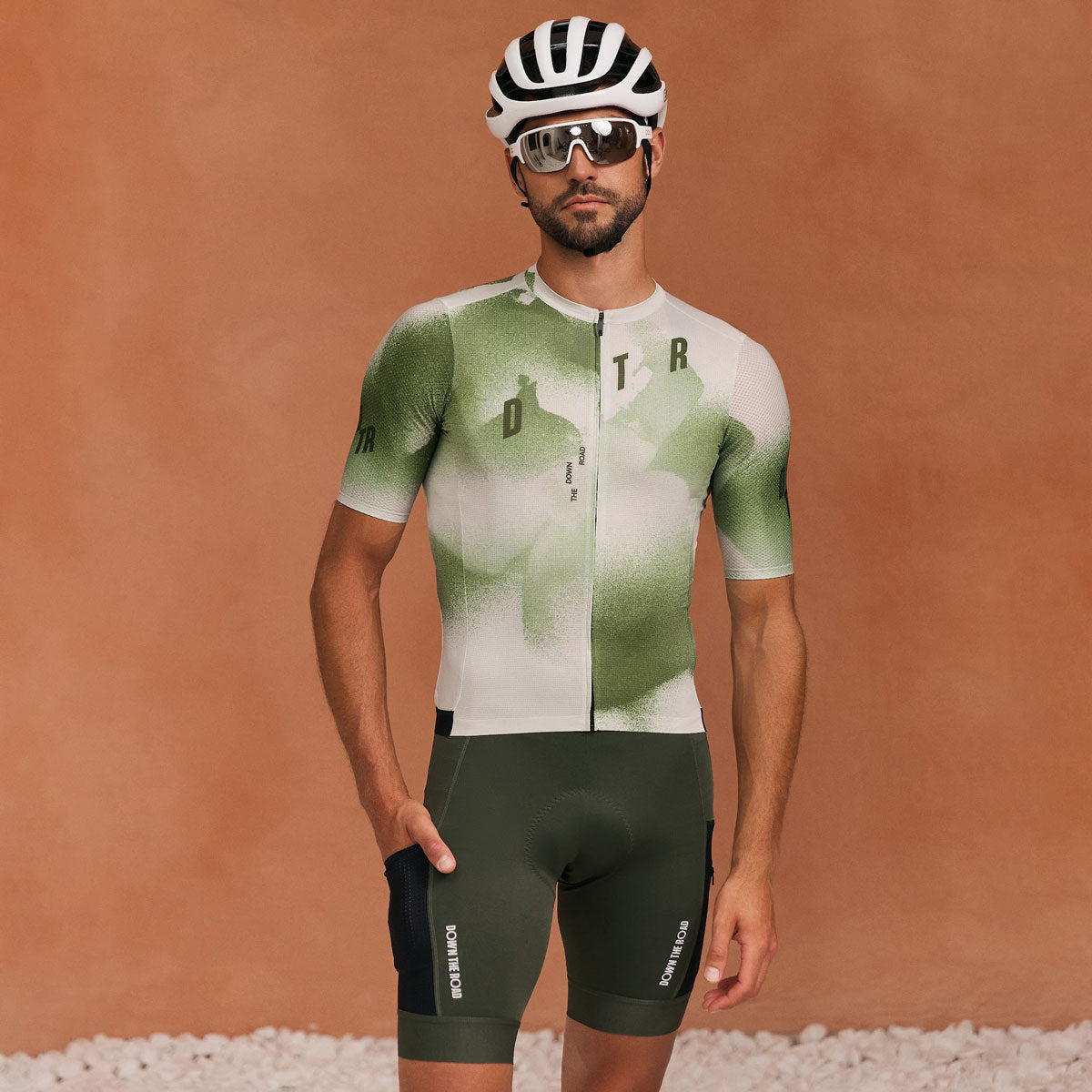
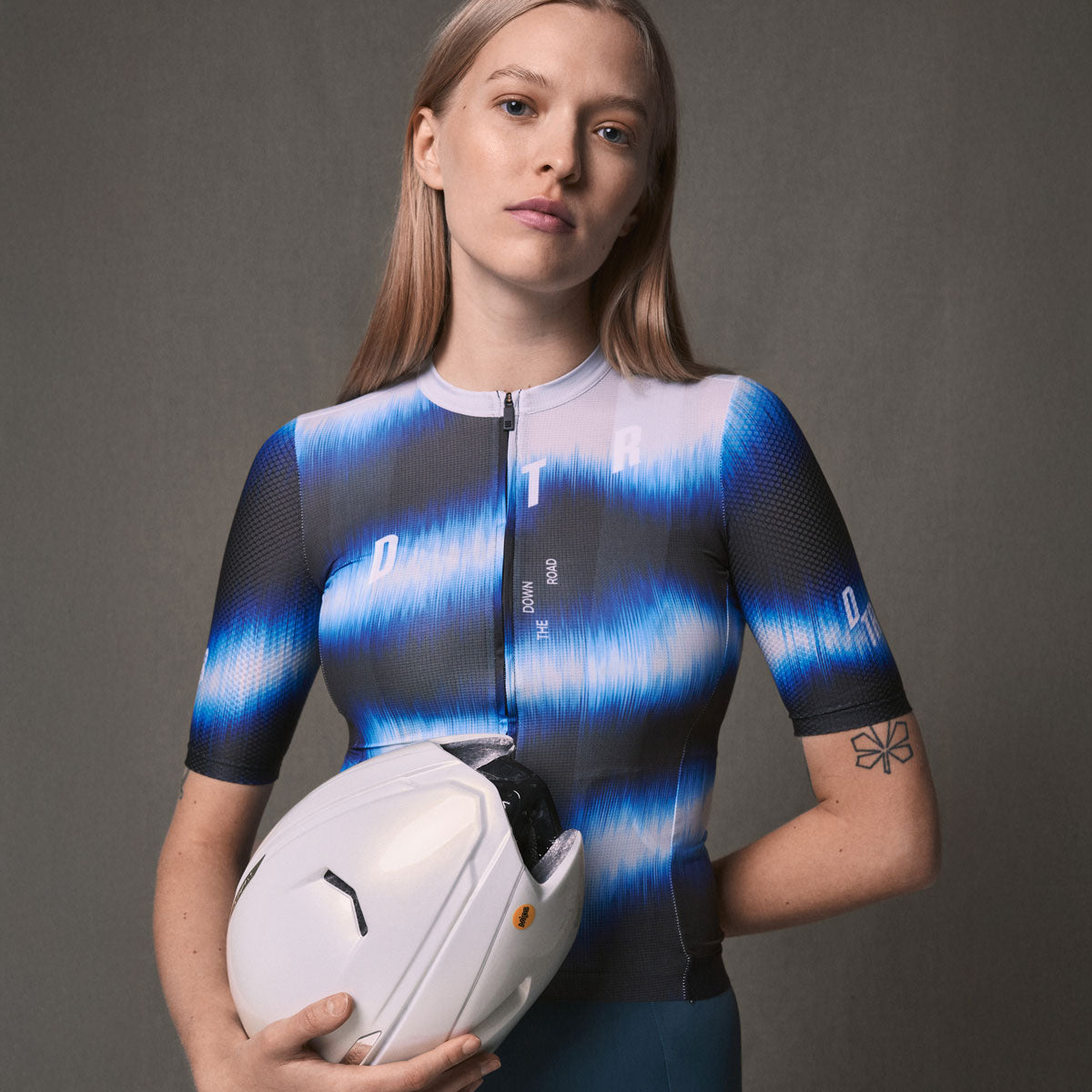
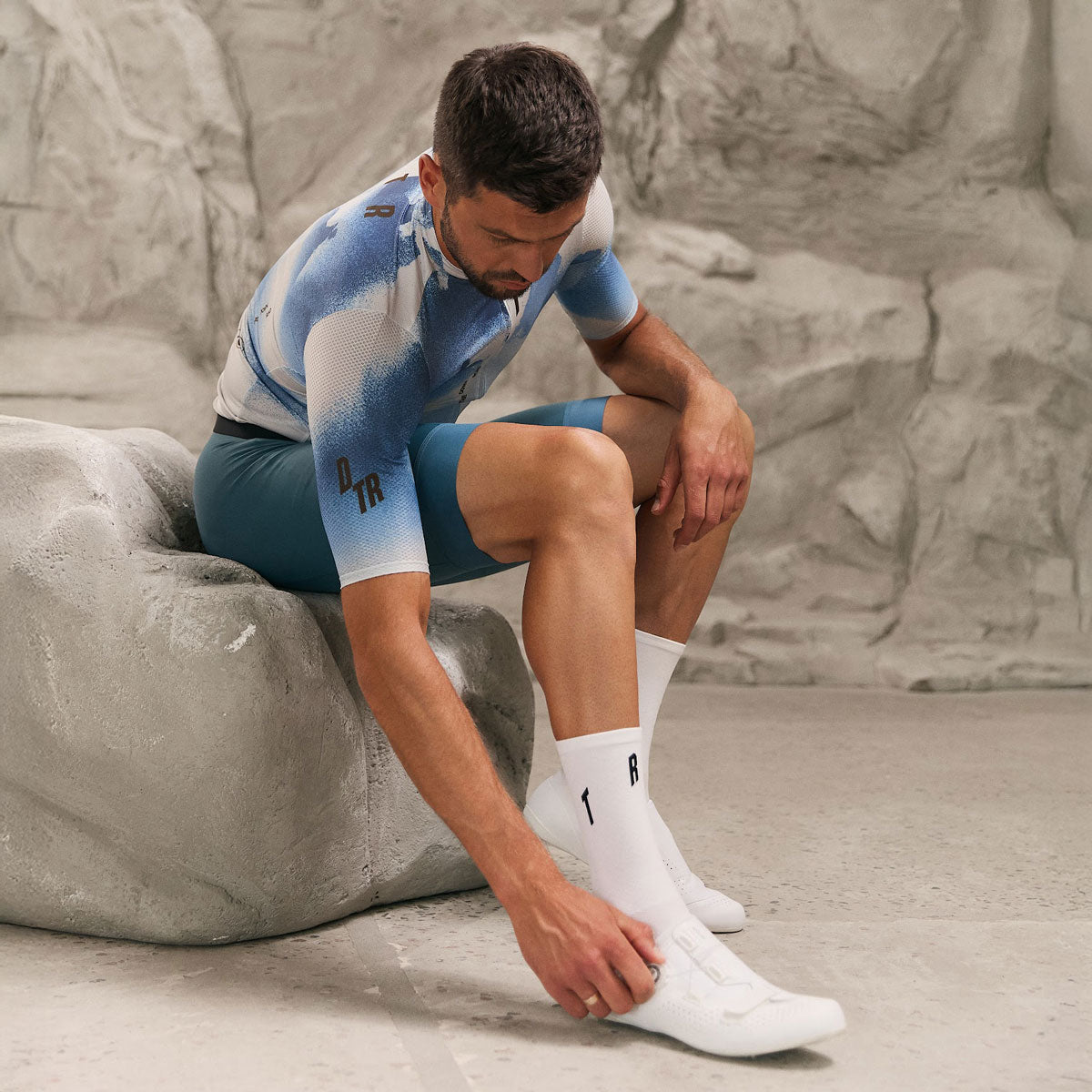
DTR's approach starts from durability: race-grade construction meant to stay in your rotation for seasons, backed by crash replacement and free returns — designed and developed in Ukraine. We'd rather you buy one bib short that lasts four years than two that last one. When we make material claims, they'll be specific and checkable — the same standard we've argued for here.
FAQ
Is recycled polyester less durable than virgin polyester? No. Once re-polymerised, the fibre is chemically the same; durability depends on the knit, the finishing and the construction around it.
Are bio-based fabrics actually available, or still a concept? Available. Castor-based polyamides are in production jerseys and base layers in 2026 — check the content percentage on the label.
Does PFAS-free mean less rain protection? Marginally different, not worse. PFAS-free DWR beads slightly less aggressively and needs reactivating more often, but for ride-length rain protection it does the job.
What's the single most sustainable choice a rider can make? Buy the right kit once, wash it cold, skip the dryer, and repair it after a crash instead of replacing it. Longevity beats any material swap.
Build a kit that lasts: explore the DTR men's and women's ranges.
DTR — performance cycling and triathlon apparel, designed and developed in Ukraine.

Leave a comment
This site is protected by hCaptcha and the hCaptcha Privacy Policy and Terms of Service apply.