

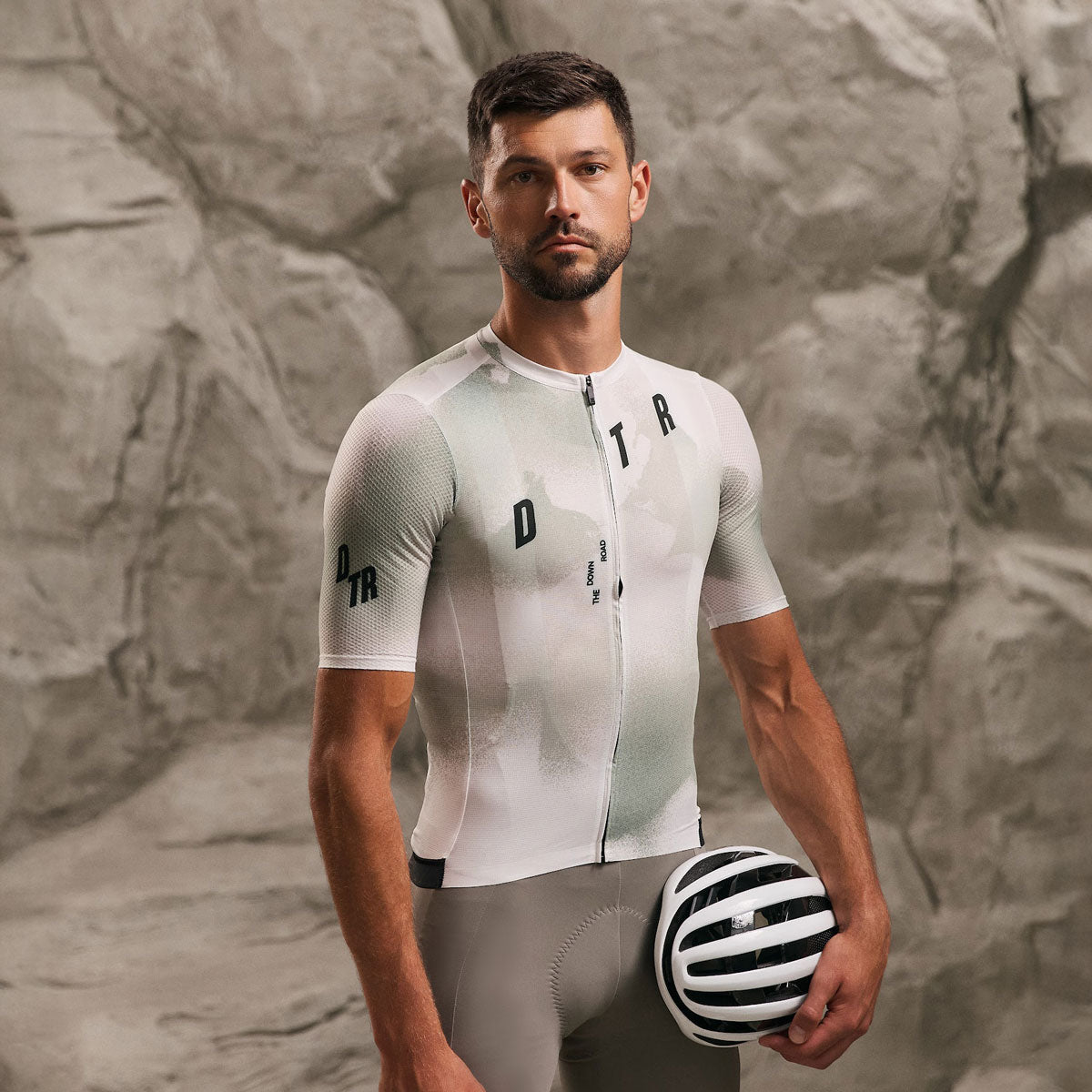
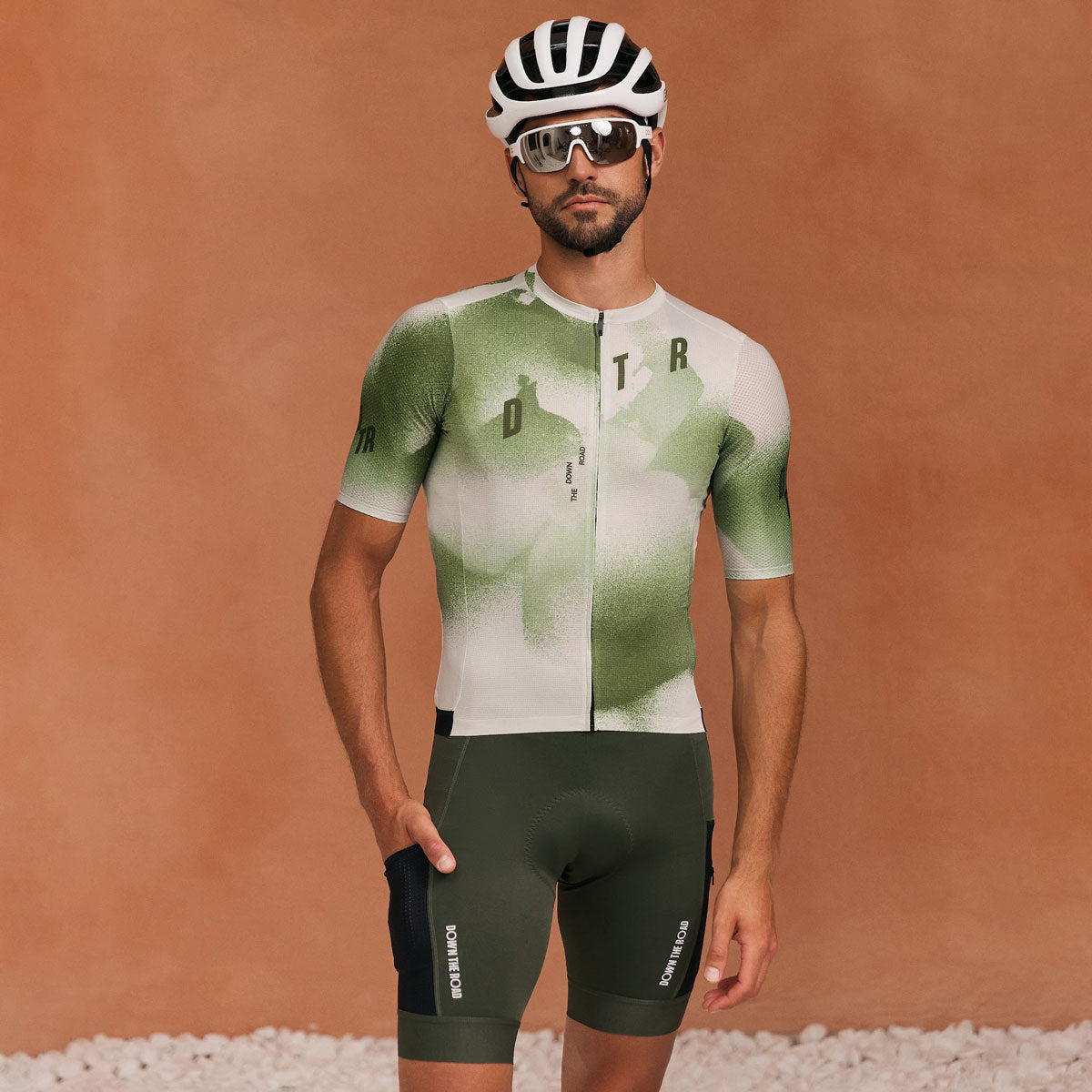
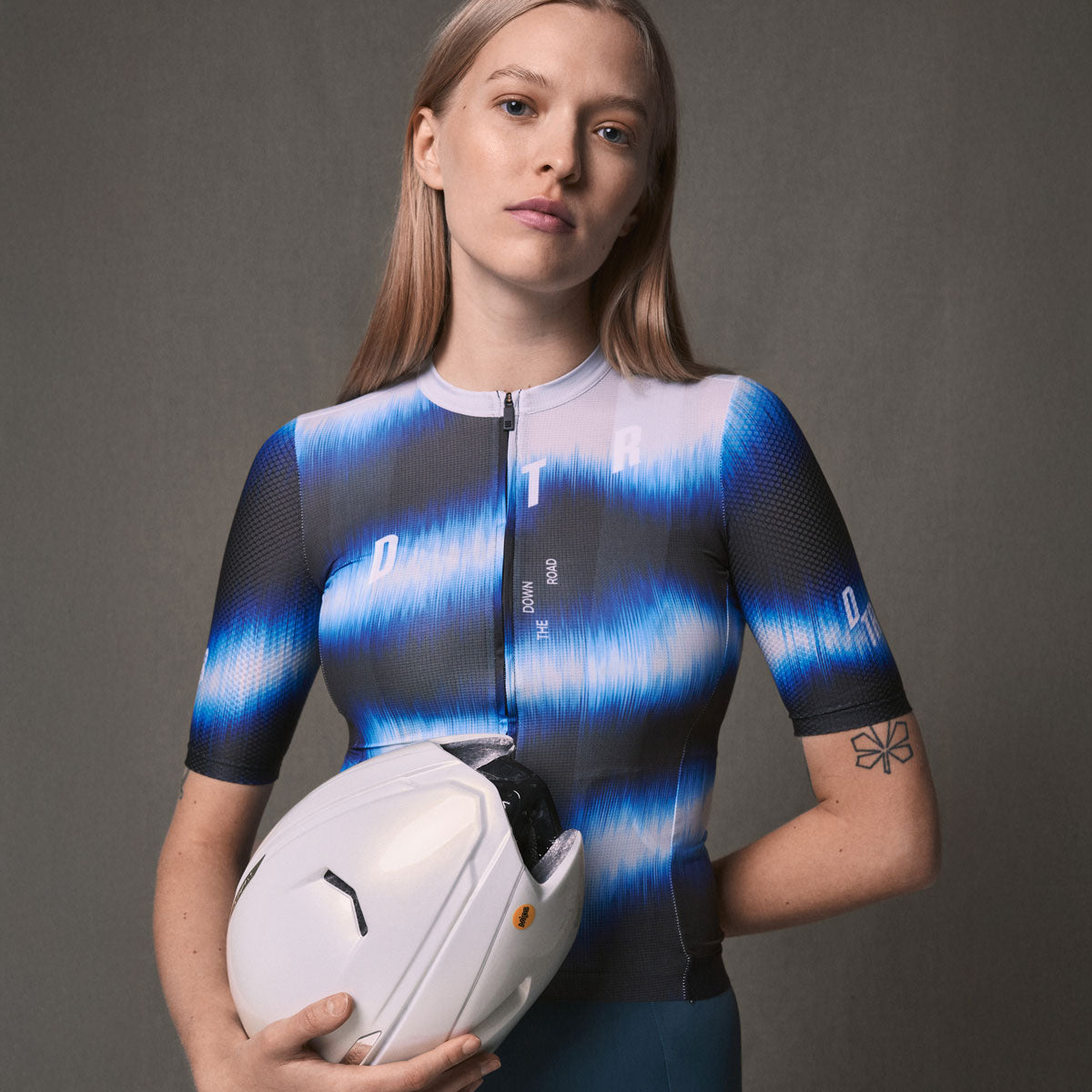
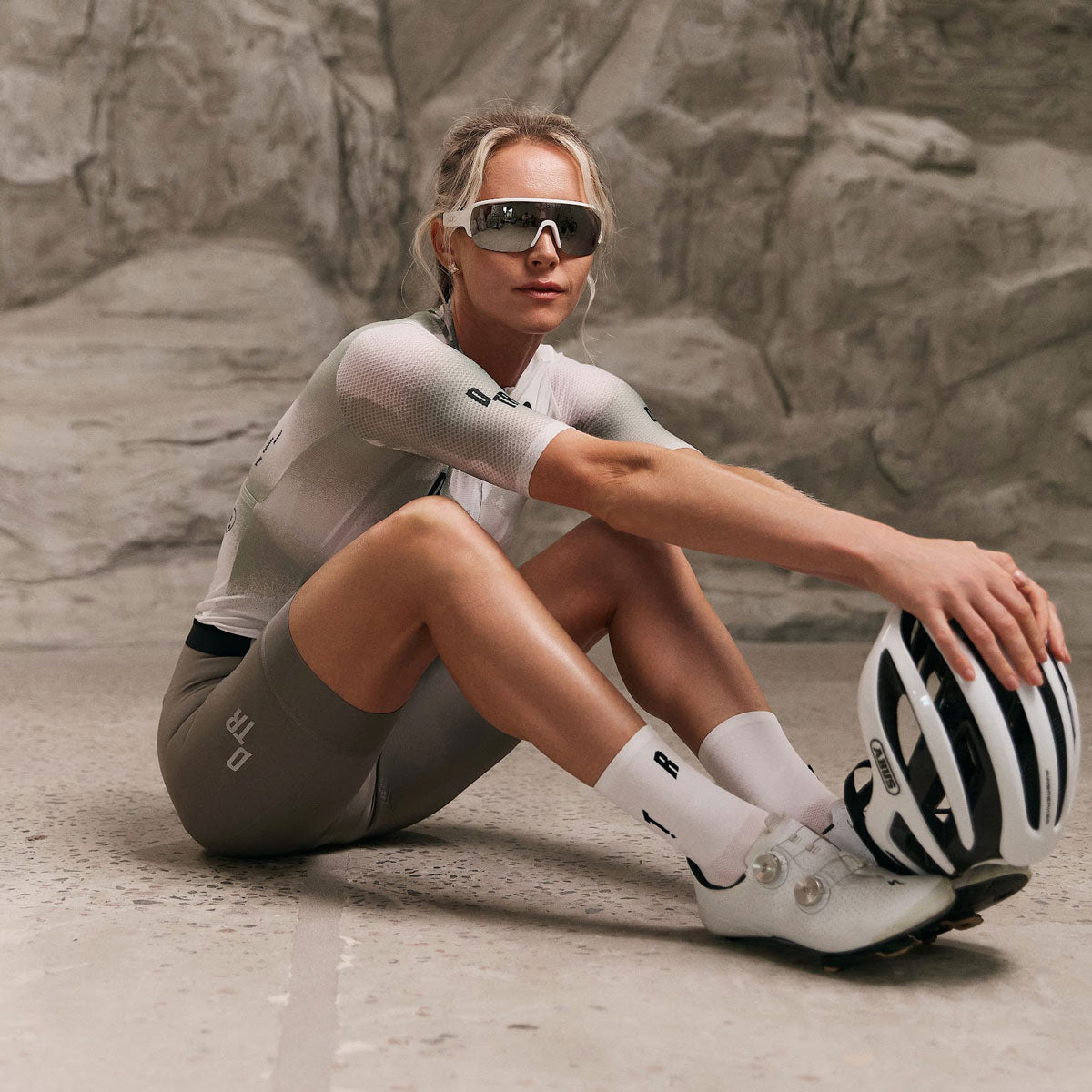
The best summer cycling jersey is the one that moves heat: an ultralight, quick-dry main fabric, mesh where you sweat most, a full-length zip and a fit close enough to the skin that evaporation actually works. This guide covers what keeps you cool above 25°C, which features are marketing, and how to choose a jersey for heat and ventilation in 2026.
What actually cools you on the bike?
Evaporation and airflow — nothing else. Your body cools by evaporating sweat, and a jersey helps or hurts by how fast it moves that sweat off your skin and how much air it lets through. Every summer feature worth paying for serves one of those two mechanisms; everything else is styling. The fabric guide goes deeper on what the materials are actually doing.
The features that earn their place in the heat
Four things to check before anything else: fabric weight — the main body should be light and quick-dry, so it never holds a reservoir of sweat; mesh panels where heat concentrates — back, underarms, sides; a full-length zip, which is the single biggest ventilation control you have mid-ride; and colour — in full sun, lighter fabrics run measurably cooler than dark ones.
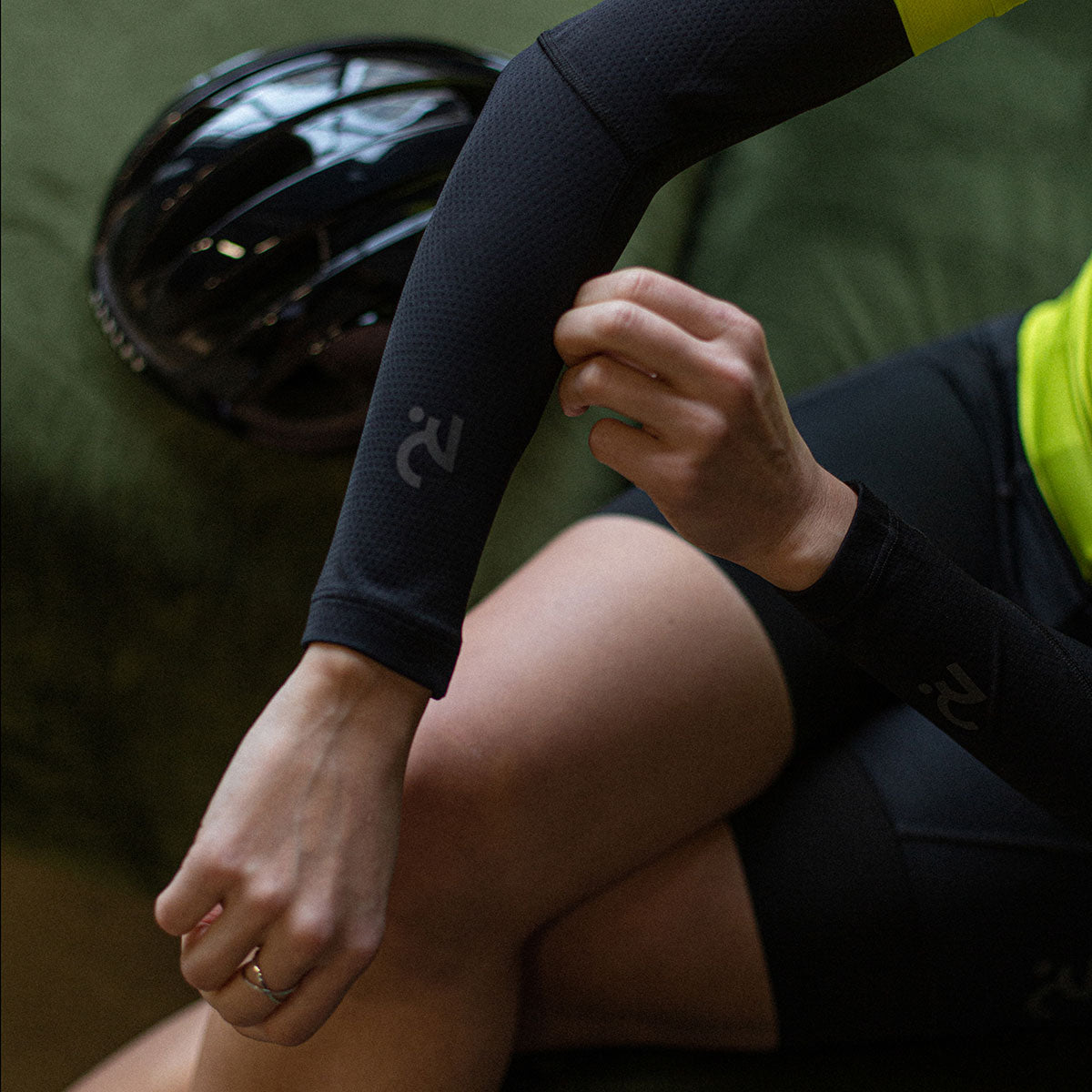
Sleeve construction matters more than most riders expect: raw-cut, light sleeves sit flat against the arm and keep air moving over skin rather than flapping. If you want the fast version of the same argument, see what makes a jersey aero.
Does fit change how hot you run?
Yes — and in the opposite direction to what intuition says. A close race-fit cut keeps wicking fabric in contact with the skin, which is what makes evaporation work; a loose jersey flaps, holds pockets of humid air and dries slower. Close-fitting doesn't mean compressive: you want contact, not pressure. At low speeds on long climbs, the full zip is what compensates. How a jersey should fit covers the detail.
Do you need UV protection?
On long summer rides, yes — and fabric is the most reliable way to get it. A covered shoulder doesn't burn, and technical summer fabrics carry meaningful UPF ratings while running cooler than bare skin in direct sun. If your rides regularly pass four hours in full sun, treat coverage as a cooling feature, not a warmth risk, and read the sun protection guide alongside this one.
What about a base layer in summer?
Counterintuitive but tested: a thin mesh base layer can make a summer jersey work better, spreading sweat across more surface area and speeding evaporation. In dry heat it's often a net gain; in humid heat, where evaporation stalls anyway, most riders drop it and rely on the jersey alone. Try both before race day.
How do you keep a summer jersey working?
Wash cold, skip fabric softener — it coats the fibres and kills wicking — and air dry. A summer jersey's performance is its finish; heat and softener are what degrade it. Rotate two or three jerseys through a heavy week rather than re-wearing one damp.
Which DTR jersey for the heat?
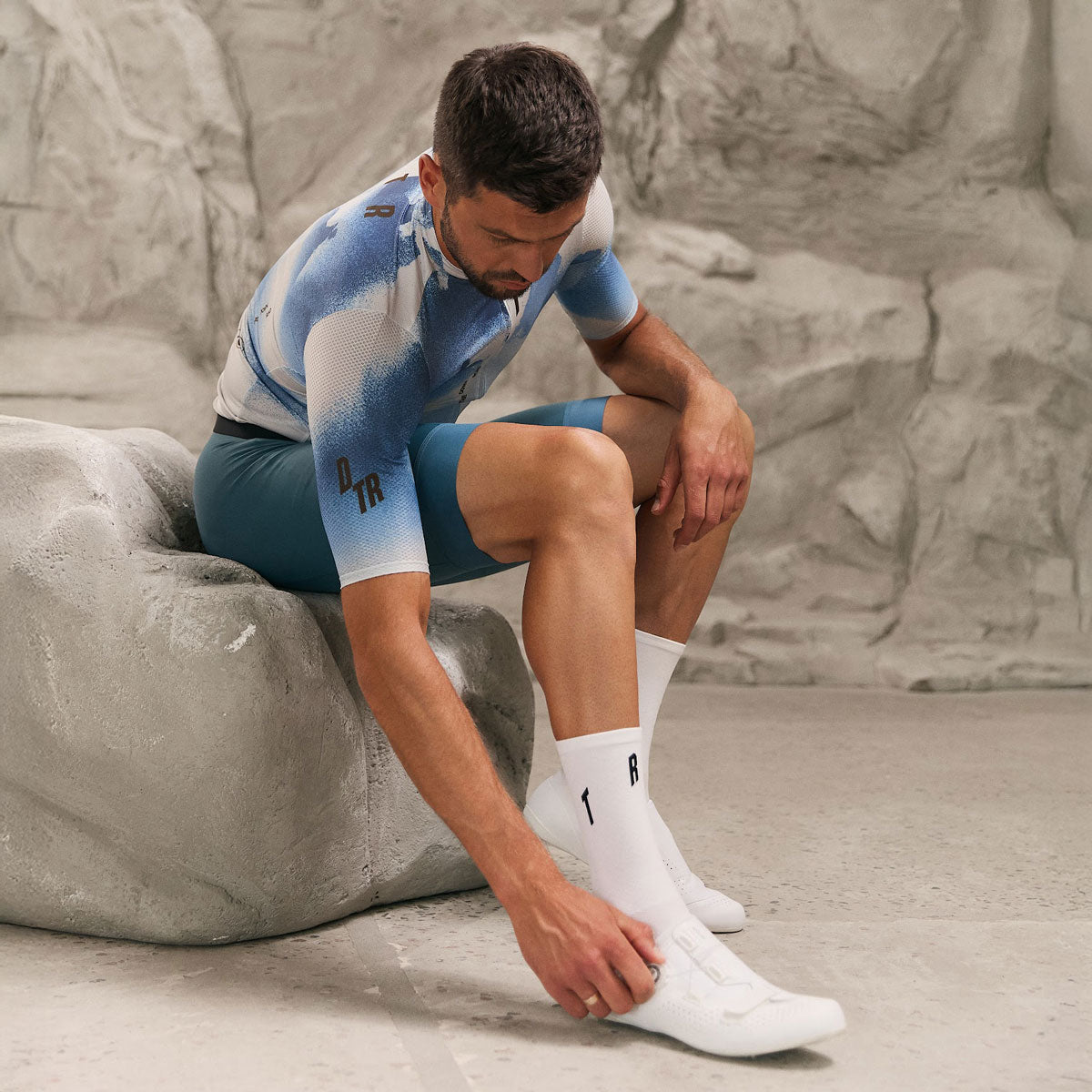
The DTR short sleeve jerseys are built around exactly these principles: light quick-dry fabrics, race-fit cut that keeps fabric working against the skin, and full-length zips for ventilation control. Frame your choice by ride type — the closer to race pace you ride, the closer the fit you want. The range splits into men's and women's cuts, and what to wear cycling in hot weather covers the rest of the kit.
FAQ
Are black jerseys really hotter in summer? In direct sun, yes — darker fabric absorbs more radiation and runs warmer than light colours. Modern light fabrics narrow the gap, but if you ride midday heat, light colours are the safer default.
Is a full zip worth it on a summer jersey? Yes. It's the only ventilation you can adjust mid-ride, and opening it on a climb dumps more heat than any mesh panel.
Do mesh jerseys protect you from the sun? Open mesh can let UV through. Check the UPF rating if you're riding long hours in full sun, and keep denser fabric across the shoulders.
How many summer jerseys do you actually need? Two or three covers a training week: rotate so you never start a ride in a jersey that's still damp, and each one lasts longer.
Shop the DTR jersey range.
DTR — performance cycling and triathlon apparel, designed and developed in Ukraine.

Leave a comment
This site is protected by hCaptcha and the hCaptcha Privacy Policy and Terms of Service apply.