

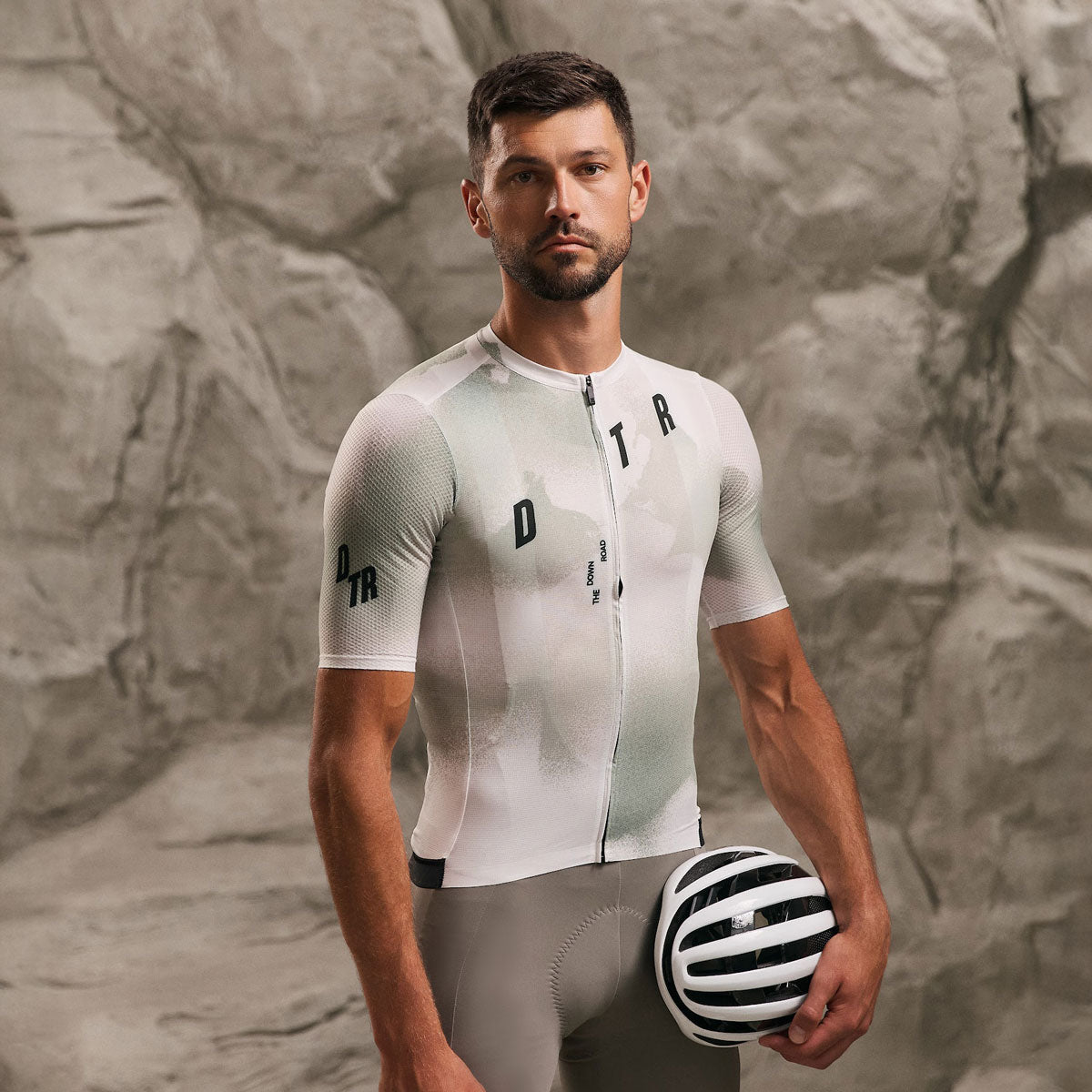
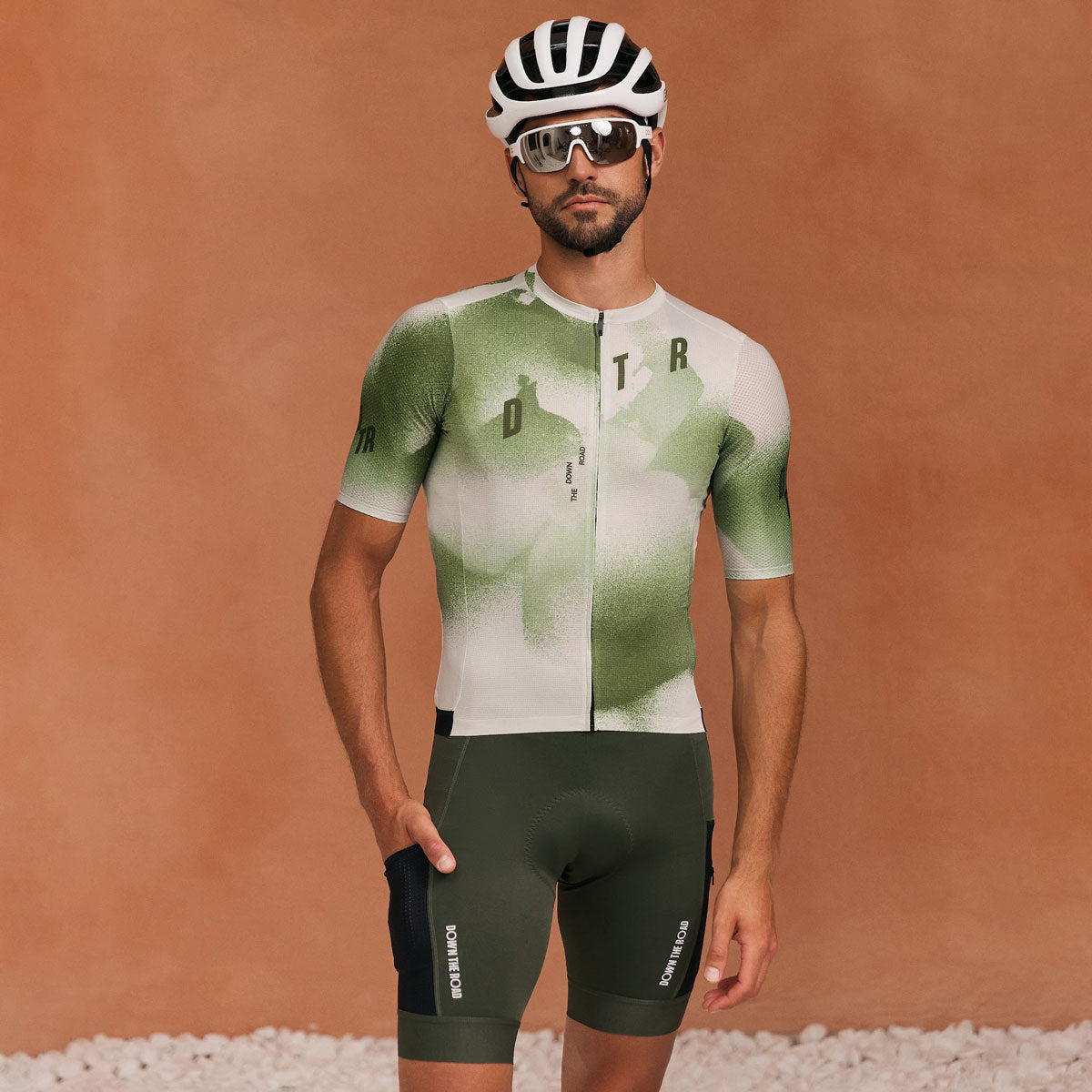
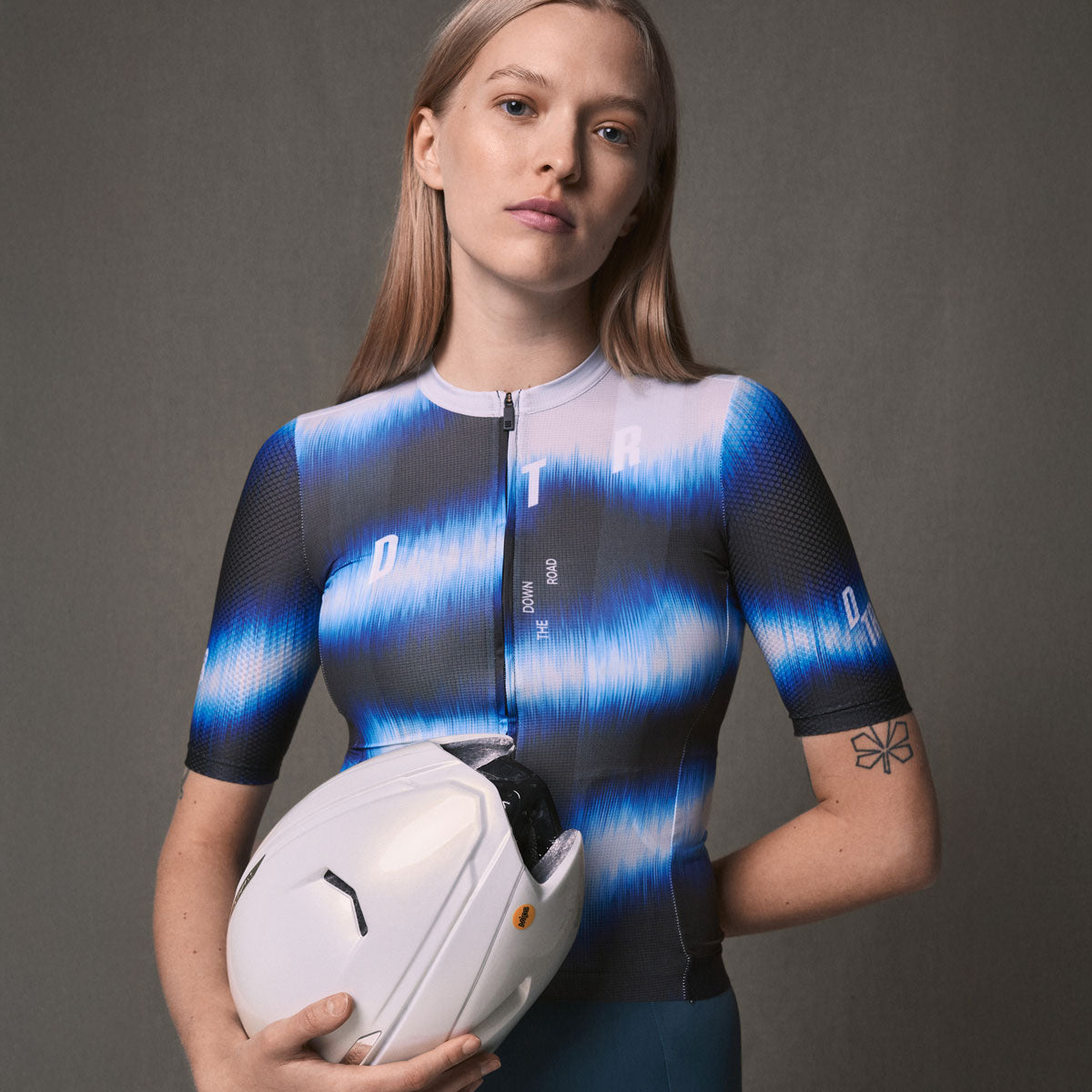

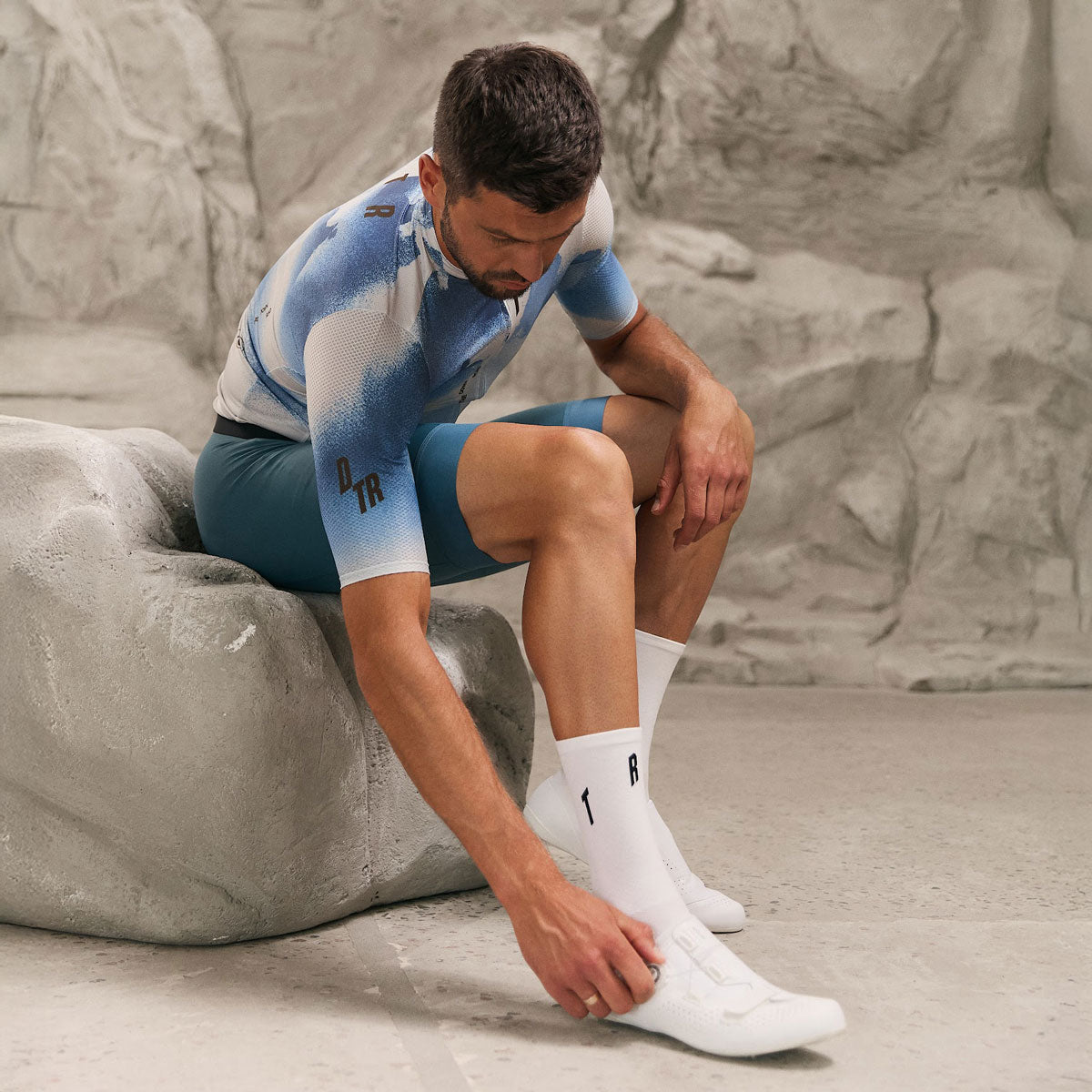
Almost every cycling jersey is knitted from polyester, sometimes blended with elastane for stretch or merino wool for warmth and odour control. What separates a good jersey fabric from a mediocre one is rarely the fibre named on the label — it is how that fibre is knitted, where each fabric is placed on the garment, and how the panels work together.
This guide covers the four jobs a jersey fabric has to do, why knit structure matters more than fibre, where mesh belongs, how merino and synthetic compare across the seasons, and why the two things you instinctively judge fabric by will mislead you.
The four jobs the fabric has to do
A cycling jersey fabric has to move sweat off the skin and spread it out to evaporate, let heat escape, hold its shape under load and against wind, and resist smelling after a few hours. Those requirements pull against each other, which is why no single fabric is right across the whole garment or the whole year.
Sweat management is the one riders underestimate. The fabric is not trying to absorb moisture; it is trying to wick it away from the skin and spread it across a wide surface so it evaporates fast. A fabric that holds water sits cold and heavy against you the moment you stop climbing.
Knit structure matters more than the fibre
Two jerseys can both be 100% polyester and behave completely differently. The knit determines the size and shape of the spaces between yarns, how much air moves through, how the fabric stretches, and how quickly liquid travels across it. A tight, smooth knit sheds wind and holds shape. An open, lofted knit breathes and dries but offers little wind resistance.
The yarn itself is engineered too. Fine multi-filament yarns create more surface area for moisture to spread across than thick single filaments, which is why a lightweight technical polyester dries faster than a heavier one of the same fibre. Four-way stretch, usually from an elastane content in the low single digits, is what lets a close race-fit cut move with you rather than resist you.
Where mesh belongs
Mesh panels work where air is already moving over the body and where heat collects — under the arms, along the sides of the torso, and across the upper back. Placed there, they vent effectively without compromising the parts of the jersey that need to hold shape.
Mesh in the wrong place is a liability. A fully mesh front panel exposes you to windchill on descents and offers no protection from the sun on long exposed rides, which is why the best summer jerseys are zoned rather than uniformly open.
Merino, synthetic, or a blend?
Synthetic polyester wins on drying speed, weight and durability, and it is the right answer for hot weather and hard efforts. Merino wins on warmth when damp, temperature regulation across a wide range, and odour resistance over multiple days, which makes it the better choice for cold rides, long unsupported days and multi-day trips.
Blends aim to split the difference: enough merino for warmth and odour control, enough synthetic for strength and drying speed. They are the sensible default for autumn and spring long-sleeve jerseys and for base layers worn under a jersey. In peak summer, straight synthetic is still faster to dry and cooler to wear.
Why weight and hand-feel mislead
A fabric that feels silky in the shop tells you about its surface finish, not about how it will handle sweat at threshold in 30 degrees. Some of the best-ventilating summer fabrics feel slightly dry or papery in the hand. Some of the softest do not move moisture well at all.
Weight is similarly unreliable. A heavier fabric can dry faster than a lighter one if the knit is more open, and a very light fabric that traps a thin layer of moisture against the skin will feel colder on a descent than a heavier one that has already dried. Judge fabric by how it behaves an hour into a ride, not by how it feels between your fingers.
What the fabric asks of you afterwards
Technical fabrics keep working if you look after them. Cool wash, no fabric softener — softener coats the fibres and destroys wicking — and air dry rather than tumble. Heat is what kills elastane, and elastane is what holds the fit.
Merino needs a gentler hand still: cool wash, wool-safe detergent, and dried flat rather than hung, which stops the garment stretching under its own wet weight.
Frequently asked questions
Is a heavier jersey fabric better quality?
No. Weight indicates the intended season and the knit density, not quality. Judge it on drying speed, shape retention and how the panels are placed.
What is the best fabric for a summer jersey?
A light, open-knit technical polyester with zoned mesh in the high-heat areas. Merino blends are better in the shoulder seasons than in peak heat.
Does merino really smell less?
Yes, noticeably, over multiple wears. Wool fibres manage moisture and the bacteria that cause odour differently from smooth synthetics, which is why merino earns its place on multi-day rides.
Why does my jersey feel cold on descents?
Because it is holding sweat that has not evaporated. A wind vest or windbreaker over the top before a long descent solves it faster than changing fabric.
Does fabric choice affect how a jersey fits over time?
Yes. Elastane content and how it is treated determine whether the jersey keeps its shape. Hot washes and tumble drying shorten that life considerably.
See the DTR jersey range at /collections/cycling-jerseys.
DTR — performance cycling and triathlon apparel, designed and developed in Ukraine.
For the on-bike mechanism behind fabric behaviour, see Moisture Wicking on a Cycling Jersey: What It Actually Means.

Leave a comment
This site is protected by hCaptcha and the hCaptcha Privacy Policy and Terms of Service apply.