

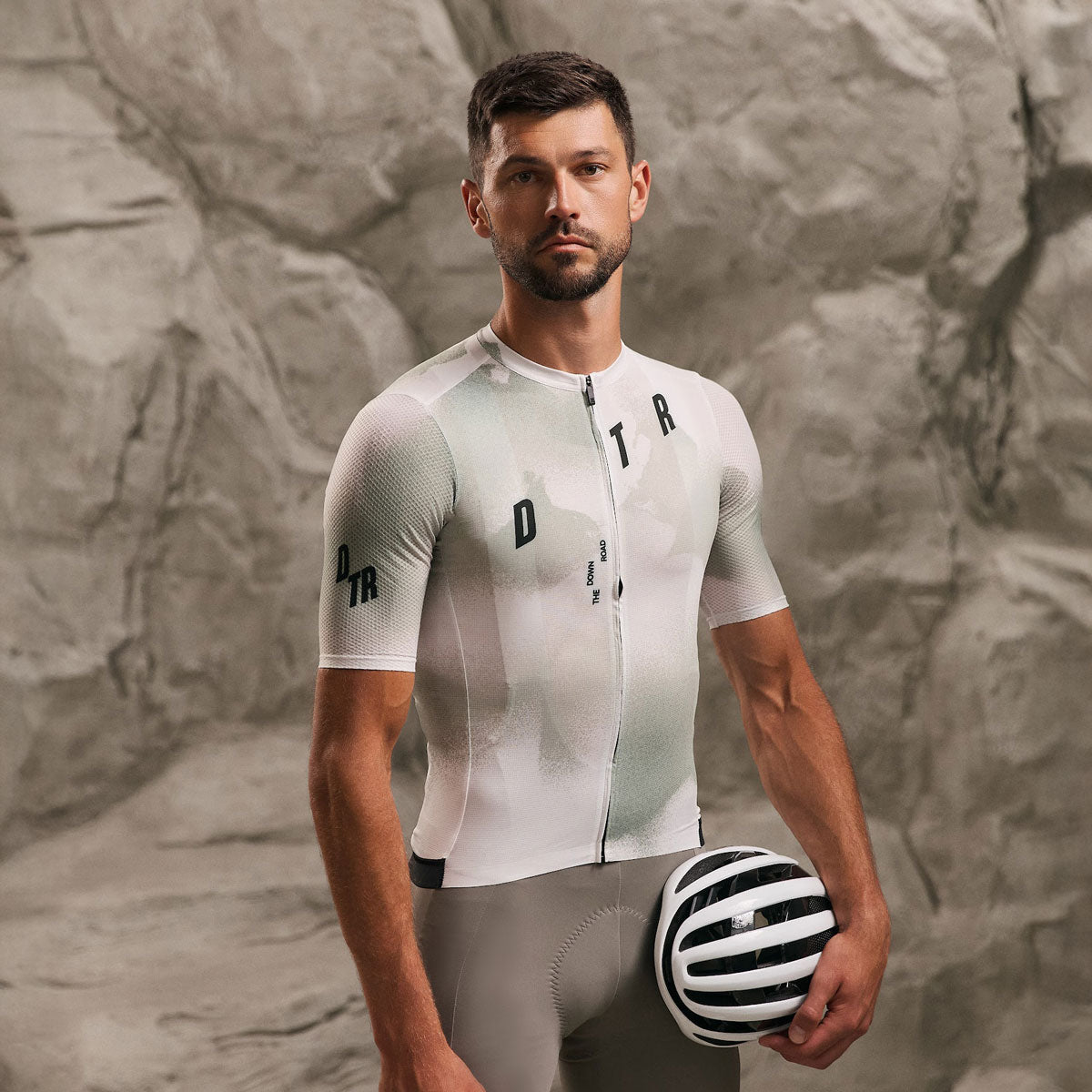
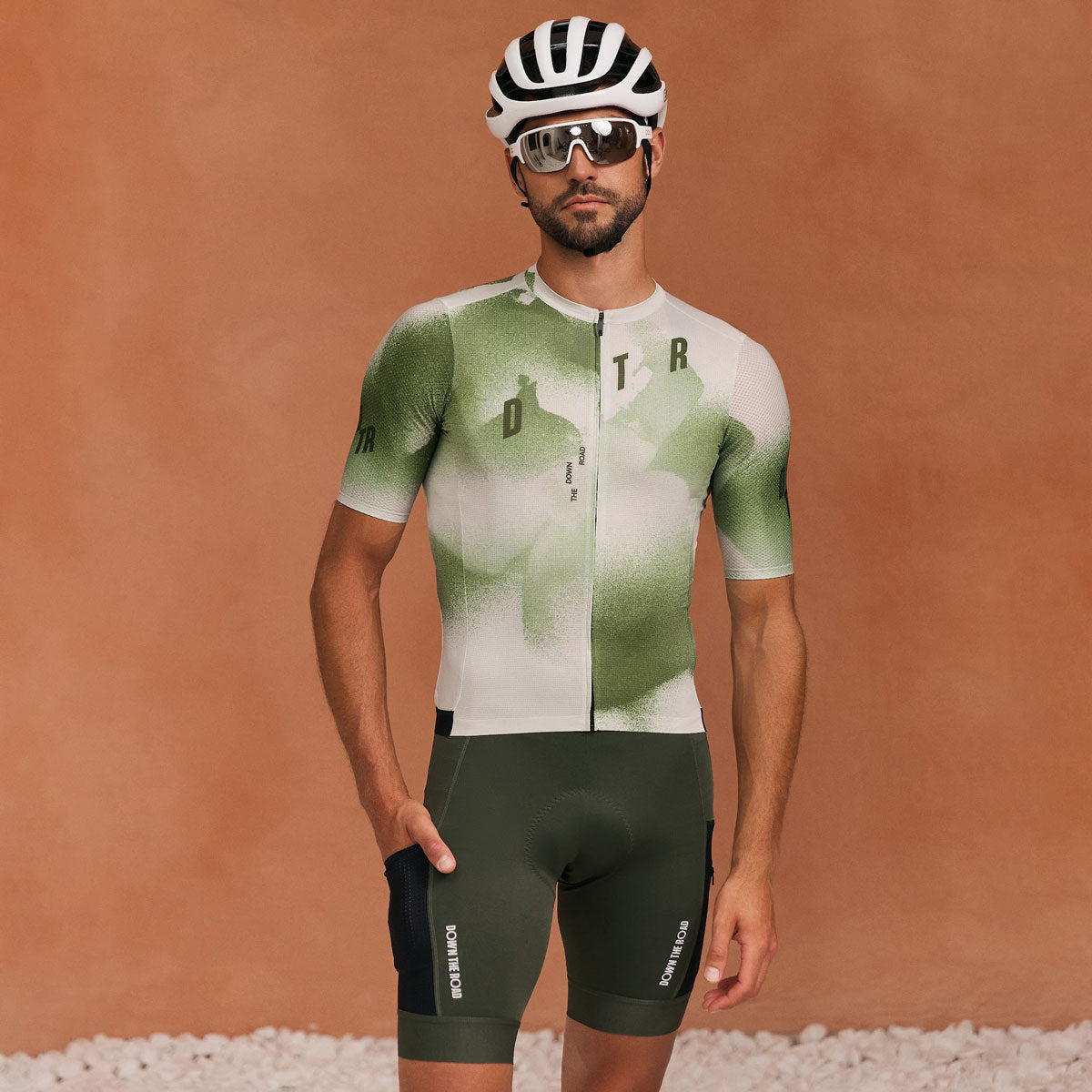
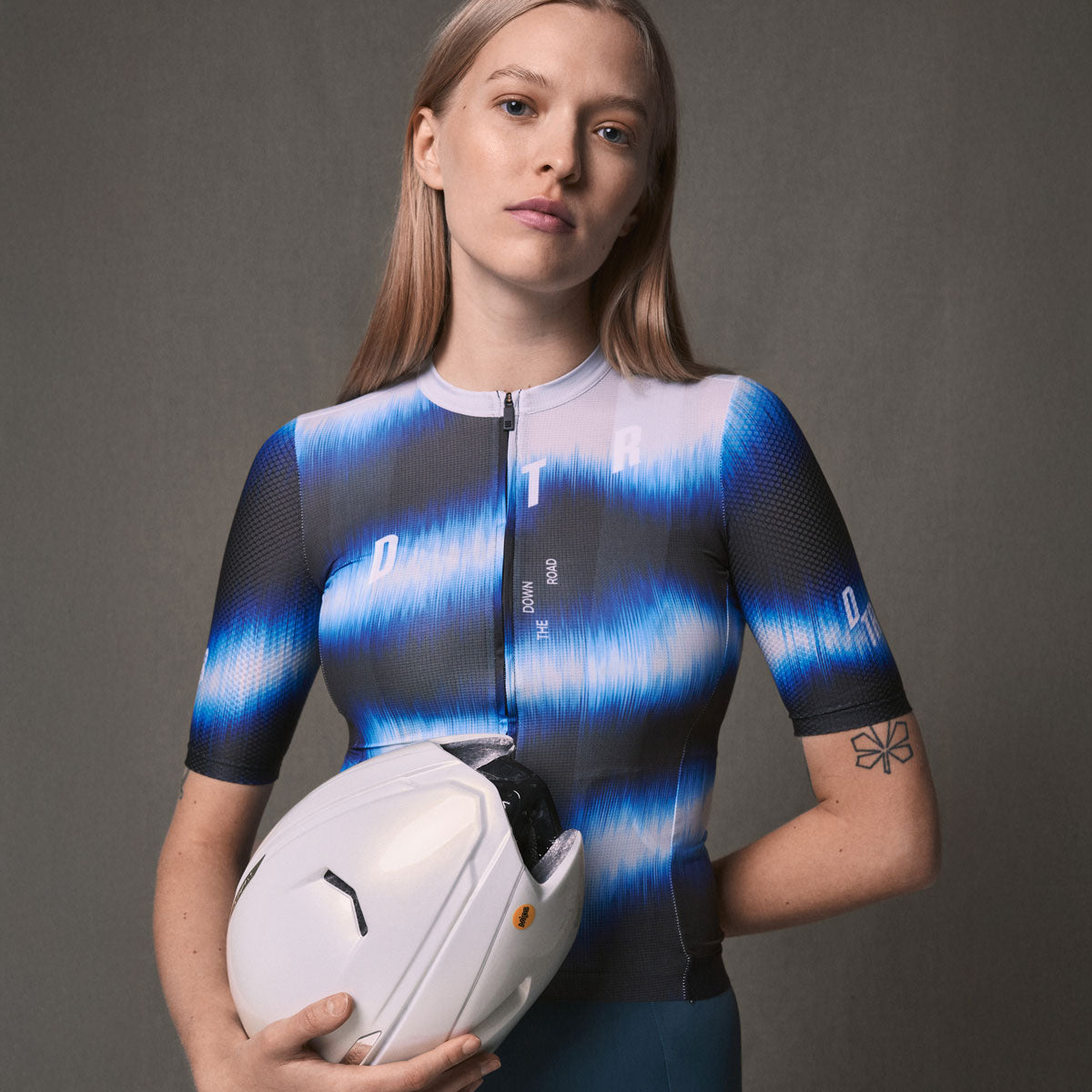

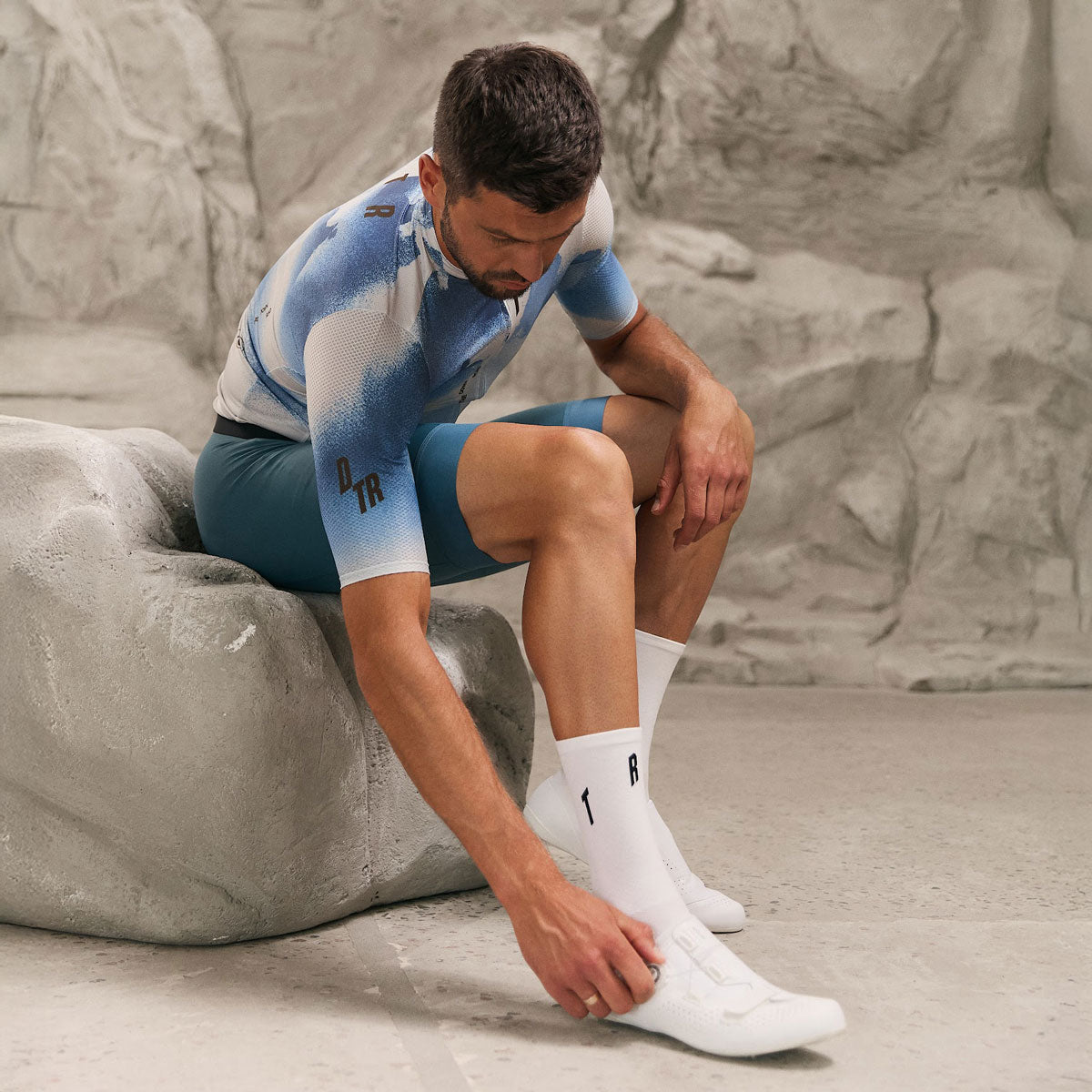
An aero cycling jersey is a jersey cut and built specifically to cut drag from your upper body: close through the chest, shoulders and back, with sleeves that hold the arm instead of flapping around it, in a fabric chosen for how air moves across it rather than how it feels in your hand. Fit does most of the work; fabric finishes the job.
This guide covers where the drag actually comes from, what fit, sleeves and fabric each contribute, the speeds at which any of it starts to matter, and when a standard race-fit jersey is the better buy.
Where the drag actually comes from
At riding speeds, roughly three quarters of the total drag on a bike and rider comes from the rider, and most of that comes from the torso and arms. The frame, wheels and everything bolted to them account for the remainder. That is why kit is one of the cheapest places to find speed — you are working on the largest part of the problem.
Within that, the biggest single variable is not the jersey at all. It is your position on the bike. A jersey cannot fix a high, wide riding position; it can only stop your clothing from adding to it.
Why fit does more than fabric
A loose jersey flaps. Every wrinkle, every ripple of fabric across the shoulders and lower back creates turbulence and pulls air with it, and at speed a jersey that billows can cost more than any fabric choice will ever recover. Getting the fit right is the whole game before texture becomes worth discussing.
A race-fit cut is drawn for the body in the riding position, not standing in front of a mirror. It runs shorter at the front and longer at the back, sits tight through the chest and upper arm, and relies on four-way stretch and flatlock seams so that close fit does not turn into restriction. Put a race-fit jersey on while standing and it should look slightly short and quite snug. On the bike it should sit flat everywhere.
What the sleeves are doing
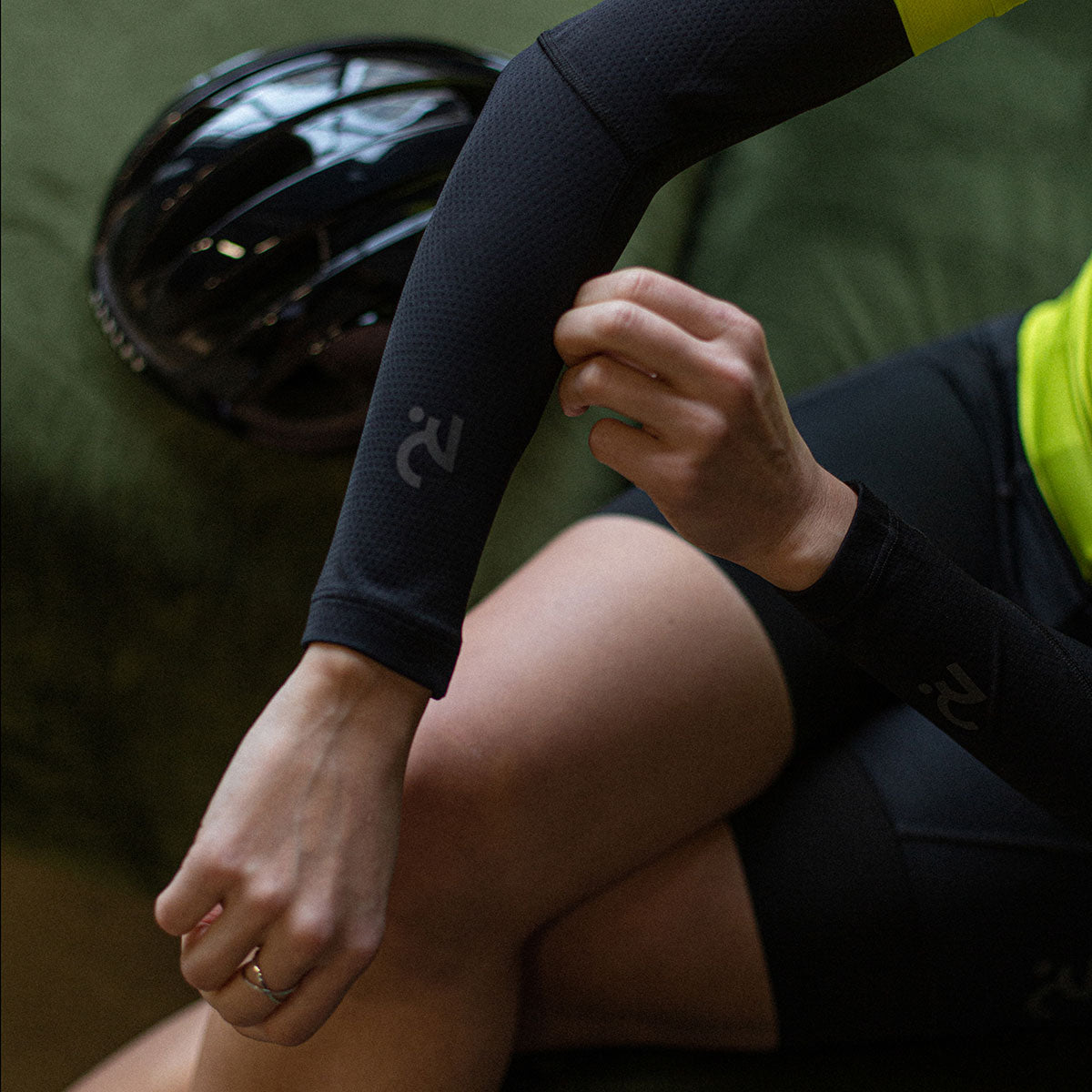
Longer sleeves that finish mid-bicep or lower, with a wide grip band rather than a hem that pinches, hold the fabric flat against a part of the arm where air separates badly. That is the reason race jersey sleeves have been getting longer for years, and it is a bigger contributor than most riders expect.
The sleeve has to grip without constricting. A band that leaves a deep ring in the arm is restricting blood flow, not improving airflow. The right feel is firm, even pressure over a wide band — the same principle DTR uses on the leg grippers on bib shorts.
Does the fabric texture matter?
Yes, but less than the marketing suggests, and only in the right place. Textured or dimpled fabric on the sleeves and shoulders can help air stay attached to a curved surface for longer before it separates, which reduces the low-pressure wake behind the arm. On flat panels across the chest and back, smooth fabric does the job.
This is why aero-oriented jerseys use different fabrics in different zones rather than one material throughout. It is also why fabric weight and hand-feel tell you almost nothing: a jersey that feels slick and expensive is not necessarily faster than one that does not.
At what speed does any of it pay off?
Aerodynamic drag rises with the square of speed, so the faster you go the more the jersey matters. Below roughly 25kph the differences between a well-fitting jersey and an aero-specific one are small enough to be lost in the noise of wind, road and position. From about 35kph upward they become measurable, and in a time trial or a fast crit they are worth having.
Put plainly: if you race, ride in fast groups, or spend real time above 35kph, an aero-cut jersey earns its place. If most of your riding is endurance pace, long days and climbing, you will get more from a jersey that ventilates well and carries a load properly.
When a standard race-fit jersey is the right call
For most riding, a well-cut race-fit jersey in a breathable fabric is the better tool. Aero-specific jerseys are tighter, usually warmer, often have less generous pockets, and demand a body position you can hold. On a five-hour ride in summer heat, ventilation and pocket access matter more than a handful of watts at speeds you are not riding.
The honest split within our own range: race-fit jerseys for racing and fast group riding, and the more ventilated summer cuts for long days and heat. Both are cut close. Only one is asking you to hold a position for an hour.
Frequently asked questions
Should I size down to make a jersey more aero?
No. A jersey pulled tight over the shoulders restricts your reach to the bars and rides up at the back, which creates exactly the wrinkles you were trying to remove. Buy the size that sits flat in the riding position.
Do the pockets ruin the aerodynamics?
Loaded pockets change the shape of your lower back, but that region sits in already-disturbed air. Keep the load low and even and the cost is small.
Is a skinsuit just a very tight jersey?
No. A skinsuit removes the waist join between jersey and shorts entirely, which is where a lot of wrinkling happens. It is faster, and far less practical for anything but racing.
Are long sleeves faster than short in summer?
Usually yes in pure drag terms, which is why they appear in time trials. Whether that beats the extra heat load on a hot day depends on the event length and the temperature.
Does a rear zip garage or hidden zip make a difference?
Marginal on its own. It matters more that the front zip lies flat rather than curling open at speed.
See the DTR jersey range at /collections/cycling-jerseys.
DTR — performance cycling and triathlon apparel, designed and developed in Ukraine.

Leave a comment
This site is protected by hCaptcha and the hCaptcha Privacy Policy and Terms of Service apply.