

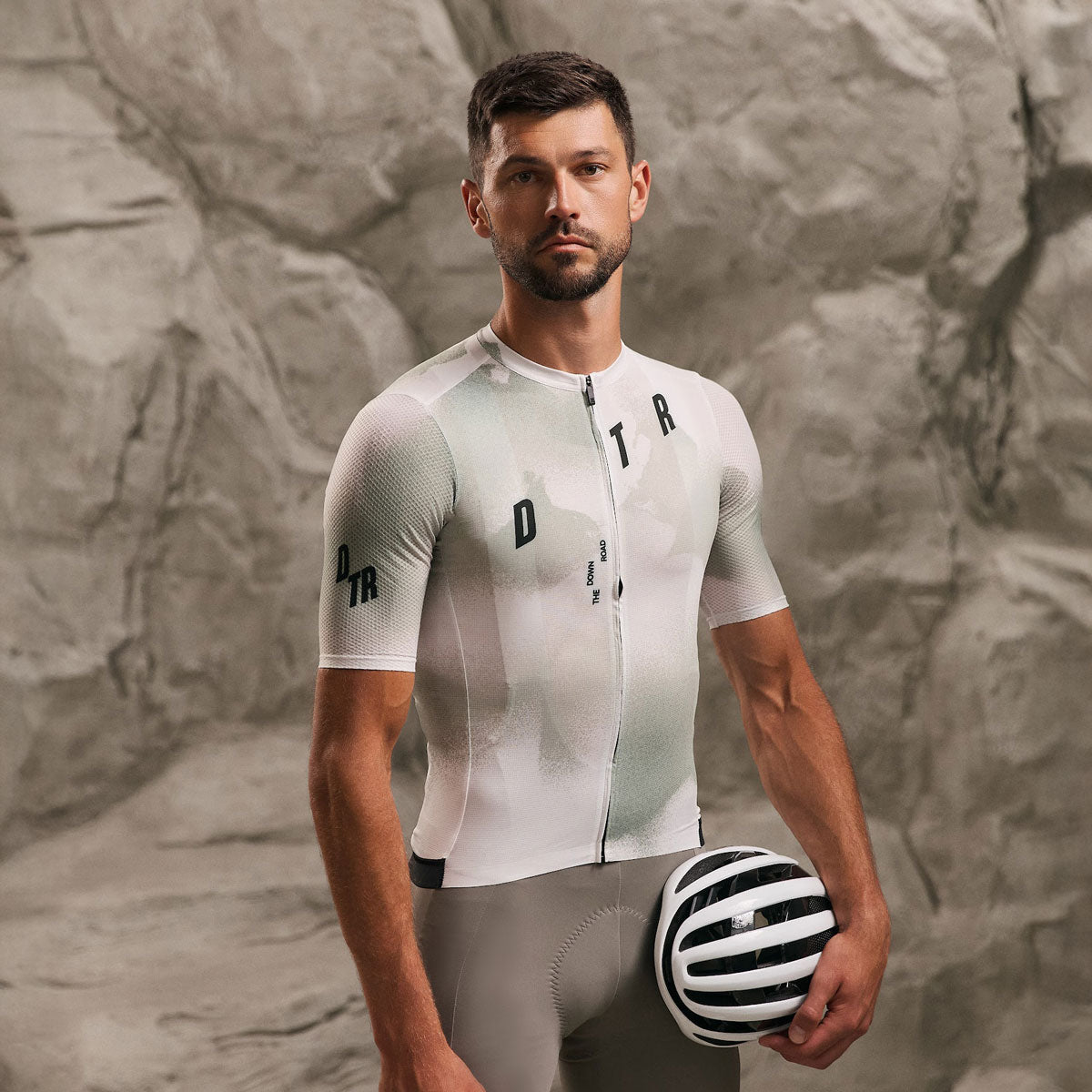
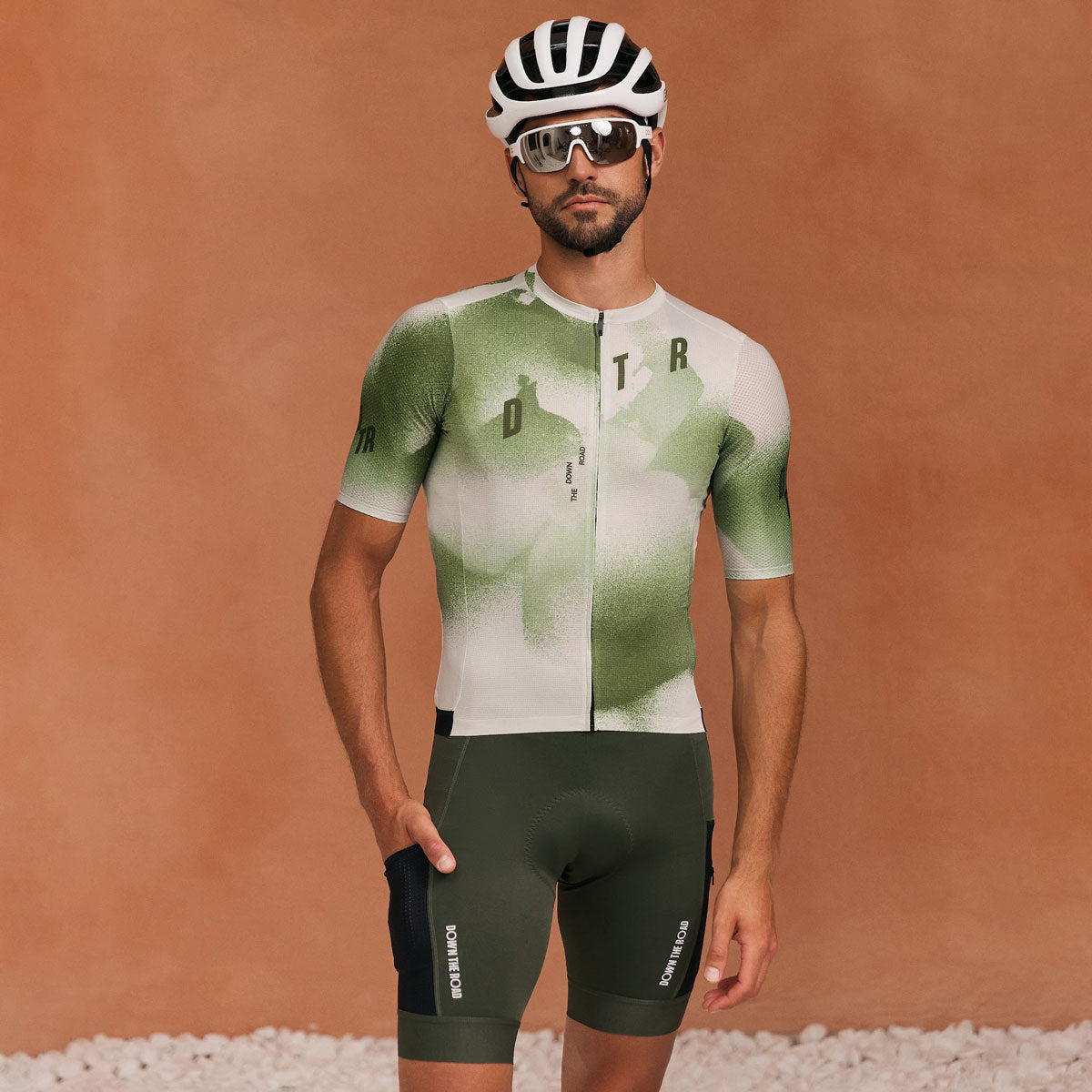
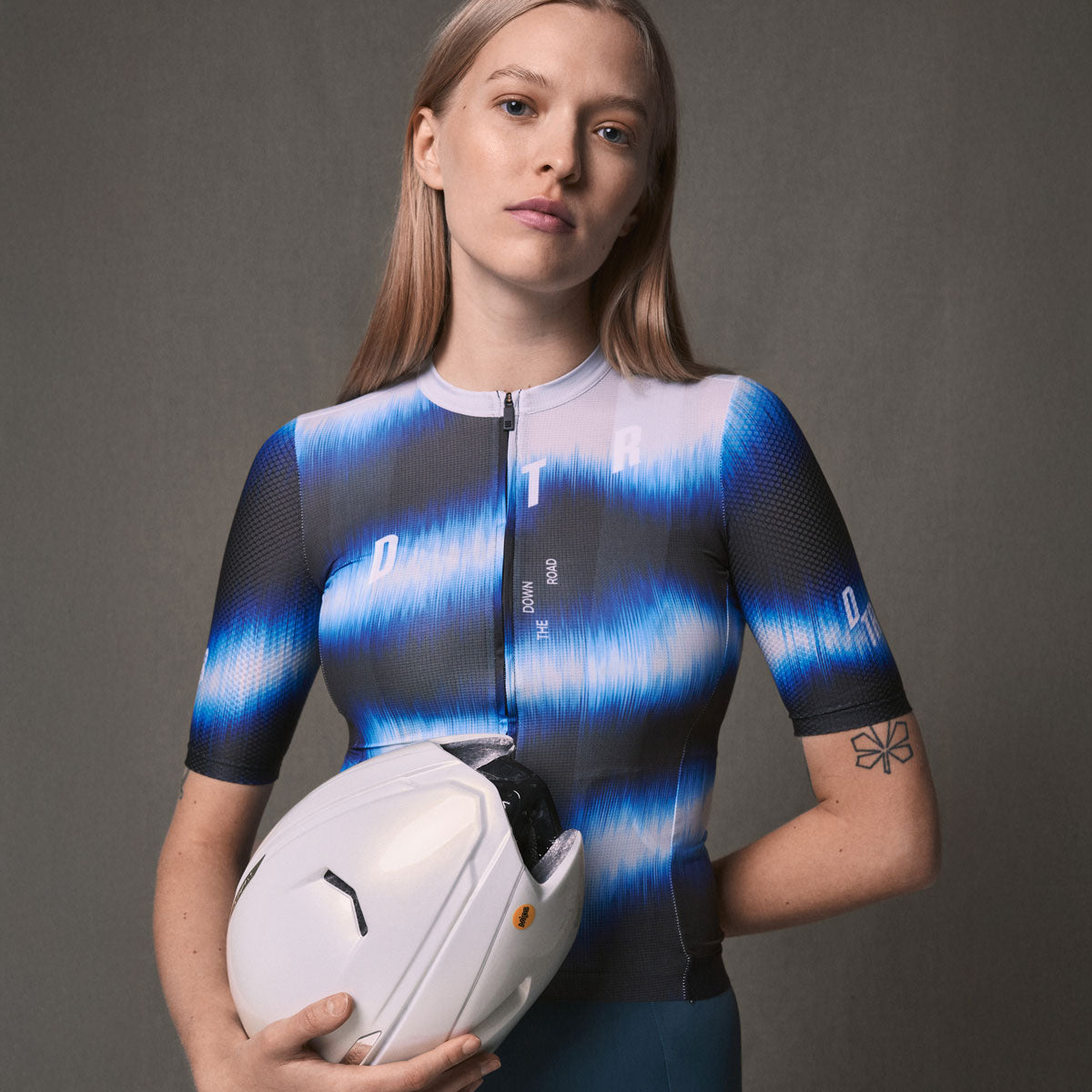
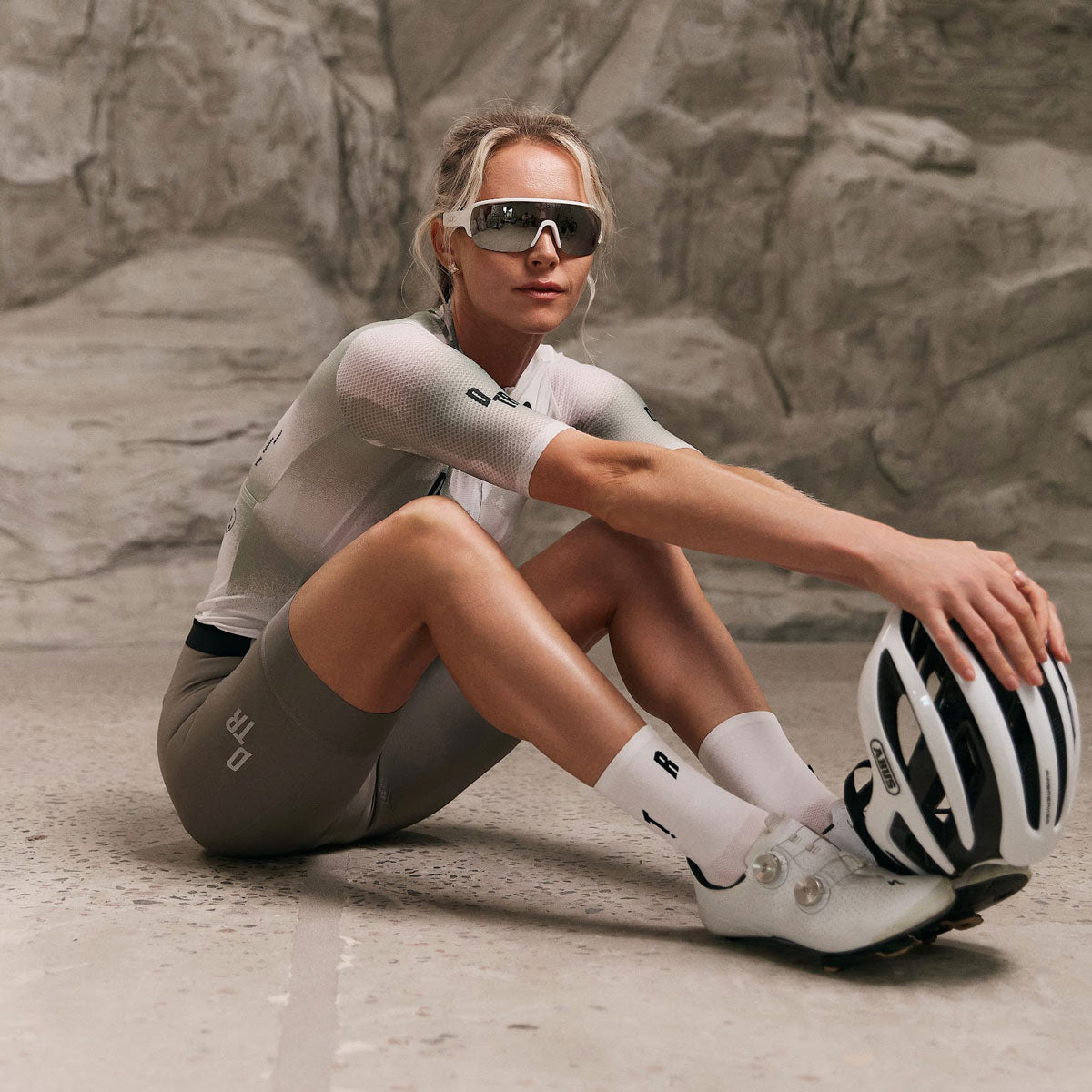
Moisture wicking is how a cycling jersey moves sweat away from your skin and spreads it across the fabric so it can evaporate. It is a mechanism, not a promise that you will stay dry in every condition.
How does moisture wicking actually work?
Technical fibres and the spaces between them pull moisture outward by capillary action. The fabric spreads sweat over more surface area; moving air then does the drying. It works best when the jersey sits close enough to the skin for moisture to reach the fabric rather than pooling underneath it.
Why does a loose jersey wick less effectively?
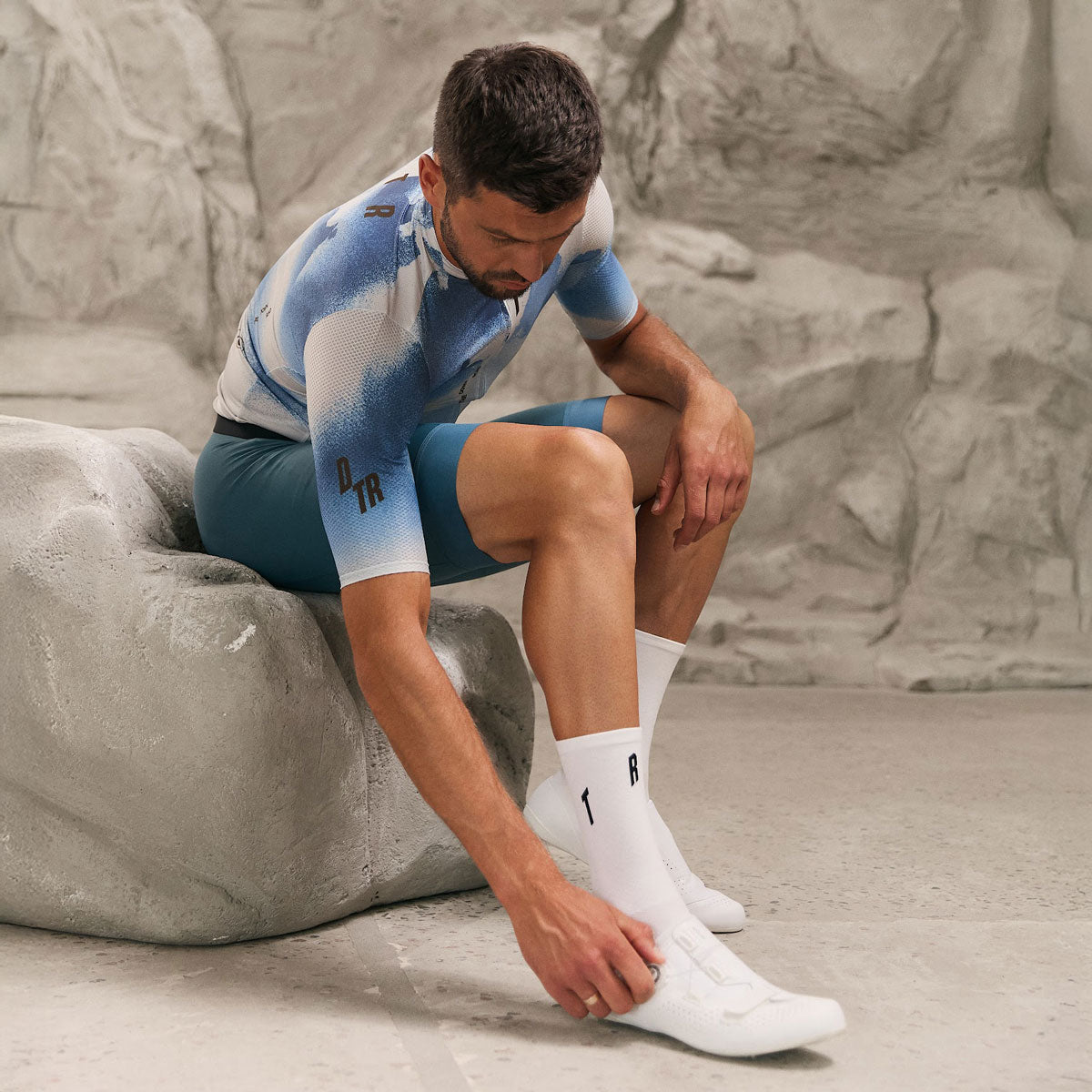
A loose fit creates gaps that slow the hand-off from skin to fabric and lets damp material move against you. Race-fit construction is not only aerodynamic: it helps a jersey manage sweat consistently when you are riding hard, especially across the shoulders, chest and lower back.
Why does humidity change the result?
Humidity slows evaporation because the air already holds more moisture. Your jersey can still transport sweat, but it cannot force the surrounding air to dry it faster. Open the zip, pace sensibly and use airflow rather than expecting fabric alone to solve the weather. Cycling in Hot Weather adds the wider on-bike plan.
What can stop a jersey from managing sweat well?
Fabric softener can coat fibres and reduce their ability to move water. Rinsing sweat out promptly and following How to Wash Cycling Kit protects the mechanism better than adding more detergent. The aim is simple: keep the fabric surface open enough to move moisture.
How is this different from choosing a jersey fabric?
Our cycling jersey fabric guide covers material families. This article owns what moisture management does on the ride: contact with skin, spreading, airflow and care. The two topics work together without asking the same question twice.
What should you choose for hot rides?
Choose a close race-fit jersey with practical ventilation and test it in the temperatures you usually ride. DTR’s cycling jersey collection has moisture-management construction, three rear pockets, a full zip and a silicone-gripper hem; use the fit guide in How Should a Cycling Jersey Fit? before your first long ride.
FAQ
Does moisture wicking mean a cycling jersey will stay dry?
No. It means the fabric moves and spreads sweat to support evaporation. In humid air or at high effort, the jersey can still feel damp because evaporation is slower.
Does fabric softener affect moisture wicking?
It can. Fabric softener may leave a coating on technical fibres, which can reduce the movement of moisture through the fabric.
Does cycling jersey fit affect moisture wicking?
Yes. A close fit improves the contact between skin and fabric, helping the jersey move sweat outward more consistently.
DTR — performance cycling and triathlon apparel, designed and developed in Ukraine.

Leave a comment
This site is protected by hCaptcha and the hCaptcha Privacy Policy and Terms of Service apply.