

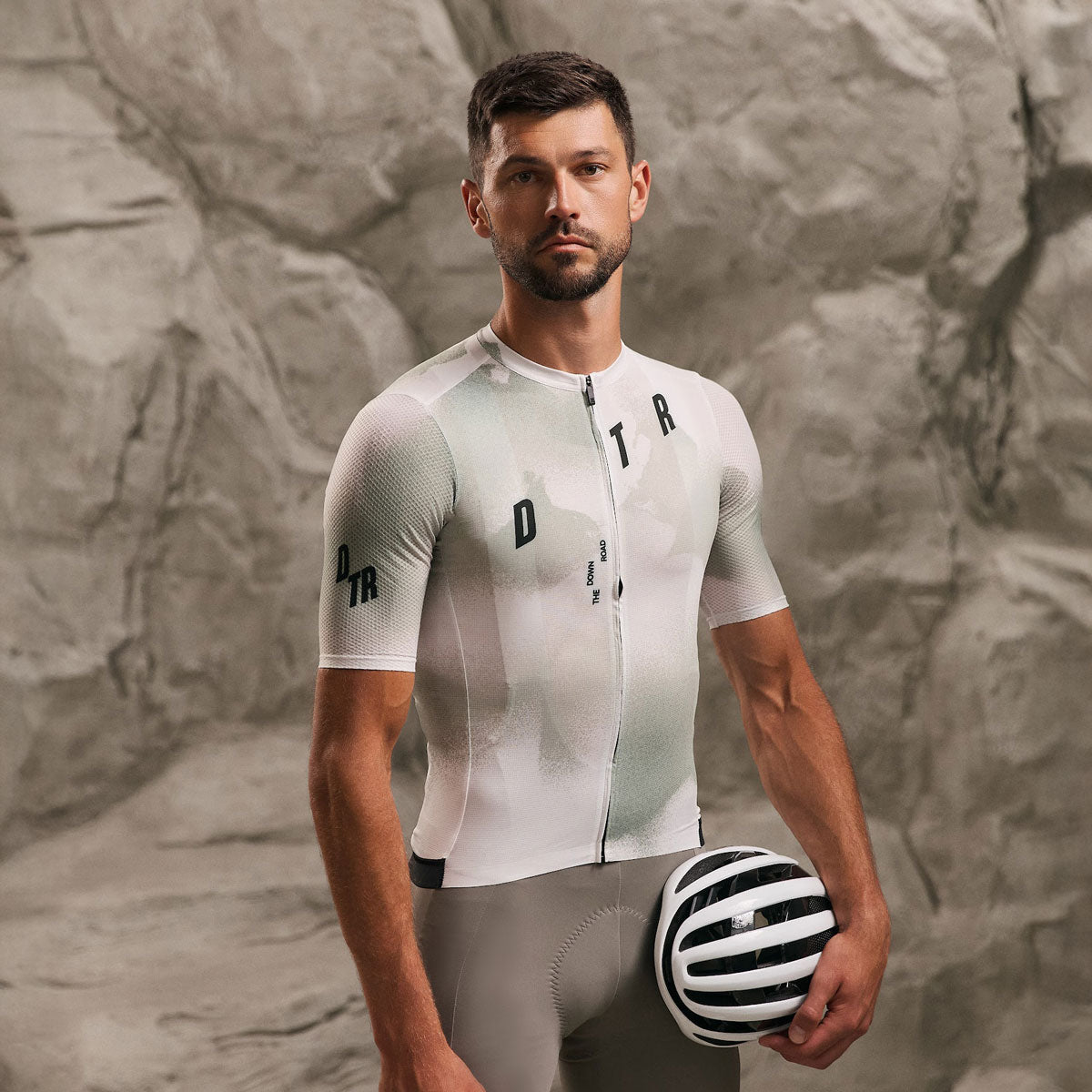
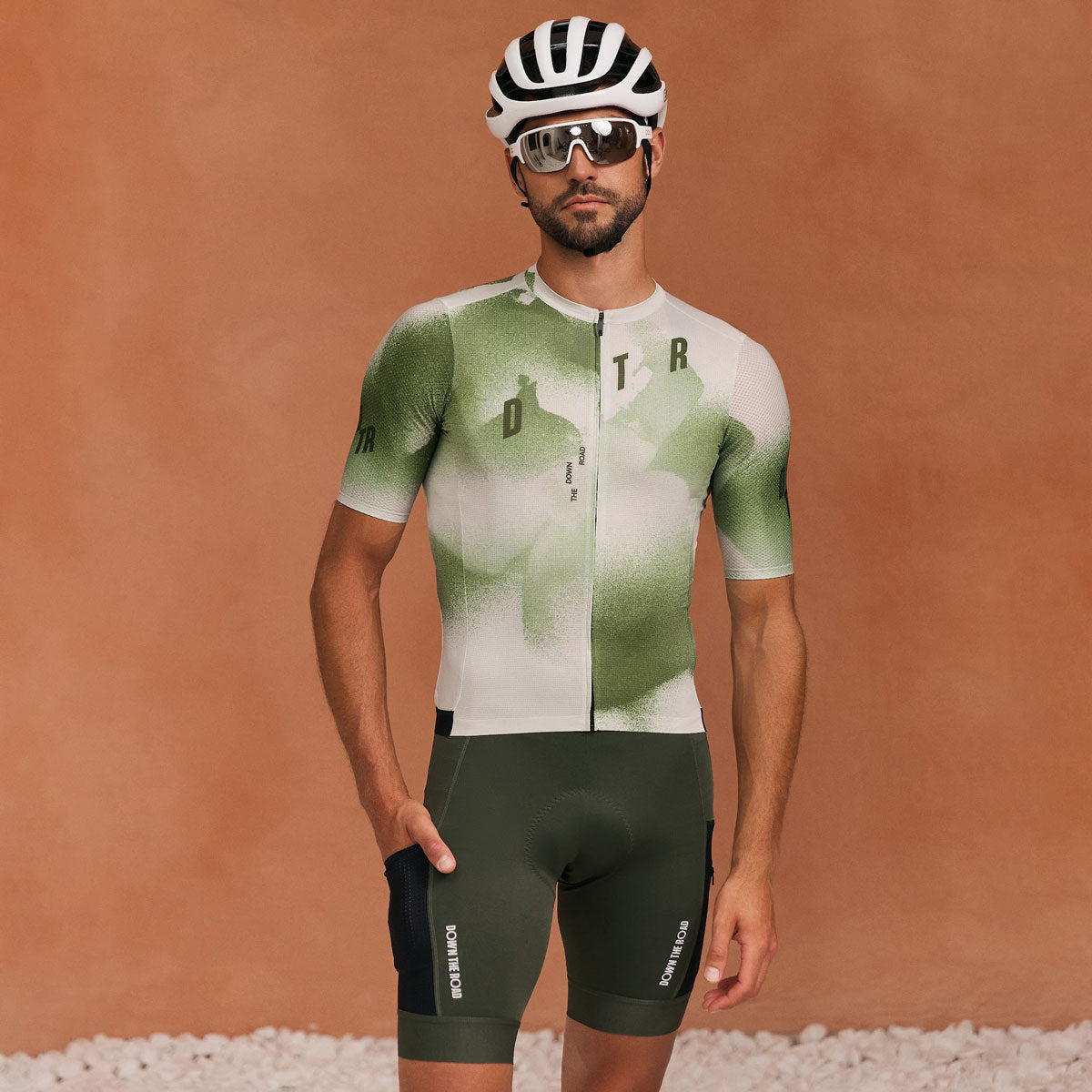
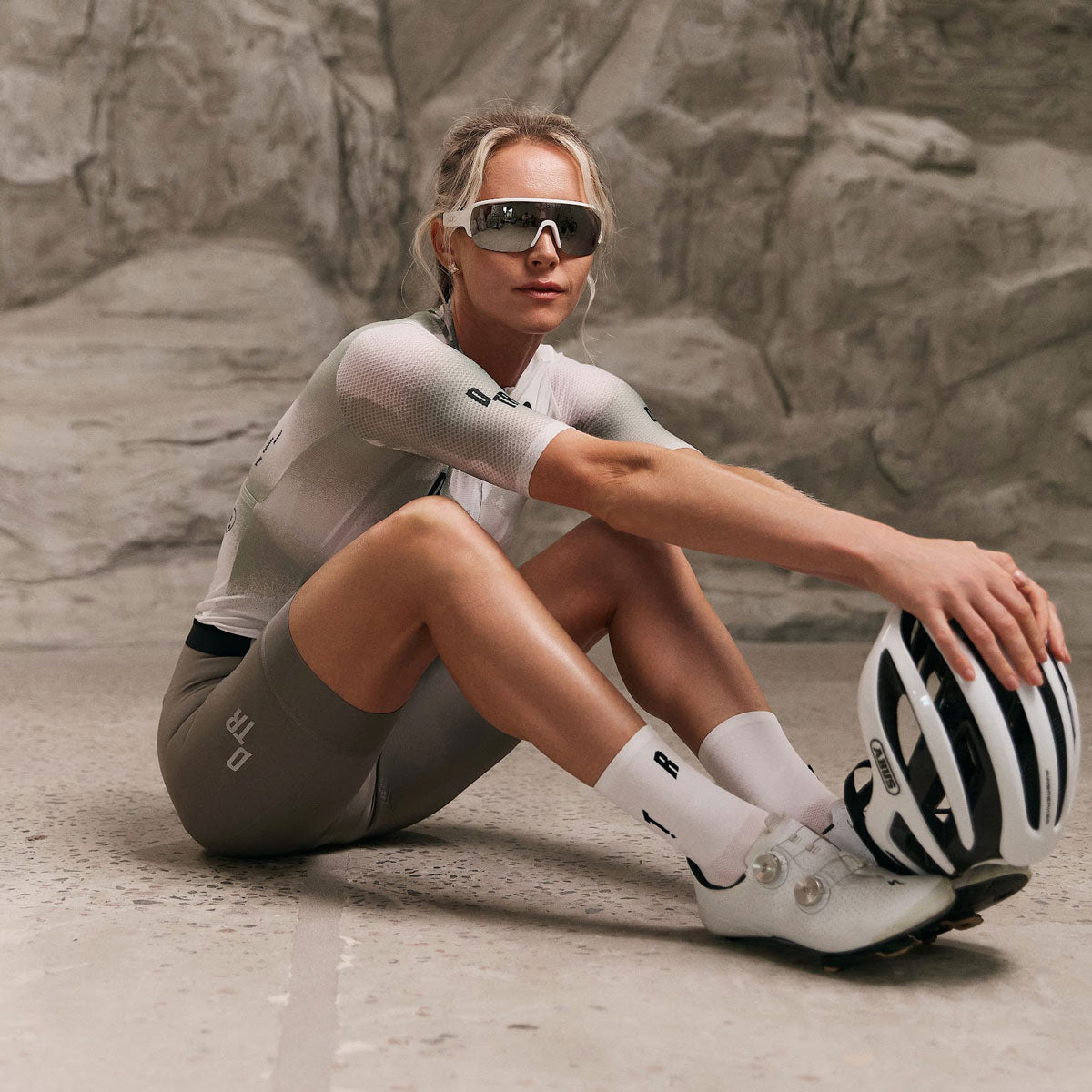
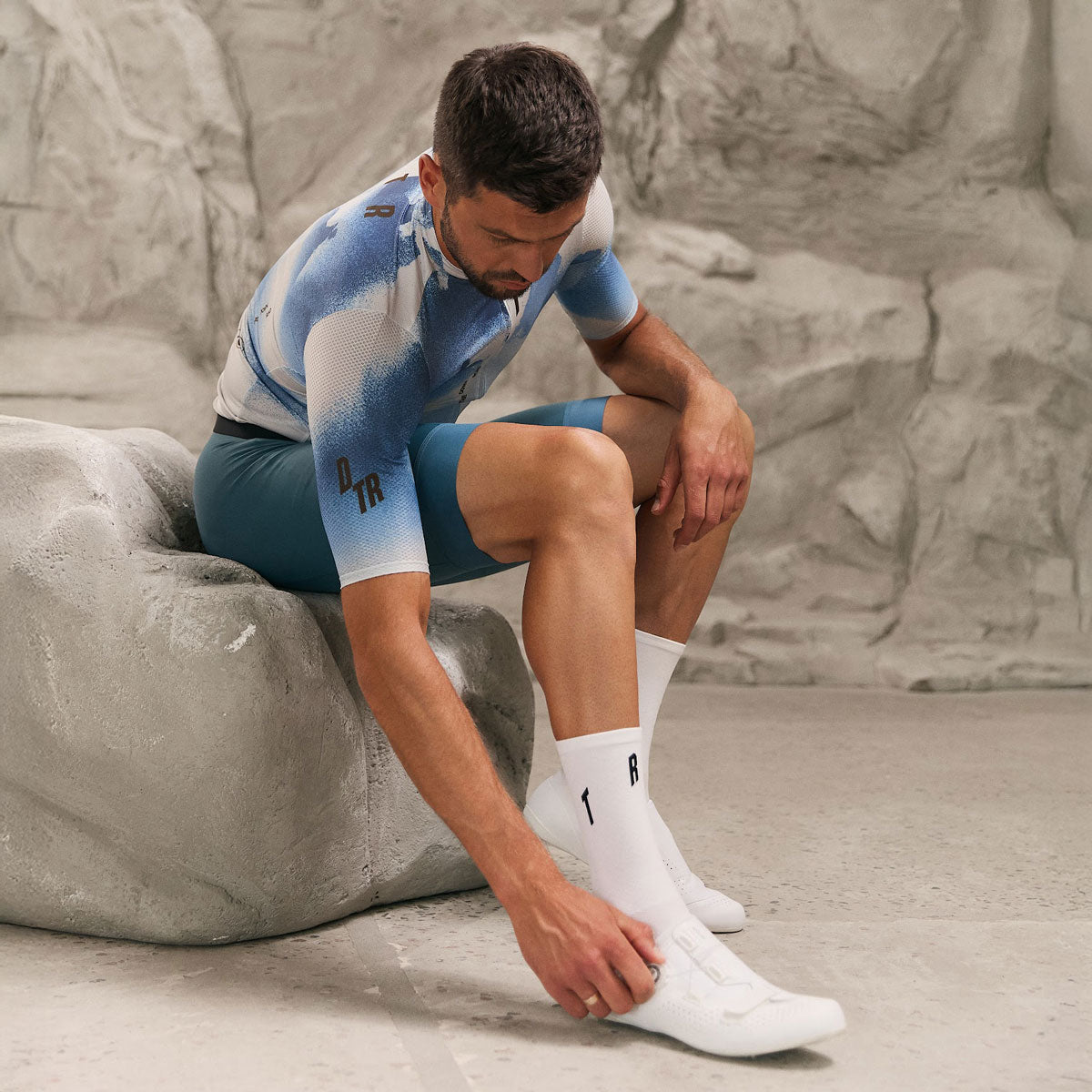
Above roughly 25°C, wear the lightest, most ventilated kit you own: a lightweight short sleeve jersey with a full zip, bib shorts with a breathable chamois — and, counterintuitively, often a thin sleeveless base layer to move sweat off your skin. In the heat the job of your kit flips: it's no longer keeping warmth in, it's moving heat and sweat out as fast as possible.
The logic flips above 25°C
In cool weather you dress to trap a layer of warm air. In hot weather every layer has to earn its place by doing one thing: evaporation. Sweat only cools you when it evaporates, so the kit that keeps you coolest is the kit that spreads sweat thin and lets air through — not necessarily the least kit.
Do you wear a base layer in the heat?
Often, yes — a thin sleeveless one. It spreads sweat across a larger surface so it evaporates faster instead of dripping, and it stops a soaked jersey from clinging to your skin. On short, very hot rides you can skip it; on long days at intensity, most riders stay drier and cooler with one than without.
Which jersey for hot days?
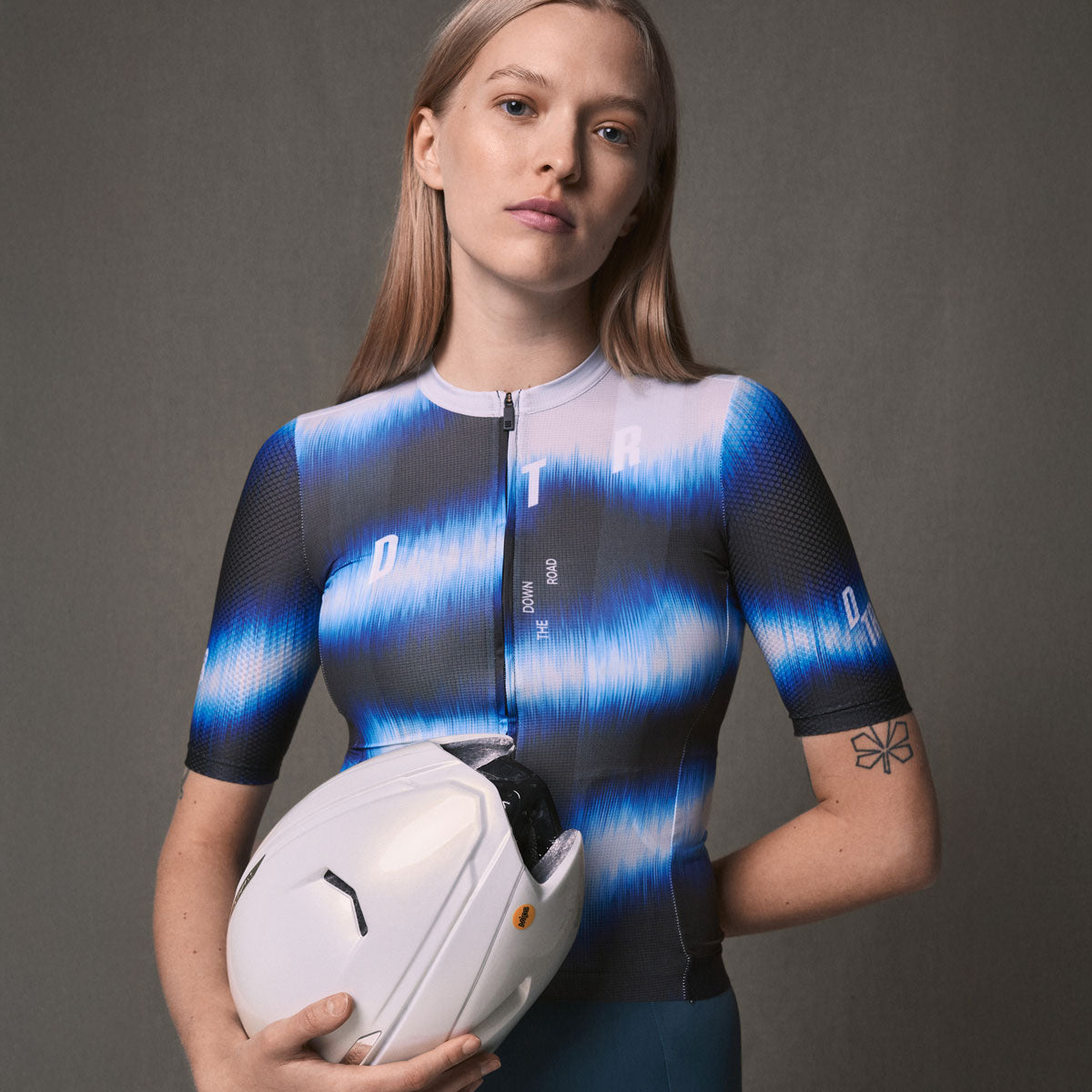
The lightest fabric with the most airflow: open-mesh or perforated panels, a full-length zip you can open on climbs, and a close fit — loose fabric doesn't ventilate better, it just flaps and shades less skin than you think. Quick-dry matters more than any other property: a jersey that holds sweat gets heavier and warmer as the ride goes on.
What about bib shorts?
Standard bib shorts work in almost any heat — the legs rarely overheat. What matters is the chamois: a breathable, multi-density chamois that keeps drying instead of saturating, because a soaked pad in hot weather is where friction problems start. Lighter-weight straps and mesh bib uppers help move heat off your core.
Sun: cover up, don't just strip down
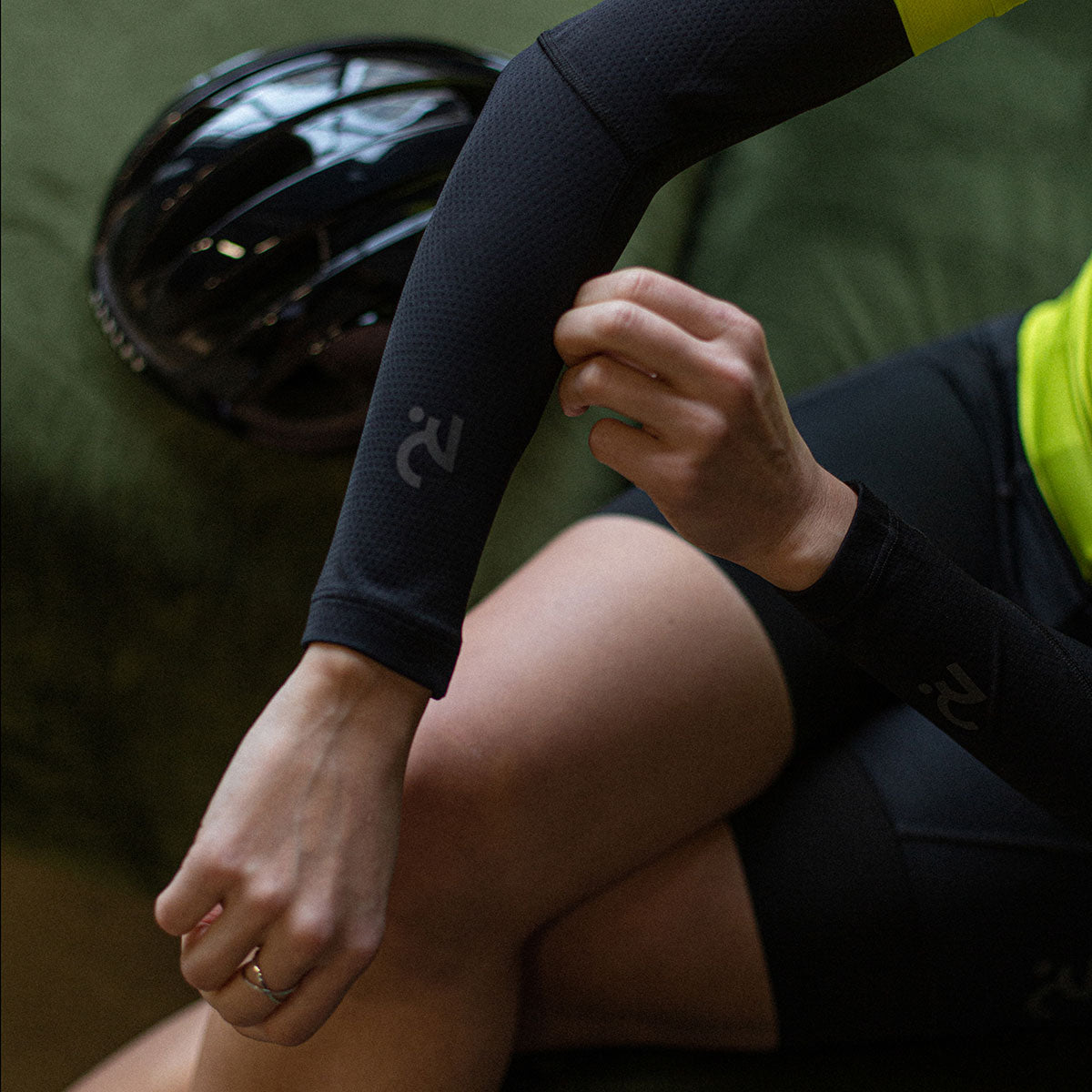
Skin in full sun heats up and burns — on a five-hour summer ride, coverage often beats exposure. A lightweight cap under the helmet shades your face, and UPF-rated fabric protects shoulders that spend all day angled at the sun. Use sunscreen on whatever stays exposed and reapply on long days; a burn is a performance problem as well as a health one.
Small habits that keep you cooler
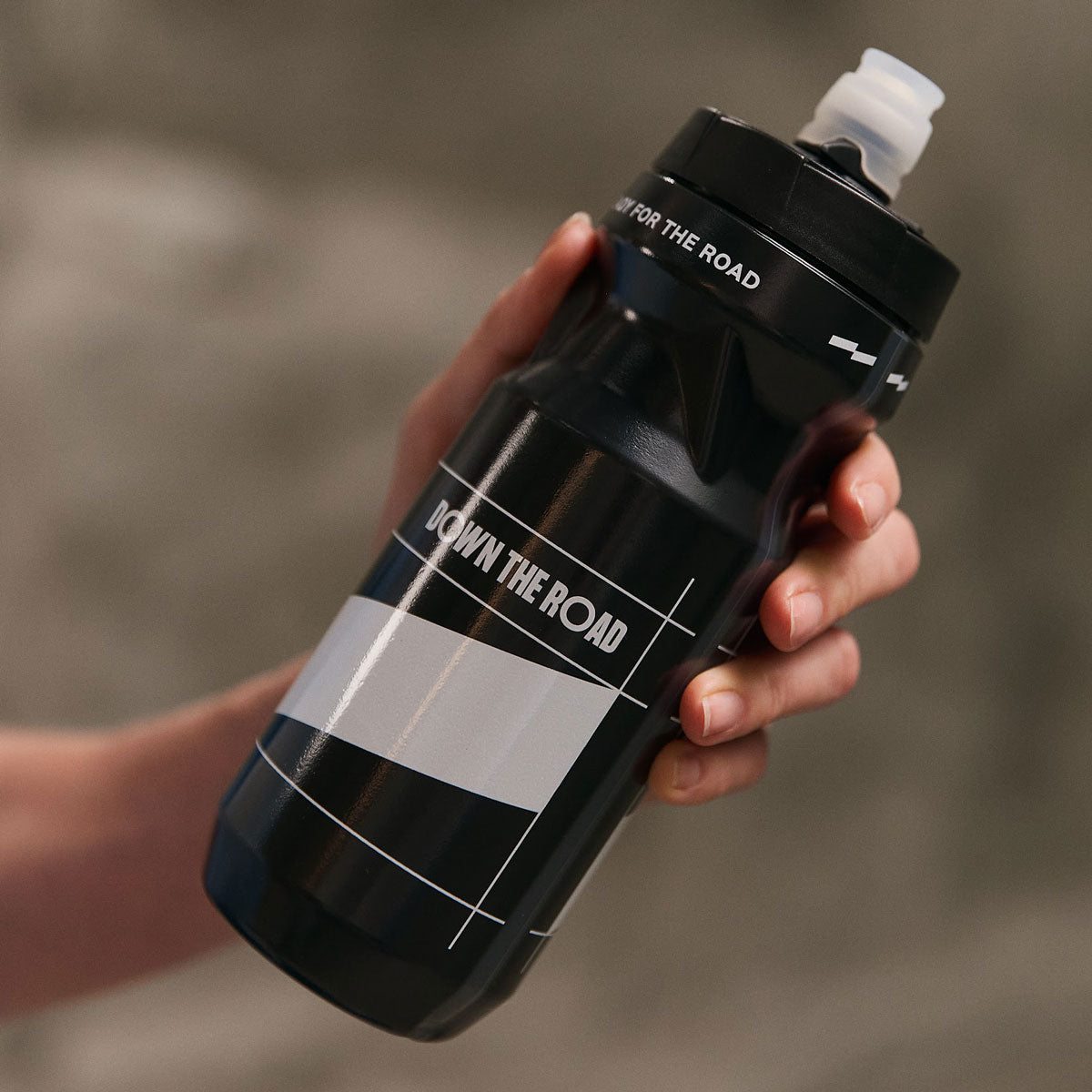
Start early, before the road heats up. Open the zip on climbs and close it for descents. Refill bottles more often than feels necessary — cold water works from the inside, and a splash over the neck and wrists buys real relief. If you stop sweating, feel chilled, or get dizzy in the heat, stop riding and cool down — and treat repeated symptoms as a reason to talk to a doctor, not to push through.
FAQ
Is a black kit hotter than a white one?
In direct sun, dark fabric absorbs more heat — the difference is real but smaller than fabric weight and airflow. A light, well-ventilated dark jersey beats a heavy white one. Fabric first, colour second.
Should you ride with the jersey fully unzipped?
On a climb, open it as far as you like — that's what the zip is for. On the flat, a flapping open jersey costs speed and shades less skin; half-open with a base layer underneath usually cools better.
What temperature is too hot to ride?
There's no single number — humidity, duration and acclimatisation matter more than the reading. Ride earlier, shorten the route, and treat dizziness, chills or a stopped sweat response as a signal to get out of the heat.
Build your hot-weather kit from the lightweight end of the range: Jerseys.
DTR — performance cycling and triathlon apparel, designed and developed in Ukraine.

Leave a comment
This site is protected by hCaptcha and the hCaptcha Privacy Policy and Terms of Service apply.