

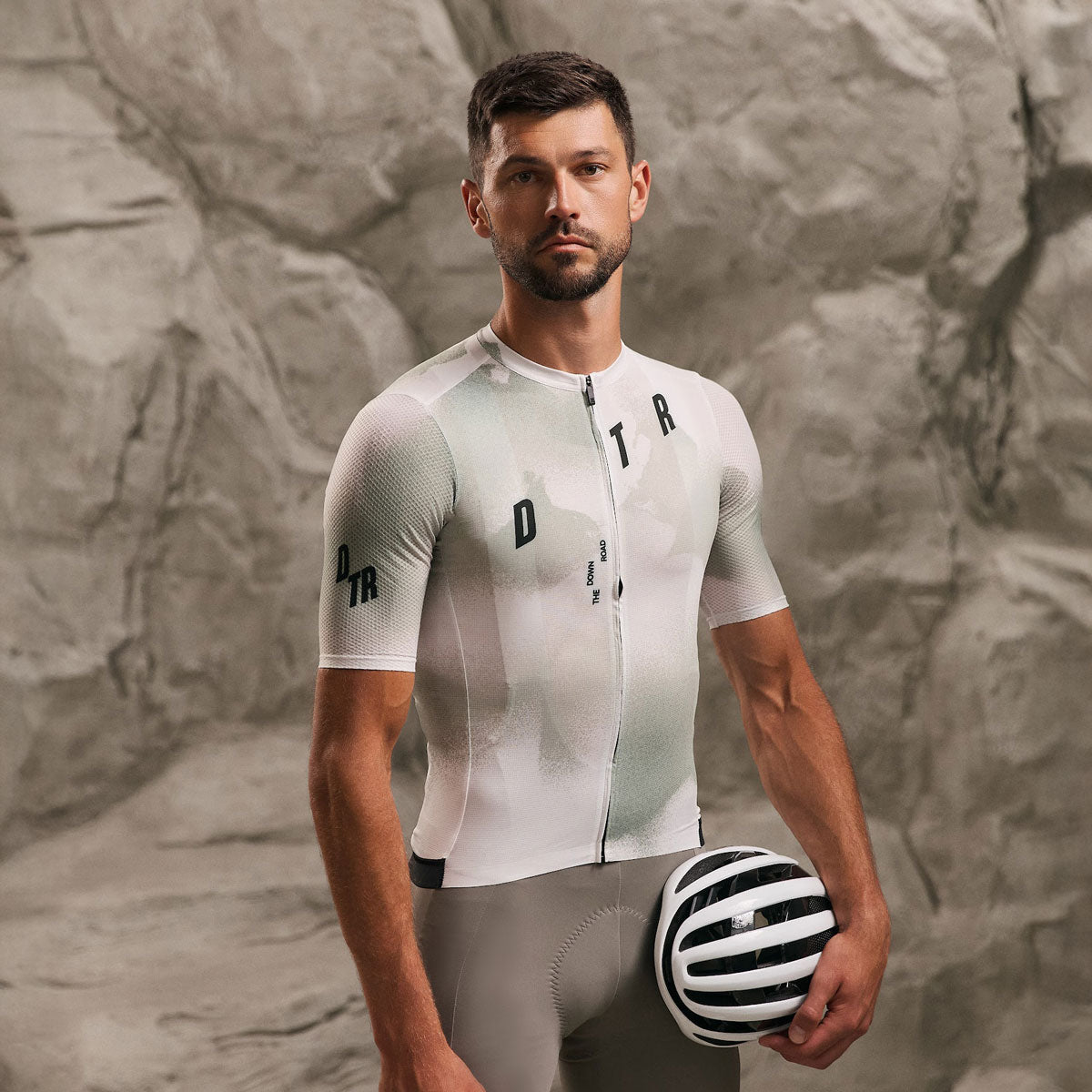
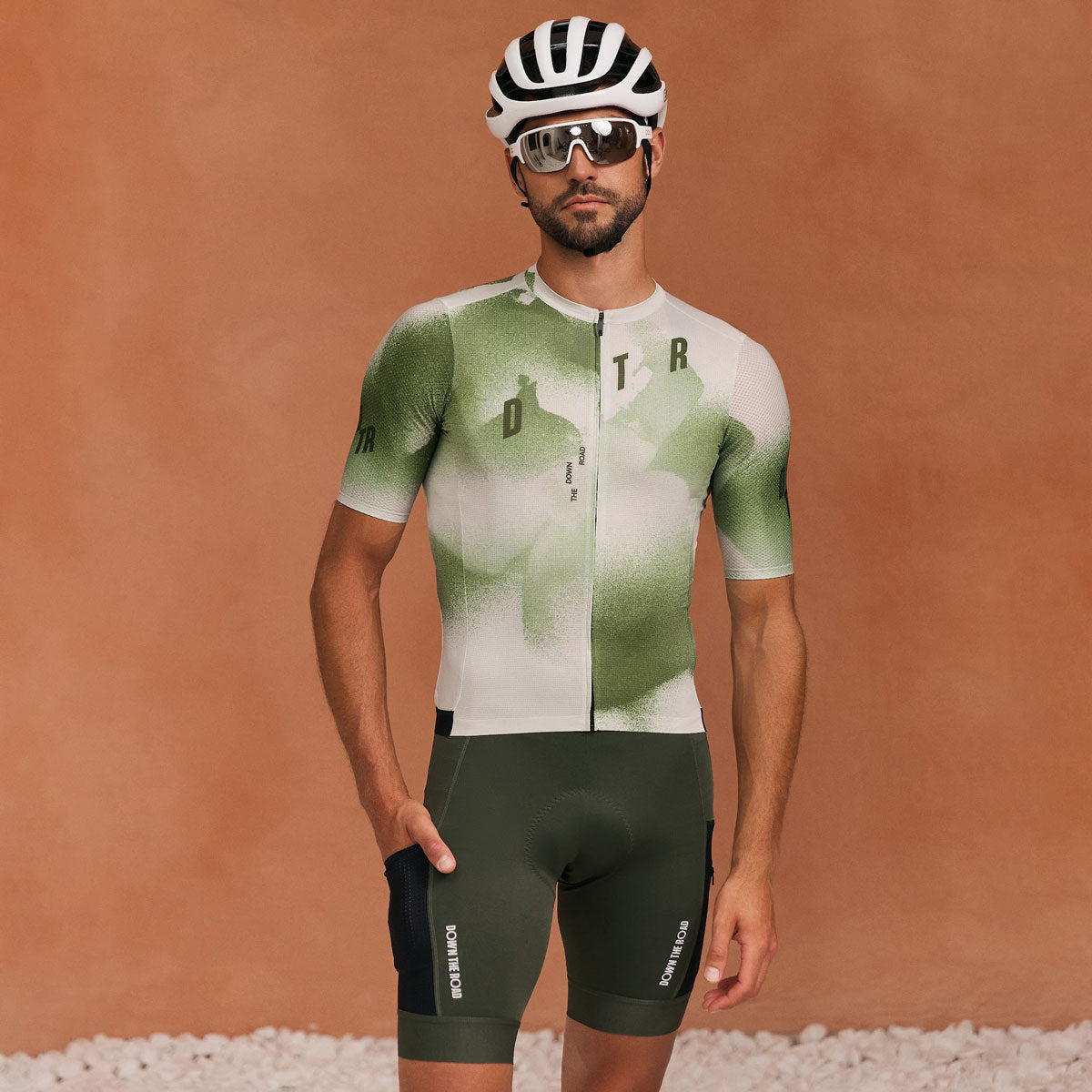
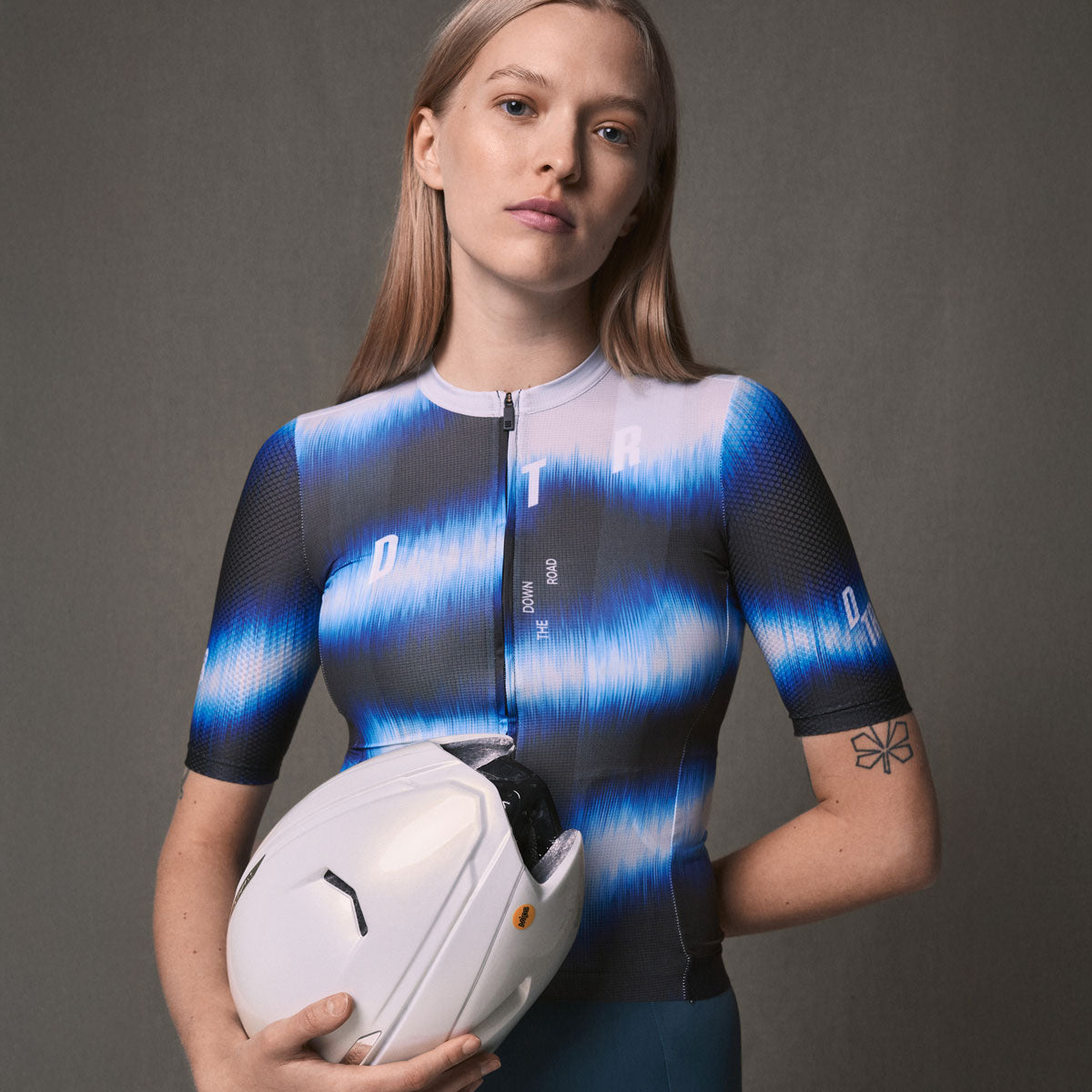
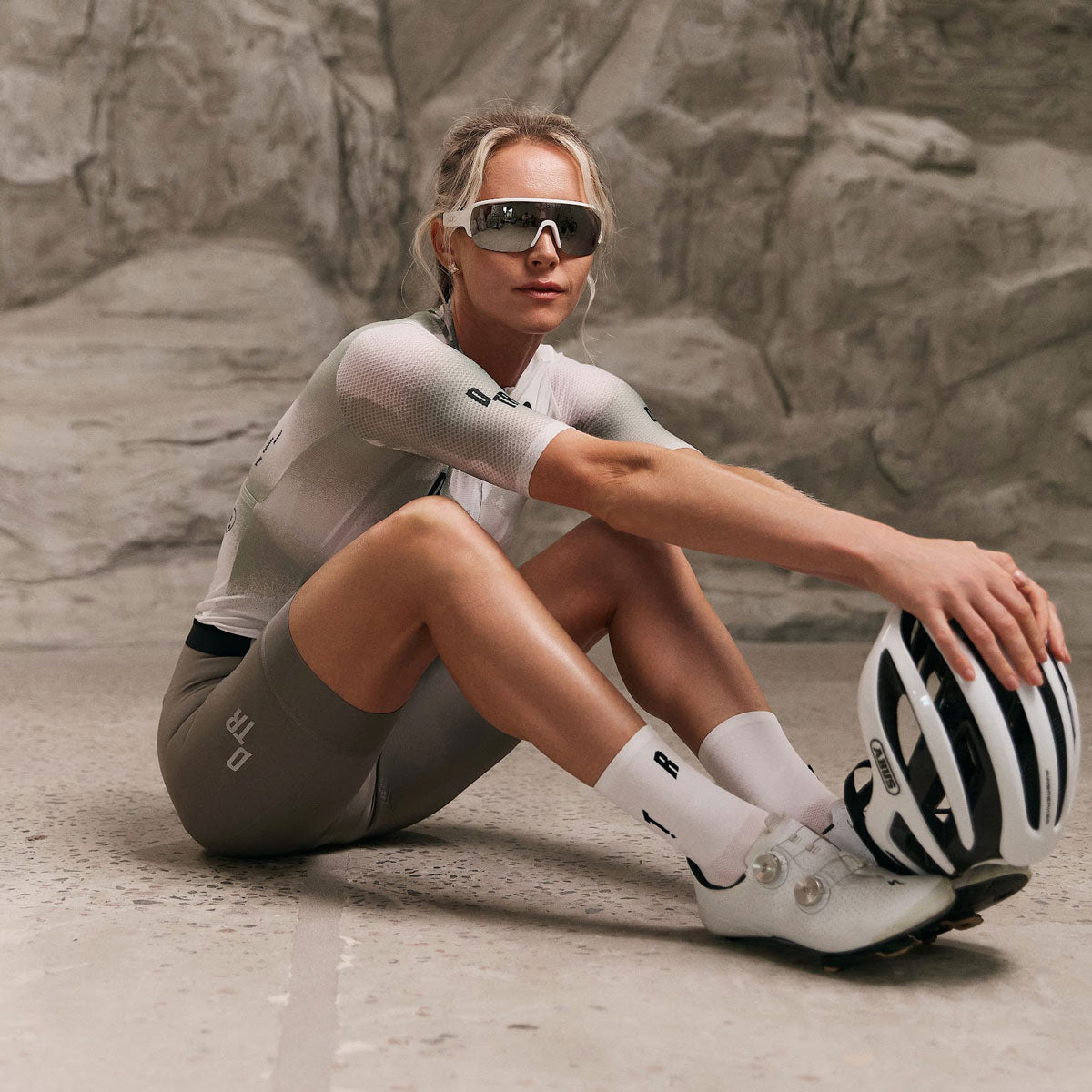
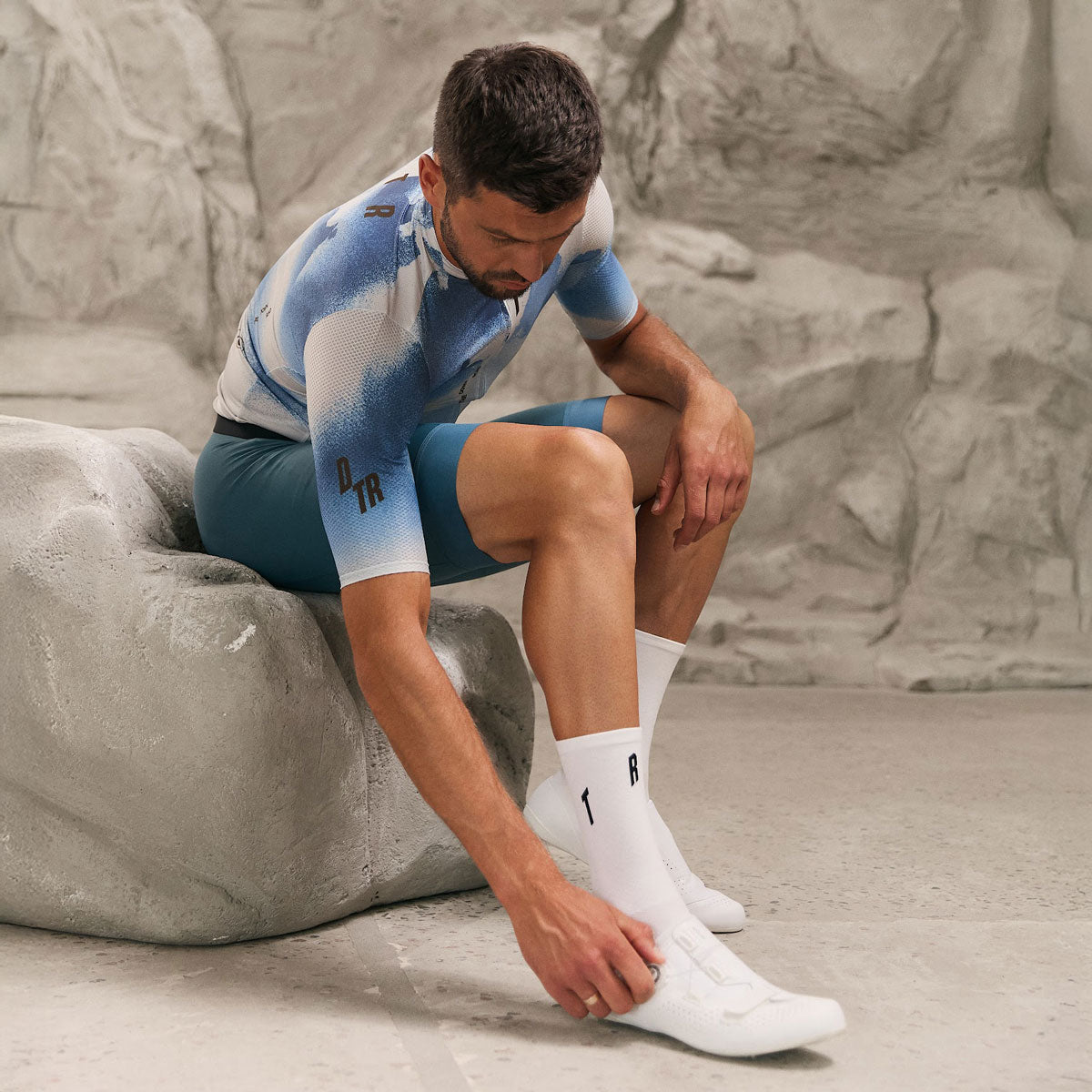
A women's trisuit differs from a men's in three places: the chamois, the torso pattern, and the proportions through chest, waist and hip. It is not a shrunken version of the men's suit — the pattern and the tri pad are engineered separately for a woman's body. This guide covers what actually changes, how the suit should fit, and how to size it for race day.
What's actually different in a women's cut?
Three things. The chamois is shaped and positioned for a woman's anatomy rather than trimmed down from a men's pad. The pattern assumes a shorter torso, narrower shoulders and a different chest-to-hip ratio, so the suit sits flat where a men's cut would gape or pull. And the proportions carry through to the leg and hip, so the grippers hold without digging in.
Everything performance-related is shared with the men's platform: fast-drying technical fabrics, breathable mesh panels, silicone leg grippers, rear pockets and UPF 50+ sun protection. The difference is the shape the platform is built around.
Why the chamois matters most
A tri pad is thin by design — it has to drain after the swim and disappear on the run. A women-specific pad is cut for wider sit-bone spacing and different soft-tissue pressure, and it sits slightly differently in the suit. If the pad is wrong, nothing else about the suit will save the bike leg.
This is the one difference you can't compromise on. A unisex suit with a generic pad can feel fine for a sprint and become a problem at half distance. If you race long, the pad is the first thing to get right.
How should it fit?
Like a second skin. A trisuit should feel compressive standing up and correct in the riding position: no folds of loose fabric at the waist or lower back, straps flat over the shoulders, grippers holding without pinching, and the chamois in light contact with the saddle from the first pedal stroke. Slightly tight standing usually means right on the bike.
Loose fabric is not comfort — it holds water out of the swim, flaps on the bike and rubs on the run. Compression that restricts breathing is the opposite failure. The suit should disappear once you're moving.
Between sizes: up or down?
Measure chest, waist and hip and check them against the size chart — then let distance decide. If you're between sizes and racing long course, take the larger size: comfort over five or more hours beats a marginal aero gain. For short course, stay true to size and keep the suit as close to the skin as you can tolerate.
The details that earn their place mid-race
A front zip lets you vent on the climb and close up for the descent. Two rear pockets hold gels where you can reach them in aero position. Mesh panels move heat out when the run gets hot, and UPF 50+ fabric matters more than most athletes think on a long, exposed bike leg. None of this is decoration — each detail exists because something goes wrong mid-race without it.
Does race distance change what you need?
Yes. For sprint and Olympic racing, a minimal suit is enough: thin pad, tight fit, low drag. For middle and full distance, comfort compounds — the pad, the pockets and sun protection start to decide how the second half of your day goes. Choose the suit for the longest race on your calendar, not the shortest.
FAQ
What do you wear under a women's trisuit?
A sports bra — usually nothing else. Choose a low-profile technical bra that drains quickly after the swim. Underwear adds seams and holds water; the suit and pad are designed to be worn without it.
Can you train in a trisuit?
Yes — and you should, at least a few times before racing in it. Brick sessions tell you how the pad, straps and grippers behave when you're tired, which is exactly what you need to know before race morning.
Sleeved or sleeveless?
The same logic as any trisuit: sleeves add aero benefit and sun coverage on the bike; sleeveless gives total shoulder freedom in the swim and runs cooler. For long-course racing in the sun, sleeves usually win.
See the women's trisuit range: Women's Trisuits.
DTR — performance cycling and triathlon apparel, designed and developed in Ukraine.

Leave a comment
This site is protected by hCaptcha and the hCaptcha Privacy Policy and Terms of Service apply.