

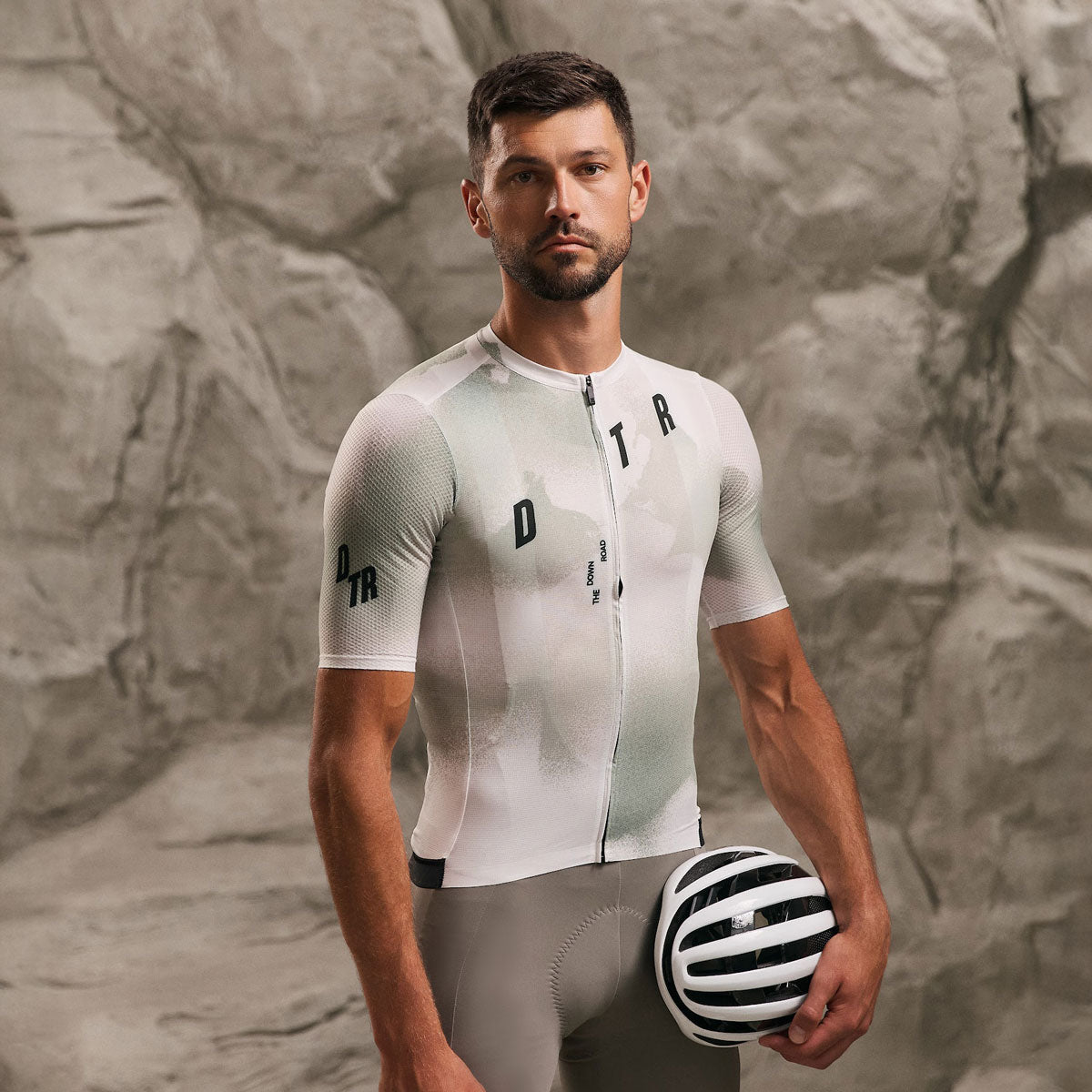
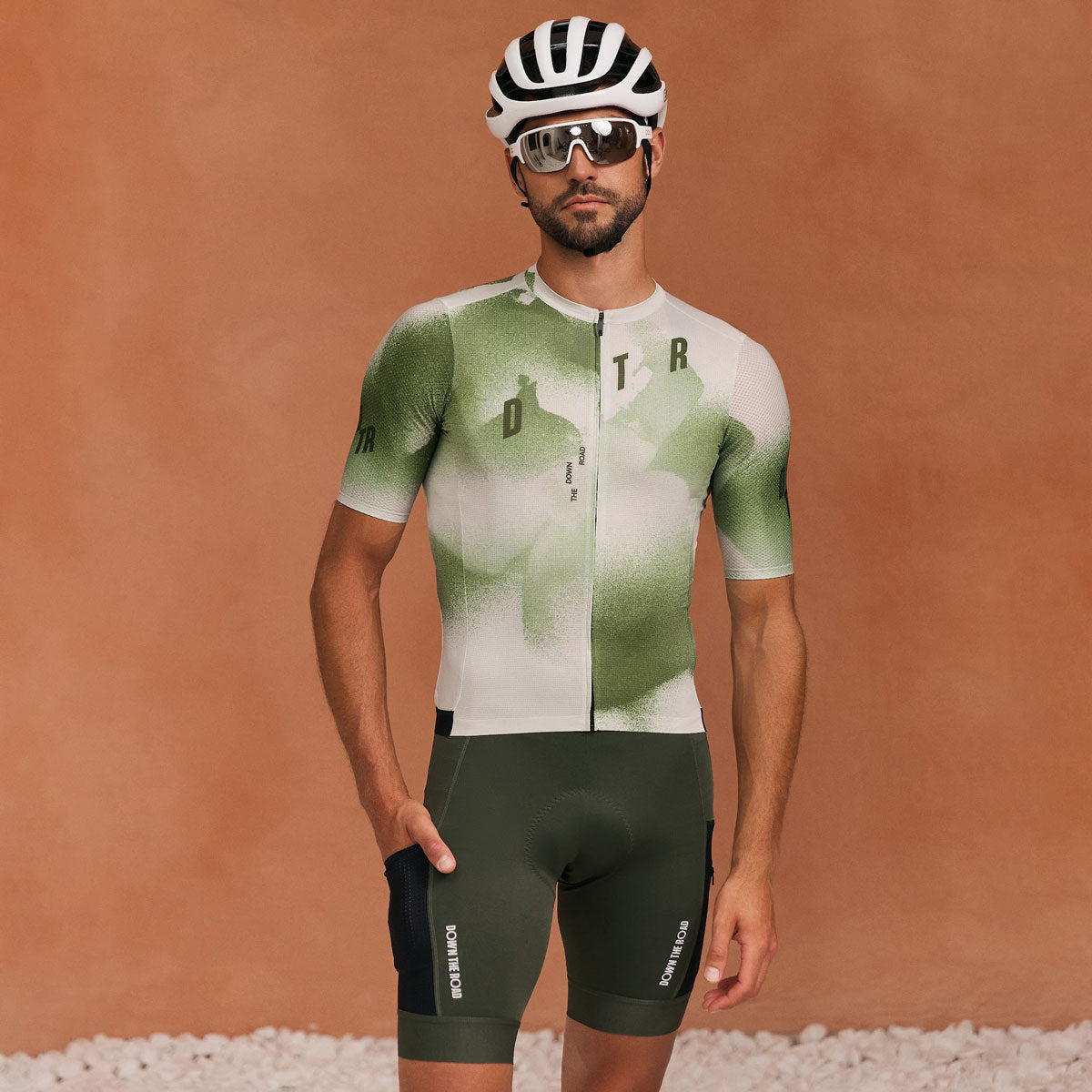
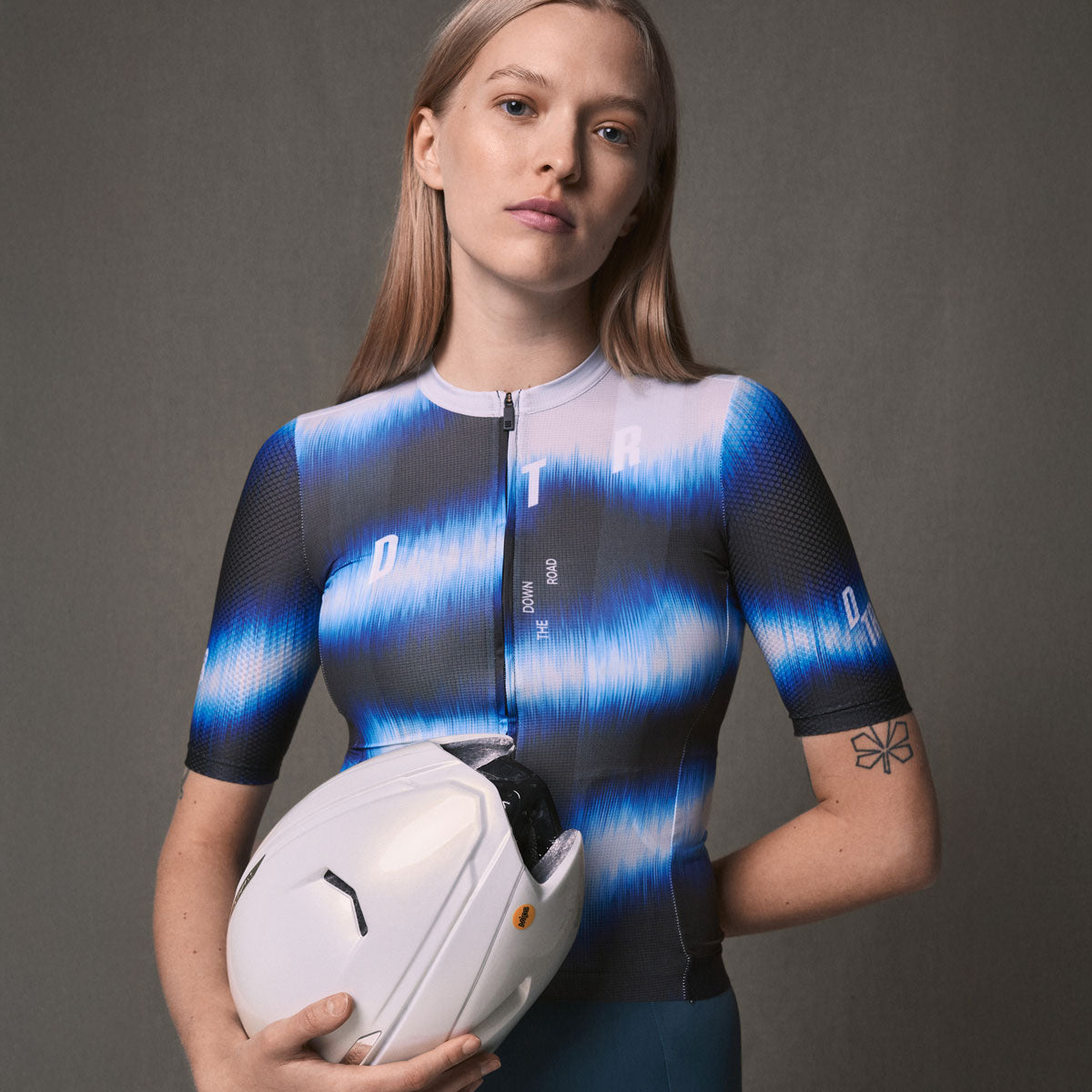
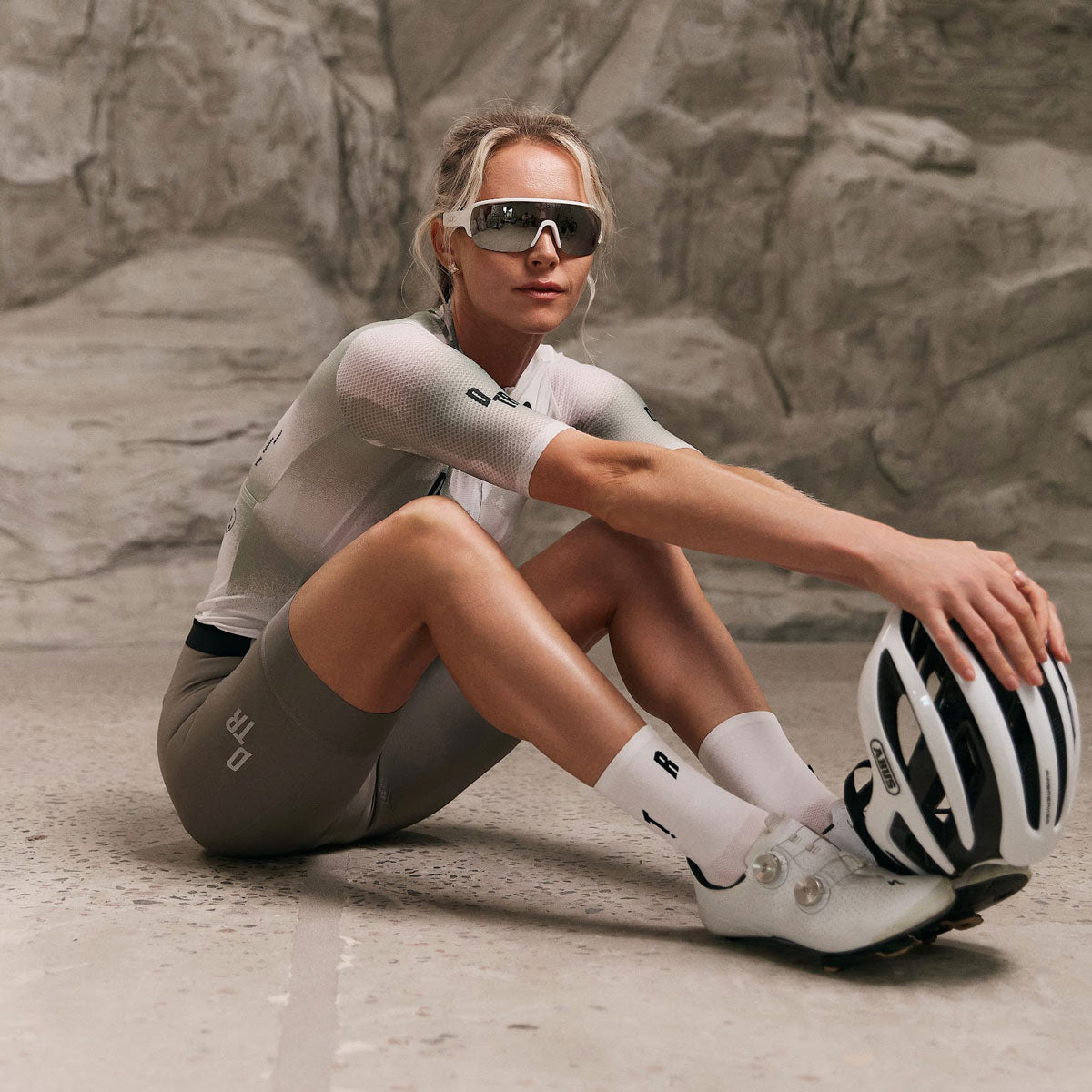
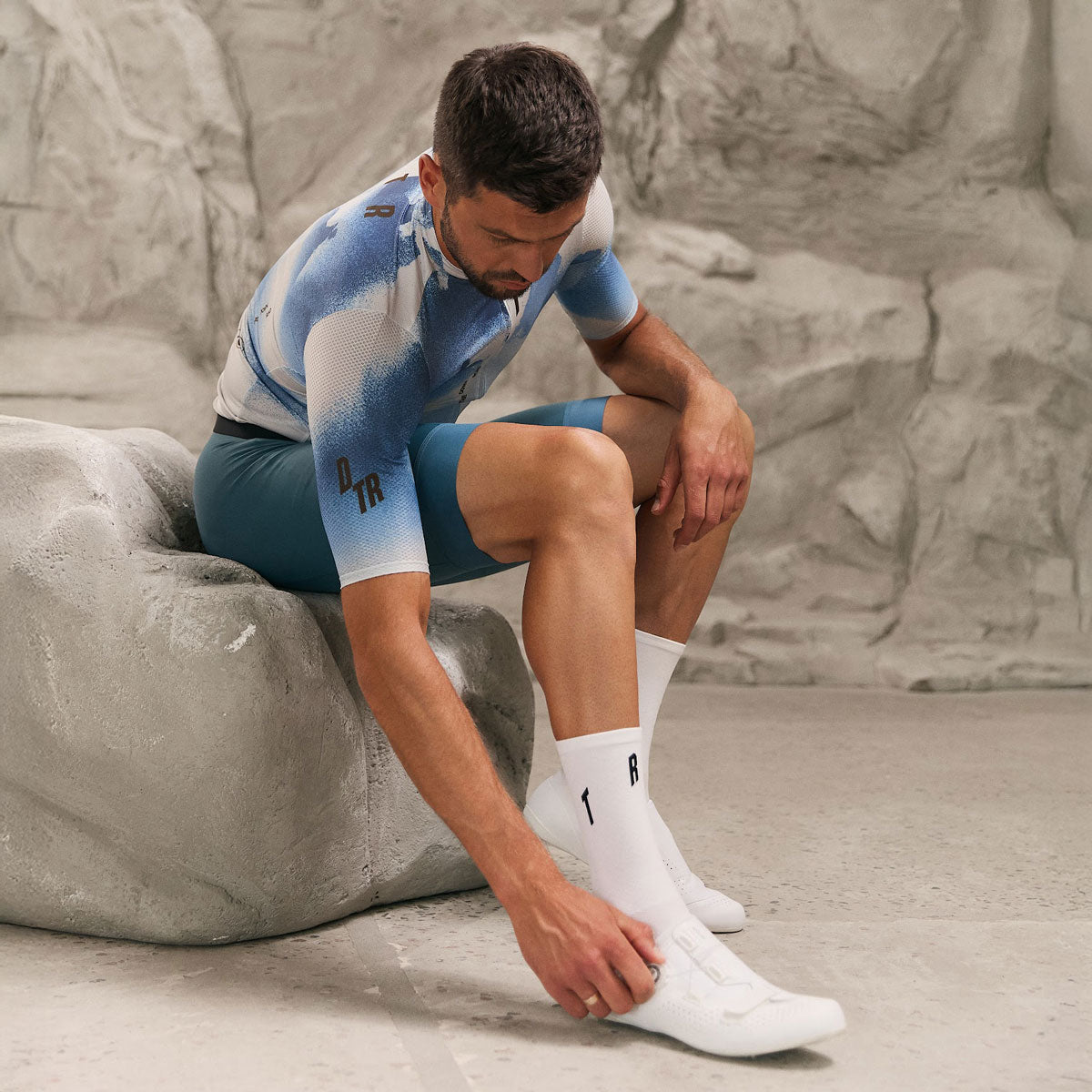
Fabric is the most reliable sun protection you can carry on a bike. A close-woven technical jersey blocks UV continuously for the whole ride, while sunscreen degrades in UV, comes off on sweat and needs reapplying roughly every two hours — which on a six-hour ride means three applications you will almost certainly not make.
This guide covers what a jersey actually blocks, what UPF numbers mean and where they mislead, the specific places riders burn, and how to get real coverage in 30°C without cooking yourself.
What a jersey actually blocks
A typical close-woven polyester cycling jersey blocks the large majority of UV across the area it covers, and it does so without degrading over the ride. Weave density matters far more than colour or thickness: UV passes through the gaps between fibres, so a tightly woven lightweight fabric outperforms a loose, heavier knit.
Two things reduce that protection in practice. Stretch opens the weave — fabric pulled tight over shoulders and thighs lets more UV through than the same fabric at rest, which is why the shoulders of a jersey that fits too small protect less than one that fits properly. And wet fabric transmits more UV than dry fabric, because water fills the air gaps between fibres and reduces scattering. A jersey soaked through on a hot climb is doing less work than the same jersey dry.
Neither effect makes fabric a bad choice. Both are arguments for a jersey that fits correctly rather than one stretched over you — how a cycling jersey should fit covers what correct looks like.
What UPF numbers actually mean
UPF measures how much UV a fabric lets through: UPF 50 means roughly one-fiftieth of UV reaches the skin, or about 98% blocked. The jump from UPF 30 to UPF 50 sounds large but moves blocked UV from about 96.7% to about 98% — real, but far smaller than the numbers suggest.
What this means on the road:
- UPF 30 and above is genuinely protective. Chasing UPF 50+ over UPF 30 is a much smaller gain than covering an area you had left bare.
- The rating applies only to covered skin. A UPF 50 jersey does nothing for your forearms, neck, or the back of your hands.
- Many technical fabrics reach UPF 30–50 without being marketed for it. A dense polyester jersey is usually in that range whether or not it carries a printed rating.
- Ratings are measured on dry, unstretched fabric. Assume real-world performance sits somewhat below the label on a hot ride.
Where riders actually burn
The burn pattern on a cyclist is predictable: the back of the neck, the forearms and the backs of the hands, the tops of the thighs above the knee, and the strip of lower back that appears when you are stretched out on the drops. All four are places where either nothing covers you or the covering moves.
Riding position is what makes cycling different from other outdoor sport. You spend hours with your neck extended and the back of it aimed at the sun, your forearms held out horizontally in the most exposed possible orientation, and your thighs facing straight up. Standing on a beach, none of those surfaces would catch anything like the same dose.
The gap between jersey hem and bib shorts on the lower back deserves specific mention, because riders rarely notice it until it hurts. A jersey with a proper dropped tail closes it in the riding position; a jersey with a straight hem does not, no matter how well it fits standing up.
Covering the arms, neck and hands
The forearms and the back of the neck are where fabric beats sunscreen most clearly, because both are high-exposure areas that sweat heavily and get rubbed — the two things that strip sunscreen fastest. Lightweight arm coverage and something over the neck solve in one decision what sunscreen only solves if you keep reapplying it.
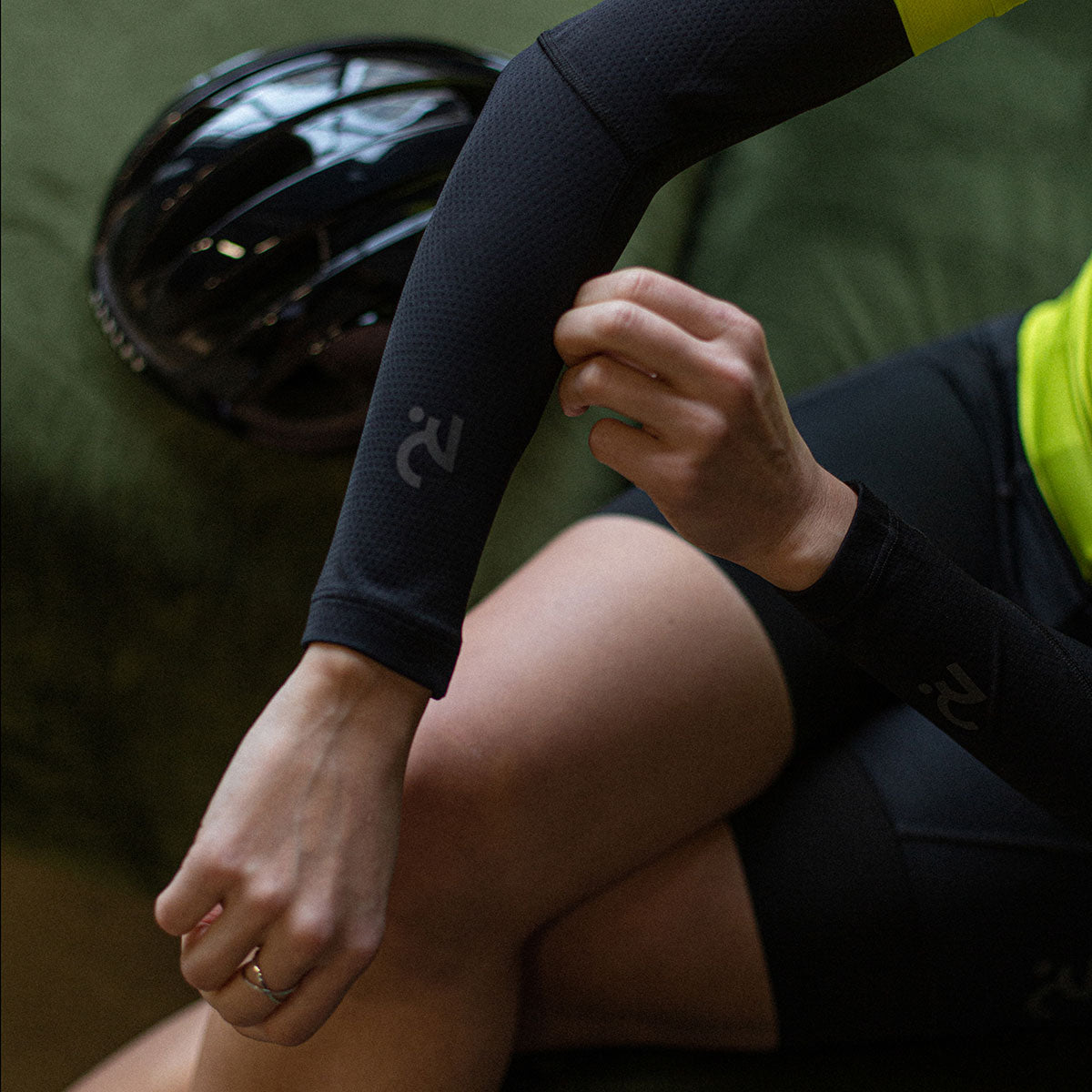
- Arms. Lightweight arm warmers pushed down to the wrists are already in your pocket on most alpine and early-season rides, and they cover the forearm completely. On genuinely hot days, a long-sleeve lightweight jersey in a ventilated fabric is often cooler than bare arms plus sweat-thinned sunscreen, because the fabric shades the skin and holds a thin layer of evaporating moisture against it.
- Neck. A cap under the helmet shades the forehead and, with the peak flipped down, part of the face. For the back of the neck, a lightweight neck covering or a jersey collar that sits high is the practical answer.
- Hands. Mitt tan lines exist because nothing covers the back of the hand. This is one of the few places where sunscreen is genuinely the only option — apply it there even if you skip elsewhere.
- Face and lips. Fabric cannot help. Sunscreen and lip balm with SPF, plus a cap peak, are the tools available.
Our guide to cycling caps covers the under-helmet options, and the case for arm warmers covers fit.
Does dark fabric make you hotter?
Dark fabric absorbs more visible light and gets hotter to the touch, but it also blocks more UV than the same fabric in a light colour. On a moving bike the heat difference is smaller than most riders assume, because airflow strips heat off the outer surface continuously — the fabric warms up, and then the wind takes it away.
The practical order of priority: fit first, then weave density and ventilation, then colour. A well-fitted, densely woven, well-ventilated dark jersey will keep you cooler and better protected than a loose pale one that flaps and lets UV through the gaps. Colour is the last variable worth optimising, not the first.
Coverage without cooking
More coverage does not automatically mean more heat, because a fabric that shades your skin and moves sweat can leave you cooler than bare skin in direct sun. The failure mode is not coverage itself — it is coverage in a fabric that traps moisture and blocks airflow.
What holds up in real heat:
- Prioritise airflow over exposure. A jersey with mesh panels under the arms and across the back moves more air than bare arms do, because bare skin in still air over the shoulders does not actually get much airflow in the riding position.
- Keep the fabric next to skin working. A very lightweight base layer that lifts sweat off the skin makes a covered torso feel cooler, not warmer — the same argument as a base layer in summer.
- Wet the fabric, not the skin. Pouring water over a jersey at a fountain cools you for far longer than pouring it over bare arms, because the fabric holds the water against you while it evaporates.
- Full zips are a temperature dial. Coverage you can open on a climb and close on a descent is coverage you will actually keep on.
For the wider hot-weather picture, what to wear cycling in hot weather and the summer jersey ventilation guide cover fabric and airflow in more detail.
Frequently asked questions
Do I still need sunscreen if I wear a UPF jersey?
Yes, on everything the jersey does not cover — face, ears, back of the neck, forearms, backs of the hands, and the strip of thigh between shorts and knee. Fabric handles the covered areas reliably; sunscreen handles the rest.
Is a long-sleeve jersey hotter than short sleeves in summer?
In a lightweight, well-ventilated fabric it often is not. Shading the skin and holding a thin evaporating layer against it can offset the extra coverage, particularly in dry heat and strong sun. In high humidity, where evaporation is already limited, short sleeves plus sunscreen usually feels better.
How often does sunscreen need reapplying on a ride?
Roughly every two hours, and sooner if you are sweating heavily or have wiped the area. This is the core practical argument for covering high-exposure skin with fabric — a jersey does not need reapplying at kilometre 90.
Does a wet jersey still protect me from the sun?
Less than a dry one. Water fills the gaps between fibres and lets more UV through, so a soaked jersey offers meaningfully less protection than the same jersey dry. It still protects considerably more than bare skin.
What about skin changes after years of riding?
Cumulative sun exposure is a real consideration for anyone who rides long hours outdoors. If you notice a mole changing shape or colour, a patch that will not heal, or any new lesion that concerns you, see a doctor or dermatologist rather than trying to judge it yourself.
Start with the layer that covers the most skin: the DTR jersey range is at Jerseys.
DTR — performance cycling and triathlon apparel, designed and developed in Ukraine.

Leave a comment
This site is protected by hCaptcha and the hCaptcha Privacy Policy and Terms of Service apply.