

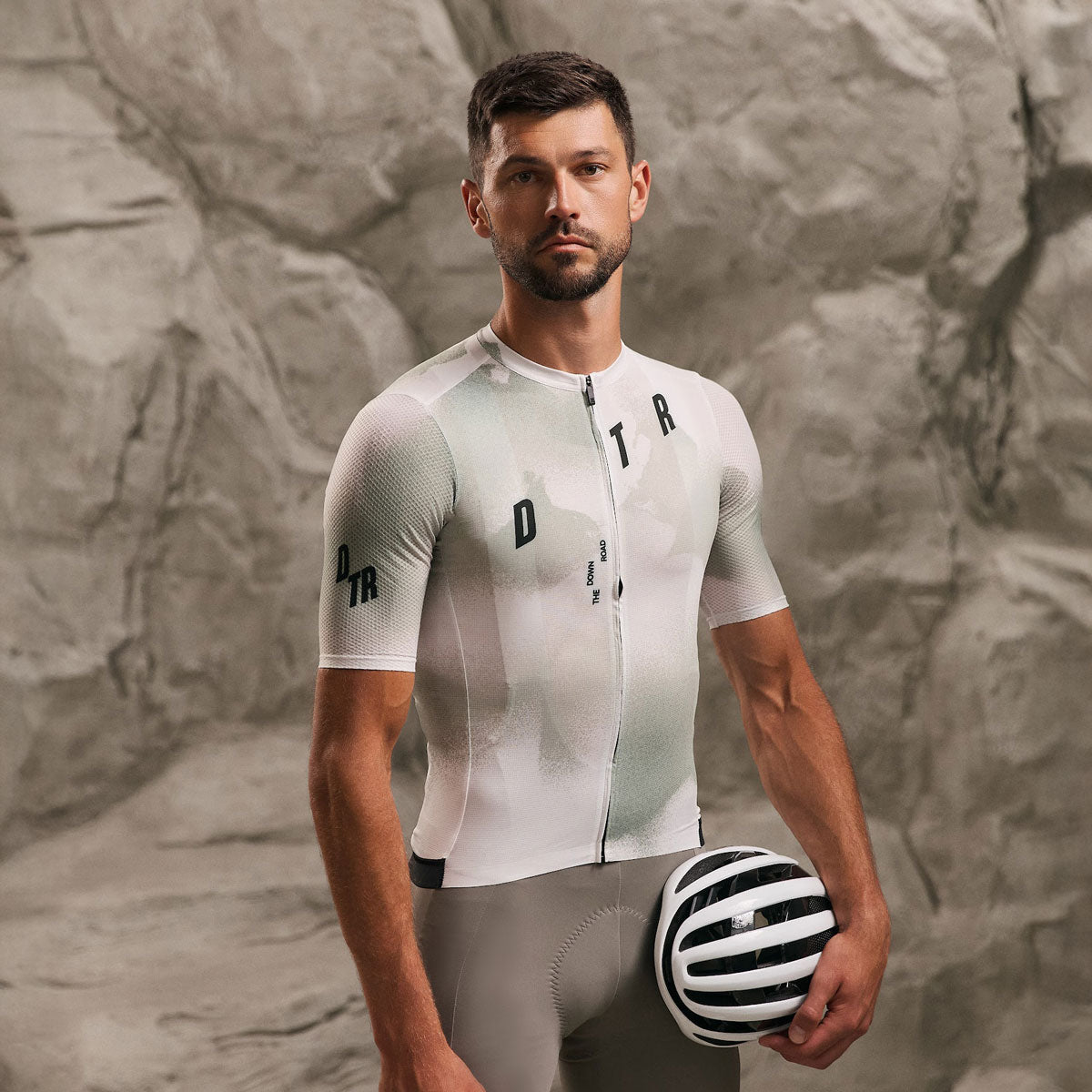
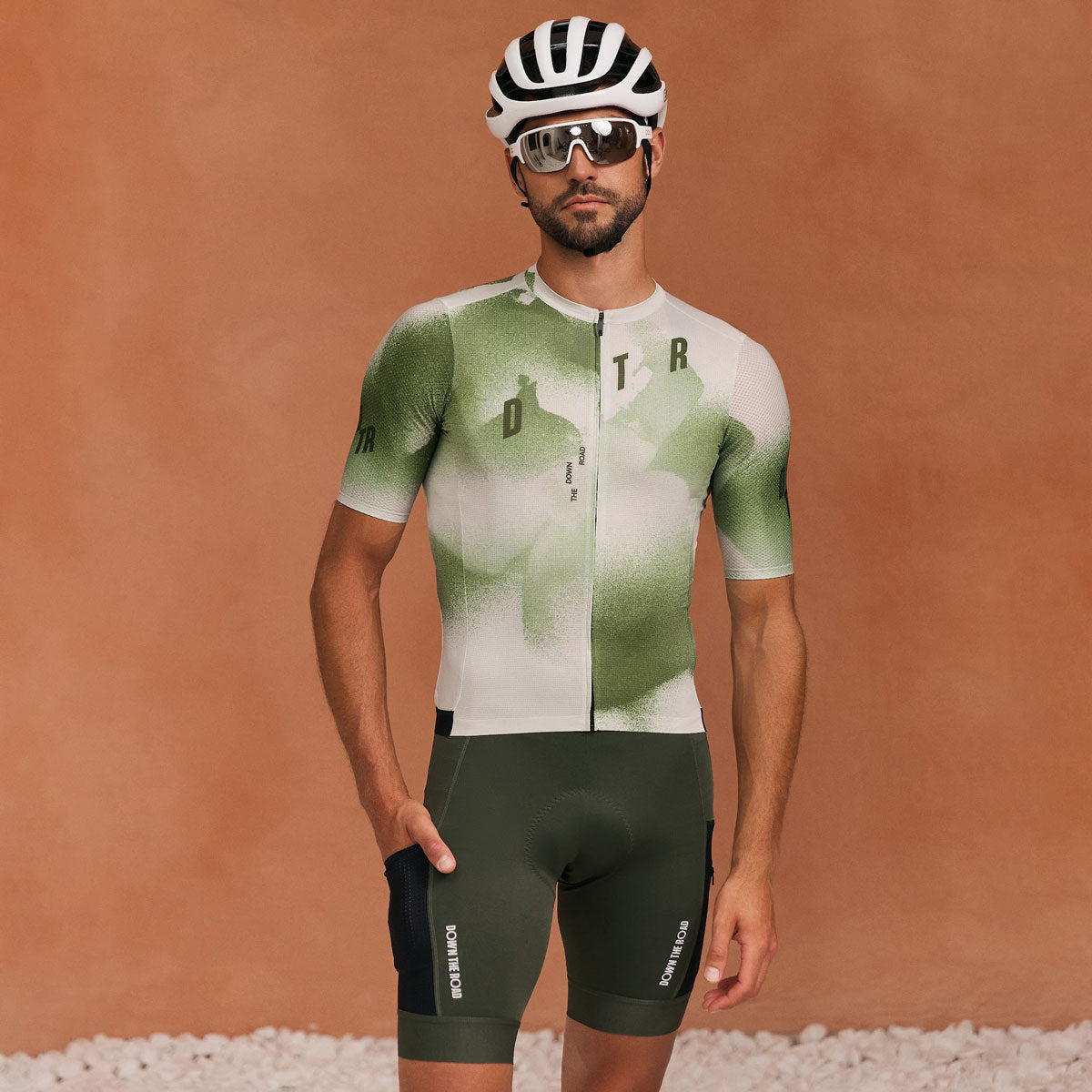
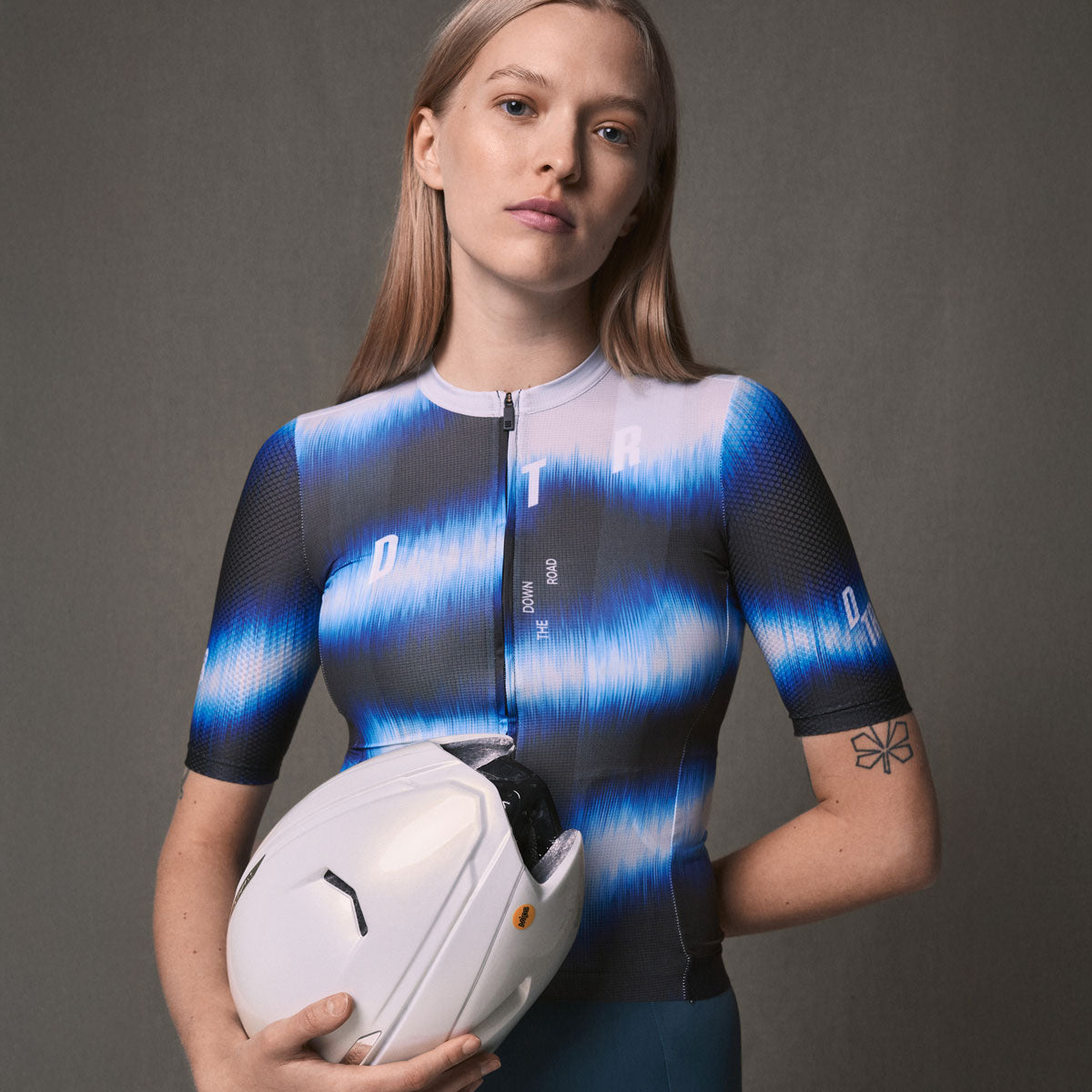
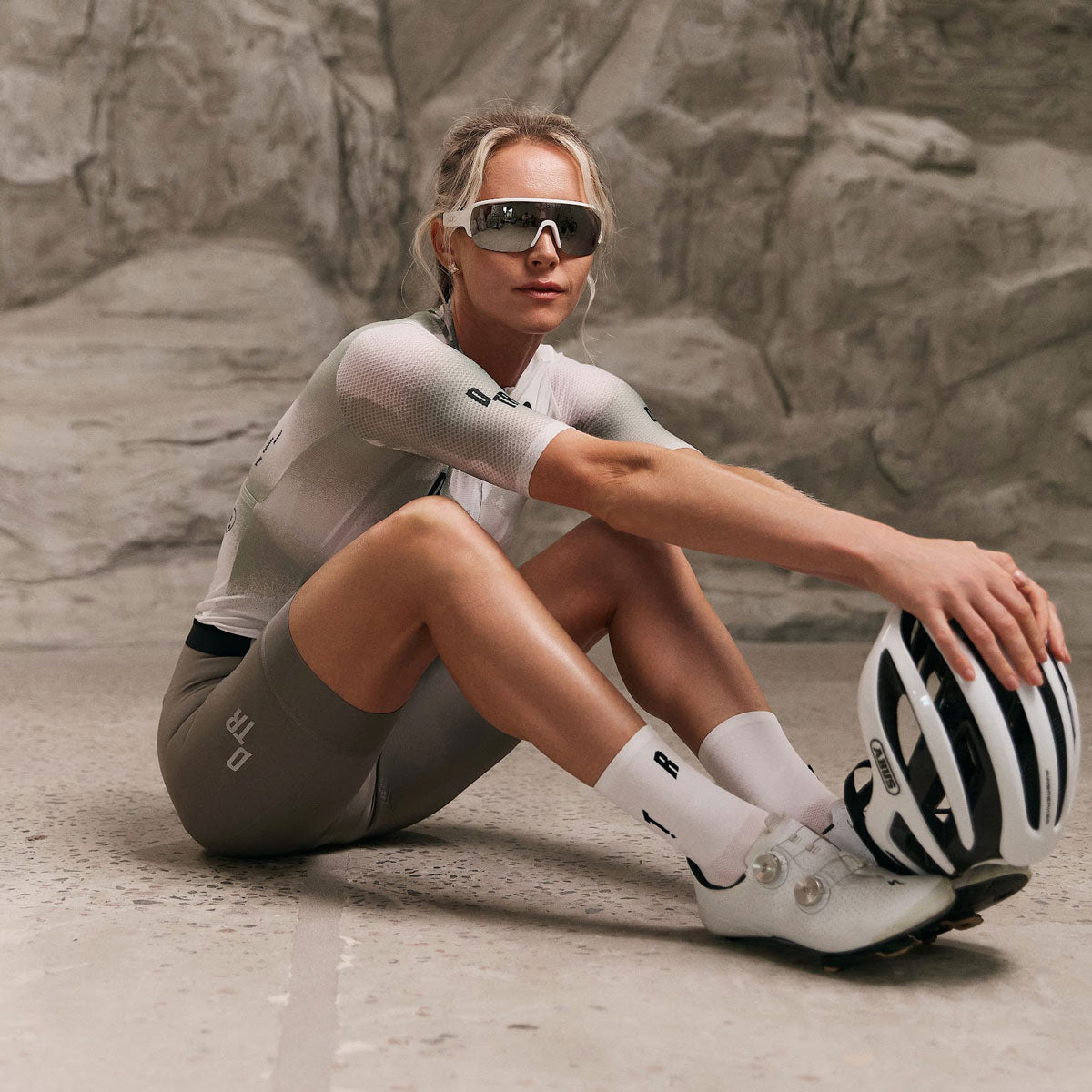
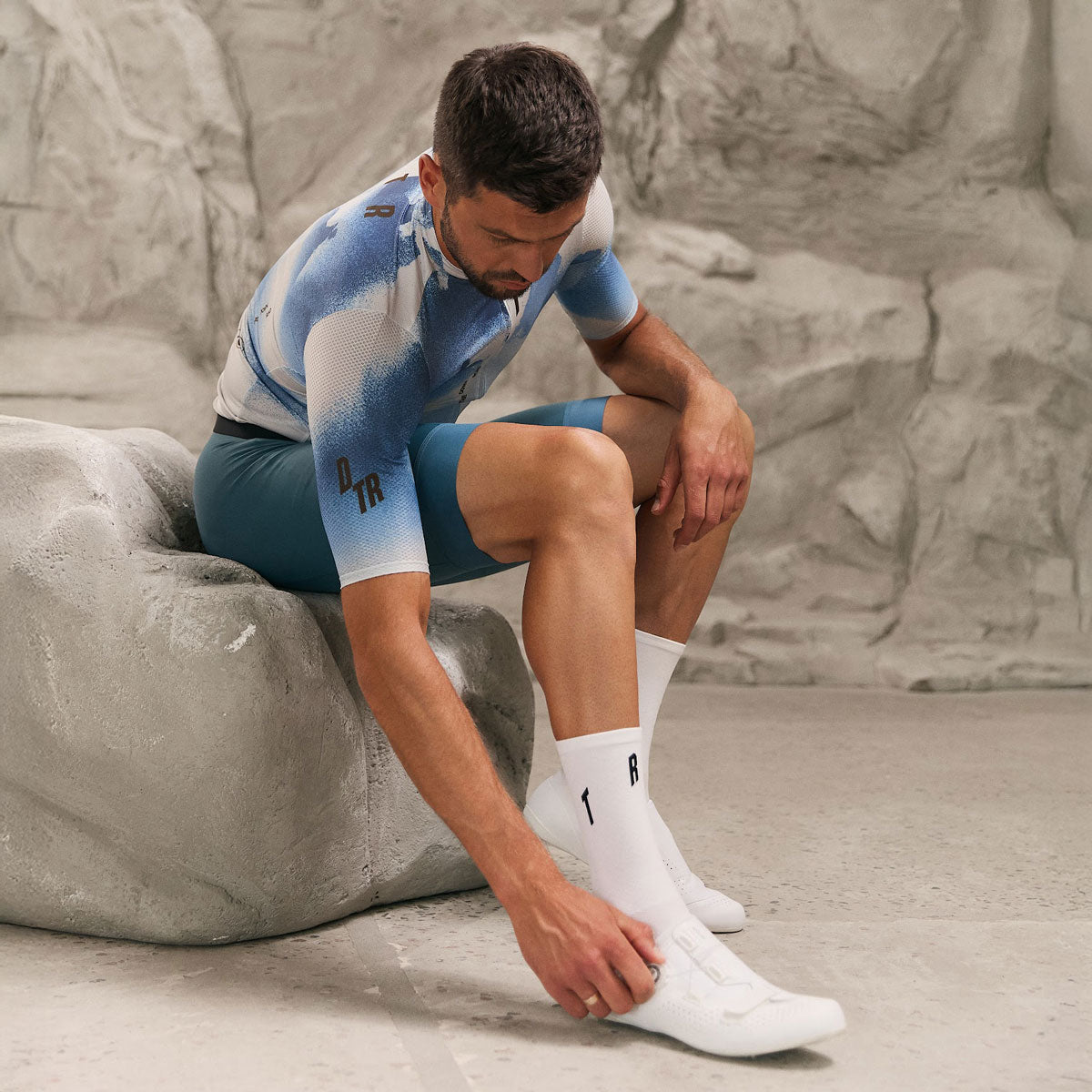
In hot weather, the goal is to move heat and sweat away from your body, not to cover up: a light, breathable, light-coloured jersey, a good pair of bib shorts, and a technical base layer that actually keeps you cooler. Add sun protection — sunscreen, sunglasses, a cap — and manage hydration, and a hot ride stays comfortable instead of becoming a survival exercise. This guide covers what to wear cycling in the heat and why the right lightweight kit beats wearing less.
Managing heat: it's about airflow, not less fabric
The instinct on a hot day is to wear as little as possible, but the better approach is light, breathable fabric that moves air and wicks sweat. Technical cycling kit works by pulling sweat off your skin and letting it evaporate — which is how your body cools itself — so a good breathable jersey keeps you cooler than bare skin or a cotton shirt that soaks and clings. Lighter colours reflect heat rather than absorbing it. The whole aim is airflow and evaporation, not just less coverage.
The jersey: light, breathable, light-coloured
Your jersey is the key hot-weather piece. Look for a lightweight, breathable summer jersey — often with mesh panels — in a lighter colour that reflects the sun. A full-length zip lets you dump heat on climbs and open up at low speed. The three rear pockets carry water, food and sun cream on a long, hot ride. A close-ish fit helps the fabric wick and stops it flapping, but breathability matters most: this is the piece doing the cooling.
The base layer: yes, even in the heat
It sounds backwards, but a lightweight base layer keeps you cooler in the heat, not warmer. A mesh or ultralight base layer wicks sweat off your skin and moves it to the jersey to evaporate, keeping a dry layer against you rather than a wet, clinging jersey. It also stops a sweat-soaked jersey sticking to your back. Skipping the base layer in summer is a common mistake — the right one is a cooling layer, not an insulating one.
Bib shorts and the lower half
A good pair of bib shorts is a hot-weather essential: the bib straps and a breathable, well-ventilated chamois keep you comfortable over long, sweaty rides, and lighter summer bibs use more breathable fabrics. Bib shorts beat waist shorts in the heat because there's no waistband to trap sweat and dig in. For the chamois, breathability and a comfortable multi-density pad matter more than ever when you're sweating for hours.
Sun protection: the part people skip
Heat and sun go together, and sun protection is kit, not an afterthought:
- Sunscreen on all exposed skin — arms, neck, knees, ears — reapplied on a long ride.
- Sunglasses to cut glare and protect your eyes.
- A cap or visor under the helmet to shade your face and soak sweat.
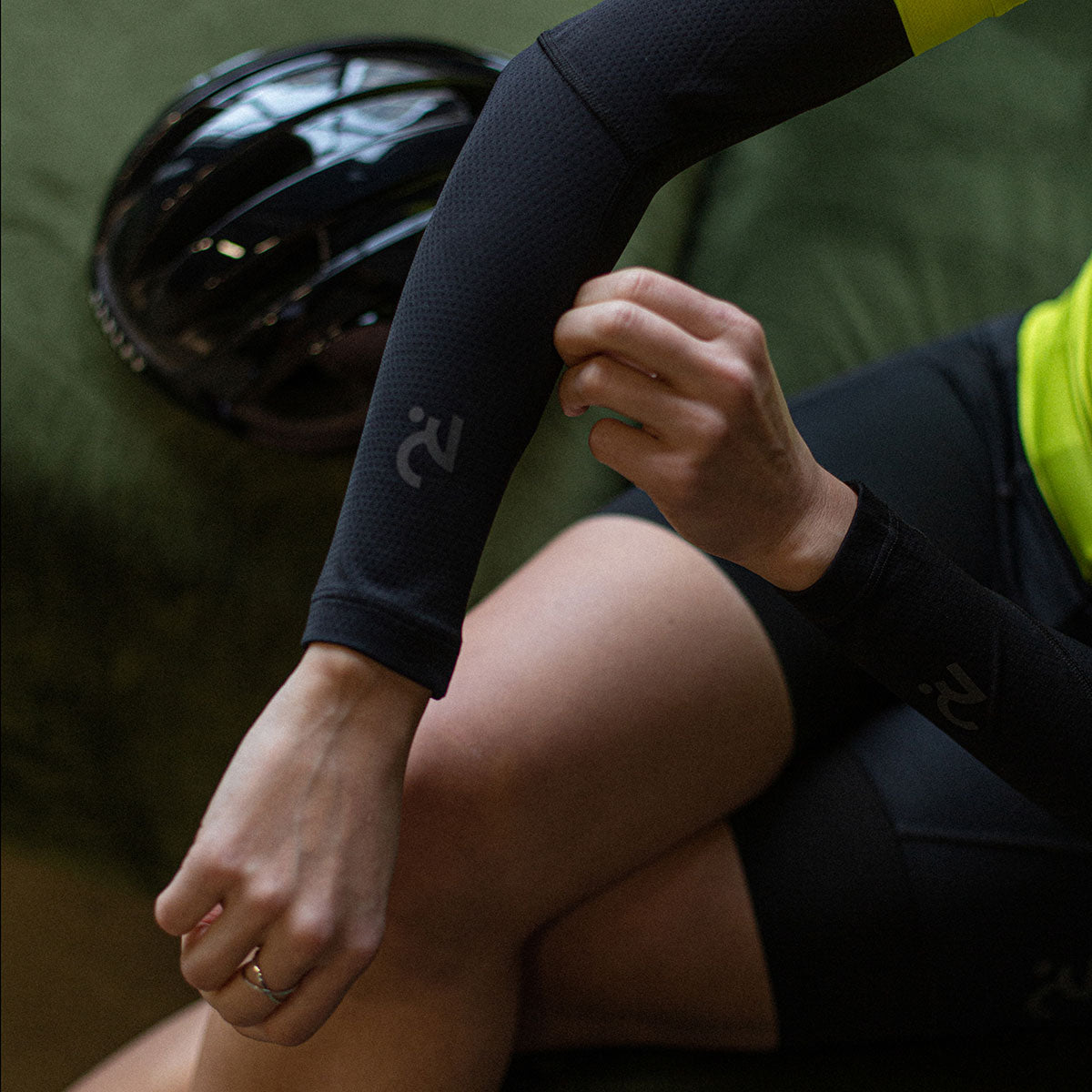
- Sun sleeves: UPF arm sleeves actually keep you cooler by shading and wicking, and protect against burn on long, exposed rides.
Sunburn and glare wear you down and turn a good ride into a miserable one — build sun protection into your hot-weather kit.
Hydration and heat management
Kit is only half of it; on a hot day, managing your body's temperature matters as much as what you wear:
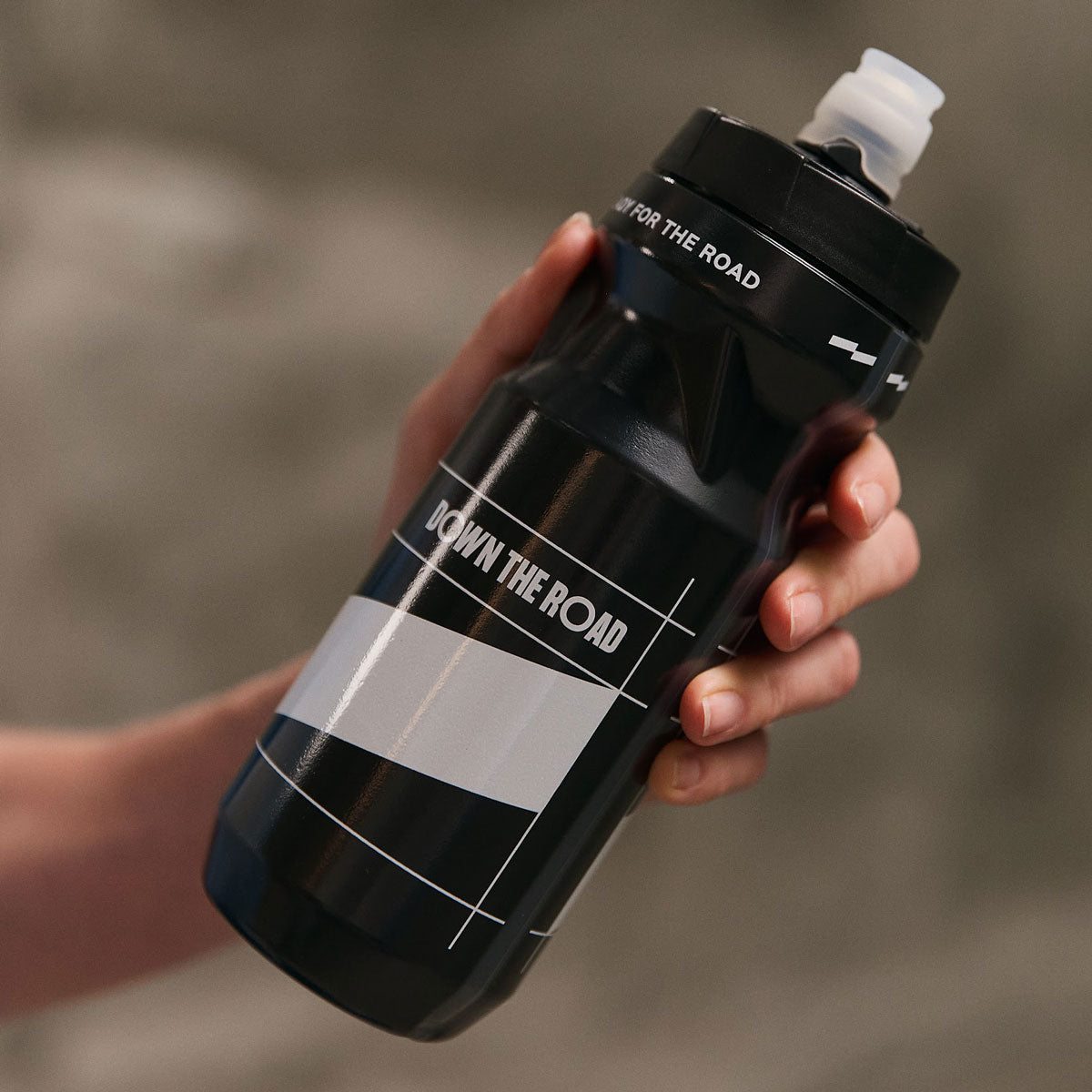
- Carry enough water — two bottles on a hot long ride, with electrolytes to replace what you sweat out.
- Use the jersey zip and start early to avoid the worst of the midday heat.
- Pour water over your head, neck and wrists to cool down on very hot days.
- Listen to your body: dizziness, cramps or stopping sweating are signs to stop, get in the shade and cool down.
Dressing for how hot it is
- Warm (20–25°C): a breathable jersey, bib shorts, a light base layer and sun protection.
- Hot (25–30°C+): the most breathable, lightest-coloured jersey you have, a mesh base layer, sun sleeves, and serious hydration; start early.
- Hot and humid: prioritise maximum breathability and airflow — humidity stops sweat evaporating, so the lightest, most open fabrics help most.
FAQ
What should I wear cycling in hot weather? A lightweight, breathable, light-coloured jersey, bib shorts, and a mesh or ultralight base layer that wicks sweat and keeps you cooler. Add sunscreen, sunglasses and a cap, and carry plenty of water.
Should I wear a base layer cycling in summer? Yes — a lightweight mesh base layer keeps you cooler by wicking sweat off your skin to evaporate, keeping a dry layer against you. Skipping it leaves a wet jersey clinging to your back.
Do lighter colours keep you cooler on the bike? Yes — lighter colours reflect more sunlight and absorb less heat than dark ones, which makes a real difference on a hot, sunny ride. It's why summer kit is often pale.
What can I wear to protect against sunburn cycling? Sunscreen on all exposed skin, sunglasses, and a cap under the helmet. UPF sun sleeves protect your arms and can actually keep you cooler by shading and wicking on long, exposed rides.
Is it better to wear less in hot weather cycling? Not really — bare skin burns and doesn't wick sweat as well as technical fabric. Light, breathable kit that moves air and evaporates sweat keeps you cooler than wearing less, and protects you from the sun.
The bottom line
For hot-weather cycling, dress to move heat and sweat, not to cover less: a light, breathable, light-coloured jersey, comfortable bib shorts, a mesh base layer, and full sun protection — plus enough water to replace what you sweat. Start with a breathable DTR summer jersey built for the heat.
—
DTR — performance cycling and triathlon apparel, designed and developed in Ukraine.

Leave a comment
This site is protected by hCaptcha and the hCaptcha Privacy Policy and Terms of Service apply.