

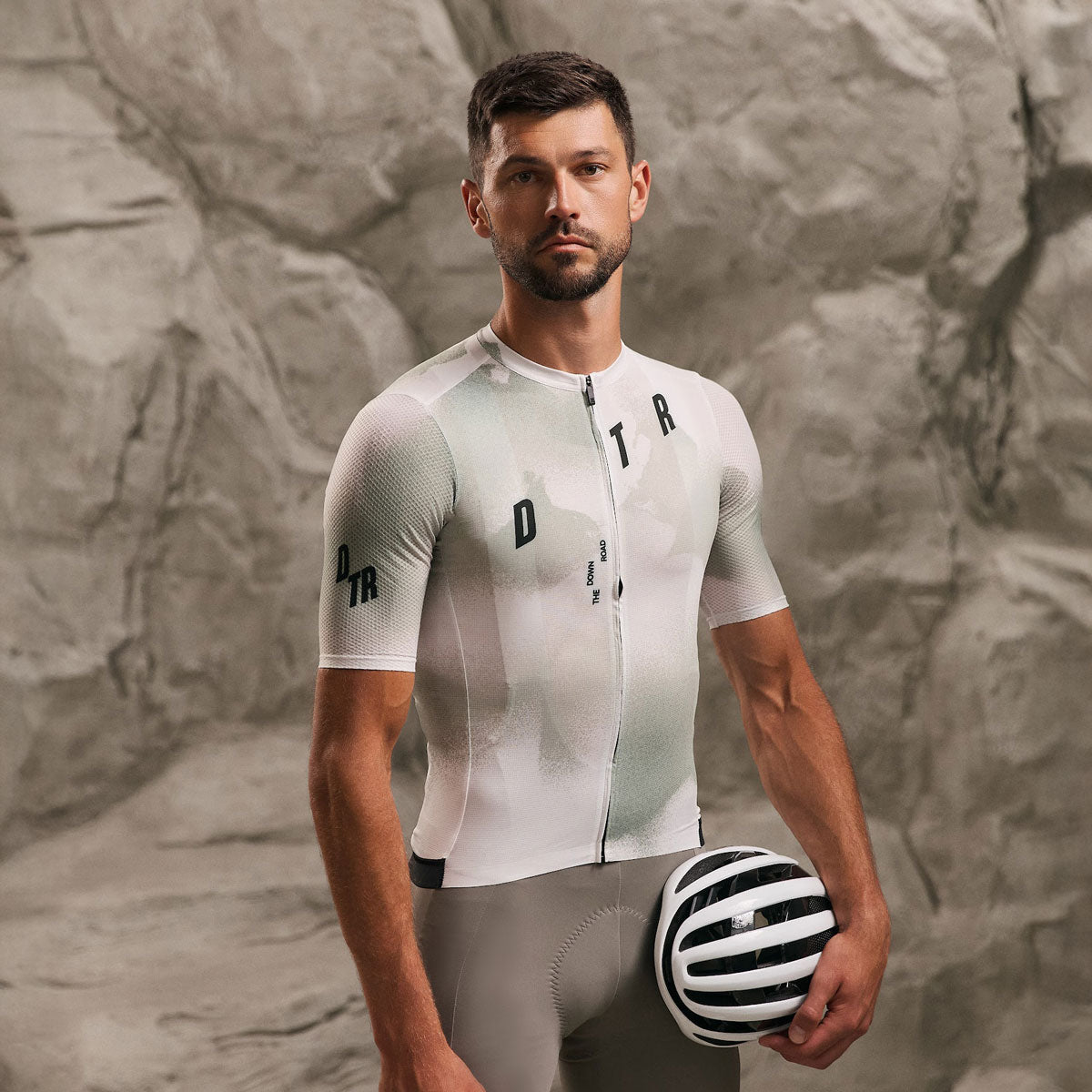
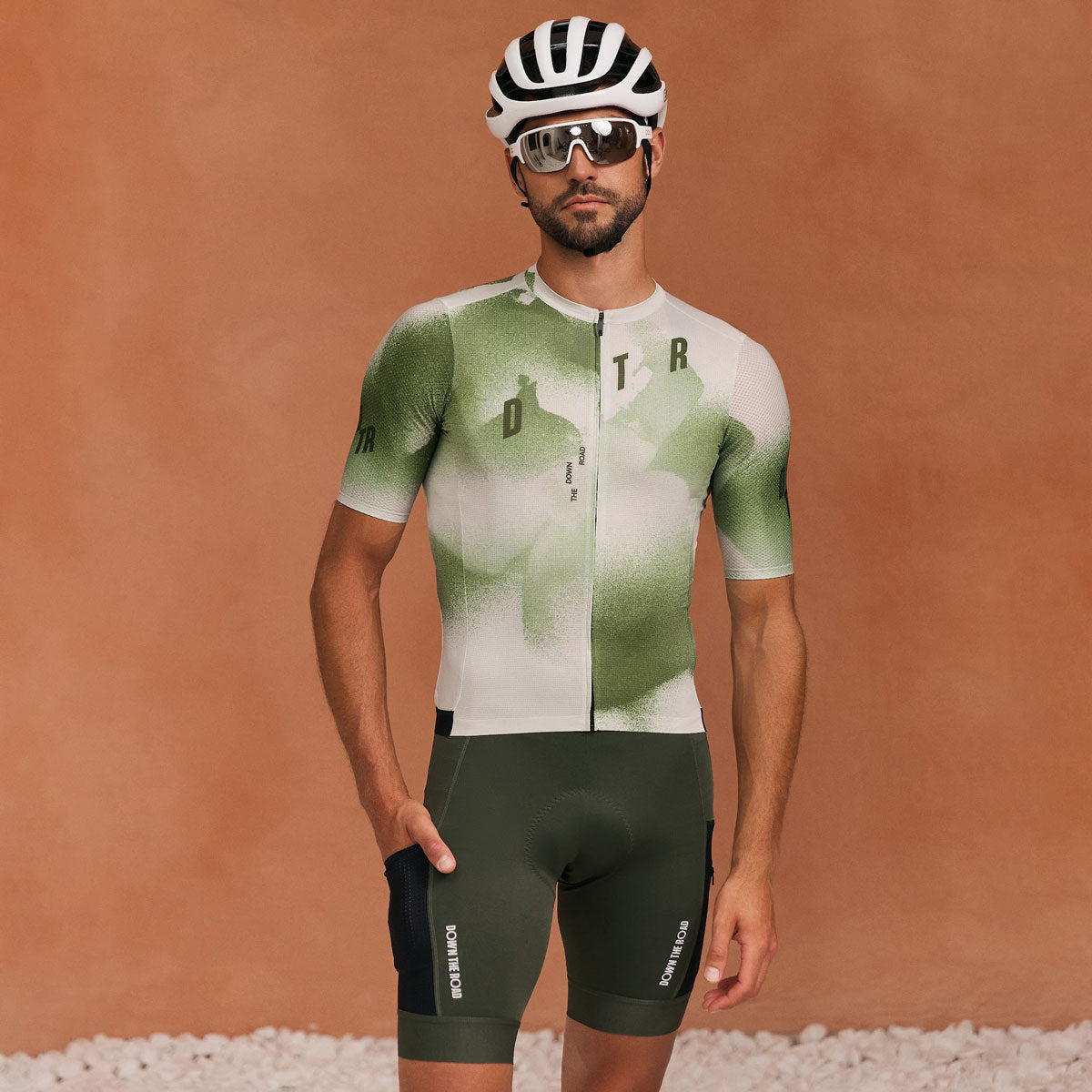
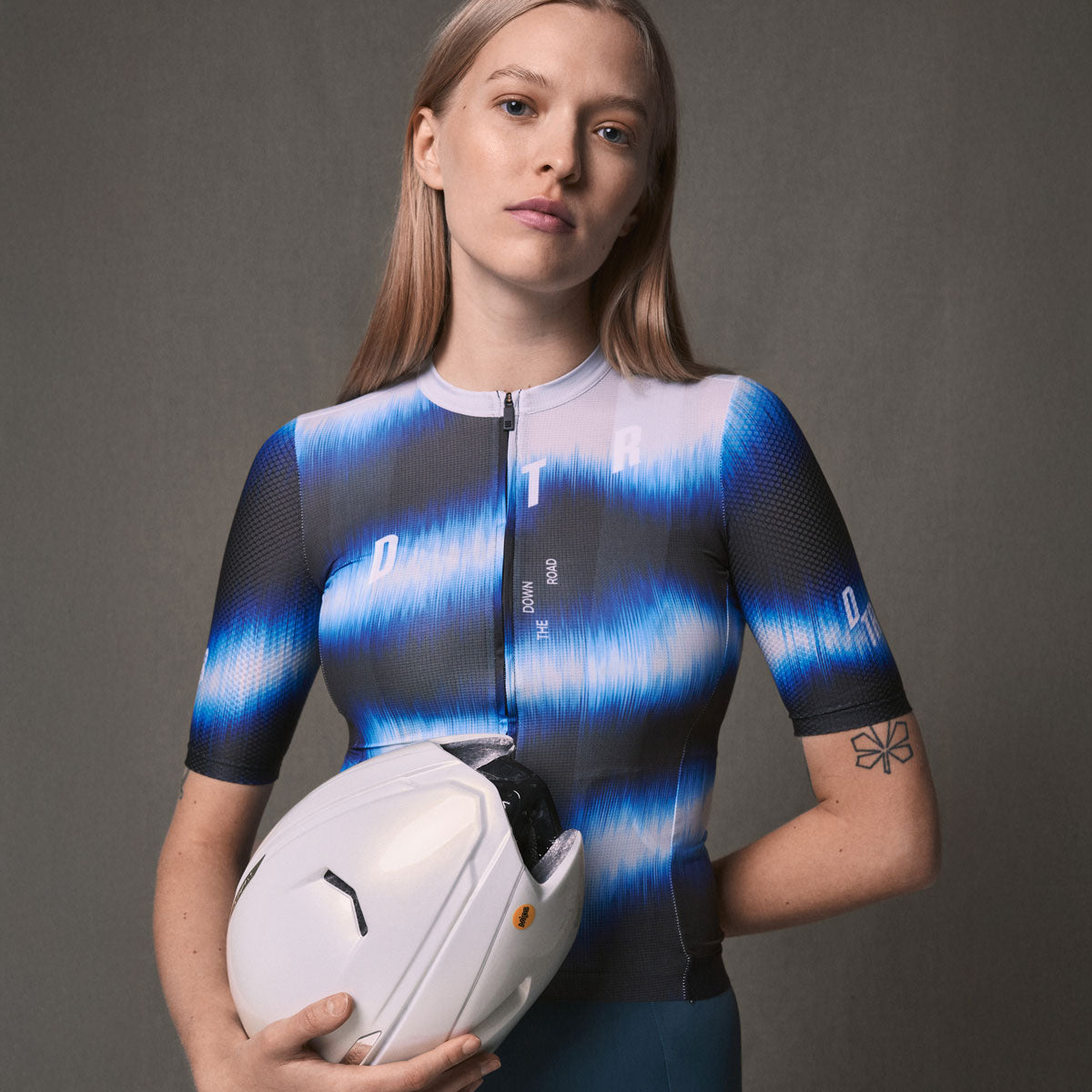

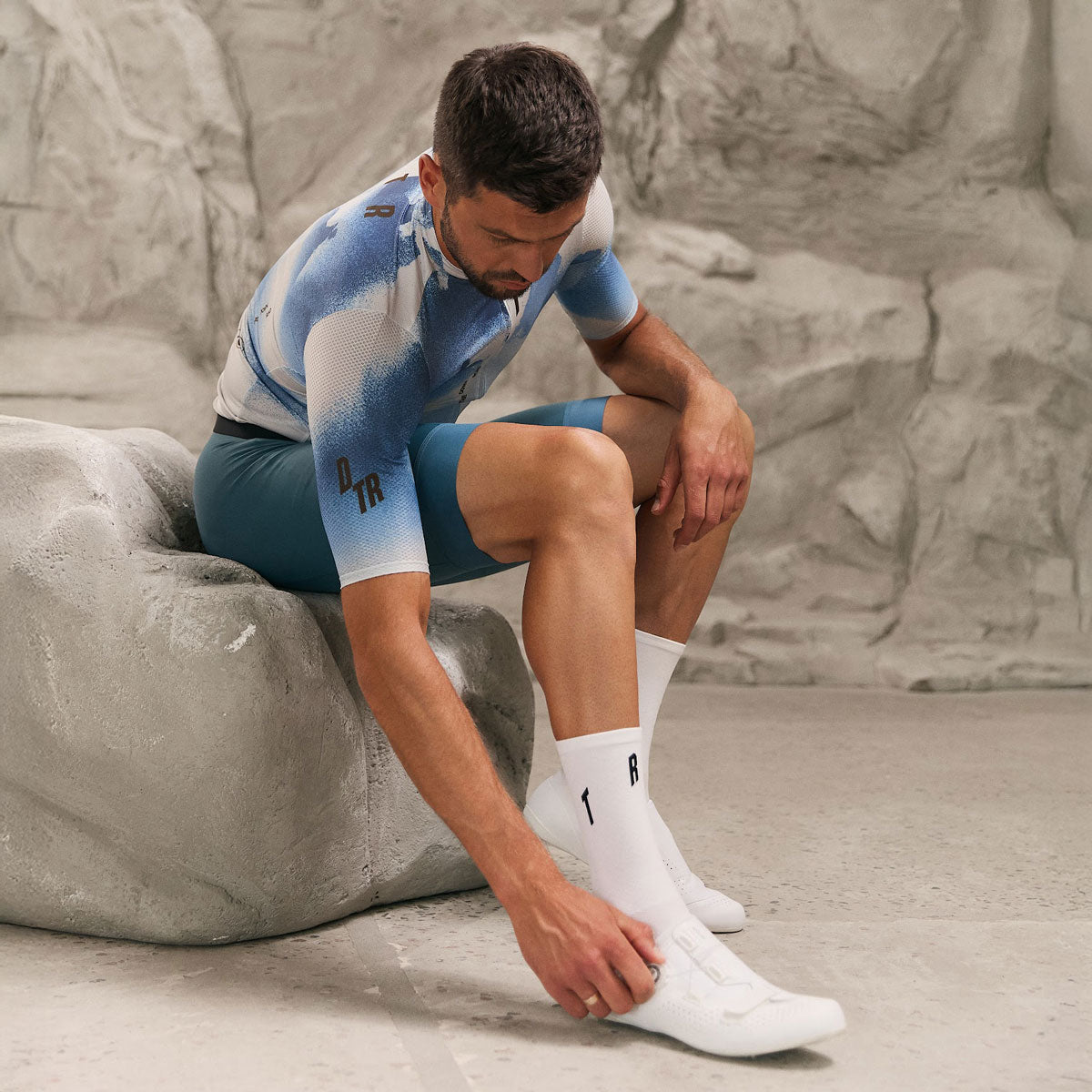
The difference comes down to how close the jersey sits to your body: a race cut (or race fit) is snug and aerodynamic, hugging the torso and arms for speed, while a relaxed fit (or club fit) is roomier and more forgiving, prioritising comfort and everyday wearability. Neither is better — the right fit depends on how you ride, your build and what you want from the jersey. This guide explains how each fits, the trade-offs, and how to choose.
What jersey fit actually means
Cycling jerseys are cut to sit a certain way on a rider in the riding position — leaned forward, arms out. Fit describes how close the fabric sits to your skin: a tight, second-skin cut versus a looser, more relaxed one. It matters because a jersey that fits well doesn't flap, ride up or bunch, and sits right in the position you actually ride in — whereas the wrong fit for you feels either restrictive or baggy. Most brands describe their jerseys somewhere on a spectrum from race to relaxed, and understanding where a jersey sits saves you guessing on sizing.
The race cut: snug and aerodynamic
A race cut sits close to the body — a snug torso, fitted arms, a longer back for the forward position. Its purpose is speed and performance: less fabric flapping in the wind means less drag, and a tight fit keeps pockets stable and the jersey in place at pace. It suits riders who want an aero, performance feel, who race or ride fast, and who are comfortable with a close, body-hugging cut. The trade-off is that it's less forgiving — a race cut shows everything and demands you're comfortable with a tight fit, and it can feel restrictive if you prefer room to move.
The relaxed fit: roomier and more forgiving
A relaxed fit (sometimes called club or endurance fit) sits looser — more room through the torso and arms, a more forgiving cut that's easy to wear all day. Its purpose is comfort and versatility: it's more accommodating of different body shapes, easier to move in, and more comfortable on long, steady rides, café stops and everyday riding. It suits riders who prioritise comfort over marginal aero gains, who are newer to cycling, or who simply prefer not to wear a skin-tight jersey. The trade-off is a little more fabric — slightly more flap at high speed and a less racy look — which most riders never notice on typical rides.
Race vs relaxed: the honest comparison
Neither wins outright — they optimise for different things:
- Aerodynamics: the race cut is faster; the relaxed fit has a little more drag at speed.
- Comfort: the relaxed fit is roomier and easier to wear all day; the race cut is closer and can feel restrictive.
- Forgiveness: the relaxed fit flatters more body shapes; the race cut shows your form.
- Look: race cut looks sharp and sporty; relaxed looks more casual and understated.
- Best for: race cut for fast, performance and racing riders; relaxed for comfort, endurance, new riders and everyday.
Which fit should you choose?
Match the fit to how you ride and what you want:
- Race or ride fast, want an aero feel, and like a close cut? Go race fit.
- Prefer comfort, ride long and steady, are newer to cycling, or want a jersey that's easy to wear? Go relaxed fit.
- In between? Consider your build and how you like clothes to sit — and remember that sizing up in a race cut or down in a relaxed fit can bridge the gap.
The most important thing is honest sizing: a race cut in your true size will feel tight if you're used to relaxed clothes, and a relaxed fit can look baggy if you wanted aero. Check each brand's fit description and size guide rather than assuming your usual size.
A note on sizing between fits
Because race and relaxed jerseys are cut differently, the same labelled size fits differently across them. If you're between fits or unsure, use the brand's size guide and fit notes, and consider that a race cut may suit sizing up for a touch more room, while a relaxed fit may suit sizing down for a closer feel. When in doubt, the fit description tells you more than the size label.
FAQ
What's the difference between a race cut and relaxed fit jersey? A race cut sits snug and aerodynamic for speed; a relaxed fit is roomier and more forgiving for comfort and everyday riding. One optimises for aero and performance, the other for comfort and versatility.
Is a race fit jersey uncomfortable? Not if you like a close cut and it's the right size — it's designed to feel like a second skin in the riding position. If you prefer room to move, a relaxed fit will feel more comfortable.
Which jersey fit is best for beginners? A relaxed (or club) fit is usually the easier first choice — it's more forgiving, comfortable and easy to wear, without the tight feel of a race cut. You can always move to a race fit as you ride more.
Do I size up in a race cut jersey? Often it helps if you want a touch more room, since race cuts are snug. Check the brand's size guide — the fit description and measurements tell you more than the size label alone.
Does jersey fit really affect speed? A race cut reduces flapping and drag, which matters at higher speeds and in racing. For most everyday riding, the difference is small, and comfort matters more — which is why the relaxed fit suits a lot of riders.
The bottom line
A race cut is snug and aerodynamic for speed and performance; a relaxed fit is roomier and more forgiving for comfort and everyday riding. Neither is better — choose the fit that matches how you ride and how you like a jersey to sit, and check the size guide either way. Explore both fits in DTR cycling jerseys.
—
DTR — performance cycling and triathlon apparel, designed and developed in Ukraine.

Leave a comment
This site is protected by hCaptcha and the hCaptcha Privacy Policy and Terms of Service apply.