

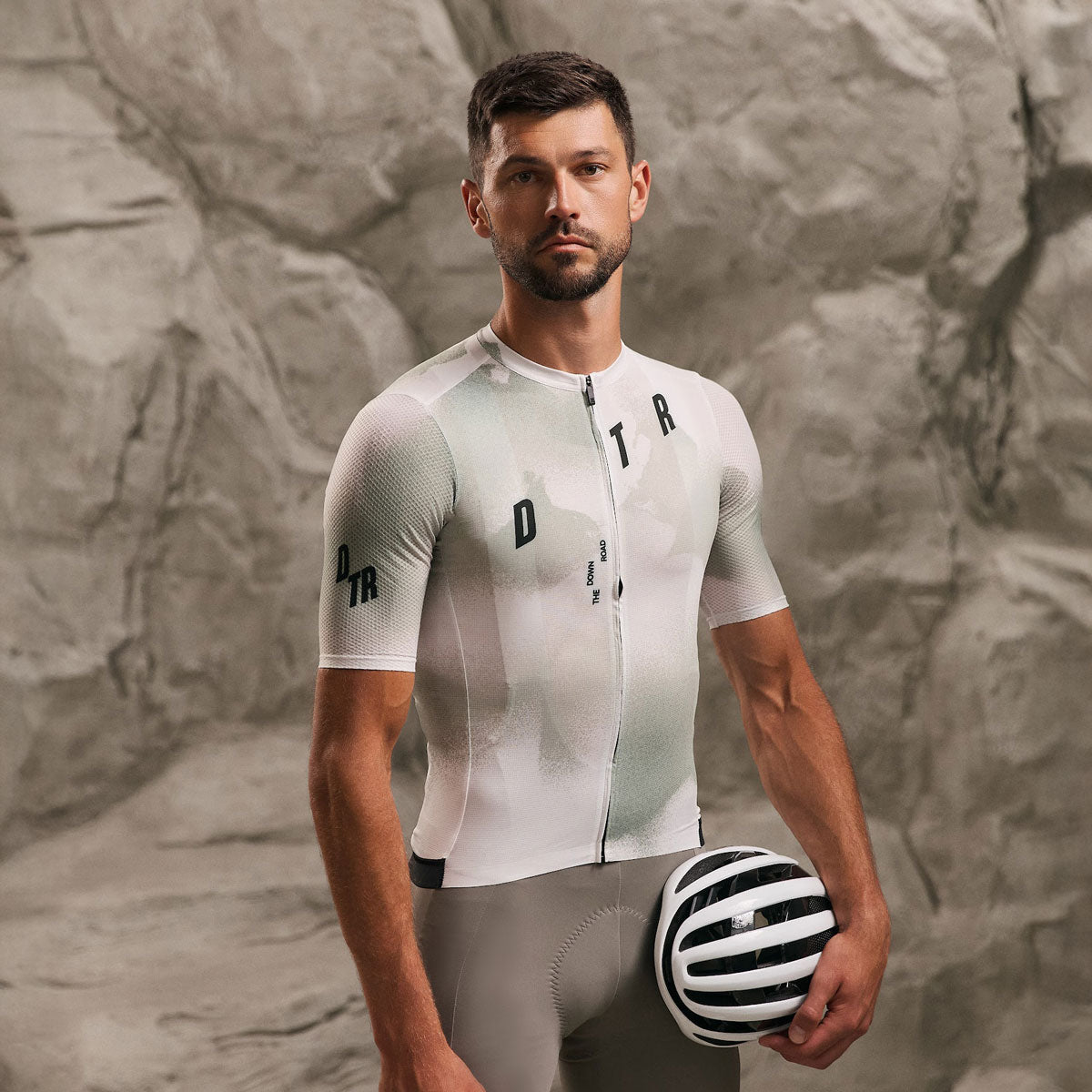
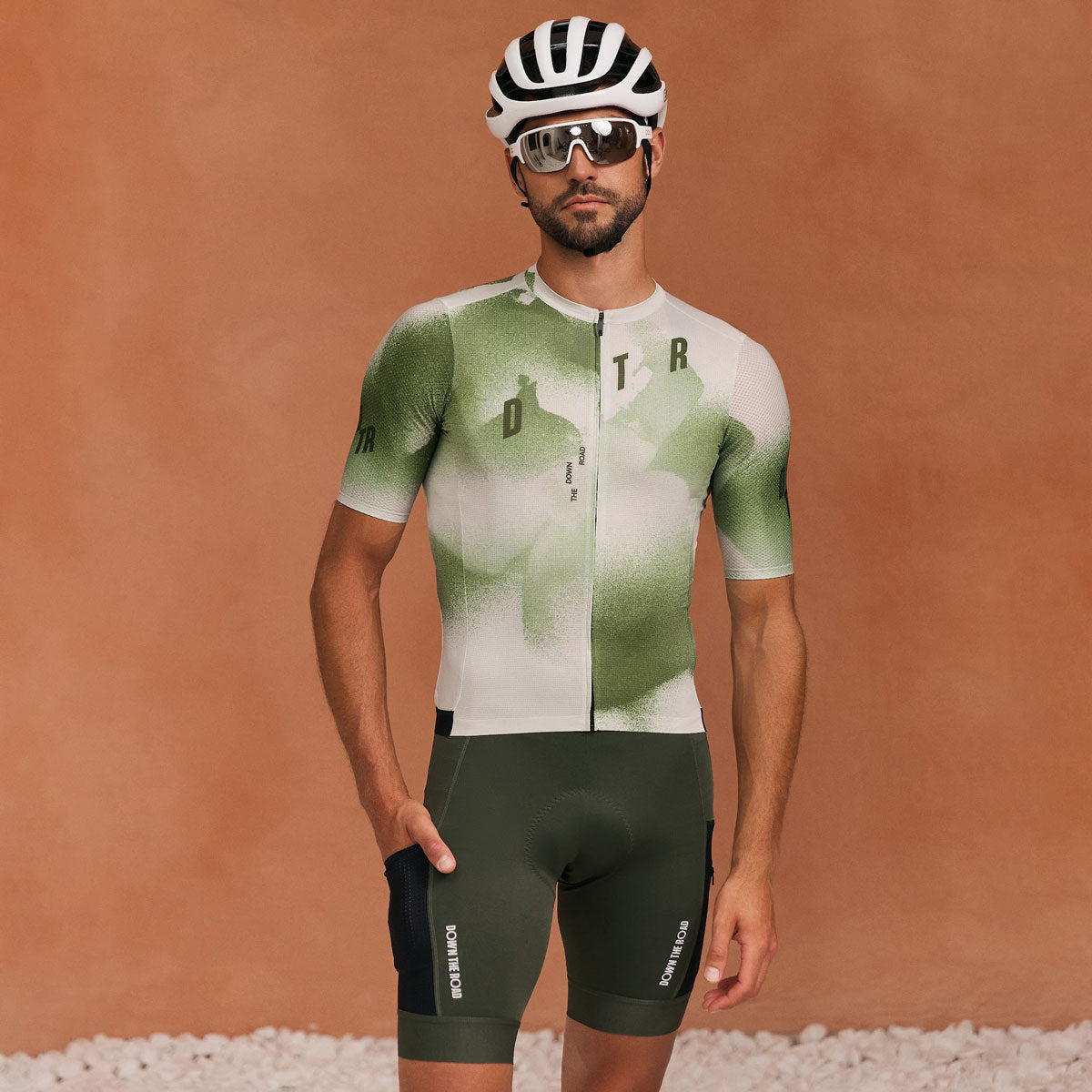
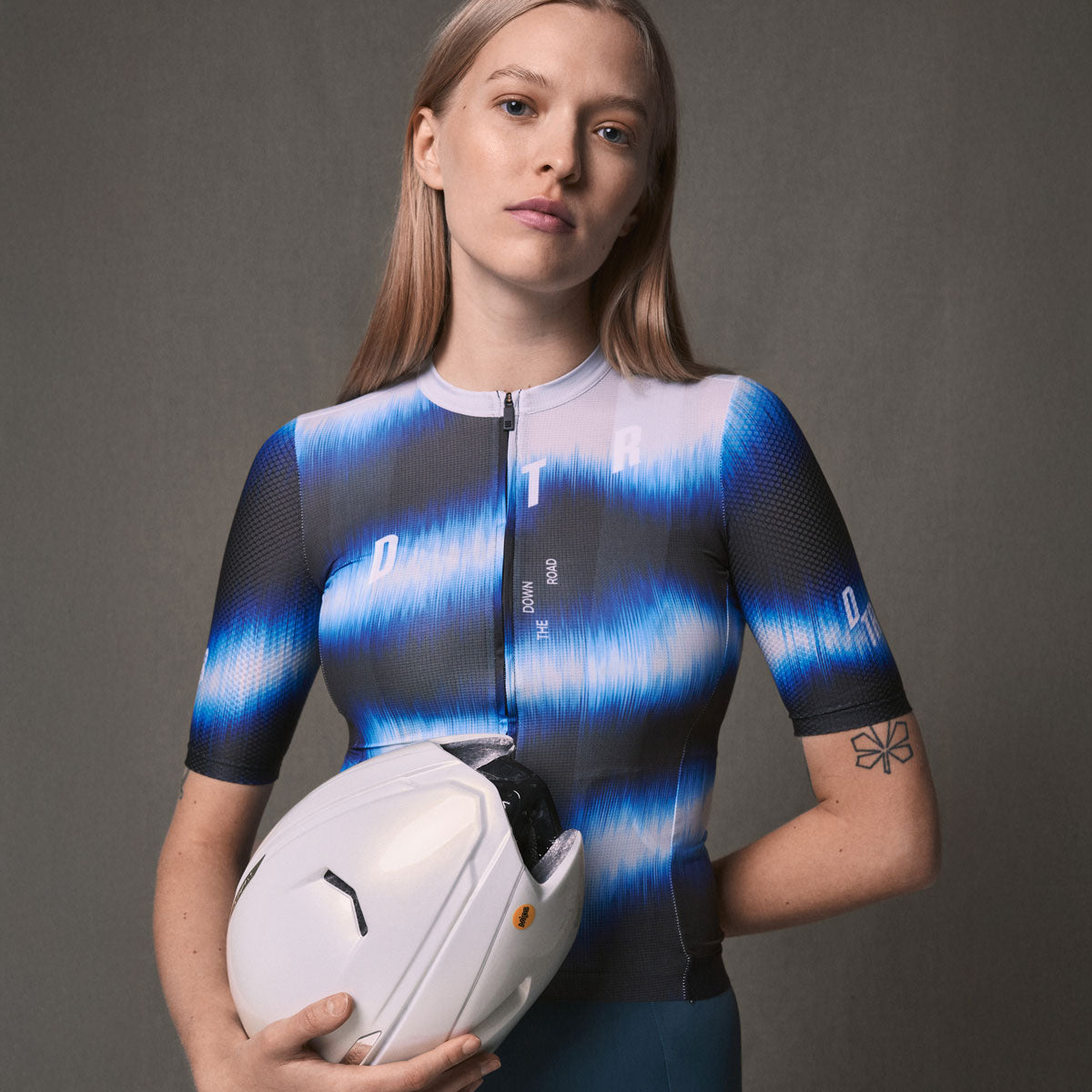
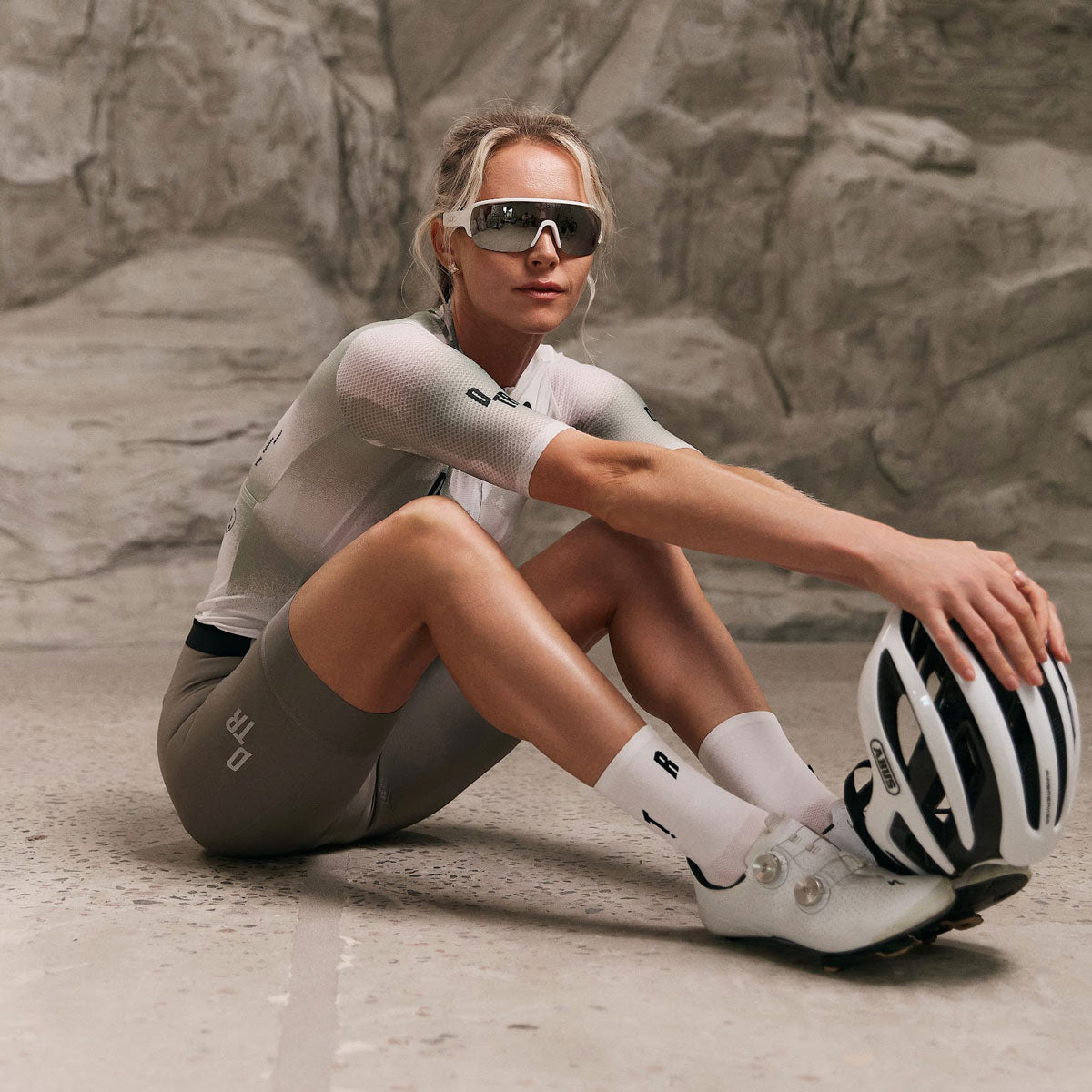
A cycling jersey should sit close enough that the fabric stays flat against you with no loose folds, but not so tight that it restricts a full breath or pulls at the shoulders when you reach for the bars. That is the whole answer to the fit question. This guide covers how to judge that in practice, what race fit and club fit actually mean, and how to choose sleeve length, fabric and pockets for the riding you do.
Why it fits tighter than it looks on the hanger
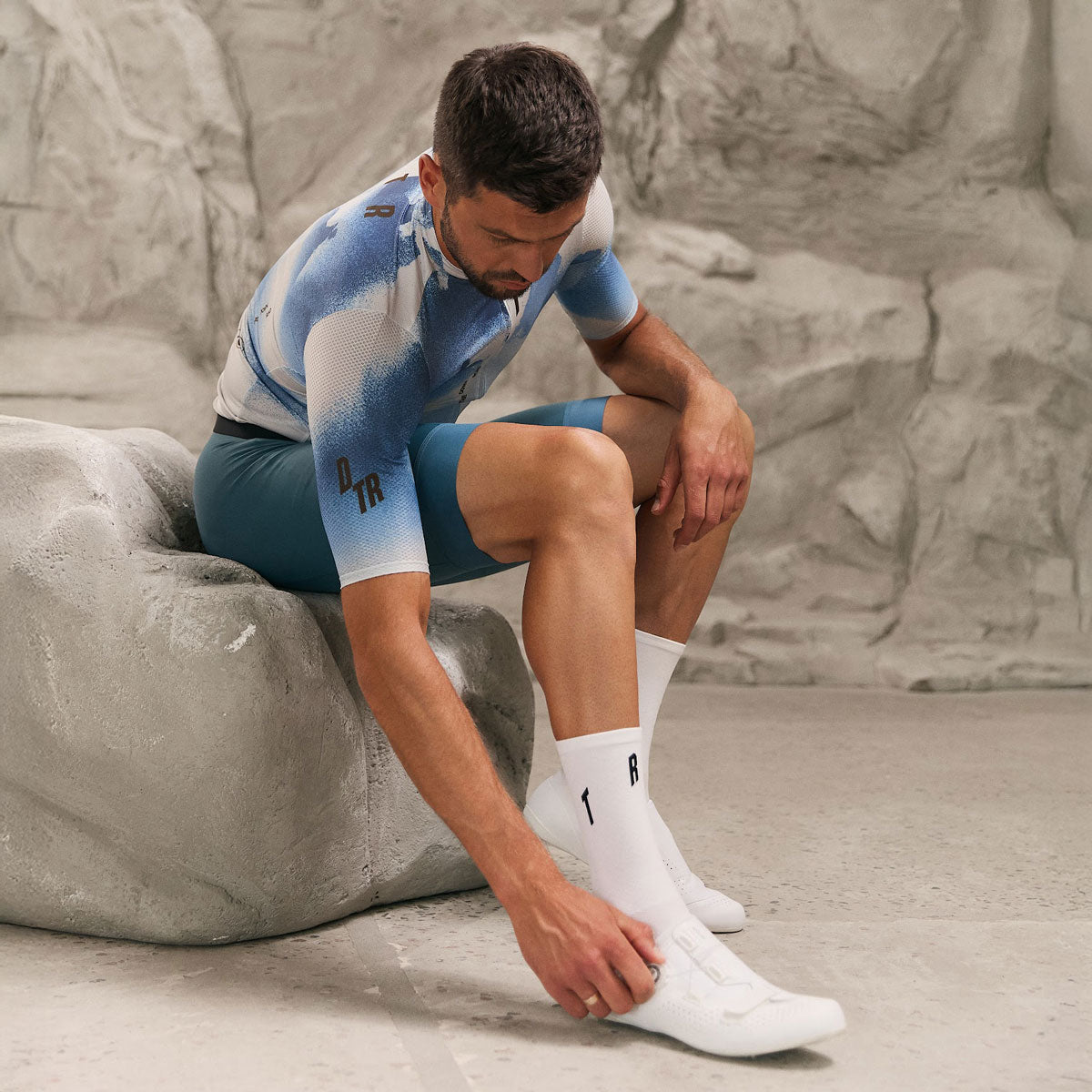
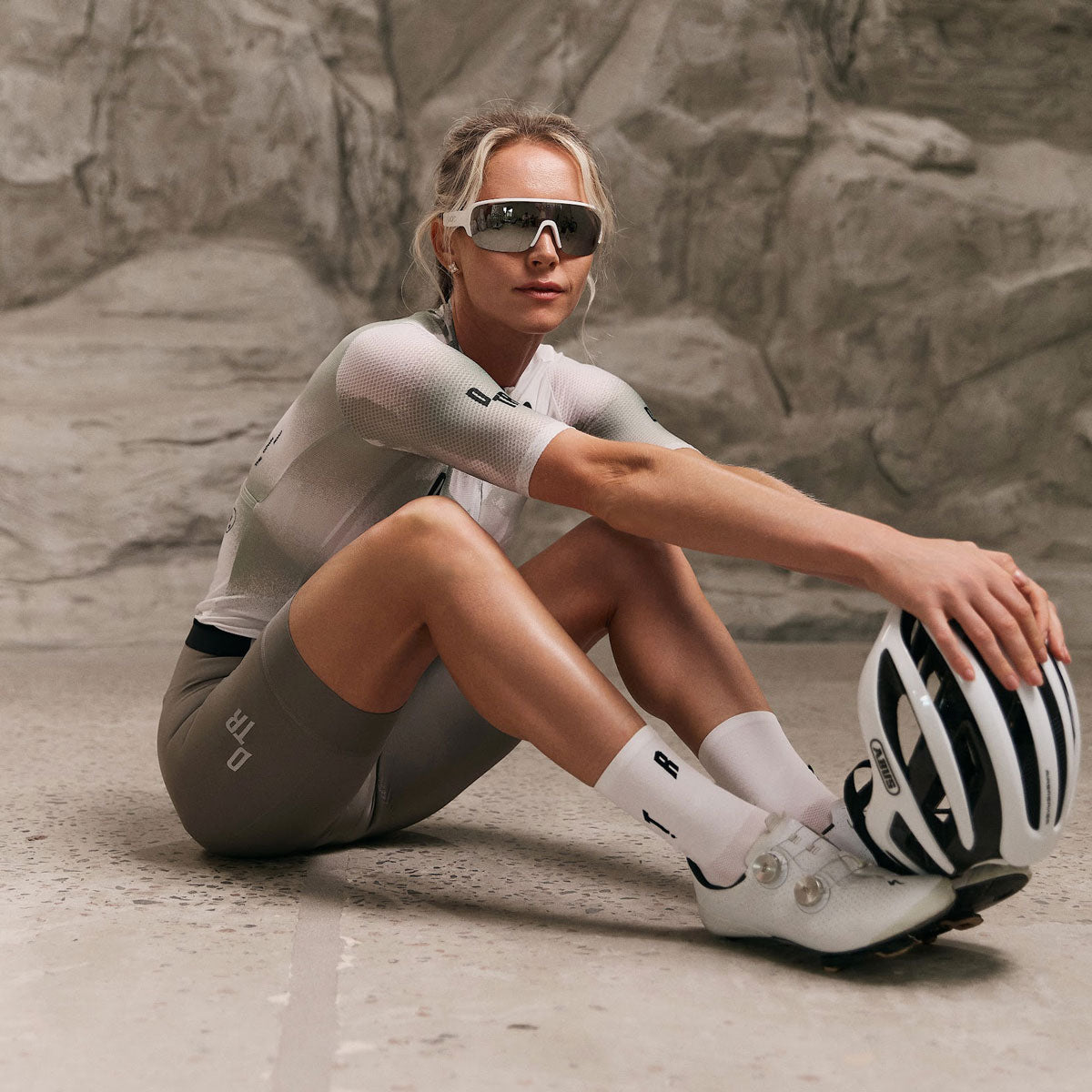
A jersey is cut for a rider bent forward with arms extended, not for someone standing in a mirror. On the hanger it looks short and narrow. In the riding position the back lengthens, the sleeves reach the right point on the arm and the front sits flat.
This is why trying one on standing up misleads almost everyone. Bend forward into your normal riding position before you judge it. If it looks slightly odd standing and correct on the bike, it is cut properly.
The performance reason for the close cut is simple: loose fabric flaps, and flapping fabric is drag. It also holds sweat against you instead of moving it out to evaporate.
How tight should a cycling jersey be?
Snug across the chest and torso with no gathered fabric, and no pinching at the shoulder or armhole. You should be able to take a deep breath without the jersey resisting, and reach forward without it dragging across your back. If you can pinch more than a couple of centimetres of loose fabric at your side, size down. For the full fit breakdown — race fit vs relaxed, sleeve length, sizing between measurements — see how should a cycling jersey fit.
Three checks that settle it. First, breathe in fully — any restriction means it is too small. Second, reach forward as if to the drops; the hem should stay put rather than riding up your back. Third, look at the sleeves: they should lie flat on the arm without a visible band of compression digging in.
Comfortable but with no slack is the target. A jersey that feels loose off the bike will usually feel right on it; one that feels tight off the bike will usually still feel tight on it.
Race fit and club fit, in plain terms
Race fit is cut close through the torso and arms, with a longer drop tail and a higher front so nothing bunches when you are low on the bike. It is the fit you want for racing, fast group rides and anything where you spend time in the drops.
A more relaxed cut adds room through the waist and chest without becoming loose. It suits long endurance days, gravel, and riders who prefer not to be aware of their kit. It is not a lesser fit — it is a different use case.
If you ride mostly on the hoods at a steady tempo, the relaxed cut is probably right. If you race or ride in a fast bunch, the close cut earns its keep. There is a fuller breakdown in race cut vs relaxed fit.
Sleeve length and the drop tail
Modern short sleeves finish around mid-bicep rather than at the elbow. That is deliberate: a longer sleeve that lies flat on the upper arm is more aerodynamic and gives better sun coverage than a short, loose one. It should grip lightly without leaving a mark.
The back hem sits lower than the front. That drop tail keeps your lower back covered in the riding position and stops the jersey riding up when you stretch forward. A silicone gripper at the hem holds it there once the pockets are loaded.
For when to switch to long sleeves rather than adding arm warmers, see short sleeve vs long sleeve.
Pockets that still work when full
Three rear pockets is the standard for good reason: it splits weight across your back rather than concentrating it. What separates a good pocket from a poor one is what happens when it is loaded. A well-built pocket holds a phone, a multitool and food without sagging into your kidneys on rough roads.
Look for an elasticated pocket opening that stays closed, reinforcement across the pocket band so the jersey does not stretch out over a season, and a zipped pocket if you carry keys or a card.
Choosing fabric by temperature
Lightweight, open-weave fabric for hot weather — the priority is moving sweat to the surface fast enough to evaporate. Under about 15°C a denser fabric holds a little warmth without trapping moisture. Quick-dry matters more than raw breathability on days with big temperature swings, because the jersey that dries fastest is the one that stops chilling you on a descent.
Flatlock seams are worth checking on any jersey you will wear for more than two hours. A raised seam under a pack strap or against a base layer becomes noticeable a long way from home.
Getting the size right
Measure your chest and compare it to the size chart rather than buying the size you take in a T-shirt — cycling sizing runs closer by design. If you are between sizes, size down for racing and up for long endurance rides.
Women's jerseys are drawn on their own pattern rather than scaled from the men's, so shoulder width, sleeve position and hem shape all differ. Sizing across from a men's jersey will not give you the same fit.
FAQ
How tight should a cycling jersey be?
Snug with no loose folds, but never restrictive. You should breathe fully and reach for the bars without the fabric pulling. More than a couple of centimetres of pinchable slack at the side means size down.
Should a cycling jersey be tight or loose?
Tight, within reason. Loose fabric flaps, creates drag and holds sweat against the skin instead of moving it out to evaporate.
Why are cycling jerseys so short at the front?
Because you ride bent forward. The shorter front stops fabric bunching at your waist, while the longer drop tail keeps your lower back covered.
Should I size up in a cycling jersey?
Only if you are between sizes and ride long endurance days rather than racing. Sizing up to feel comfortable standing usually produces a jersey that flaps on the bike.
Do I wear anything under a cycling jersey?
A base layer, in almost all conditions including summer. It moves sweat off the skin faster than the jersey alone. See do you need a base layer.
How should the sleeves sit?
Flat against the upper arm, finishing around mid-bicep, gripping lightly without leaving a mark or creating a visible bulge of compressed skin.
See the fit for yourself in the DTR jersey range.
DTR — performance cycling and triathlon apparel, designed and developed in Ukraine.

Leave a comment
This site is protected by hCaptcha and the hCaptcha Privacy Policy and Terms of Service apply.