


A trisuit is a one-piece garment worn for all three legs of a triathlon — swim, bike and run — without changing. It has a thin, quick-drying chamois that pads the bike leg without holding water or chafing on the run. This guide covers what a trisuit is made of, how it differs from cycling kit, and when the one-piece is the right call.
What it is actually for
A trisuit solves one problem: three sports, one outfit, no stopping. It goes on before the start, sits under a wetsuit if the swim is wetsuit-legal, and stays on through both transitions to the finish. Fabric weight, chamois thickness, leg length and pocket placement are all tuned to work acceptably in water, well on the bike, and tolerably on the run. That compromise is the point. A swimskin is faster in water, a cycling bib short is more comfortable over four hours in the saddle, and running shorts are lighter. A trisuit gives up some of each so you never have to change. In a sport where transitions are on the clock, that trade usually wins.
Why one piece instead of separates
The one-piece construction removes the seam where a jersey and bib shorts would otherwise meet. That matters more than it sounds: a waist join is exactly where a wetsuit rides up in the swim, where a race belt sits on the run, and where fabric bunches once it has been wet for an hour. It removes three chafe points, not one.
What it is made of
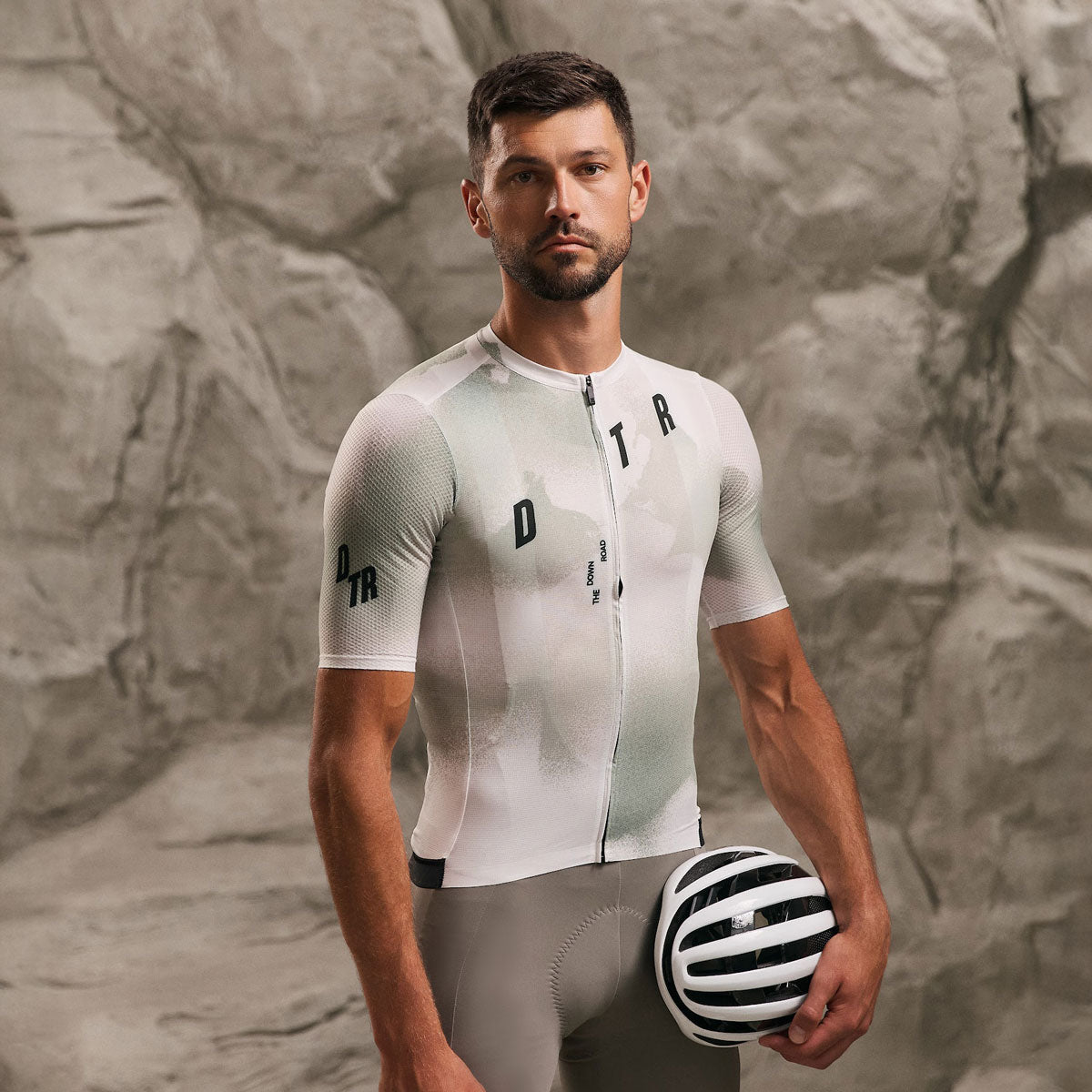
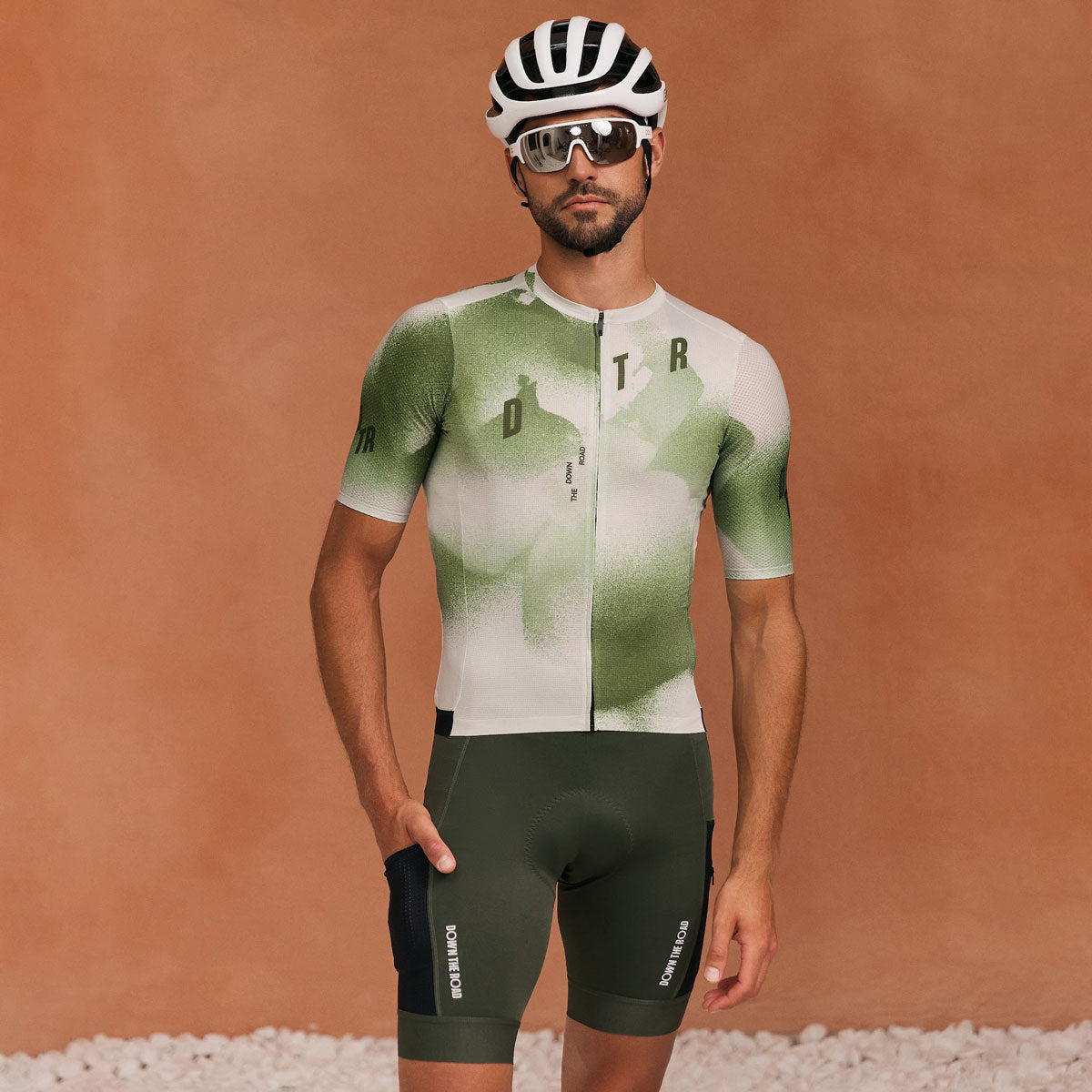
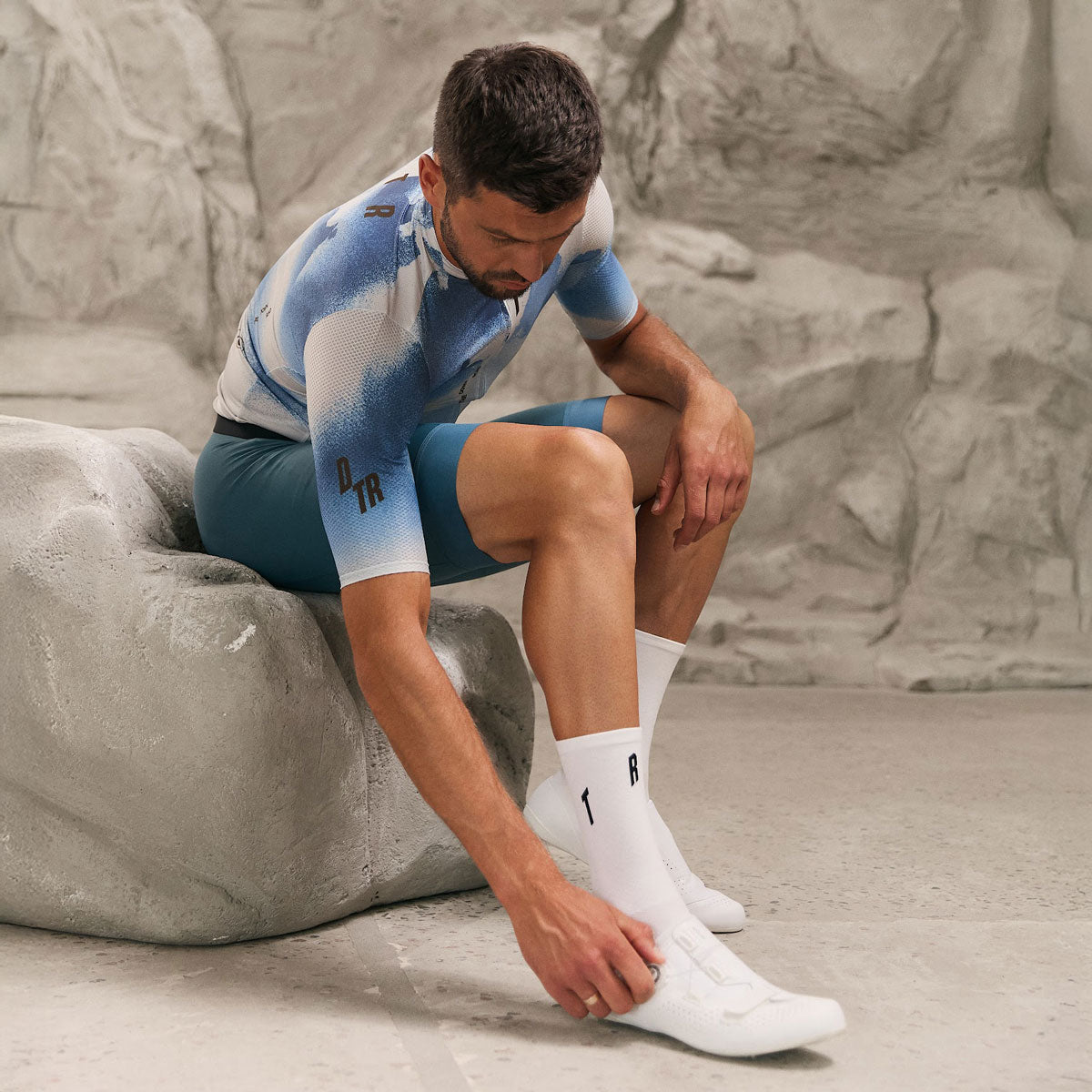
Most trisuits use a light, tightly knitted polyamide-elastane fabric with four-way stretch, chosen because it sheds water fast and holds its shape when wet. Flatlock seams sit flush against skin so nothing raises a blister once the fabric is soaked and you start running. Panels are cut to follow the riding position rather than a standing one. The details that matter in a race: a front zip for temperature control and for getting out of a wetsuit cleanly, silicone grippers so the legs stay put without digging in, rear pockets reachable on the bike, and UPF fabric because you are exposed for hours. Leg length generally runs mid-thigh — long enough to stop chafe, short enough to run in.
Why the chamois is thinner than a cycling one
A tri chamois is deliberately thin, dense and fast-drying, usually a few millimetres where a road chamois is many times that. It has to do three jobs a cycling chamois never does: survive a swim without soaking up water, stay unobtrusive while you run, and still take the edge off the bike leg. This is the single biggest misunderstanding for riders coming from road cycling. A multi-density cycling chamois is built for hours in one static position and would hold water like a sponge and swing around on the run. The tri pad trades saddle comfort for the ability to do all three legs. On a sprint or Olympic bike leg you barely notice the difference. Over an Ironman bike split you will — which is why some long-course athletes accept it and others go two-piece. Thickness is matched to race distance rather than preference, and the trisuit pad guide breaks that down by length.
Do you wear anything underneath?
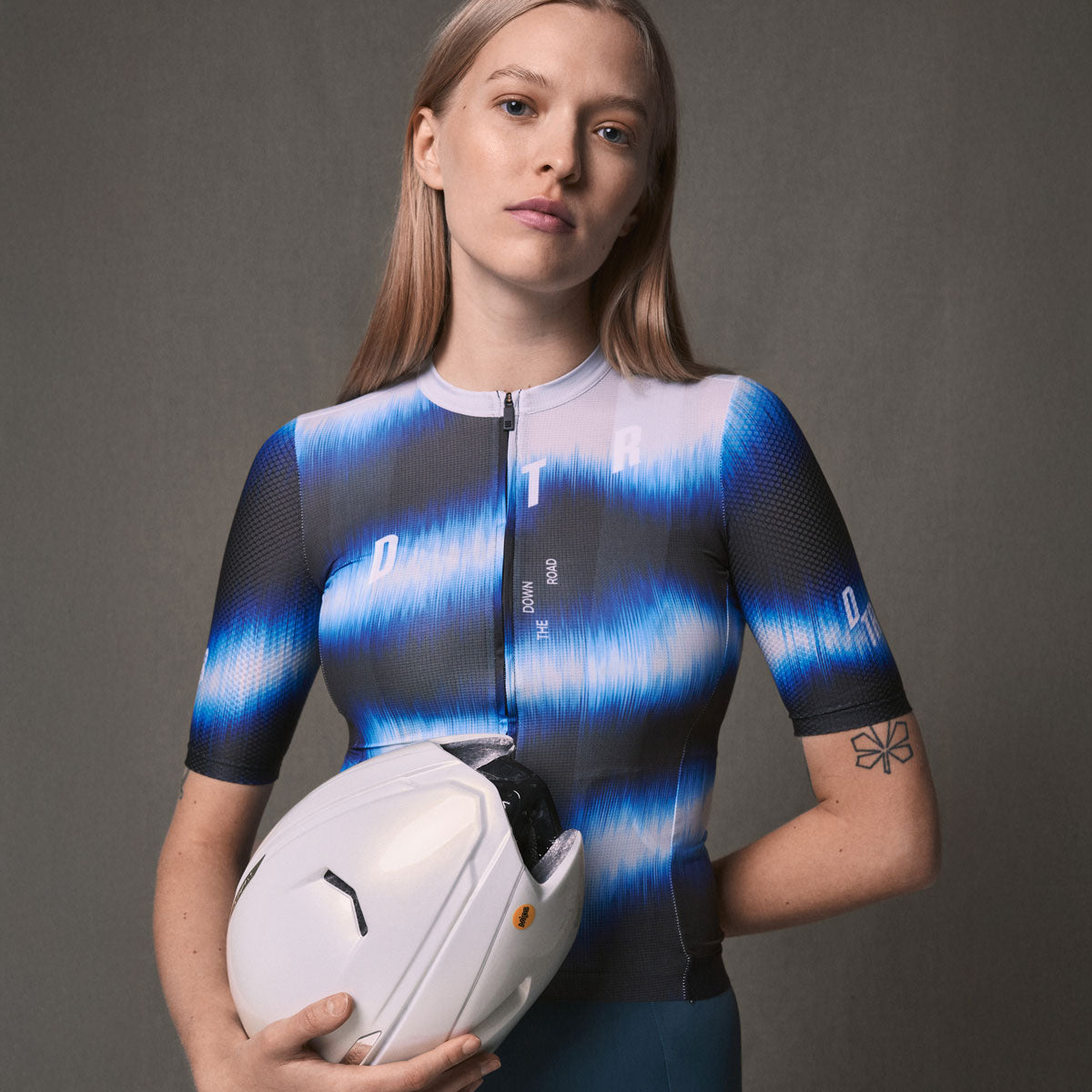
No. A trisuit is worn next to skin, with nothing under it — no underwear, no cycling shorts, no sports bra beyond the built-in support in women's suits. The chamois only works against skin, and any extra layer traps water out of the swim and creates a seam that will chafe over the run. Women's trisuits are built with integrated bust support, so a separate sports bra is unnecessary and usually counterproductive under a race-fit suit. This is engineered fit, not a scaled-down men's pattern — the panel shaping, chamois shape and torso length are all cut differently.
Sleeved or sleeveless?
Sleeved suits are marginally more aerodynamic and give better sun coverage; sleeveless suits are cooler and easier to get a wetsuit over. For most age-group racing the difference is small enough that shoulder comfort and race-day temperature should decide it. One practical note: if your race is wetsuit-legal and you are not confident in transitions, a sleeveless suit comes out of a wetsuit faster and with less bunching at the shoulder. If the race is hot, exposed and non-wetsuit, sleeves are worth the small heat penalty for the sun protection alone. We put the two side by side in sleeved vs sleeveless trisuit.
Which distances suit a one-piece
One-pieces make the most sense from sprint through middle distance, where the race is short enough that the thin chamois is a non-issue and the aero and simplicity gains are free. The longer the race, the more the convenience argument shifts. Sprint and Olympic racing is where the one-piece is close to unarguable — under three hours, few or no nature breaks, and the seamless waist is genuinely faster. At 70.3 and full-distance racing, nutrition access and nature breaks start to matter more than a small aero gain, which is the case for a two-piece. If your first race is still ahead of you, what to wear for a first triathlon covers the full kit list. And if you are weighing the formats directly, trisuit versus two-piece tri kit covers the decision in full. DTR builds its one-piece range around distance rather than a single race-fit, for men and women alike.
FAQ
What is a trisuit? A one-piece garment worn for the swim, bike and run of a triathlon without changing. It uses quick-drying fabric and a thin chamois that pads the bike leg without holding water or chafing on the run.
What is the difference between a trisuit and cycling kit? The chamois. A tri chamois is thin and fast-drying so it can swim and run; a cycling chamois is thick and multi-density for hours in one position. Trisuit fabric is also lighter and made to shed water.
Do you wear a trisuit under a wetsuit? Yes. The trisuit goes on first, the wetsuit over it for the swim, and the wetsuit comes off in T1. The trisuit stays on to the finish.
Can you swim in a trisuit without a wetsuit? Yes — that is one of its jobs. The fabric is built to be swum in directly when water temperature rules a wetsuit out.
Can you pee in a trisuit? In a one-piece you have to peel the suit down to the waist, which is why many long-course athletes prefer a two-piece. On sprint and Olympic distances it rarely comes up.
Is a trisuit worth it for a first triathlon? Yes, if you are racing in it — it removes the transition changes entirely. Comfort and fit matter far more than the format at a first race, and whatever you choose should be tested across all three legs beforehand.
How should a trisuit fit? Snug everywhere, like a second skin, with no loose fabric at the chest or thigh and no pulling at the shoulders when you reach the bars. Loose fabric costs time in the water and bunches on the run.
The bottom line
A trisuit is one garment doing three jobs: shedding water in the swim, padding the bike leg with a thin quick-drying chamois, and staying out of the way on the run. It is the simplest and fastest option from sprint to middle distance, and the one thing you should not race in untested. See the full trisuit range at /collections/trisuits.
DTR — performance cycling and triathlon apparel, designed and developed in Ukraine.

Leave a comment
This site is protected by hCaptcha and the hCaptcha Privacy Policy and Terms of Service apply.