

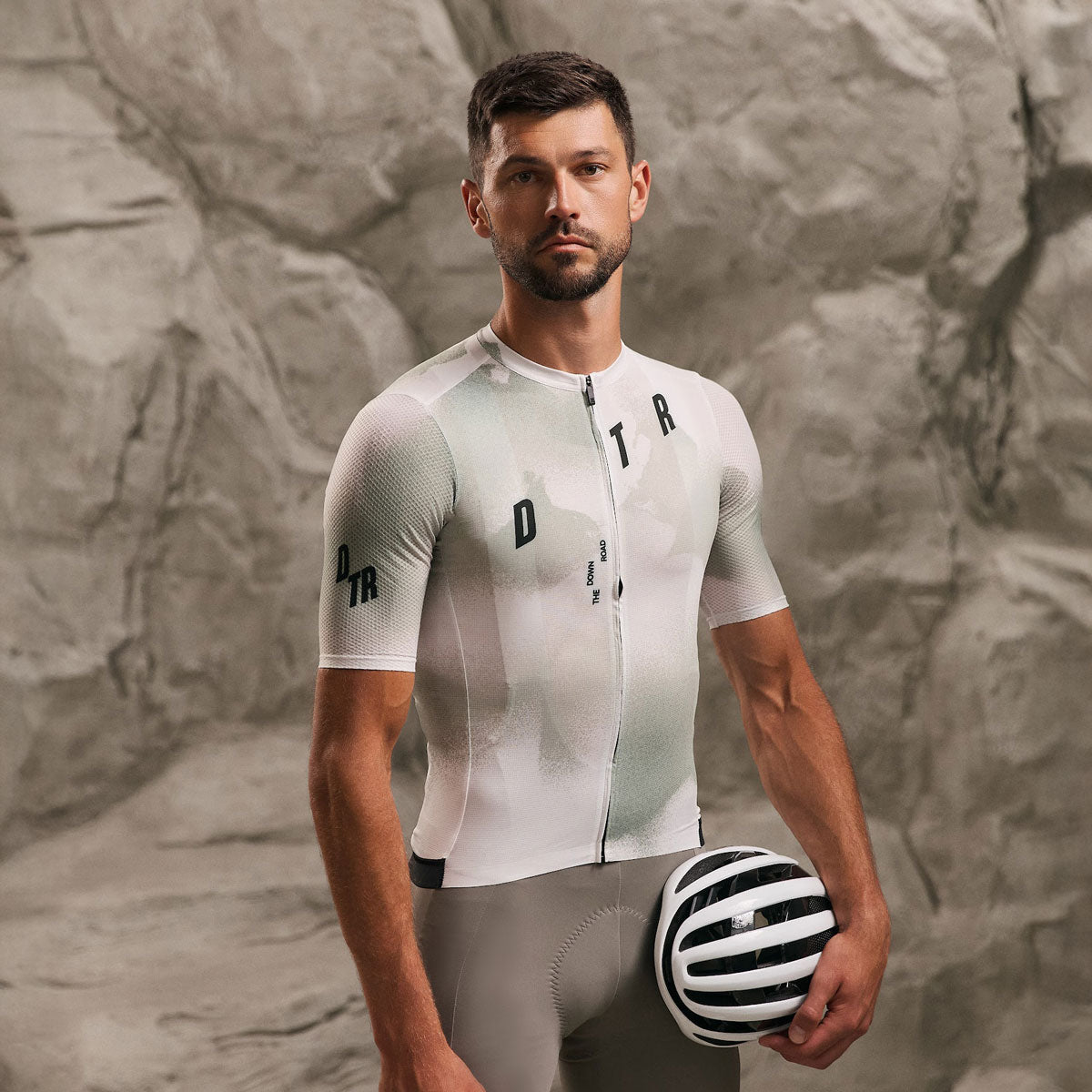
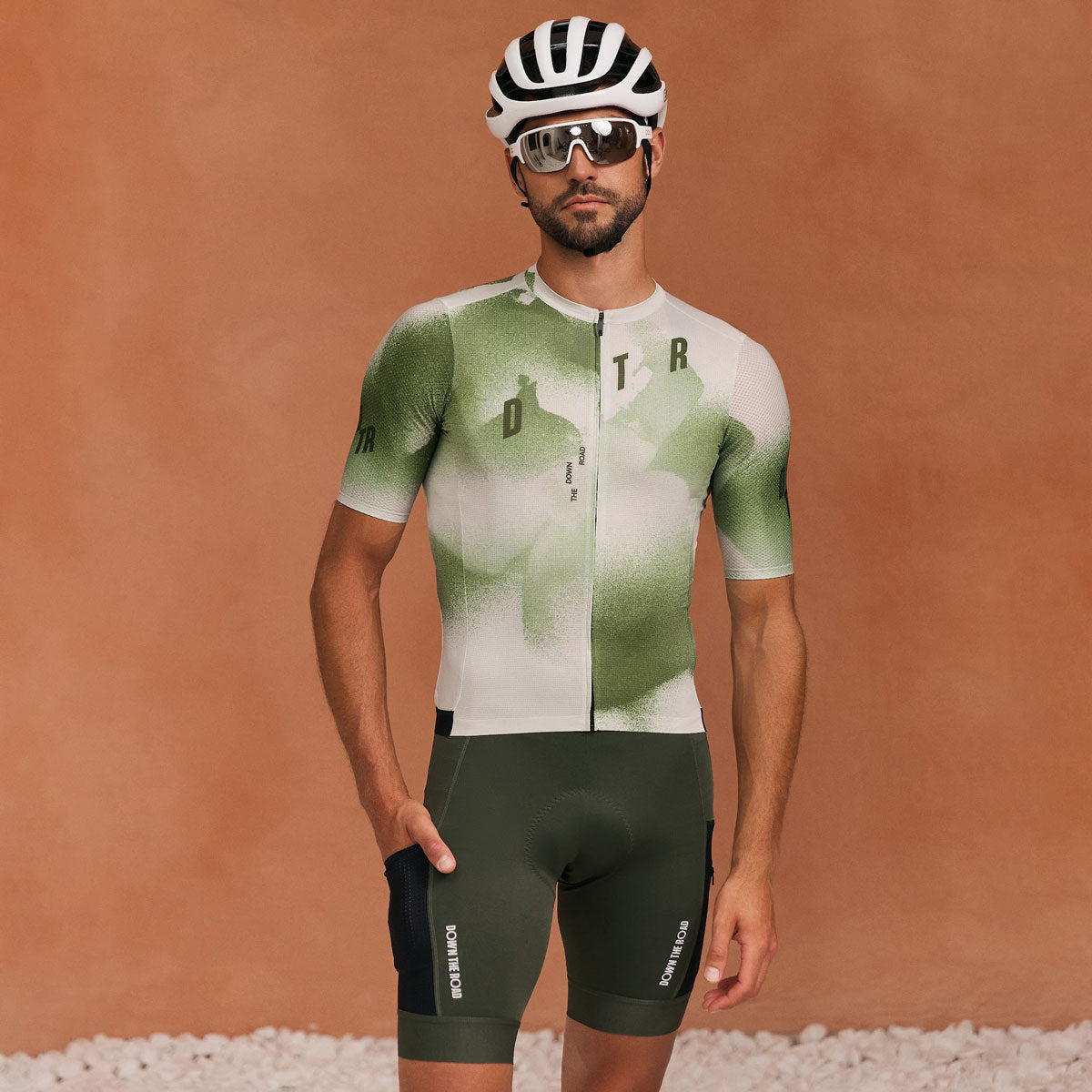
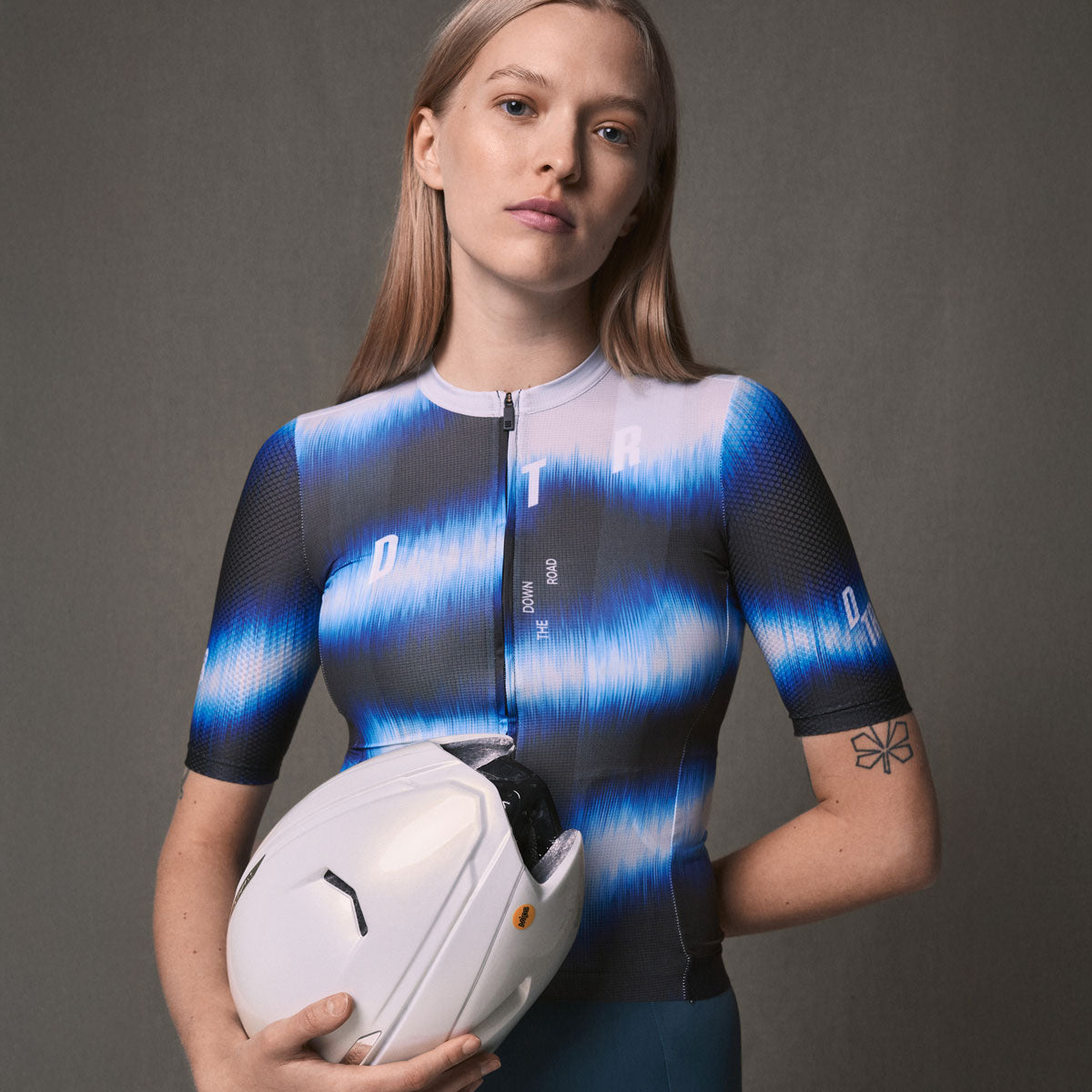
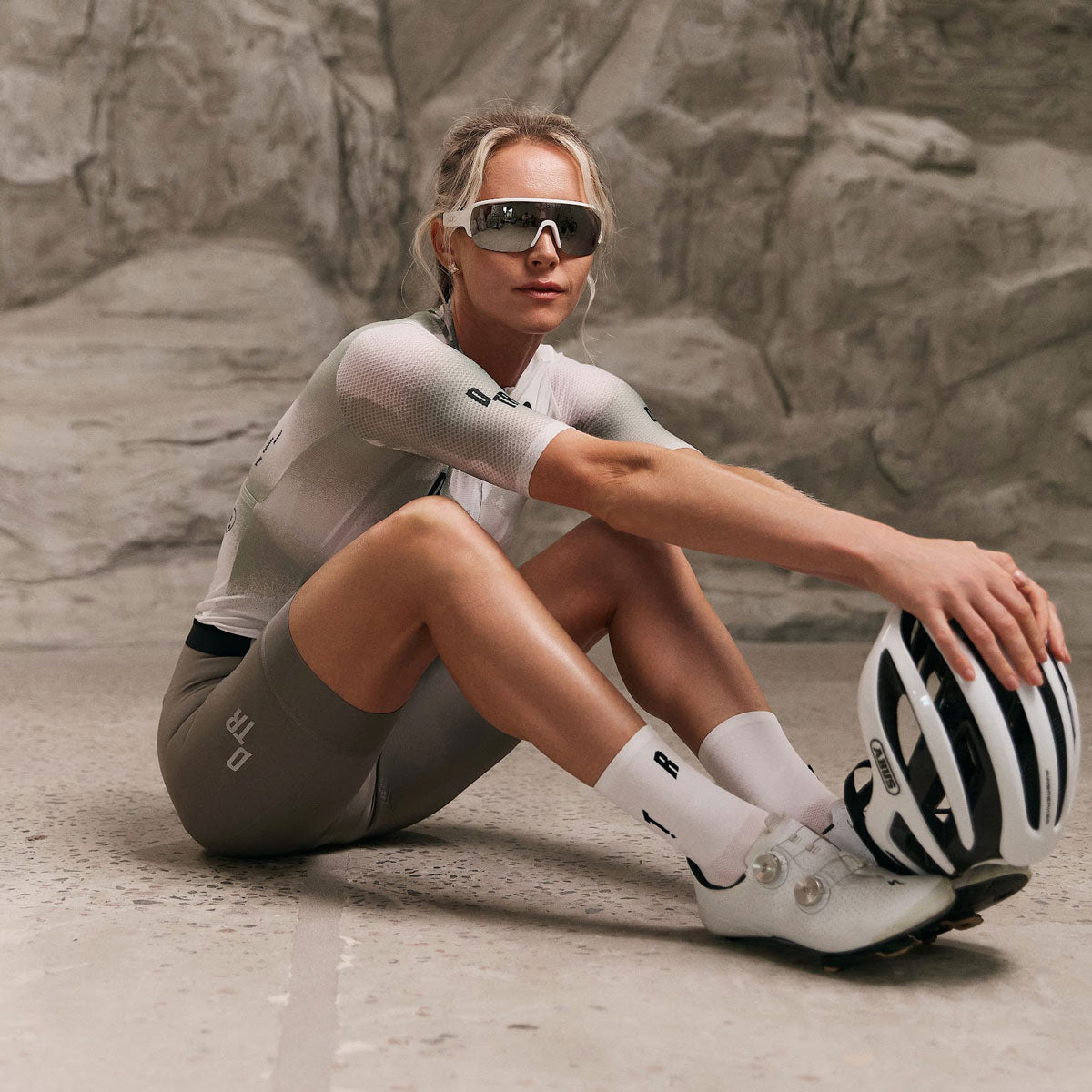
For a full-distance triathlon you wear one kit from gun to finish line: a trisuit under your wetsuit for the swim, the same trisuit for 180 km on the bike, and the same trisuit through the marathon. This guide covers each leg, what changes for a 70.3, and what belongs in your transition and special-needs bags.
Why one kit for the whole day
Long-course racing rewards one decision made well: a trisuit you have trained in for months, worn from start to finish. Changing clothes mid-race costs minutes and invites chafing from fresh seams, so everything in this guide builds on kit that has already survived your longest training days.
The day runs eight to sixteen hours. Small discomforts compound — a seam you barely notice at hour two owns your race by hour ten. Nothing new on race day is the whole strategy.
What do you wear for the swim?
You swim in your trisuit with a wetsuit over it — triathlon-specific, worn over the kit you will ride and run in. If the water is warm enough that wetsuits are not allowed, you swim in the trisuit alone or add a swimskin over it.
Nothing goes under the trisuit. Use anti-chafe balm at the neck and wrists before pulling the wetsuit on, and bring two pairs of goggles — tinted for sun, clear for a dark or overcast start.
One-piece or two-piece for 180 km?
Both formats finish long-course races every weekend. The one-piece is smoother and stays put; the two-piece makes toilet stops faster and lets you size top and bottom separately — which matters over an eight-to-sixteen-hour day. What is not negotiable is a true tri chamois: thin, quick-drying, built to disappear on the run.
We compared the formats in detail in Trisuit vs Tri Top and Shorts. For the long ride itself: pockets you can reach on the aerobars carry your nutrition, and a sleeved trisuit doubles as sun protection through the middle of the day.
What changes for the run?
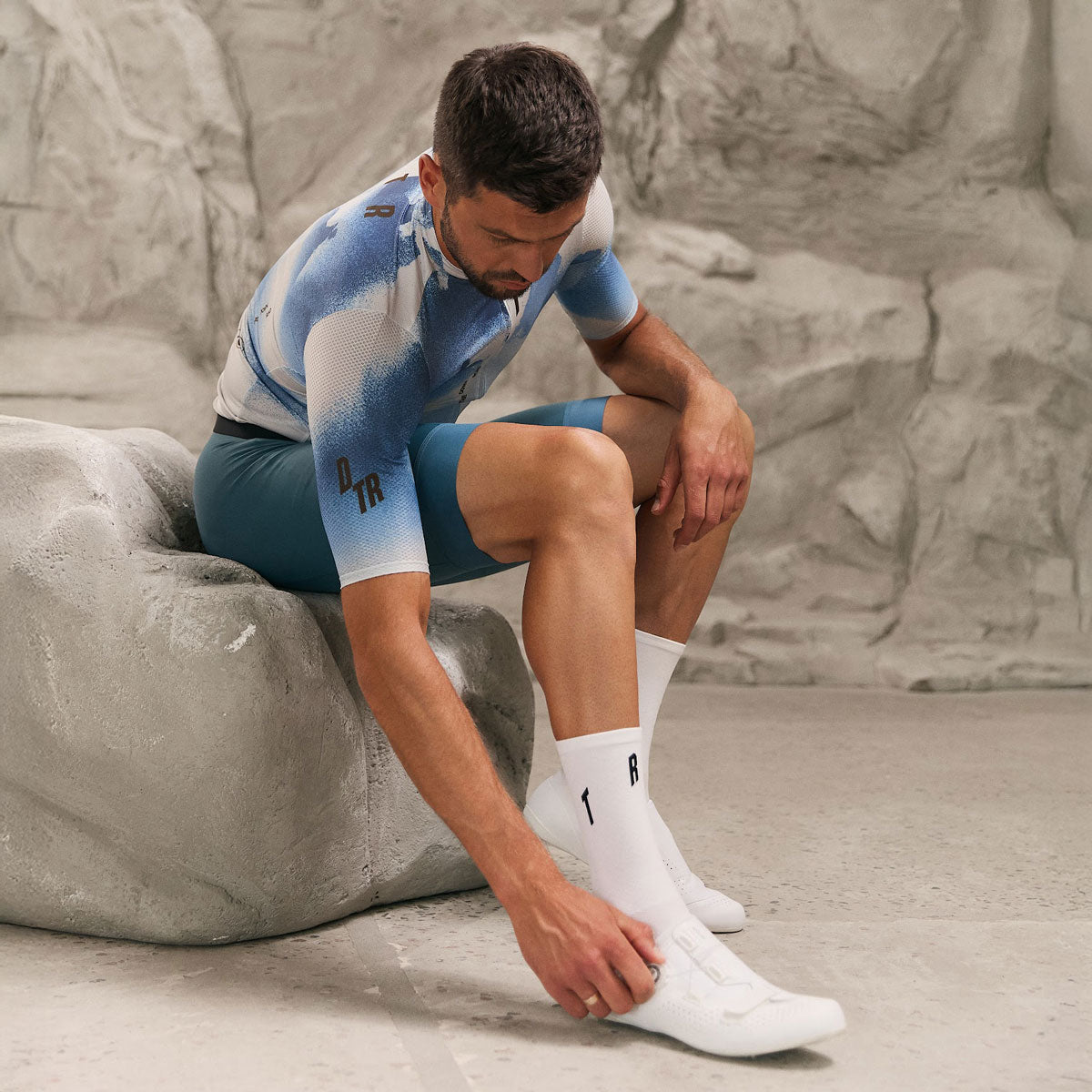
Nothing has to change — the trisuit runs as it rode. What most athletes add at T2 is fresh socks, a visor or cap, and a race belt with the number already attached. Dry socks after 180 km of riding are the cheapest comfort you will buy all day.
Do you change kit mid-race?
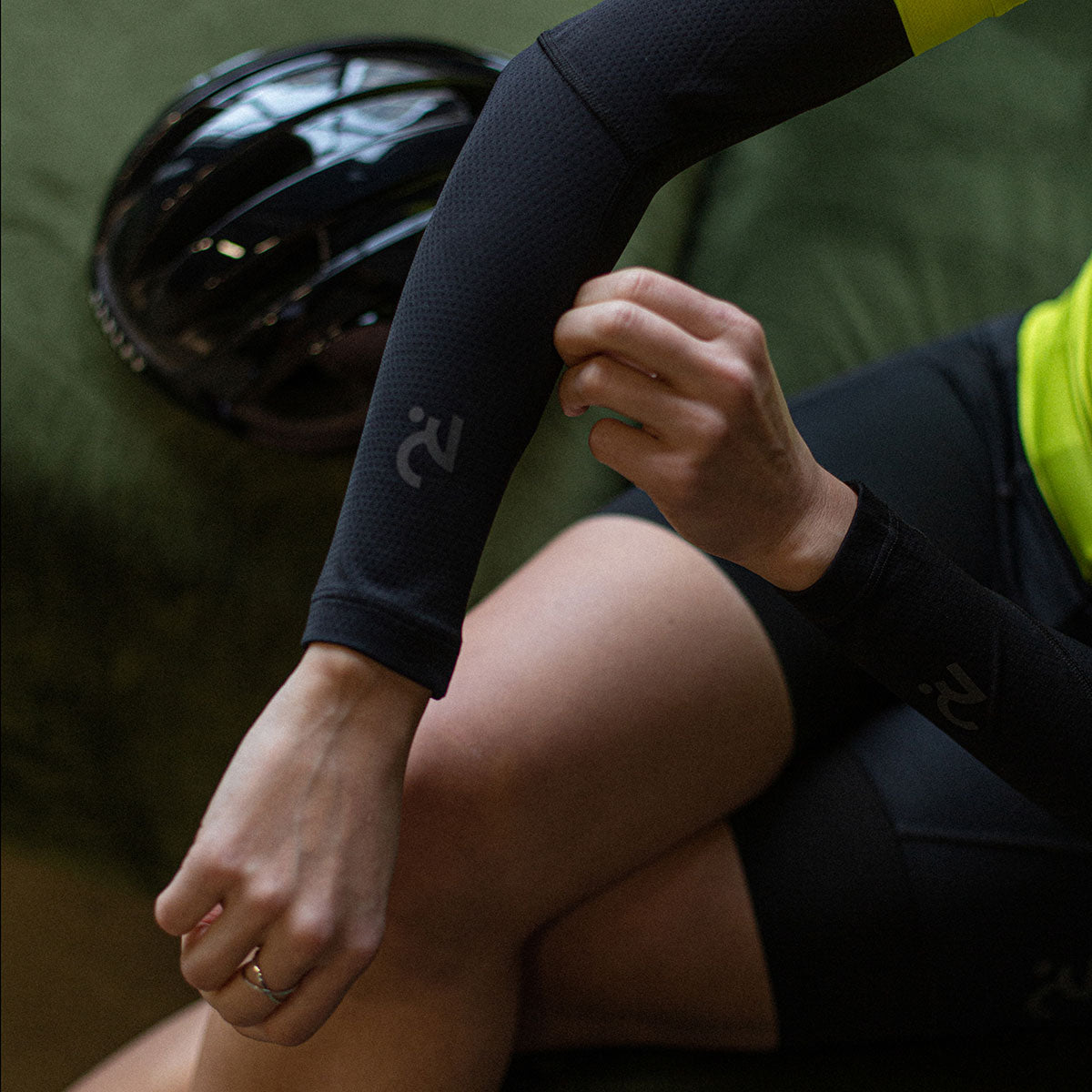
You can — most long-course events allow a full kit change in the transition change tents — but most athletes do not: the clock runs while you change. The smarter version is the special-needs bag: arm warmers, a light windbreaker for a mountain descent or a night finish, spare socks.
If your race finishes after dark, plan for it. Core temperature drops hard in the last hours of a long day, and a windbreaker you never use costs you nothing.
How is a 70.3 different?
A 70.3 simplifies everything: a four-to-eight-hour day, less nutrition to carry, usually no special-needs bags, and the one-piece trisuit as the default choice. Kit changes are rare — the two-piece's flexibility matters less when the day is half as long.
The rest holds: same wetsuit logic, same tri chamois rule, same nothing-new-on-race-day discipline.
What goes in your bags?
T1: helmet, glasses, bike shoes, nutrition already taped to the bike. T2: run shoes, fresh socks, visor, race belt. Special-needs (full distance only): arm warmers, light windbreaker, chamois cream, backup nutrition.
Pack every bag as if you will open it exhausted and in poor light — because you will.
FAQ
What do you wear under a wetsuit in a triathlon? Your trisuit — nothing else under it.
Do you wear underwear under a trisuit? No. The suit is built to sit against skin; anything underneath chafes and holds water.
Can you ride in cycling bib shorts and change for the run? Rules generally allow it, but a cycling multi-density chamois holds water from the swim and is miserable on the run — and the change costs real minutes.
What do you wear for a night finish? Arm warmers and a light windbreaker from your special-needs bag.
The bottom line
One suit, proven in training, from the first horn to the finish chute. Race-day kit starts with the suit: the DTR trisuit range is at /collections/trisuits.
DTR — performance cycling and triathlon apparel, designed and developed in Ukraine.

Leave a comment
This site is protected by hCaptcha and the hCaptcha Privacy Policy and Terms of Service apply.