

A triathlon transition setup needs less than most first-timers pack: for T1, your bike with helmet and shoes staged, nutrition loaded, and a towel to stand on; for T2, run shoes, race belt with number, and a cap. Everything else you'll race in is already on your body, under the wetsuit, from the start.
This guide walks through T1 and T2 item by item, what the trisuit removes from the list, weather extras, and the rehearsal that saves race-day minutes.
Setting up T1: swim to bike
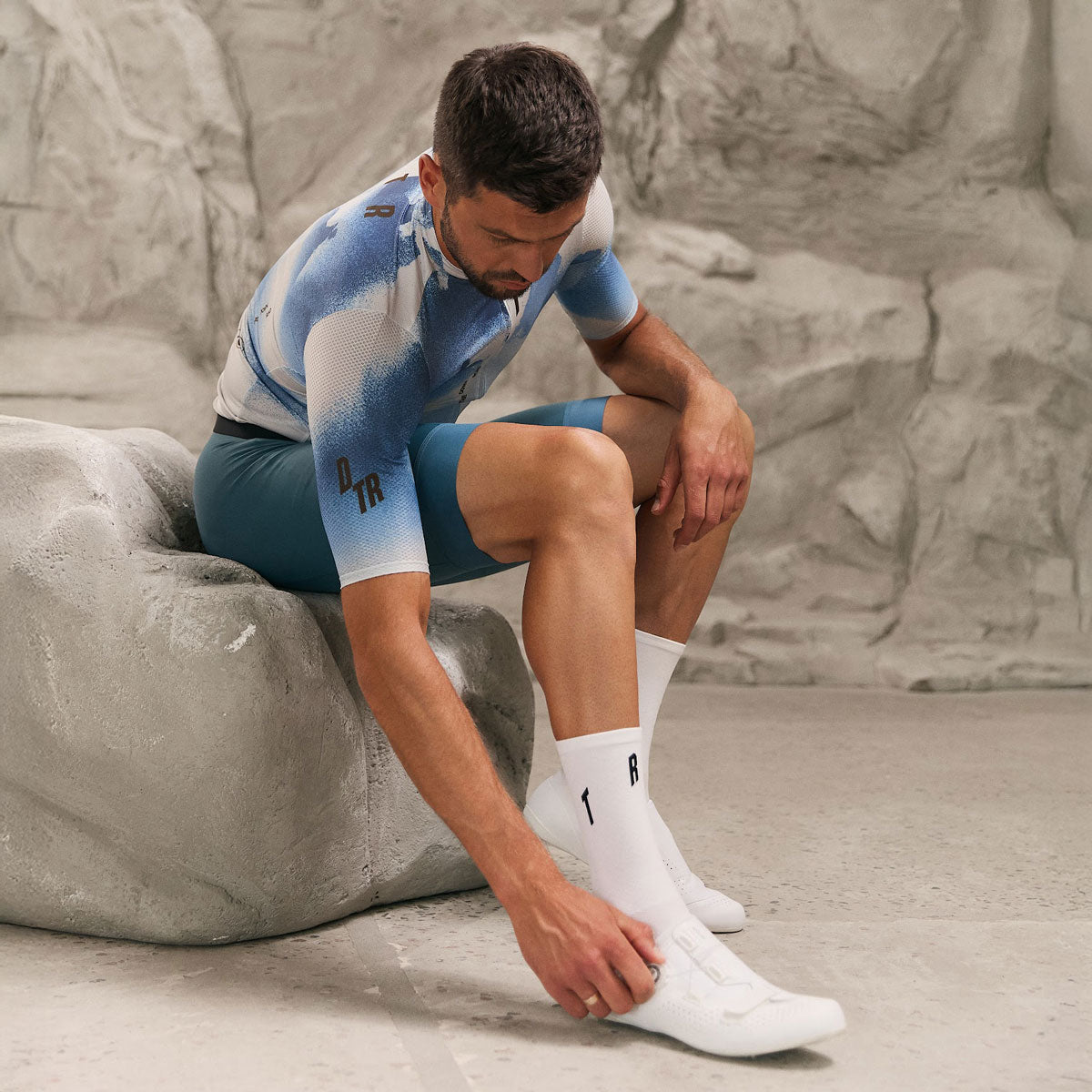
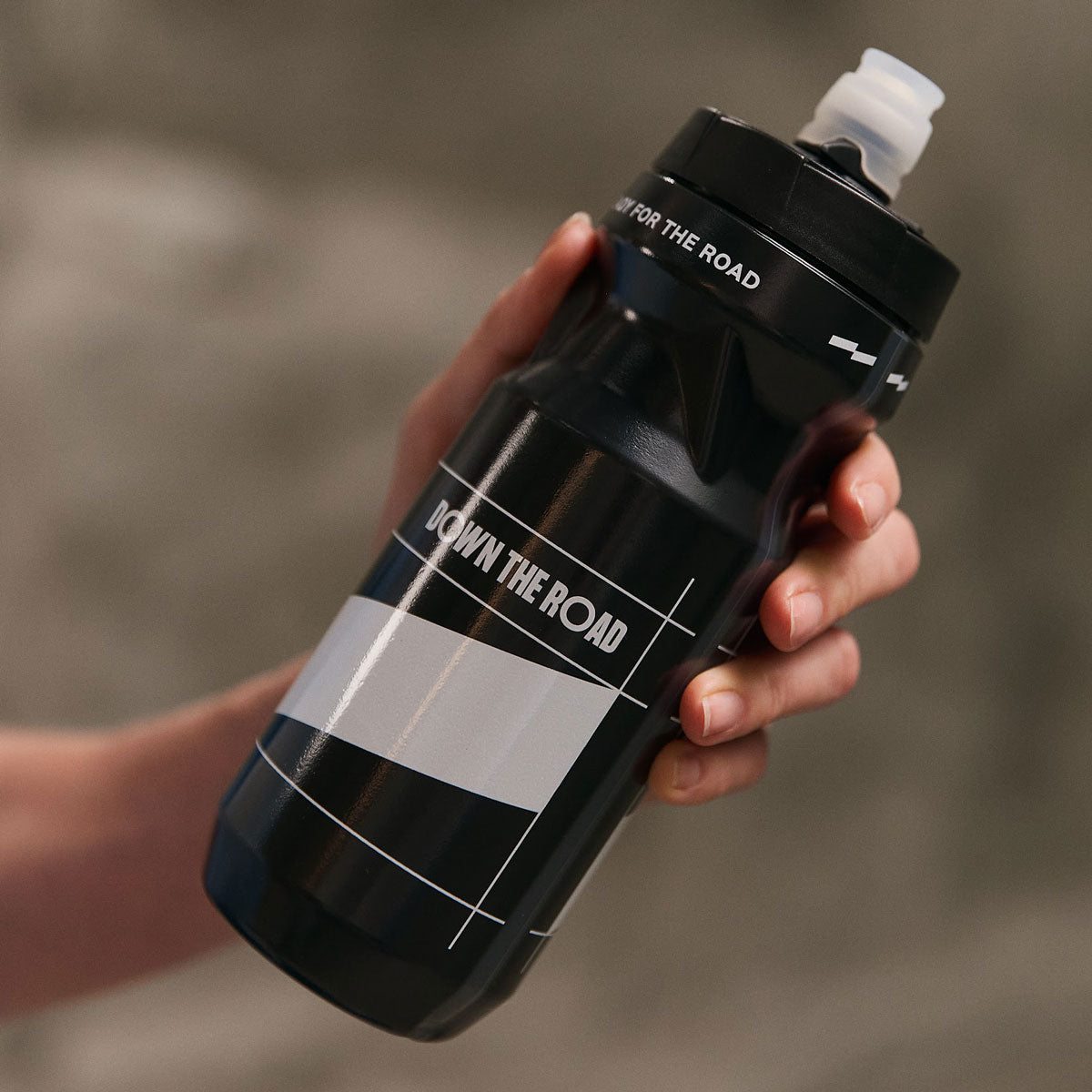
At your bike you need exactly this: helmet resting upside down on the bars with straps open, sunglasses inside it, bike shoes open and ready (or clipped to the pedals if you flying-mount), nutrition taped or bottled on the bike, and a small towel to wipe grit off your feet. Helmet on and buckled before you touch the bike — that order is a rule, not a preference.
Setting up T2: bike to run
T2 is shorter and simpler: run shoes with elastic laces open and tongues out, race belt with your number attached so you never fumble safety pins, a cap or visor, and any run nutrition you didn't carry on the bike. Rack the bike, helmet off after it's racked, shoes on, belt on while moving. Seconds here are the cheapest you'll ever save.
What the trisuit takes off the list
The trisuit is why a transition list is short: you swim, ride and run in the same suit, so there are no clothing changes at all. No cycling bib shorts waiting at the bike, no dry top for the run. That removes the slowest, most error-prone step transitions used to have — and most races don't allow changing anyway since public nudity means disqualification.
Weather extras worth staging
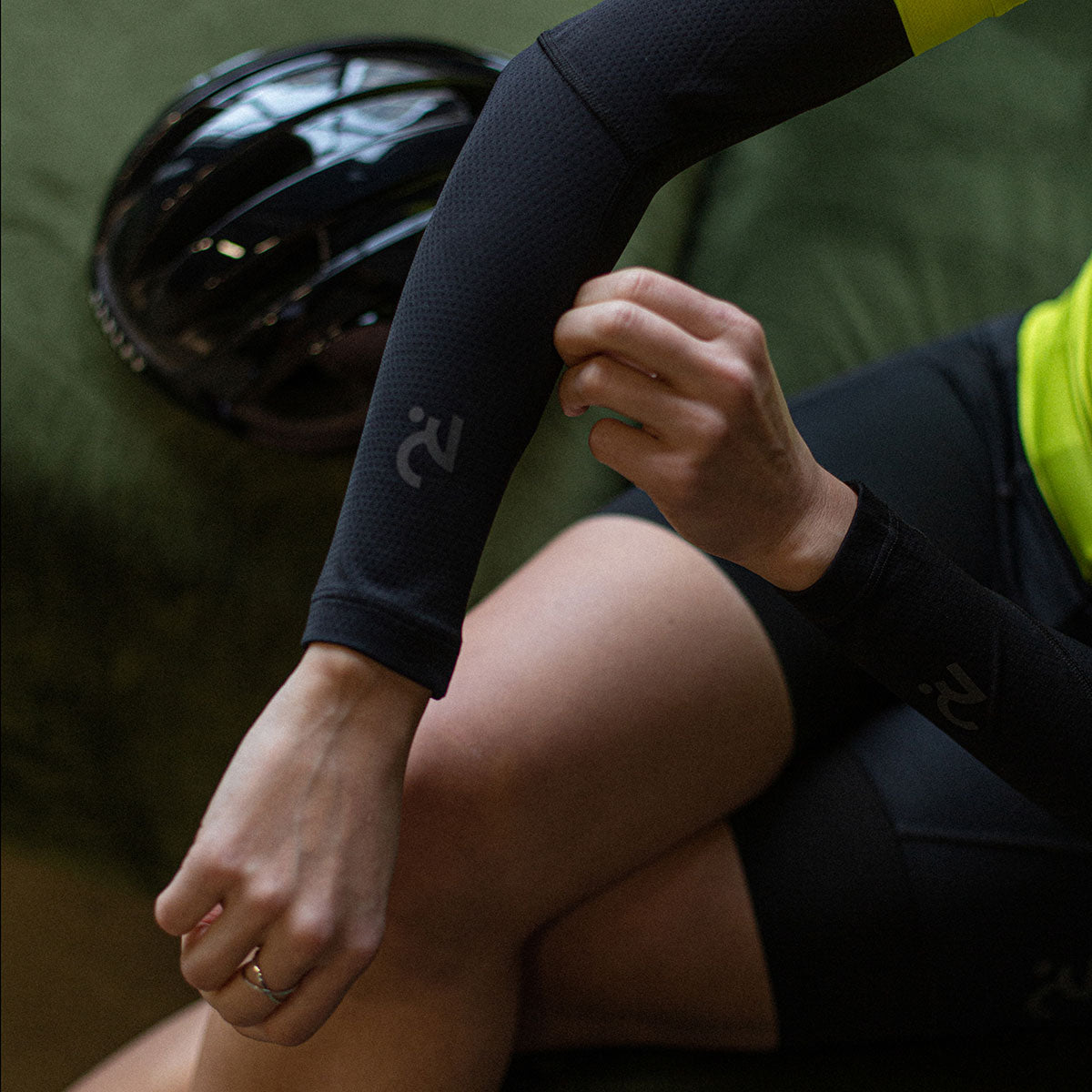
Stage weather items only when the forecast earns them: arm warmers rolled and ready to pull on for a cold bike leg, a packable windbreaker if the descent or the wind is serious, and sunscreen applied before the start rather than stored in transition. Cold morning, warm race is the common pattern — kit you can shed beats kit you can't.
Rehearse it once before race day
Walk your row from swim-in and bike-in entrances, count racks to your spot, and run the full sequence twice at home: wetsuit off, helmet on, shoes, go. Ten minutes of rehearsal is worth more than any gadget in transition — the goal is that on race morning your hands know the order without your head getting a vote.
FAQ
Can you change clothes in transition?
Practically, no — you race in what you started in. Most races forbid public nudity, so a full change means a changing tent (long-course races that offer one) and minutes lost. This is exactly the problem the trisuit exists to solve: nothing to change, only neoprene to remove.
Socks or no socks?
Short course: most athletes go sockless in both sports — practise it first, blisters on race day are a bad trade for twenty seconds. Long course: dry socks at T2 are cheap insurance for a half-marathon or marathon. If in doubt, wear them; nobody lost a race to socks.
What should you not bring to transition?
Anything you won't touch mid-race: bags (usually banned at the rack), floor pumps, spare wheels, full changes of kit. Most races also restrict rack space to what fits beside your bike. A minimal, memorised setup beats a full kit bag every time — clutter costs seconds and calm.
One suit for all three sports: DTR trisuits.
DTR — performance cycling and triathlon apparel, designed and developed in Ukraine.
For the cycling-leg bottle setup in more detail, read Cycling Water Bottles and Cages: What You Actually Need for Long Rides.

Leave a comment
This site is protected by hCaptcha and the hCaptcha Privacy Policy and Terms of Service apply.