


A long ride needs bottles you can reach, squeeze and replace without breaking rhythm, plus cages that keep them secure over rough roads. The useful setup starts with your planned refill gap and the conditions, not a generic rule about how much to carry.
How many bottles should you take?
Start with the longest stretch of your route without a reliable refill, then account for heat, duration and how hard you expect to ride. Two bottles are a practical baseline when the bike has two cage mounts, but the right plan is the one that leaves you able to drink before the next stop rather than rationing late in the ride.
The bottle count is only one part of the plan. Know where you can refill, carry the drink mix or food you need separately, and do not treat a café stop as guaranteed if the route is remote or early. For multi-day packing, the same discipline applies: our bikepacking kit guide covers how to keep the load useful rather than overfilled.
What must the bottle and cage do together?
A bottle and cage work as one system: the cage must hold the bottle through vibration, while the bottle must come out and return with one hand. If either side is wrong, the result is usually a bottle that rattles, launches on a rough section, or takes too much attention to use while rolling.
Check the bottle’s diameter against your cages and test the entry and exit in the riding position before a long event. A cage that feels tight in the garage may be difficult to use when you are tired; one that feels loose can become a problem on broken tarmac. There is no gain in carrying a bottle you hesitate to reach for.
What should a road bottle do well?
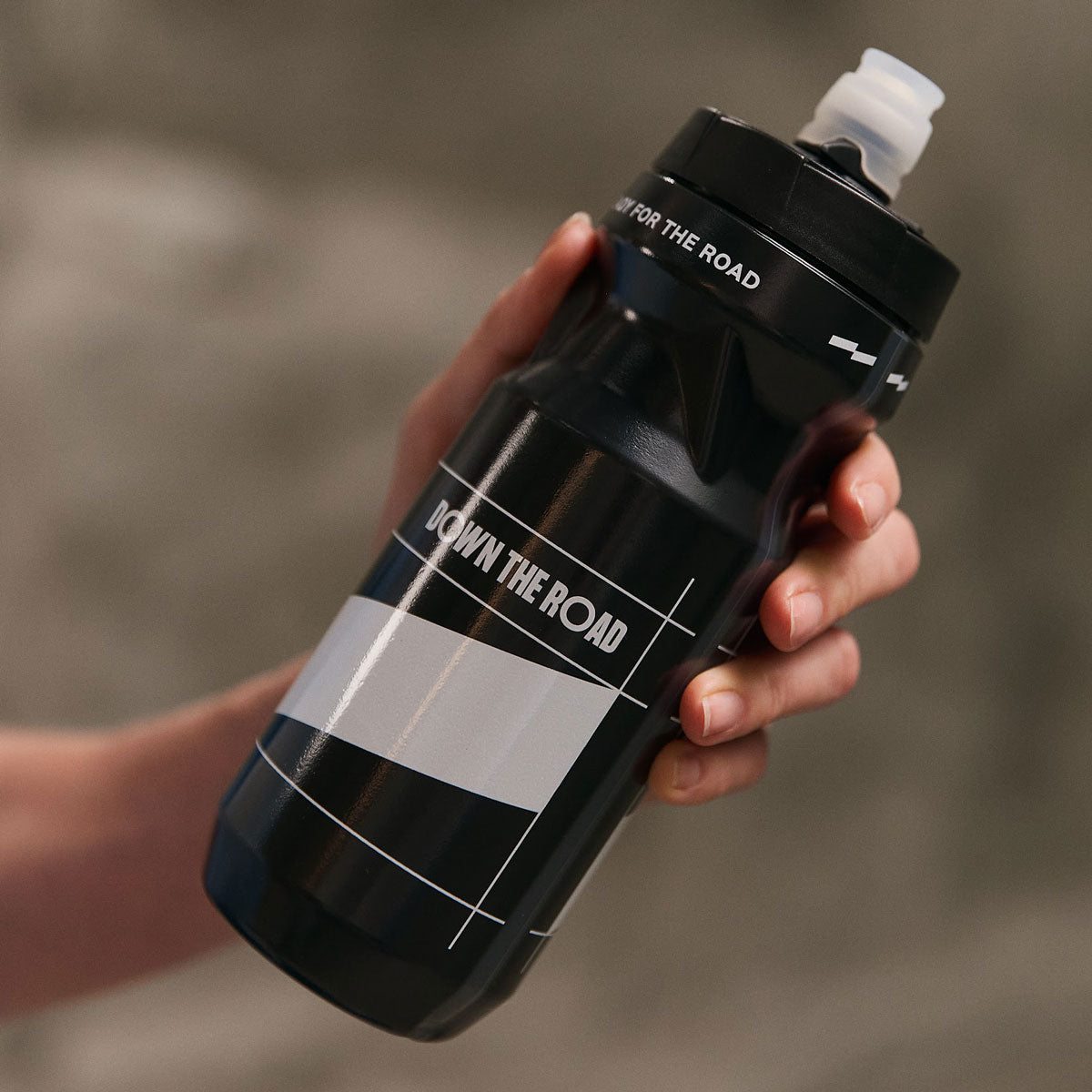
The useful features are basic: standard cage-compatible sizing, a valve that releases easily, and a body you can squeeze with one hand. DTR’s bottle range is built around those essentials, with BPA-free, dishwasher-safe construction rather than unnecessary complication. The Paceline bottles are 500 ml; use capacity as part of a route plan, not as a claim that one size fits every ride.
Bottle choice is also about reliability on the fifth refill, not how it looks on the first kilometre. Clean the valve and bottle threads properly, inspect them after a crash, and replace a bottle when it is damaged or the valve no longer works cleanly.
How should you plan refills on a long ride?
Plan your first refill before the first bottle is empty, then adjust for the day as it unfolds. Heat, wind, climbing, pace and access to water change what you need; the plan should be flexible enough to respond without leaving you behind the curve. On hot days, the broader hot-weather riding guide helps frame the rest of the setup.
For a training camp, make bottles part of the daily routine rather than a last-minute decision. The cycling training camp packing guide is useful for organising repeat ride days, while a Gran Fondo checklist helps with an event where refill points and timing matter.
Do you need special bottles for every ride?
No. A standard, cage-compatible bottle is the right starting point for most road riding. More specialist options only make sense when the route, climate or race format creates a clear need. Do not buy around a theoretical marginal gain when a clean, secure bottle you use consistently solves the real problem.
For triathlon, access matters as much as volume because the bike leg is only one part of the day. Our transition kit checklist is a better place to plan the whole sequence. For the rest of your small on-bike essentials, see DTR cycling accessories.
FAQ
How many cycling water bottles do I need for a long ride? Carry enough to cover the longest confirmed gap between refills, then adjust for the day’s heat, effort and route. Two cage-mounted bottles are practical on a bike with two mounts, but refill planning matters more than a fixed number.
Do bottle cages need to match the bottle? They need to work together. Check that the bottle is secure over rough roads but can still be removed and replaced with one hand while you are riding.
Are 500 ml bottles enough for a long ride? They can be, if the route gives you reliable refill points and the conditions suit the plan. Capacity alone does not decide the setup; access to water, weather and ride intensity do.
How do I stop a bottle launching from its cage? First check bottle and cage compatibility, then test the hold on rough ground. A cage that is too loose, damaged, or poorly matched to the bottle is the usual issue.
The bottom line
Choose bottles and cages as a working system: secure enough for the road, easy enough to use one-handed, and matched to a real refill plan. Start with the route and conditions, keep the bottle clean and reliable, and make drinking early easier than drinking late.
DTR — performance cycling and triathlon apparel, designed and developed in Ukraine.

Leave a comment
This site is protected by hCaptcha and the hCaptcha Privacy Policy and Terms of Service apply.