

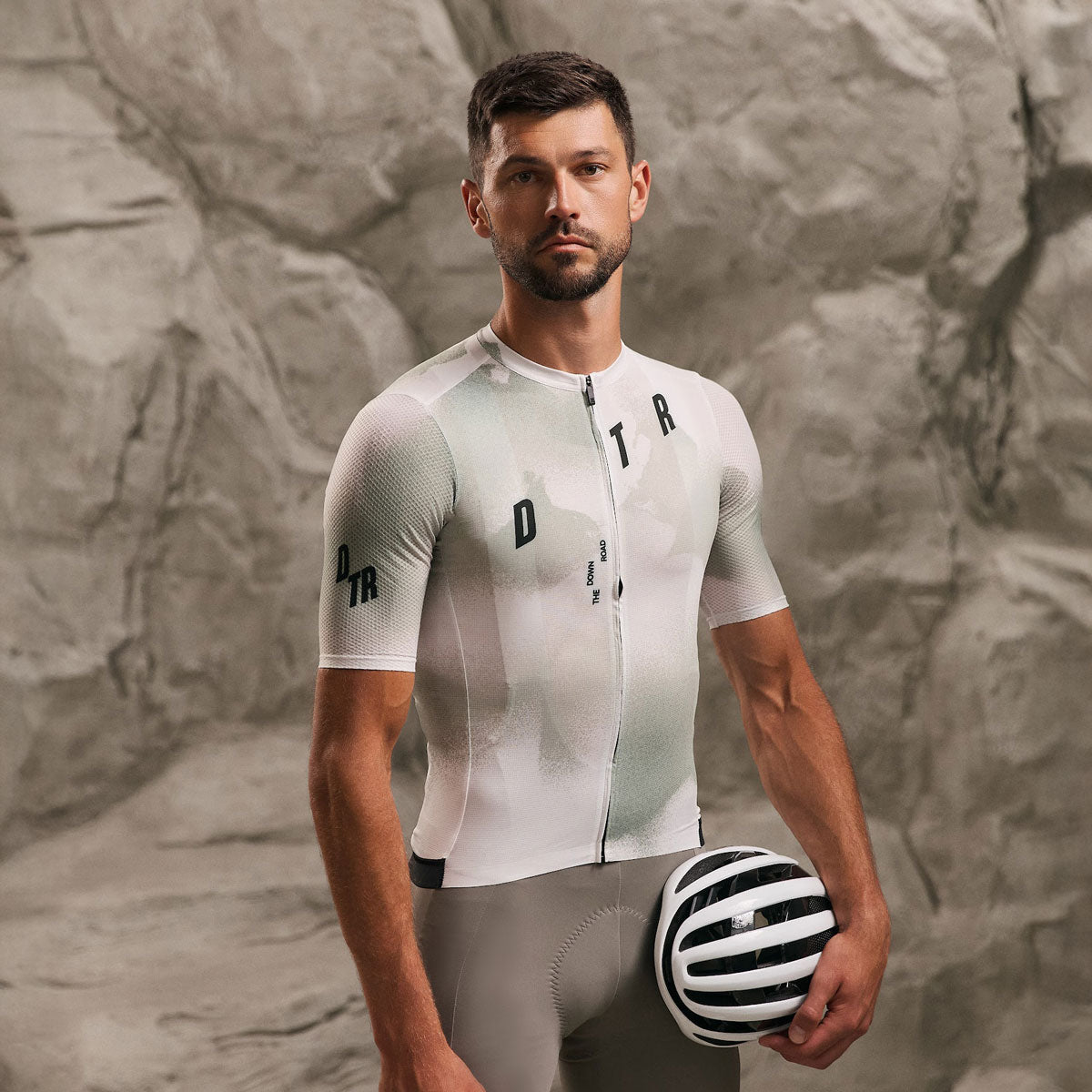
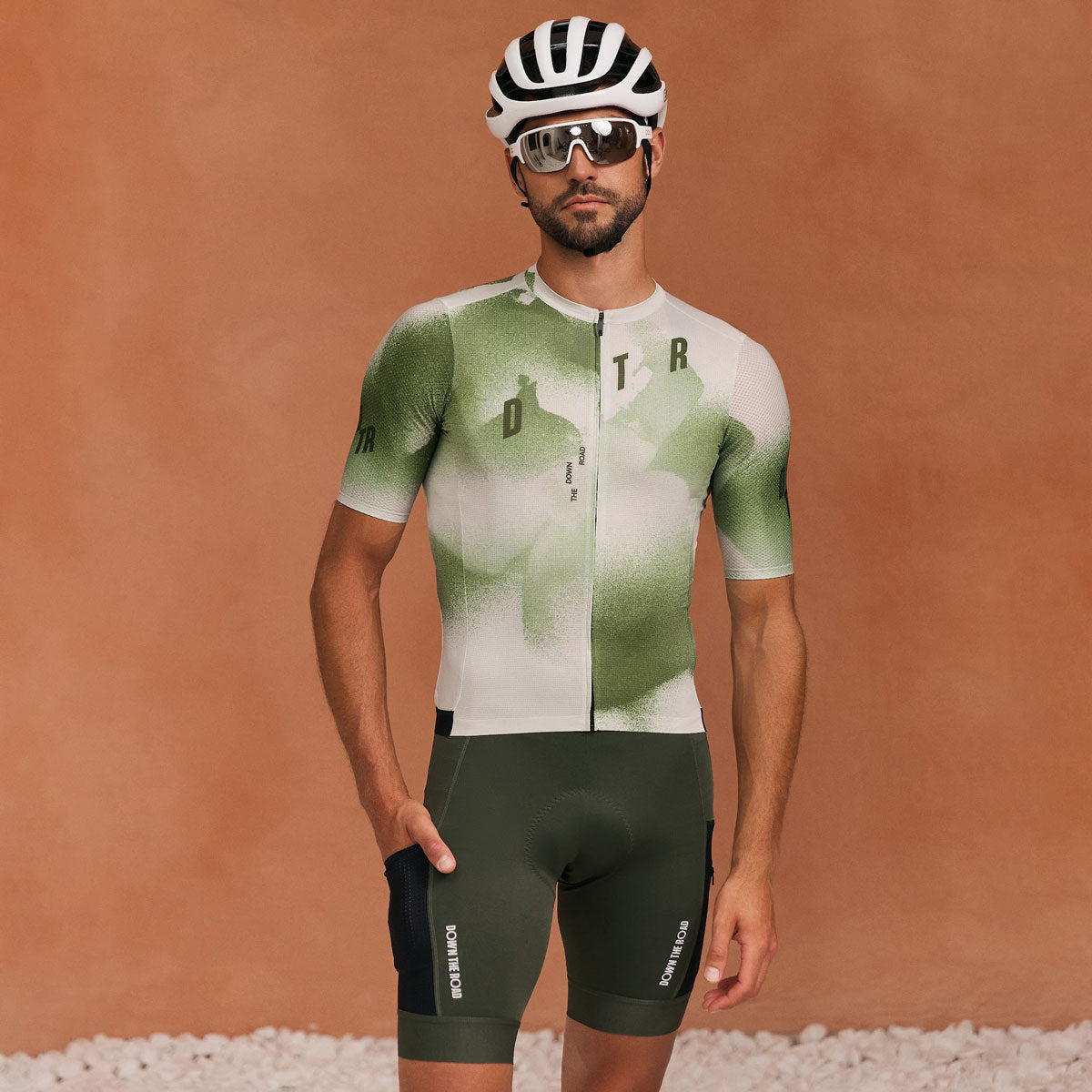
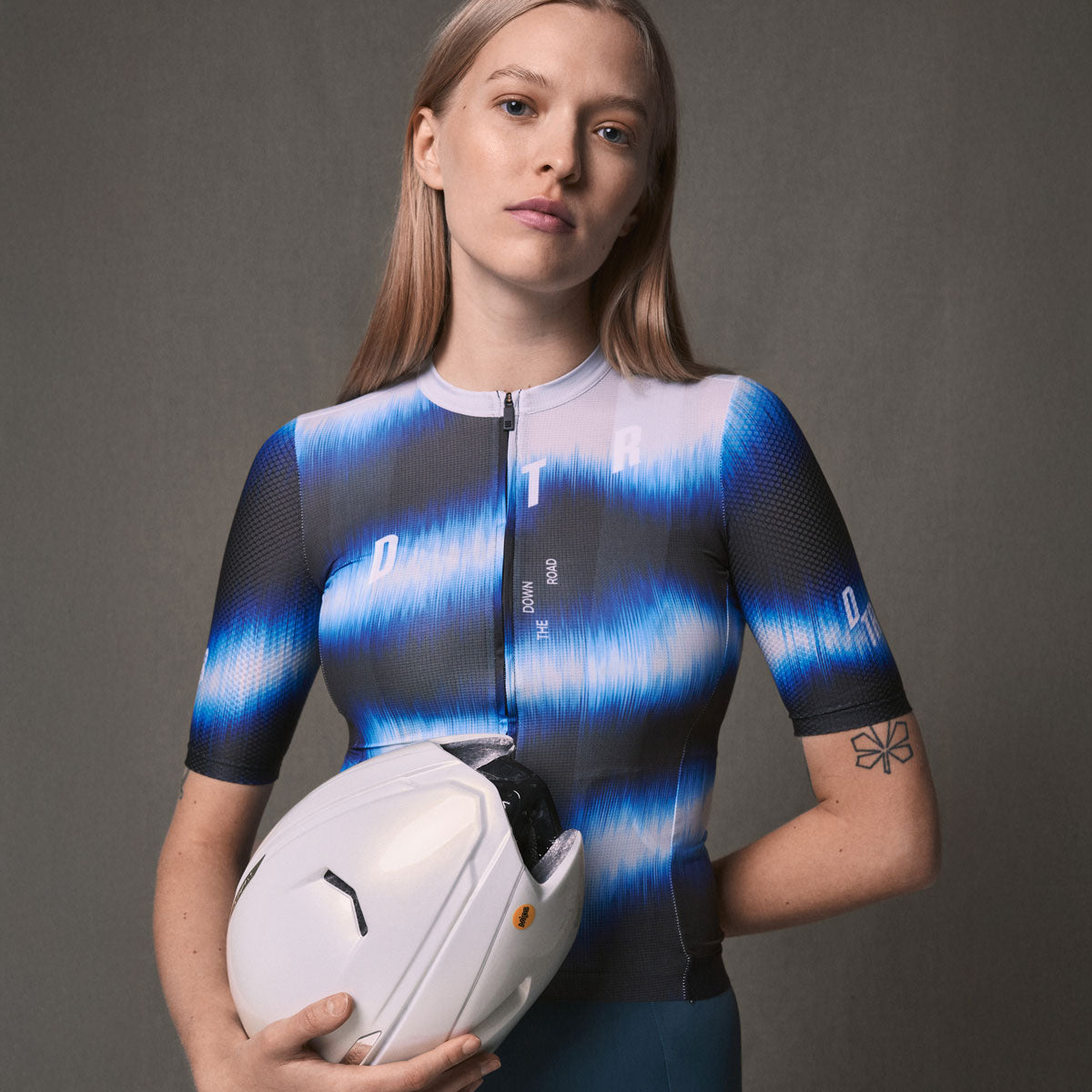
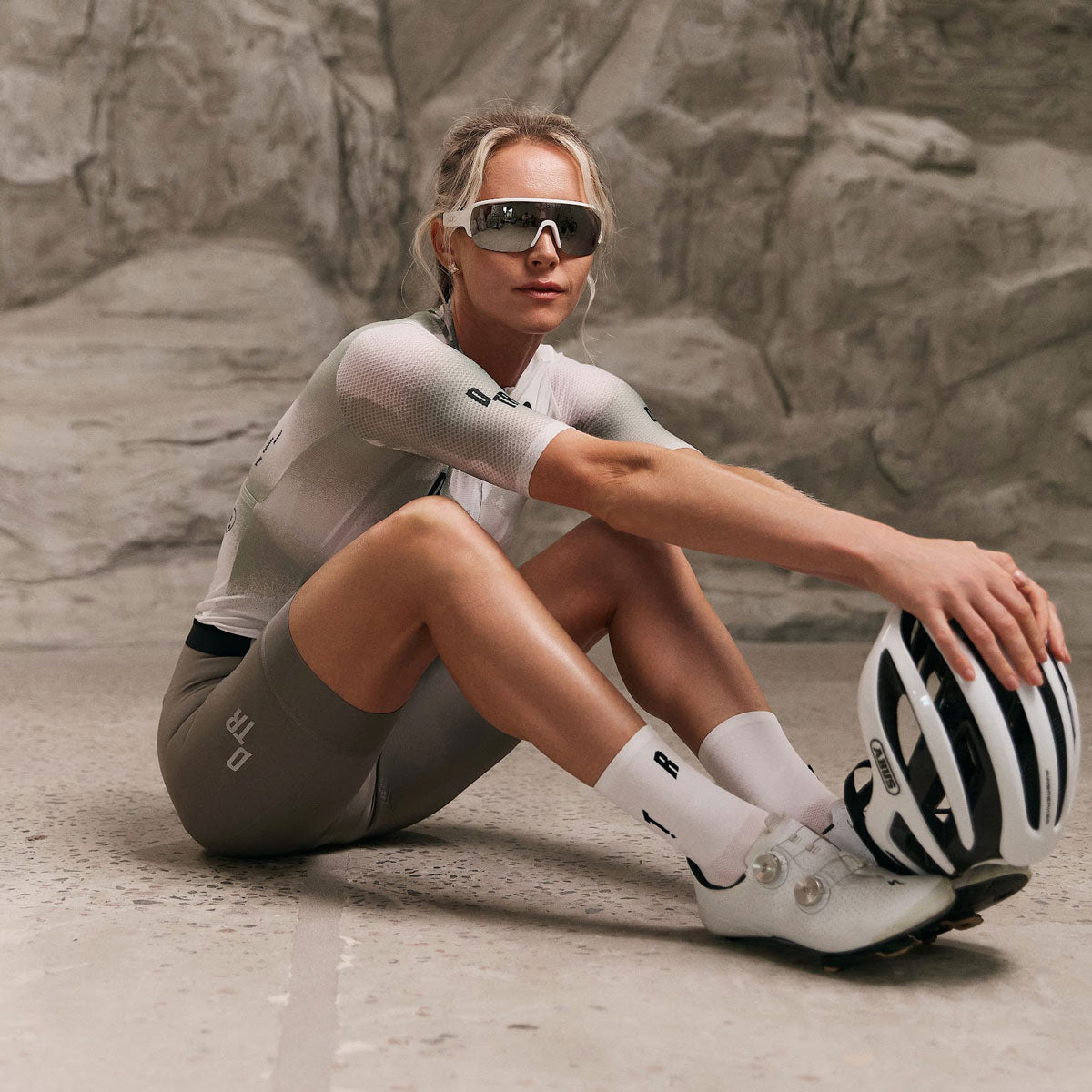
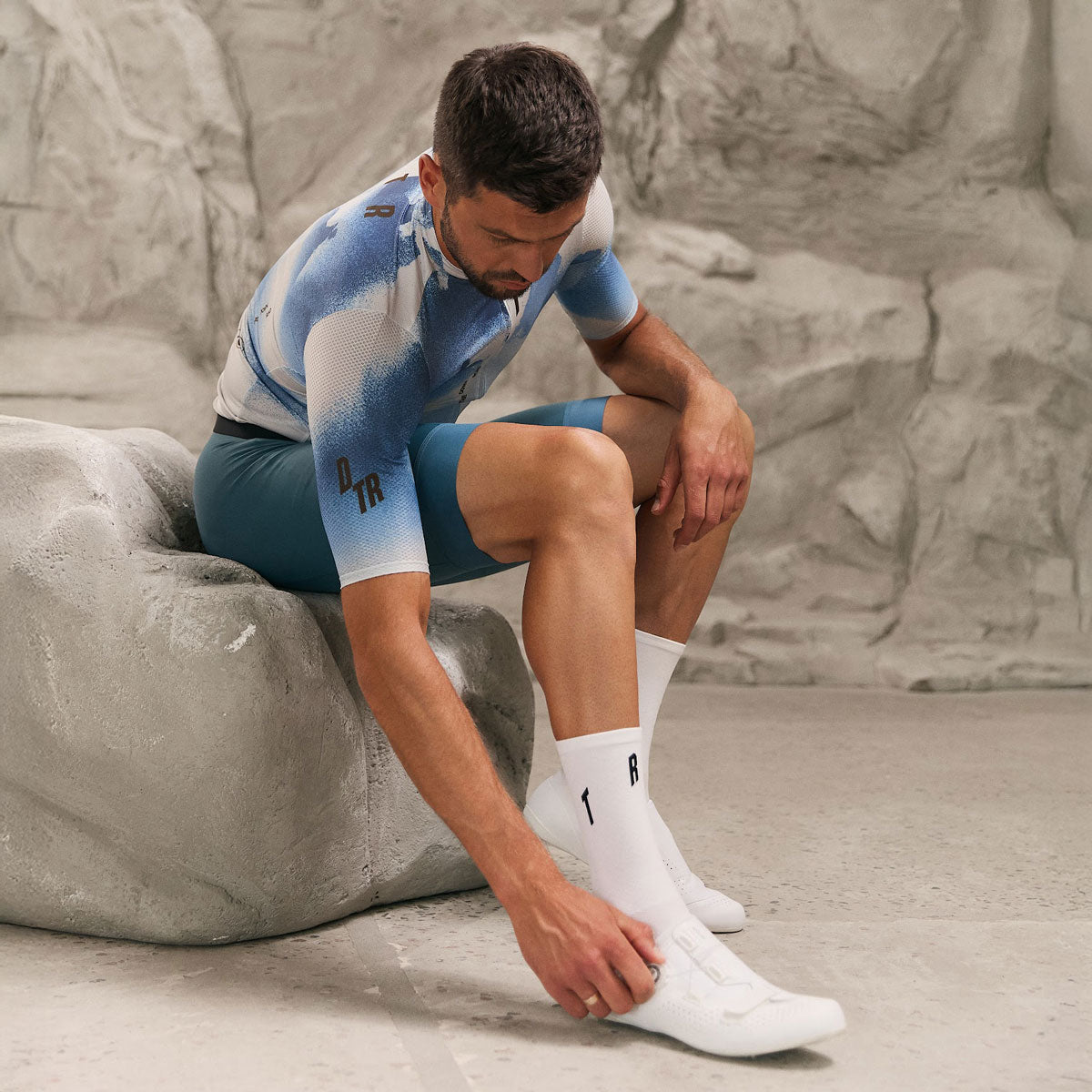
For a gran fondo, wear the bib shorts you know are comfortable over five hours or more, a breathable jersey with pockets you can actually reach, a base layer underneath, and a packable windbreaker or gilet in a pocket. The governing principle is simple: dress for hour six, not hour one. Almost every kit mistake at a gran fondo comes from someone dressing for how they feel at the start line — fresh, warm from the car park, surrounded by people — rather than how they will feel on a long descent at 2pm with 140km in their legs.
Why do bib shorts matter more than anything else?
Because you are sitting on them for five, six, seven hours, and no other garment can ruin the day so completely. This is the one item where the choice is not close.
- Wear the pair you have already proven. A gran fondo is not the day to try new shorts. Whatever you have ridden your longest training ride in — wear that.
- A multi-density chamois earns its keep on long days. Layered foam of different firmness supports where you press and stays soft where you do not. On a three-hour ride you might not notice. On a six-hour ride you will.
- Fit is everything. Any loose fabric, any bunching, any shifting of the chamois will become a hot spot and then a sore. If your shorts move around at hour two, they will have caused damage by hour five.
- Use chamois cream. Not clothing, but part of the same system. Apply generously before you start.
If you are unsure whether your shorts are right, our guide on how bib shorts should fit is the place to check.
What should you wear on top?
- A base layer, even in summer. This is the most-skipped item and one of the most useful. It moves sweat off your skin so you are not chilled on descents and at feed stops, and it stops your jersey clinging to you when you are soaked.
- A breathable jersey with a full zip. The full zip is a temperature control you will use constantly on a hilly fondo — open on the climb, closed on the descent.
- Pockets you can reach while riding. You will be eating for hours. Three deep rear pockets that hold their shape when loaded are worth more than any weight saving.
- A snug fit. A flapping jersey costs you real energy over 150km, and on the fast group sections that adds up.
What do you need for the weather you did not plan for?
This is where gran fondos are won and lost in comfort terms. A long event covers a wide range of conditions: a cold start, a hot valley, an exposed summit, a fast descent, and possibly rain.
- A packable windbreaker. The single most important thing in your pocket. It weighs almost nothing, and it turns a freezing 20-minute descent into a non-event. Take it even if the forecast is perfect.
- A gilet is the alternative if the day is mild but breezy — it keeps your core warm while your arms stay cool on a climb.
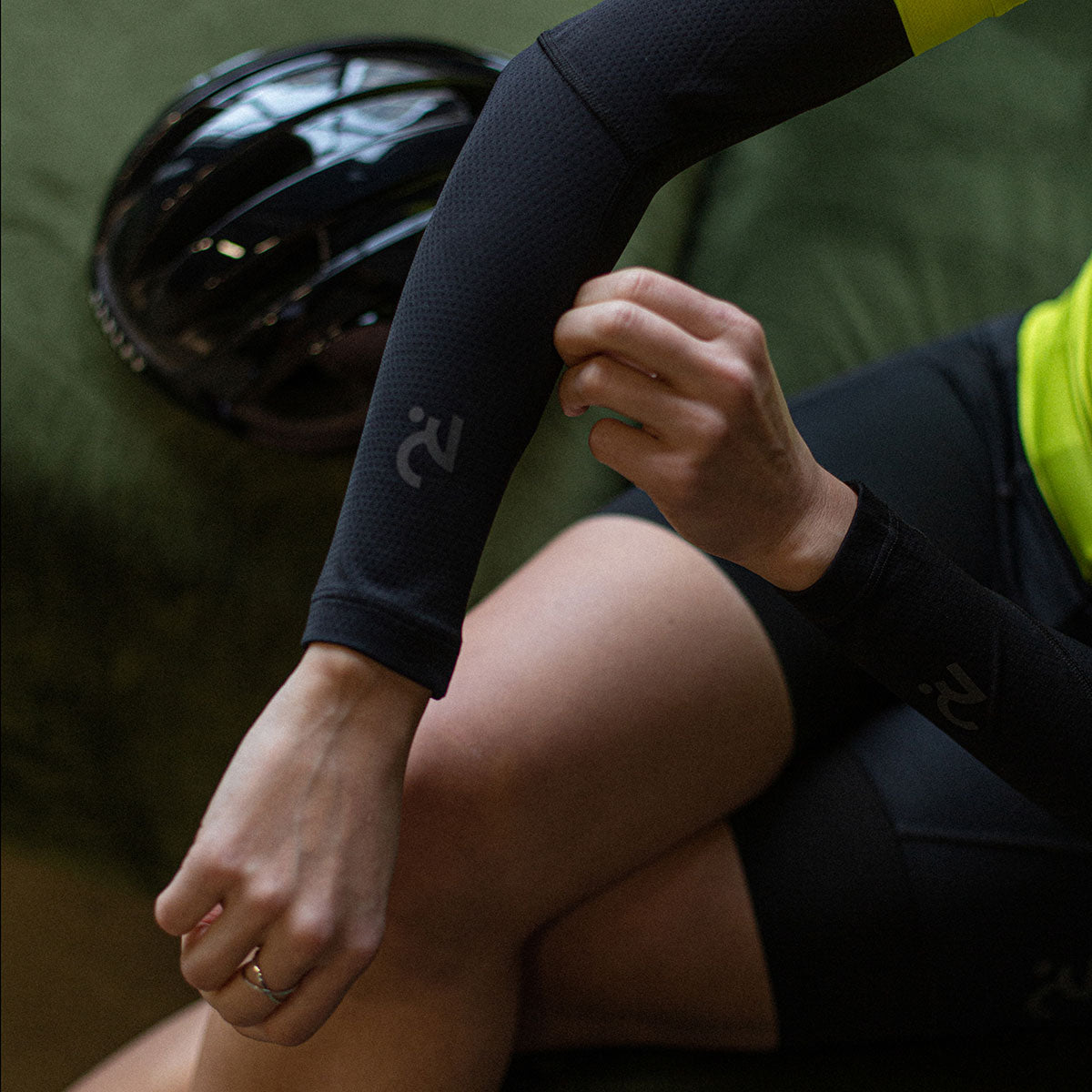
- Arm warmers. The most flexible item you can carry. On at the start, off at the first feed, back on for the descent.
- Light gloves if the start is cold. Numb hands on a technical descent are a genuine safety problem, not just a discomfort.
All of these pack into a jersey pocket. There is no good reason to leave the house without them.
How should you dress for a mountain gran fondo?
Mountain fondos are a different problem, because the temperature swing between the valley and the summit can be 15°C or more, and you will climb for an hour sweating and then descend for 20 minutes doing nothing.
- Overdressing on the climb is the classic error. You will be too hot and you will soak your base layer, which then chills you brutally on the descent.
- Carry the windbreaker and put it on at the summit, before you start descending. Not halfway down when you are already cold.
- A gilet plus arm warmers gives you more granular control than a single jacket.
- Consider a spare base layer or a newspaper — riders have stuffed something down their front at a col summit for a hundred years because it works.
What are the most common gran fondo kit mistakes?
- New kit on event day. The single most expensive mistake. Every seam and every gripper must be tested at distance first.
- Dressing for the start line. You are warm and standing still with a thousand people. That tells you nothing about hour five.
- Leaving the windbreaker at home because the forecast was good. Forecasts are for the valley, not the summit.
- Skipping the base layer to stay cool. It backfires. Without it, sweat sits on your skin and chills you on every descent.
- No sunscreen and no eyewear. Six hours of exposure is not a small thing, and grit in the eye on a descent is dangerous.
- Forgetting chamois cream. Cheap, weightless, and the difference between finishing comfortable and finishing raw.
FAQ
What should you wear for a 100-mile bike ride? Proven bib shorts with a multi-density chamois, a base layer, a full-zip breathable jersey, and a packable windbreaker in a pocket. Add arm warmers and light gloves if the start is cold. The overriding rule is to wear only what you have already ridden a long training ride in.
Do you need a base layer for a gran fondo in summer? Yes. Its job in hot weather is to move sweat off your skin so it can evaporate and so you are not chilled at feed stops and on descents. A lightweight or mesh base layer makes you cooler in the heat, not warmer — skipping it is a common and counterproductive mistake.
Should you carry a jacket on a gran fondo? Carry a packable windbreaker, yes — always. It weighs almost nothing, fits in a jersey pocket, and it is the difference between a survivable descent and a miserable one. Mountain summits and long descents get cold regardless of what the forecast said in the valley.
How do you avoid saddle soreness on a long ride? Well-fitting bib shorts with a multi-density chamois that does not shift, chamois cream applied generously before you start, no underwear, and getting out of the saddle regularly. Most saddle problems on long rides trace back to shorts that move or a chamois that was never in the right place.
Can you wear a new jersey for a gran fondo? You can, but do not. A jersey is lower risk than shorts, but a seam that rubs at hour one becomes a raw patch by hour five. Anything touching your skin for six hours should have been tested on a long ride first.
The bottom line
Gran fondo kit is about the sixth hour, not the first. Wear the bib shorts you have already proven over distance, put a base layer under a full-zip breathable jersey, and never leave without a packable windbreaker and arm warmers in a pocket. Nothing new on event day, chamois cream applied before you start, and dress for the descent rather than the start line. Get that right and the day comes down to your legs, which is exactly how it should be. Explore DTR cycling jerseys, built in technical lycra for long days and full pockets.
Born in Ukraine, ridden around the world.
—
DTR — performance cycling and triathlon apparel, designed and developed in Ukraine.
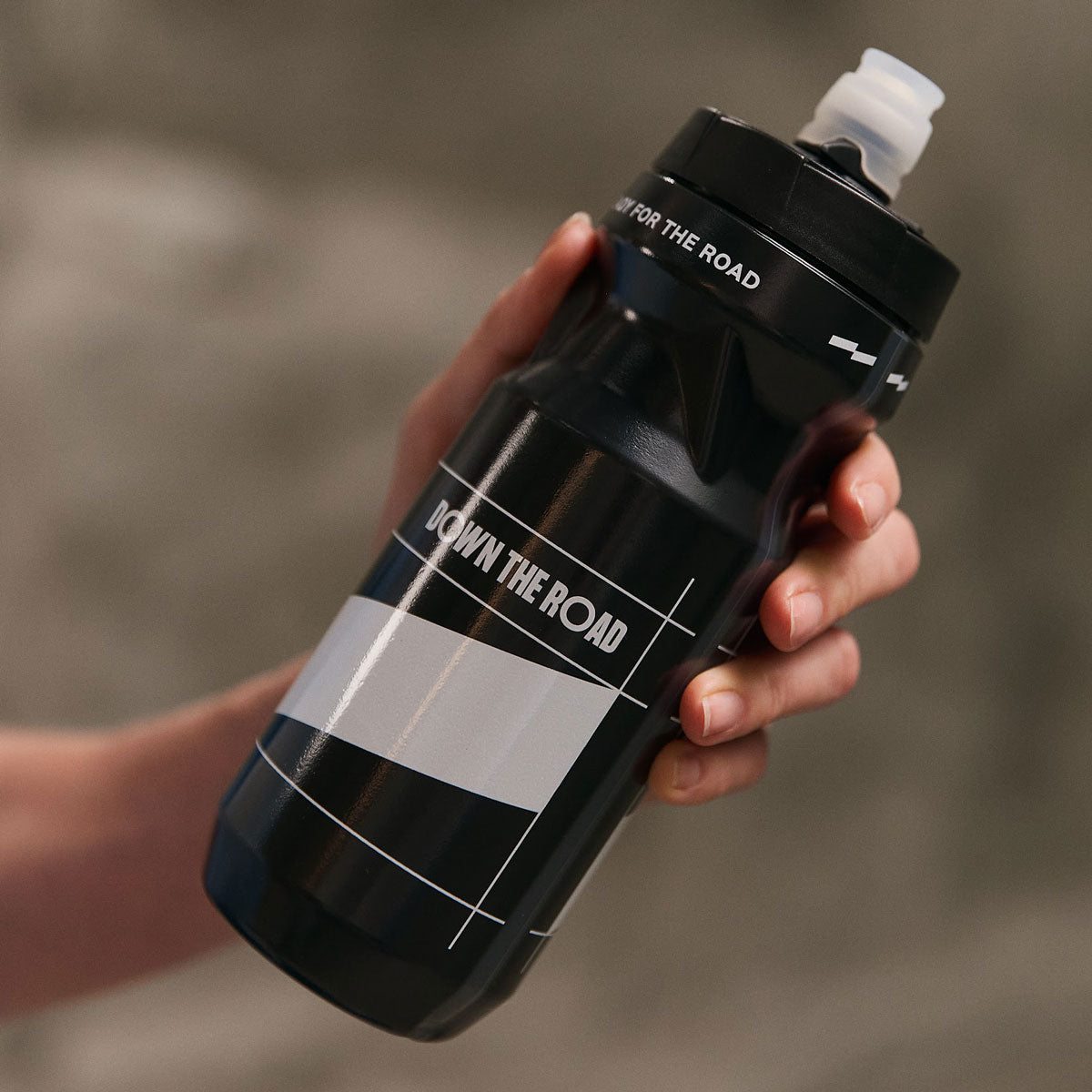
For a practical bottle-and-cage setup before an event, read Cycling Water Bottles and Cages: What You Actually Need for Long Rides.

Leave a comment
This site is protected by hCaptcha and the hCaptcha Privacy Policy and Terms of Service apply.