

Pack for the chamois, not the day count. On a six-day camp the limiting item is bib shorts — you need enough that every pair goes on dry and fully recovered, which in practice means three or four pairs rather than six. This guide covers how to work that number out, how to manage washing away from home, and how to dress for a fifteen-degree swing between a 7am rollout and a 2pm climb.
Start with the bib shorts
Three pairs is the working minimum for a week; four is comfortable. The constraint is not cleanliness, it is recovery: a chamois needs to dry completely and the fabric needs time to return to shape. A pair worn on consecutive days without full drying compresses faster, and a flattened chamois is the fastest route to a ruined third day.
With three pairs on a six-day camp you wear one, wash one, and have one drying — a rolling cycle that works provided you wash immediately after each ride rather than at the end of the day. Four pairs gives you slack for a wet day when nothing dries, which on a spring camp is a realistic possibility.
Take your best-fitting pairs, not your newest. A camp is the wrong week to discover a new chamois does not suit you. If a pair has done two seasons and the fabric has gone slack at the leg, leave it — our guide on how long bib shorts last covers the signs.
Washing and drying when you are not at home
Wash in the shower, immediately, while you are still in there. Cool water, a small amount of mild detergent, rinse thoroughly, then press the water out in a towel rather than wringing — wringing damages elastane and distorts the chamois. Hang on a hanger, not folded over a rail, so air reaches both faces.
A hotel bathroom in a humid climate will not dry a chamois overnight. If you are somewhere warm, hang kit outside on a balcony in shade; direct sun degrades elastane and fades fabric. If the room has air conditioning, kit dries faster in the airflow than anywhere else in the room.
Never put technical kit in a hotel tumble dryer, and be wary of hotel laundry services, which run hot. Full detail in our kit washing guide.
The temperature swing is the real packing problem
Spring camps in the mountains routinely run 6°C at an early start and 20°C by mid-afternoon, and you will be at altitude for part of it. That is a fifteen-degree working range inside a single ride, which no single garment covers.
The answer is not more jerseys. It is one appropriate jersey plus a layering system you can adjust without stopping and repacking — which means everything you remove has to fit in a rear pocket. Our temperature guide maps the bands; on camp you are simply covering several of them at once.
Descents are the specific risk. You will climb for forty minutes generating heat, then descend for twenty generating none, in sweat-soaked fabric. Riders get genuinely cold on camp descents far more often than they get cold on the climbs.
Warmers and a windbreaker do the fine control
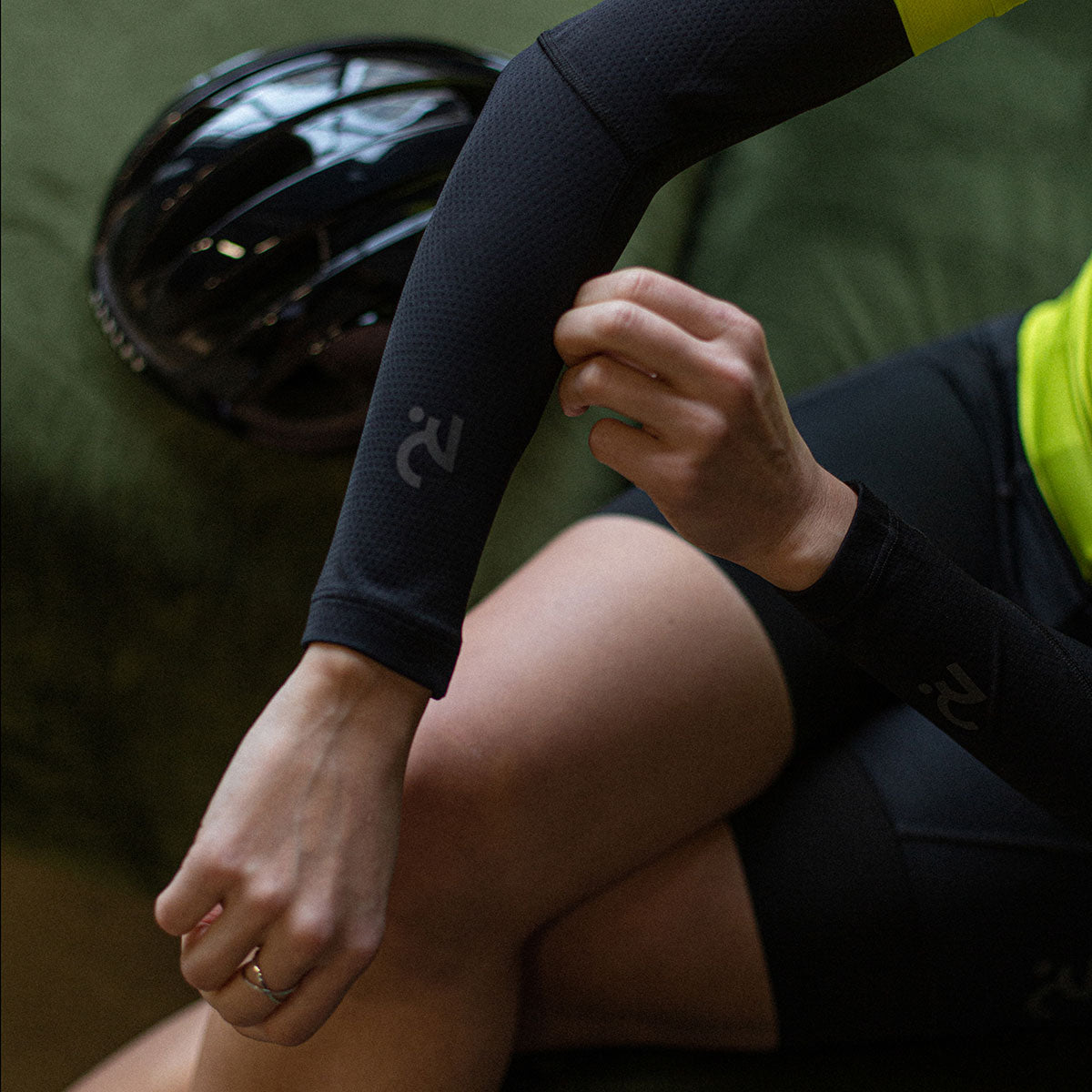
Arm warmers, leg warmers and a packable windbreaker are the three items that turn one kit into five. They weigh almost nothing, they all fit in pockets, and between them they cover roughly a ten-degree range on top of whatever jersey you are wearing.
Take one set of arm warmers, one set of leg warmers, and one windbreaker. A gilet is a reasonable fourth if you run cold, but it overlaps heavily with the windbreaker and a camp bag is not the place for redundancy.
The practical routine: start the cold morning fully covered, shed warmers into pockets as the day warms, and put the windbreaker on at the top of every descent before you start down rather than three minutes into it when you are already cold.
Jerseys, base layers and socks
Two or three jerseys is enough. Jerseys wash and dry far faster than bib shorts and they are not load-bearing in the same way, so the rotation is easy. Take one long sleeve or thermal option if the camp is early season.
Base layers matter more than jersey count. Take one per riding day if you have them — they are light, they pack to nothing, and a fresh base layer makes a reused jersey feel considerably better. This is the one item where packing generously costs almost nothing.
Socks: one pair per day plus a spare. They weigh nothing and wet socks are miserable.
What earns its place in the bag
Chamois cream, enough for every day. Camp is high volume on unfamiliar roads and it is exactly the week your skin is under most pressure. A second pair of gloves, because one pair will be wet. A cap under the helmet for sun and for keeping rain out of your eyes. Sunglasses with a spare clear or low-light lens for early starts and tunnels.
A small bag of detergent sachets. Two spare pairs of socks. Something warm and dry that is not cycling kit, for the hour after each ride — you will be sitting outside a cafe at altitude in a wet base layer otherwise.
What to leave at home
A pair of bib shorts for every day. A jersey for every day. Anything you have not ridden in before. Deep winter kit, unless the camp is genuinely in winter — thermal bib tights are heavy, bulky, and on most spring camps get worn once or never, with leg warmers doing the job better.
The general rule: a camp bag rewards a small number of items that work together across conditions, not a large number of items each covering one condition. Every garment you pack should be usable on at least three of the six days.
FAQ
How many bib shorts do I need for a week-long training camp?
Three as a working minimum, four if you have them. The limit is drying time and chamois recovery, not cleanliness — each pair needs to go on completely dry, and a chamois worn damp compresses faster and gets less comfortable as the week goes on.
Can I wear the same bib shorts two days in a row?
Only if they have been washed and dried completely, which rarely happens overnight in a hotel. Riding in a damp chamois raises the risk of skin problems and flattens the padding faster. If you have to, choose your oldest pair for the second day rather than your best.
How do I dry cycling kit in a hotel room?
Press the water out in a towel, hang on a hanger so air reaches both sides, and put it in the airflow — near air conditioning, or outside in shade if it is warm. Avoid direct sun, tumble dryers and hotel laundry services, all of which run too hot for technical fabrics.
Do I need bib tights for a spring training camp?
Usually not. Leg warmers over bib shorts cover the same range with far more flexibility and take a fraction of the space, since you can remove them mid-ride when the temperature climbs. Bib tights only make sense if morning starts are consistently below about 5°C.
What should I carry in my pockets on a camp ride?
Whatever you have shed. Plan the ride assuming arm warmers, leg warmers and a windbreaker all end up in the pockets by mid-morning, alongside food and a phone. If your jersey pockets cannot take that, you will end up wearing layers you do not need.
See the bib shorts range at /collections/bib-shorts.
DTR — performance cycling and triathlon apparel, designed and developed in Ukraine.
For bottle and refill planning on repeat ride days, read Cycling Water Bottles and Cages: What You Actually Need for Long Rides.

Leave a comment
This site is protected by hCaptcha and the hCaptcha Privacy Policy and Terms of Service apply.