

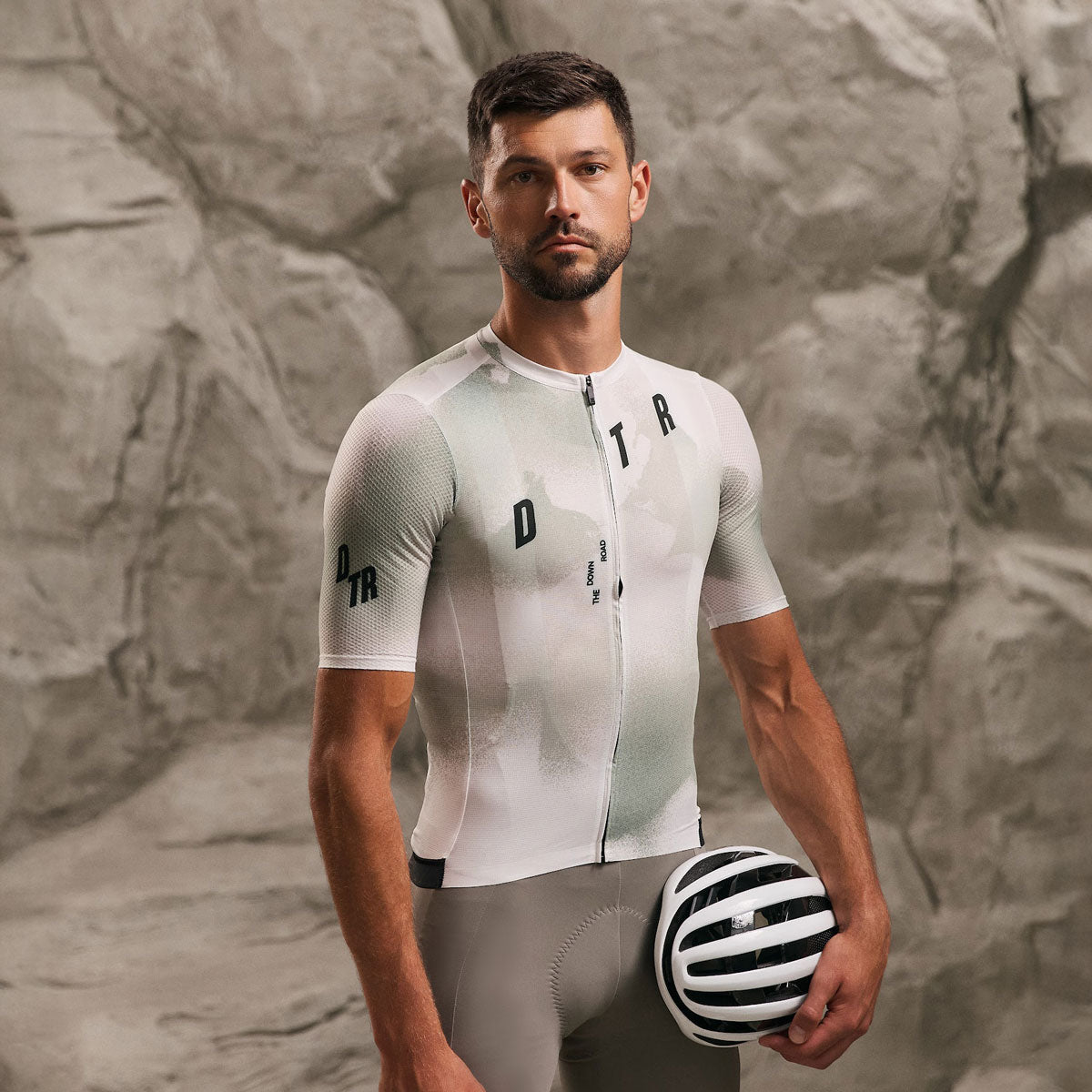
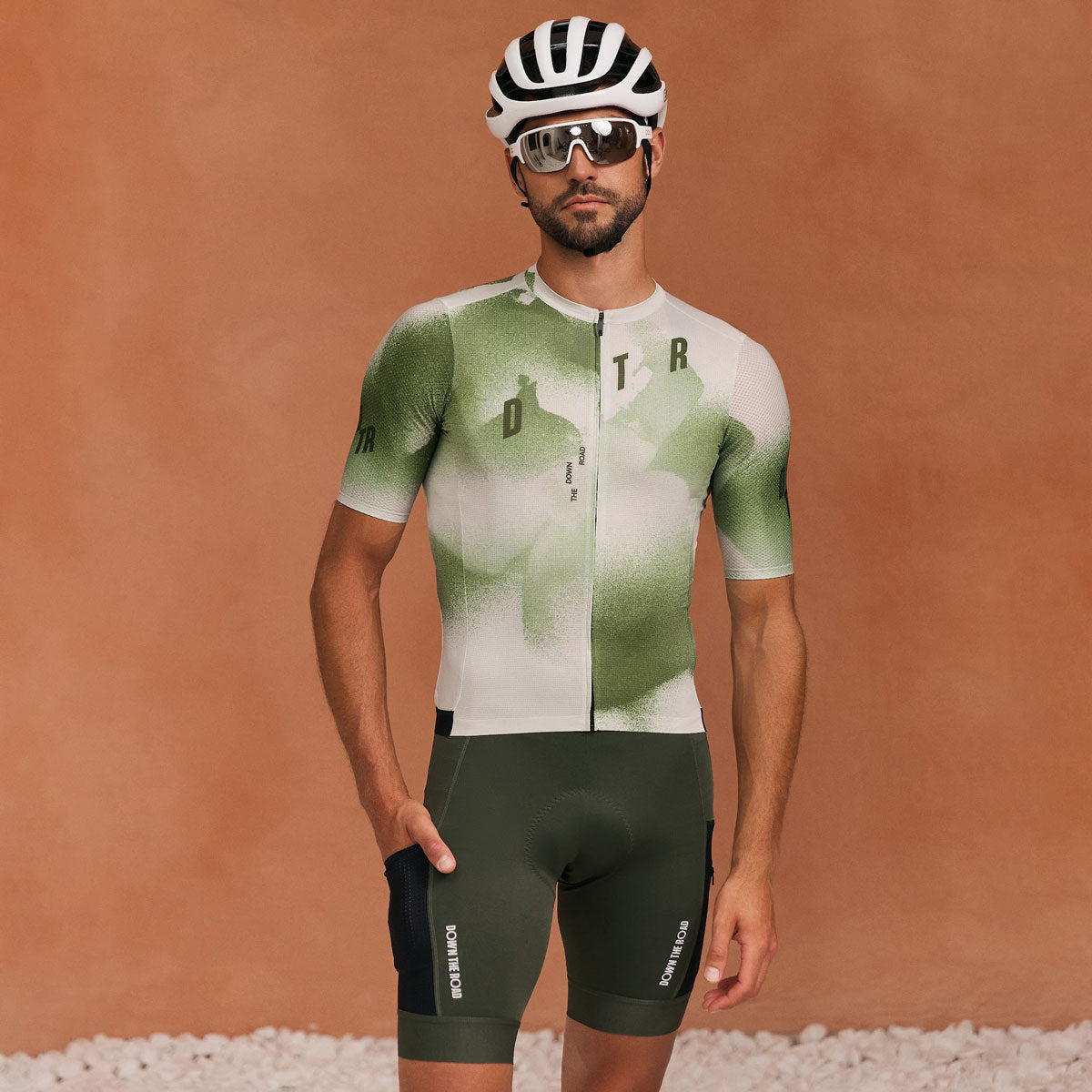
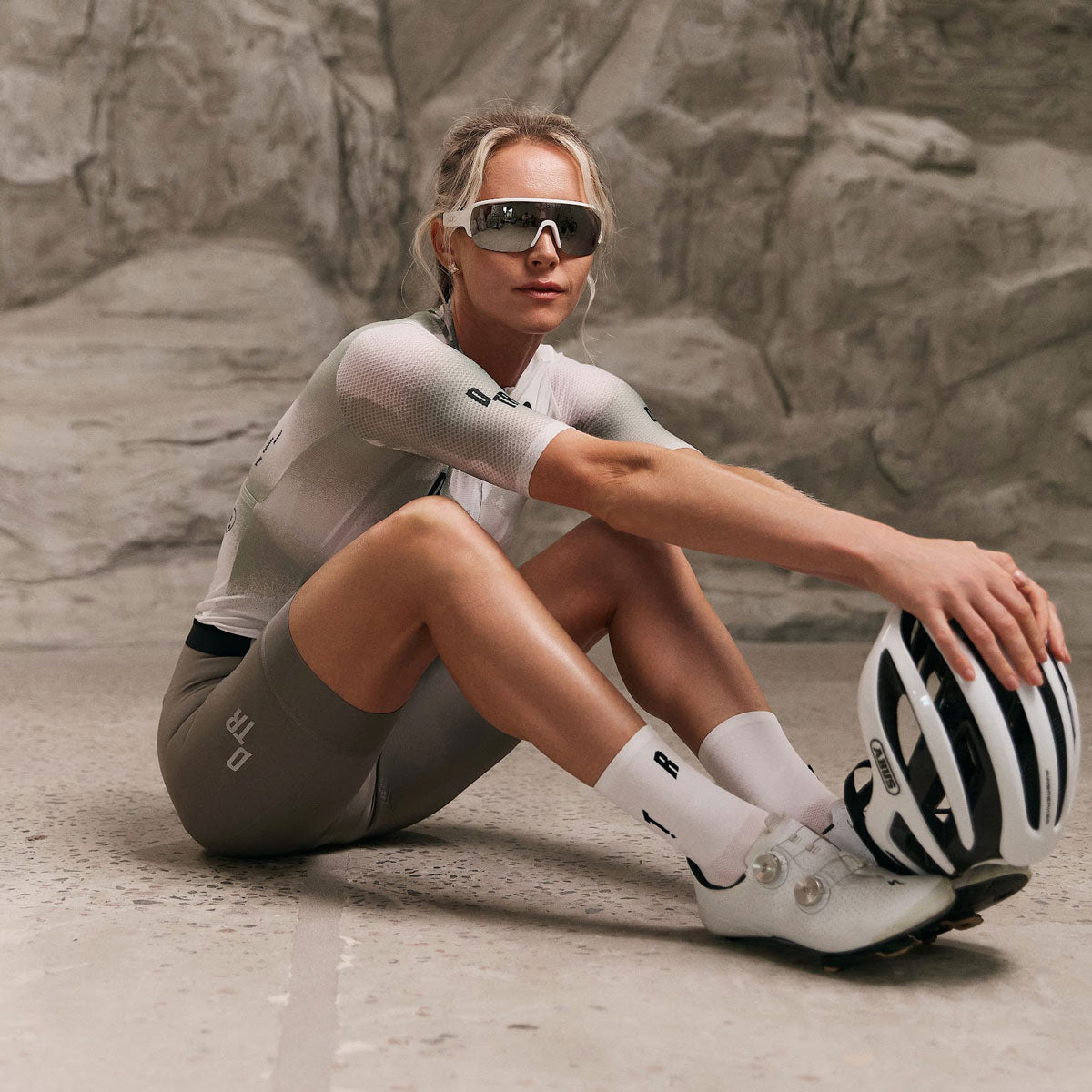
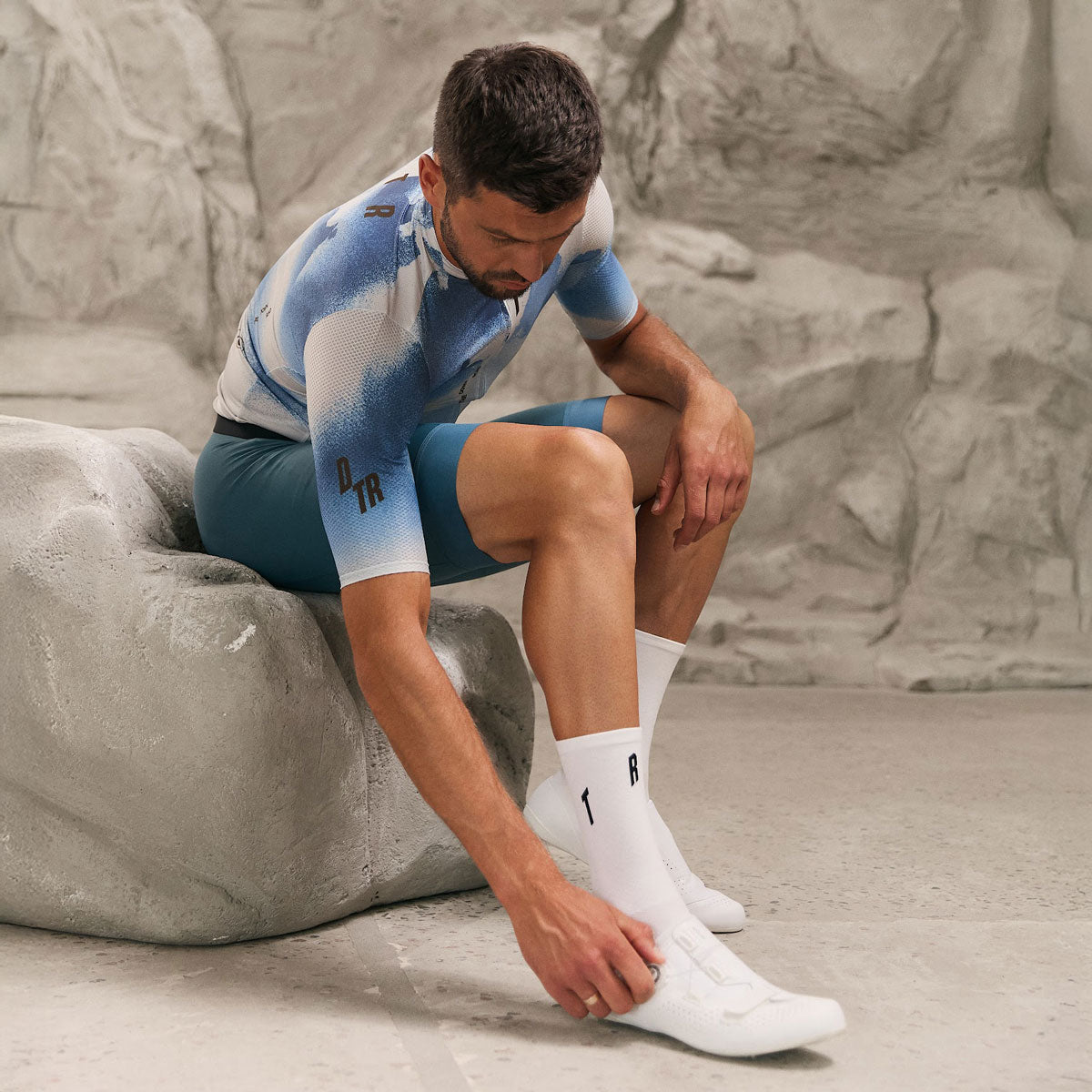
Wear a trisuit, or tri shorts with a technical top — and choose the thinnest pad you can tolerate on the bike. The thing that separates duathlon from triathlon is that you start dry and you run twice, which reverses the usual logic about padding and fit. This guide covers the kit choice, the pad question, race belt placement, and how to dress for the cold spring mornings duathlons tend to land on.
What is a duathlon?
A duathlon is run, bike, run — no swim. A sprint duathlon is typically a 5 km run, a 20 km bike and a 2.5 km run. A standard duathlon roughly doubles that: 10 km run, 40 km bike, 5 km run. There are two transitions, both from and back to running, and the whole race is done in one set of clothing.
That last point is what drives every kit decision. You are not managing wet-to-dry, you are managing a garment that has to be comfortable running hard, then aerodynamic and padded enough on the bike, then comfortable running hard again on tired legs.
One-piece or two-piece?
A trisuit is the faster and simpler choice, and it is what most competitive duathletes race in. Nothing rides up during the runs, there is no gap at the waist on the bike, and there is nothing to adjust in transition when your heart rate is at threshold and your hands are unreliable.
Tri shorts and a separate technical top make sense in two cases: if the weather is genuinely cold and you want to change or add a layer between disciplines, and if you have not yet found a trisuit that fits your torso length. A one-piece that is too short in the body will pull on the shoulders every stride of the second run. Our comparison of trisuit vs tri top and shorts covers the tradeoffs in more detail.
What you should not race in: a cycling jersey and bib shorts. Bib straps are slow and awkward to deal with, a road chamois is far too thick to run in, and a jersey with loaded rear pockets bounces on the run.
Why a thinner pad wins here
In duathlon the bike leg is bracketed by running, so the pad has to be judged as much on how it runs as on how it rides. A thick chamois chafes between the legs once you are running on it, holds heat, and is noticeably present for the whole second run.
A duathlon bike leg is also short relative to a triathlon or road race — 20 km at sprint distance, 40 km at standard — and it is ridden hard and mostly in one position. That is not enough time on the saddle to need a road-depth chamois. A thin, dense tri pad is the correct tool: enough to take the edge off, thin enough to disappear on the run.
Density matters more than thickness here, and the two are not the same thing. Our pad guide explains how to read the difference.
The race belt question
Yes, use one. A race belt lets you spin your number from back to front between disciplines without pinning anything to a garment you have to run in twice. Most duathlons want the number visible on the back for the run and the front for the bike — check your race instructions, because it varies.
Pinning a number directly to a trisuit is a mistake you make once. The pins tear the fabric, the paper number goes soft with sweat, and it flaps against your thigh for two runs. A belt costs almost nothing and solves it permanently.
Set the belt before the start, sitting on your hips rather than your waist so it does not ride up over your ribs on the run.
Dressing for a cold start
Duathlons cluster in early spring, which means the first run often starts at 5–10°C. The trap is dressing for the start line instead of for the effort. You will be warm within ten minutes of the first run, and then genuinely cold on the bike, which is where most of the exposure happens.
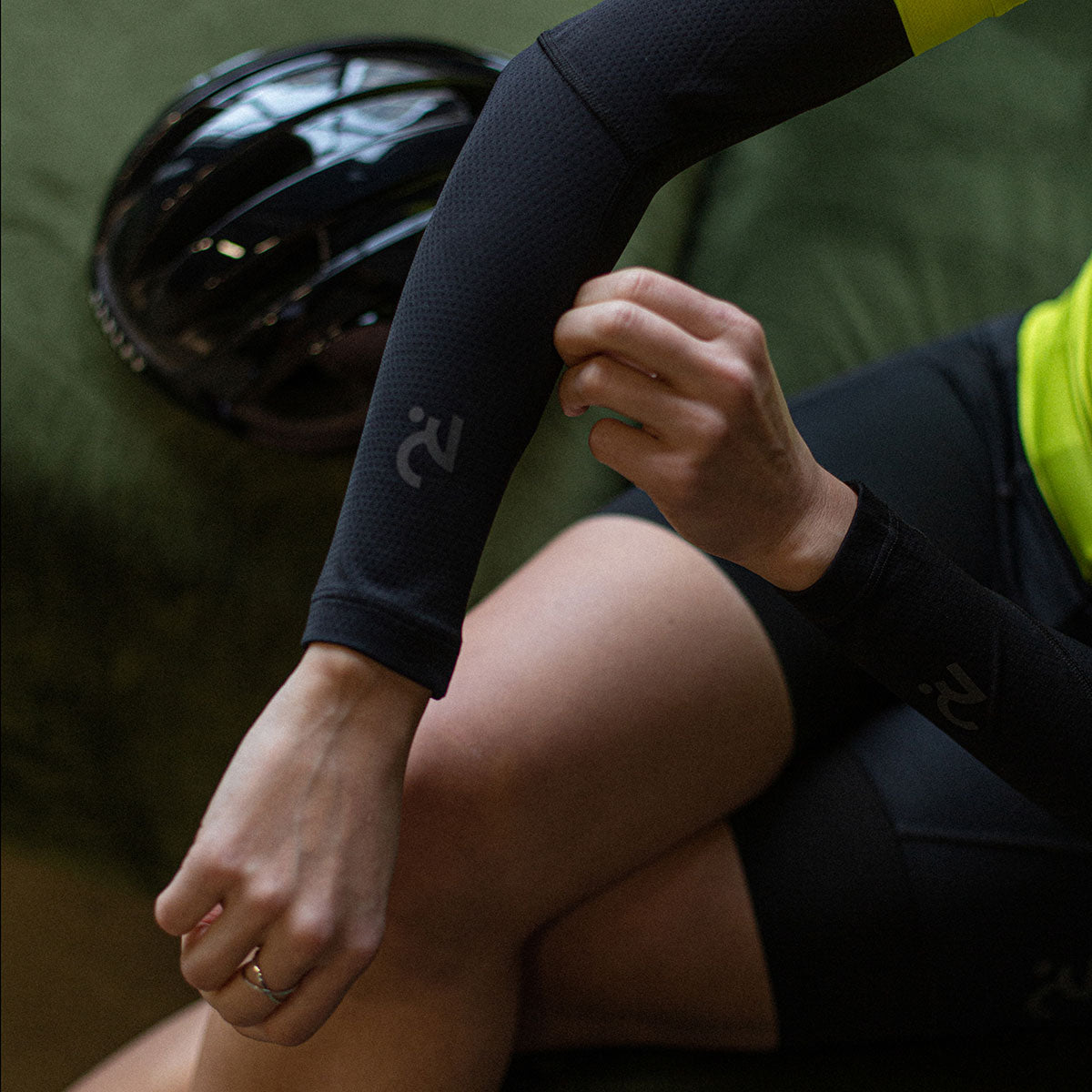
The system that works: race the trisuit, and add arm warmers plus a lightweight gilet that you can carry through transition. Arm warmers can be pushed down or removed on the run without stopping, and a gilet goes on in T1 in a few seconds and comes off in T2 — or stays on, if the bike leg was colder than expected.
Do not start the first run overdressed. Anything you have to take off mid-run and carry is a worse problem than being briefly cold on the start line.
Sprint or standard: what changes
Very little, and that is the useful thing to know. The kit is the same; the tolerance is not. At sprint distance you can get away with a slightly imperfect fit because you are only in it for an hour or so. At standard distance a seam in the wrong place, a pad that is fractionally too thick, or a leg gripper that is slightly tight will have three or four hours to make itself known.
If you are stepping up to standard distance, do a full brick session in the exact kit you plan to race in — run, ride, run, without changing. That is the only way to find the seam that only becomes a problem on the second run.
Shoes, socks and the small stuff
Elastic laces on the run shoes, so you can get in and out of them without sitting down. Socks are a personal call: sock-free is faster through transition, but because duathlon starts dry, there is far less reason to skip them than in triathlon. Most people are better off wearing socks and running comfortably.
A cap or visor if it is bright, sunglasses you can wear on both disciplines, and gloves only if the bike leg is genuinely cold — they are one more thing to manage in T2. Lay everything out in transition in the order you will need it and leave it alone. Our transition checklist transfers almost entirely to duathlon, minus the swim gear.
FAQ
Can you wear a trisuit for a duathlon?
Yes, and it is the standard choice. A trisuit stays put through both runs, has no waist gap on the bike, and needs no adjustment in transition. Because there is no swim, you can also pick a suit with slightly more coverage or a longer zip if you prefer.
What do you wear on the bike leg of a duathlon?
The same thing you ran in. There is no change of clothing in duathlon — you add or remove layers such as arm warmers or a gilet in transition, but the trisuit or tri shorts and top you started in stay on for the whole race.
Do you need a race belt for a duathlon?
Not mandatory, but strongly recommended. It lets you move your number between front and back for the bike and run without pinning anything to a garment you run in twice. Check your race instructions for which side needs to be visible when.
Should I wear a padded chamois for a duathlon?
Yes, but a thin one. A tri pad is designed to be run in; a road chamois is not, and will chafe and hold heat through the second run. The bike leg is short enough that you do not need road-depth padding.
What should I wear for a cold duathlon?
Trisuit plus arm warmers and a lightweight gilet, both of which you can add or shed in transition. Dress for the effort rather than the start line — you will be warm within ten minutes of the first run, and the bike leg is where you actually get cold.
See the trisuit range at /collections/trisuits.
DTR — performance cycling and triathlon apparel, designed and developed in Ukraine.

Leave a comment
This site is protected by hCaptcha and the hCaptcha Privacy Policy and Terms of Service apply.