

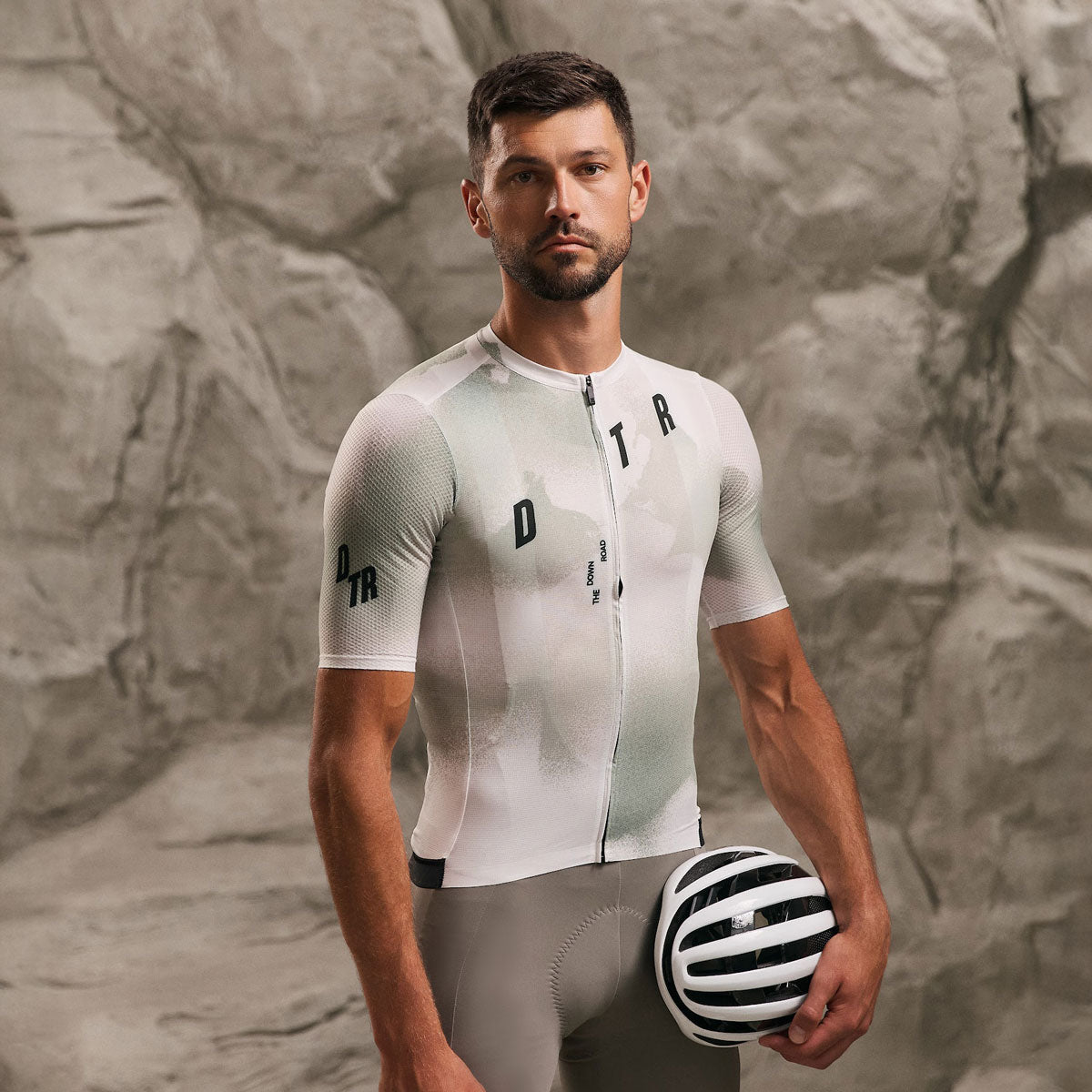
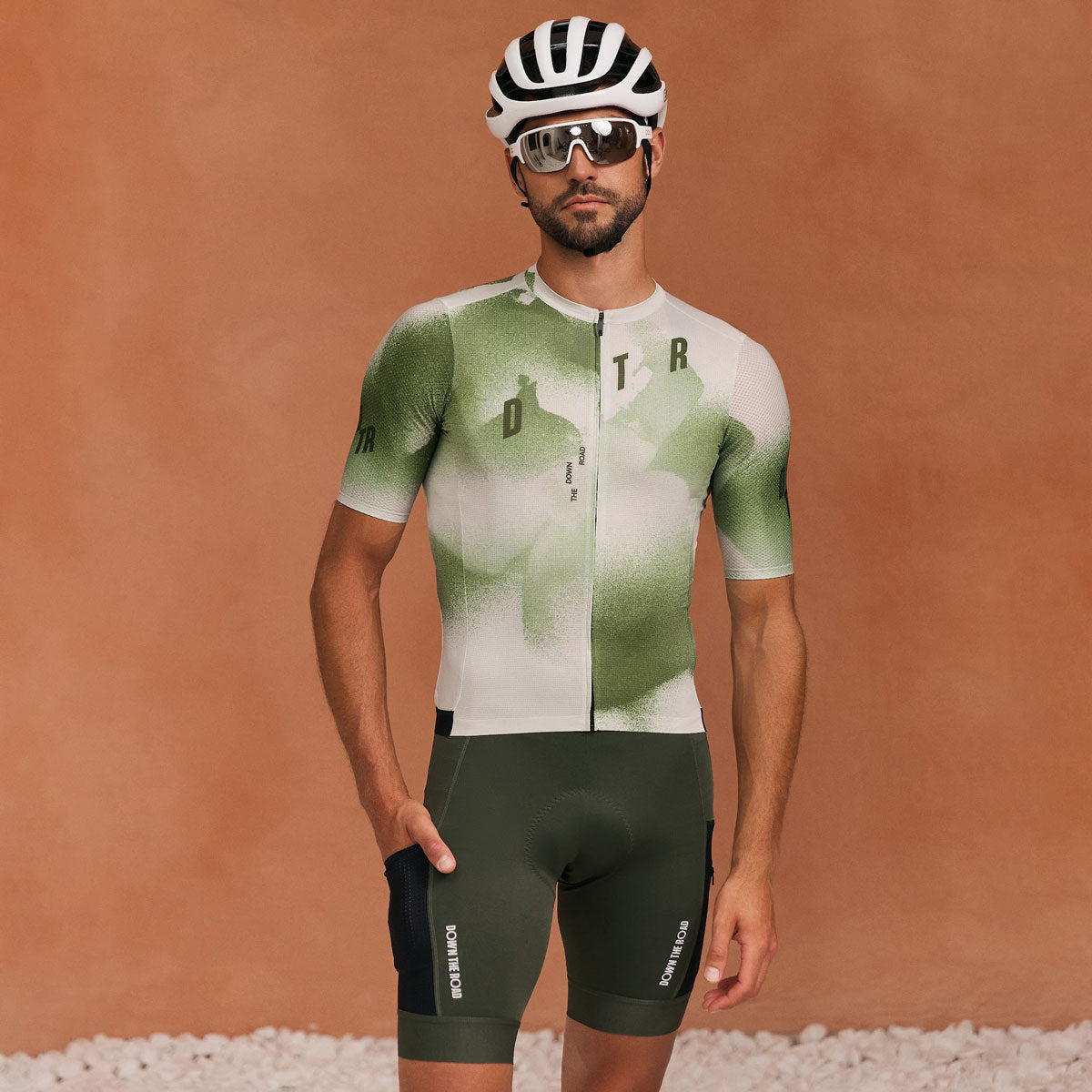


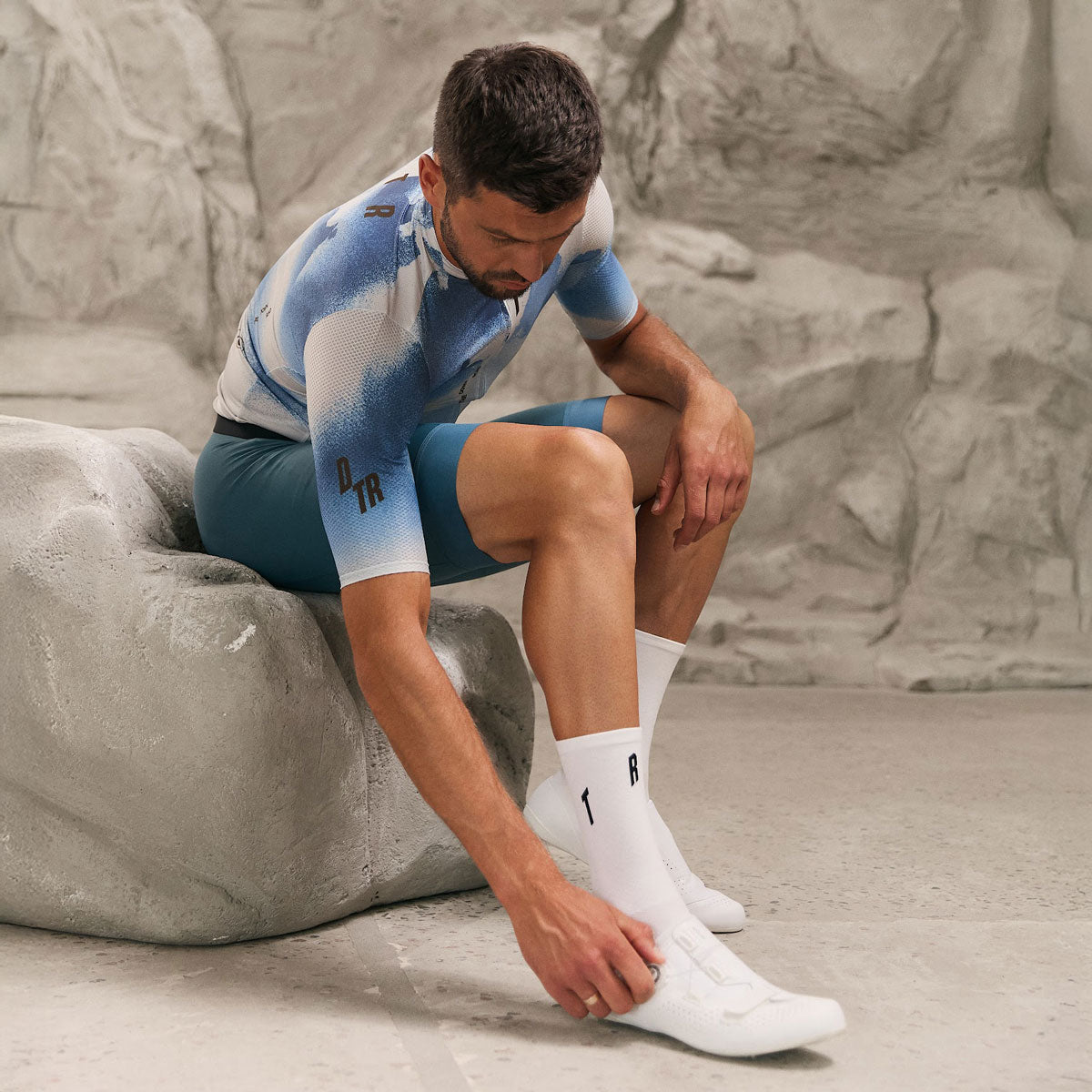
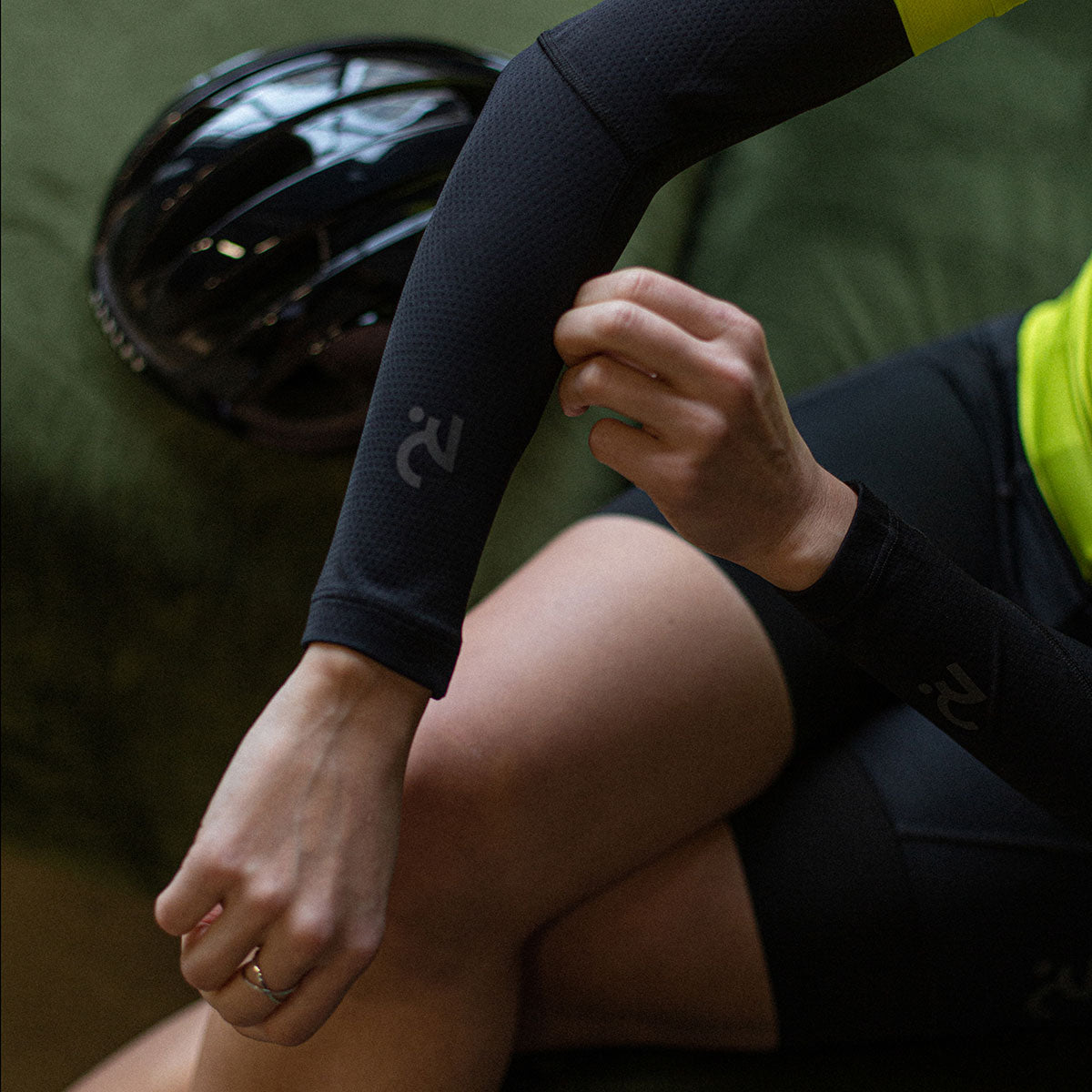
Cycling tan lines form where your kit ends: mid-bicep at the jersey sleeve, mid-thigh at the short, wrist at the glove. They're so sharp because good kit sits in exactly the same place for hours at a time, ride after ride. This guide covers why riders wear them with pride, how to keep them crisp — and how to protect the skin that earns them.
Why the lines are so sharp
A race-fit jersey and bib shorts don't shift as you ride — gripper hems hold the sleeve and leg in one fixed line, so the boundary between covered and exposed skin never blurs. Add a few hundred hours of summer riding with the same kit lengths and the edge gets printed in.
Casual clothing moves; that's why beach tans fade at the edges and cycling tans don't. The sharper the line, the more consistently the rider has been putting in the hours — which is exactly why the culture reads it the way it does.
The badge-of-honour thing
In road cycling, tan lines are shorthand for time on the bike. A crisp line at the sleeve says summer miles; matching lines at wrist and thigh say a full season of them. Nobody sensible plans their riding around a tan — but nobody with a sharp one is embarrassed either. It's the one status symbol in cycling you can't buy.
Keeping them crisp
If the lines are coming anyway, consistency is what keeps them clean: same sleeve length, same short length, same glove choice across your kits. A wardrobe that mixes sleeve cuts blurs the line at the bicep; jumping between short lengths does the same at the thigh.
That's an argument for a kit range with consistent cuts — a matching jersey and bib short lineup keeps every edge in the same place. Sunscreen doesn't erase the contrast, it just slows the exposed side down — which is the point.
Avoiding them
If you'd rather not carry the stripes into a wedding season, the tools are coverage and sunscreen. Sun sleeves bring the covered line down to the wrist, high SPF applied properly (and reapplied on long rides) softens the contrast, and riding earlier or later in the day cuts the strongest exposure. Full strategy in cycling sun protection.
What doesn't work: skipping sunscreen on already-tanned skin. Tan is not protection worth the name — it behaves like very low SPF.
The skin-safety part
A tan line is a UV exposure line — the visible record of radiation your skin absorbed. Wear proper sunscreen on exposed skin even when chasing the crisp line; it darkens more slowly but with far less damage. And watch your skin: new or changing spots on high-exposure areas like forearms, neck and ears are worth showing to a doctor. Riders log more UV hours than almost anyone.
FAQ
How long do cycling tan lines last? A full-season line typically shadows into winter and fades by spring — faster with exfoliation, slower the longer the exposure ran. Deep multi-year lines can persist as subtle tone differences.
Do the pros care about tan lines? Famously. Sharp lines are peloton-standard to the point of ritual — but remember the same riders also sit under team sunscreen protocols. Imitate both halves.
Can I even out a cycling tan? Time off the bike, sunscreen discipline on the dark zones and short sleeves off the bike will converge things over weeks. There's no fast, skin-safe shortcut.
Does sunscreen under kit make sense? Under lightweight summer fabric, a light layer at the hems helps — thin stretched fabric lets some UV through, which is how faint gradient lines happen.
Consistent cuts keep every line where you left it: /collections/cycling-jerseys.
DTR — performance cycling and triathlon apparel, designed and developed in Ukraine.

Leave a comment
This site is protected by hCaptcha and the hCaptcha Privacy Policy and Terms of Service apply.