

A skinsuit is the fastest thing you can wear for a time trial, but a close-fitting aero jersey over bib shorts gets you most of the way there at club level. Clothing matters more here than in any other road discipline, because you hold one position into the wind for the entire effort and there's no bunch to hide in. This guide covers the top half, the shorts, the socks, and how to handle a cold start without wrecking your position.
Why fabric does more work here than anywhere else
On a time trial you're alone against the air for the whole ride, and at racing speed most of your effort goes into pushing air aside. That makes surface — how smooth your clothing is and how little of it flaps — a bigger lever than it ever is in a bunch. The same kit that feels fine on a group ride can cost you real time here.
Two things drive it. Loose fabric flutters, and fluttering fabric drags. And every edge — a rolled sleeve, an open collar, a pocket flap — creates turbulence that the air behind you has to sort out. Nothing else in your kit choice comes close to the difference between tight and loose.
The top half: tight, smooth, nothing loose
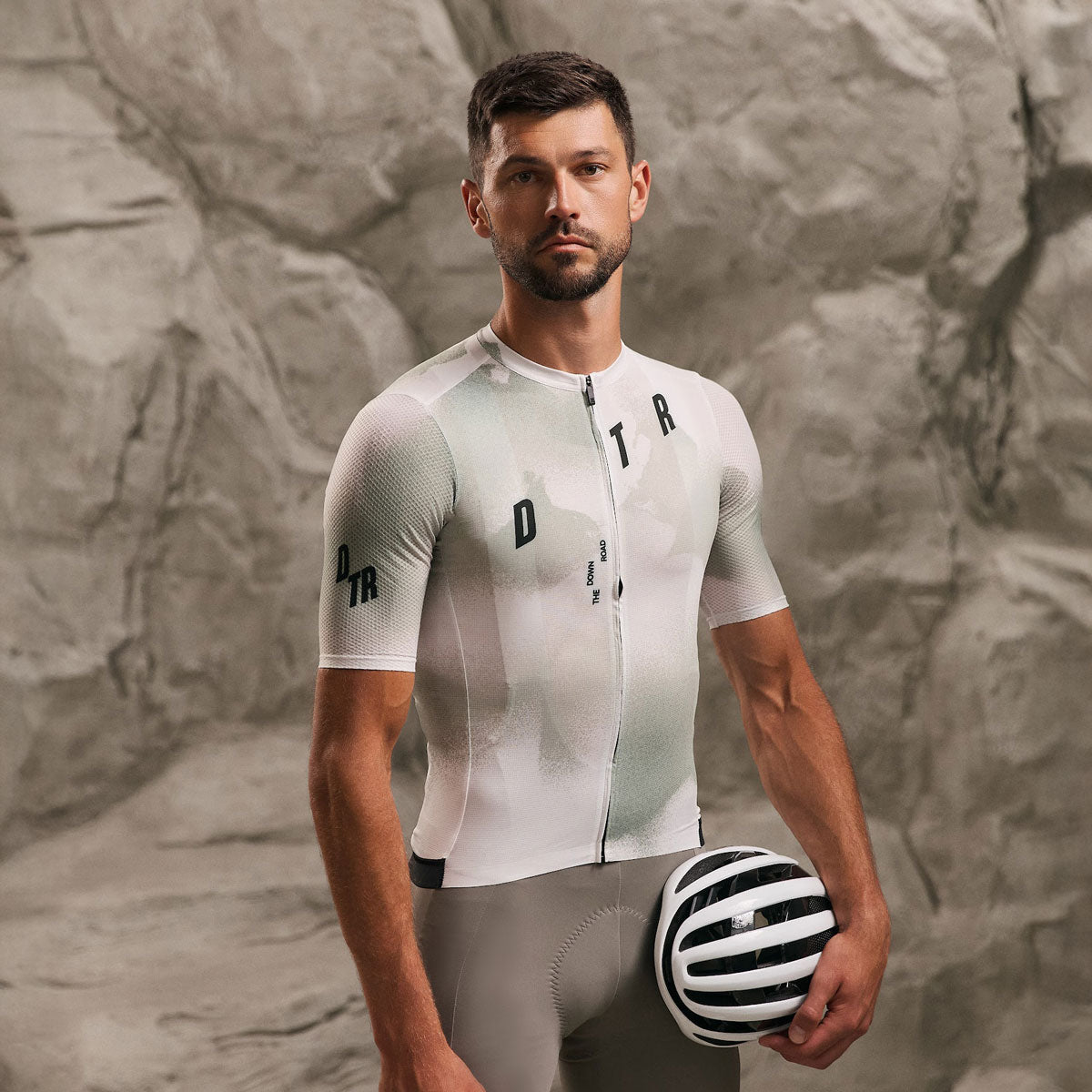
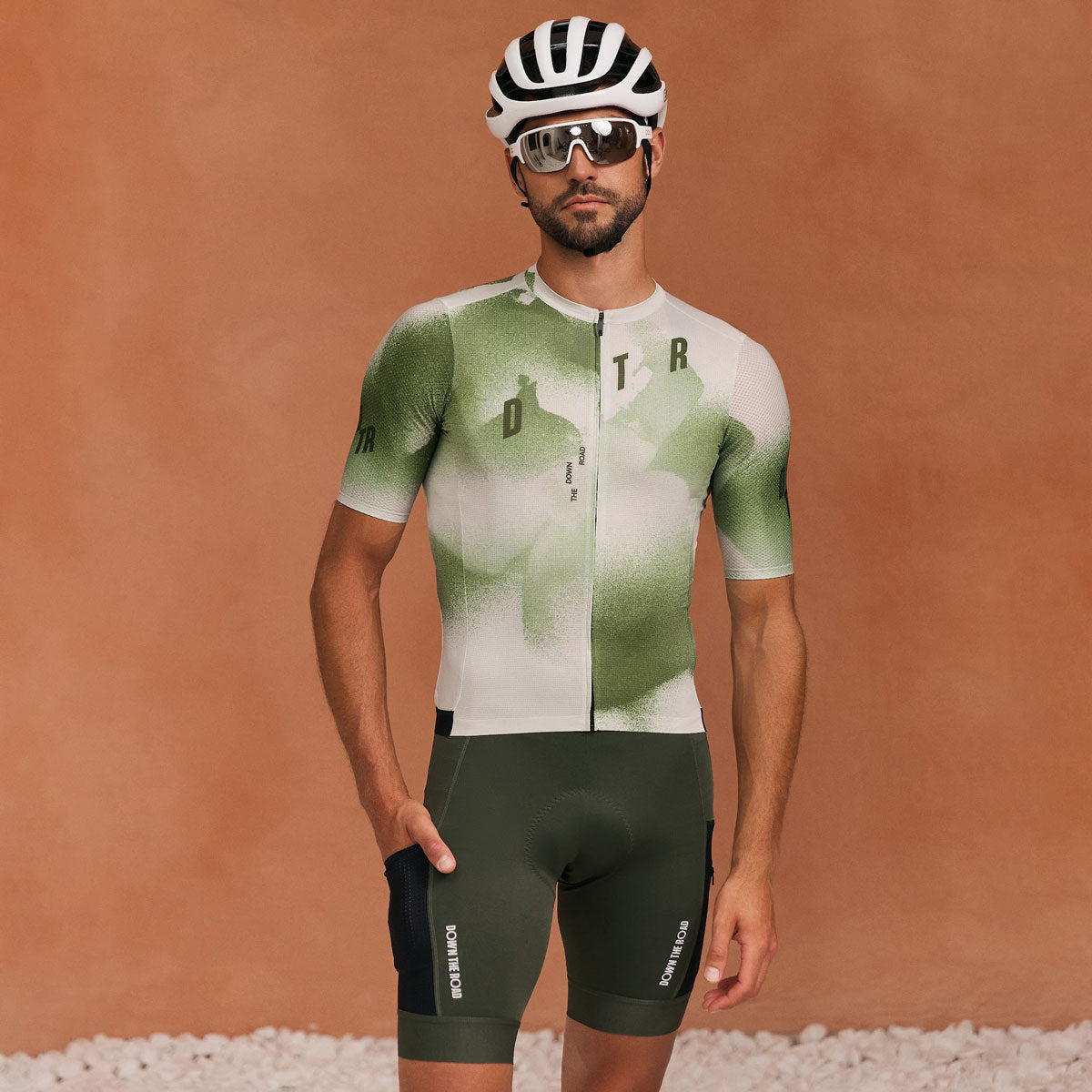
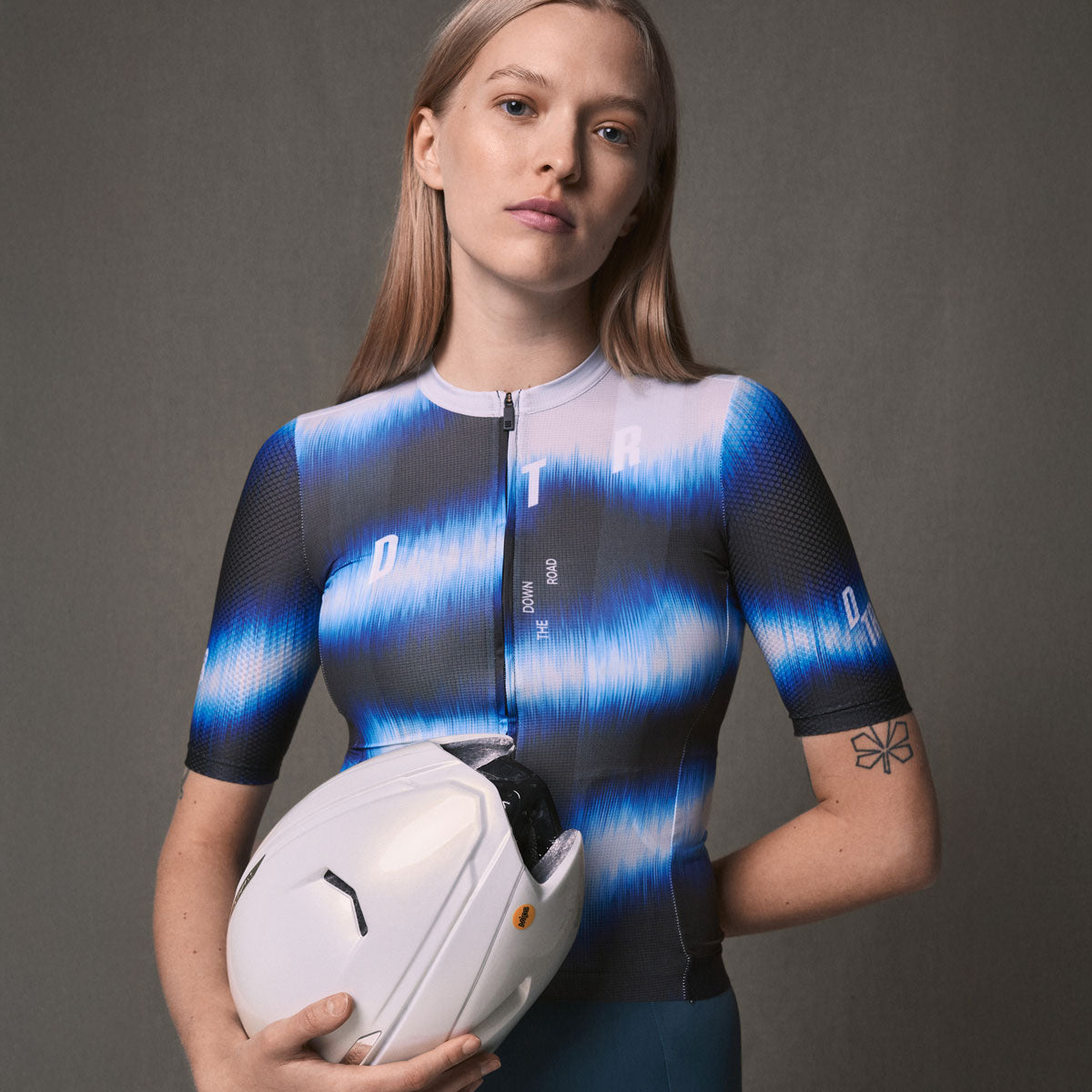
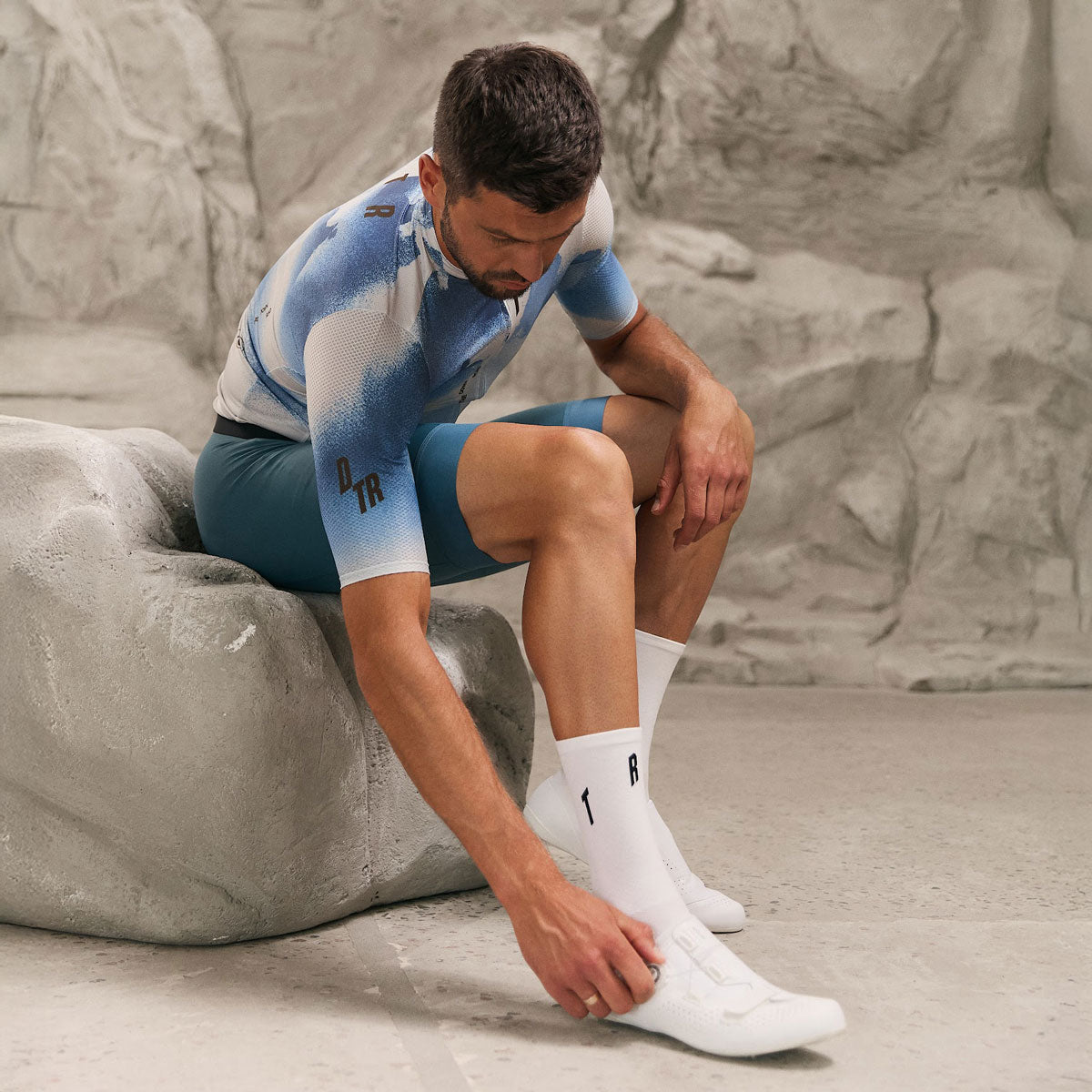
The fastest top you own is the one that fits closest with the fewest open edges. That means an aero jersey with a race-fit cut, a full-length zip closed to the neck, and sleeves that end mid-bicep with a grip rather than a loose hem. Textured aero sleeve panels help, but fit does most of the work.
If you only own a standard jersey, wear it a size down from your everyday fit rather than your usual size, empty the pockets completely, and close the zip fully. An empty pocket lies flat; a loaded one is a sail. That single change costs nothing and is worth more than most upgrades you could buy for the same ride.
Underneath, a lightweight base layer is fine and often faster than bare skin because it smooths the surface under a jersey. Skip anything with a visible seam ridge across the chest.
Do you need a skinsuit?
For a club ten or a local open, no. A skinsuit is genuinely faster — one piece, no waist join, no jersey hem to flap — but the gap between a skinsuit and a well-fitted aero jersey with an empty pocket and a closed zip is smaller than the gap between that jersey and a loose club jersey. Fix the loose fit first.
If you're riding national-level events or chasing a course record, a skinsuit is the right purchase. Below that, the honest ranking is: tight kit, then position, then equipment, then a skinsuit. Most riders reverse that order and buy the suit before they've fixed the sleeve that's still flapping.
Shorts and socks
Wear your normal race-fit bib shorts. There is no time-trial-specific short that will do anything a good pair doesn't already do — the chamois still needs to hold position, the leg gripper still needs to sit flat, and a short that's comfortable for four hours is comfortable for twenty minutes. Don't experiment on race day.
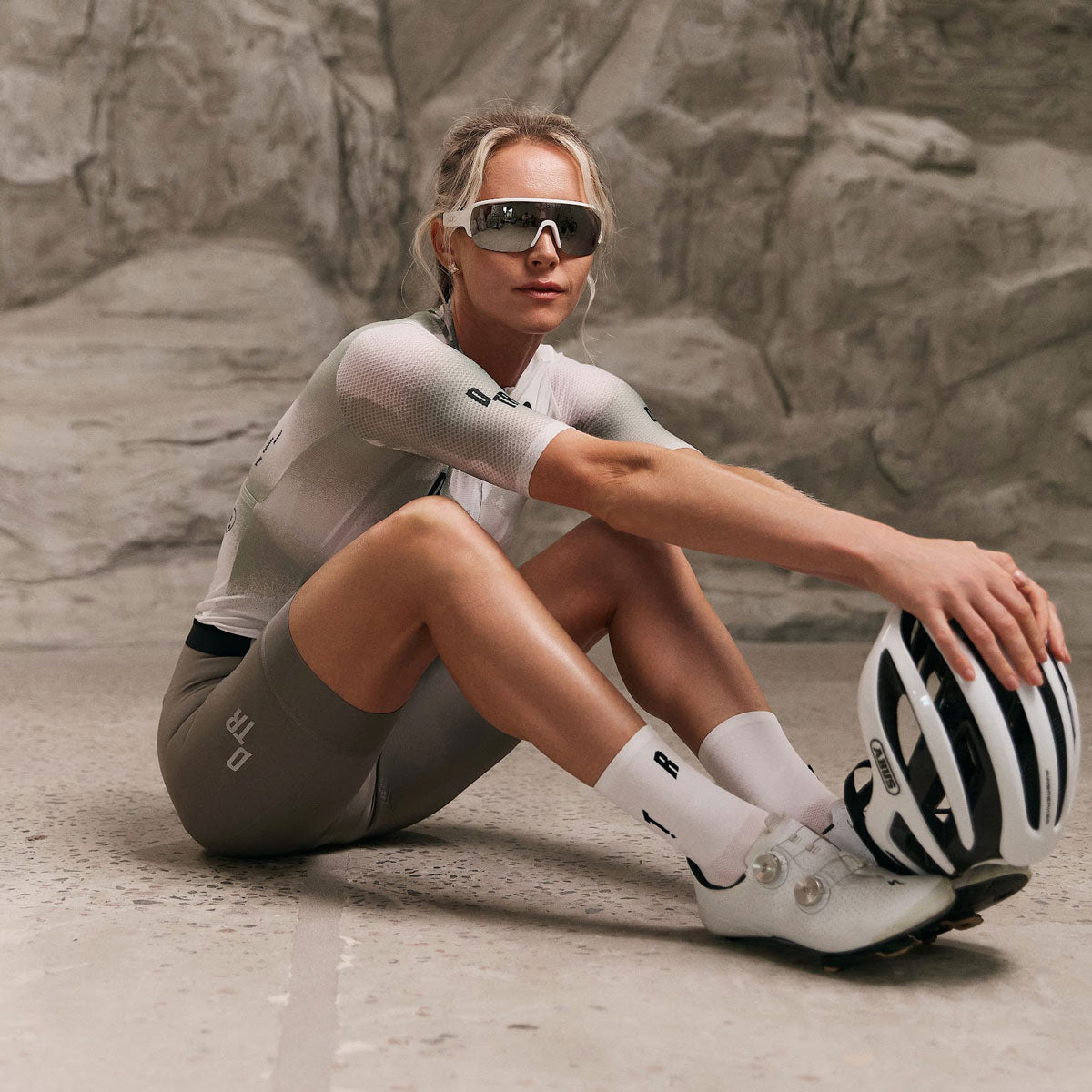
Socks are the one small item worth thinking about. A taller, textured sock trips the airflow at the ankle in a way that shrinks the wake behind your leg, and it costs almost nothing. Check the event's rules on sock height before you rely on it, because governing bodies cap it and the limit has changed more than once. Overshoes smooth the shoe closure and are worth wearing even on a warm day.
Cold starts without losing the shape
The problem with a cold morning time trial is that everything you add for warmth adds surface and looseness. The fix is to warm up in layers you take off before the start, then ride in the minimum you can tolerate for the twenty to sixty minutes you're actually racing.
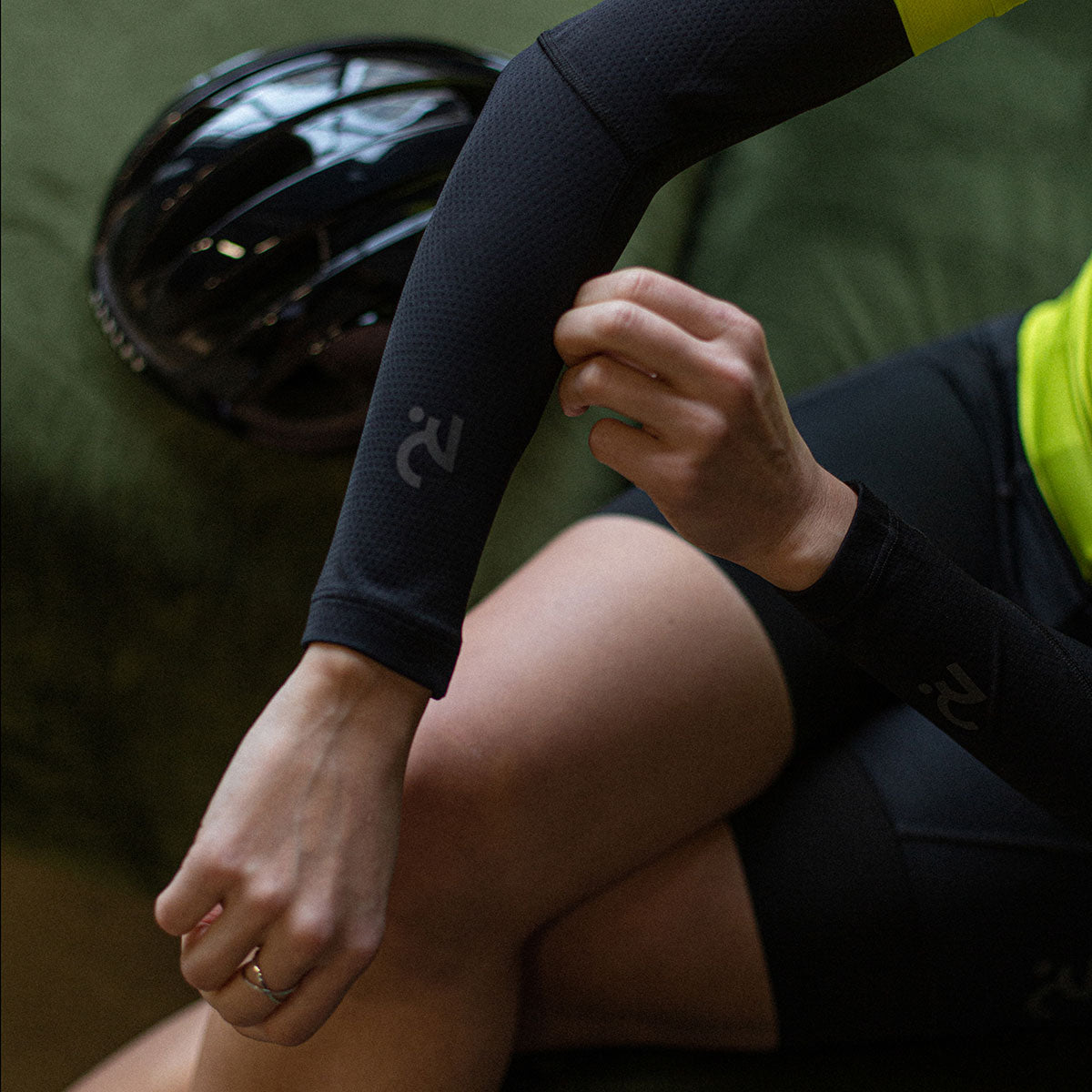
On a genuinely cold start, arm warmers under a closed jersey are the least costly addition — they're close-fitting and they don't flap the way a gilet or a jacket does. A long sleeve aero jersey is better again if you have one. What doesn't work is a windbreaker over the top: it billows, and the time it costs outweighs the comfort on anything shorter than an hour.
Remember you'll be warmer than you expect once the effort starts. Dress for ten minutes in, not for the start line.
What to leave at home
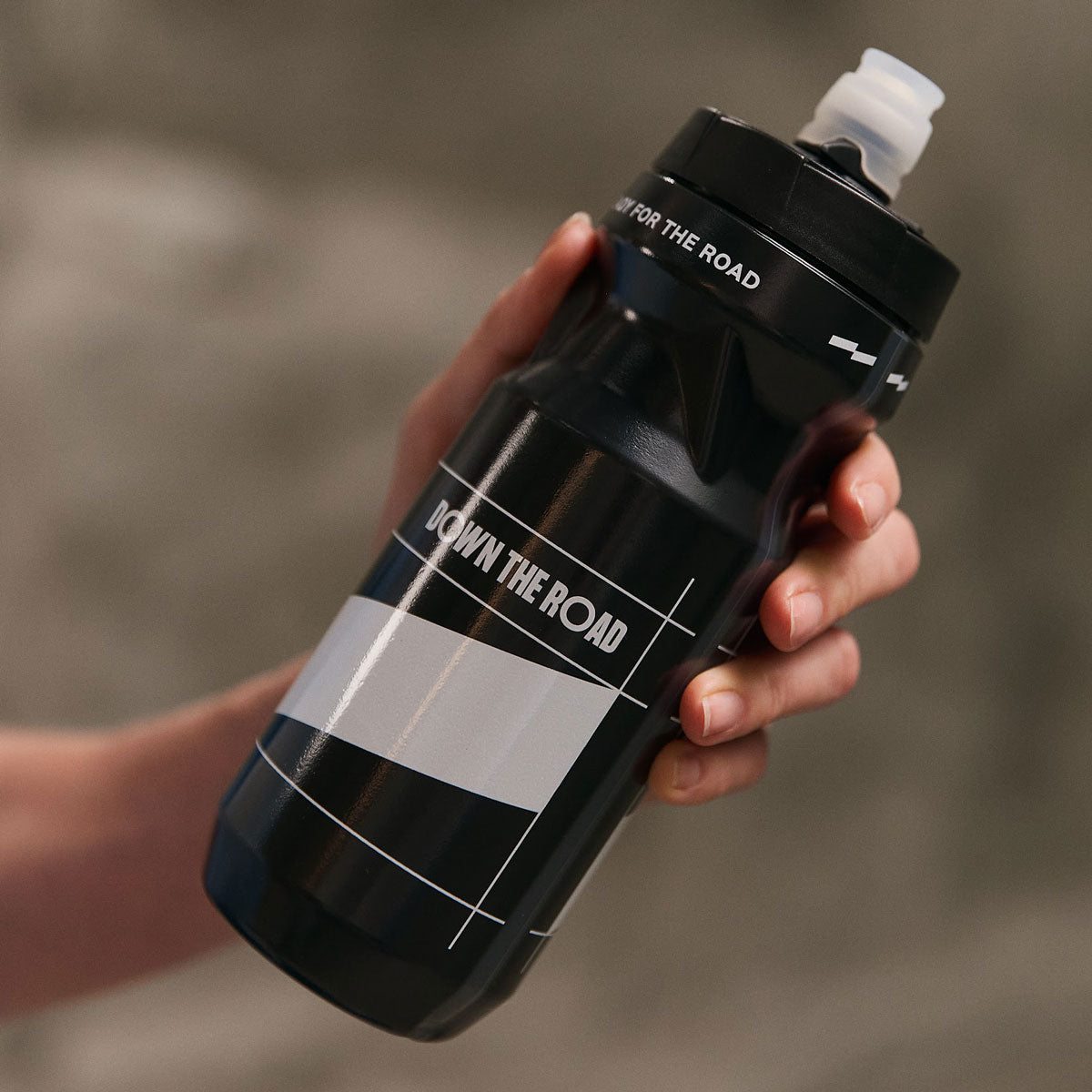
A loaded jersey, a saddlebag, a loose gilet, and anything you haven't ridden before. A time trial is short enough that you don't need food or spares in most events, and every item you carry is both weight and surface.
Also leave the untested kit. New shorts, new socks and a new base layer on race morning is how you find out about a seam you'd never noticed. Race in what you've trained in.
FAQ
Can I race a time trial in a trisuit?
Yes, and it's a good option if you own one. A trisuit is one piece with no waist join and a thin chamois that's fine for the distance most time trials cover. Check your event's rules — some road time trials require a rear number to be visible and pockets can affect where it sits.
Does sock height actually make a difference?
Enough to be worth the price of a pair of socks, and the mechanism is well understood. Treat any precise watt figure you see quoted with suspicion, and check the height limit for your event.
Aero jersey or long sleeve for a cold morning?
Long sleeve if you have it, arm warmers under a short sleeve if you don't. Both beat adding a layer on top.
Should I wear a base layer?
Yes, a lightweight one. It moves sweat off your skin and gives the jersey a smoother surface to sit on.
Do I need a different chamois for a time trial?
No. Ride the bib shorts you train in. Twenty to sixty minutes is well inside what any decent chamois handles.
Start with the top half: the aero and race-fit jersey range is at /collections/cycling-jerseys.
DTR — performance cycling and triathlon apparel, designed and developed in Ukraine.

Leave a comment
This site is protected by hCaptcha and the hCaptcha Privacy Policy and Terms of Service apply.