



You wear your trisuit under a wetsuit — the same suit you'll ride and run in. You put your full race kit on before the swim, pull the wetsuit over it, and strip the wetsuit at T1 with everything already in place. Nothing goes on or comes off in transition except the neoprene.
This guide covers what not to wear under there, where wetsuits chafe and what helps, cold-water additions, and the questions every first-timer asks.
Your race kit goes on first
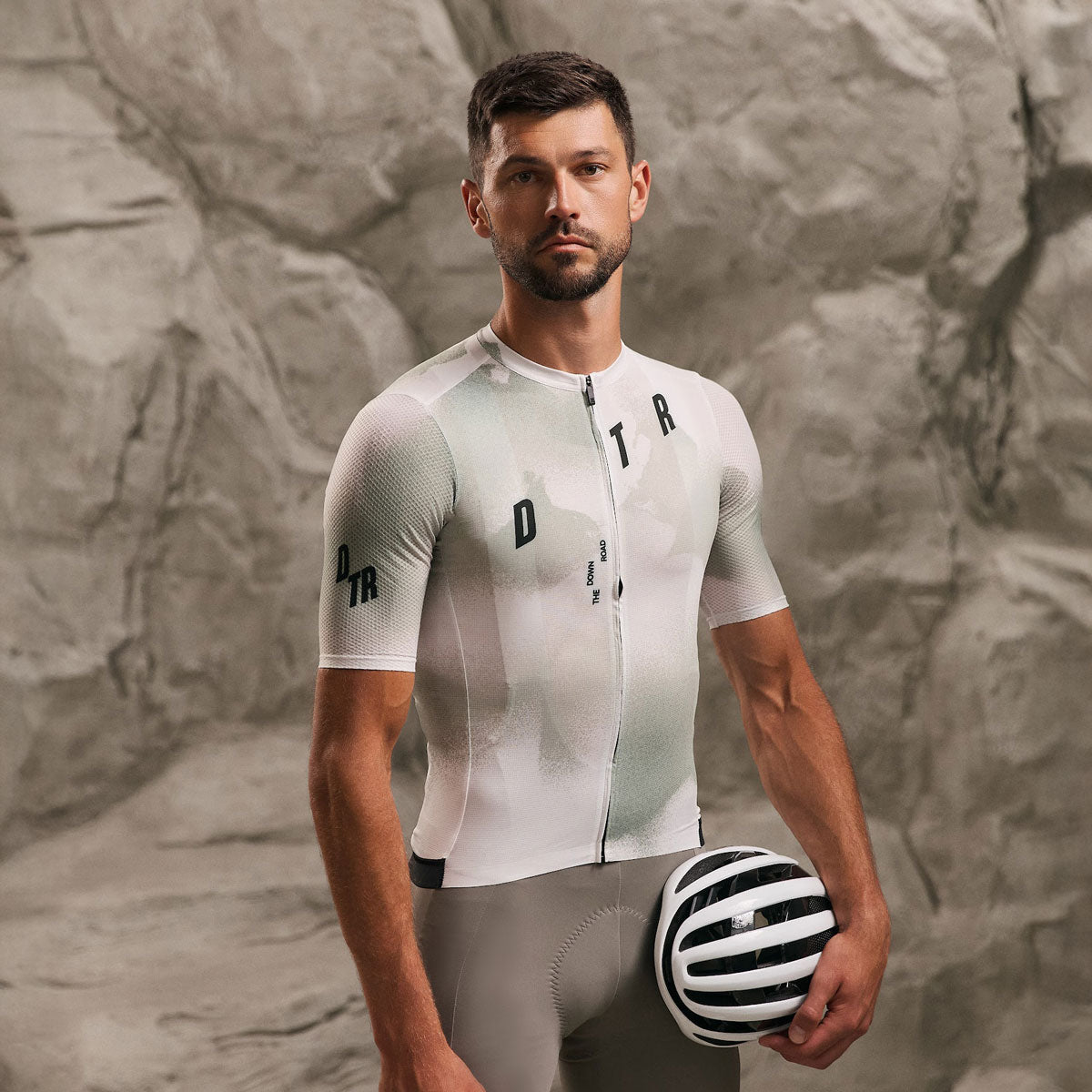
The trisuit is designed for exactly this: a thin, snug layer that adds no drag under neoprene, holds a slim pad that sheds water, and comes out of the swim ready to ride. Racing in a two-piece tri kit works the same way — both pieces on from the start. The wetsuit is the only thing you remove at T1. Without a wetsuit it works the same way — yes, you can swim in a trisuit on its own, in the pool or open water.
What not to wear under a wetsuit
Don't wear cycling bib shorts — a cycling chamois is built thick for the saddle and soaks up water like a sponge, then stays heavy and wet for the whole bike leg. Skip cotton anything, loose shorts that wrinkle under pressure, and anything you'd have to change out of in transition. Every fold under tight neoprene is a chafe line waiting to happen.
Where wetsuits chafe — and what helps
The usual spots are the back of the neck, the underarms, and anywhere a seam crosses skin. A dedicated anti-chafe balm applied to those spots before you suit up prevents most of it; use one made for neoprene, since petroleum-based products can degrade the suit over time. Chafing is a friction problem, not a toughness problem — sort it before the gun, not after. If a raw spot doesn't settle in a few days or keeps recurring, have a doctor look at it.
What about cold water?
In cold water the wetsuit itself does most of the work, and the highest-value additions sit outside your race kit: a neoprene swim cap under the race cap, earplugs, and — where the race rules allow them — neoprene booties. Some athletes add a thin neoprene vest under the suit for very cold swims; check your event's rules first, because extra insulating layers are regulated at most races.
Is it different for women?
The answer is the same trisuit — plus whatever you'd normally wear under it on the bike and run. For most women that means a sports bra designed for multisport under the suit from the start. Nothing changes at the swim: the wetsuit goes over the complete kit you plan to finish the race in.
FAQ
Can you wear nothing under a wetsuit?
For a training swim, yes — plenty of swimmers do, though most prefer swimwear for hygiene, easy changing and less neoprene-on-skin friction. On race day the question answers itself: you need your full kit under the suit, because there's nowhere to change in transition.
Do you wear socks under a wetsuit?
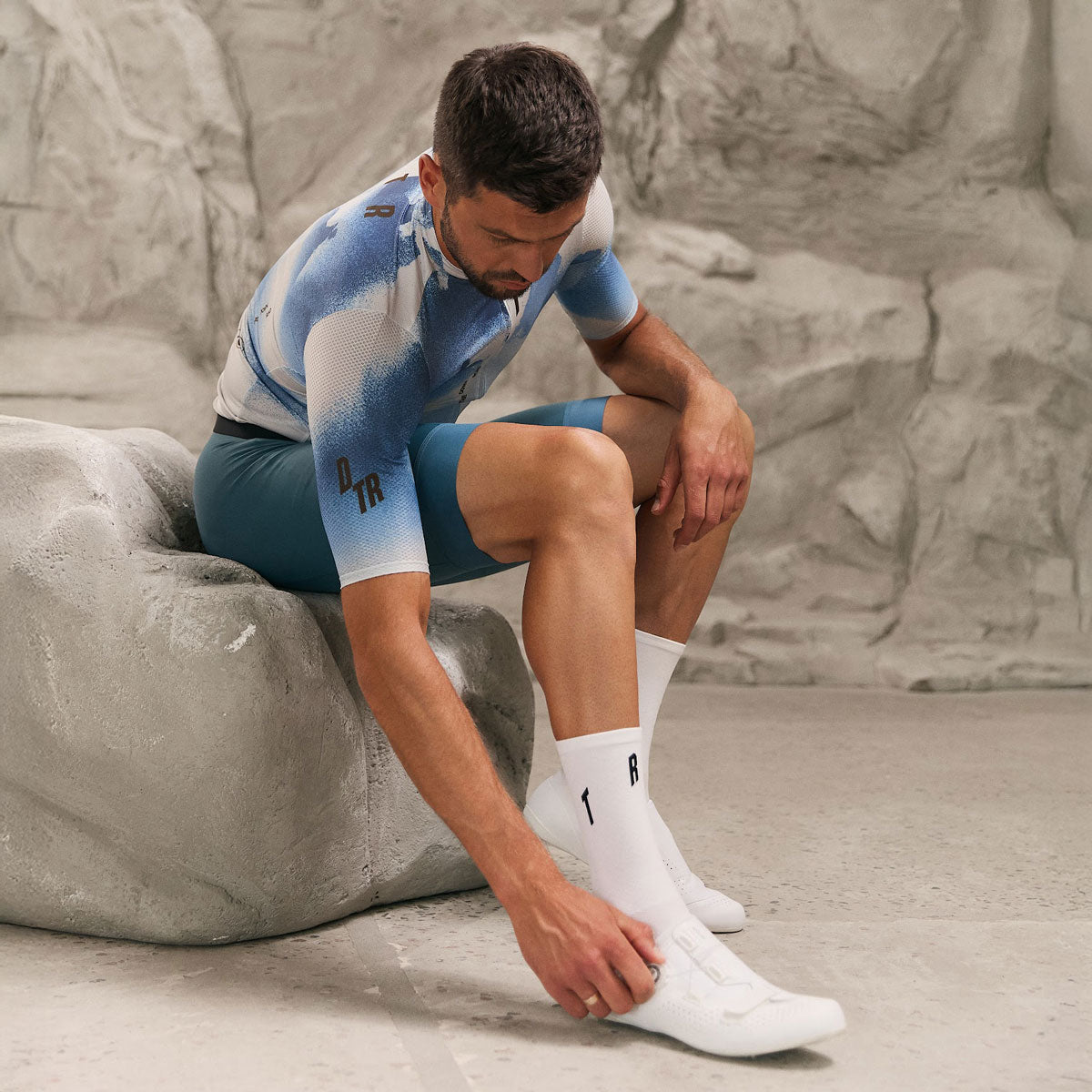
No — you swim barefoot inside the suit. Socks go on (or don't) at T1 when you're at your bike. Many short-course athletes ride and run sockless; for longer races, dry socks at transition are cheap insurance against blisters.
Won't the trisuit pad be soaked for the bike?
A trisuit pad is thin and quick-draining by design — it sheds most of its water in the first minutes of the ride. That's exactly why it's the right thing under a wetsuit and a cycling chamois isn't: multi-density cycling pads hold water; tri pads are built to lose it.
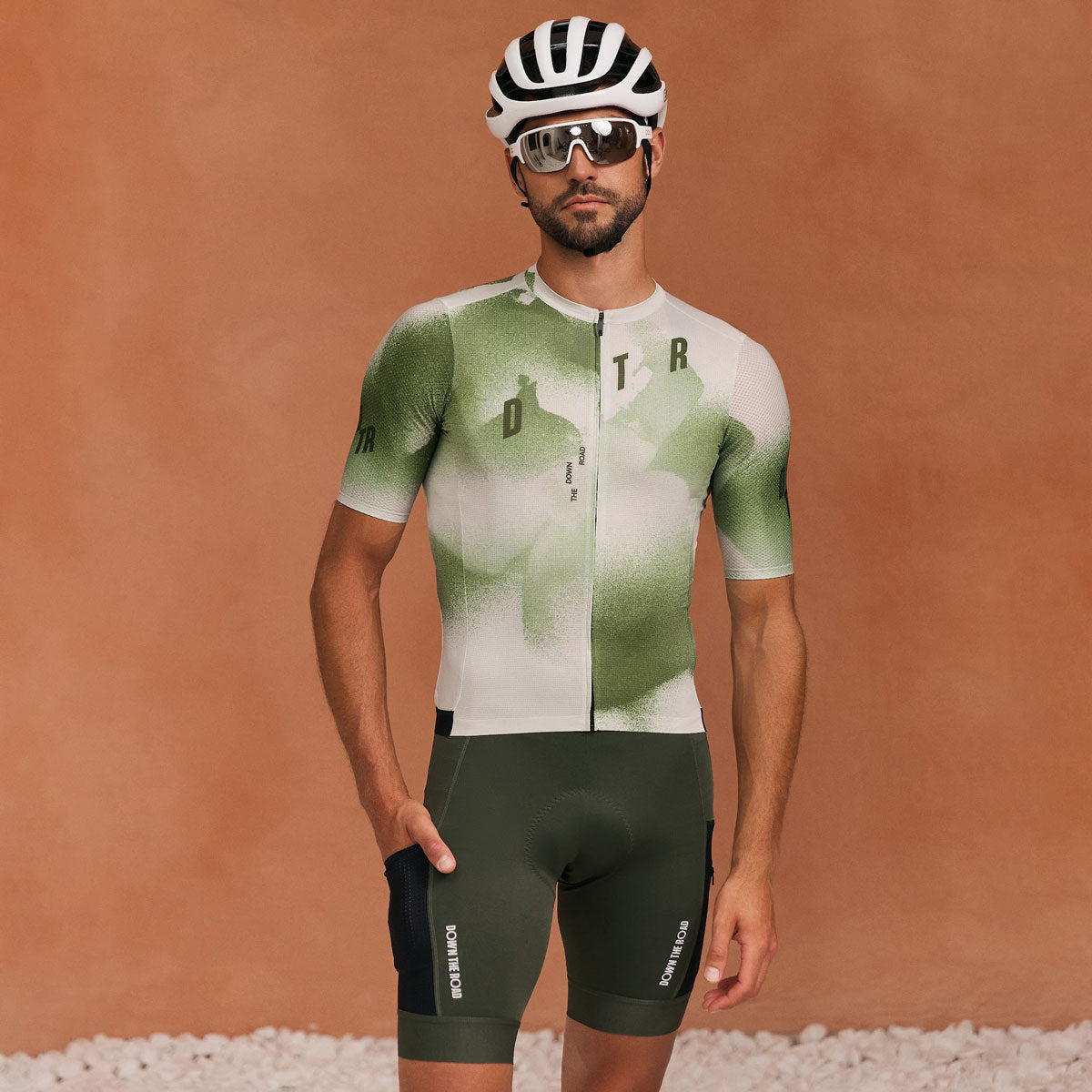
Race-day base: DTR trisuits.
DTR — performance cycling and triathlon apparel, designed and developed in Ukraine.

Leave a comment
This site is protected by hCaptcha and the hCaptcha Privacy Policy and Terms of Service apply.