



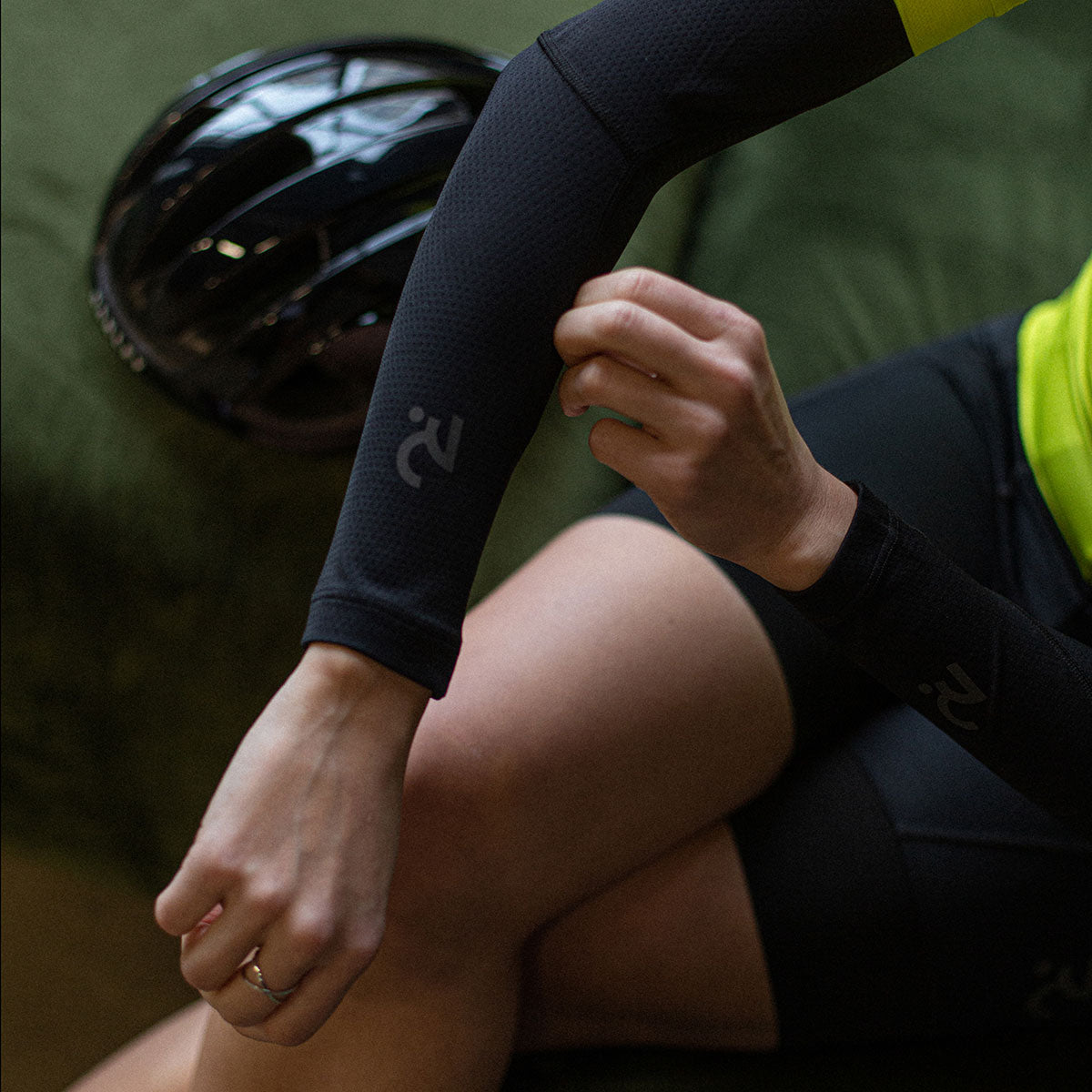
Windbreakers are good for wind and light rain, but not for a genuine downpour — for sustained, heavy rain you need a dedicated rain jacket. A cycling windbreaker blocks wind and sheds light showers while staying breathable and packable, whereas a rain jacket (waterproof) seals out sustained, heavy rain with a membrane and taped seams, at the cost of some breathability and packability. Both are outer layers, but they solve different problems — wind chill and light rain versus proper wet weather — so the right one depends on your conditions. This guide explains what each does and when to reach for which.
What a windbreaker does
A cycling windbreaker (or wind shell) is a thin, lightweight outer layer whose main job is blocking wind. On the bike, wind chill strips heat away fast — especially on descents and at speed — and a windbreaker stops that, keeping the warmth you're already generating. Most have a durable water repellent (DWR) finish, so they also shed light rain and showers, and they're highly breathable and packable — stuffing into a jersey pocket and coming out when you need them. What a windbreaker doesn't do is keep out sustained, heavy rain: it sheds a shower, but soaks through in a downpour.
What a rain jacket does
A rain jacket (a waterproof) is built to keep out sustained rain. It uses a waterproof membrane and taped or sealed seams so water can't get through, keeping you dry in a genuine downpour where a windbreaker would soak. The trade-off is breathability and bulk: a waterproof is less breathable (so you can overheat and get damp from sweat on a hard effort), heavier, and less packable than a windbreaker. Modern waterproofs balance this better than old ones, but the fundamental trade — full waterproofing versus breathability and packability — remains.
Windbreaker vs rain jacket: the honest comparison
Neither is better — they're built for different weather:
- Wind protection: both block wind; the windbreaker is the specialist.
- Rain: the windbreaker sheds light showers; the rain jacket keeps out sustained, heavy rain.
- Breathability: the windbreaker is more breathable; a waterproof traps more sweat.
- Packability: the windbreaker wins — it packs into a pocket; a rain jacket is bulkier.
- Best for: windbreaker for changeable, breezy, showery days; rain jacket for committing to genuinely wet rides.
Which one do you need?
Match it to the weather you actually ride in:
- Ride mostly in dry, breezy or changeable conditions with the odd shower? A windbreaker is the more versatile, more-used choice — it lives in your pocket and handles wind and light rain.
- Ride regularly in genuinely wet weather, or commute rain-or-shine? A rain jacket earns its place for the days it really rains.
- Ride year-round in a variable climate? Many riders own both: a packable windbreaker for most days, and a waterproof for when the forecast is set to rain. They solve different problems, so it's not really either/or.
If you're buying one first and ride in a temperate, changeable climate, a windbreaker is usually the more useful first purchase — you'll wear it far more often. Add a rain jacket for the genuinely wet days. To see what packs small enough to carry on every ride, read packable windbreakers and vests compared.
Layering them
Both work as your outer layer over a jersey (and base layer). A windbreaker goes over a jersey for a breezy or showery ride, or over more layers in the cold. A rain jacket goes over your layers when it's properly raining. Neither adds much warmth of its own — they manage wind and water, while your base and mid layers provide insulation. In cold, wet weather, a waterproof over warm layers is the combination; in cool, breezy weather, a windbreaker over a jersey. (For the shell basics, see our cycling windbreaker guide.)
FAQ
Are windbreakers good for rain? For light rain and showers, yes — most windbreakers have a water-repellent finish that sheds it while staying breathable and packable. For sustained, heavy rain, no — a windbreaker will soak through, and you need a dedicated waterproof rain jacket.
What's the difference between a windbreaker and a rain jacket? A windbreaker blocks wind and sheds light showers while staying breathable and packable; a rain jacket (waterproof) seals out sustained, heavy rain with a membrane and taped seams, at the cost of breathability and packability. One is for wind and light rain, the other for proper wet weather.
Is a windbreaker waterproof? No — most windbreakers are water-repellent (DWR), so they shed light rain and showers but soak through in sustained, heavy rain. For a genuine downpour, you need a waterproof rain jacket.
Do I need both a windbreaker and a rain jacket? If you ride year-round in a variable climate, both is common — a packable windbreaker for most days and a waterproof for genuinely wet ones. If buying one, a windbreaker is usually more versatile and more-used in a changeable climate.
Can I wear a rain jacket instead of a windbreaker? You can, but a waterproof is less breathable and packable, so you may overheat on drier, harder efforts and it's bulkier to carry. For wind and light showers, a windbreaker is more comfortable and versatile.
The bottom line
A windbreaker blocks wind and light rain while staying breathable and packable; a rain jacket seals out sustained, heavy rain at the cost of breathability and bulk. Neither is better — choose the windbreaker for changeable, breezy days (you'll use it most), the rain jacket for genuinely wet ones, and if you ride year-round, both earn their place. Start with a packable DTR windbreaker that lives in your pocket.
—
DTR — performance cycling and triathlon apparel, designed and developed in Ukraine.

Leave a comment
This site is protected by hCaptcha and the hCaptcha Privacy Policy and Terms of Service apply.