

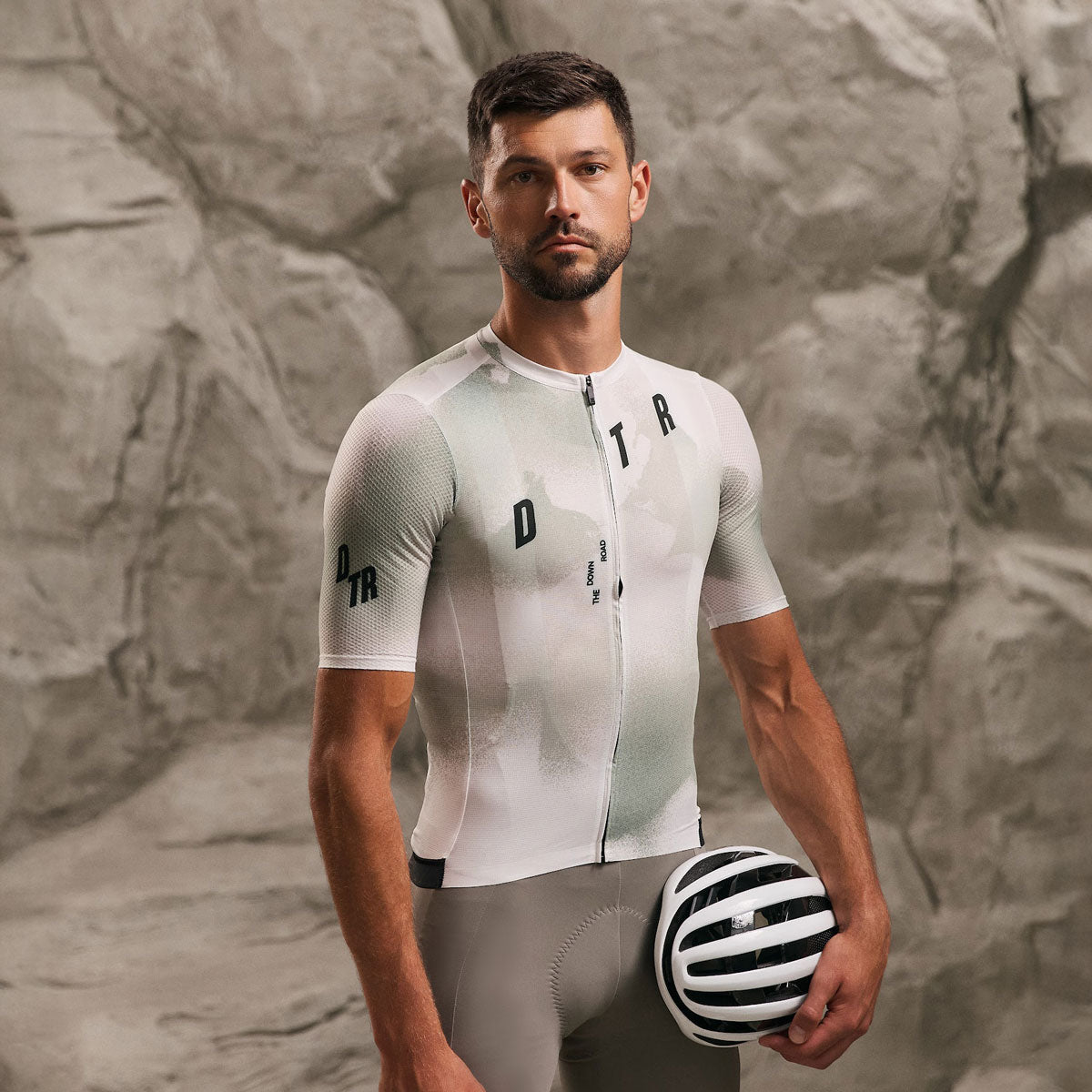
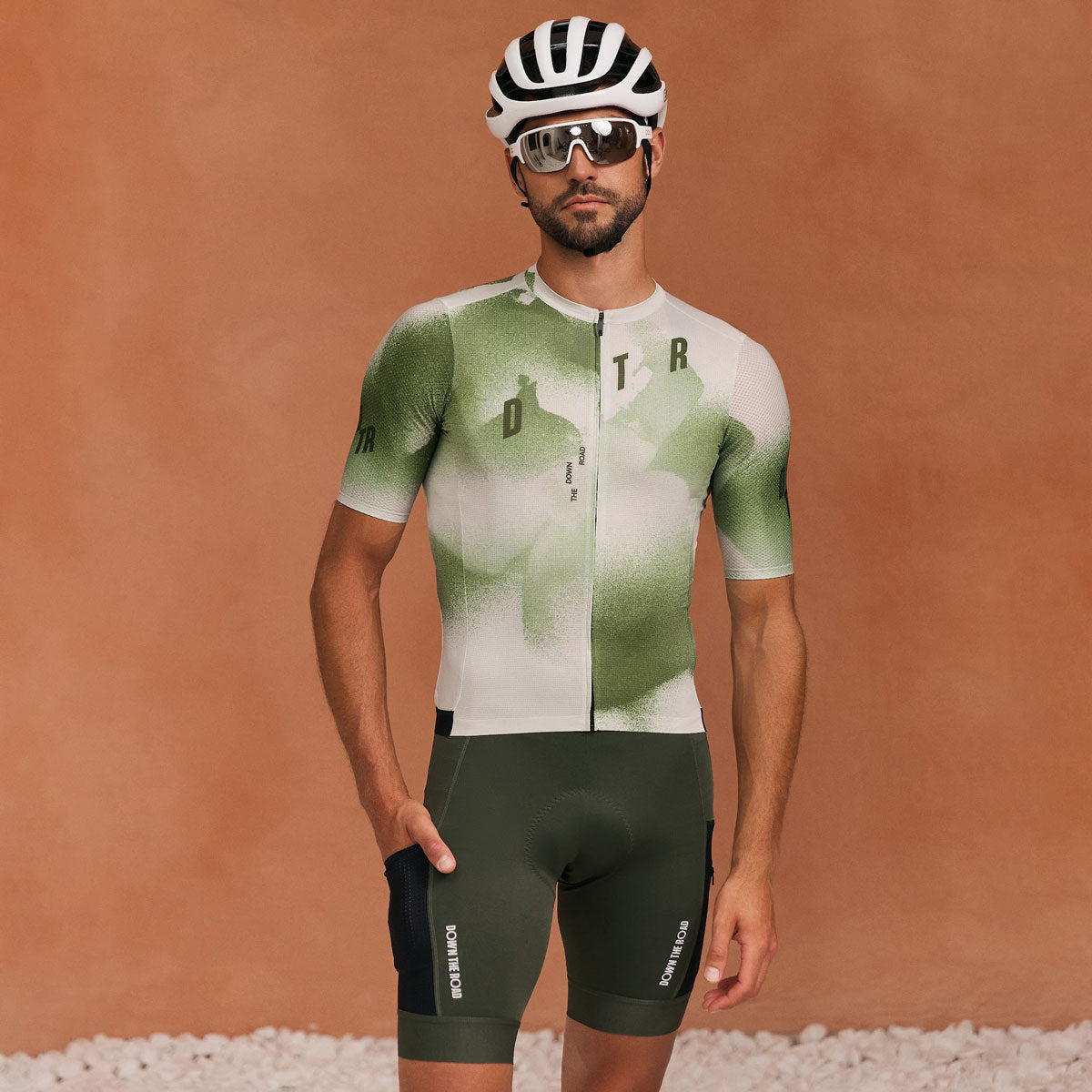
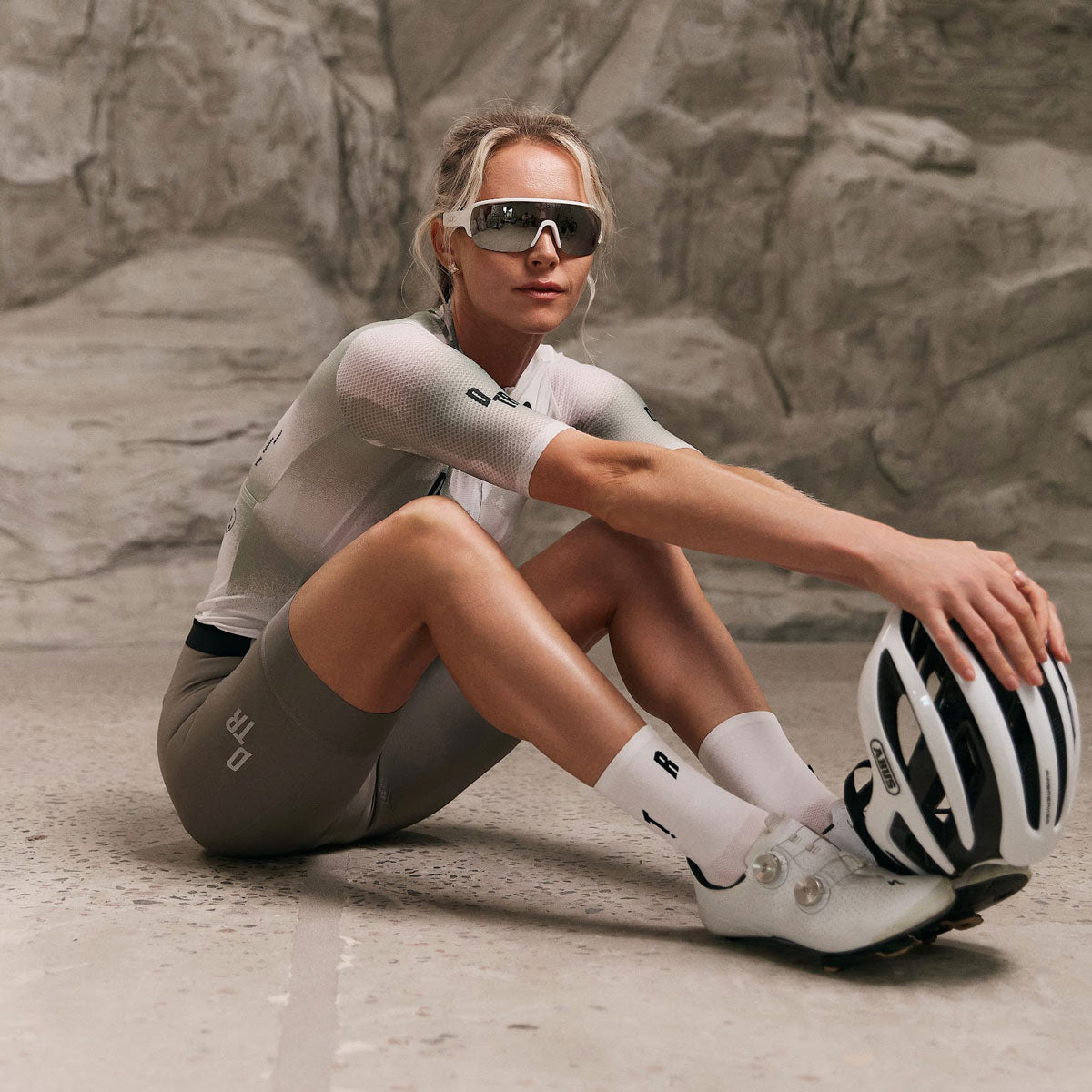
Cycling chafing is friction damage: skin rubbing against fabric, seams or skin, thousands of times an hour, made worse by sweat and salt. Prevention is mostly a kit question — the right size, worn the right way, kept clean. This guide covers why it happens, where it strikes, and what actually stops it.
Why riders chafe
Three ingredients: friction, moisture and repetition. A pedal stroke repeats about 5,000 times an hour, so any rub — a seam in the wrong place, a bunched pad, a loose hem — gets multiplied until skin gives up. Sweat softens skin and leaves salt crystals behind, which turn mild rubbing into sandpaper.
That's why chafing shows up on long rides and hot days first: more repetitions, more sweat, more salt. The same kit that's fine for an hour can cause trouble at hour four.
Where it shows up
The classic zones are the inner thighs where leg meets saddle, the skin under the chamois edge, and anywhere an edge sits — leg gripper, waist, strap lines. Less obvious: the neck against a jersey collar and the back where a heavy loaded pocket bounces.
Each zone points at a cause. Inner-thigh rub usually means the short is too loose or the fabric has aged; chamois-edge rub means the wrong pad shape or underwear where it doesn't belong; gripper lines mean the wrong size.
The kit choices that prevent it
Most chafing is solved by four decisions: bib shorts that fit snug with no loose fabric, worn against skin with no underwear, with flatlock seams and a chamois that still has structure. Fit does more than any cream — fabric that can't move can't rub.
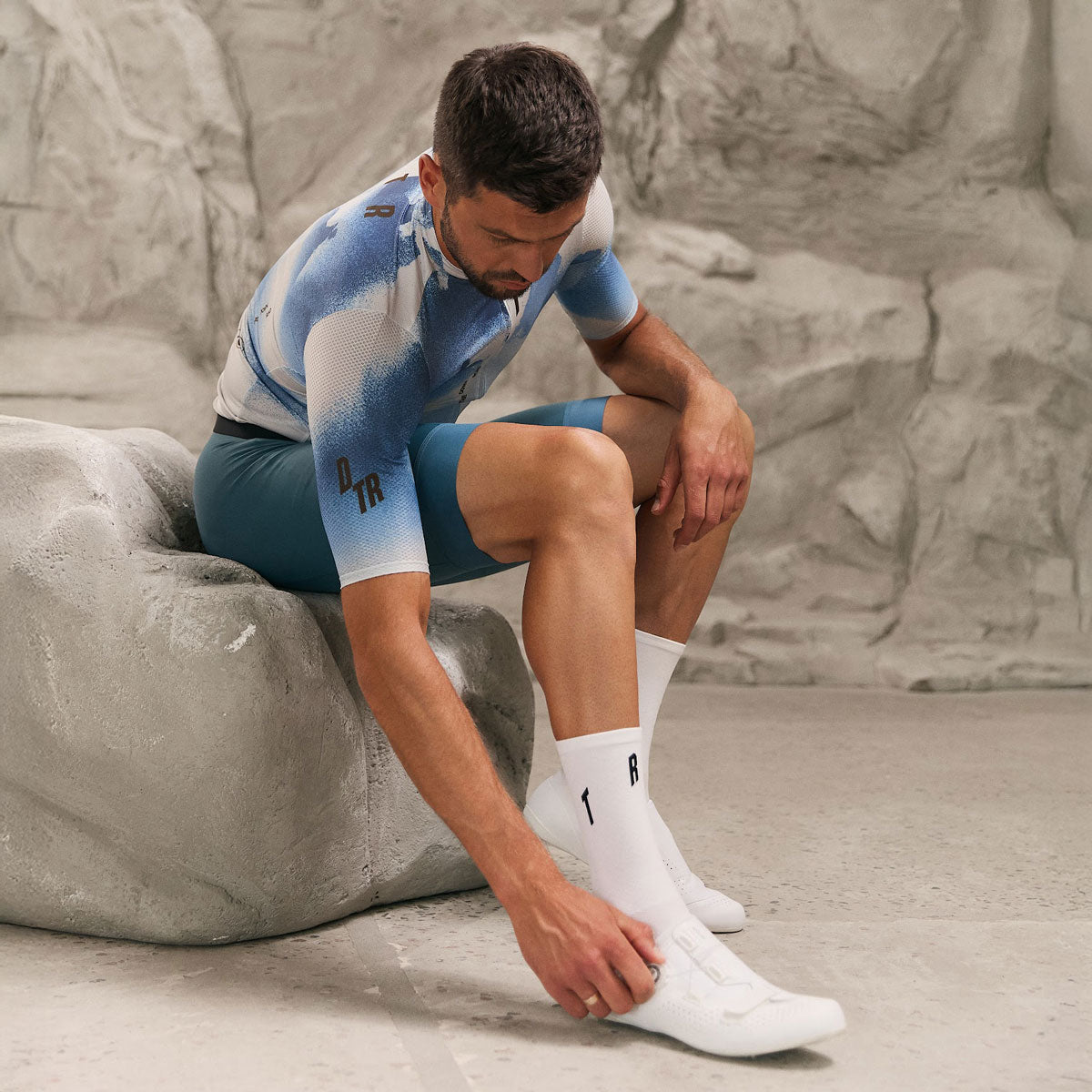
A short that's too big folds, and folds rub. Too small, and the gripper digs a line into your leg. The fit test is in how tight should bib shorts be, and the underwear rule is explained in do you wear underwear under bib shorts. DTR bib shorts use flatlock seams and a wide silicone gripper that spreads pressure instead of concentrating it — exactly to remove the two most common rub points.
Chamois cream, used properly
Chamois cream is a friction reducer, not a fix for bad-fitting kit. Applied to skin (or pad) before long or hot rides, it cuts the rub at the contact points and resists sweat wash-off. If a two-hour ride chafes you, fix the kit first; if the kit is right and the six-hour ride still rubs, cream is the missing layer.
How to choose and apply it is covered in our chamois cream guide.
When it starts mid-ride
Act early — chafing compounds. Stand for a few pedal strokes to change the contact point, straighten the short so the pad sits flat, and if you carry cream, apply it at the first hot spot rather than the tenth kilometre after. On multi-day rides, washing kit properly overnight matters as much as anything you do on the bike — dried sweat is tomorrow's sandpaper. Routine in how to wash cycling kit.
When it's more than chafing
Chafed skin that develops into raised, painful or infected spots is a different problem — that's saddle sore territory, covered in saddle sores: causes, prevention and what helps. Broken skin that isn't healing, swelling, or anything that looks infected is a reason to see a doctor, not to ride through. Persistent chafing in the same spot despite good kit is also worth a professional look — sometimes the underlying issue is bike fit, not clothing.
FAQ
Does chamois cream prevent chafing? It reduces friction meaningfully on long rides, but it can't compensate for a loose short, underwear under the chamois, or a dead pad. Kit first, cream second.
Why do my new bib shorts chafe? Usually the size, not the short: too big folds and rubs, too small digs at the gripper. Check fit before blaming the model — and give a new chamois two or three rides to settle.
Can washing habits cause chafing? Yes. Fabric softener stiffens technical fibres' wicking and detergent residue irritates; unwashed kit carries salt and bacteria. Cool wash after every ride, no softener, air dry.
Is cycling chafing the same as a saddle sore? No — chafing is surface friction damage; saddle sores are inflamed or infected spots that develop under pressure. Chafing left alone can open the door to them, which is why prevention matters.
The cure for most chafing is a bib short that fits and a chamois that still works: /collections/bib-shorts.
DTR — performance cycling and triathlon apparel, designed and developed in Ukraine.

Leave a comment
This site is protected by hCaptcha and the hCaptcha Privacy Policy and Terms of Service apply.