

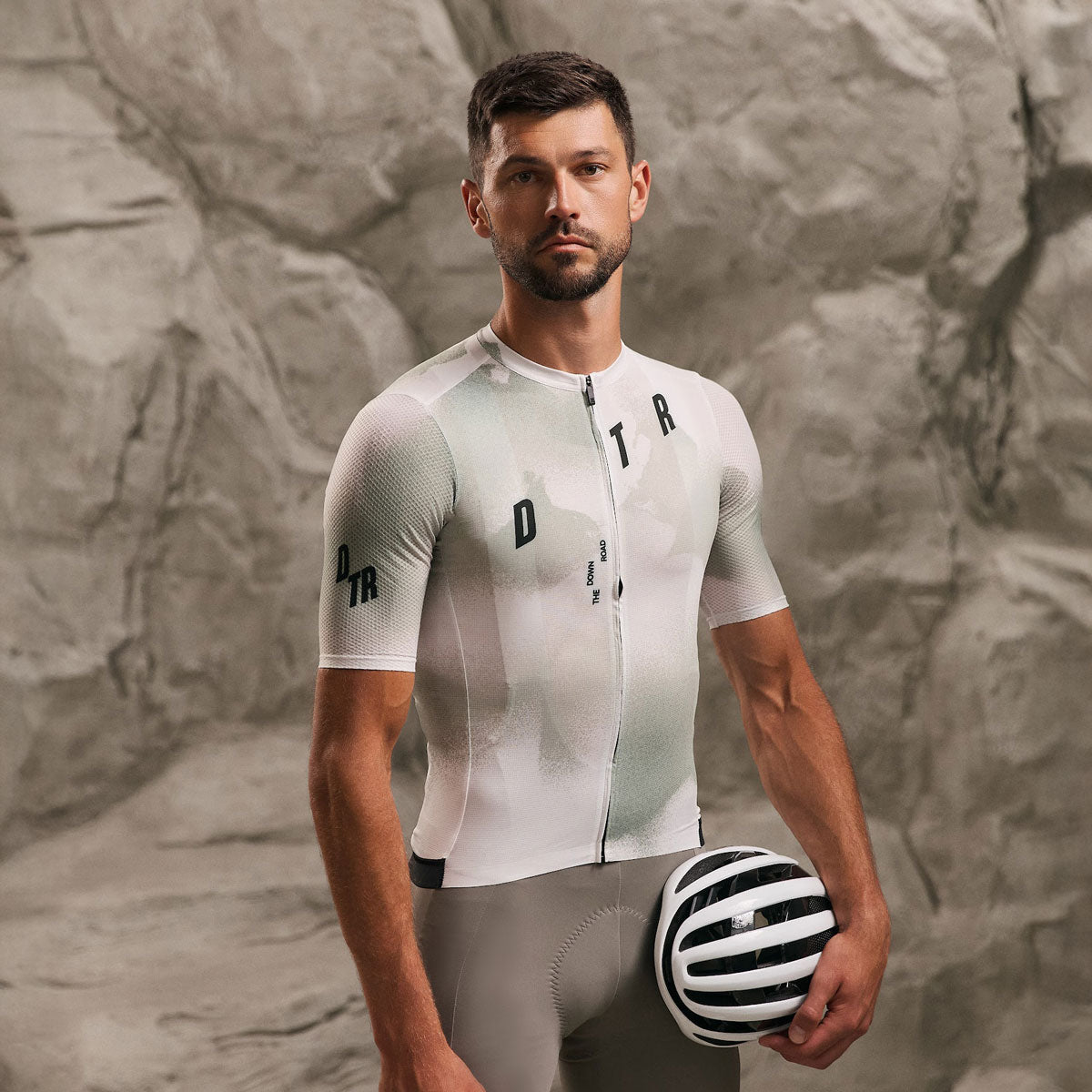
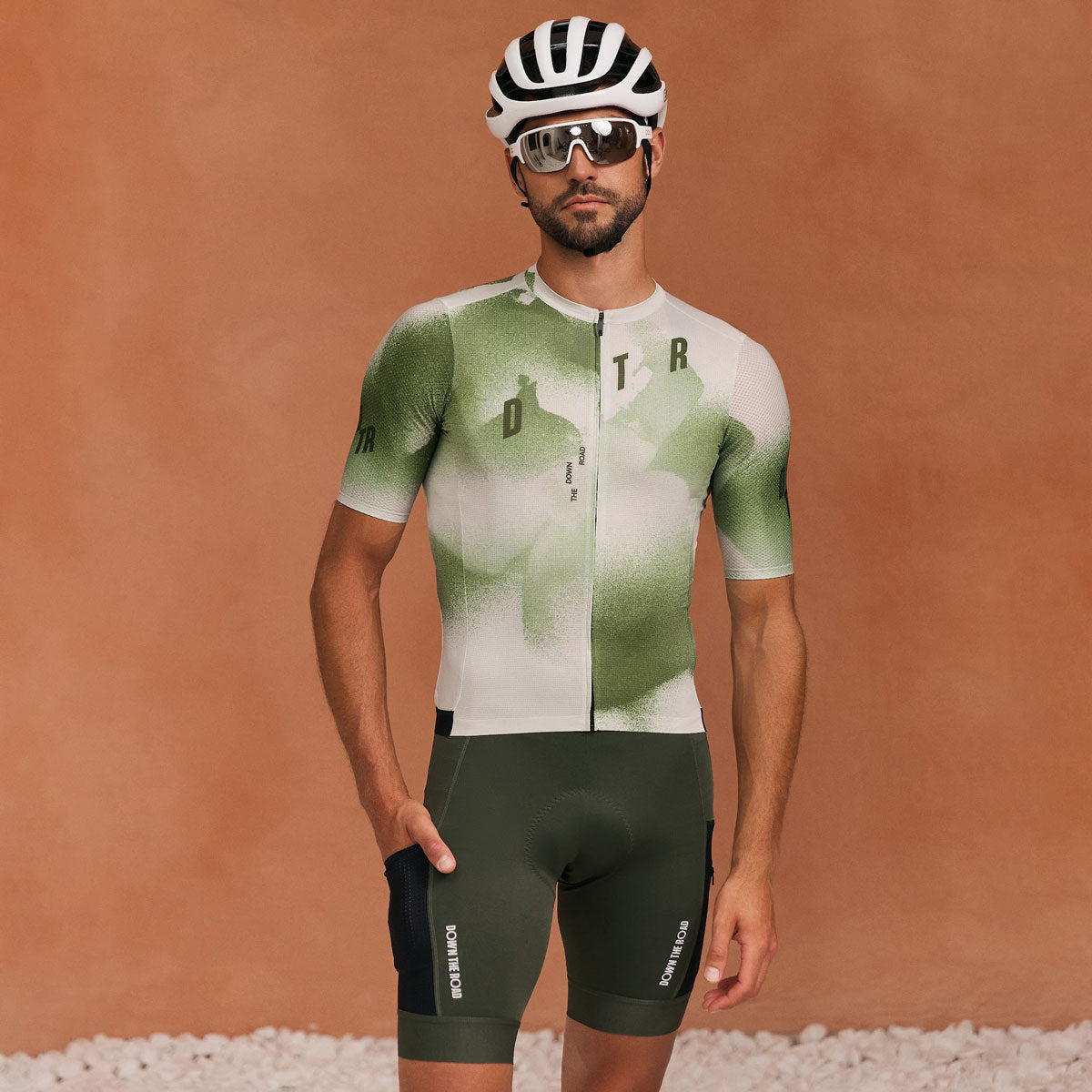



No. Bib shorts are worn directly against the skin — nothing between you and the chamois. The chamois is engineered for direct contact: it wicks sweat, moves with your body, and cushions pressure without bunching. This guide covers why the rule exists, what goes wrong if you ignore it, and how to keep skin-on-lycra comfortable and hygienic on every ride.
Why the chamois works against bare skin
A chamois only does its job in direct contact with skin. Its top layer wicks moisture away before it can soften skin, its densities support your sit bones exactly where the pattern places them, and its stretch mirrors the short's four-way stretch so nothing shifts as you pedal. A layer of underwear cancels all three functions at once.
The multi-density chamois in DTR bib shorts is positioned by the short's compression. The fit holds it still against your body so friction happens between chamois and saddle — surfaces designed for it — not between fabric and skin. Anything you add between them introduces movement where the system is built to have none.
What happens if you wear underwear anyway
Three things, usually in this order: trapped moisture, seams under pressure, and friction. Cotton holds sweat against your skin and stays wet for the rest of the ride. Seams land under your sit bones and press into exactly the tissue the chamois is shaped to protect. Damp fabric moving over softened skin causes chafing.
On a 45-minute commute you might get away with it. Over two hours, softened skin plus seam pressure plus movement is how chafing starts — and repeated chafing in the same spots is how saddle sores develop. If chafing or skin irritation keeps coming back or becomes severe, see a doctor rather than riding through it.
Doesn't bare skin get cold in winter?
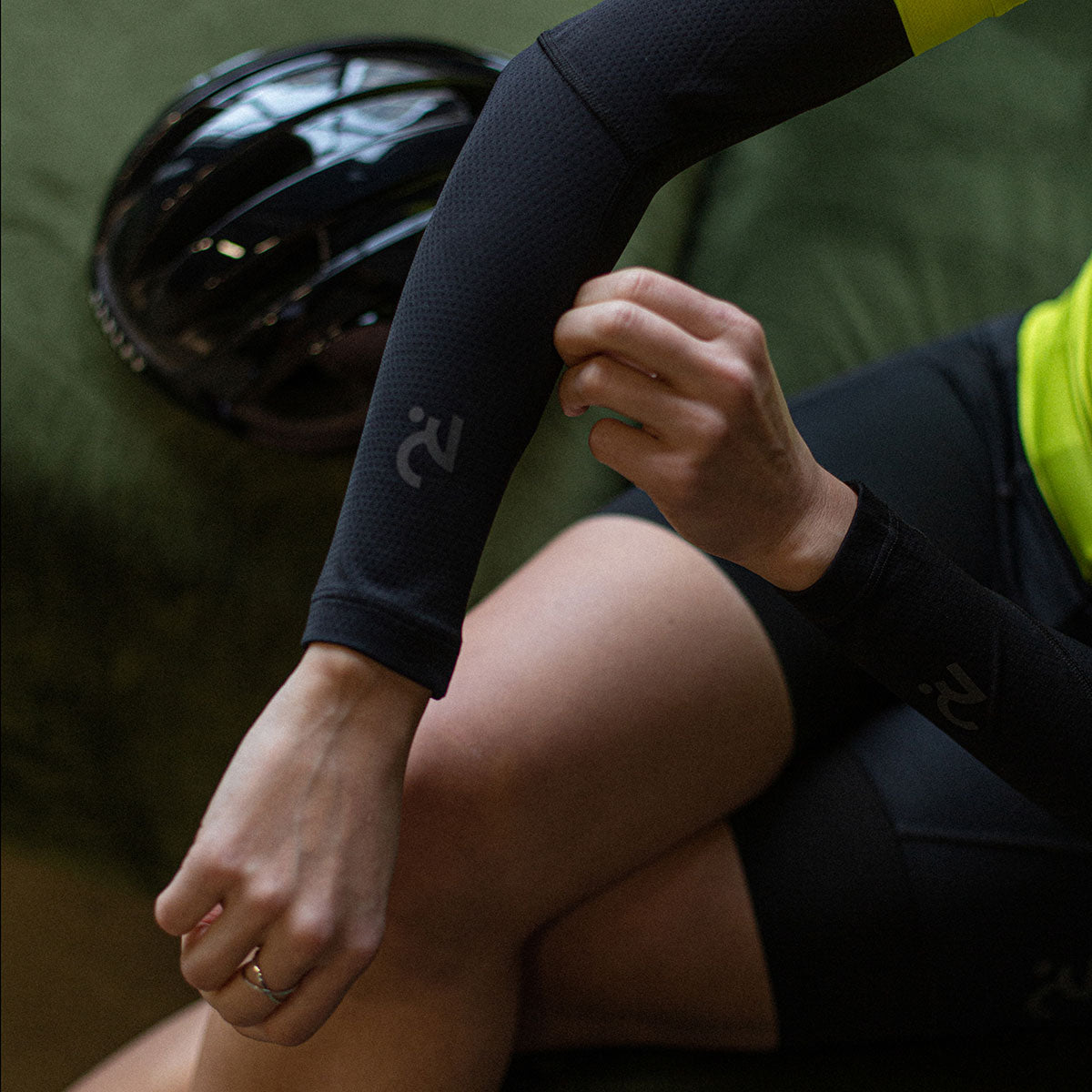
Layers go over bib shorts, never under them. When temperatures drop, you move to thermal bib tights or add leg warmers over the legs, and a base layer on your torso — the chamois stays directly against your skin in every season. The rule doesn't change with the weather; the layers around it do.
How to keep skin-on-chamois hygienic
The no-underwear rule works when the kit is clean: wash bib shorts after every ride, get out of them soon after finishing, and let the chamois dry fully before the next use. A damp, worn chamois is where irritation starts — not the bare-skin contact itself.
For rides over three or four hours, chamois cream reduces friction further. Applied to the chamois or directly to skin, it keeps the contact points moving smoothly deep into a long day.
Is the rule different for women?
No — women's bib shorts follow the same skin-on-chamois rule. The difference is the chamois itself: a women's-specific chamois is shaped for female anatomy, with its widths and densities engineered from scratch, not a shrunken version of the men's short. Worn directly against skin, it works the same way: wick, support, move with the body.
FAQ
Do professional riders wear underwear under bib shorts?
No. Skin-on-chamois is universal practice in road cycling, from club riders to the pro peloton.
What about padded cycling underwear?
Padded underwear is an alternative to a chamois for casual riding in regular clothes — never an addition. Two pads mean bunching and seams in the worst places.
Does the rule apply to a trisuit too?
Yes. A trisuit's chamois is worn against the skin through the whole race — swim, bike, and run.
See the DTR bib shorts range at /collections/bib-shorts.
DTR — performance cycling and triathlon apparel, designed and developed in Ukraine.

Leave a comment
This site is protected by hCaptcha and the hCaptcha Privacy Policy and Terms of Service apply.