

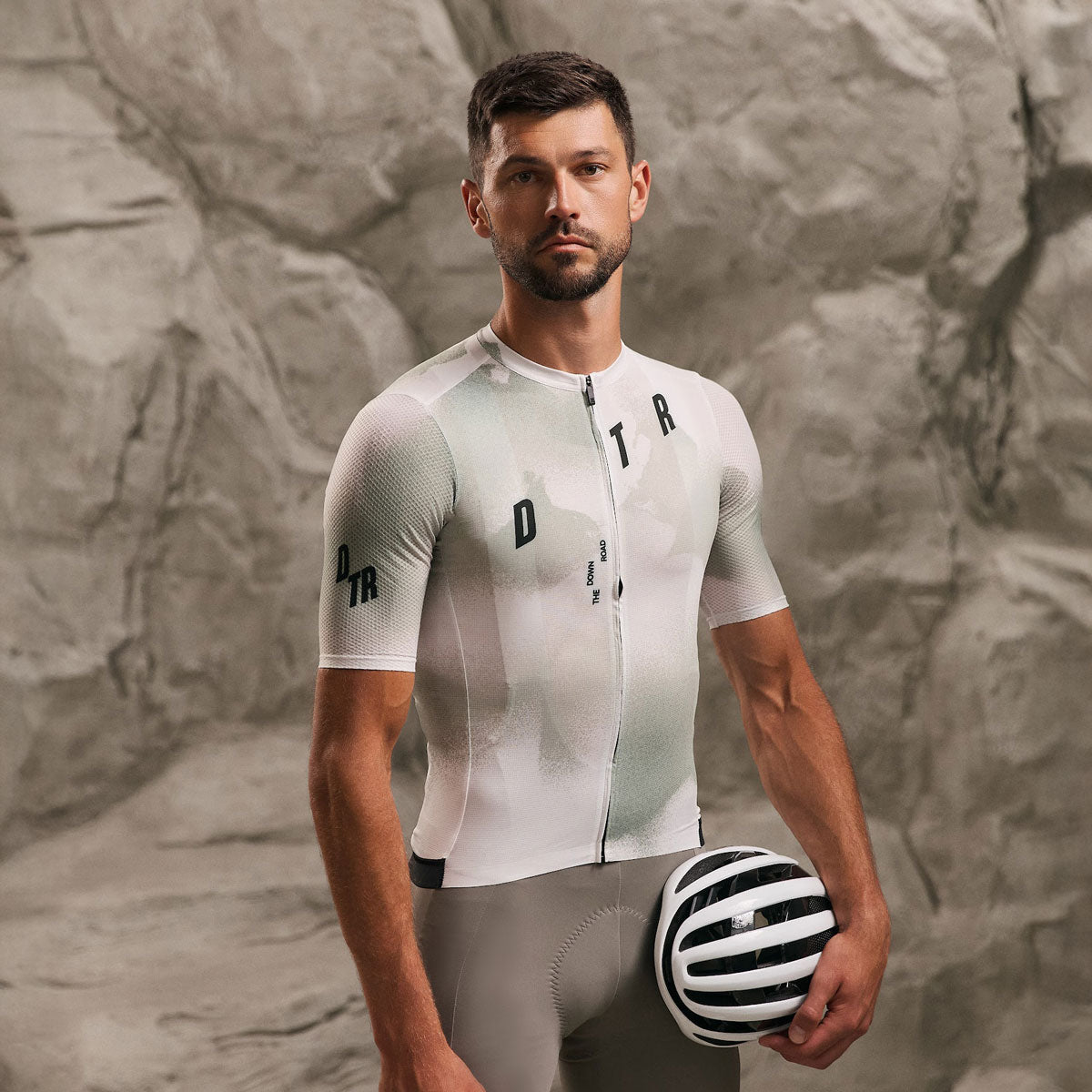
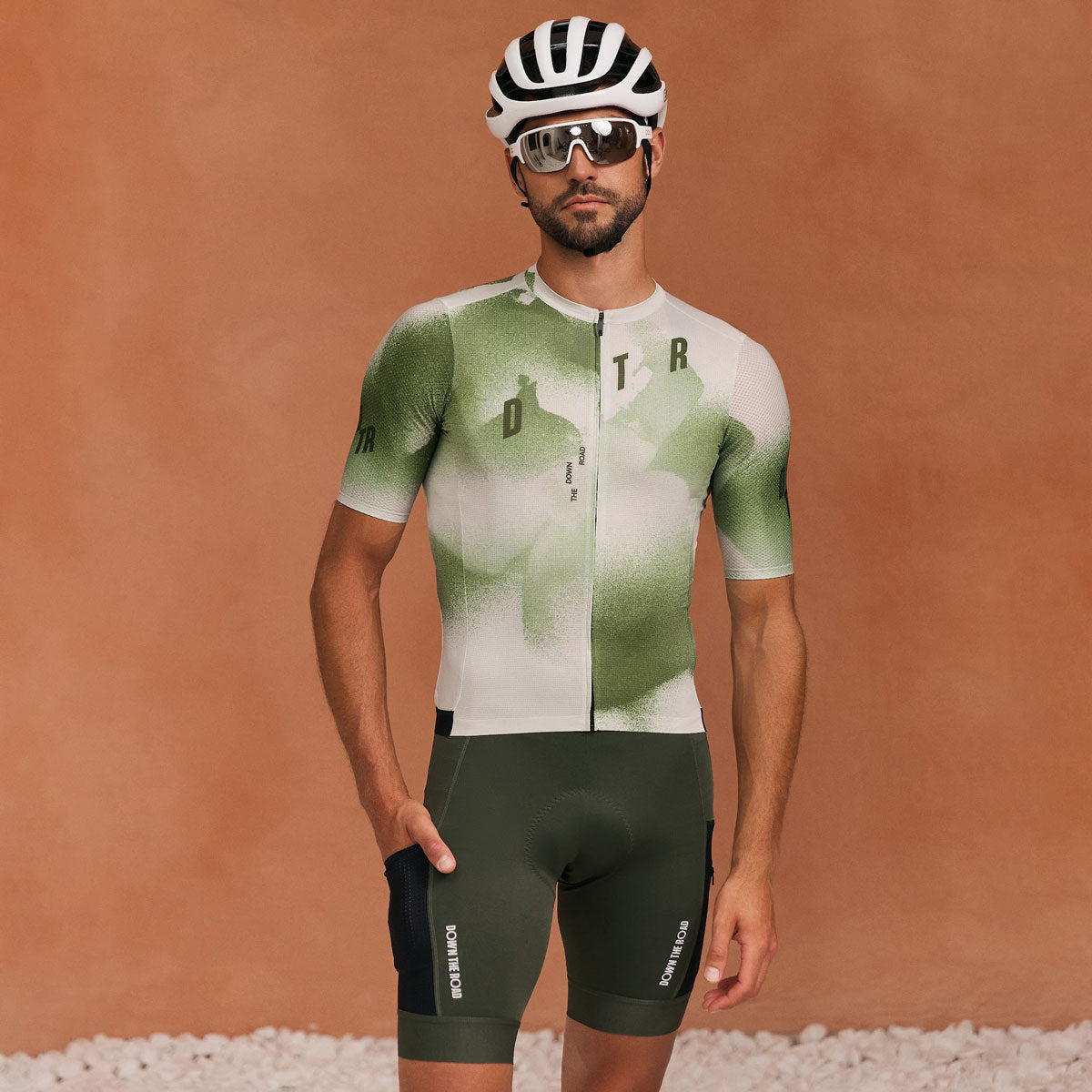
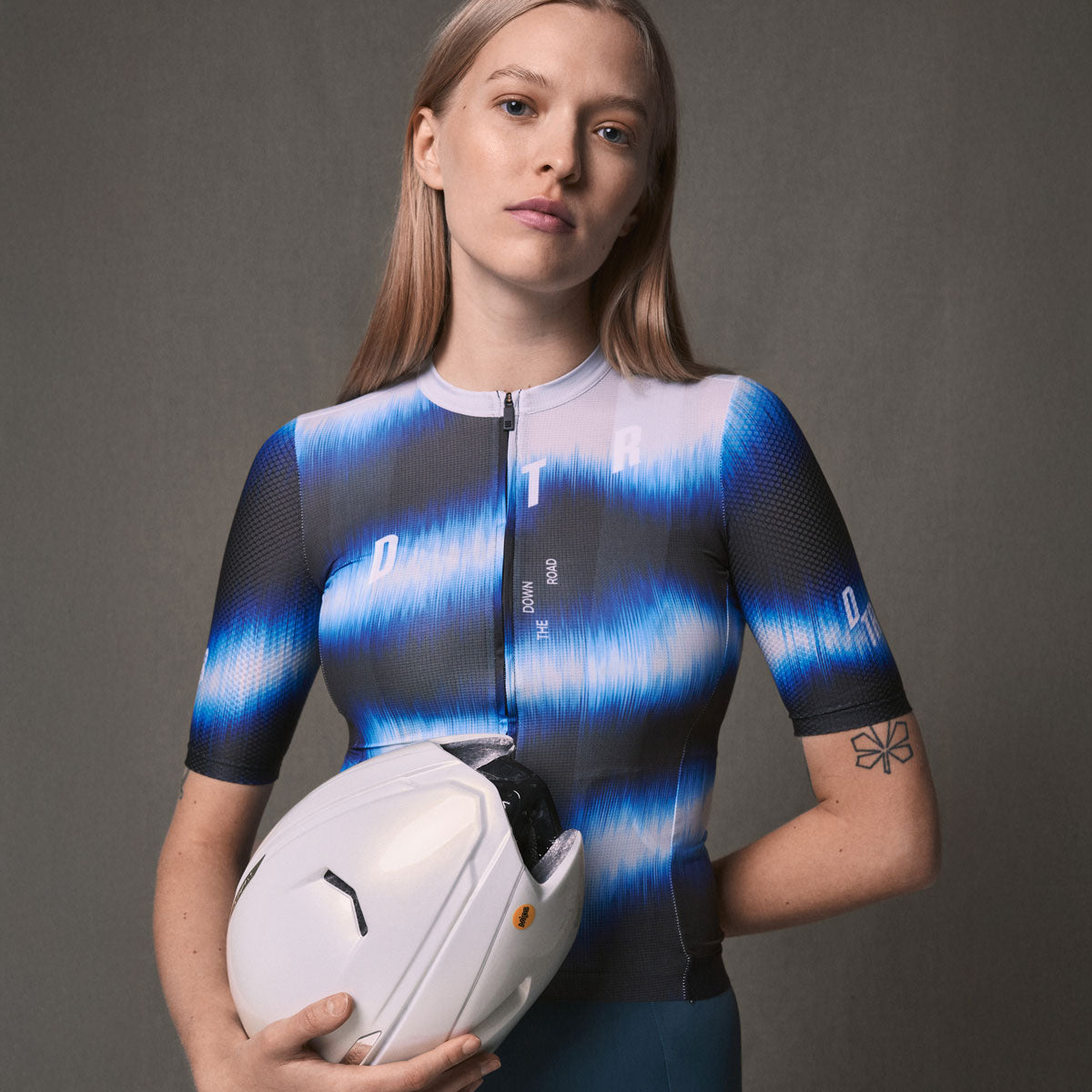
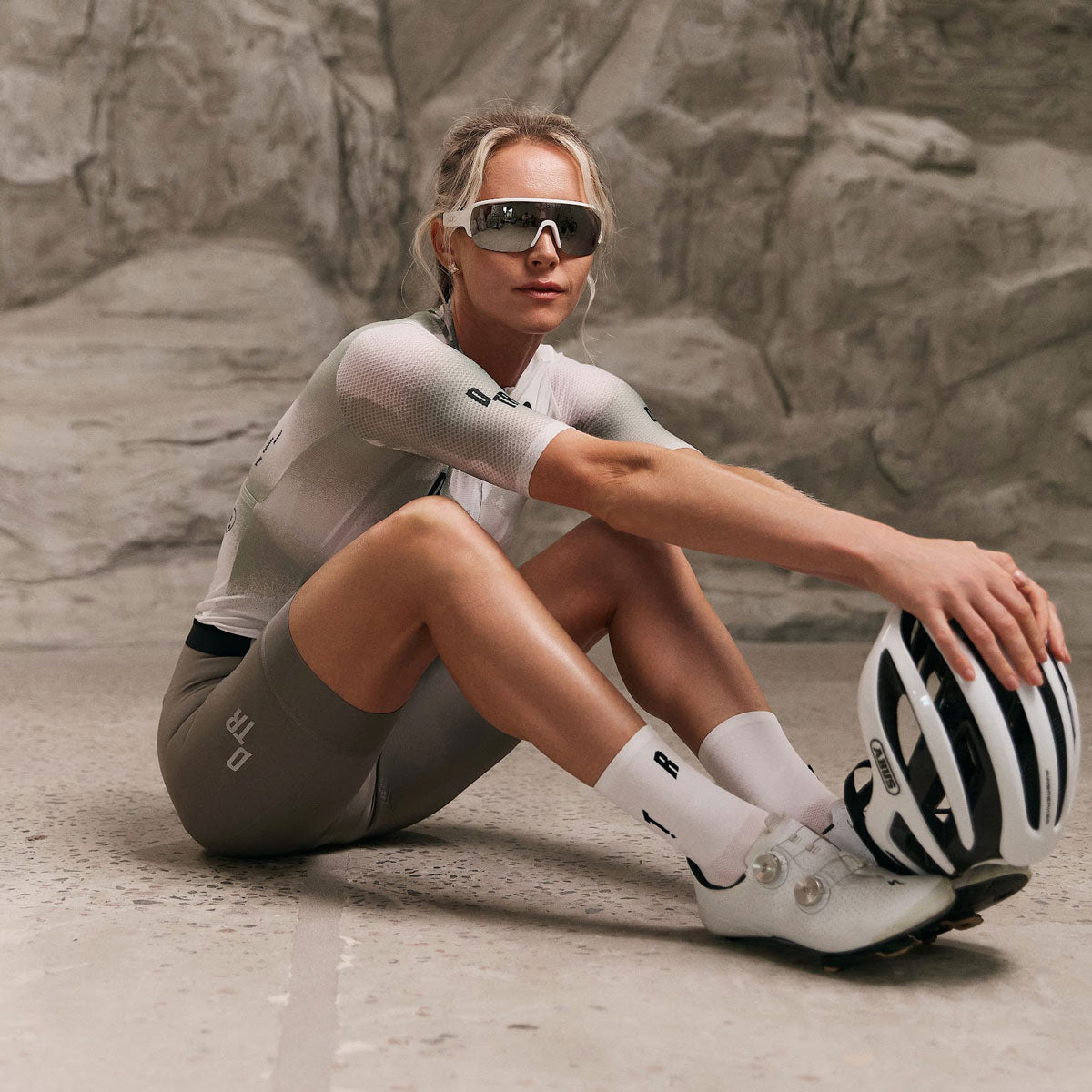
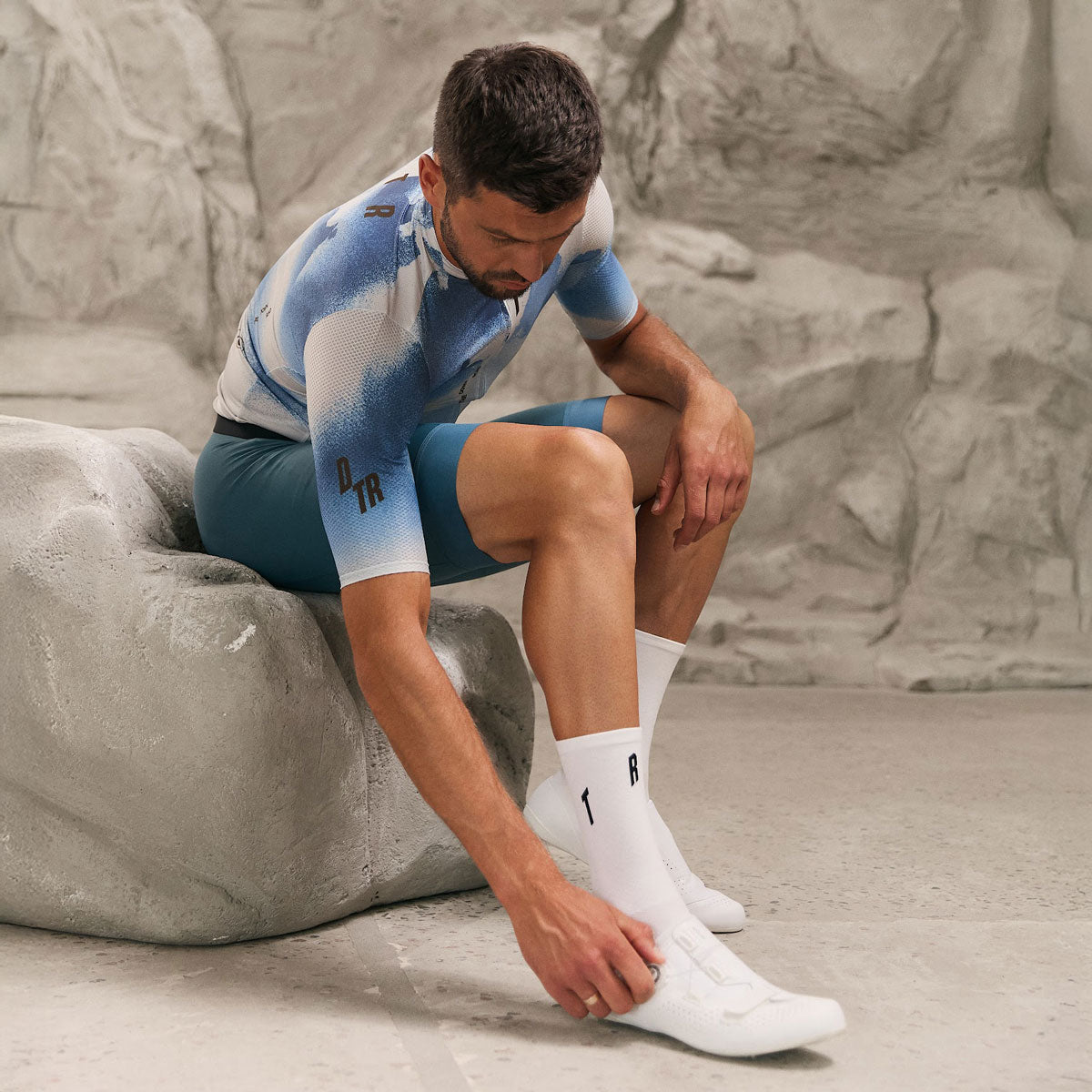
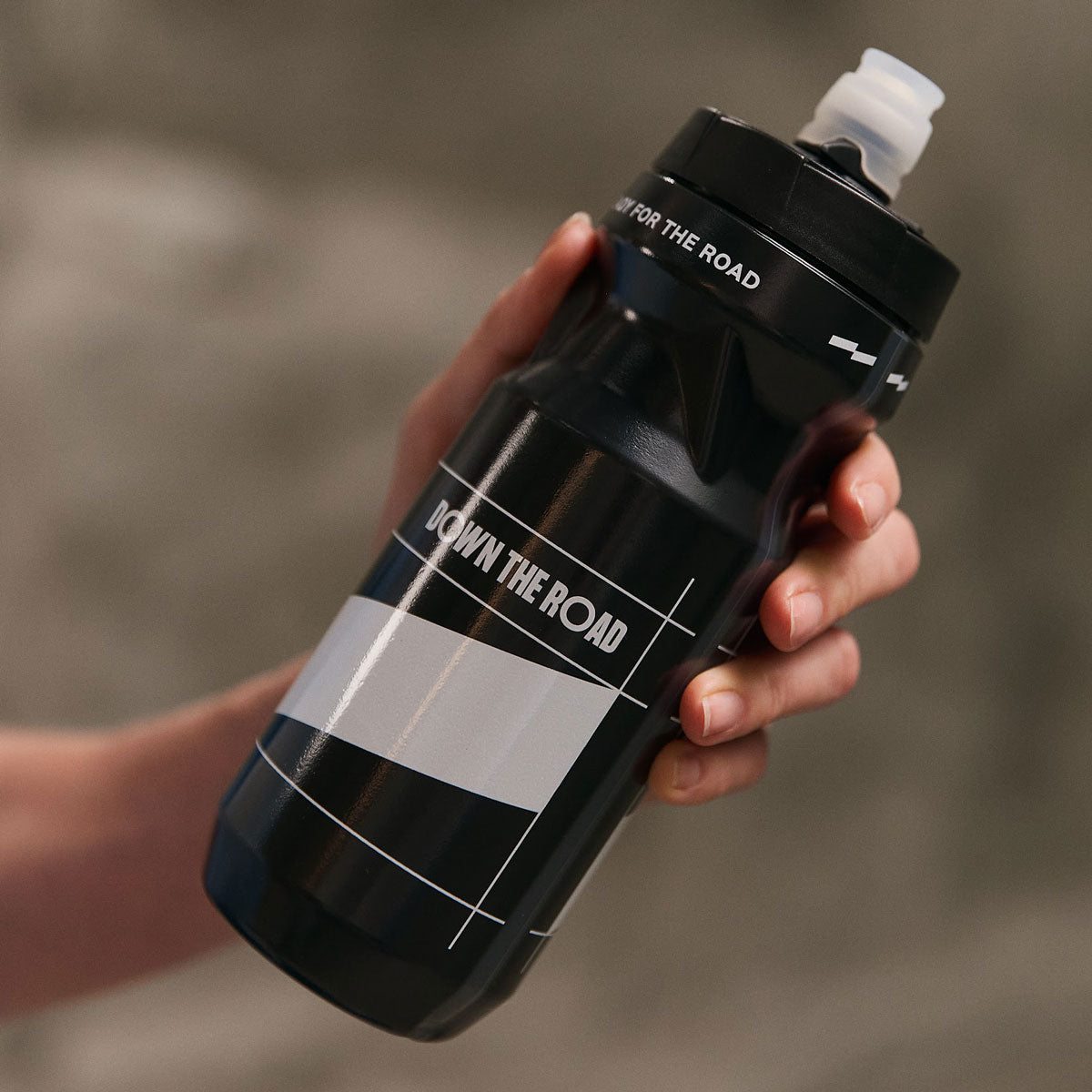
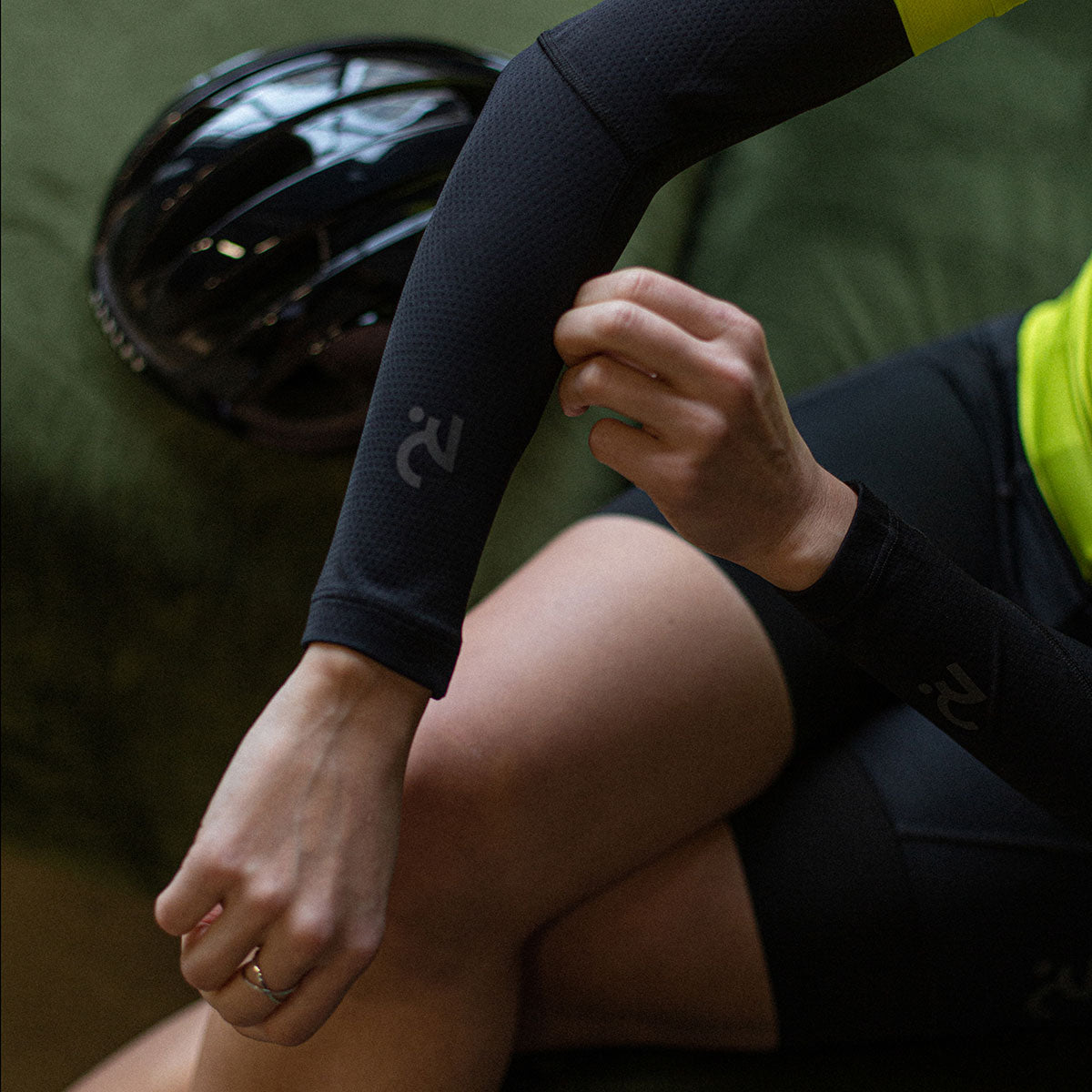
For indoor cycling you need less kit than outside, but the right kit: bib shorts with a good chamois, a lightweight jersey or base layer — or nothing on top — plus a sweatband and a fan. Indoors, the problem is never cold; it's heat and sweat with no airflow to clear them. This guide covers what to wear on the trainer, what to leave in the drawer, and how to keep sweat from eating your kit.
Why the trainer changes what you wear
Outside, a 30 km/h breeze evaporates sweat continuously — it's free air conditioning. On a trainer that airflow is gone, so your core temperature and sweat rate climb far beyond what the same effort produces on the road. Indoor kit is chosen for one job: moving sweat away and letting heat out.
What actually works on the trainer
Bib shorts are non-negotiable — the chamois matters as much indoors as out, because you sit steadier on a trainer and rock less, loading the same contact points continuously. Up top, wear a lightweight summer jersey or a short-sleeve base layer — or skip the top layer entirely. Add cycling socks and a sweatband or cap with a brim to keep sweat out of your eyes.
A trainer session also loads the chamois differently: with no descents, junctions or freewheeling, you're planted on the saddle the whole hour. A multi-density chamois that supports your sit bones for steady seated work earns its keep here.
Do you need a jersey indoors at all?
No — nothing about a jersey is required indoors except pockets, and you don't need pockets next to a shelf. A short-sleeve base layer often beats a jersey on the trainer: it's lighter, wicks faster, and dries between intervals. If you race indoors and ride on camera, a jersey is a choice, not a need.
Sweat management: the fan, the towel, the mat
A strong fan is the single biggest comfort upgrade indoors — more than any garment choice. Add a towel over the bars or top tube: sweat is corrosive, and headset bolts pay the price of a winter of drips. A headband keeps salt out of your eyes through intervals when your hands are busy.
Wash kit after every session — especially indoor ones
Indoor sessions soak kit more thoroughly than most road rides, and the sweat stays concentrated in the fabric instead of evaporating out. Bib shorts and whatever you wore on top go in the wash after every trainer ride, and the chamois dries fully before the next one. Skin sits on that chamois for focused, static hours — it has to start clean.
Winter doesn't reach the trainer
If the bike is indoors, dress for indoors: summer kit, all year. Thermal layers, warmers and windproofs stay in the drawer even in January — five minutes into the first interval you'd be peeling them off. The only cold-weather adjustment worth making is a slightly longer warm-up if the room starts cold.
FAQ
Can you use your best bib shorts on the trainer?
Yes — the chamois quality matters indoors. Just wash them after every session; concentrated sweat is harder on fabric than road spray.
What do you wear for Zwift races?
The same logic: bib shorts, base layer or light jersey, sweatband, big fan. Racing effort indoors produces the most sweat you'll ever make on a bike.
Do you need special indoor cycling shorts?
No. Good bib shorts are good bib shorts — the same multi-density chamois that works for four road hours works for a one-hour trainer session.
Start with the shorts that carry the session: /collections/bib-shorts.
DTR — performance cycling and triathlon apparel, designed and developed in Ukraine.

Leave a comment
This site is protected by hCaptcha and the hCaptcha Privacy Policy and Terms of Service apply.