

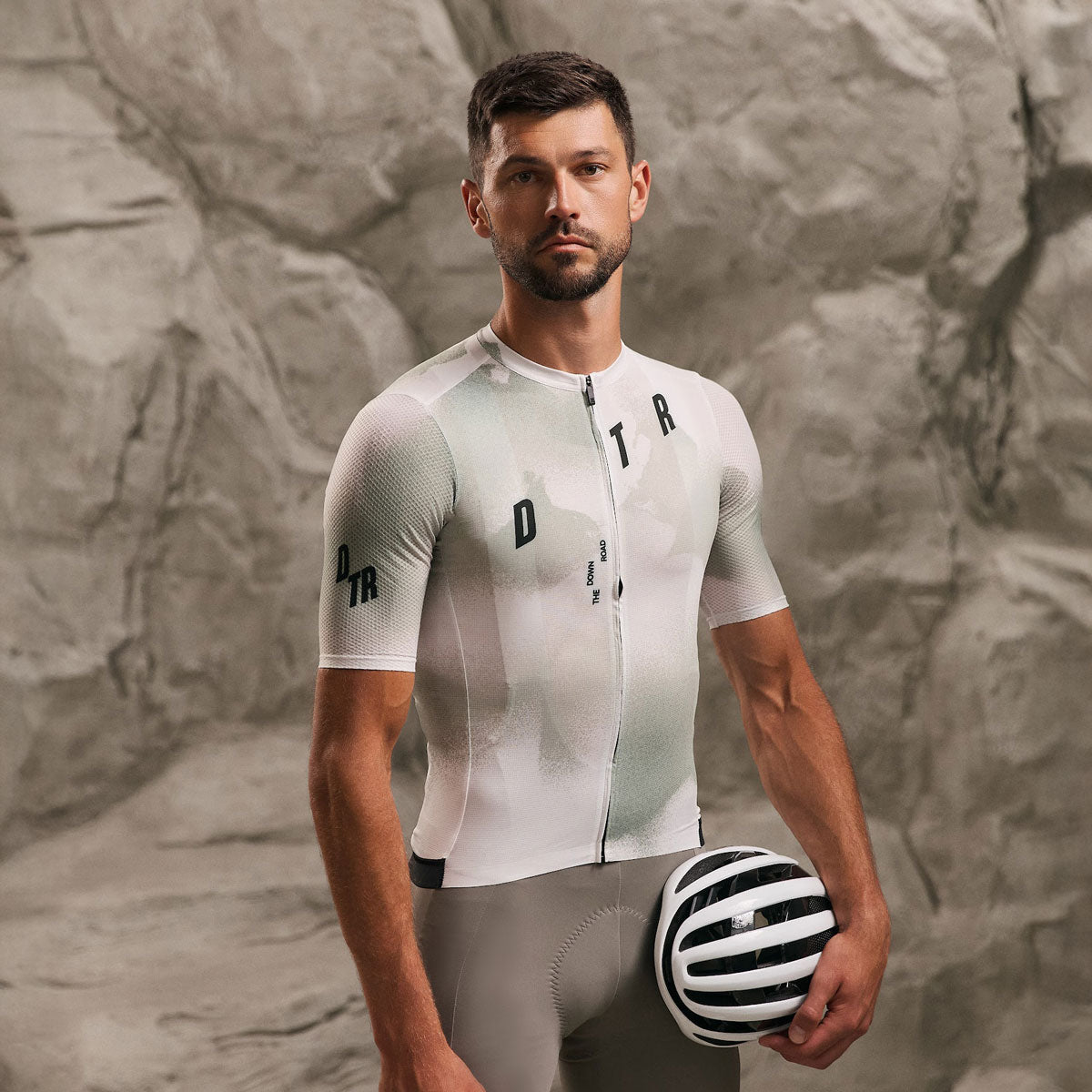
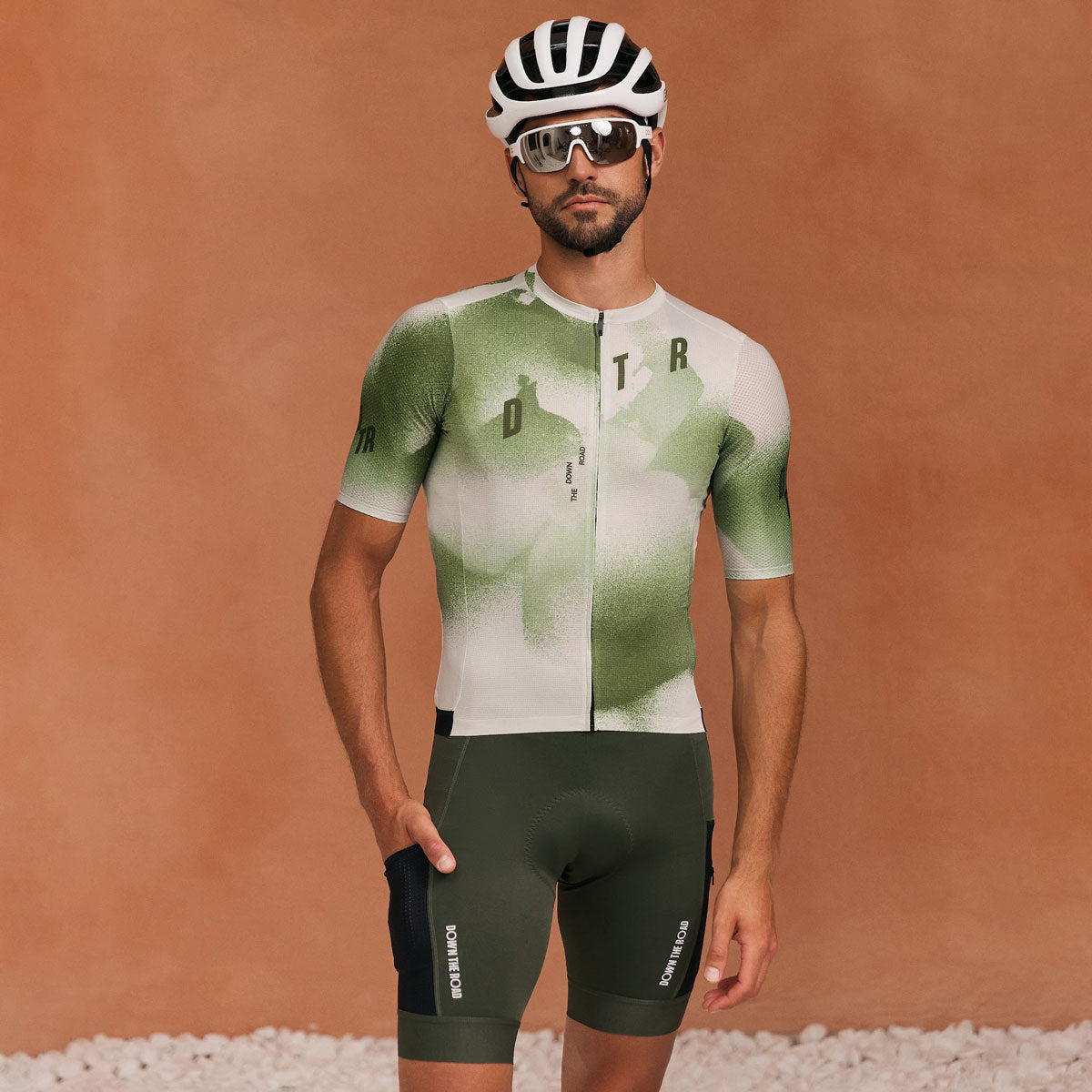
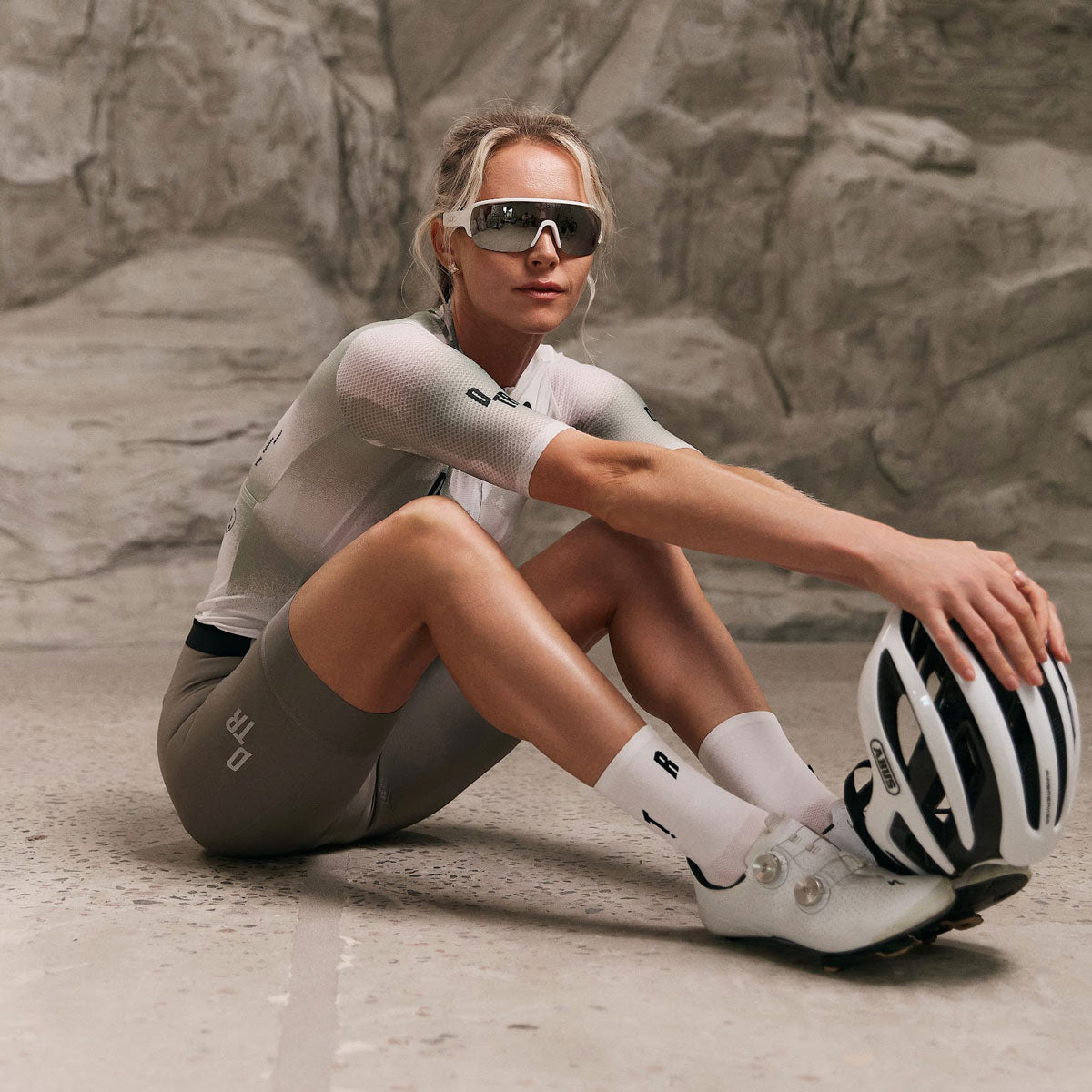
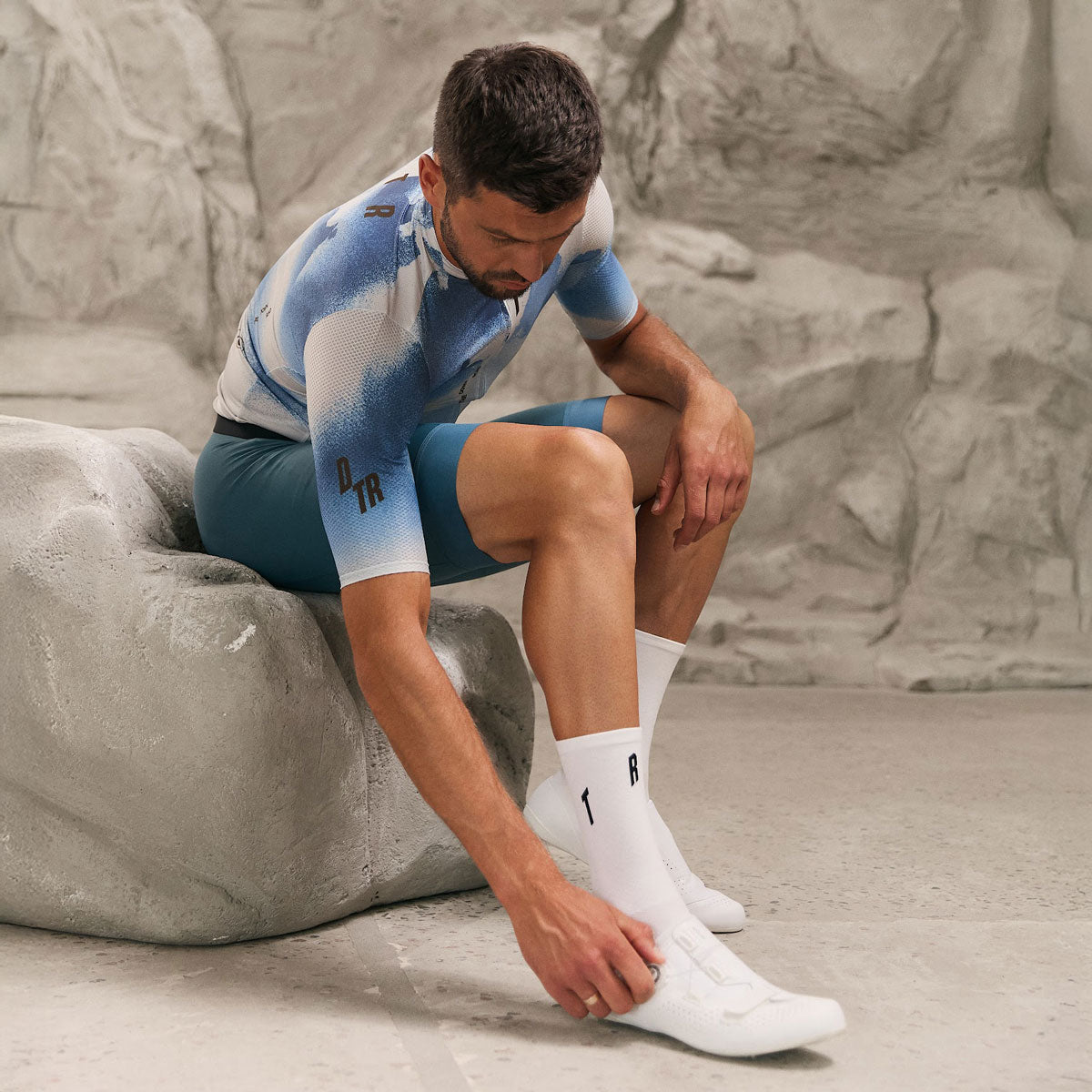
A chamois is the shaped pad sewn into cycling bib shorts — layers of multi-density foam and stretch fabric that cushion your sit bones, damp road vibration and cut friction where you meet the saddle. It's the reason cyclists don't wear underwear on the bike. This guide covers what it does, how a modern pad is built, and how to make yours last.
Where the name comes from
The word is older than the foam. Early racing shorts used a panel of chamois leather — soft goatskin — to reduce friction against the saddle. The leather is long gone, replaced by engineered foam and technical fabric, but the name stuck. Riders say it in every language, which is why it never translates.
You'll also hear "pad," but chamois is the cyclist's word — and once you know it, product pages make a lot more sense.
What it actually does
A chamois does three jobs at once. It distributes pressure so your sit bones don't carry your weight on two small points. It moves with your skin to stop the rubbing that causes chafing. And it wicks sweat away from a part of the body where trapped moisture causes real trouble on long rides.
None of those jobs is about softness. A pad that feels plush in the shop can collapse under riding pressure and leave you sitting on the seams. Support — the pad holding its structure hour after hour — is what separates a good chamois from a soft one.
How a modern pad is built
A modern chamois is layered: denser foam under the sit bones where pressure concentrates, lighter foam where you need flexibility, a stretch top layer that moves with you, and perforation so it breathes. That's what multi-density means — and it's about density placement, not thickness. More density is not more bulk.
Thickness is the spec beginners overrate. A thick soft pad bunches and rubs; a well-placed dense pad supports without bulk. The full logic is in chamois density explained, and how branded pad systems differ is covered in Elastic Interface vs standard chamois. DTR bib shorts use multi-density chamois across the range — placed for long-ride support, not showroom softness.
Why you don't wear underwear with it
The chamois is designed to sit against skin. Underwear adds seams and a layer of moisture-holding cotton exactly where the pad is trying to remove both — the most common self-inflicted cause of chafing among new riders. One layer, no seams, job done. The full explanation is in do you wear underwear under bib shorts.
Are men's and women's chamois different?
Yes — properly different, not recoloured. Pelvic geometry differs, so sit-bone spacing, pad width and density placement differ with it. A women's chamois in a well-made bib short is engineered for female anatomy, not a shrunken version of the men's pad. Fit in the shoulder straps and leg matters too, but the pad is where gender-specific design earns its keep.
Making a chamois last
Wash after every ride — bacteria in a used pad is how saddle trouble starts — cool cycle, no fabric softener, air dry. Rotate two or three pairs if you ride most days; foam recovers between wears. When the pad stays compressed, feels thin at the sit bones or the top layer wrinkles, the chamois is done even if the lycra looks fine.
Routines and warning signs: how to wash cycling kit and saddle sores: causes and prevention.
FAQ
Is a thicker chamois more comfortable? Not usually. Comfort comes from density in the right places, not depth. Thick soft pads deform and rub on long rides; a firmer multi-density pad supports where pressure actually lands.
How long does a chamois last? Roughly 200–300 wash cycles for a quality pad — a season or two of regular riding. The foam fails before the fabric: when it no longer springs back, replace the short.
What is chamois cream for? It reduces friction between skin and pad on long rides and in heat. Not mandatory — many riders never need it — but useful past the three-hour mark. Details in our chamois cream guide.
Do all cycling shorts have a chamois? Nearly all road shorts and bib shorts do. Some mountain bike liners and casual shorts use thinner pads, and tri shorts use a slim quick-draining pad built for swim-bike-run.
When you're ready to feel the difference a properly placed pad makes: /collections/bib-shorts.
DTR — performance cycling and triathlon apparel, designed and developed in Ukraine.

Leave a comment
This site is protected by hCaptcha and the hCaptcha Privacy Policy and Terms of Service apply.