


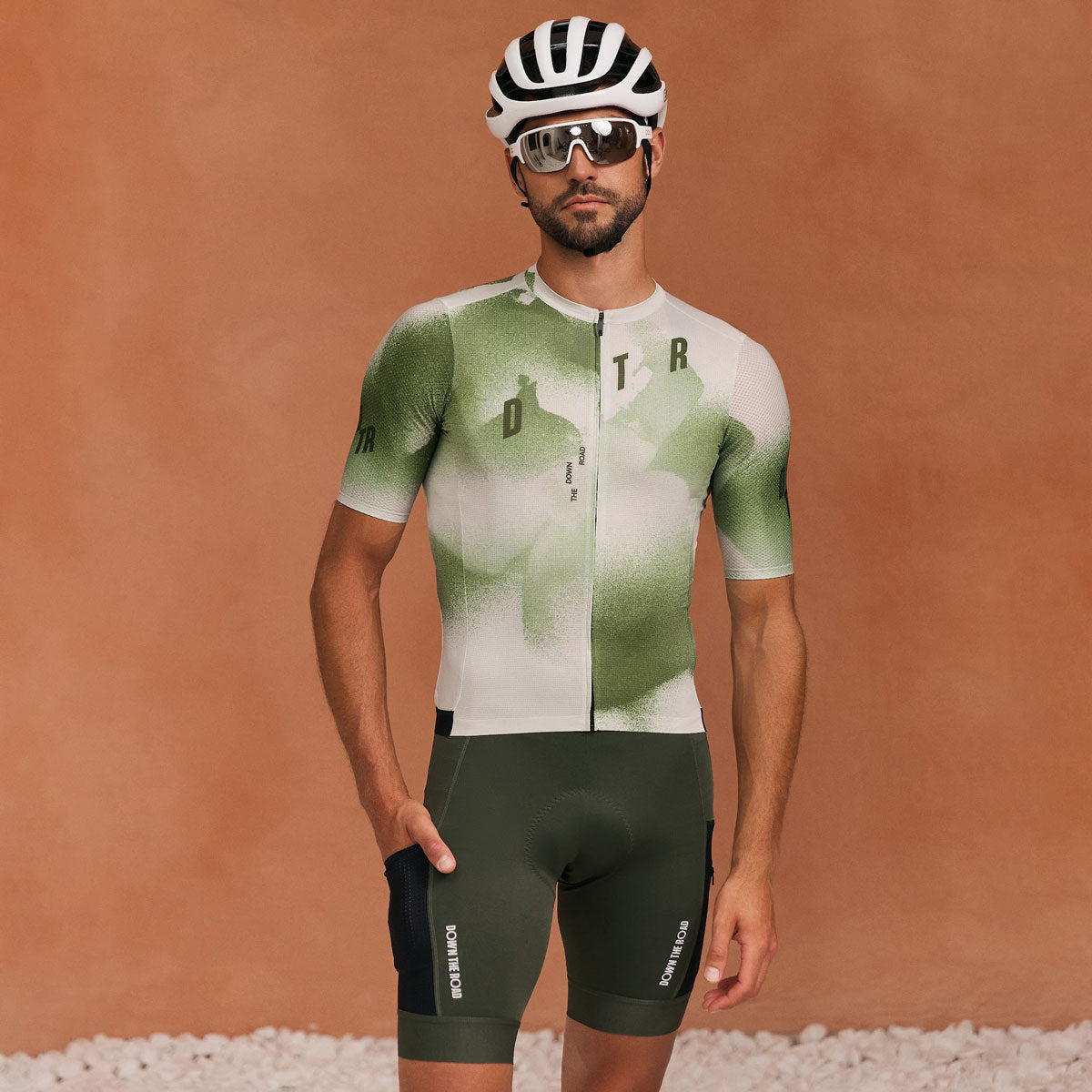




Rinse it in cold water the moment you're out of it, wash it cold on a gentle cycle turned inside out, and dry it flat or on a hanger in the shade. That routine handles the three things that actually shorten a trisuit's life: chlorine, salt and heat. This guide covers each of them, what to do about the chamois, and how to store a suit between races.
What actually wears a trisuit out
Fabric failure in a trisuit almost never comes from riding. It comes from chemistry and heat: chlorine attacks elastane, salt water leaves crystals that abrade fibres from the inside, and hot water or a tumble dryer breaks down the stretch that holds the suit against your body. A suit that's lost its compression hasn't been worn out — it's been cooked or bleached.
The chamois is the second failure point. It's a thin, dense foam designed for a few hours on the bike, and what kills it is being left compressed and damp. A suit balled up in a transition bag for two days is doing more damage than the race did.
The rinse that matters most
The single highest-value thing you can do is rinse the suit in cold fresh water within minutes of taking it off — before the pool chemicals or salt have time to dry into the fabric. Thirty seconds under a cold shower or a tap is enough. Do it even if you're going to wash it properly later that day.
If you swim in a chlorinated pool regularly, this stops being optional. Chlorine keeps working on elastane after you're out of the water, and a suit that's rinsed every session lasts several times longer than one that isn't. Sea water is less aggressive chemically but leaves salt that stiffens fabric and grinds at fibres each time you move.
After an open-water swim, check for silt and sand in the leg grippers and around the chamois edges before you rinse — grit trapped there is what turns a smooth gripper into an abrasive one.
Washing: cold, gentle, inside out
Wash at 30°C or below on a gentle or delicate cycle, turned inside out, with a mild liquid detergent. Turning it inside out puts the chamois and the seams on the outside of the drum where they take less friction, and protects any printed or sublimated graphics on the outer face.
Skip fabric softener entirely. It coats fibres and destroys the wicking that makes technical fabric work, and on a chamois it leaves a residue that holds moisture against your skin. Skip bleach and anything with optical brighteners for the same reason.
A mesh laundry bag is worth using if you're washing the suit alongside anything with a zip or a hook. Zips catch lycra, and a pulled thread in a race suit is permanent.
Hand washing works fine and is gentler still: cold water, a small amount of detergent, gentle agitation for a minute, then rinse until the water runs clear. Don't wring it — press the water out.
Drying without cooking it
Hang it or lay it flat in the shade, away from direct heat. No tumble dryer, no radiator, no sunny windowsill. Heat is what permanently relaxes elastane, and a suit that has been through a dryer once will never sit as close again.
Direct sun does two things at once: it heats the fabric and it fades sublimated colour. Indoors on a hanger, or outside in shade with air moving, is the right answer. A technical suit dries quickly — usually a few hours — so there's rarely a reason to rush it.
Make sure the chamois is completely dry before the suit goes into a drawer. Damp foam in a dark space is how a suit starts to smell in a way that doesn't wash out.
Looking after the chamois
The chamois needs washing after every single use, without exception, and it needs to dry fully before it's stored. This is a hygiene point rather than a fabric one: a chamois sits against skin under pressure and moisture for hours, and bacteria build up quickly in foam that stays damp.
Don't scrub the chamois hard or use a brush on it. The foam's structure is what gives it its density profile, and grinding at it flattens the surface layer. Gentle agitation and a thorough rinse is all it needs.
If you use chamois cream, rinse the suit promptly — most creams are designed to stay put, which means they need proper washing rather than a quick rinse to come out fully. If you get persistent skin irritation, saddle sores or anything that isn't clearing up between sessions, that's worth raising with a doctor rather than solving with kit.
Storing a suit between races
Store it flat or loosely folded in a drawer, dry, out of sunlight, and not compressed under a stack of other kit. Hanging is fine for short periods, but a heavy wet suit left on a thin hanger for months will stretch at the shoulders.
At the end of the season, wash it once more before it goes away rather than storing it as it came off the last race. Residual salt, chlorine or sweat keeps working on the fabric in storage.
FAQ
Can I put a trisuit in the washing machine?
Yes — cold, gentle cycle, inside out, mild liquid detergent, no softener. A mesh bag helps if anything with a zip is in the same load.
How do I get chlorine out of a trisuit?
Rinse in cold fresh water immediately after swimming, then wash normally. Chlorine keeps degrading elastane after you leave the pool, so the timing matters more than the wash.
My trisuit smells even after washing. What now?
Usually the chamois has been stored damp. Soak it in cold water with a small amount of mild detergent for an hour, rinse thoroughly, and dry it completely in moving air. Avoid hot water, which sets odour into synthetic fibres.
Can I tumble dry it on low?
No. Even a low setting is warm enough to relax the elastane that gives the suit its fit, and that change is permanent.
How often should I wash it?
Every use. The chamois makes this non-negotiable.
When a suit has done its miles: the trisuit range is at /collections/trisuits.
DTR — performance cycling and triathlon apparel, designed and developed in Ukraine.

Leave a comment
This site is protected by hCaptcha and the hCaptcha Privacy Policy and Terms of Service apply.