

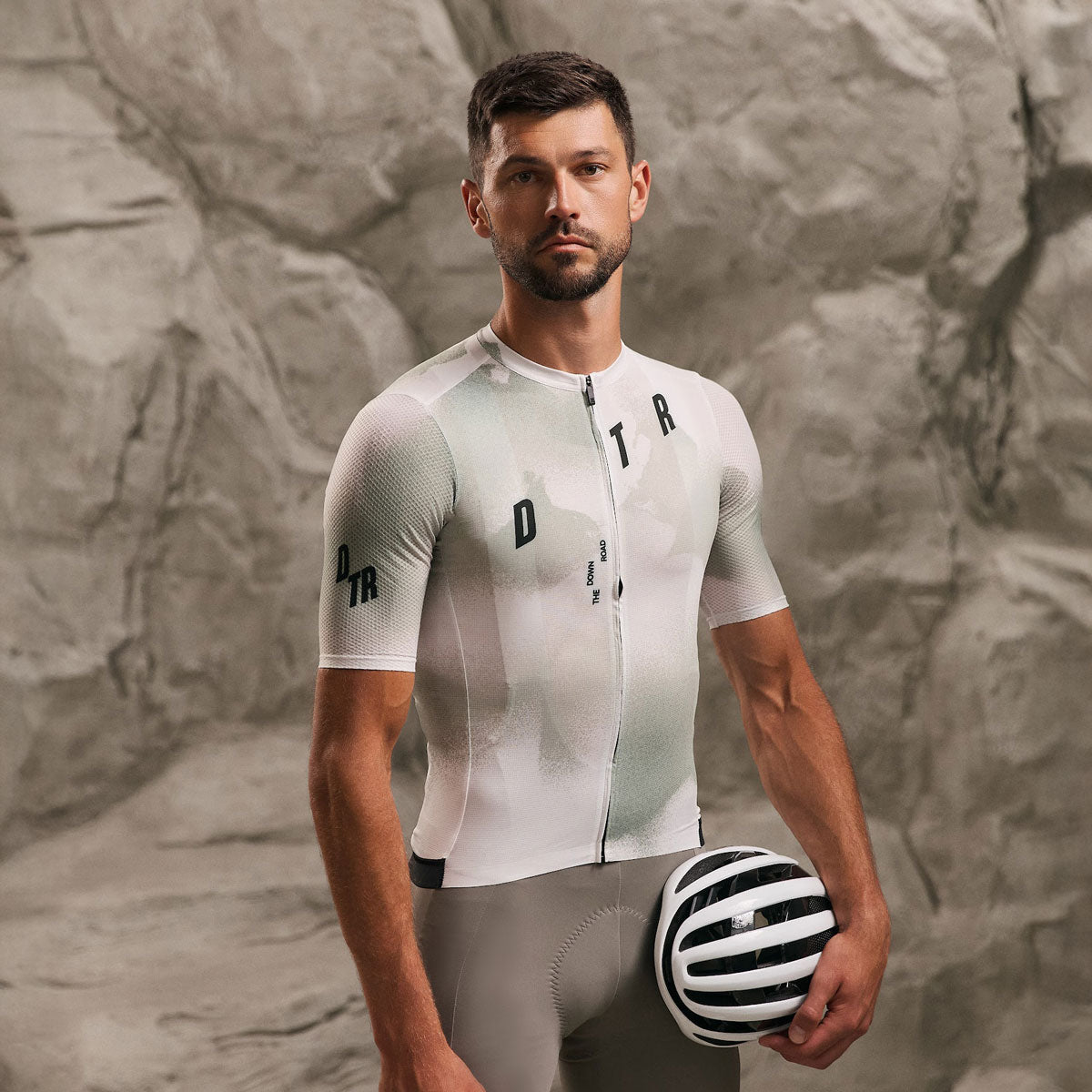
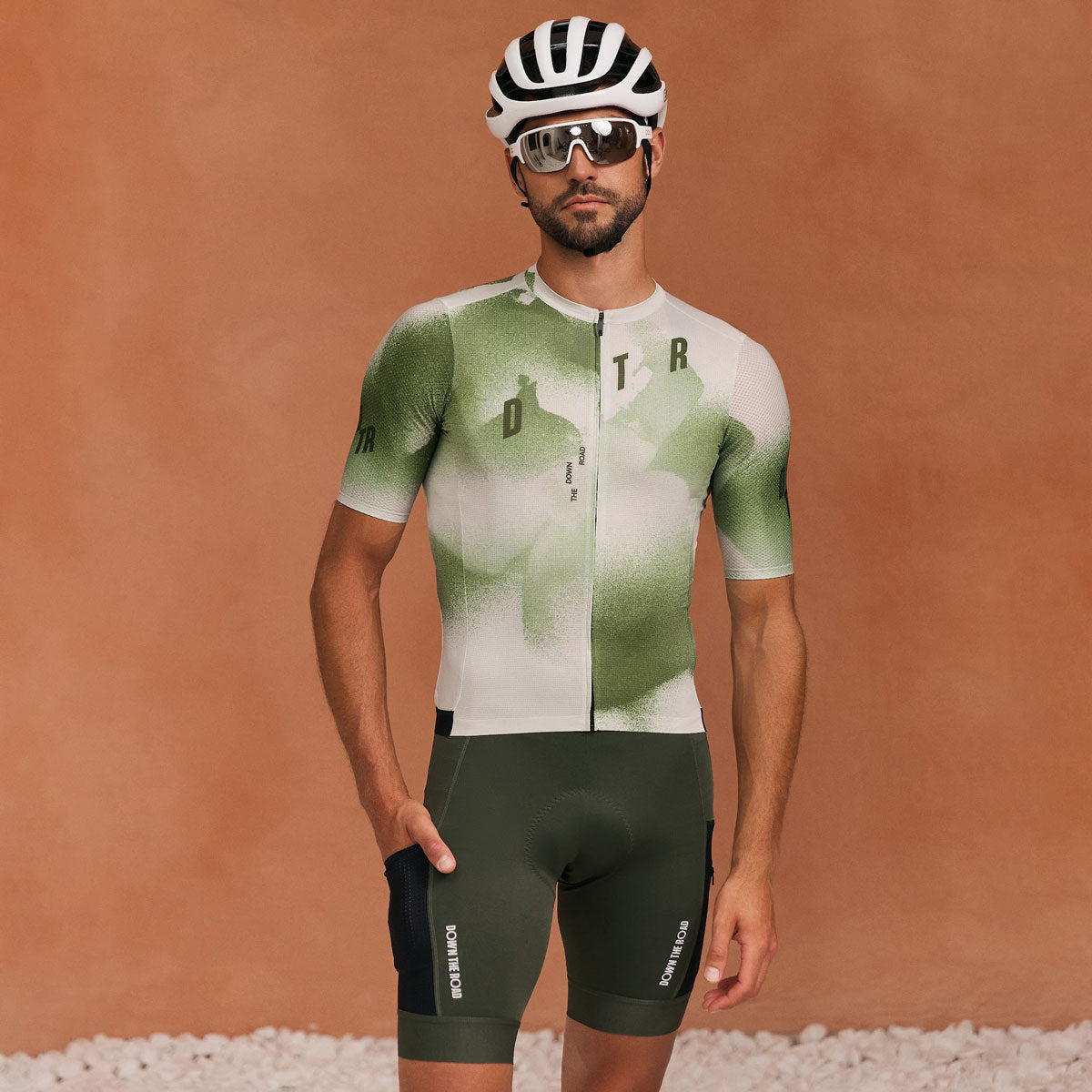
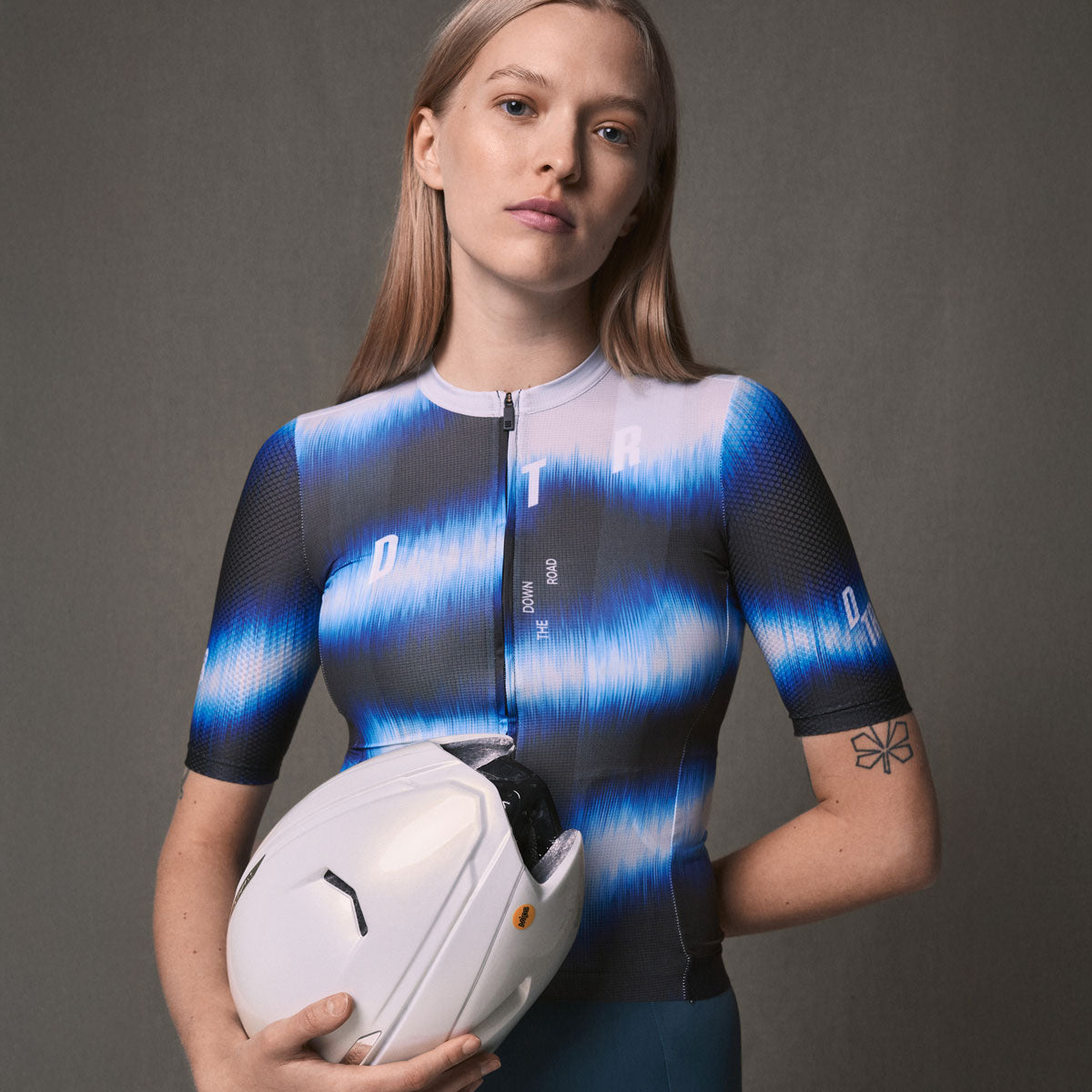
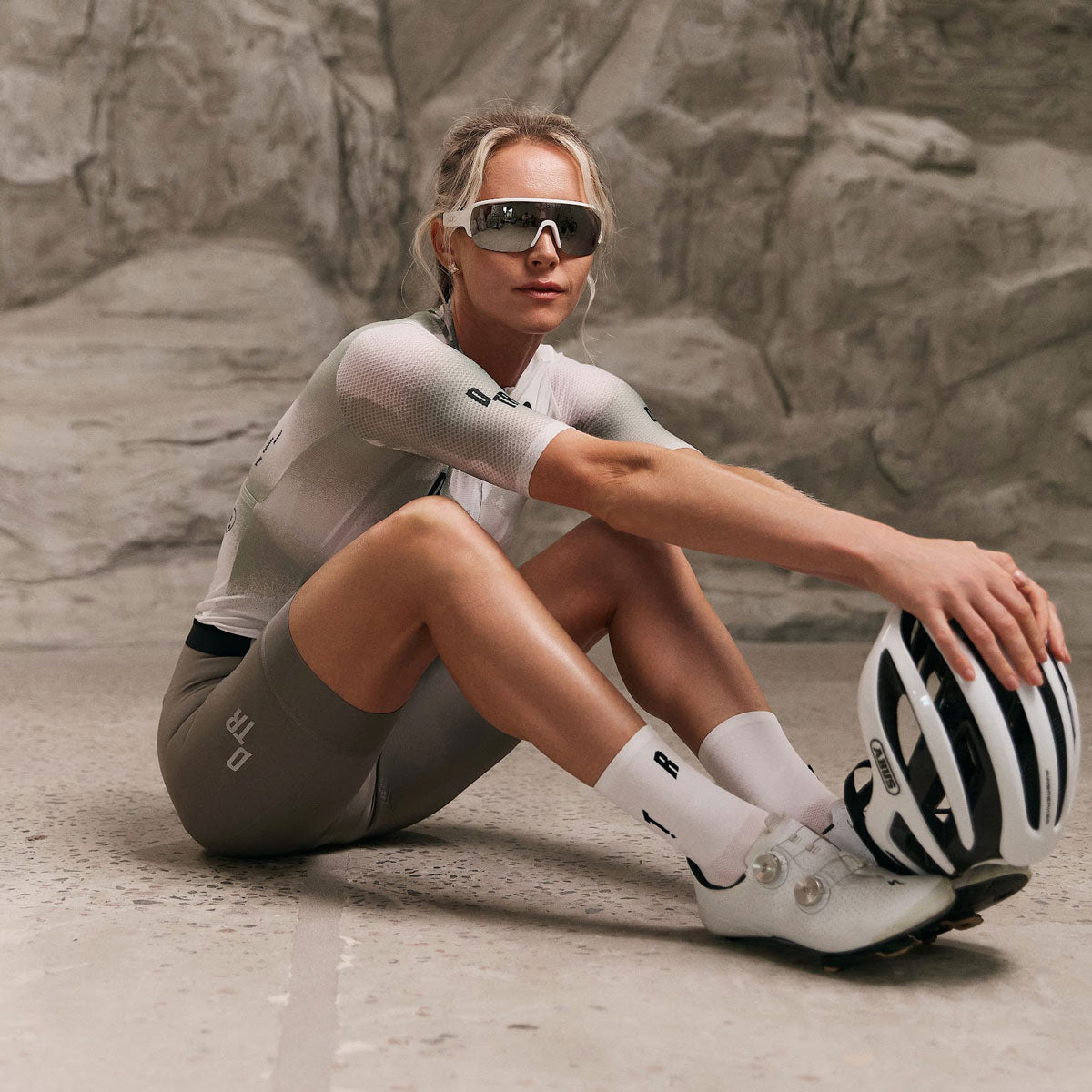
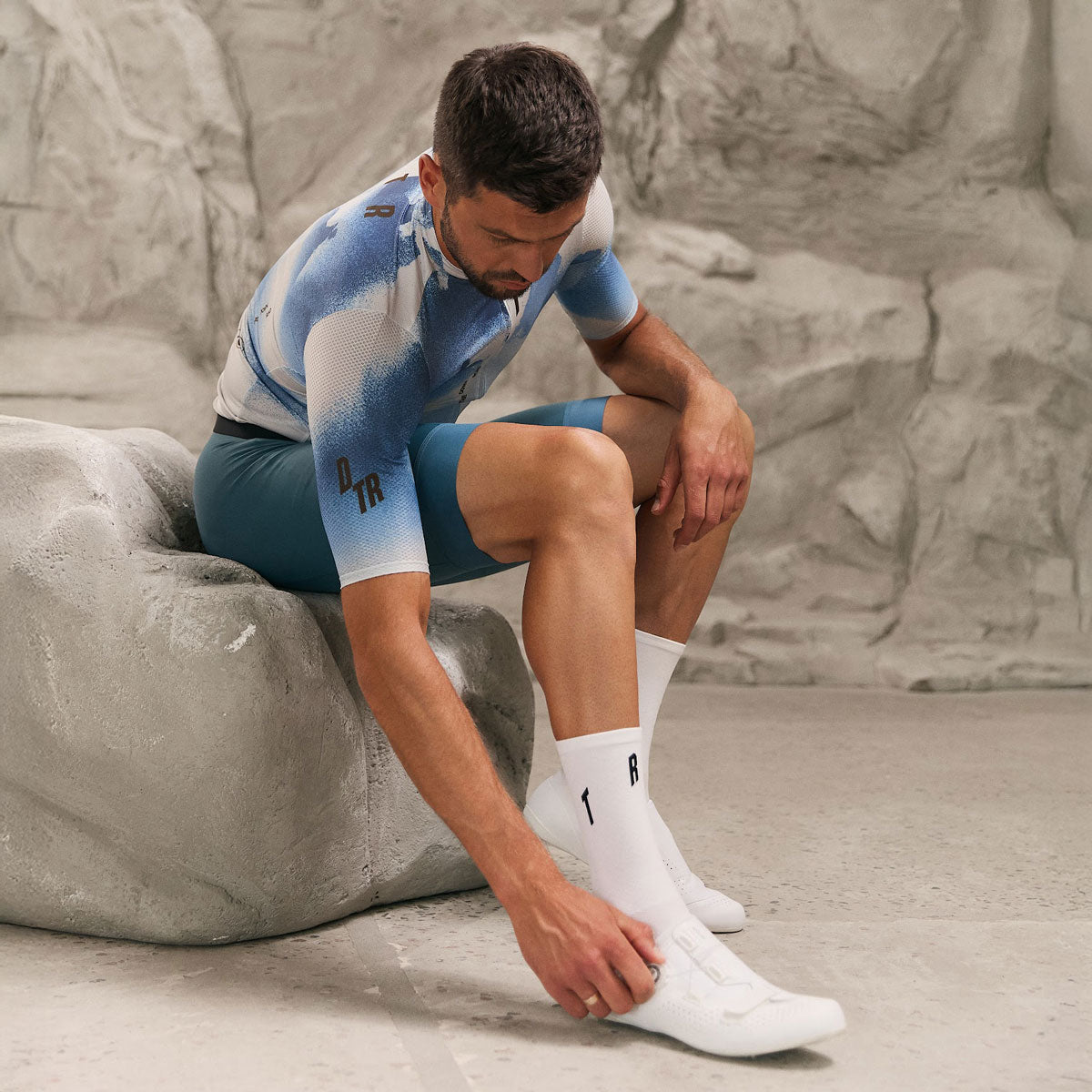
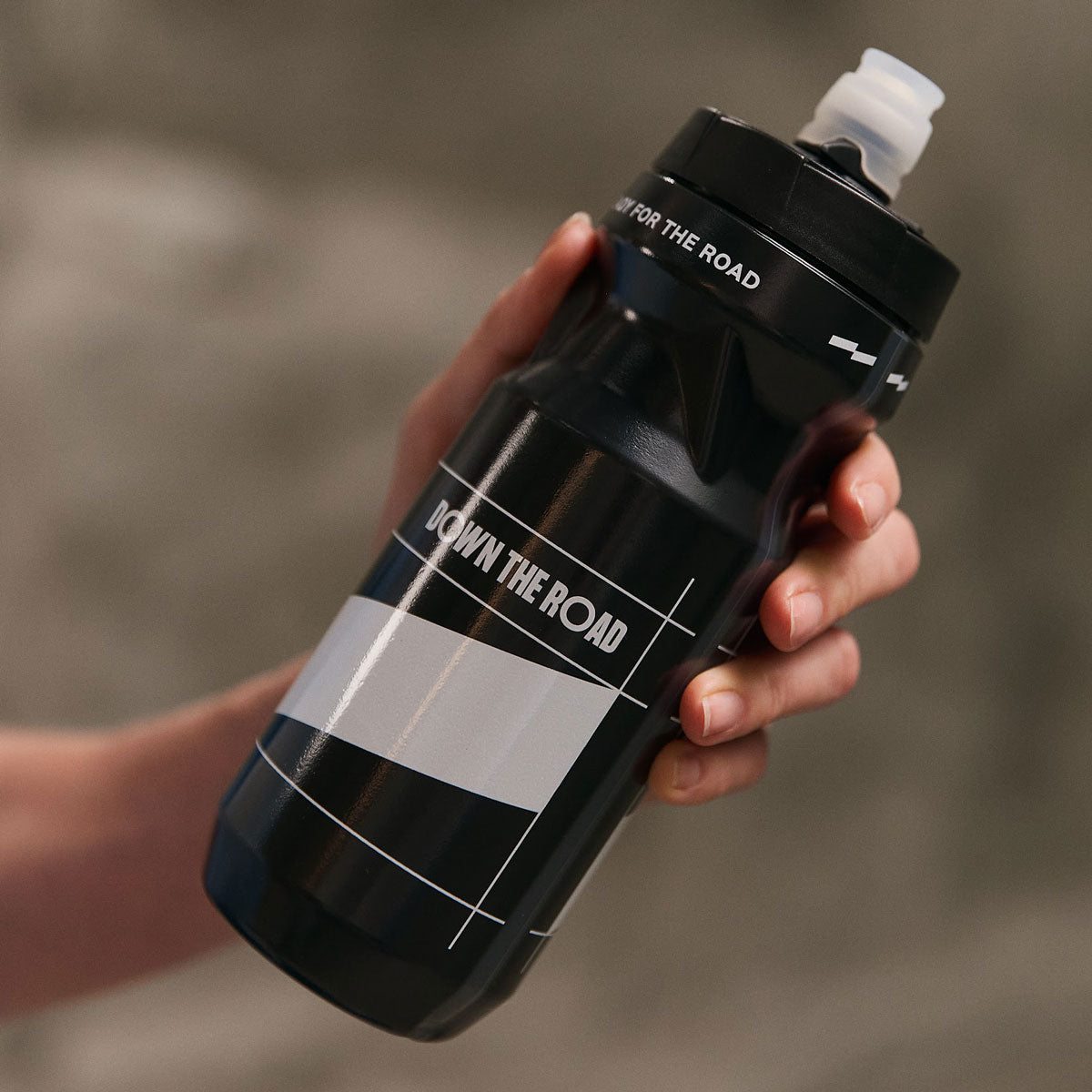
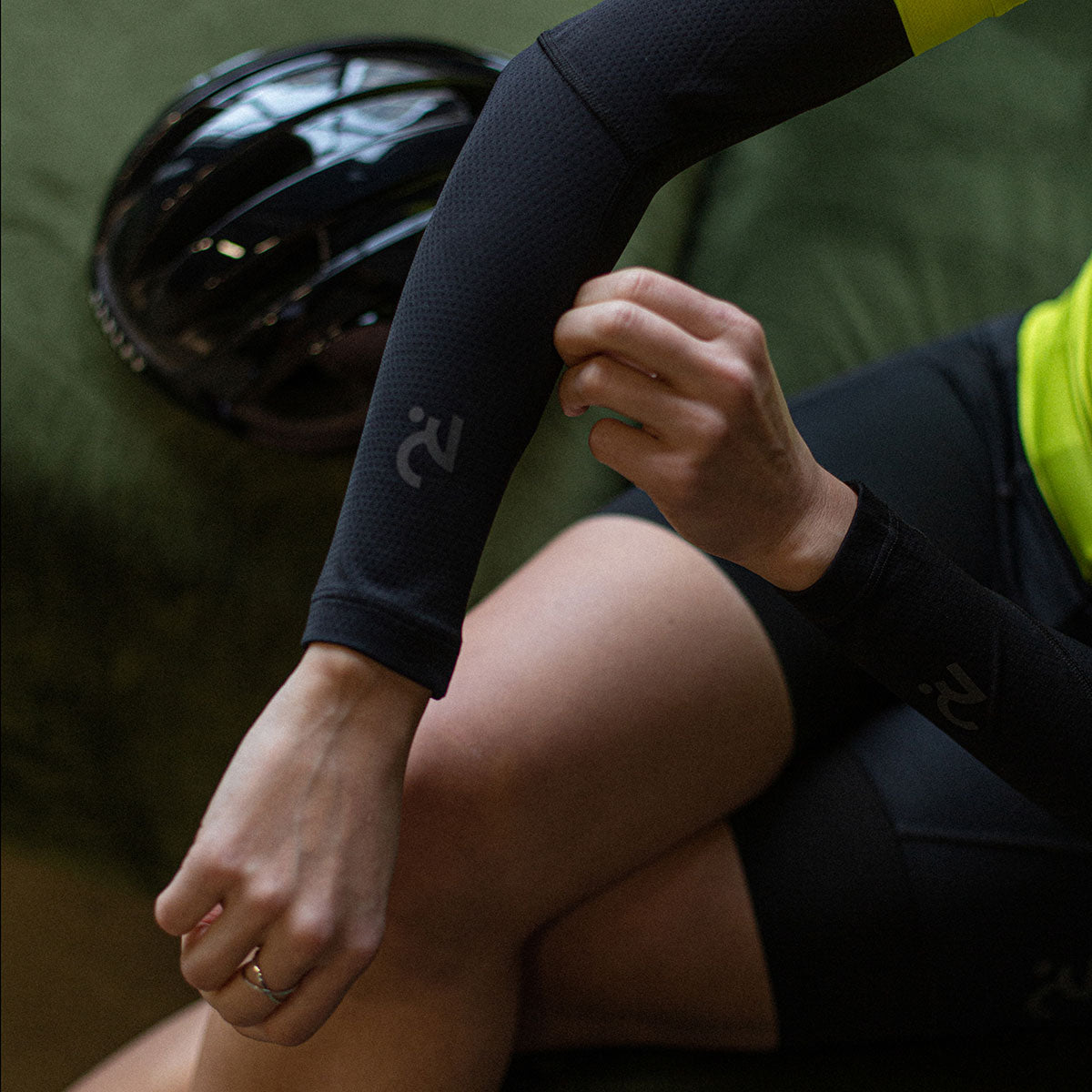
For cycling in fog, dress for damp air rather than cold air: a moisture-wicking base layer, a long-sleeve jersey or jersey with arm warmers, and a windbreaker or gilet on top. Low light is a separate problem, and no jacket replaces lights. This guide covers layering for fog, what to add at dusk and dawn, and where visibility actually comes from.
Why does fog feel colder than the temperature says?
Fog is air full of tiny water droplets, and those droplets settle on your kit. The thermometer may read 8 to 10°C, but damp fabric pulls heat from your body faster than dry air would. Dress for a few degrees colder than the number, and expect the outer layer to be wet on the surface by the end of the ride.
What should the base layer be?
A moisture-wicking base layer, because wet cotton against skin is where the chill starts. It moves sweat outward so the damp air has less to work on. Why base layers matter explains the choice, and the DTR base layer range is where to start.
Which jersey and warmers work best?
A long-sleeve jersey is the simplest answer on a foggy morning, or a short-sleeve jersey with arm warmers you can take off when the fog lifts. Warmers are the flexible option, because fog often clears by mid-ride. Long-sleeve jerseys and arm and leg warmers are both in the range, and arm warmers vs a long-sleeve jersey helps you decide.
Do you need a windbreaker?
Usually yes, and a light one is enough. It stops the wind chill that fog makes worse on descents and keeps the surface wetness off your torso. A windbreaker is not a rain jacket, but for fog and drizzle it is the better carry. Windbreaker vs rain jacket covers when you need the heavier option, and the windbreaker guide covers how to choose one.
What can you wear to be seen in low light?
Clothing helps, but it is the second line of defence. Light, bright or contrasting colours show up better than black in fog and at dusk, and a good fit matters because flapping fabric blurs your outline. Your lights do the real work: front and rear, on in daylight fog, and charged before you set out. The hi-vis kit guide goes deeper on colour and reflective detail.
What about your hands, feet and head?
Fog chills extremities first. Pair a cap or skull cap under the helmet with cycling socks that dry quickly, and consider overshoes in cold fog. Gloves are not part of the DTR range, so choose them elsewhere.
How does this fit with autumn riding?
Fog and low light peak in autumn, when temperatures swing between morning and afternoon. Use the temperature guide to pick layers and add one for the damp: what to wear by temperature, and autumn cycling kit for the whole season. If it turns to rain, move to the wet-weather guide.
FAQ
What should I wear cycling in fog?
A wicking base layer, a long-sleeve jersey or arm warmers, and a windbreaker or gilet, plus lights front and rear.
Do I need lights in daytime fog?
Yes. Fog cuts how far others can see you, so lights are worth running even in daylight.
Does bright kit make me safe in low light?
It helps drivers notice you, but it does not replace lights and sensible route choice.
Need a layer for damp mornings? See the DTR windbreakers.
DTR — performance cycling and triathlon apparel, designed and developed in Ukraine.

Leave a comment
This site is protected by hCaptcha and the hCaptcha Privacy Policy and Terms of Service apply.