


In a one-piece trisuit, a toilet stop means getting the suit off your shoulders and down to your hips, so the practical answer is to plan it: use the portable toilets before the start and in transition, and practise the sequence in training. This guide covers how it works in a one-piece, what changes with sleeves, and how to prepare for race day.
How do you actually take a trisuit down?
Pull the straps or sleeves off your shoulders, work the top down to your hips, and the suit sits around your waist while you do what you need to do. Then pull it back up and reset the straps. In a sleeveless suit that takes seconds; with sleeves, you free your arms first. The first time should not be in a race, so try it at home.
Does a front zip make it easier?
A front zip makes the suit easier to get on and off, and helps with ventilation, but it does not change the stop itself: the suit still needs to come down from the shoulders. Check the construction of the suit you plan to race in and practise with that one. The fit guide explains why a correct fit makes this simpler, because a suit that is too tight or too loose is harder to manage.
Do sleeves change things?
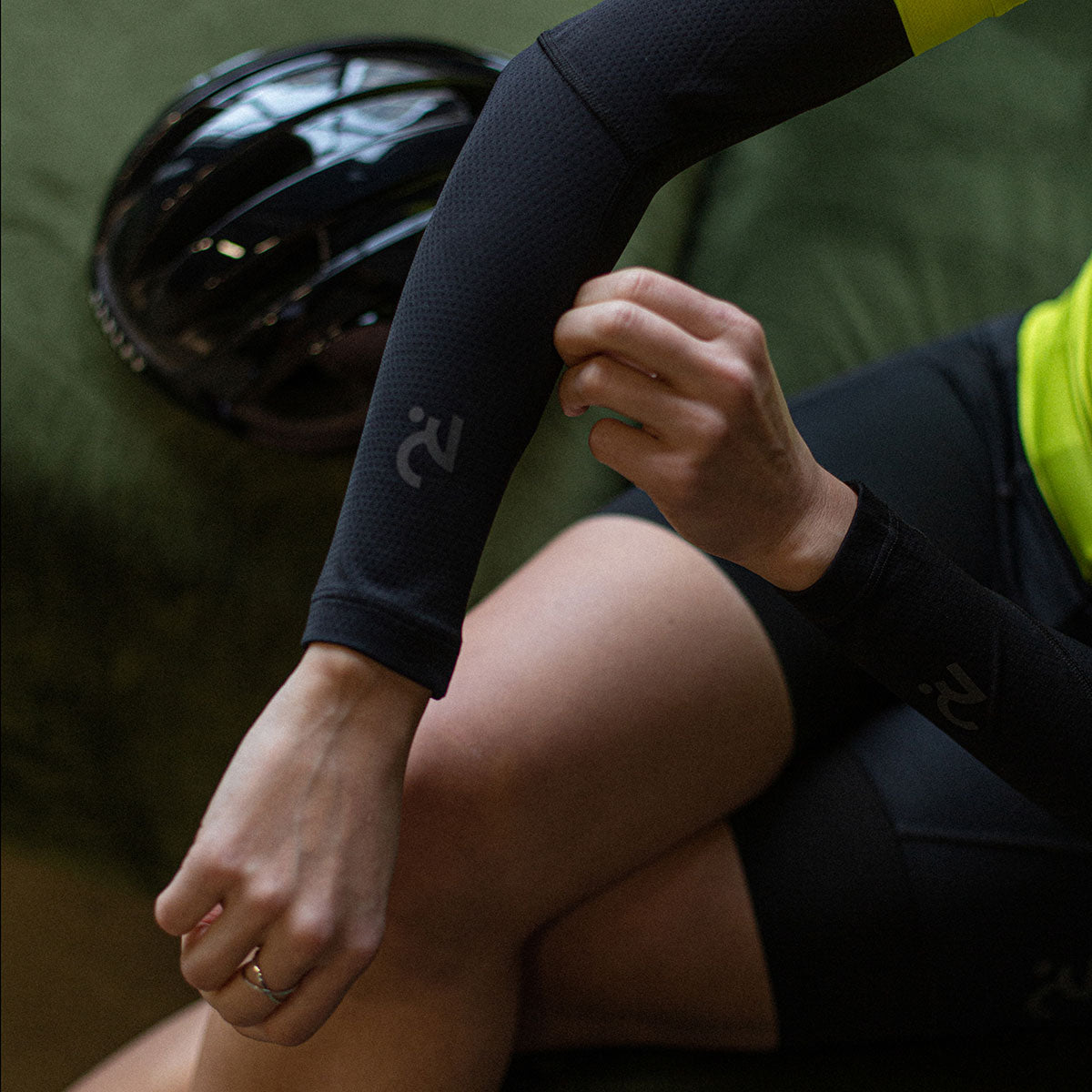
Slightly. A sleeved suit needs both arms out before it comes down, a sleeveless suit only the straps. It is one more step, and one more reason to rehearse. Sleeved vs sleeveless compares the two for racing.
Where is the best place to stop on race day?
Before the swim start and in transition. Queue for the portable toilets early, because lines build in the last half hour. In T1 and T2 you are already changing kit, so a short stop costs less time than you would lose on the course. The transition kit checklist shows what to have ready, so a stop does not turn into a scramble.
What about on the bike and run course?
Longer races have aid stations with toilets, and a planned stop there is quicker than an urgent one. In an Ironman or 70.3 you are on the bike for hours, so build your stop into your pacing and fuelling rather than waiting until it is urgent. What to wear for an Ironman and the 70.3 kit guide cover the long-race setup, and sprint racers can look at sprint kit, where a stop is rarely needed.
How do you practise before race day?
Do a few brick sessions in the suit you will race in and take it down once, deliberately, so you know how the straps, sleeves and chamois behave. Check that nothing twists or folds under you when you pull it back up. A new first-timer should start with what to wear for a first triathlon.
Does the chamois matter here?
It matters for comfort after a stop, because a chamois that sits wrong feels worse on the next ten kilometres. Pull the suit up fully, straighten the chamois, then reset the straps. The pad guide explains how thickness suits each distance.
FAQ
Can you pee in a trisuit?
Many triathletes do during the swim and bike, and it is common. How you handle it is a personal decision; the suit should be rinsed or washed afterwards either way.
Is a one-piece or two-piece better for toilet stops?
A two-piece makes it easier because the bottom comes down on its own, at the cost of a gap or ride-up between top and shorts. Both work.
How long does a stop take?
With practice, under a minute in a sleeveless suit. Add time for the queue.
Choosing a suit for race day? The range is in the DTR trisuits collection.
DTR — performance cycling and triathlon apparel, designed and developed in Ukraine.

Leave a comment
This site is protected by hCaptcha and the hCaptcha Privacy Policy and Terms of Service apply.