

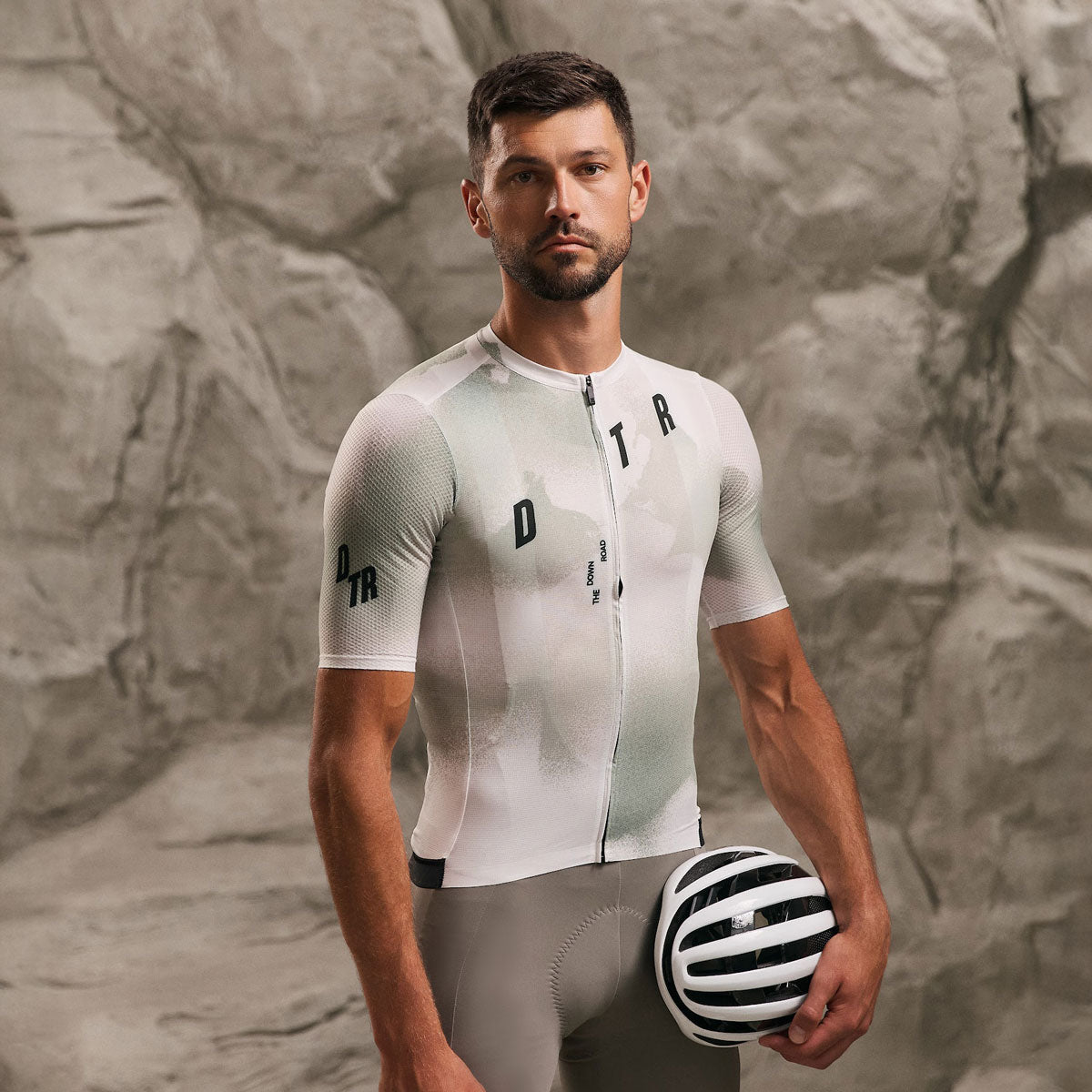
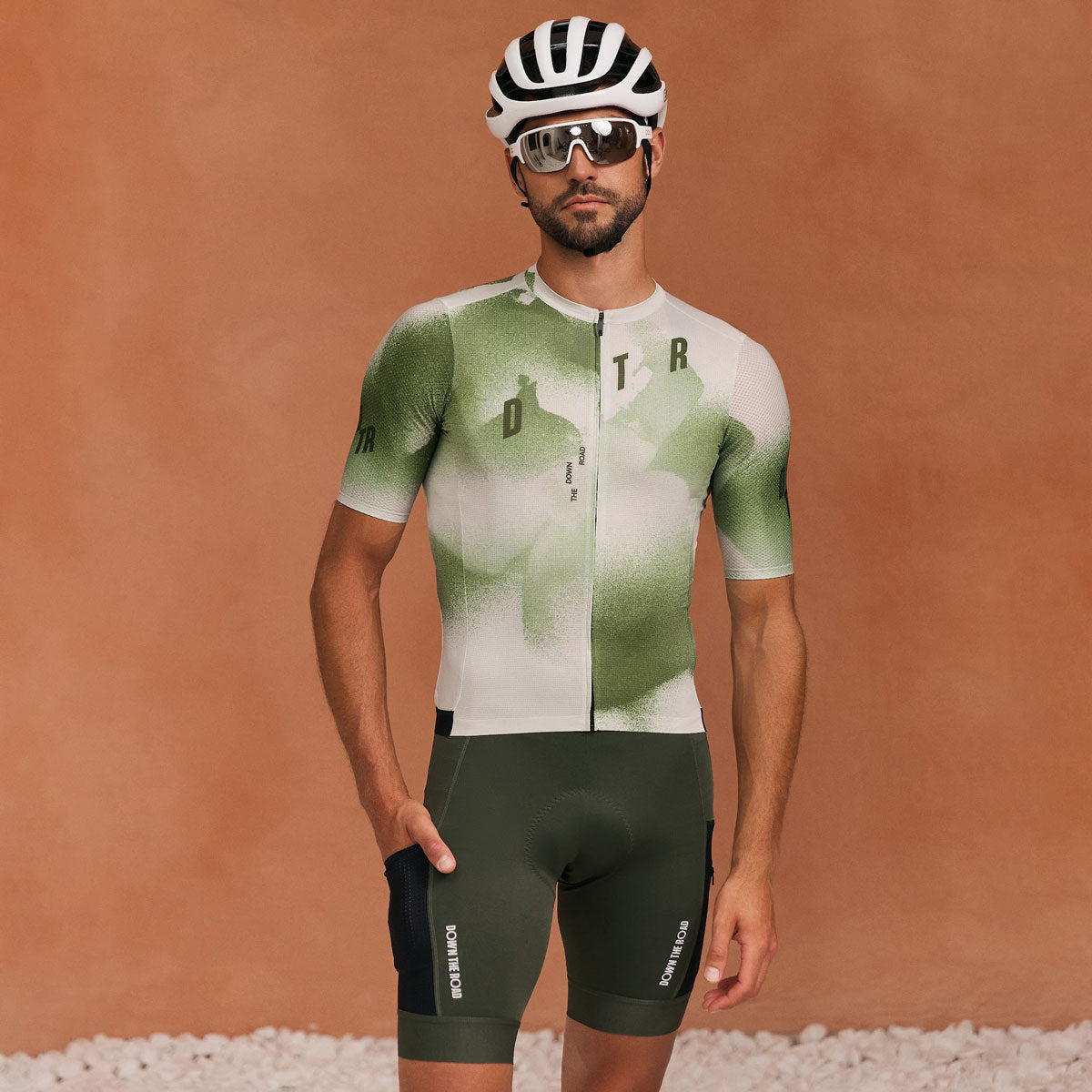
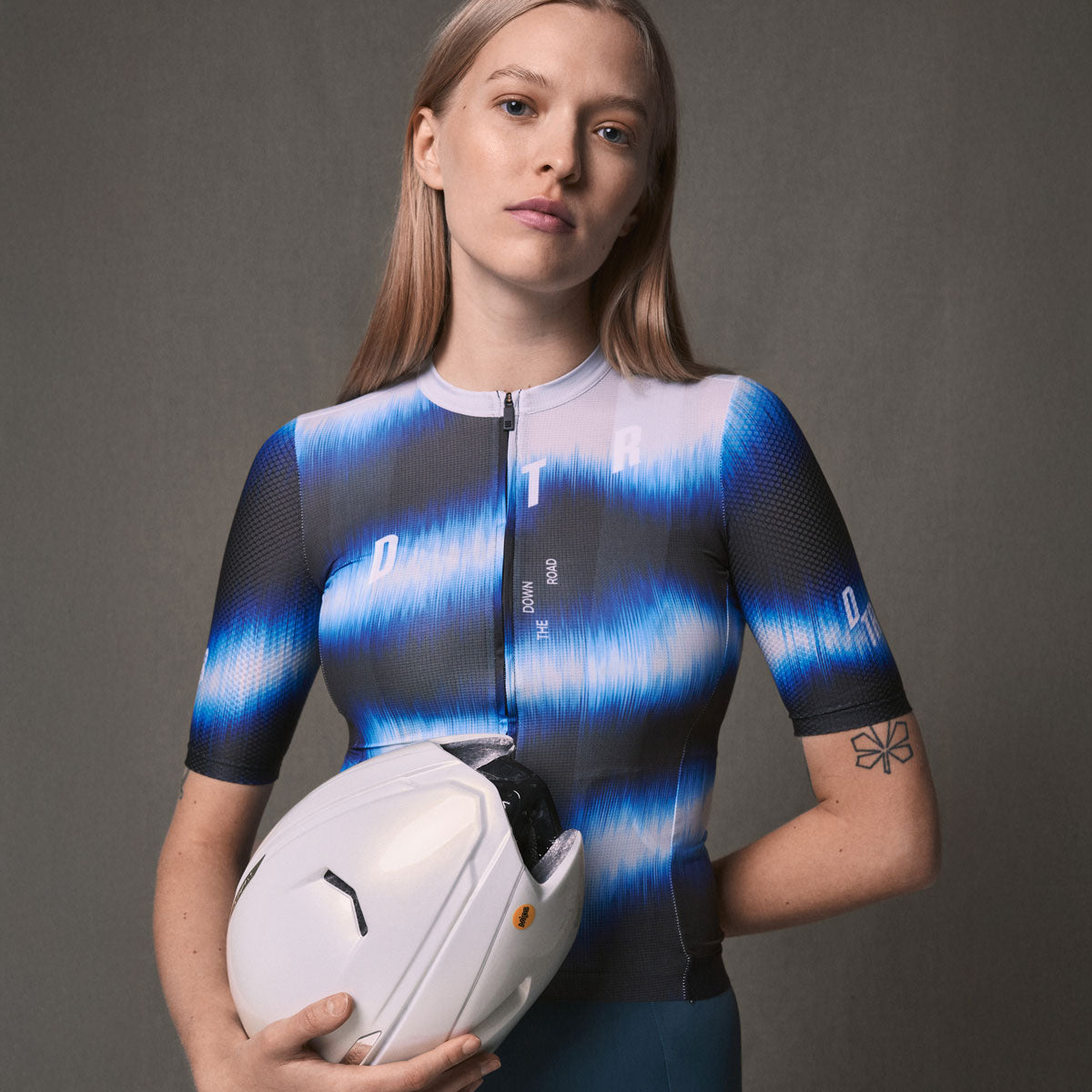
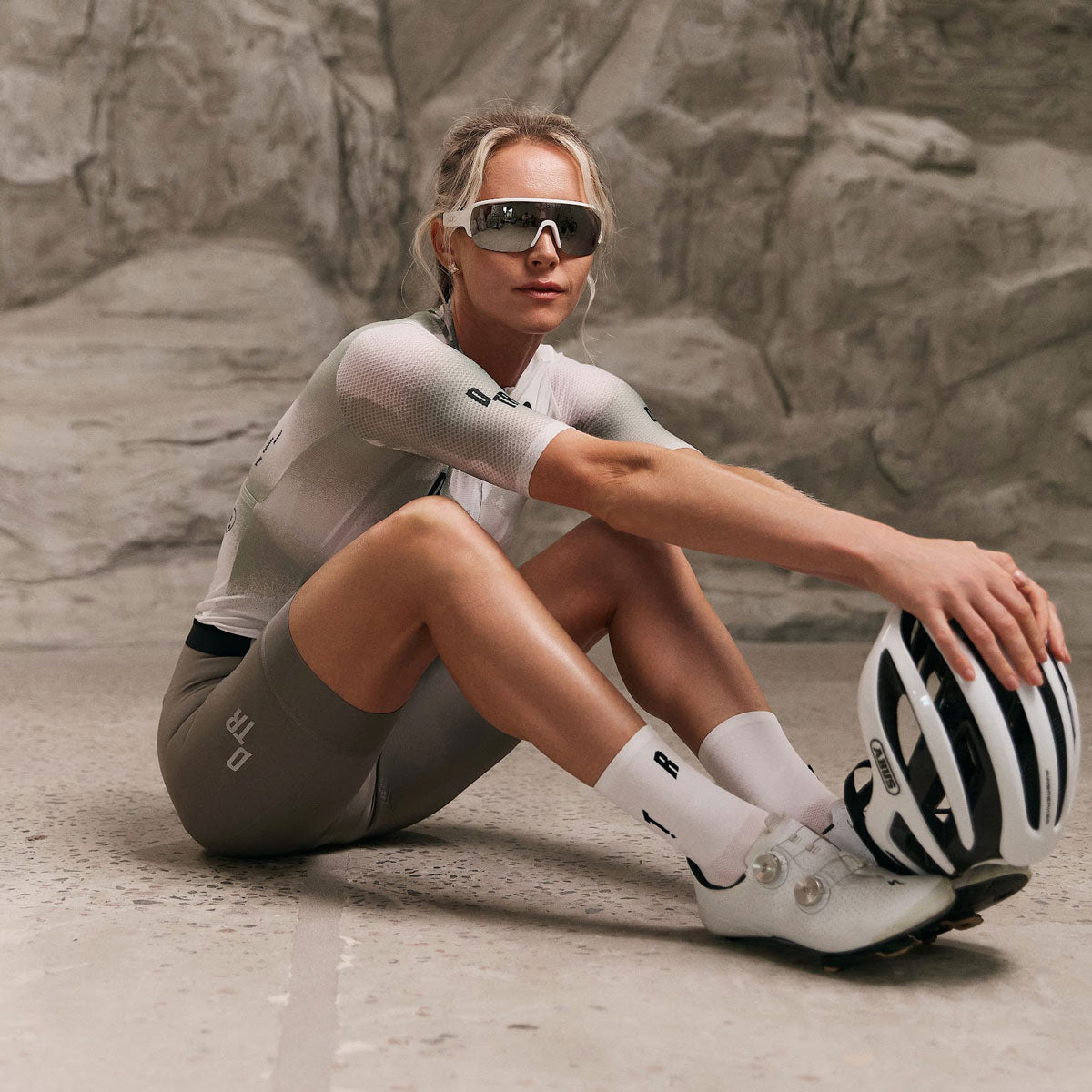
For a first Ironman or 70.3, you race in one trisuit from the swim start to the finish line — a wetsuit over it in the water, nothing underneath it, and no kit changes in transition. This guide covers what that suit has to do across all three disciplines, what to add when the race is cold or hot, and what to lock in during training so nothing is a surprise on race morning.
If you are racing the full distance and want the longer breakdown, the full-distance Ironman kit guide goes further on nutrition storage and finishing in the dark. This piece is about your first one, at either distance.
One suit, the whole race
A trisuit is built to be worn for the entire day: it swims under a wetsuit, sheds water on the bike, and runs without chafing. Changing kit in transition costs several minutes and gains almost nothing at half or full distance. Choose one suit you already trust and wear it start to finish.
The compromise is deliberate. A trisuit chamois is thinner than the one in your bib shorts because it has to run as well as ride, and the fabric is cut to drain rather than insulate. It will never be as plush as a dedicated long-ride short. That is the correct trade for a day that ends on foot.
What goes underneath
Nothing, in nearly every case. A tri chamois is designed to sit against skin, and underwear adds seams, traps swim water, and stays damp for the rest of the day. Race in the suit alone.
Women racing in a suit without internal support can add a low-seam sports bra, ideally one that is flat across the back where the wetsuit and race number sit. Test it in open water first — anything with a thick clasp or a raised seam will make itself known by hour four.
Do you need anything for the swim?
The trisuit goes on first, under the wetsuit, before you leave the hotel. Add a swim cap (the race usually provides one), goggles, and — if the water is genuinely cold — a neoprene cap. Nothing else changes.
A suit with a rear zip or a low front zip sits more comfortably under neoprene than a tall full-length zip. If your wetsuit rubs your neck, that is a wetsuit and lubricant problem, not something a trisuit fixes. More detail in what to wear under a wetsuit.
Sleeves or no sleeves?
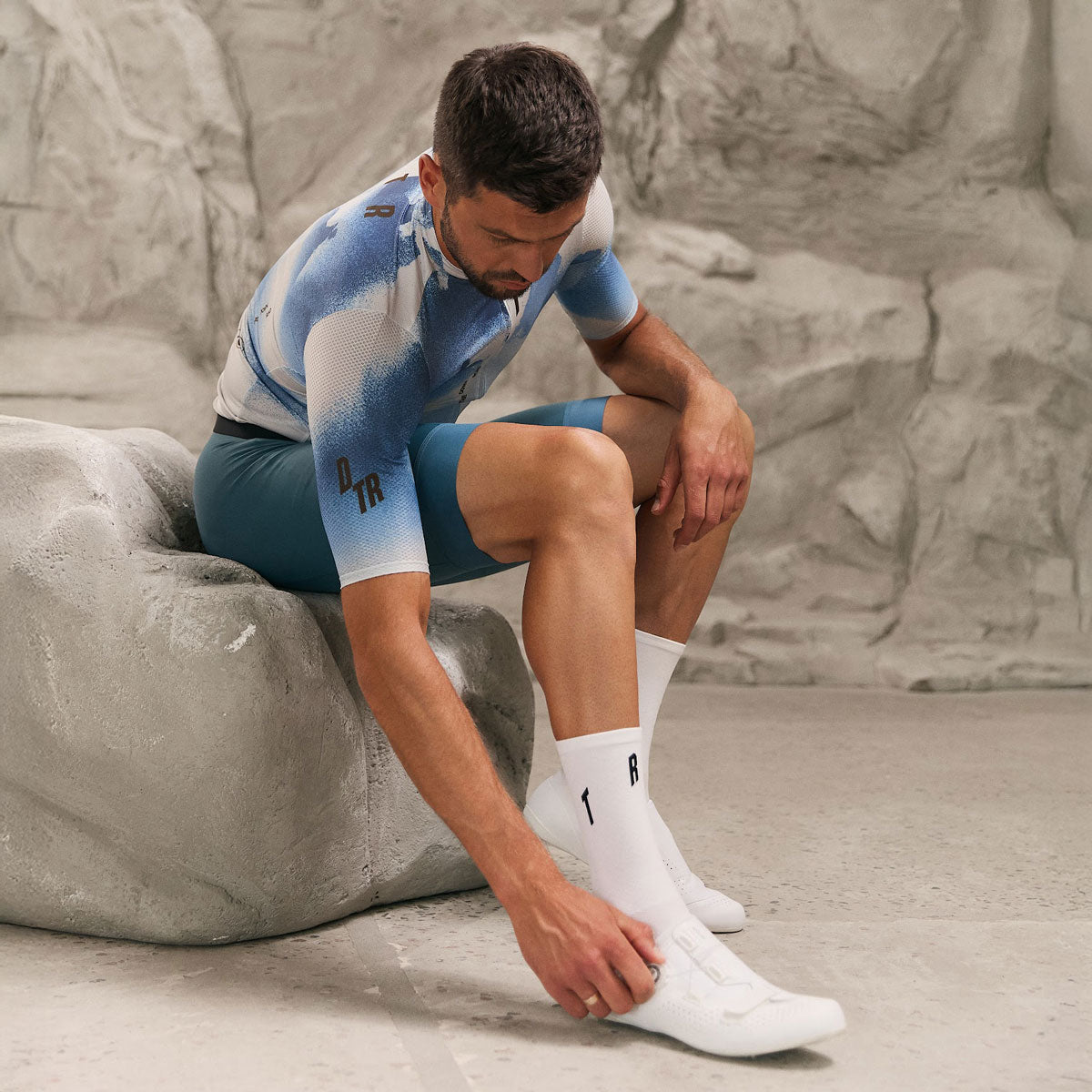
Sleeved suits are faster on the bike and better in strong sun; sleeveless suits are cooler in humid heat and easier to pull a wetsuit over. For a first race, comfort and shoulder freedom matter more than the aero margin, so pick the one that lets you swim and run without restriction.
If your race is hot and humid — much of the mid-season European and Asian calendar — sleeveless is the safer first choice. If it is dry and exposed, sleeves give you real sun cover across five to seven hours, which is worth more than the drag saving.
Five hours in one position on the bike
The bike leg is where kit either disappears or becomes the thing you think about. What matters is that the chamois stays put, the leg grippers do not dig in when you are low on the bars, and the fabric across your back does not bunch when you are in aero.
Check the fit in position, not standing in front of a mirror. Get on the bike, get low, and have someone look at the back panel and the leg openings. A suit that fits standing up can still ruck up across the lower back once you are stretched out.
Rear pockets carry what you cannot mount on the bike — gels, a phone, salt. Load them the way you will race and ride with them full at least twice.
The run is what changes everything
The run is where a trisuit earns its keep, because you are now upright, wet, and rubbing. A pad that felt thin at hour two is the reason your legs turn over freely at hour six. Anything that held water on the bike will chafe on the run.
This is the single strongest argument for racing in one suit: by T2 you know exactly how it behaves, and there is nothing new against your skin at the point in the day when your tolerance is lowest.
Racing in the heat
In hot races the kit job is heat loss and sun cover, not insulation. Choose a light-coloured suit with mesh panels, keep the front zip available to open on the run, and use your cycling socks and a cap to manage what you can.
Ice goes in the suit, not on it — down the front and in the leg openings at aid stations. A suit that drains well handles this without turning into a bucket. A visor or cap keeps sun off your face and lets you tip water over your head without soaking your eyes.
Cold, wet and windy race days
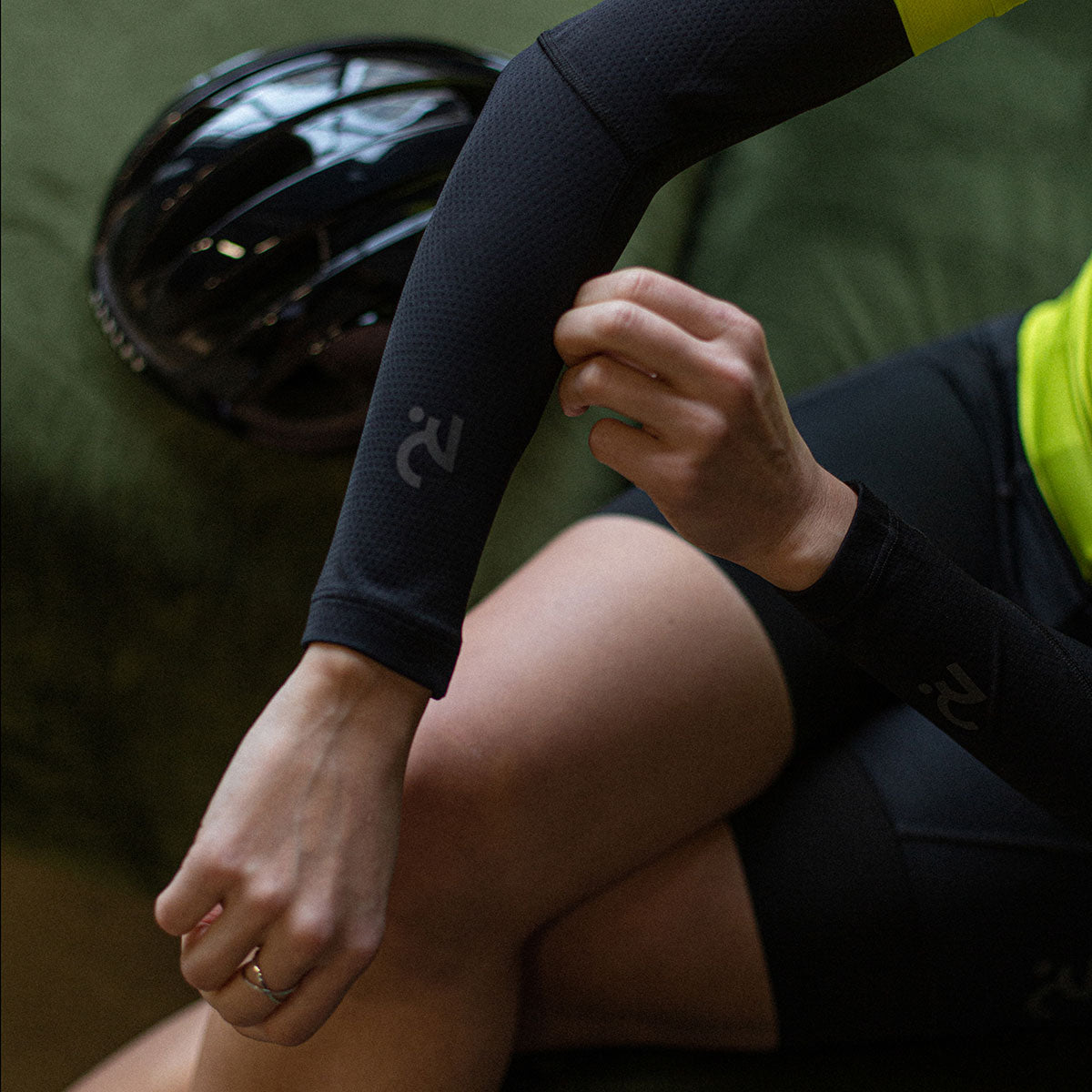
Below roughly 15°C on the bike, add arm warmers and a packable windbreaker you can drop at special needs, over the same trisuit. Do not add a base layer under a trisuit — it holds swim water against you for the rest of the day.
Long descents are the risk, not the average temperature. You come out of the water wet, ride into wind, and lose heat fast in the first hour. Arm warmers and a gilet in T1 are cheap insurance and easy to shed. For a genuinely extreme forecast, the Norseman kit breakdown covers the far end of this.
Comfort over five to seven hours
Most race-day skin problems come from friction plus moisture over time, not from one bad decision. Chamois cream, a suit that fits without wrinkles, and kit you have already ridden long in remove most of the risk.
Apply chamois cream to skin rather than loading the pad, and take a small amount in your bike bag if you expect a long day. Seams at the shoulder, under the arm, and at the leg opening are the usual chafe points — lubricant on those before the swim helps. If you develop skin that stays sore, breaks, or shows signs of infection after a race, see a doctor rather than riding through it. More on the mechanics in our saddle sores guide and chamois cream guide.
What to test before race week
Everything you will wear should have done at least one long brick session. That means the suit, the socks, the cream, the cap, and the pockets loaded as you will race them — nothing new on race day, including a suit that has only been worn for an hour.
A practical sequence: race the suit in a shorter event first, then do one long ride plus run in it, then leave it alone. Race week is for logistics, not for testing a new pad.
Race-morning kit list
- Trisuit, worn from the start
- Wetsuit, goggles, spare goggles, swim cap
- Chamois cream and lubricant for the neck and shoulders
- Cycling socks and shoes
- Helmet and sunglasses
- Arm warmers and a windbreaker if it is under about 15°C
- Cap or visor for the run
- Race belt and number
Our transition checklist covers how to lay this out in T1 and T2.
FAQ
Can I wear bib shorts for the bike leg instead?
You can, but you have to change in transition and then change again for the run, which costs more time than the extra comfort is worth at 70.3 or full distance. A trisuit is the reason transitions stay short.
Do I wear a bra under a trisuit?
Only if the suit has no internal support. If you do, choose a flat, low-seam design and swim in it before race day.
Is a sleeved trisuit worth it for a first race?
Only if the race is dry and exposed enough that sun cover matters. For humid heat, sleeveless is easier to manage.
Will a trisuit pad be enough for a full-distance bike leg?
Yes, if it fits and you have trained in it. Tri pads are deliberately thinner so they do not interfere with the run.
Should I put a base layer under my trisuit in a cold race?
No. It holds swim water against your skin all day. Add arm warmers and a windbreaker over the top instead.
See the trisuit range at /collections/trisuits.
DTR — performance cycling and triathlon apparel, designed and developed in Ukraine.

Leave a comment
This site is protected by hCaptcha and the hCaptcha Privacy Policy and Terms of Service apply.