

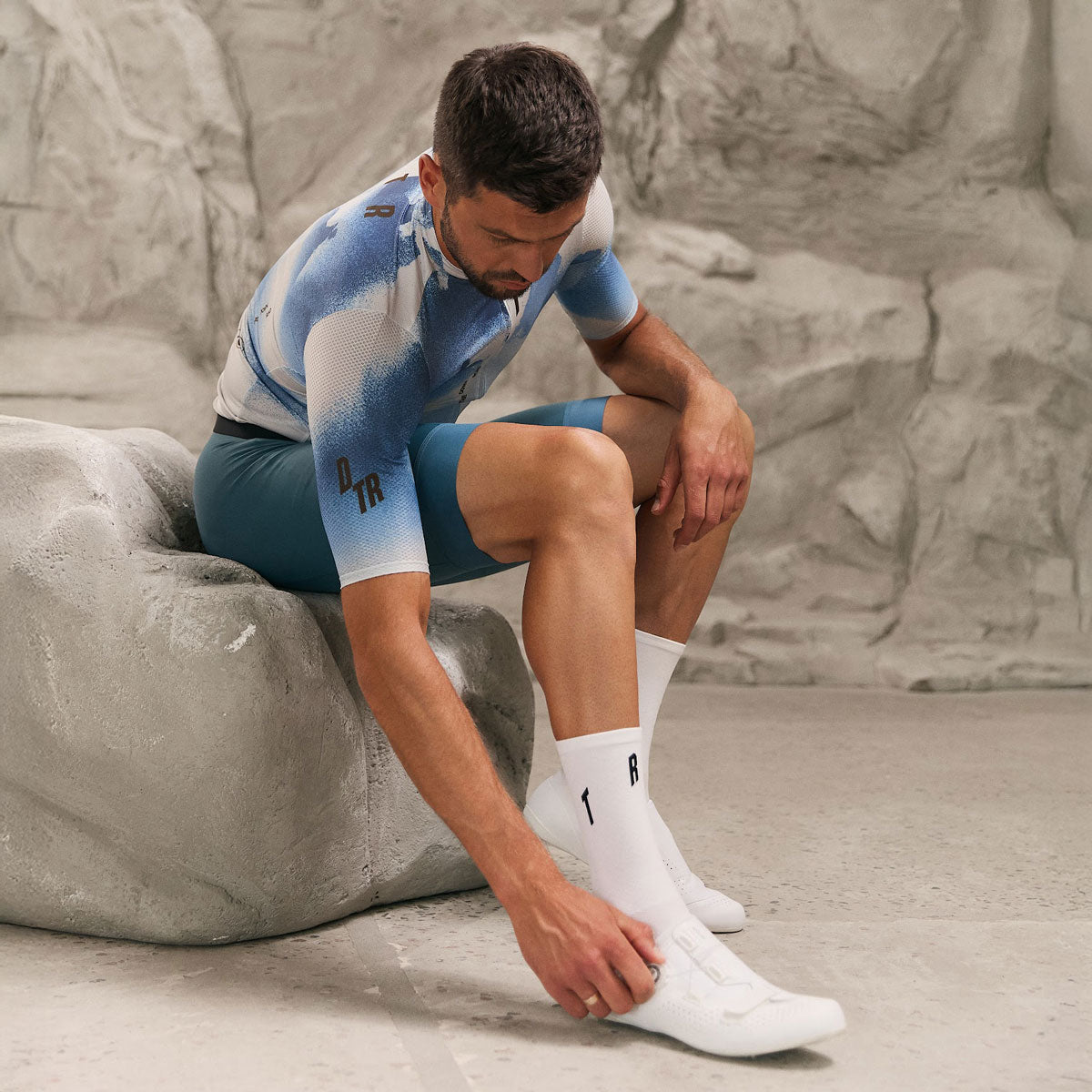
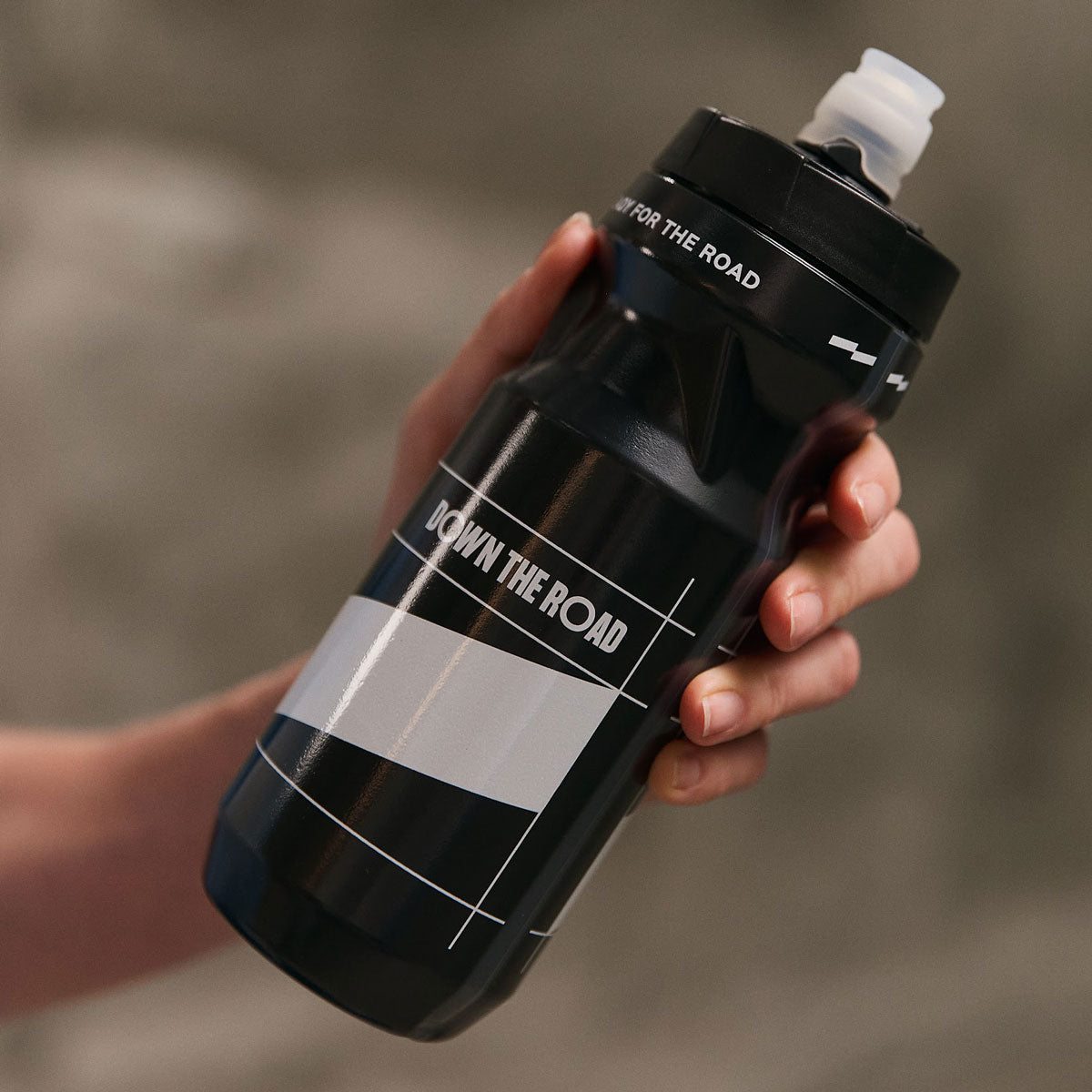
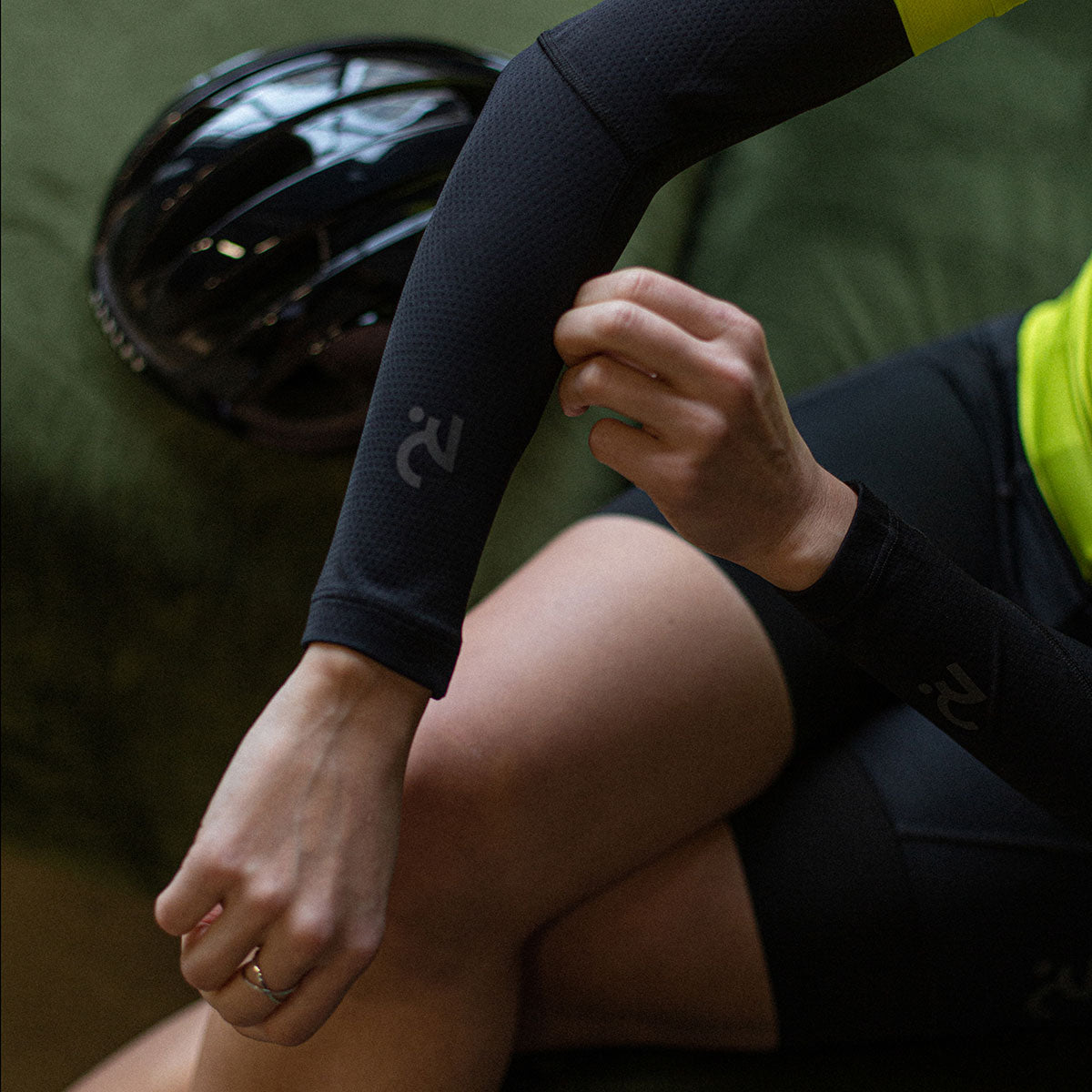
For a cold-weather triathlon bike leg, keep your trisuit as the base and add what you can put on quickly in T1: arm warmers or fleece arm warmers, a vest or windbreaker, and covers for head and feet. You start the bike wet and slightly chilled, so every extra layer has to go on fast over damp skin. This guide covers what to add, in what order, and what to leave in the bag.
What should you wear on the bike after a cold swim?
Wear your trisuit as the base, then add arm warmers and a vest or windbreaker in T1, plus a thin cap or headband under the helmet. You leave the water with wet skin and a cold core, and wind at race speed makes it worse, so the bike is where cold conditions catch athletes out.
Plan this at home, not in transition. Lay out the order of the pieces, practise pulling them on with damp hands, and decide what you will not wear. For the transition routine itself, see our triathlon transition kit checklist.
Arm warmers or a vest over the trisuit?
Use arm warmers when you want flexibility and a vest or windbreaker when wind is the problem. DTR fleece arm warmers are rated for 12°C down to 5°C and standard ones for 18°C down to 12°C; a windbreaker or vest blocks the wind across your chest on a fast descent.
Wet skin makes snug sleeves hard to pull on. Pre-roll arm warmers like a sock so you can slip them up in one motion, and size them so the silicone band holds on bare skin. Our guide to fleece arm warmers covers the ranges and sizing, and windbreaker versus rain jacket helps you choose the outer layer.
Do you need a base layer under a trisuit?
Only if you can keep it dry. A base layer worn through the swim stays soaked and chills you on the bike. If you want one, pack it dry and decide whether the T1 time is worth the warmth; for a sprint it usually is not, for a long-course race it often is.
For what goes under the suit in cold swims, read what to wear under a wetsuit and what to wear under a trisuit. A winter-duathlon start without a swim is a different problem, covered in what to wear for a winter duathlon.
How do you stay warm through T1?
Dry off quickly, put on the dry pieces first and the outer layer last, and stay moving. Time matters in T1, so choose pieces you can fit in under a minute and leave behind anything that needs fiddling. Rehearse the sequence until you do not have to think.
Distance changes the answer. In a sprint, a few minutes in T1 is a large share of the race, so lean on arm warmers and a vest you can leave on. In a 70.3 or full distance, comfort over four to eight hours matters more than a minute; see what to wear for a first 70.3 for the long-course picture.
What about legs, head, hands and feet?
Legs are the hardest to cover in a trisuit race. Leg warmers fit over wet legs only if they are pre-rolled and well sized; most athletes in cold races accept bare legs and spend their layers on the arms and chest. Cover head and ears with a winter cap or headband under the helmet.
Hands and feet lose heat fastest. DTR does not make gloves, so buy ones you can pull on with wet hands; for the feet, see our cycling overshoes guide. The DTR winter cap, headband and facemask all sit under a helmet; the headwear range is the one place we can cover the head fully.
Taking it all off for the run
Plan T2 as carefully as T1: vest and arm warmers come off before the run, because you will overheat within minutes of starting to run. Roll them into your bag or tuck a vest into the trisuit rear pocket if the rules of the race allow.
If the run is cold and wet, keep the arm warmers on and ditch the windbreaker instead. Which layer you shed depends on wind, not on the temperature on the thermometer. For harsher conditions end to end, our Norseman extreme-weather kit breakdown is the long-form example, and what to wear cycling below freezing covers the bike side on its own.
FAQ
Should you wear a base layer under a trisuit in a cold triathlon?
Only if it stays dry. A base layer through the swim stays wet and chills you on the bike. Pack a dry one in the T1 bag if you want it.
Can you wear arm warmers over a trisuit?
Yes. Pre-roll them like a sock and size them to hold on bare skin; fleece arm warmers cover roughly 12°C to 5°C.
Is a vest or a windbreaker better for the bike leg?
A vest blocks wind across the chest and leaves your arms free to move; a windbreaker adds sleeves for colder, wetter conditions. Both stow small enough to remove in T2.
What do you wear for the run after a cold bike leg?
Shed the outer layer and keep arm warmers if it is cold and wet. You will warm up within the first kilometres.
Build your race kit: the DTR trisuit range is at /collections/trisuits.
DTR — performance cycling and triathlon apparel, designed and developed in Ukraine.

Leave a comment
This site is protected by hCaptcha and the hCaptcha Privacy Policy and Terms of Service apply.