

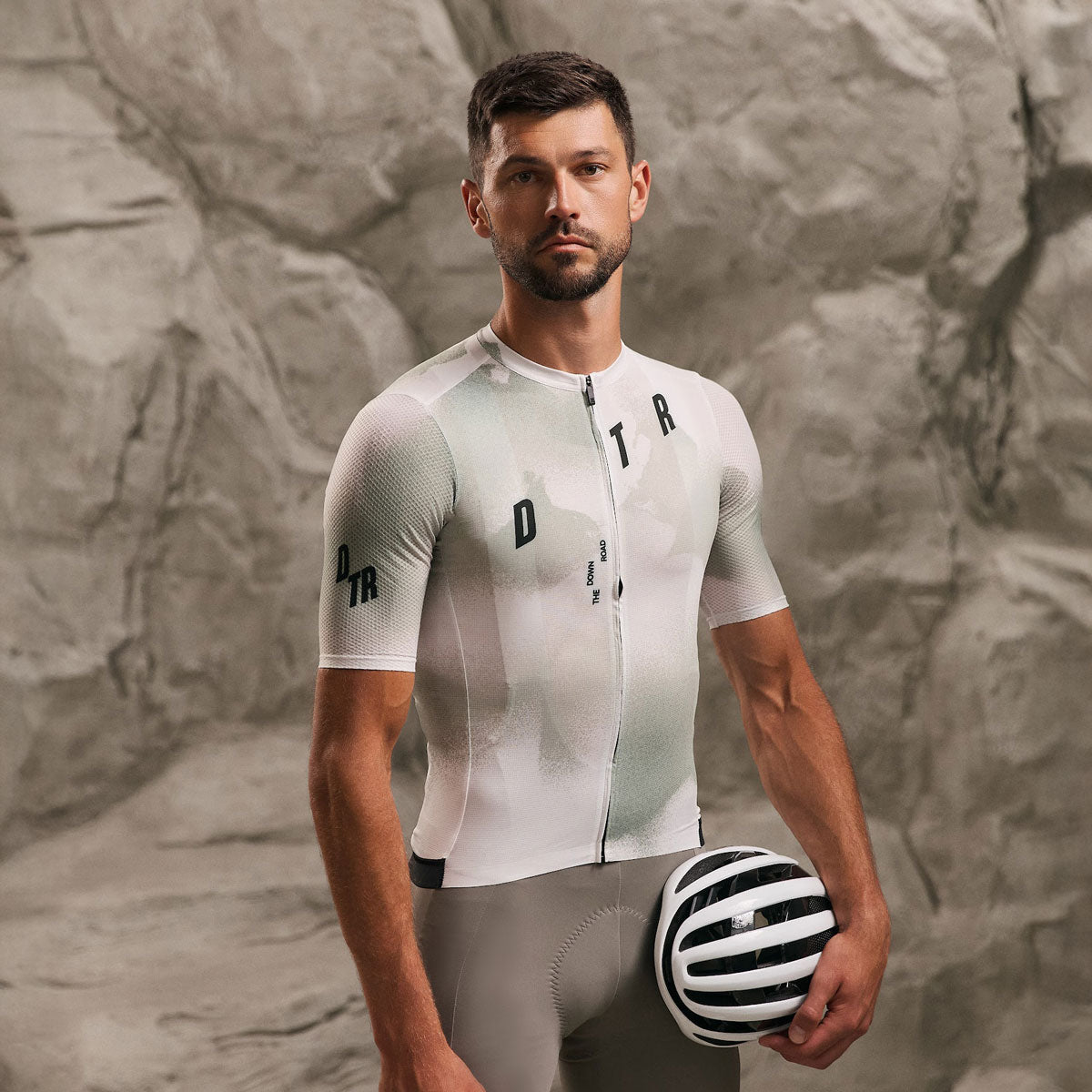
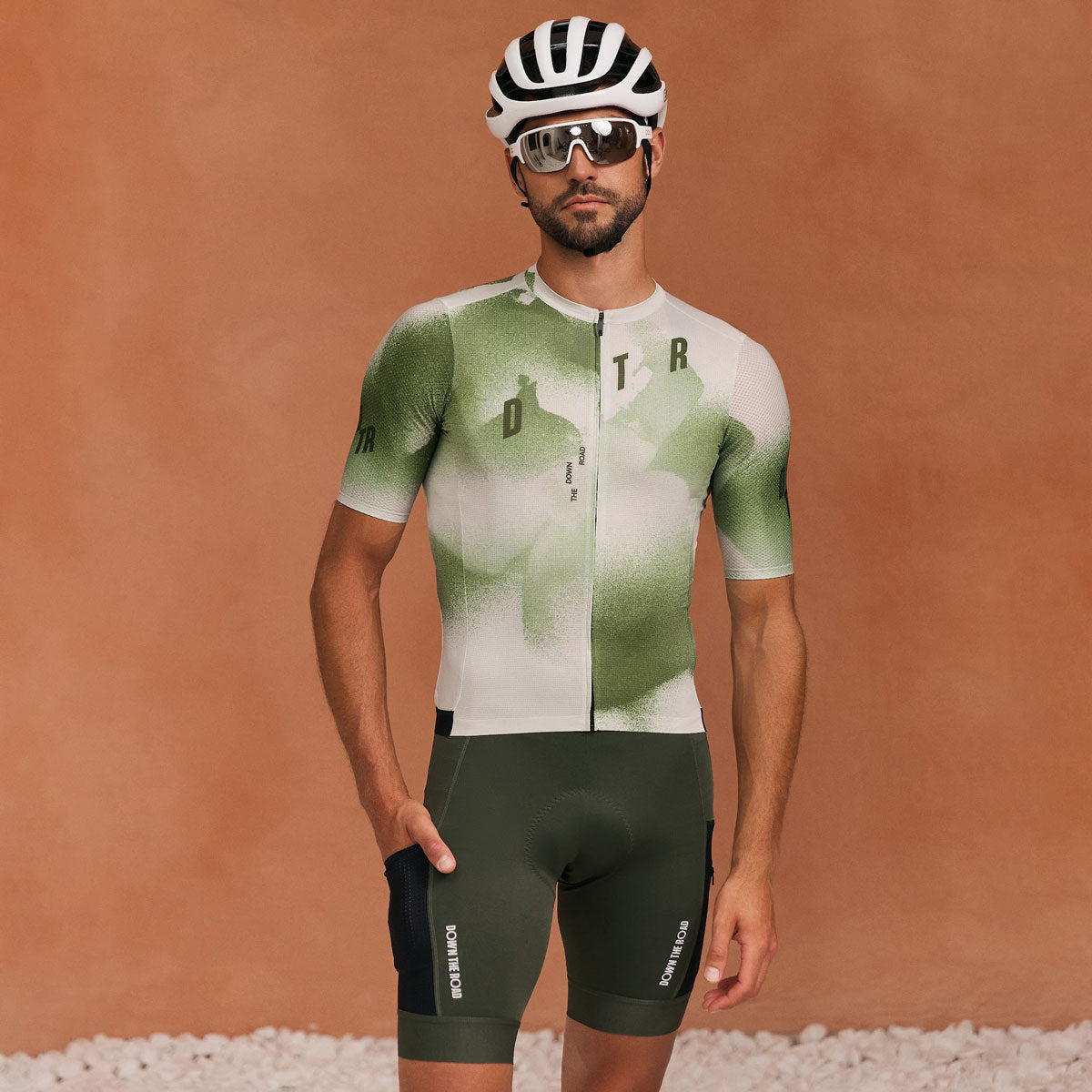
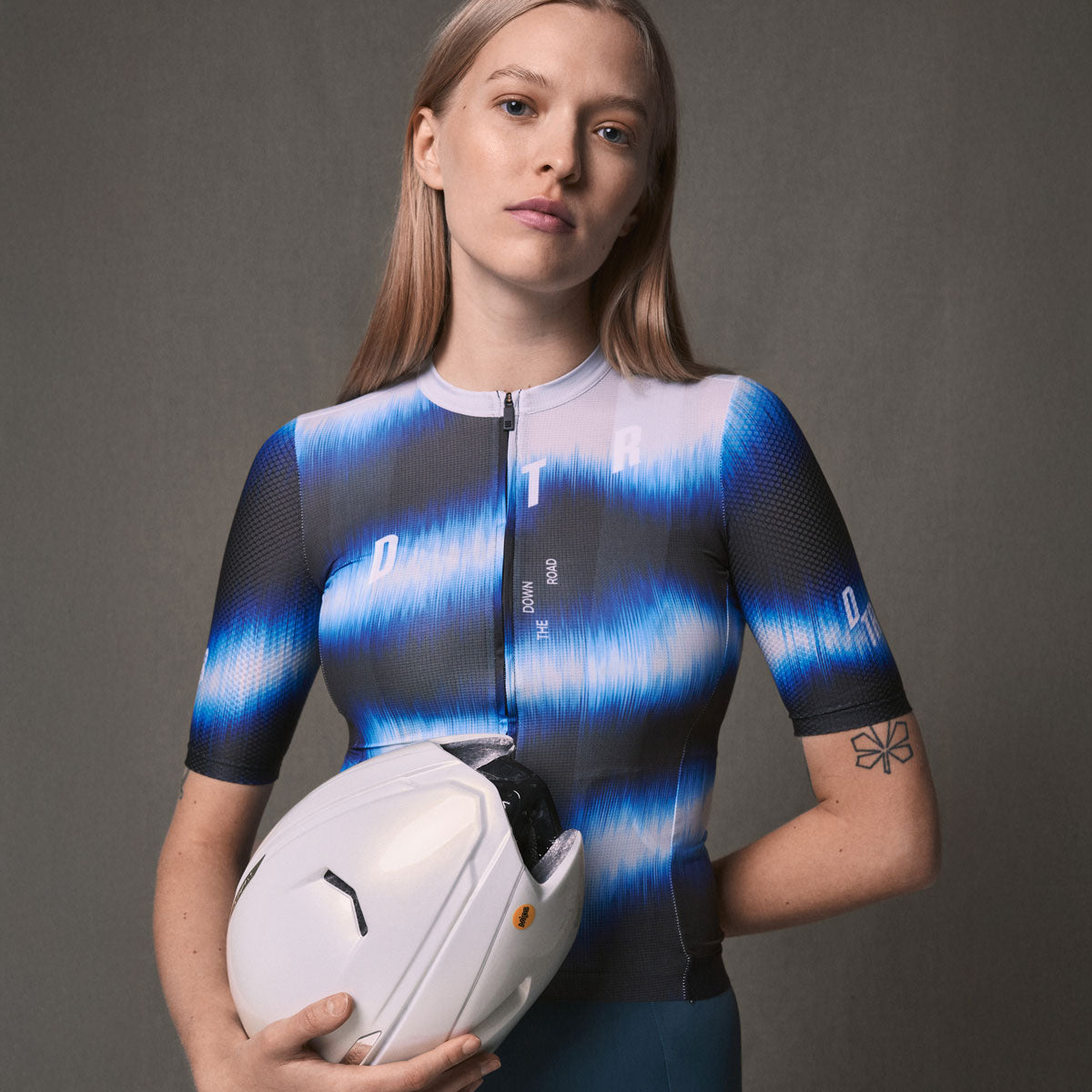
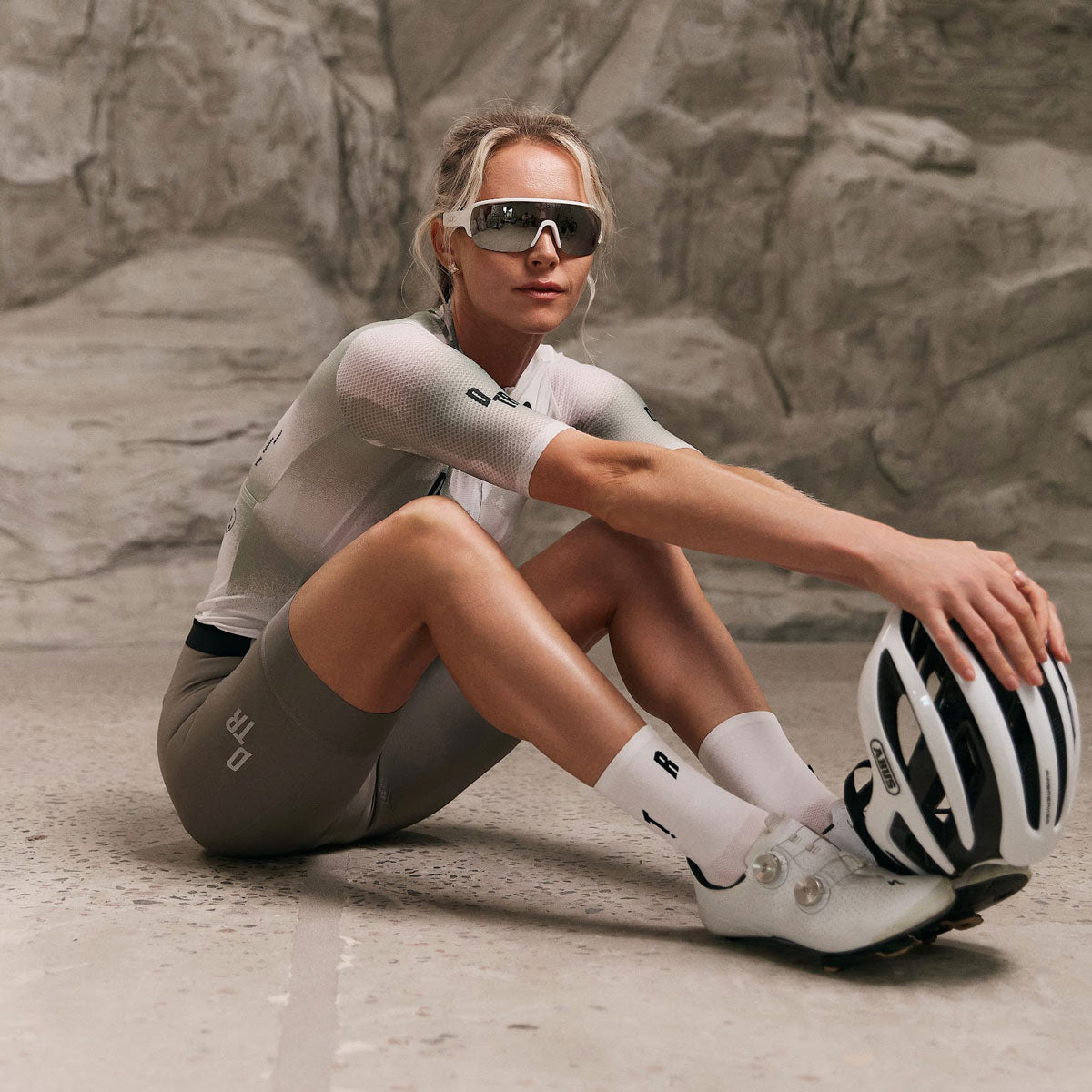
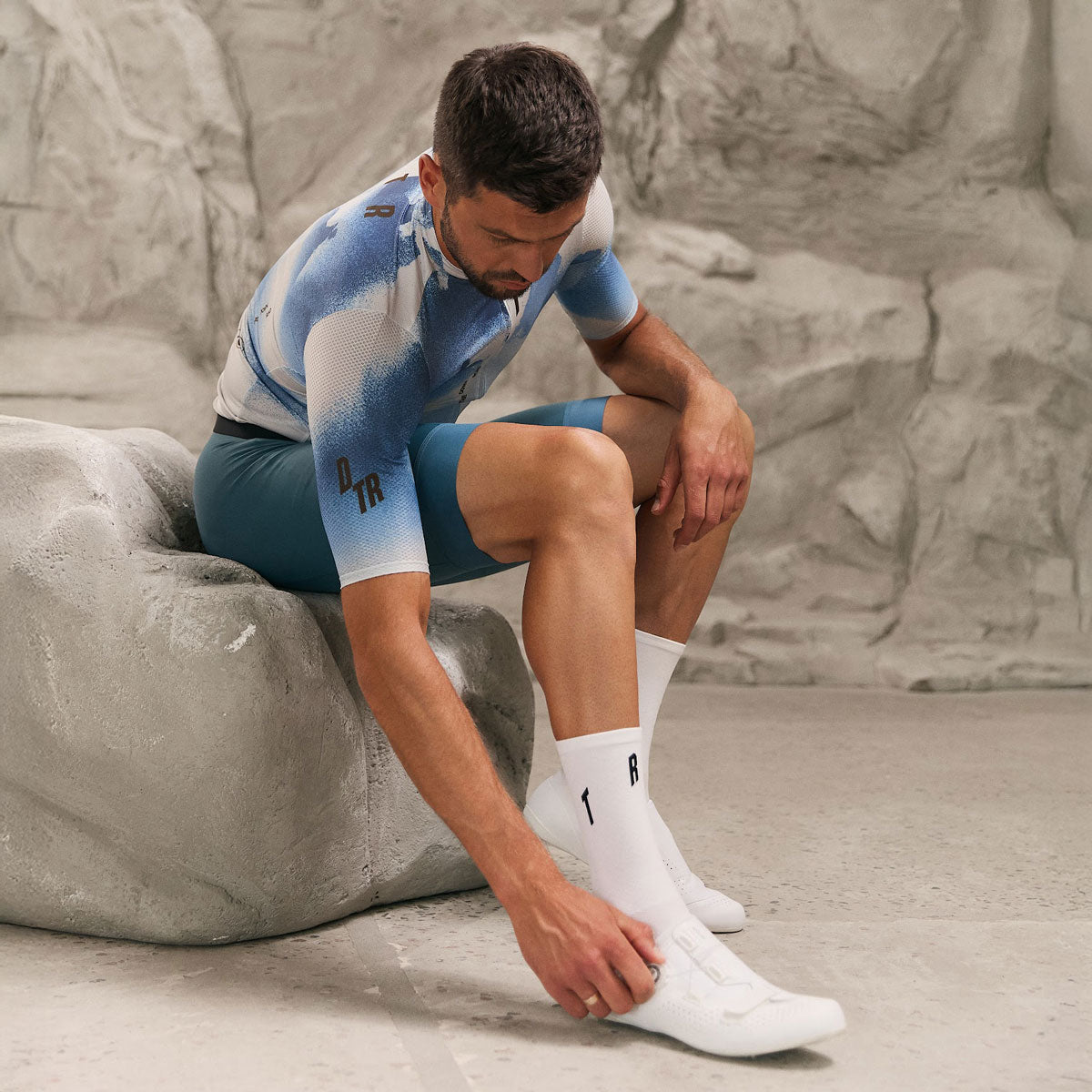
A club kit range starts with two pieces: a short sleeve jersey and bib shorts. Everything else is a second-round decision, made once you know how many members ordered and what they asked for. Ranges fail when a committee tries to launch ten garments at once, because every extra piece splits the order across more items and makes each one harder to reach a minimum on.
The two pieces every range starts with
A short sleeve jersey and bib shorts are the core because they are what every member already owns and replaces, and because together they are what the club looks like from the roadside. Launch those two, get them right, and you have a working identity that people will wear.
The jersey is the piece that carries the design and the sponsor logos, so it takes the most attention. Bib shorts are usually simpler visually and sold on fit and chamois quality rather than graphics, which is why most clubs run a plain or lightly branded short against a fully designed jersey.
If you have budget or appetite for only one piece, make it the jersey. A club can look like a club in matched jerseys and personal shorts. The reverse is not true. The design ideas guide covers what makes that jersey work visually.
What to add in round two
Once the first order lands, the two additions that sell best are a gilet and a long sleeve jersey. Both extend the season, both work over or alongside what members already bought, and both photograph well in club-run pictures from October onward.
A gilet is the higher-value addition of the two. It packs into a pocket, gets used across a huge temperature range, and members who ride year-round will buy one even if they skipped the shorts. A long sleeve jersey is the natural second, particularly for clubs in Northern Europe where the winter season is long.
Thermal bib tights are the next tier down in order volume but high in loyalty: fewer members buy them, and the ones who do are your winter core. Custom base layers and warmers sit in the same tier. Consider both for round three rather than trying to fit them into a first launch.
Accessories: what actually sells
Socks are the highest-conversion item in any club range, and they are the piece to add early rather than late. They are inexpensive relative to the rest of the kit, everyone can wear them regardless of size confidence, and they turn a partial buyer into a full one.
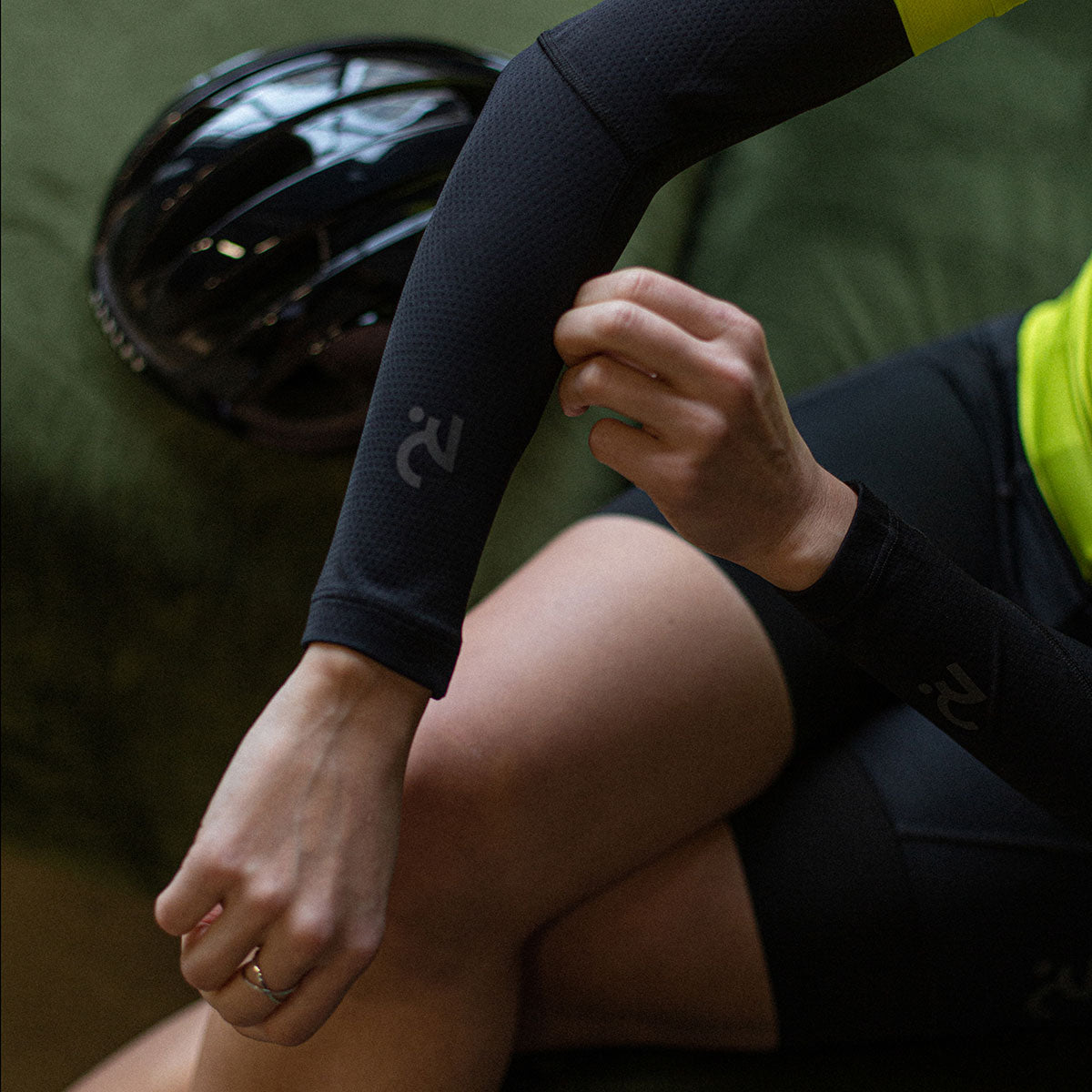
Caps and headwear behave similarly. Both are worn off the bike as well as on it, which makes them the pieces that travel furthest as a club signal. Arm warmers and leg warmers are useful but sell in lower numbers, because members often already own black ones that work with anything.
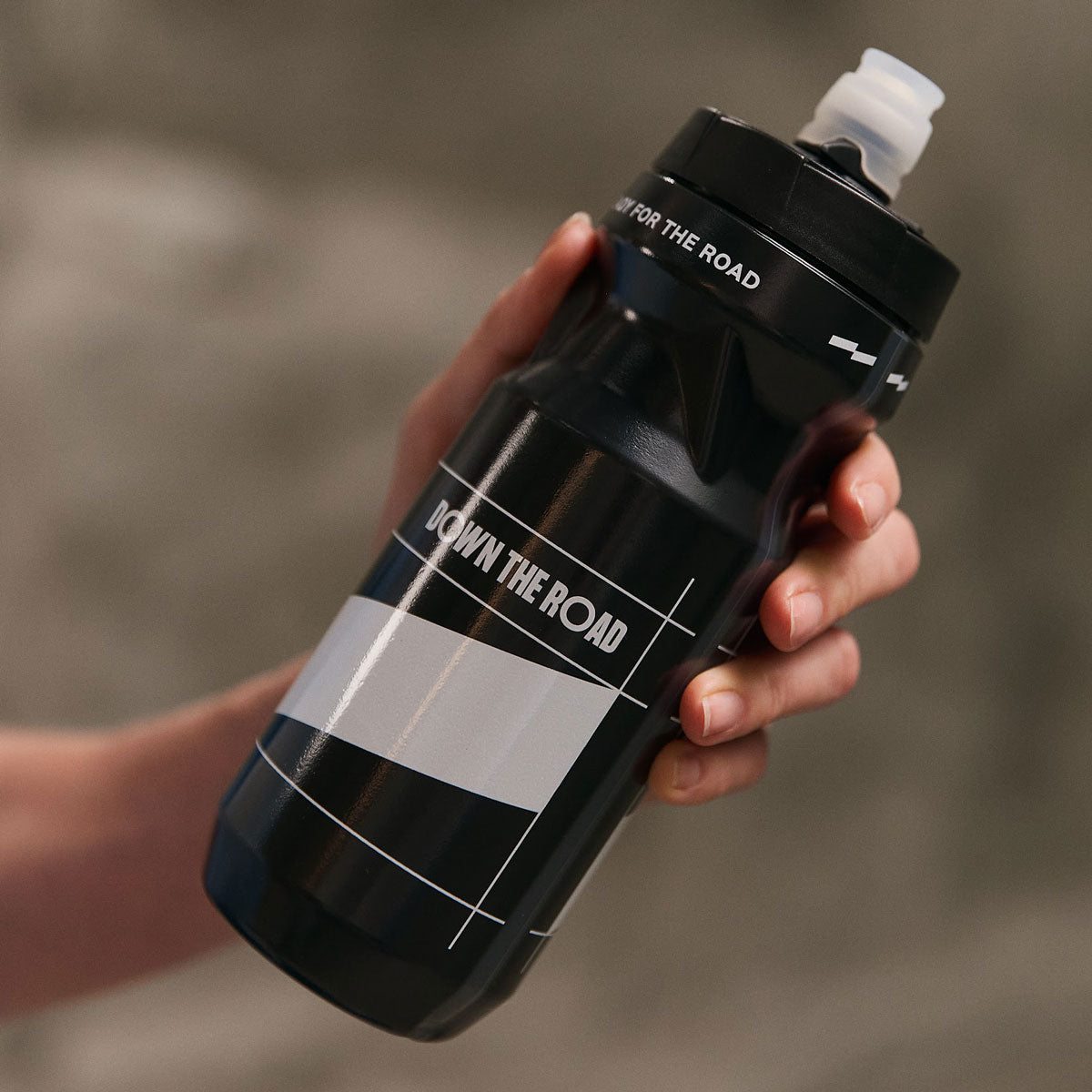
Bottles sit in a different category. They tend to be bought by the club rather than the individual, and often work better as something you hand out at events than as a range item members order for themselves.
How many designs, and whether to split summer and winter
One design, applied consistently across every piece, beats two designs applied inconsistently. A club range works because it reads as one thing at a distance, and a second colourway halves the visual effect while doubling the artwork and approval work.
Where a split is worth it is season rather than style: the same design, executed on summer-weight and winter-weight garments. That keeps the identity intact and lets you order the two halves at the times of year when members actually want them.
If members push for options, offer them in fit rather than design. A race-fit and a slightly more relaxed cut of the same jersey solves far more real objections than a second colour ever will.
Sizing and how many people will actually order
Expect a meaningful gap between the number of members who say they want kit and the number who complete an order. Committees consistently over-forecast, and the gap is almost always sizing confidence rather than price. Members who cannot try a garment on hesitate, and hesitation becomes a missed deadline.
The fix is to run a size set or samples before the order opens, and to publish measurements rather than only letters. Cycling kit sizing is not consistent between brands, so a member who knows they are a medium in one range genuinely does not know what they are in yours. The club sizing guide covers how to collect sizes without chasing people.
Set one clear ordering window with a hard close date, and communicate it three times: at open, at halfway, and forty-eight hours before it closes. Open-ended ordering windows are the single most common reason a club range underperforms.
Planning the range around your season
Work backwards from the date you want members riding in the kit. Add production time and shipping, then add the design and approval loop before that, then add the ordering window before that. Most clubs discover they need to start two to three months earlier than they assumed, which is what the ordering timeline is for.
For a range you want in use for the spring, that means artwork in autumn and ordering open in winter. For a winter range, the equivalent work happens in summer. Ask for current turnaround times when you request a quote, because they move with the season and the mix of pieces.
Build the reorder into the plan from the start. Knowing that a second run will follow lets you set a smaller, more confident first order rather than trying to guess every size for every member who might join.
Common questions
How many pieces should a first range have? Two garments plus socks is a sound first launch. Three or four garments is workable for a large club. Ten is how ranges stall.
Do we need a minimum on every piece? Minimums are usually set per garment rather than per order, which is why a narrow range reaches them more easily than a wide one. Small clubs should also look at low-minimum jersey runs.
Should we offer women's-specific cuts? Yes, if you have women in the club who will order. Women's kit is engineered differently, not scaled down, and offering only a unisex cut suppresses orders you would otherwise get.
What about junior sizes? Worth asking about if you have a youth section, but treat it as a separate conversation with its own minimums rather than assuming it extends the adult range automatically.
Can we add a piece after the order closes? Sometimes, depending on where the run is in production. Ask early rather than assuming, and plan the reorder as the proper route for anything that missed the window.
Tell us your brief and we will take it from there: /pages/cycling-triathlon-custom-apparel.
DTR — performance cycling and triathlon apparel, designed and developed in Ukraine.

Leave a comment
This site is protected by hCaptcha and the hCaptcha Privacy Policy and Terms of Service apply.