

Collecting sizes for a club kit order comes down to three rules: measure, don't guess; get riders into a sample kit or an equivalent garment before they commit; and give one person ownership of the spreadsheet. Sizing errors are the number one reason custom orders go wrong — and every one of them is preventable before production starts.
Why sizing is where club orders go wrong
A custom kit order is made to order: once production runs, a wrong size isn't an exchange, it's a remake. That's the structural difference from retail, and it's why a casual "just put me down for a large" carries more risk than anyone sending it realises.
The failure pattern is always the same: riders self-report from memory of a different brand's sizing, nobody tries anything on, and three sizes surface as wrong on delivery day. The fix costs nothing but process — measurement, reference garments and one accountable owner. The rest of this guide is that process.
Race fit or club fit? Set expectations first
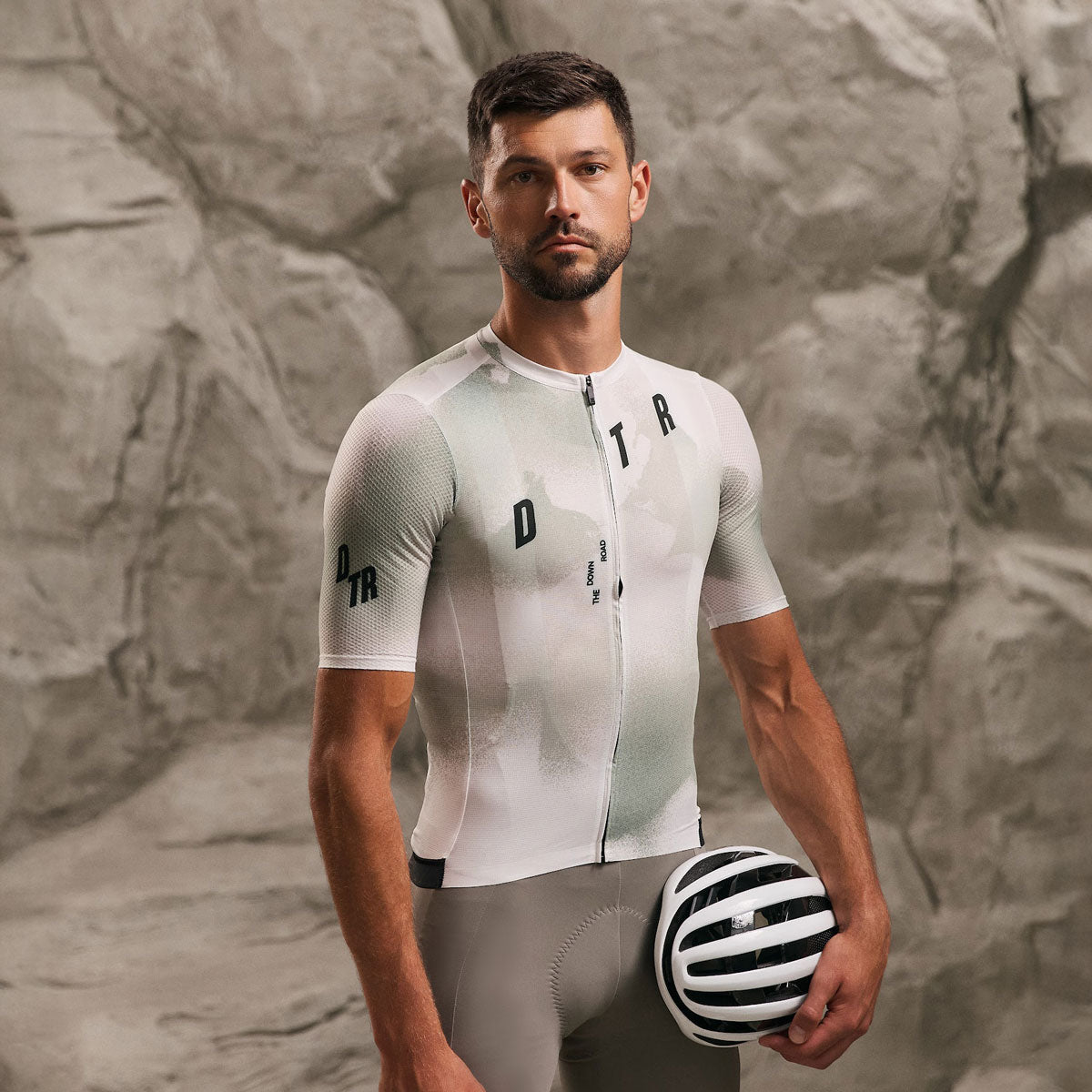
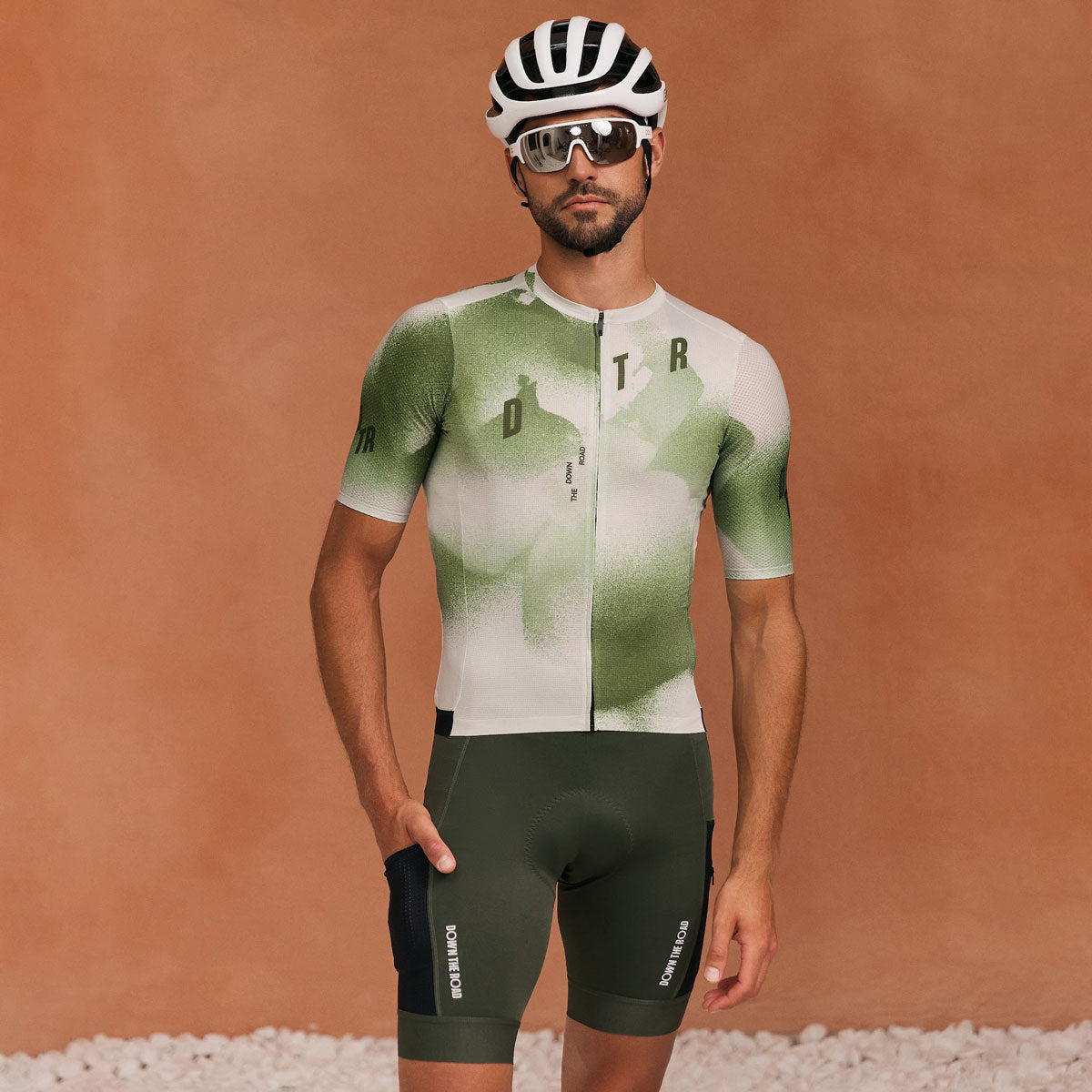
Before anyone submits a size, the club needs one shared answer to a single question: are we ordering race fit or club fit? Race fit is cut close to the body — compressive, aero, sized for a riding position. Club fit is more forgiving through the shoulders and waist. The same rider can be a medium in one and a large in the other.
Announce the choice with the size call, not after. A rider who expects a relaxed jersey and receives a race cut will report it as "too small" — the size chart was right, the expectation was wrong. Our guide to race cut vs relaxed fit explains the difference in rider terms; share it with the order form.
How to run the size collection
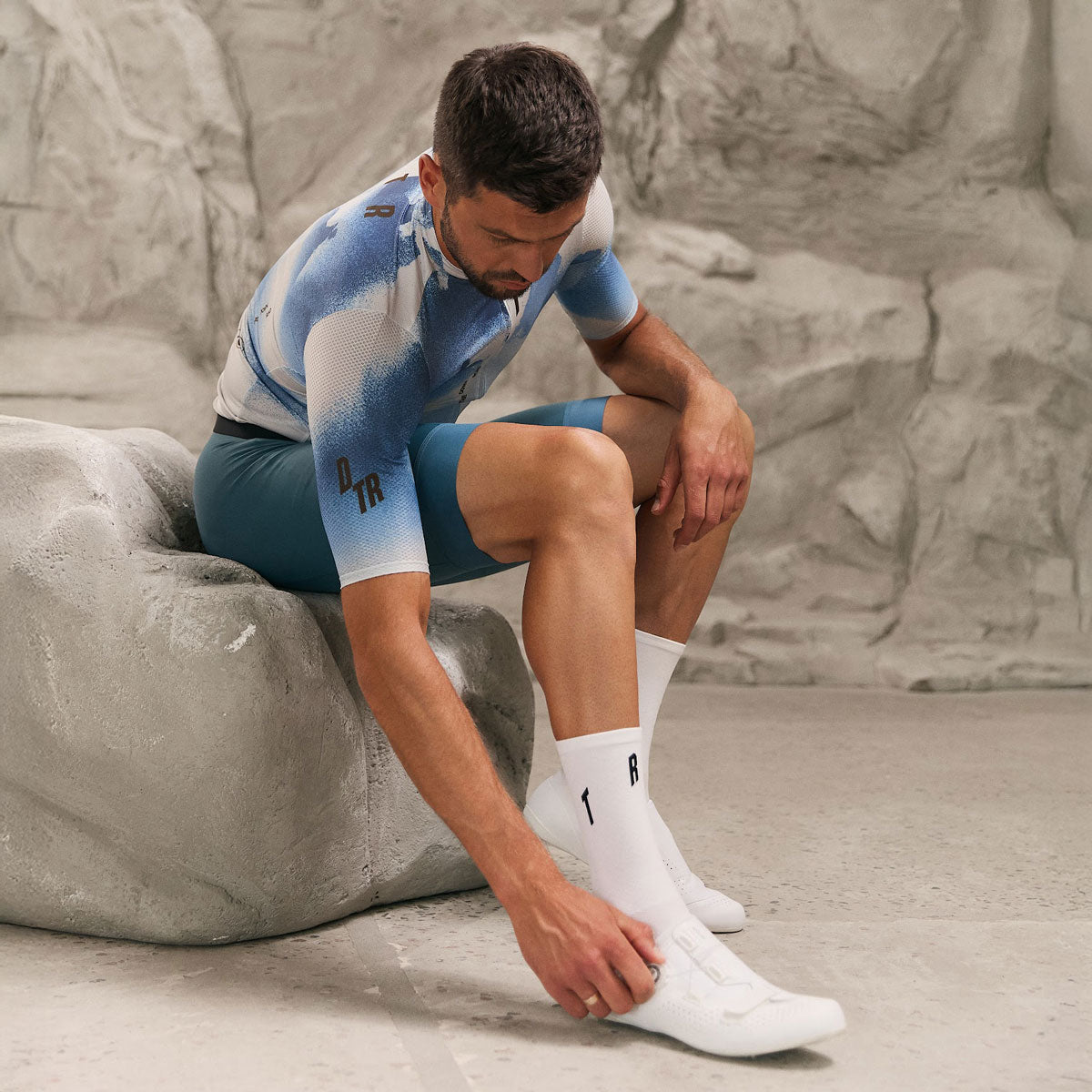
Run it as a fitting, not a survey. Book one club evening or a post-ride slot, bring a tape measure and the size chart, and record chest, waist and hip measurements against the chart — not what people remember wearing in another brand. If a sample kit is available, use it: two minutes in a sample jersey settles what twenty minutes of chart-reading can't.
Three practical rules from hundreds of club orders. First, measure over a base layer or thin top, not a winter jacket. Second, when a rider sits between sizes, size for the riding position: on the bike, arms forward, torso rotated — that's the shape the garment was cut for, and it's also why bib shorts should feel snug standing up; our bib shorts fit guide covers what right feels like. Third, collect sizes per garment, not per rider — the same person can take one size in a jersey and another in bib shorts.
Mixed men's and women's cuts in one order
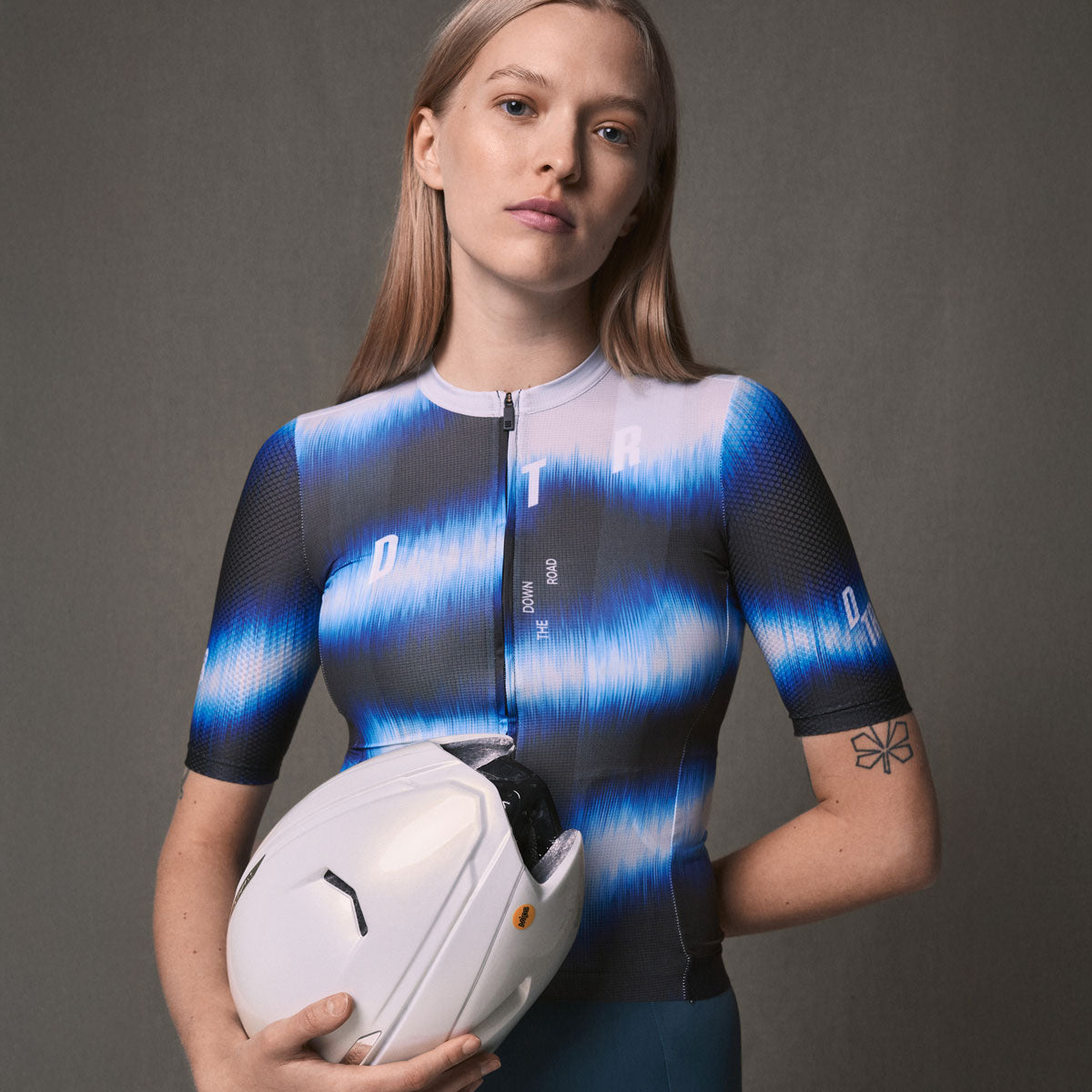
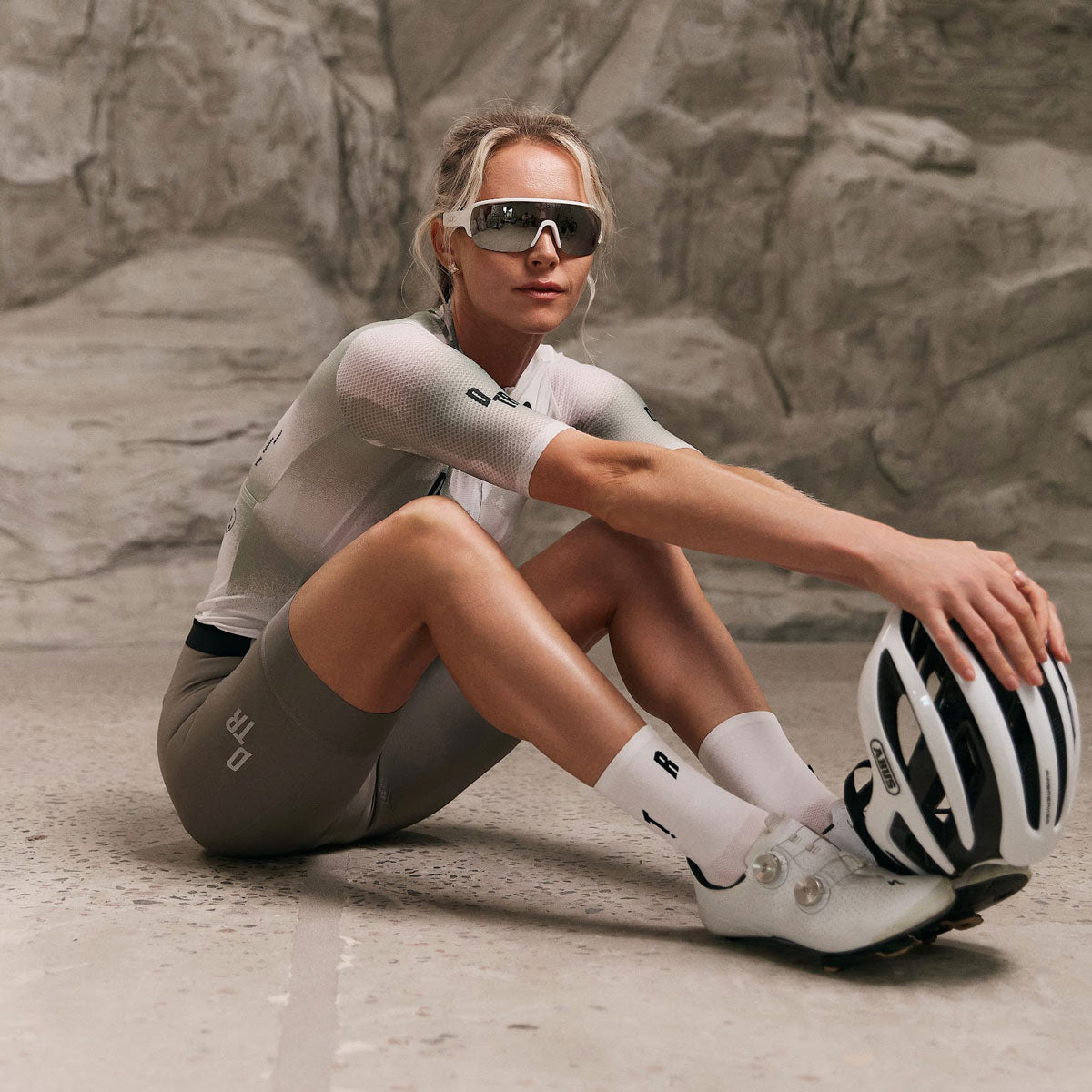
A club order should mix men's and women's cuts freely — same design, same fabrics, same delivery, gender-specific patterns. A women's cut is engineered for a different body geometry: shoulder width, torso length, hip-to-waist ratio and chamois design all differ. It is not a scaled-down men's garment, and it shouldn't be ordered as one.
The practical implication for the organizer: your spreadsheet needs a cut column, not just a size column. "M — women's" and "M — men's" are different garments. Collect that explicitly on the form and confirm it at the fitting, because it's the single most common column to go missing — and the most annoying one to fix after production.
Who owns the spreadsheet
One person. Not a committee, not a group chat — one named organizer who owns the sheet, chases the stragglers and signs off the final list. Split ownership is how duplicate rows, stale sizes and "I told someone in the WhatsApp" errors reach production.
Keep the workflow boring: one sheet, columns for rider, garment, cut, size and payment status, a hard deadline a week before the order goes in, and a locked copy at sign-off. Sign-off is a real step — at DTR, nothing goes to production without your confirmation, so the locked sheet is the document you check the final order against. Boring process, correct kit.
Order buffer pieces for new members
Add two or three unassigned pieces in the middle sizes — typically M and L jerseys — to every order. Clubs grow between orders, and reorders below minimum quantities are exactly the situation you're trying to avoid. From 5–10 pieces the economics of custom work, but a mid-season order of one is nobody's idea of efficiency; a small buffer bridges new members to the next round. It also quietly solves the delivery-day problem of a single wrong size: swap into a buffer piece now, reassign the rest later. For garment-by-garment options, see our guide to custom cycling jerseys.
FAQ
What if a rider is between sizes?
Decide by fit philosophy and position: in race fit, take the measured size and trust the stretch — sizing up defeats the cut. In club fit, sizing up is fine for comfort. When in doubt, try the sample kit and pick the size that feels right on the bike, not standing.
Can we mix race fit and club fit in one order?
Yes — like men's and women's cuts, fits can mix within one order and one design. Record fit per garment in the spreadsheet and make sure each rider knows which one they chose.
How much time should sizing add to the timeline?
Plan two weeks: one fitting session, one week of chasing stragglers, then sign-off. With production and delivery on a 6–8 week turnaround, sizing is the part of the schedule you fully control — spend it once and the rest of the order runs clean.
What about riders who join after the order?
Buffer pieces cover the gap until the next order. Keep the locked spreadsheet from last round — returning sizes plus a saved design make reorders quick.
Running a club order? Tell us your brief and we'll take it from there: /pages/cycling-triathlon-custom-apparel.
DTR — performance cycling and triathlon apparel, designed and developed in Ukraine.

Leave a comment
This site is protected by hCaptcha and the hCaptcha Privacy Policy and Terms of Service apply.