
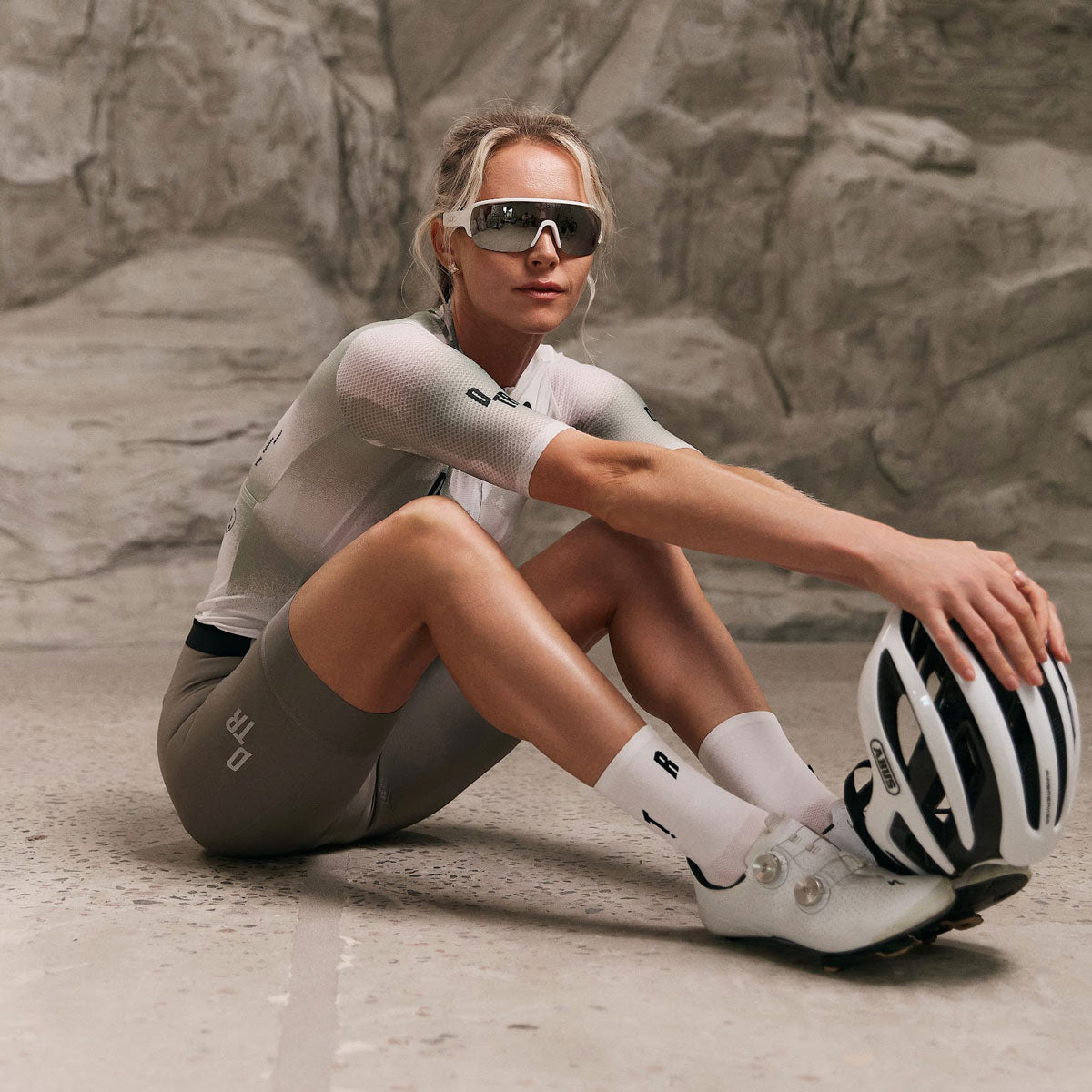
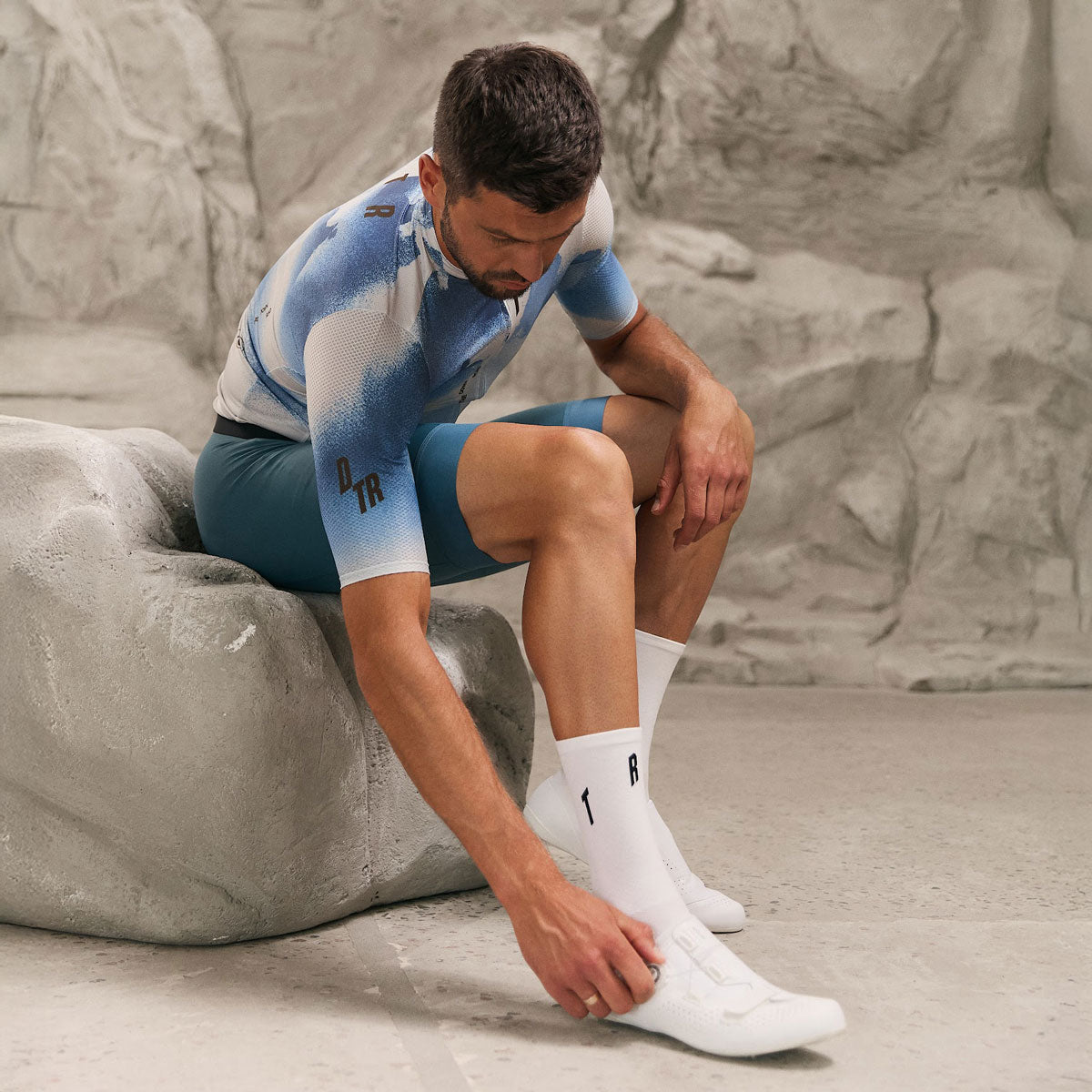
Cycling bib shorts should fit snug and supportive like a second skin — tight enough to hold the chamois firmly against you with no bunching or movement, but not so tight they dig in, restrict you or cut off circulation. A good fit is the difference between comfort and misery on the bike, because loose shorts chafe and a badly positioned chamois causes pressure and saddle sores. This guide covers how bib shorts should fit — the legs, the chamois, the straps and the waist — and how to tell if yours are the right size.
Bib shorts should be snug all over
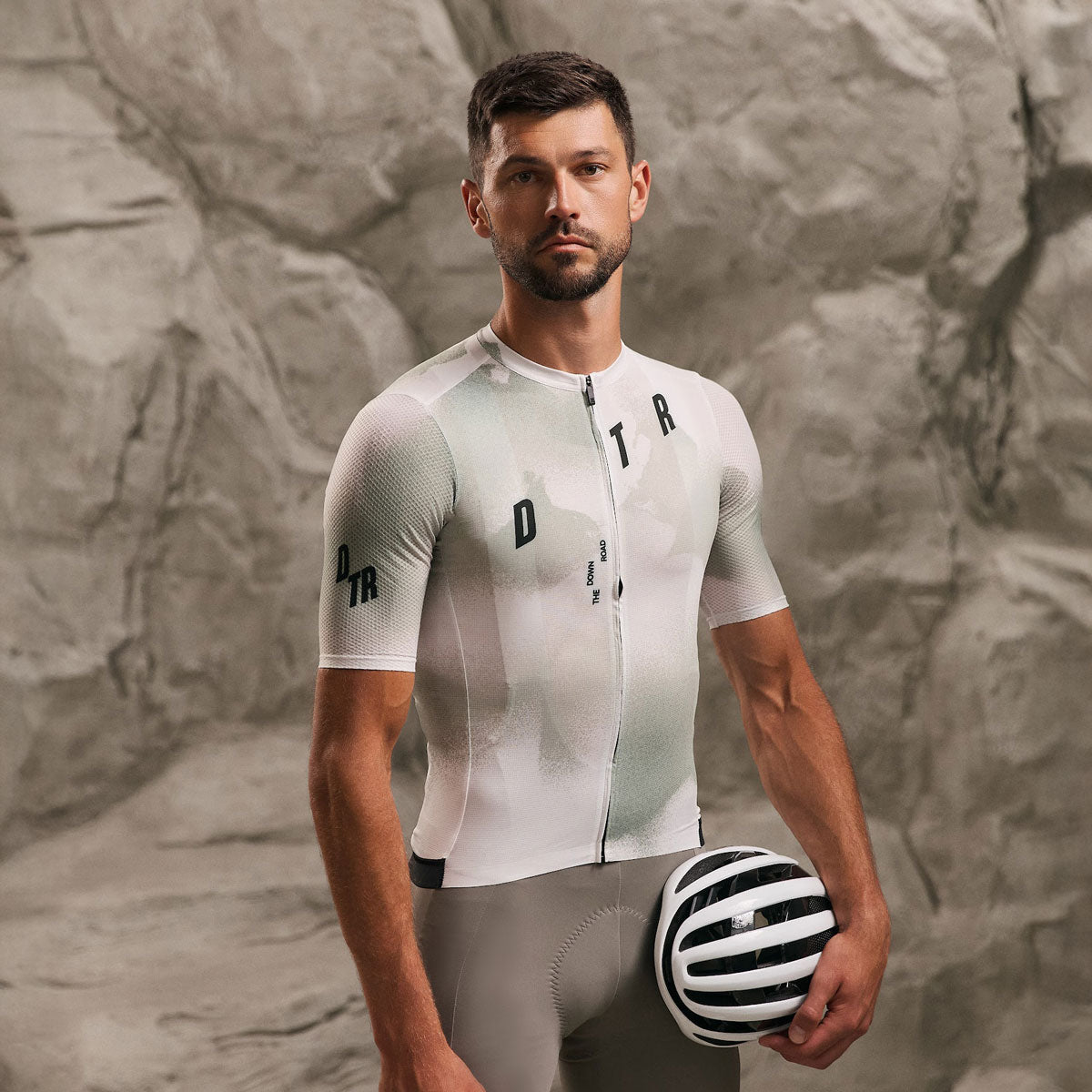
Bib shorts are meant to fit tight — a compressive, second-skin fit with no loose fabric anywhere. That snugness is what holds the chamois in the right place against your sit bones and stops fabric bunching and rubbing as you pedal. Off the bike they can feel almost too tight; on the bike, in the riding position, they should feel supportive and disappear. If they feel loose, baggy or shift around as you ride, they're too big. If they dig in, pinch or restrict movement, they're too small.
The leg grippers
The leg grippers — the silicone bands at the hem of each leg — should hold the shorts in place on your thigh without leaving deep marks or cutting in:
- They should feel secure but not tight enough to pinch or restrict circulation.
- The legs shouldn't ride up as you pedal; if they do, the shorts are too big or the grippers too weak.
- They shouldn't dig a deep welt into your thigh; a little mark is normal, painful compression is not.
A wide, soft gripper holds better and more comfortably than a thin, tight elastic. The leg length should sit around mid-thigh, not creep toward your knee or barely cover your groin.
The chamois position
The chamois (the padded insert) has to sit in exactly the right place, and a snug fit is what keeps it there:
- It should sit directly under your sit bones when you're in the riding position, cushioning where you actually press on the saddle.
- It shouldn't shift side to side or bunch as you pedal — movement is what causes chafing and sores.
- You shouldn't feel seams or edges pressing on soft tissue.
Remember bib shorts are worn with no underwear — underwear adds seams that chafe and defeats the chamois. If the chamois feels off-centre or moves around, the shorts are the wrong size or cut for you.
The straps
The bib straps hold everything up and should be comfortable and unnoticed:
- They should hold the shorts up without digging into your shoulders or pulling down hard on the chamois.
- In the riding position (leaned forward), they should have the right length — not so short they yank the chamois up, not so long they sag.
- They should lie flat under your jersey without twisting.
Straps that dig in or pull the chamois too tight usually mean the bib is too short in the body for your torso — a common reason a size feels wrong even when the legs fit.
Signs your bib shorts don't fit
Watch for these red flags:
- Bunching or loose fabric at the legs or crotch — too big; will chafe.
- Legs riding up as you pedal — too big or weak grippers.
- Deep painful welts from the grippers or waist — too small.
- Chamois shifting, off-centre, or you feel the seams — wrong size or cut.
- Straps digging into shoulders or yanking the chamois — bib too short in the body.
- Restricted movement or cut-off circulation — too small.
The right size feels supportive and unnoticed in the riding position; the wrong size makes itself known within a few kilometres. For what else matters in a good pair, see our guide to choosing bib shorts.
FAQ
How tight should cycling bib shorts be? Snug and compressive, like a second skin, with no loose or bunched fabric — tight enough to hold the chamois firmly in place, but not so tight they pinch, restrict movement or cut off circulation. They can feel almost too tight off the bike and should feel supportive on it.
How should the chamois sit? Directly under your sit bones in the riding position, cushioning where you press on the saddle, with no shifting or bunching as you pedal and no seams pressing on soft tissue. A snug fit keeps it in place; if it moves or feels off-centre, the size or cut is wrong.
Should bib short leg grippers leave marks? A light mark is normal; deep, painful welts are not. Grippers should hold the legs in place without cutting in or restricting circulation. If they dig in painfully, the shorts are too small; if the legs ride up, they're too big or the grippers too weak.
Do you wear underwear under bib shorts? No — bib shorts are designed to be worn directly against the skin, with the chamois doing the job underwear normally would. Underwear adds seams that chafe and traps moisture. Wearing nothing underneath is correct and part of why the fit needs to be snug.
How do I know if my bib shorts are the wrong size? They chafe, bunch, or ride up (too big), or they pinch, leave deep welts, or restrict movement (too small). If the chamois shifts or the straps dig in or yank it up, the size or body length is wrong. The right fit feels supportive and unnoticed on the bike.
The bottom line
Cycling bib shorts should fit snug and supportive like a second skin: tight enough to hold the chamois firmly under your sit bones with no bunching or movement, with leg grippers that hold without cutting in and straps that support without digging. Off the bike they feel tight; on the bike they should disappear. If they chafe, ride up or shift, they're too big; if they pinch or leave deep welts, they're too small. Explore DTR bib shorts.
—
DTR — performance cycling and triathlon apparel, designed and developed in Ukraine.

Leave a comment
This site is protected by hCaptcha and the hCaptcha Privacy Policy and Terms of Service apply.